Image

A WAR OF CHOICE

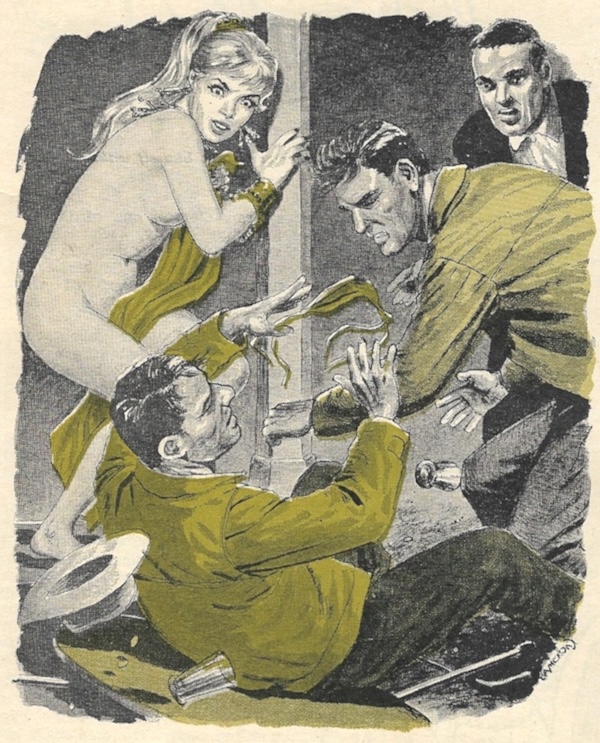
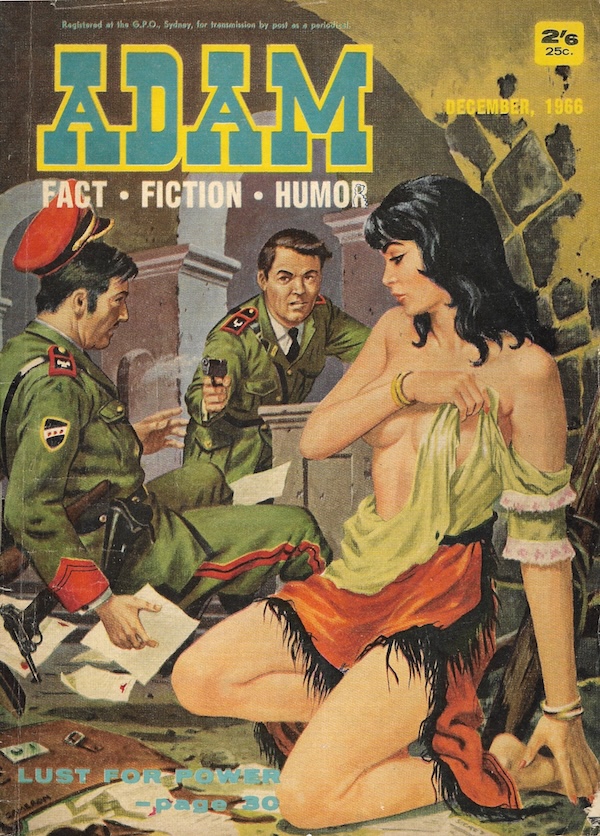
They say it's for noble reasons but the truth is they're fighting over her because she's rich in natural resources.
Image

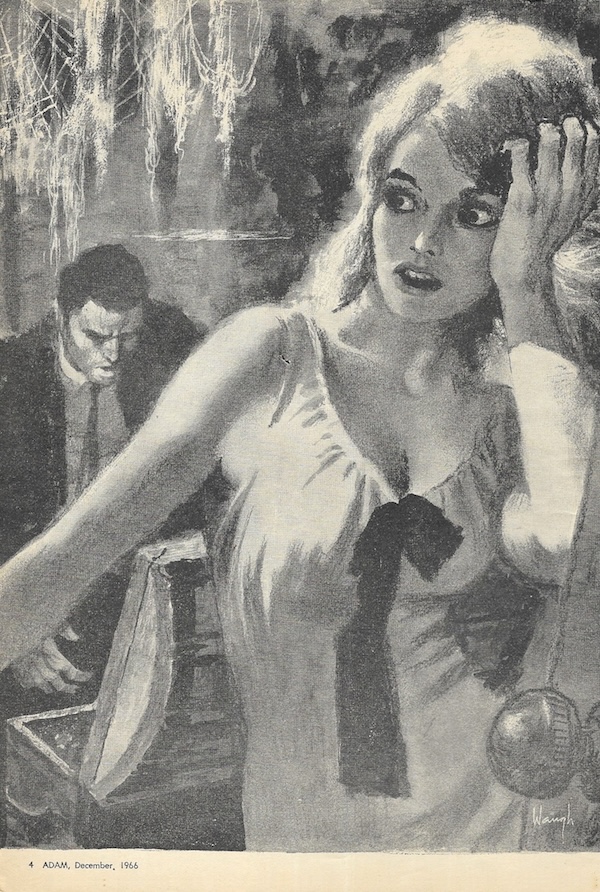
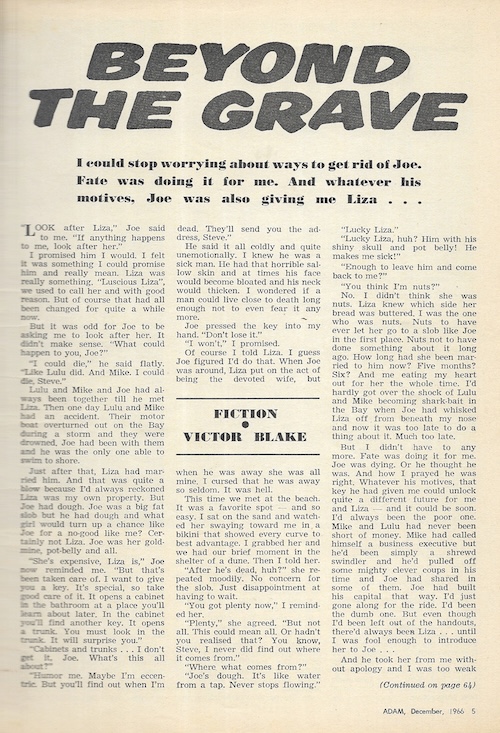
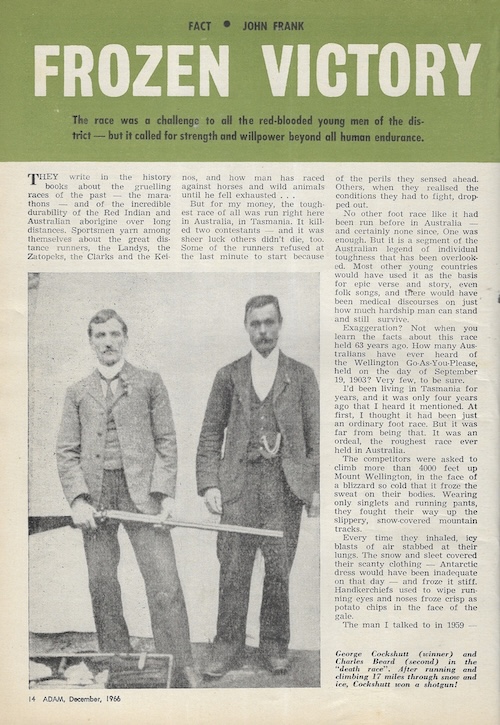
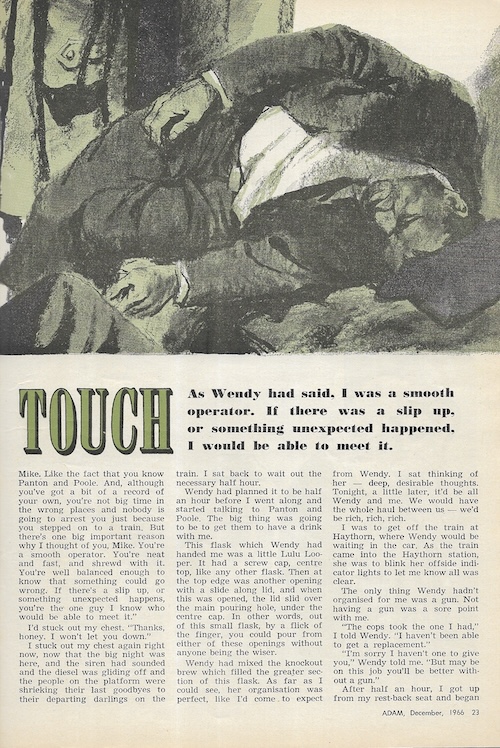
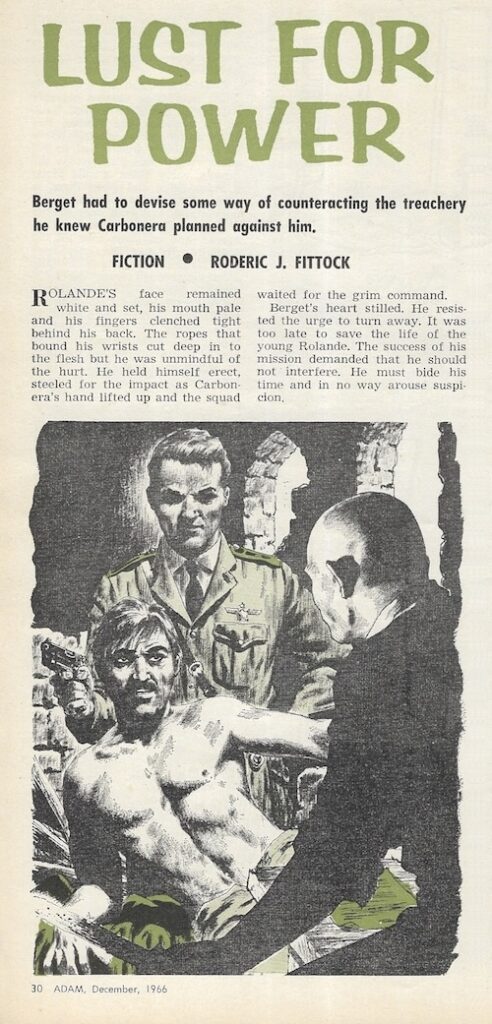
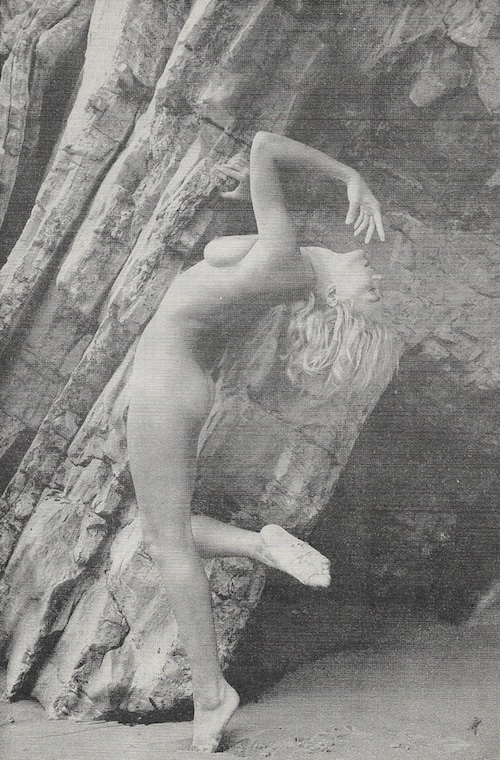
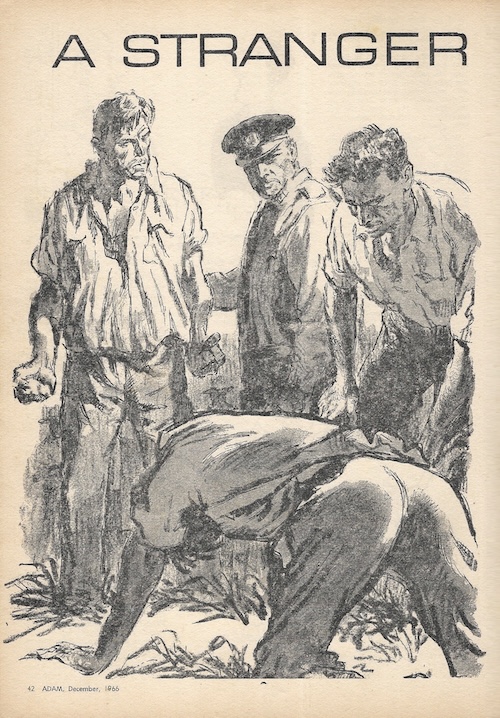
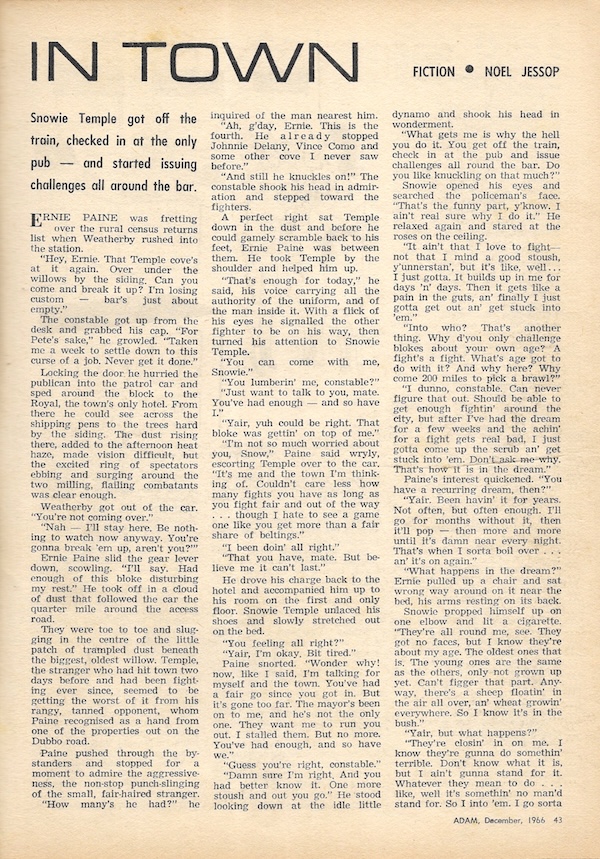
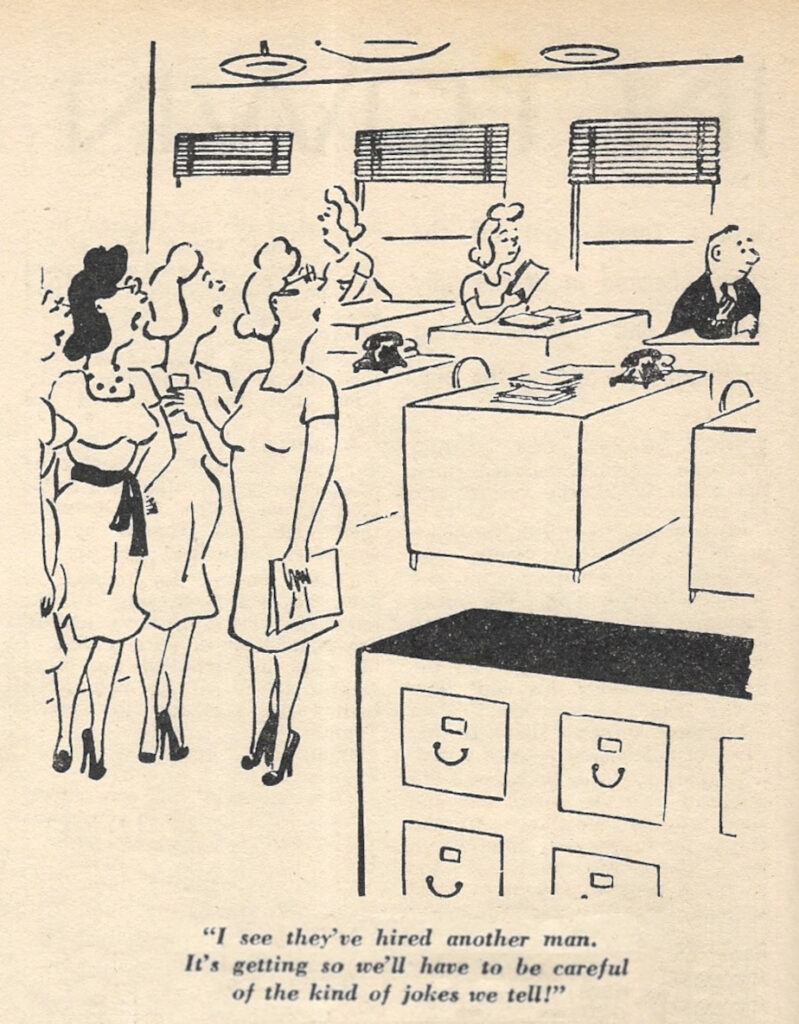
Today’s issue of the Australian men’s adventure magazine Adam hit newsstands this month in 1966, and bears interesting cover art meant to illustrate the story “Lust for Power,” which was written by Roderic J. Fiddoc. Again, Fiddoc? You don’t see the guy for years, then he pops up twice in consecutive issues. Well, what’s Rod got for us this time? In his story a spy named Berget infiltrates a revolutionary movement in an unnamed French colony with the aim of foiling the efforts of its leader Carbonera. The art depicts the moment Berget and Carbonera turn on each other, with a woman named Gretta who had been used as bait in a betrayal scheme caught in the middle. It’s an okay story but it’s clear Fiddoc was undone by editorial constraints, as the tale ends prematurely and poorly.

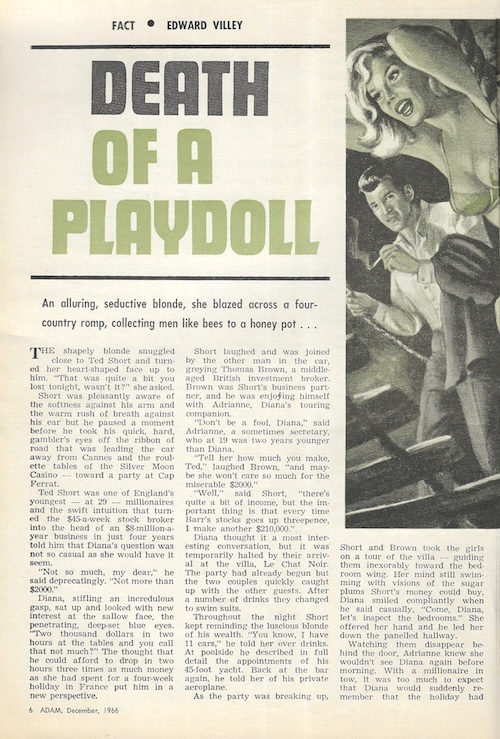
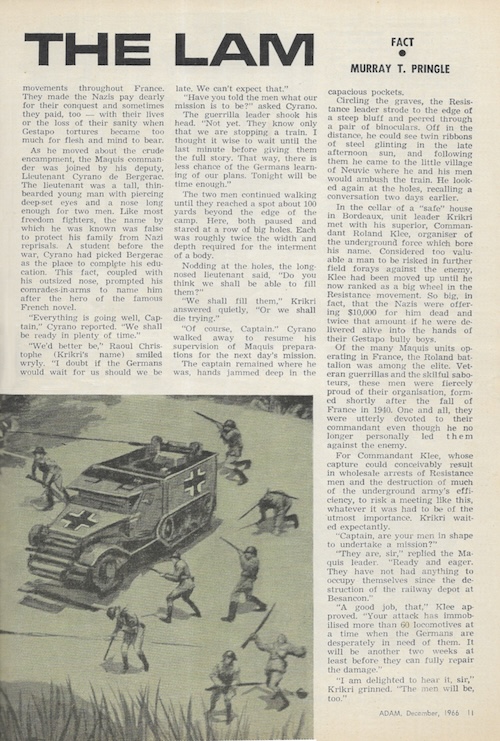
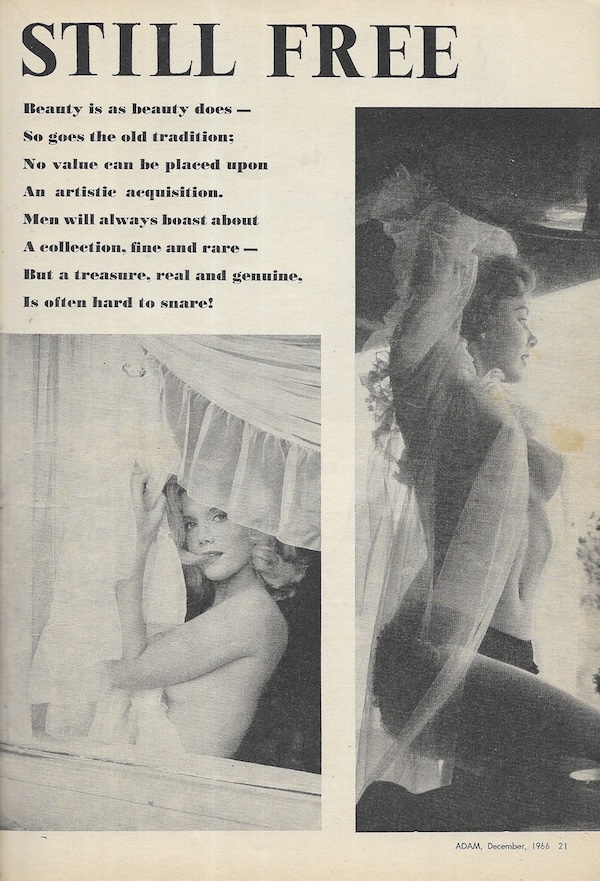
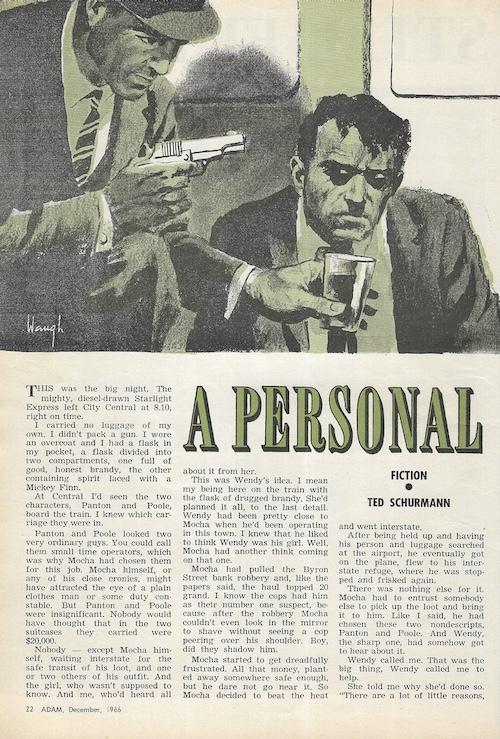
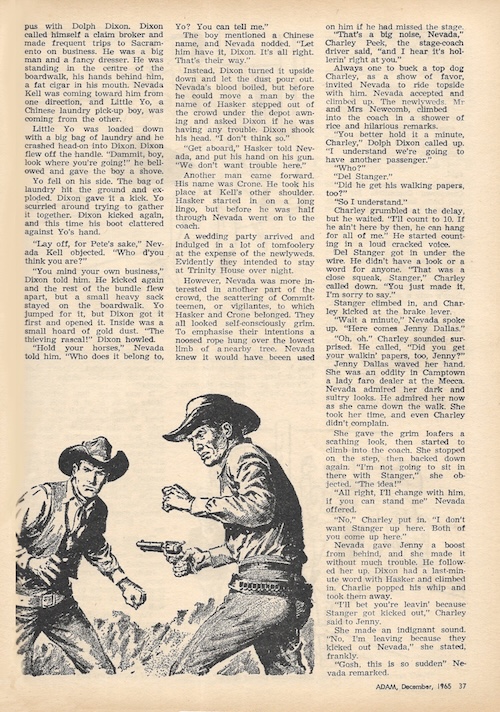
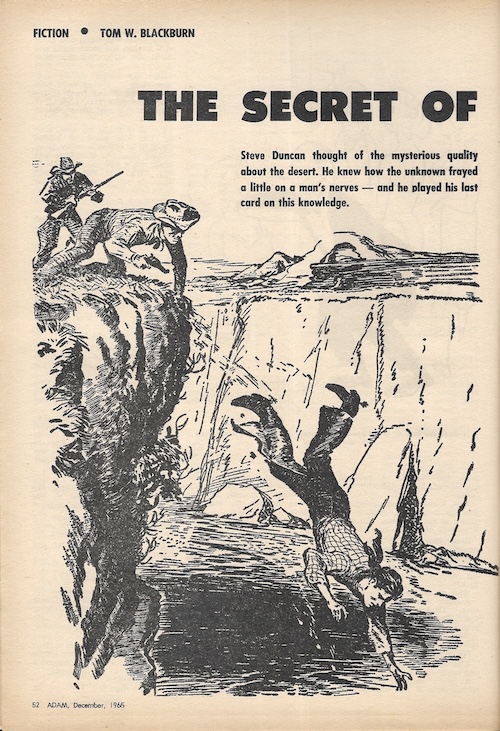
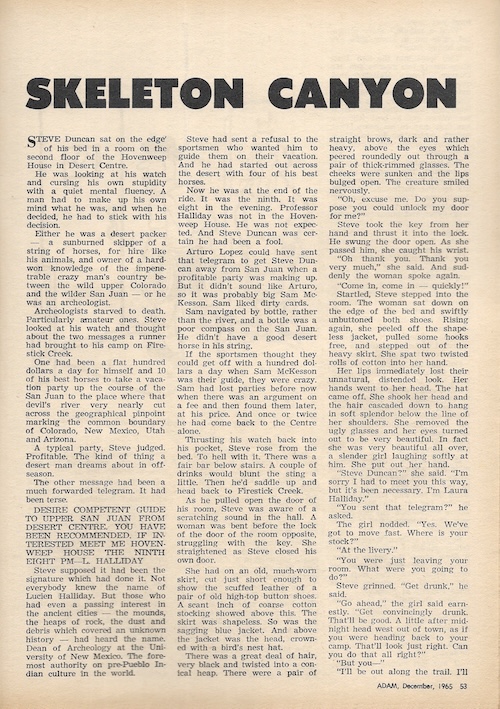
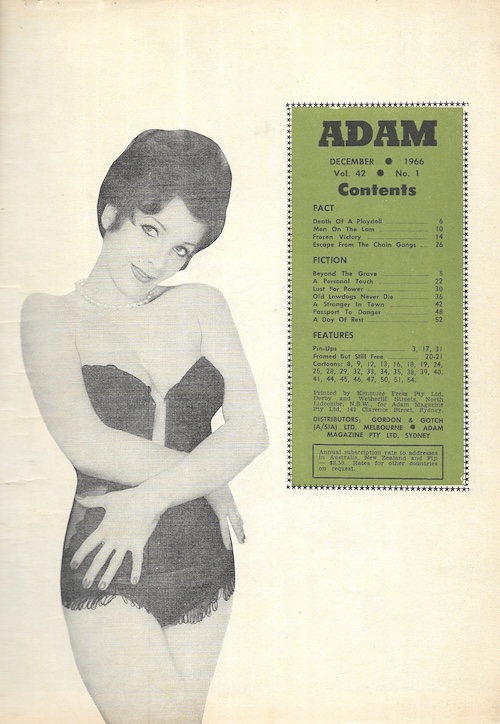
This Adam represents a landmark for Pulp Intl. It’s the one hundredth issue we’ve shared. Someone emailed us that it felt like we were teasing people, showing scans but not making the magazines available for download. Time has shown that to be a good decision. We upload more original scans than any pulp related website we’re aware of, and they’re sometimes taken en masse by others without a thought of acknowledgment (which is why we appreciate the credit we get from good Tumblrs like Mudwerks). Everyone borrows art—a panel, or two. But several sites have systematically scoured innumerable scans from us (usually the nudes) without giving a single credit. So while we could share images 2000 pixels wide, keeping them small indicates to those in the know that the bloggers with lousy ethics aren’t uploading original scans—much as they try to pretend. Twenty-eight panels below.

Image
Image
Image
Image
Image
Image
Image
Image
Image
Image
Image
Image
Image
Image
Image
Image
Image
Image
Image
Image
Image
Image
Image
Image
Image
Image
Image
Image
This is the last time she books a trip that requires a layover.
Image

This Robert Bonfils cover for Dan Brennan’s 1961 novel Doomed Sinner fooled us. It looked tropical, but the story never gets anywhere warm. Jerry Bassett, a pilot during World War II now living in the north of Minnesota, stumbles across war buddy Johnny Cotton while fishing in the deep boreal forest. It’s clear Cotton is up there for a nefarious purpose, considering he’s with four heavily armed men and they have a floatplane. Trouble is avoided only because Cotton convinces his henchmen to let Jerry leave unmolested. Days later, back in civilization, Jerry goes to a dance, meets a woman who owns a small plane, and goes on a pleasure flight only to have an oil line burst. They crash land right about where Cotton and Co. are hanging out. That’s a hell of a coincidence, but okay, it happens early in the narrative, so it qualifies as the premise—we accepted it.

This time, though, Jerry is stuck in the wilderness. Cotton and his partners—who it becomes clear are bank robbers about to pull a heist—aren’t about to let him leave twice. Plus they like his female companion. Well, maybe like isn’t the word. Want to devour her like a Catskills buffet lunch is more accurate. If Jerry doesn’t get her out of those woods she’ll be in seriously dire straits, but how can they escape? Ultimately they don’t. He does, leaving her behind, and her existence is indelibly changed. This is less than a third of the way through the book. It then evolves into a tale of redemption. Jerry sees a newspaper account of a bank robbery, recognizes it had been Cotton, and decides to track him down and rescue the girl—if she’s still alive and with him. Better late heroics than none at all, we guess.

Brennan has an interesting style, though on occasion it’s difficult to understand what’s actually happening because his flourishes confuse the action. There’s a double shooting, for instance, where we weren’t immediately sure who was shot. We looked him up, and it turns out he wrote a lot of books in two areas: sleaze and air war. So the combo in Doomed Sinner makes sense. One of his publishers (sleaze imprint Novel Books) claimed Brennan won a McKnight Foundation award in 1960. We couldn’t confirm that, but we wouldn’t be surprised. Brennan can write pretty well, even if it’s unfocused at moments. We’ll try him again down the line if we can find something cheap. In the meantime, we recommend Doomed Sinner. It’s a stupid title but a reasonably engrossing, occasionally hard-boiled thriller.

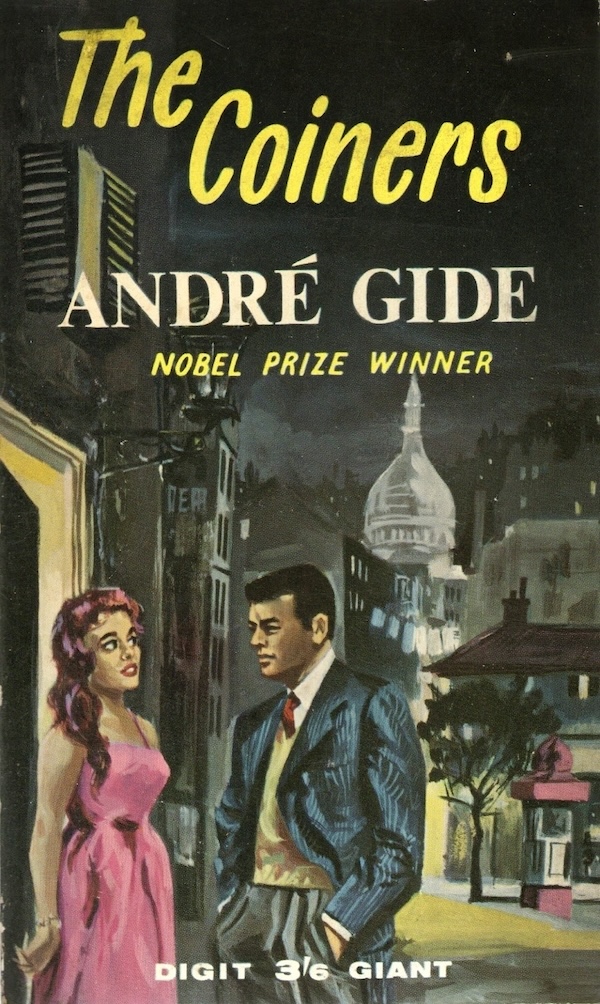
What do you mean no? This is Paris. In Paris the answer is always yes.
Image

French author Andre Gidé was born in Paris in 1869, but he published throughout the pulp era’s advent and heyday. Above you see a cover for his novel The Coiners, which in French was titled Les Faux-monnayeurs. That would make a more accurate English title “the counterfeiters,” but we guess “coiners” was chosen because the tale is largely about making fake gold coins. It’s also considered a breakthrough work in terms of its gay themes. This edition is from 1961. The book originally appeared in 1925, so this is another example of a classic spruced up with sexier art. Gidé won the Nobel Prize for literature in 1947 for his general body of work, but he certainly wouldn’t win today—he admitted to and occasionally wrote about being sexually attracted to young boys. In any case, we’re just here for the art. Unfortunately, it’s uncredited.

Asada reveals her true self to the world, and the world does it right back.
Image

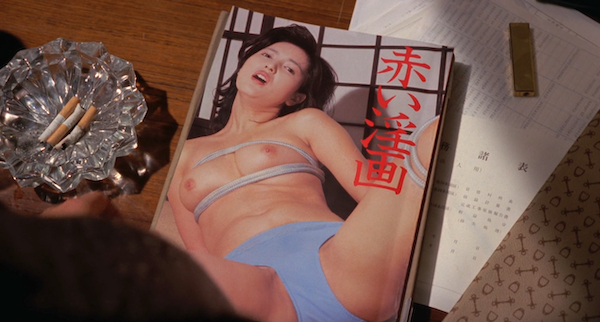
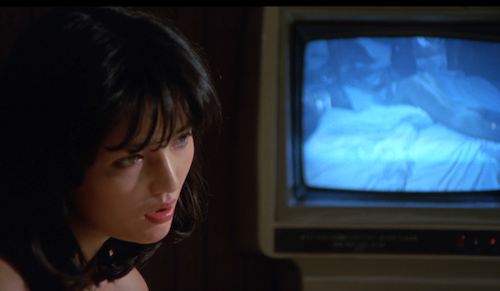
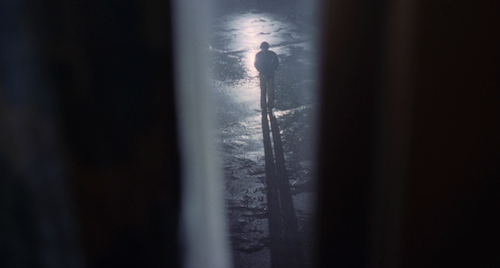
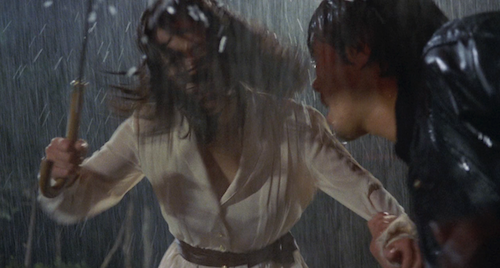
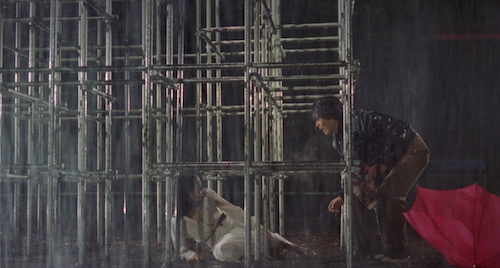
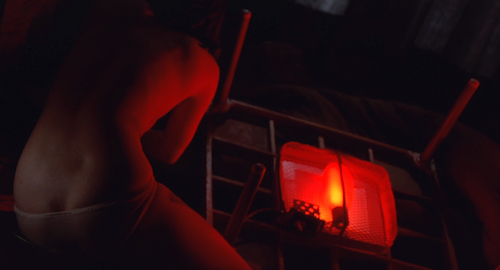
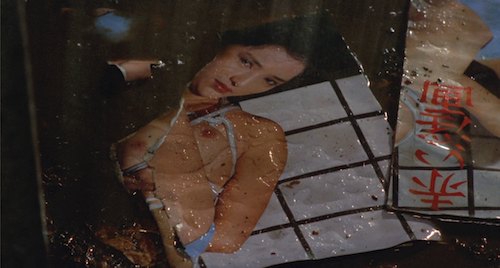
Nothing says Christmas like bondage and sadism. Fourth in a series of films, Tenshi no harawata: Akai inga is known in English as Angel Guts: Red Porno. It isn’t a porno film, though—it’s a roman porno film, where “roman” is short for “romantic.” Basically, the name is just a marketing gimmick dreamt up by the honchos at Nikkatsu Studios, which pioneered these softcore erotic films. They’re racy, yes. And often fetishistic in ways that boggle the mind. But pornographic? Not unless your own imagination supplies the “graphic” part.

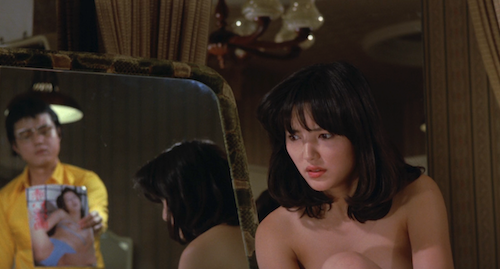
In this effort, the beautiful Nami Asada works in a department store and at the suggestion of a friend poses nude for a magazine called Red Porno. She’ll lose her job because of it, but in Nikkatsu’s fevered imagination Asada’s decision is the stepping off point to more serious problems. Her bondage themed pictorial is wildly popular, and generates interest from a man who lives nearby, spies on her, and possibly harasses her with pervert calls. At the same time there’s an exploration concerning whether the formerly conservative Asada has unleashed her true, kinky self.

While this is the main thrust of the story, the question of lonely men being susceptible to flights of egotistical fancy and sexual obsession is actually more interesting, especially because in this case it leads to mistaken identity and violence. But in dealing with this issue the film is rougher than most roman pornos, which we never consider to be a good thing. Do we forgive this one because it tries to make a serious point about male sexual desire often being aggressive in some way, shape, or form? No, not really. But you’ll have to decide on your own. Angel Guts: Red Porno premiered today in 1981.

Image
Image
Image
Image
Image
Image
Image
Image
Image
Image
Image
Image
Image
Image
Image
Image
Image
Image
Travelling by astral plane is a non-stop mindtrip.
Image
Image

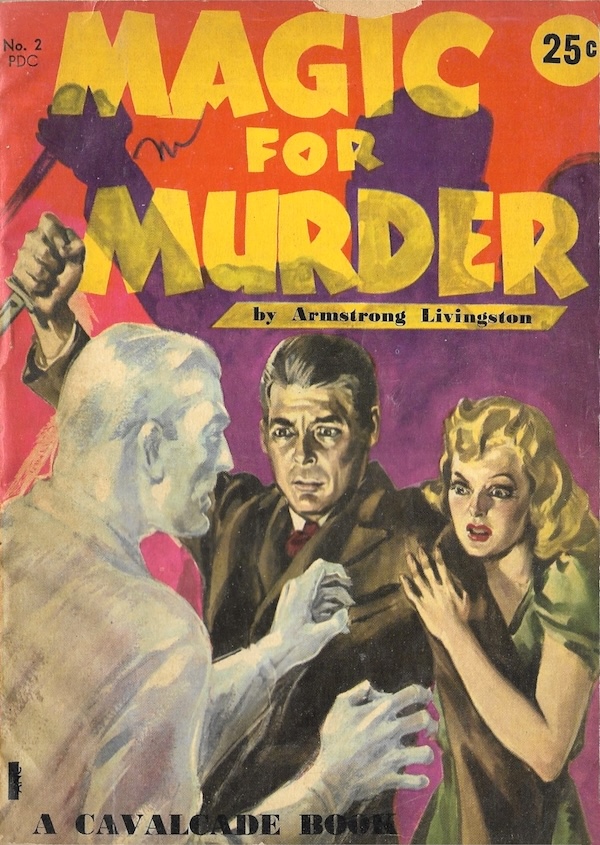
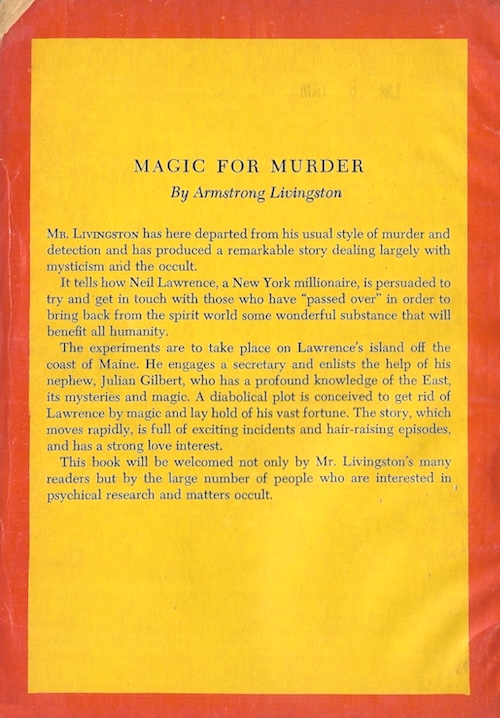
1945’s Magic for Murder was a random purchase, part of a group. We were eager to read it. Struggling writer Kenneth Adrie is hired to objectively document New York City millionaire Neil Lawrence and his cousin Julian Gilbert’s exploration of the mystical. For five hundred bucks the skeptical Adrie is all-in.

Lawrence and Gilbert, both of whom are highly experienced with occult matters, plan to project Lawrence’s astral self beyond the “great divide” to retrieve the Philosopher’s Stone, sought for centuries in every far corner of the Earth, but which they think resides in astral realms. The Stone was thought by ancient alchemists to be the key to transmuting lead into gold, mercury into silver, and glass into a flexible version of itself, as well as allowing lamps to burn eternally, plants to rejuvenate perpetually, and humans to live forever.

The experiments are to take place on Lawrence’s island off the coast of Maine. Adrie, Lawrence, and Gilbert, plus Lawrence’s daughter Janet yacht their way there, whereupon Adrie begins to suspect Lawrence will be transmuted from living to dead by means of a knife. Adrie is shown a vision in which it’s he who wields the weapon. But what’s actually going on? Is he truly going to murder his host? Are astral selves real? We’ll tell you, as enticement rather than spoilage, that the magic in Magic for Murder is real. Therefore, despite its old-fashioned structure, deliberate pacing, and remote characterizations, the uniqueness of the premise makes it a book to perhaps seek out. A little magic is always fun.

I finally hold the power of life and death in my hand. I could kick myself for having waited this long.
Image

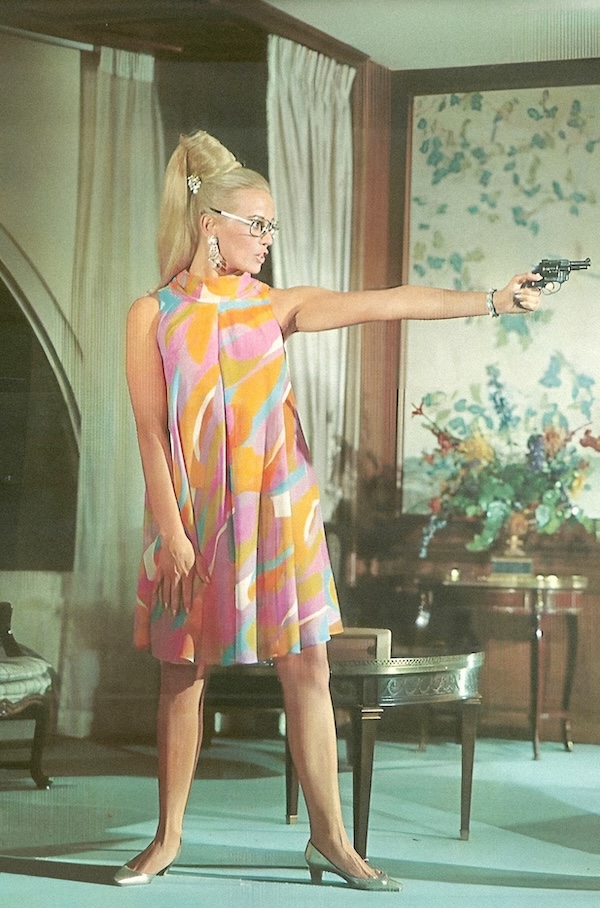
We have here a second promo image of Austrian actress Hannelore Auer from the 1968 spy movie film X: Drei blaue Panther, aka Kill Panther Kill. This one is even in color. We haven’t gotten around to the movie yet but we will. See the previous image here.

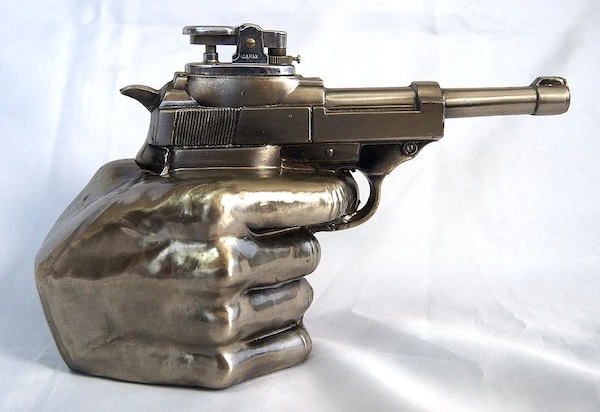
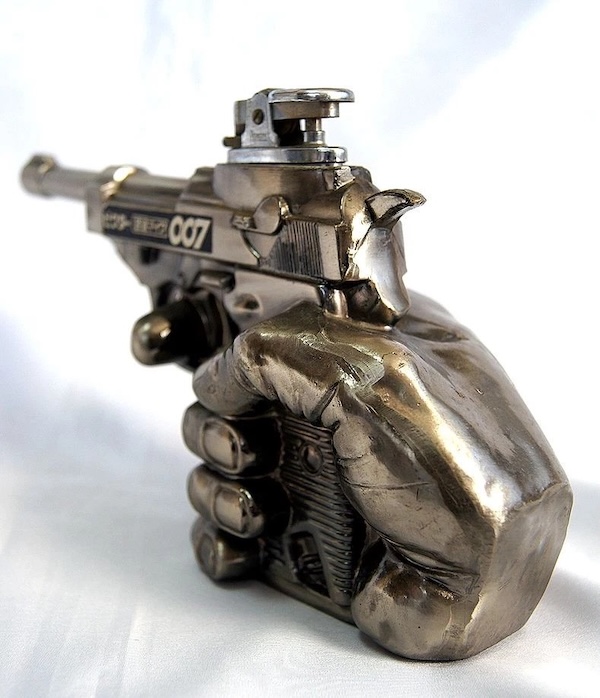
What do you get for the man who has everything except good taste?
Image

Finding unique Christmas gifts can be a difficult mission, but what man doesn’t need a disembodied, lethally armed bronze hand? This James Bond themed item, which we located on Ebay Japan, was manufactured by the Victor Company in 1981 and runs about eight inches in length by four high. It seems as if Victor execs didn’t do their research—Bond favored the Walther PPK pistol, but this hand holds what looks like a Luger. Details, details. We also don’t remember reading that he had an oversized right thumb. Maybe the person you’re shopping for won’t mind those minor quirks. If they do, perhaps they’ll be impressed that the pistol doubles as a lighter, which makes it not just ornamental, but practical. Our shelves are already full of creepy curios, so this isn’t something we’d buy, but just the same, we almost want to.

Image
Image
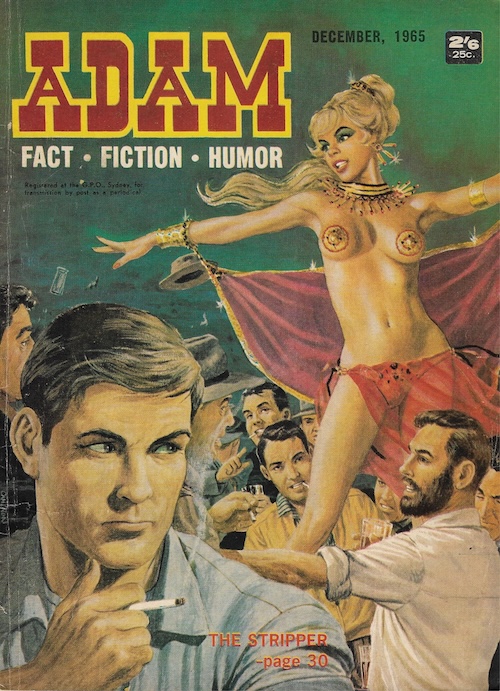
When she says she performs every night for a bunch of animals it's a metaphor—but just barely.
Image

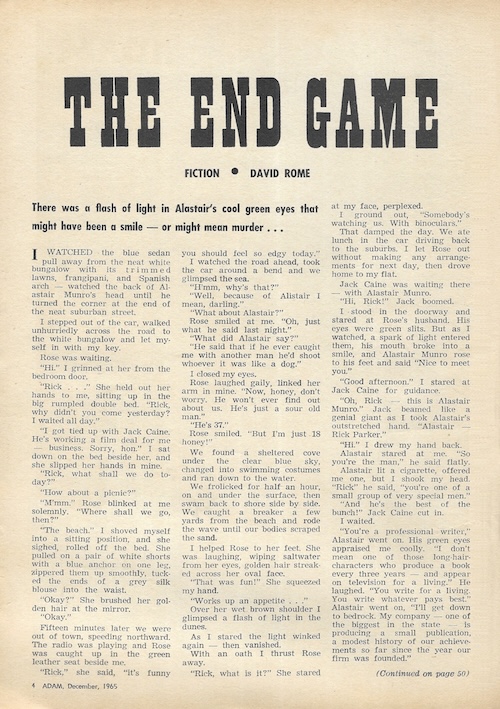
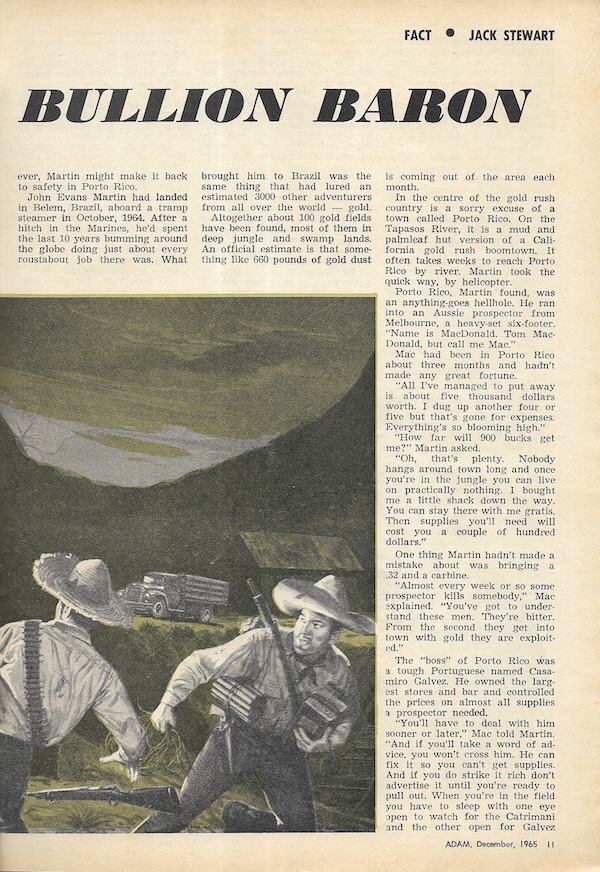
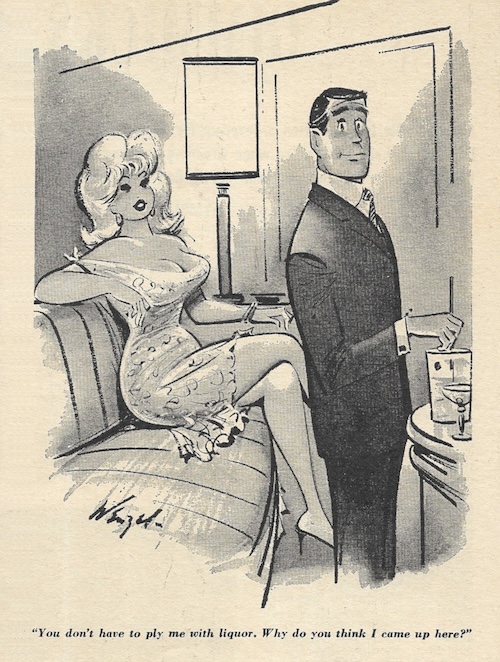
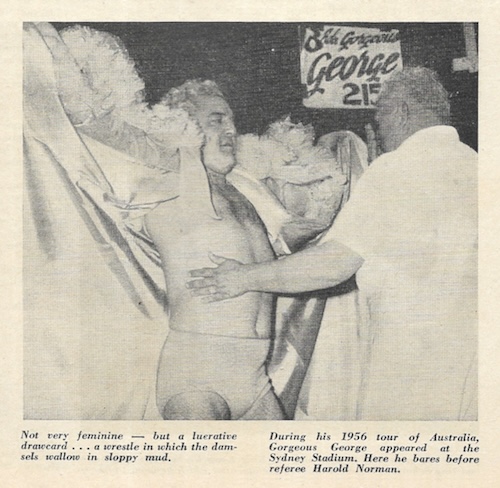
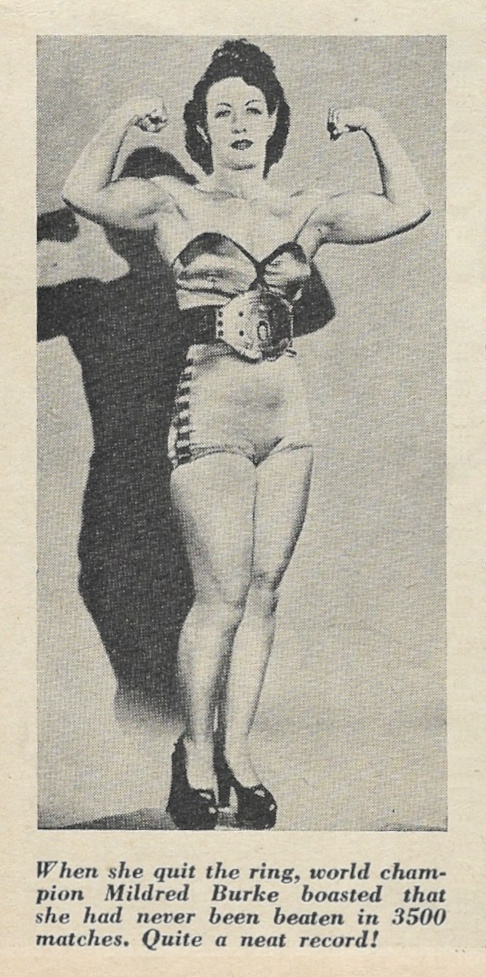
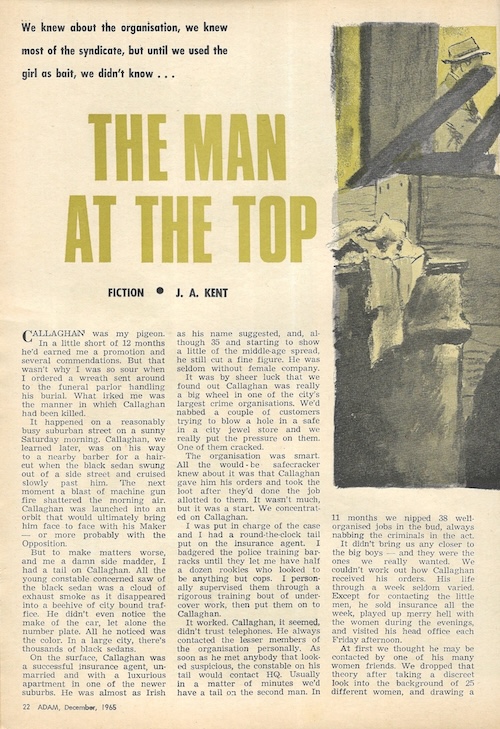
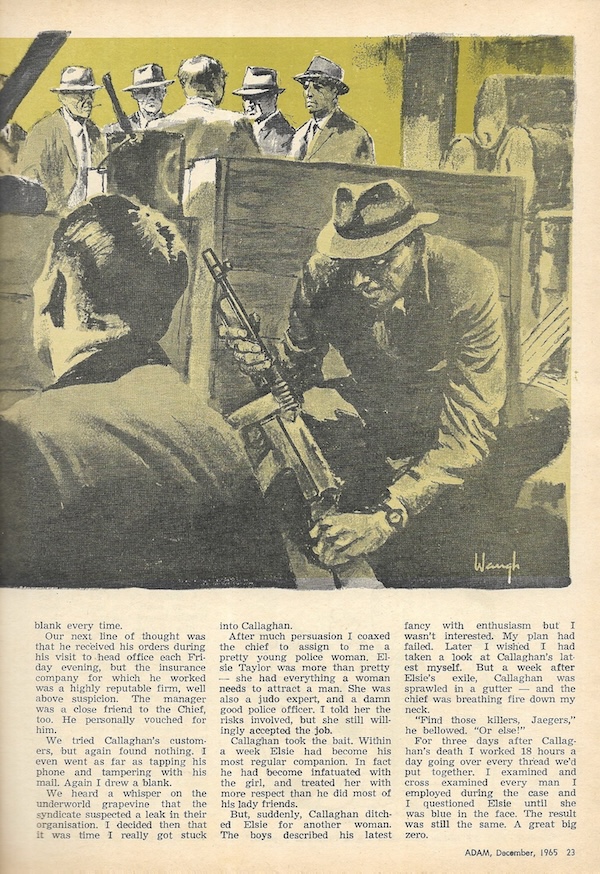
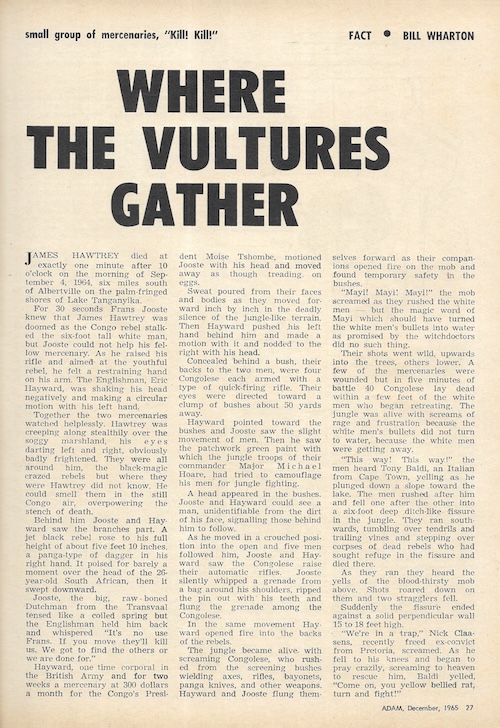
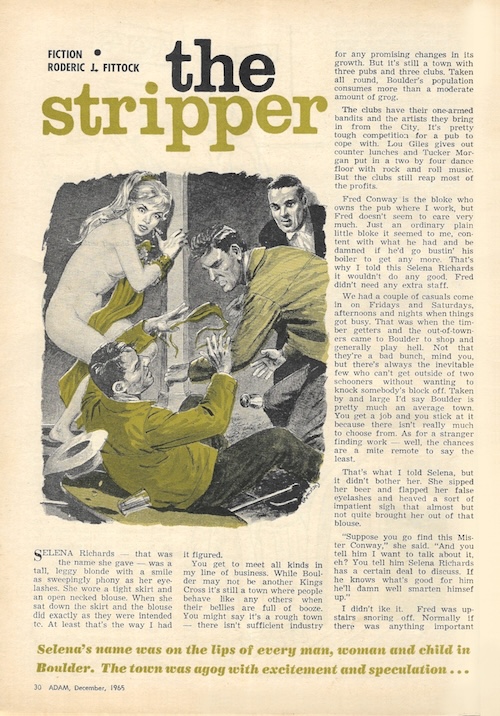
It’s too bad Adam magazine never credited its covers. They were painted mainly by Phil Belbin or Jack Waugh, but we’ve never reached the point where we can tell for sure who painted which. This is an especially nice one, in our opinion, with art that pairs with Roderic J. Fittoc’s tale “The Stripper.” This is the second time we’ve run across Fittoc in an Adam, but he’s left no impression elsewhere in the literary world that we could find. His story is about femme fatale Selena Richards, who shows up in an outback town and wheedles her way into a stripping job at a rough and tumble bar. She’s a sensation who sends the patrons into a lustful frenzy, even triggering a riot one night, but she’s also the vanguard of a crew of outlaws. On a particular night when she dances, and every man is present to see her lascivious act, the crew plan to rob the rest of the town. It’s a decent idea for a short story, adequately executed. When it comes to short fiction Adam was always reliable. Below in thirty scans are more stories, several glamour models, wrestlers Gorgeous George, Mildred Burke, and King Kong Kashey, and art by Waugh and others. What’s not to love about this magazine?

Image
Image
Image
Image
Image
Image
Image
Image
Image
Image
Image
Image
Image
Image
Image
Image
Image
Image
Image
Image
Image
Image
Image
Image
Image
Image
Image
Image
Image
Image
The good news is they qualified for a ton of frequent dier miles.
Image

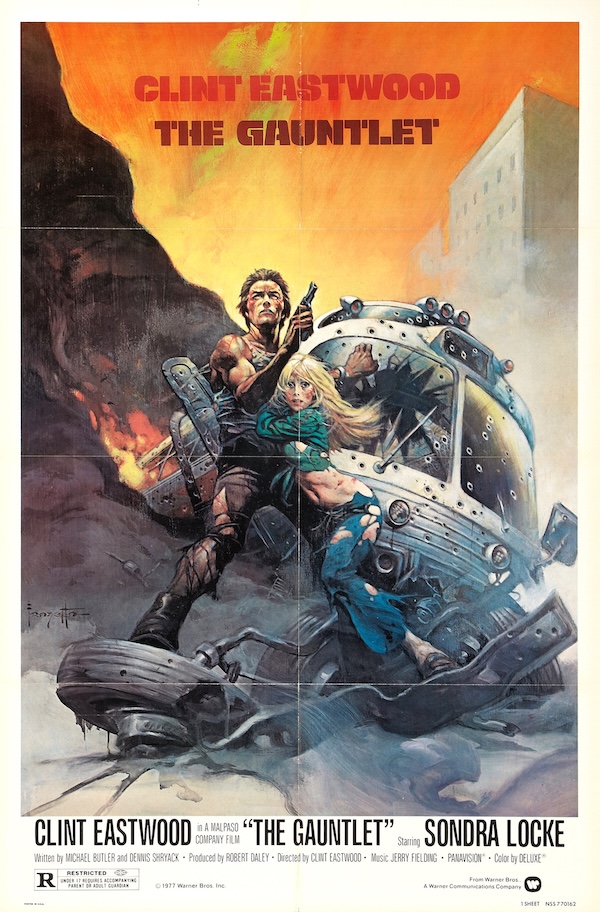
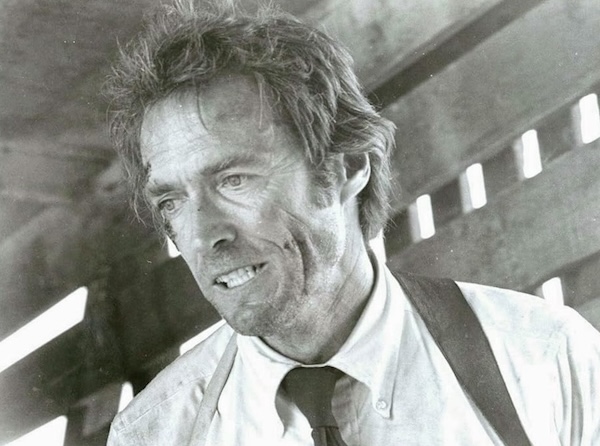
We were led to the Clint Eastwood drama The Gauntlet by its promo poster from Frank Frazetta, the generally agreed upon wizard of sword and sorcery art. We’ve featured him a little, such as here, here, and here. We didn’t know anything about the movie’s plot at all. We quickly found it, queued it up, and sat back to check out an Eastwood movie we hadn’t seen—a rarity.

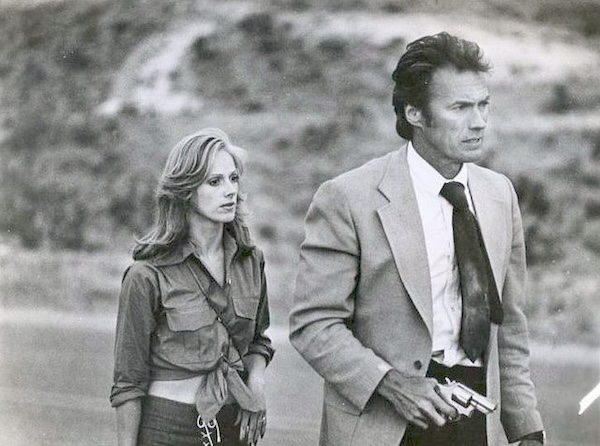
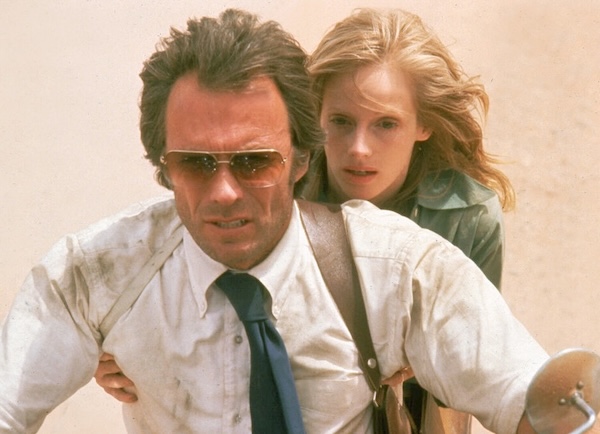
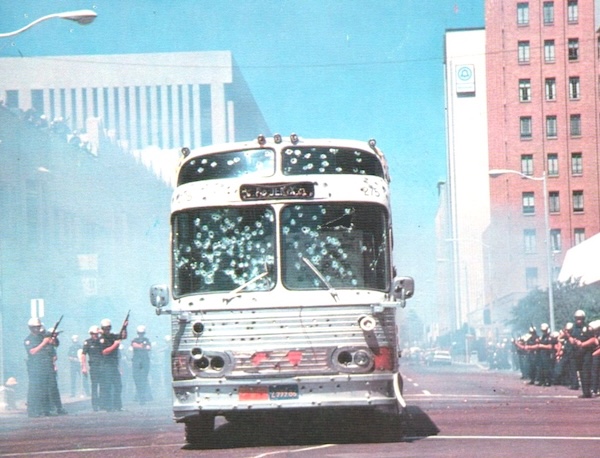
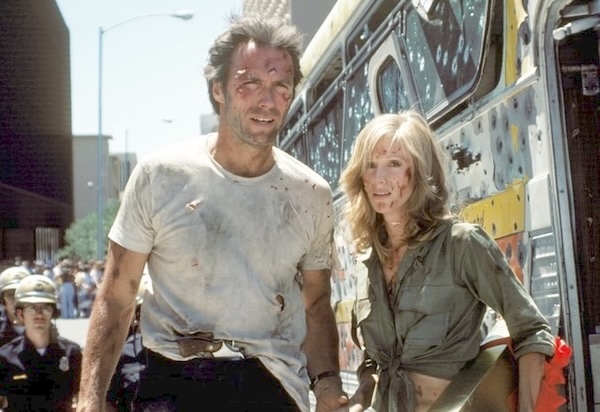
He plays a gruff, rebellious cop sent to escort trial witness Sondra Locke from Las Vegas to Phoenix by plane. When mobsters try to kill her via various unlikely means, his transportation options—which quickly range through an ambulance, a rental car, and a motorcycle—are finally reduced to a bus that he packs with plate steel to make it bulletproof.

The Gauntlet was Eastwood’s eighth directorial effort, and was voted one of the year’s worst films by the Phoenix Film Critics Society. We don’t think it’s that bad, but it certainly isn’t very good. It hits some stupidly broad notes, such as when an empty liquor bottle falls out of Eastwood’s car to let us know he likes to drink, and a bunch of bikers are driven to attempt rape after being called “fairies.”

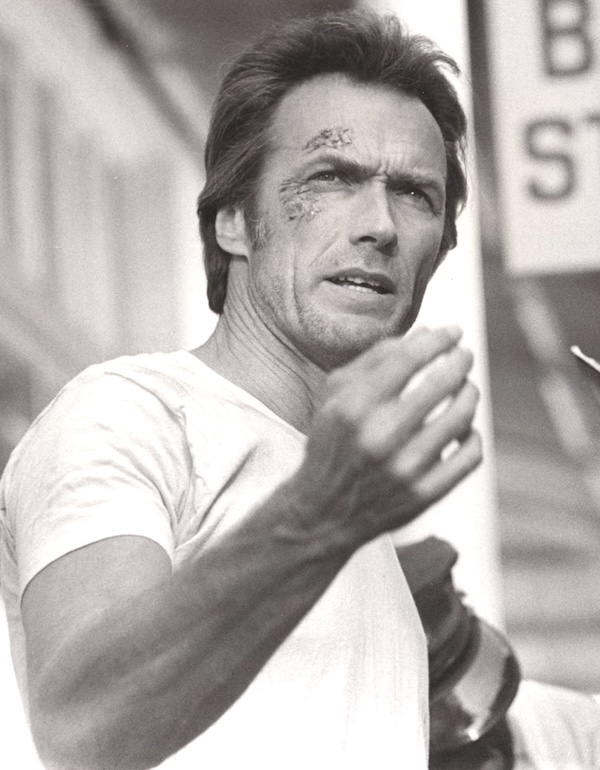
In addition, the mobsters’ attempts to knock off Locke are a bit ridiculous, and the traitor in the plot is obvious by minute eight. Still, the movie is Clint in full grunt-and-grimace mode and that’s worth something. During filming each take he was probably: “Okay, cut! Let’s do another, and I’ll crinkle my eyes more this time.” As the saying goes, you do you. Mainly we wanted to share the above piece by Frazetta. It’s a reminder to us that we should feature him more.

Image
Image
Image
Image
Image
Image
Image
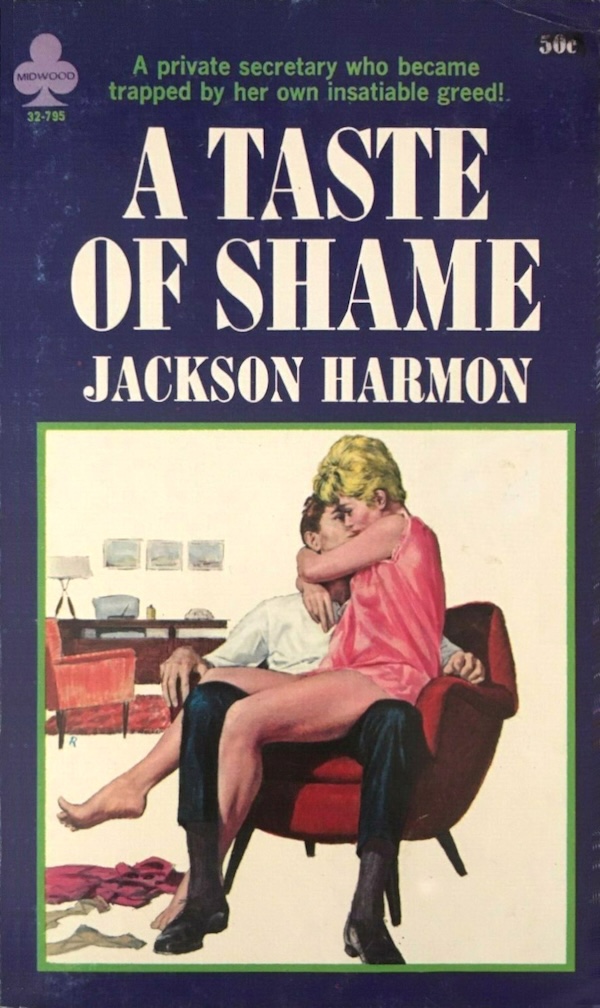
I've been your secretary for a week now. When do I get a chair and a desk?

Image

It’s back to the office—here’s yet another cover from possibly the most fertile sub-genre of sleaze literature. Jackson Harmon’s A Taste of Shame is from 1967 with Paul Rader art. It looks sort of repurposed, but we can’t find any books with the same painting. The cut down framing reduces its impact, which is a bad move when the illustrator is a genius. If you’re unimpressed by Rader, you can click his keywords to enjoy him on full display, but if you’re time-pressed, you can take the short route and see a few brilliant examples here, here, and here.


Image
Femme Fatale Image

ABOUT

SEARCH PULP INTERNATIONAL

PULP INTL.
HISTORY REWIND

The headlines that mattered yesteryear.

1981—Hoagy Carmichel Dies

American singer and songwriter Hoagland “Hoagy” Carmichel, composer of such American classics as “Stardust,” “Georgia On My Mind,” and “Heart and Soul,” and actor in films such as To Have and Have Not, dies of heart failure in Rancho Mirage, California.

1919—Ruth Goes to Yankees

Boston Red Sox pitching star Babe Ruth is sold to the New York Yankees by owner Harry Frazee. After moving to the Yankees, Ruth’s transition from a pitcher to a power-hitting outfielder becomes complete. In his fifteen year Yankee career, consisting of over 2,000 games, Ruth rewrites the record books in terms of his hitting achievements, while making only five widely-scattered token appearances on the mound, winning all of them.

1946—W.C. Fields Dies

American vaudevillian and film star W. C. Fields, whose renowned hard-drinking, misanthropic persona was only partly an act, dies from a stomach hemorrhage in a Pasadena, California hospital.

1977—Charlie Chaplin Dies

British comedian, actor, and director Charlie Chaplin, who at the height of his fame had been targeted by reactionary commie-hunter Joseph McCarthy and FBI head J. Edgar Hoover, with the result of forcing him out of Hollywood, dies in his sleep in Vevey, Switzerland.

1968—Apollo 8 Orbits Moon

The crew of Apollo 8 enters into orbit around the Moon, becoming the first humans to do so. They perform 10 lunar orbits and broadcast live TV pictures that become known as the Christmas Eve Broadcast, one of the most watched programs in history.

A Peter Driben paperback cover for W. T. Ballard's Say Yes to Murder, from 1943. Driben was mainly a magazine illustrator, so this cover is rare.
Uncredited but dynamic cover art for Clyde B. Ragsdale's The Big Fist.
Italian artist Benedetto Caroselli illustrated this set of predominantly yellow covers for Editrice Romana Periodici's crime series I Narratori Americani del Brivido.

VINTAGE ADVERTISING

Things you'd love to buy but can't anymore

Vintage Ad Image

Around the web