Today is 7.4.2022, and the Hugo Awards finalists have just been announced. The winners will be presented quite late at this year’s Chicon 8 1.-5.9.2022.
You may have noticed that I’m not posting regularly these days. That’s because I’m in gaming mode. I can’t say if or how many of those works I’m going to review. If so, I’ll update this post, of course
As an additional service, I try to find the online available versions and link them in the list. Please note, that I’ve left out categories which are less interesting to me.
Finalists
All the nominees from short to long (links in the title lead to online available versions):
Nominees for Best Short Story
★★★★☆ •Mr. Death • 2021 • Humorous ghost short story by Alix E. Harrow • review
To my English speaking followers: This omnibus contains two novels, The Word for World is Forest and The Telling. Reviews for both are available via links in the titles.
Ursula K. Le Guin ist nicht nur bekannt für ihre Erdsee-Fantasy Romane, sondern auch für ihre SF Werke, allen voran der Hainish-Zyklus. Umrahmt durch ihren gemeinsamen Weltentwurf können die Romane unabhängig voneinander gelesen werden. Wenn zwei von ihnen jedoch wie hier in einem Band gesammelt werden, ergibt sich eine wunderbare Gegenüberstellung und ein zusätzlicher Blickwinkel.
Die Auswahl von “Das Wort für Welt ist Wald” einerseits und “Die Erzähler” andererseits ist spanned in mehrerlei Hinsicht. Zum einen umspannen die beiden Romane mehr als dreißig Jahre Erzählens in diesem Universum, wobei Wort für Welt ist Wald in der sehr frühen Phase um 1968 entstanden ist, wohingegen “Die Erzähler” als letzter Hainish-Roman entstand. Zum anderen ähneln und ergänzen sie sich auch inhaltlich, denn bei beiden geht es um eine Kultur, die von einer technologisch fortgeschrittenen, aber zugleich ethisch zurückgebliebenen Kultur unterdrückt wird.
Widmen wir uns zunächst dem Kurzroman “Das Wort für Welt ist Wald”:
James Cameron’s Film “Avatar” liegt nun bereits wieder etliche Jahre zurück. Wer ihn gesehen hat kann sich sehr schnell in den Roman hineinversetzen, der sich beinahe wie eine Vorlage für den Film liest: Da gibt es den Wald, Ureinwohner (die hier grün statt blau sind und vielleicht ein Viertel so groß). Weiter gibt es den soldatischen Antagonisten und schlußendlich der Sieg des Guten über das Böse. Selbst das lucide Träumen der nativen Athsheaner findet ihren Widerpart in der Verbindung zum Avatarbaum.
Wer Le Guin liest, sollte an sich keine Feuerwerk an Action erwarten. Ihr literarischer Stil ist eher geprägt von introspektiven Anteilen und bedachtsam, oftmals lyrisch. Jedesmal wenn ich eines ihrer Werke lese, berührt etwas davon meine Seele. Hier jedoch gibt es ungewöhnlich viele Kämpfe zwischen Athsheanern und Terranern, die das Lesen recht kurzweilig machen.
Die Autorin entwickelt oftmals eine exotische Kultur, anhand derer sie unsere Gesellschaft reflektiert. Faszinierend ist in dieser Geschichte ihr Entwurf zum luciden Träumen. Tatsächlich gibt es auch in unserer Welt indigene Gesellschaften, die sich von Träumen stark leiten lassen. Bei den Athsheanern geht das soweit, dass sie denken die Terraner seien wahnsinnig, da sie so wenig Kontrolle über ihren Schlaf und Träume haben.
Die Handlung folgt zwei Freunden. Der eine ist ein terranischer Forscher Davidson, der sich gegen das unterdrückende und arrogante Regime durch seine Firma wendet. Der andere ist der Athsheaner Selver, der zunächst nur den Mord seiner Frau an dem terranischen Hauptmann rächen möchte. Er führt einen Aufstand der eingesperrten Athsheaner herbei, der schließlich in einem Volksaufstand mündet. From Zero to Hero sozusagen.
Le Guin schrieb den Roman ursprünglich 1968 als Reaktion auf den Vietnamkrieg. Harlan Ellison erkannte sofort das Potential der Geschichte und veröffentliche sie 1972 im Rahmen seiner zweiten SF-transformierenden Anthologie “Again, Dangerous Visions”. Sie wurde mit dem Hugo-Award ausgezeichnet und sehr häufig wiederveröffentlicht.
Die politische Verbindung mag damals relevanter gewesen sein als heute, aber der Roman leidet nicht darunter und ist auch in unserer Zeit äußerst lesenswert.
Der zweite Roman des Bandes ist “Die Erzählung” und Le Guin’s letzter Roman im Hainish-Universum. Danach schrieb sie nur noch eine Kurzgeschichte, man kann es also durchaus als Abschlusswerk betrachten. Auch dieser Roman kann unabhängig von den anderen gelesen werden, und die Reihenfolge im Buch ist ebenfalls nicht ausschlaggebend.
Der Roman folgt Sutty, eine Inderin und Sprachexpertin, die als Diplomat für das Hainish-Ekumen auf dem Planeten Aka arbeitet. Aka war noch vor ein paar Jahren ein Hinterweltplanet. Dann kamen die Hainish und die Gesellschaft dort wandelte sich um in eine fundamentalistische, technophile Monokultur.
Sutty erlebt eine Mischung aus politischen und religiösen Konflikten zwischen einem autoritären und unterdrückerischen Zentralstaat und einer indigenen Kultur. Der alte Glauben und die damit verbundene Kultur sind gänzlich verboten.
Es dauert einige Zeit, bevor Sutty die sterile Hauptstadt mit seinen “Produzenten-Konsumenten” verlassen darf und ein Ausflug in das rustikale Hinterland genehmigt wird. Dort erhofft sich Sutty die Begegnung mit Resten aus den alten Gebräuchen.
Tatsächlich findet sie Reste und Anzeichen der (verbotenen) Erzähltradition, von der sich der Titel ableitet. Als Leser denkt man sofort an Tibetanische Praktiken unter der Chinesischen Kulturrevolution, die auf Aka “der Marsch zu den Sternen” heißt. Sutty vertieft sich immer mehr in diese faszinierende Kultur, versucht (verbotene) Bücher zu finden und lernt (verbotene) Übungen. Immer auf ihren Fersen ist ihr dabei ein Regierungsagent, der versucht, die letzte (verbotene) Bibliothek zu finden.
Suttys neue Freunde führen sie schließlich tief in die Berge zu einem alten Kloster.
Können Sutty und das Ekumen diese Kultur vor der Ausrottung bewahren?
Ich denke, die Ähnlichkeit der beiden Erzählungen liegen auf der Hand, sind aber unterschiedlich genug, um beide lesenswert zu sein.
In diesem Roman übertreibt Le Guin etwas ihre Liebe zum Taoismus und ihre Kritik an der industriellen Revolution, was etwas plump und langwierig wirkt. Andererseits kann man dem Roman nicht absprechen, auch über 20 Jahre nach der Veröffentlichung noch absolut relevant zu sein, angesichts der Chinesischen Repressionen gegen ganze Völker in in ihrem Herrschaftsbereich.
Die Erzählung ist nicht abgehoben oder esoterisch, der Leser kann förmlich Gerüche, Geräusche, Farben und tägliche Rituale fühlen. Das ist pure Immersion!
Auch fällt es leicht, sich in Sutty hineinzuversetzen. Ausgehend vom Horror des unterdrückerischen Staates geht einem die Schönheit der Kultur der Landbevölkerung sehr nahe.
Nun noch zu meiner Empfehlung: Leser, die Le Guins Hauptwerke “Die linke Hand der Dunkelheit” und “Planet der Habenichtse” noch nicht gelesen hatten, sollten dies zuerst nachholen. Vor allem, weil sie einfach grandios sind und aus meiner Sicht ein “Muss” für Genreliebhaber darstellen. Erst danach empfehle ich den vorliegenden Band.
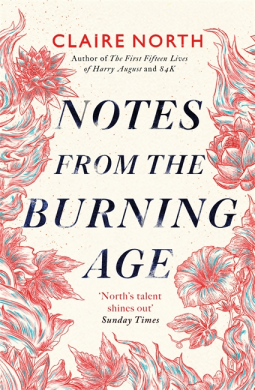
Synopsis: The “Burning Age” is our near future when the Earth itself rebels, using mystical nature spirits called the Kakuy “angels, or devils, guardian voi or djinn of fire and sea” to wipe away humanity by fire, plague, or simple physical stomping at bodies.
The novel is set some centuries in the post-apocalyptical future when the sins of our time, the greed, the climate crisis, most of the technology, are carefully redacted and tended by a monk like order called the “Temple” in precious vaults of data.
Some technology like solar panels, wind turbines, or information technology have survived. People might have heard of combustion engines, but fear to use them because the Kakuy could wake up from their slumber at any time. Instead, they use bicycles mostly.
The novel follows Middle-European Ven who is one of a few people of his time to have spotted a Kakuy. He becomes a priest, learns dead languages like English or German to translate the Notes of the Burning Age. Many are forgeries, most contain silly content like WhatsApp conversations, or porn. But here and there are valuable “heretical” information about technology. Ven goes rogue and sells the information outside of his monastery, ends up disgraced. He works as a bartender in the city of Vien at the beautiful river Ube.
Ok, you’ve got that probably: all those Middle-European names are a little bit twisted, just like the Danube got the “Ube”. The stories touches many of the Middle-European cities like Vienna, Budapest, Bukarest, or Belgrad, finally reaching Istanbul.
There is an organization called the “Brotherhood” who wants to break free from the reclusive rule of the monasteries, who want to return to humanity’s former state of knowledge, including the atomic bomb, strip mining, and sub-prime mortgages. They want to free humanity from the Kakuy. Their leader Georg has access to heretical data passed to him by a spy. Here Ven comes into play, because Georg needs him to validate and translate the data.
If Georg only knew that Ven is really a spy, passing everything what he does to the Temple. Soon enough, a game of spy vs spy comes up, Ven has to start a reckless flight through half of Europe, diving from one ugly situation to the next one.
Review: I so much wanted to like this. A book spy! Magical Futurism! My home river, the Danube! Many places where I’ve been like Vienna, or Budapest!
Why didn’t it work for me? I nearly DNFed it after 20% in, because it dragged on and on. I soldiered through, because I loved other works from the author. And indeed, the middle-part was a breathless action plot. Only, that it was too much: Too many recurring situations where I thought “yet another XYZ”. Half of it would have perfectly well transported the needs and situation without giving up anything. The plot really wasn’t driven forward by yet another flight to yet another station.
The Who’sTheSpy mystery was resolved in a single exposition within the last 10% of the novel which I didn’t like at all.
It remembers me too much of Miller’s “Canticle for Leibowitz” (review), and not in a good way. I’d recommend rather to read that one.
Meta: GoodReads. UK hardcover publication date is 10.02.2022 by Orbit.
Synopsis This novel is set in the Hainish universe, Le Guin’s last novel in that cycle and also the first Hainish novel after her phenomenal The Dispossessed (my review). You can read it perfectly well as a standalone, although I recommend reading her Left Hand of Darkness and The Dispossessed first – not because there would be a huge logical connection beside the general setting, but because these two novels are the magnum opus of Le Guin.
The Telling follows Sutty, a human from India and a specialist in language and literature, working as a diplomat for the Hainish Ekumen on planet Aka. Aka was a backwater planet some years before and its society transformed heavily towards a fundamentalist monoculture with technophilic orientation due to Hainish technology advancements.
Sutty experiences a mix of political and religious conflicts between a horrible suppressive central government and an indigenous culture. The old beliefs and customs have been banned by the state. It takes a long time before Sutty is allowed to leave the controlled environment of the sterile capital city with its “producer-consumers” into the rustic country-side where the indigenous people live.
There, she slowly finds traces of a (forbidden) oral tradition, the titular Telling – imagine Tibetan practices in a Chinese environment during the Cultural Revolution, or in Aka’s terminology “The March to the Stars”. She digs ever more into this fascinating culture, trying to find (forbidden) books and learn (forbidden) practices. Ever hard on her heels is a government agent who tries to find the last (forbidden) library of the indigenous people.
Despite the fact that it was all banned, all illicit, people talked to her quite freely, trustfully answering her questions. She had no trouble finding out about the yearlong and lifelong cycles and patterns of feasts, fasts, indulgences, abstinences, passages, festivals. These observances, which seemed in a general way to resemble the practices of most of the religions she knew anything about, were now of course subterranean, hidden away, or so intricately and unobtrusively interwoven into the fabric of ordinary life that the Monitors of the Sociocultural Office couldn’t put their finger on any act and say, “This is forbidden.”
Sutty’s new found friends suffer on the agent’s repressions, though they secretly accompany Sutty deep into the mountains to find an old monastery and center of wisdom.
Can Sutty and the Ekumen save this culture who is about to get completely destroyed?
Review A human visitor witnessing the traditions of a strange culture is the essence of Le Guin’s anthropological SF. The Telling doesn’t deviate from that topic. It features Le Guin’s interpretation of industrial revolution, Taoism, and Chinese long way to modernity, and is as such relevant as 20 years ago when it was published.
The author’s narration feels grounded, as the reader can immerse into smells, sounds, colors, and every day rituals
Yellow of brass, yellow of turmeric paste and of rice cooked with saffron, orange of marigolds, dull orange haze of sunset dust above the fields, henna red, passionflower red, dried-blood red, mud red: all the colors of sunlight in the day. A whiff of asafetida. The brook-babble of Aunty gossiping with Moti’s mother on the verandah.
It’s not everywhere as flowery as this citation, but you can get the gist of it. Add to this lucid prose a good portion philosophical explanations, an extremely rich setting filled up to the last nook, and remove any notion of a juicy Space Opera’s spaceship battle.
On the negative side, I found the novel somewhat heavy-handed in messaging, and burdened with exposition.
I didn’t need the action to get moved and involved. Starting with the horrors of an oppressive state it soon soothed my reading tastes with the beauty of upcountry traditions.
The novel is linked to a similar novella, The World for World is Forest (review) which has also pacifist people with a strange tradition threatened by Terrans. But this novel is not yet another retelling of the same topic. It expands and transports the reader to a rather new world and situation, extrapolating Asian issues to a different planet to provide the reader with a different angle. That’s SF’s core value!
While it doesn’t have Left Hand of Darkness’s outstanding quality, the novel nevertheless won the Locus Award and is well-worth reading, didn’t age at all. Time to immerse yourself in another book by Le Guin!
Interested in other reviews of Le Guin’s works? I’ve read much of her work but not reviewed enough:
At the start of each year, Locus publishes a consensus list from several editors, columnists etc (like Strahan, Horton, Clarke,…) a list of recommended readings of the last year. If you’re looking for previous years: 2020 is here, and 2019 is here. Now, the new one for year 2021 has just been published.
I don’t copy the whole list, but pick out the sections I’m most interested in (e.g. no YA, Horror, Art). I’ll add links to my reviews over time, and links to online available works where applicable. Consider this a work in progress 🙂
NOVELLAS
A Blessing of Unicorns, Elizabeth Bear (Audible Originals 10/20; Asimov’s 9-10/21)
A Psalm for the Wild-Built, Becky Chambers (Tordotcom)
“Arisudan”, Rimi B. Chatterjee (Mithila Review 3/22/21)
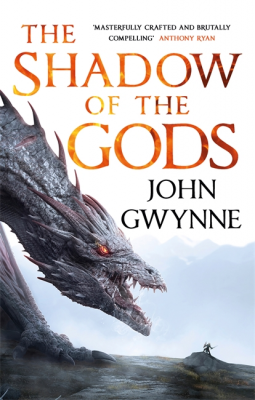
Synopsis: It is 300 years after the twilight of the gods, when the gods killed each other. Their tainted children, all those who have the blood of the gods within them, life as thralls in the Norse land of Vigrið.
The story follows three warriors: Varg is a former thrall who seeks revenge for the murder of his sister, if only he knew them. He is about to find a new home among a group of mercenaries called the Bloodsworn. Orka is a mother and a warrior on a mission to find her kidnapped son and take vengeance. Elvar seeks battle-fame and an undying name among another group of mercenaries, the Battle-Grim, who hunt trolls and other tainted because they give good money.
“You are Berak Bjornasson, and the blood of the dead god Berser flows in your veins. You are Tainted, you are Berserkir, and you are wanted by three jarls for murder, blood-debt and weregild. And now you are mine,” Agnar said, and smiled. “You will fetch a fine price.”
All three have some mystery in their past which unfolds only late in the story.
Review: Shadow of the Gods starts a new series, The Bloodsworn Saga, by John Gwynne. I haven’t read anything yet by this prolific author, but it shows that this isn’t his first novel. One can literally feel how much Gwynne, a Viking re-enactor, loves the Nordic way of living with all its mythology.
He sprinkles his love with a lot of world-building, stuffed with Islandic terms and sentences. You’ll find blóð svarið, a blood oath, or nålbindingcaps, and other terms similarly like the typical Nordic trope of blood eagles. The only negative thing I can say about strange terms is Gwynne’s notion of “thought-cage” for the mind – he uses it so often, 70 times in summary, and each time it drew me out of the immersion.
Magic goes through runes and Icelandic sentences:
Blóð drekans, lík rífa, voldugur, sameina og binda, brenna þessa hindrun, opna leið fyrir herra okkar
The reader doesn’t need to know the meaning (though my ebook reader readily translates them on the fly), but they let you immerse yourself in this world just like all the well-chosen names do. Those battle descriptions with shield-walls, stabbing spears, wounds, shouts will suck you in and provides a sense of reality opposing the otherwise clear Fantasy setting.
It’s not exactly our mediaeval Viking world. The gods of Vigrið were real there, magic is happening right now, and their god-blood gives the Tainted advantages in battle that others can only dream of. It is an original world, mixing elements from Bernard Cornwell’s Last Kingdom series (including “arselings”), and Viking’s Lagertha and Ragnar Lothbrok plus a lot of magic and gods. A world which is as beautiful as cold, and Gwynne invites you to live within its snowy landscapes.
Gwynne takes his sweet time setting up the novel. Not that there aren’t enough fights, sense-of-wonder, or suspense in the first half. But the story doesn’t clarify, where all is heading to, why there are three characters, and what they have to do with each other. While this might sound slow, it isn’t: the story sucked me in and kept me on my toes from start to finish. Towards the end I pushed through in a marathon read, because I couldn’t put it down anymore.
All three main characters are interesting, and well-motivated. Some readers will prefer Orka as a tough mother, and the only one fighting for her own instead of being part of a warband. Elvar’s story is slower in the first half and really takes speed in the second half. For me, it was Varg and his way into the Bloodsworn mercenaries. Both groups of mercenaries have secondary characters which are fully fleshed out and have interesting stories of their own right. They remember me of Glen Cook’s Black Company. Yes, it’s a harsh and dark world, full of murder, aggression and fighting.
I’m very looking forward to the second book in the Bloodsworn saga, The Hunger of Gods, which is about to appear this April.
Highly recommended for fans of darker, epic fantasy with multiple point of views, full of scary monsters, magic, and gods.
Meta:GoodReads. Published in the UK at 27.01.2022 by Little, Brown Book Group
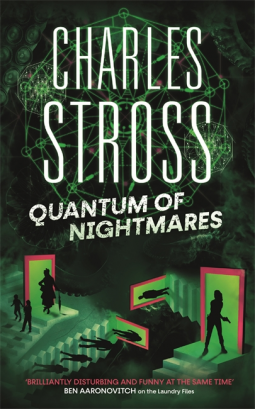
Synopsis: Quantum of Nightmares is the sequel to Dead Lies Dreaming, set in an alternate London in the Laundry Files universe, but with a fresh start of characters and topics.
The book takes up exactly at the point where it left Dead Lies Dreaming: Eve Starkey sent her boss Rupert into oblivion. Now she’s in charge of the company. Searching through a secret stash she finds out that her boss has set up lethal magical and physical traps for her. He wants to get back from literal hell through some occult ritual involving human sacrifices. The order’s base where such a ritual will be conducted is located on one of the smaller Channel Islands modelled after Sark. Rupert bought the island and profits from its feudal governance with mediaeval laws. She gets help from her brother and his heist gang, the “Lost Boys”, just like in the first novel.
There is also Wendy Deere who investigates a London-based supermarket chain. They are testing bleeding-edge technology, robots automatically boning livestock and feeding the meat into a 3D printer which produces customer-specific meat products.
Eventually they plan to have vats full of animal tissue culture in every branch, feeding it to 3D printers on the deli counter – meat products without animal cruelty and the risk of another Mad Cow Disease epidemic.
Just wait for those mincemeat golems (no, that’s no joke) called “meat puppets” to replace the expensive human workforce!
A third plot line involves Mary, stepping in as a nanny for the children of two superheroes who are about to leave for some super-urgent mission abroad. Now, that one isn’t a cute Poppins at all, but she has the mission to kidnap the kids. If only the children wouldn’t have powers of their own, the job would be far easier.
The little girl’s face was buried against the side of her neck like an infant vampire, but her quivering shoulders signaled manipulative sobbing rather than sanguinary suckling.
Review: Stross kept the comical style from the first novel, but strengthened the horror aspect by a multitude. When it was light horror in the predecessor, it includes absolute disgusting details up to projectile vomiting here. You have a sensitive stomach? Do yourself a favor and don’t dive into this novel’s guts and bloods. The synopsis’s hint of meat production should be enough to figure out what I’m talking about. If you get any Sweeney Todd vibes, that’s totally intentional!
There are a lot of funny situations and dialogues where I had to laugh out loud. They just couldn’t counter the super bad feelings I’ve got from the nauseating descriptions.
Usually, when I soldier through such revolting parts and make it past the halfway-through mark, I continue to the end. This novel had a special, extremely uncomforting and disgusting sentence at around 75% for me:
Remember, work sets you free!
If anyone of you doesn’t recognize this idiom, let me tell you that it’s a Nazi slogan “Arbeit macht frei” at the entrance of concentration camps.
This crossed a red line. Coming out of nowhere, without context, this idiom isn’t funny at all, and I consider it unacceptable to include it that way.
I could barely go on.
Mind you, the novel has its qualities. It’s a fast page-turner, a superhero thriller with Cthulhu vibes, just like the first volume. But Stross turned up the volume of all the elements I hate, especially of horror and disgust factor. If you like those and you’re not especially sensitive about holocaust, then you will like this book.
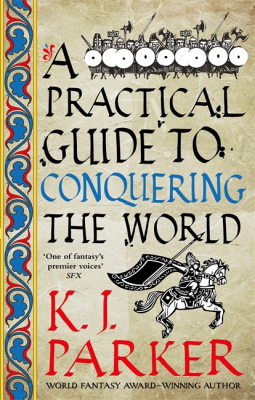
Synopsis: We follow the improbable quest of translator Felix, on his way from suddenly being the last of all Robur (read: Byzantines) at the court of the Echmen (read: Chinese) emperor, savior of the barbarian people called Hus (read: Mongolians), founding a new religion, becoming a prophet, to conquering the empire of the Echmen and then of the rest of the world.
Felix inadvertently saves a young princess of the Hus from being executed by the Echmen by pointing out a translation error.
The Echmen are extremely focused on paperwork and procedures, and when they find out that the Robur people have been extinguished (as described in the previous two volumes of this trilogy), there is no need for a Robur embassy anymore. Felix’s boss and colleagues are killed and only he is spared, because he’s adopted by the Hus out of gratefulness. That’s how he became entangled with their fate.
The next step is that the Echmen want to build a huge Wall (read: the Chinese Wall) at their border, and they need people for doing the job. It’s only logical that they slaughter the Hus leadership and enslave the Hus people. This leaves the princess as the queen. Felix has to rescue her once again out of the palace.
One might think, that all this rescuing sets up the two for a big romance. But the author has different plans for Felix. First of all, he isn’t up to the task of romancing around anymore, caused by reasons which led to his exile at the Echmen court. Secondly, the princess is one hell of a young adult.
I wouldn’t recommend reading this novel as a standalone, because there are several tight references especially at the end of this book to the other two. Also, and this is already a summary of this book, I enjoyed the first novel far better than this one.
In general, the story has the author’s trademark elements. A snarky, funny first person protagonist stumbling through one difficulty after the other on his implausible crazy journey. The quasi-mediaeval world, almost but not exactly resembling our own. No magic at all. A fast flowing plot with lots of funny moments. In contrast to the other two novels, this one isn’t bounded with a close environment like the walls of the City, but opens up to the whole world. Yes, you will have armies shuffling around in strategical and tactical movements, battlefield tricks playing out, and you will get to know several different kinds of people, including the Swiss.
A lot of these battles and tricks are references to history, and neither Felix nor the author shy away:
If imitation is the sincerest form of flattery, plagiarism is practically a declaration of love.
While this standard recipe usually works very well for me, I had several issues this time, lessening my reading experience:
I didn’t like the main protagonist like I loved Orhan from book one. Where Orhan was a petty criminal turned capable savior, Felix is far too often a self-centric, blithering, unsympathetic person. I could very well feel with sidekick talking to Felix: “I’ve met some real arseholes in my time […] but you’re something else, you know that? You’re so full of shit I don’t knwo how you live with yourself.”
at the start of each chapter, there always was a longer excursion from the main plot, often with some info dump. I found my mind wandering which is always a bad sign, before jumping back to the story. To cite Felix commenting about himself: “it’s like they say in medicine, the dose makes the poison. Unfortunately, I come with the story. You want one, you’re goint to have to put up the other.“
Felix’s story and the overall story of the Robur didn’t come to a final conclusion, and the ending was a letdown for me.
I also understand that there are reviewers who had issues how Parker addressed and embedded PoC in his three books. If you’re sensitive, you might want to avoid this book.
Those were minor issues, and overall I liked the book, just not in the way of the first two, and I would still recommend it. If you’ve read the first two, you won’t want to miss this concluding book, anyway. It was good for many giggles with its deadpan humor, and it’s a really fast-paced read.
Meta:GoodReads. Published at 13.01.2022 by Little, Brown Book Group
This is the story of a man who went far away for a long time, just to play a game. The man is a game-player called “Gurgeh”. The story starts with a battle that is not a battle, and ends with a game that is not a game. Me? I’ll tell you about me later.
Seriously, the author loves to play games with the reader 🙂
Synopsis: The story follows Culture citizen Jernau Morat Gurgeh, a famous player of board games. He’s bored with his life on his home Orbital, and just parties around with his human and drone friends.
One of his drone friends, Mawhrin-Skel, manages to blackmail Gurgeh into accepting an offer from Culture’s secrect police called “Special Circumstances (SC)”. They want him to participate in a very complex game called “Azad”.
This game isn’t played in the political sphere of the Culture, but in a far-away Empire of Azad, located in the Small Magellanic Cloud. The game Azad is the basis for the Empire, players win political status and social ranks through it, and the Emperor himself is the one player winning the game. The players define their philosophy and political targets by playing it.
Now, SC has kept contact to the Empire secret for some 70 years, but they see now the chance to introduce one of their citizens as a player in the tournament which will once again find the next Emperor.
Gurgeh learns to play the game on his two years journey to the Empire’s home planet Eä. He’s accompanied only by one diplomatic drone Flere-Imsaho.
Gurgeh more or less flies through the qualifications which is already a shock for the Empire. They thought that he would loose his first match already. Along the way, Gurgeh learns about the highly oppressive nature of the Empire, and several other dark and cruel aspects like snuff channels for the high society, life torturing of prisoners and similar atrocities.
He’s matched against ever more capable and important opponents, and there are attempts on his life and other blackmailing actions. Nevertheless, he participates in the final rounds on a different planet Echronedal, the “Fire Planet” which has an everlasting firewall going around the planet’s circular continent.
Review: Just recently, I’ve read the first Culture novel from Iain M. Banks, Consider Phlebas (review), and I really liked it. It’s very similar with Player of Games, not because it’s the same thing in different colours, but because it’s very different.
First of all, it feels more like an extended novella than a typical representative of the Space Opera subgenre. Compare it’s 300 pages to some other huge doorstoppers (looking at you, Mr Reynolds!), and you know what I mean.
Throughout the whole novel, I couldn’t identify with the one defining core element of the narration: the game Azad, which is an extrapolation of chess. I simply don’t believe that future games, culture-defining games would be board games. Of course, Banks hadn’t got any The Last of Us, World of Warcraft, or similar video games at the time of writing. But still, there were team-oriented role playing games around, and in the one case where Gurgeh participated in one of the first person shooter simulations, he disregarded them as uninteresting. Also, the “facing opponents” part works out very differently in our COVID-19 world. Even the pen&paper RPGs happen remotely these days. In those regards, the novel doesn’t feel fresh or relevant, it’s got a nostalgic touch. Which I liked, mind you, and I was easily able to ignore my second thoughts about them during the reading experience.
The novel once again focuses on a single protagonist in tight third person. It doesn’t have sidekick protagonists to speak of. Yes, there are the friends of Gurgeh, especially several named drones exposing interesting personalities, but none of them steal Gurgeh’s show. Mind you, they aren’t pale or uninteresting, quite the contrary, but still, they don’t take much screen-time to be noteworthy. It’s really a one-man show.
I can already hear the outcry “oh, that’s soooo last millenium to have an entitled white man dominating the show”. Well, it isn’t, because Gurgeh is a PoC, which causes him a lot of resentment from the racist Azad people. And also, all those Culture people constantly change their gender on a whim. I guess, everyone of the Culture is a transgender. Which, again, is considered highly offensive at the homophobic Azad.
Banks makes a decided statement about sexuality in this novel – I didn’t like that one too much, because it was too heavy-handed for my taste, and too obvious, too easy.
This is already one of the core features of this novel, differentiating it from others:
It’s clearly structured with chapters orienting on the tournament just like a sports story.
It doesn’t have multiple points of view (with some very minor exceptions)
It doesn’t jump around in time (contrasting for example Use of Weapons, the third in the series)
It has a single main protagonist Gurgeh who isn’t highly relatable but very interesting to read about
It has several very clear philosophical statements about racism, sexism, torture, and free will.
For my taste, it’s lacking a certain finesse and is clearly dedicated for ease of accessibility to a broader reading public.
I really like the unobstructed flow through the novel, and could easily rush through it, just like the first Culture novel. That is a quality I often call “unputdownable” which hit me in only three reading sessions.
As a side-note, the mysterious figure from the “first sentence” was very easily identifiable, as was the general plot line and the question “what would Culture’s AIs achieve with involving Gurgeh”.
In summary, I loved how Banks made a statement how he write a very easy novel which doesn’t lack statements about our own society. It’s not a masterpiece but solid craft and well worth your reading time. Highly recommended!
To celebrate it, I’ve written a review for J.R.R. Tolkien’s The Fall of Gondolin. I also invested a couple of hours producing two new overview posts for all reviews on this blog:
That was a huge mess of work, because WordPress doesn’t have a good system for meta data, like “publication date” or “author last name”. Luckily, most of these relevant information were in my review titles, and I only had to develop an algorithm in Excel to carve out the fields after having it exported. I learned a lot that way!
1000 blog posts is a huge number. Let me elaborate it:
Nearly all of the posts – 937 – are reviews. I don’t post much fluff (like this fun level-up posts), it is really dedicated to reviews.
686 story reviews (short stories, noveletts, and novellas)
159 novel reviews
72 anthologies and collection reviews
20 non-fiction book reviews
I began this blog in 2014 after realizing that GoodReads doesn’t handle short story reviews nicely. The first problem was that reviews are restricted in size. That’s usually no problem, but for larger collections where I wanted to write one review for every story, it became a burden. The next issue was that GoodReads policy is to delete entries which aren’t books. Moderators often enough deleted short story reviews together with their entry. That’s when I decided to search for a safe spot for short story reviews.
Nearly at the same time, I started requesting ARCs from NetGalley, and this blog came in handy for writing reviews also for novels.
Up to this time, GoodReads was my main site for writing novel reviews.
Then, a reviewing slump hit me between 2017 and the end of 2019.
Since 2020, this blog is my main site for reviews.





 Reißwolf

You must be logged in to post a comment.