I want to begin this review by saying that I listened to The Bird in the Bamboo Cage on audiobook – and if you’re someone who enjoys listening to audiobooks, I would definitely recommend reading this book in audio format. Having listened to the phenomenal performances given by both narrators (Imogen Church and Rosie Jones), I couldn’t imagine experiencing the story any other way.
The Bird in the Bamboo Cage is a quiet, compelling character study about human endurance and hope in the bleakest of circumstances. It’s a WWII story with a different angle to the usual Western-centric take on the conflict, as it’s set at a missionary school in Yantai (formerly known as Chefoo), China. The protagonists are Elspeth Kent, a British teacher at the school, and Nancy Plummer, a ten-year-old British pupil.
It’s difficult to describe much of the plot, as this is very much a character-driven novel – but at its core, The Bird in the Bamboo Cage is about the effects of the Japanese occupation of China on the inhabitants of the missionary school. With the children’s parents away, and their extended families scattered across the globe, the teachers are the sole familiar adult figures in the children’s lives – and through Elspeth’s voice Hazel Gaynor masterfully explores the sometimes overwhelming sense of responsibility these teachers face as they become not only teachers, but also surrogate parents to these children in the most difficult of circumstances.
A key theme running through this novel is the Girl Guiding movement. Nancy and her friends belong to a Brownies group at the school, and at the beginning of the story they are excited to be transitioning up to Guides. When the occupation begins, their Guides meetings shift from a fun way to socialise and learn skills to a lifeline of normality and focus amid ever-increasing chaos, not just for the pupils but also the teachers running the meetings. Snippets of the Guides handbook are quoted throughout the book, and it’s fascinating to see how Hazel Gaynor cleverly weaves elements of these quotes into the narrative.
This novel definitely goes to some dark and emotional places, and there are a couple of utterly heartbreaking moments – but at its heart it is a story about togetherness, and community, and people supporting each other through incredible hardship. Although it’s not action-packed, I found myself completely gripped by Elspeth and Nancy’s stories, and often caught myself thinking about the characters even when I wasn’t actively listening to the book.
I would wholeheartedly recommend The Bird in the Bamboo Cage for fans of WWII historical fiction looking for a slightly different angle on the conflict. Hazel Gaynor is quickly becoming a firm favourite historical fiction author of mine, and I look forward to my next read of hers.
Over the past few years, I’ve noticed an increasing trend in the publishing industry of re-releasing existing books in a myriad of new editions. While I am someone who has bought special or collector’s editions of some books, I also have some concerns and frustrations about the growing number of re-releases being churned out, which I want to share with you today.
Cover Changes – An Important Marketing Strategy
The rebranding and redesigning of book covers to reflect shifting marketing trends is hardly a new strategy in publishing. It makes sense to keep up with cover design trends, as the right cover can ensure that a book has the best chance of appealing to its target audience.
Take Georgette Heyer’s books, for example. My copy of The Reluctant Widow is the 2004 design, which, like all of these editions, features a painting as the main image. The newer editions, however, which have been published over the last few years, feature a more photorealistic cover design, which I can only imagine has been done to match the similar redesign of the Bridgerton books by Julia Quinn.
The Reluctant widow – 2004 edition
The Reluctant Widow – new edition
Example of the new Bridgerton covers
This switch to a more photorealistic cover image, along with the new “Perfect for fans of Bridgerton!” tag line on the Heyer covers, is a good example of the publishers capitalising on the immense success of the Bridgerton Netflix series and looking to introduce some new, possibly younger readers to Heyer’s work.
I’m not, therefore, opposed to cover redesigns per se. What I want to talk about today is the frankly astounding number of special editions I’ve noticed being published for all sorts of anniversaries of popular books’ releases, which I think probably began with the release of the 20th anniversary Hogwarts house editions of the Harry Potter books.
The Harry Potter House Edition Hype
I will fully admit to buying into the hype when the Harry Potter and the Philosopher’s Stone 20th anniversary editions were released in 2017. The only copies of the Harry Potter books I owned were my original copies that I read as a child, which have subsequently been passed around so many people (and read by me more times than I can count!) that they are rather falling apart. So the prospect of owning a beautiful, matching set of hardbacks in my Hogwarts house colours (Slytherin, in case you were wondering) was definitely an exciting one, and I looked forward to the trip to the bookshop each year to pick up the latest in the series.
Then, of course, the pandemic hit, so I didn’t visit bookshops in person for a while. And, call me shallow, but if I’m collecting a special edition of a book, I want to go to the shop and physically choose a copy, because I’ve been burned too many times by ordering books online only for them to turn up battered or bent. So when I returned to book shopping in person after the pandemic, I was very excited to pick up the next couple of Slytherin house editions – only to find that, not only had the entire series of special editions been released during the pandemic, but they were no longer available to buy!
I know that ‘limited edition’ obviously means a book won’t be around forever, but I was quite shocked by how briefly those editions were available. The only way of completing my collection now would be to buy Bloomsbury’s entire box set of the books, which would be a complete waste since I already ownthe first four. And that’s my main issue with this trend, to be honest – the sheer speed at which these editions are being brought out and then disappearing from the shelves, which I feel is likely to lead to overconsumption driven by the fear of missing out.
The Growing Anniversary Edition Trend
Since the Harry Potter house editions, I’ve noticed popular authors from Cassandra Clare to Madeline Miller getting anniversary editions of their books – but the one I particularly want to discuss is the new 10th anniversary edition of The Bone Season by Samantha Shannon, which is due to be published next month.
The Bone Season is an ongoing YA fantasy series I’ve had on my radar for a while. I prefer to start fantasy and sci-fi series when they’re completed, so I’ve been holding off starting it for the time being. I do plan to read the series someday, though, so this new edition of the first book caught my eye – but I was very surprised to see that it includes not only bonus material, but also rewritten sections, described on the Waterstones site as a ‘Director’s Cut’.
Is this, apparently, a thing that happens now? Are we entering an era in which authors bring out rewritten versions of previous books in a series before the complete series has been written and published? I would love to know other people’s opinions on this – because to me that seems completely wild.
My first issue is that it’s just straight-up confusing. For new readers to the series, like me, which version do I now start with? The obvious choice is the new one, because it’s been rewritten, so that version, you would think, is objectively ‘better’ – but then I’ll have a different reading experience to all the people who read the original version. So do I buy both, in order to compare the two? That, I’m sure, is what the publishers will be hoping for – because at the end of the day, this is all about money for them.
And I get that. As I touched on earlier, I fully understand that publishing is, at the end of the day, a business, where making a profit is the ultimate aim. When we’re talking about the business of art, though, such obvious money-grabbing tactics leave a sour taste in my mouth. Because while these popular authors are getting the opportunity to have even more money invested in their already-published works, that money won’t be getting invested in taking a chance on new, undiscovered authors.
There is an argument, of course, that the undoubtedly huge profits all these special editions are generating might well mean that publishers actually have more money to invest in new authors – but the cynical part of me feels like that’s only likely to be the case for a select lucky few. It’s just as likely that publishing houses will realise they can make more money with less work by constantly pumping out these special editions of old books, making it even more difficult for new authors to get their break.
Cause for Concern?
Yes, publishing is a money-making business. No, I don’t think that special or collector’s editions of books are inherently a bad thing. But I am concerned that the increased number of special editions, and their rapid turnover rate in bookshops, will lead to impulse-driven overconsumption in a time where it is vital to be collectively thinking about consuming less. Not only this, but there is the real risk of creative stagnation if we are constantly being sold repackaged versions of the same old stories, instead of all those exciting new ideas and stories out there which are just waiting for the chance to be shared.
I’m not at all speaking from a ‘holier than thou’ place of telling other people that they shouldn’t buy special editions of books they love, not least because that would be very hypocritical of me! This post is not written with a view of ‘right’ or ‘wrong’ – it is simply my personal musings on a trend I have noticed in book publishing recently.
What are your thoughts on this growing trend? Do you share my view that it is a growing trend? I would love to hear your opinions, so do feel free to share them by leaving a comment below.
It’s always exciting to find a new favourite author – and I was delighted to begin 2023 with the discovery of Gill Hornby as a new favourite historical fiction author of mine. Having read and enjoyed her latest release, Godmersham Park, I immediately picked up Miss Austen, in which Hornby tackles the question that has stumped Jane Austen fans for almost two centuries: Why did Cassandra Austen decide to destroy the majority of her sister’s written correspondence?
Miss Austen is a dual-timeline novel, straddling the 18th and 19th centuries. The main timeline is set in the village of Kintbury in 1840, where Cassandra Austen is visiting Isabella Fowle, the daughter of an old family friend, in the hopes of recovering some of Jane Austen’s correspondence which she believes may be stored somewhere in the house. The other timeline provides snapshots of various moments over the course of Cassandra and Jane’s lives, up to Jane’s death in July 1817.
I am certainly no expert on Jane Austen’s life – but from what I do know, it seems to me that Hornby’s imagined version of events succeeds in filling some of the most intriguing blanks whilst fitting neatly around the established facts. Writing about a real historical figure – especially one so famous as Jane Austen – certainly poses a significant challenge, but I feel that Hornby pulls it off with ease. The imagined letters included in the novel really capture the essence of the great writer herself, and the entire narrative is infused with a gloriously Austen-esque feel.
The most interesting aspect of this novel for me is Hornby’s imagining of the complex relationships between Cassandra and the women of the Fowle family. Whilst Jane Austen has the advantage of being remembered for her literary accomplishments, these other women are only included in the history books by nature of their association with Jane. It’s refreshing to see them imagined as real, flawed individuals, and through their stories Hornby explores some of the challenges faced by women in the early 19th century.
Overall, Miss Austen is a moving, character-driven novel which reads as a wonderful tribute to both Jane Austen and, of course, her beloved sister Cassandra. I would thoroughly recommend it for any Jane Austen fan, along with Godmersham Park, in which Hornby turns her attention to Jane Austen’s friendship with Anne Sharp, who worked as governess to one of Jane’s nieces. I really hope Gill Hornby decides to write another novel set in her Jane Austen ‘universe’ – and if she does, I’ll certainly be picking it up as soon as it’s released.
Jane Austen is often cited as the originator of what we think of as the Romance Novel. Her books certainly inspired several of the popular tropes in today’s romance novels, including enemies-to-lovers, friends-to-lovers, and second-chance romance.
Given that my brain is always at least 10% occupied with Austen-related thoughts, I often find myself drawing parallels between relationships in modern romance books and Jane Austen’s romantic pairings. The result is this blog post, in which I have a romance book recommendation inspired by the main romantic pairing in each of Jane Austen’s six novels. I’ve got a mixture of historical, fantasy and contemporary recommendations, so hopefully there’ll be something for everyone!
*I want to caveat this post by pointing out that it does somewhat give away who ends up with who (both in Jane Austen’s novels and the modern reads) – so if you haven’t read all of Jane Austen’s novels, or don’t like to know who the main love interest is when going into a romance novel, it might be best to skip it!*
Elizabeth Bennet and Fitzwilliam Darcy from Pride and Prejudice // Half a Soul by Olivia Atwater
Title: Half a Soul (Regency Faerie Tales #1)
Author: Olivia Atwater
Published: 29th March 2020
Pages: 284
Genre: Fantasy
Let’s start with the most popular of all Jane Austen’s romantic pairings! Pride and Prejudice is the original enemies-to-lovers romance, which is perhaps the most popular romance novel trope these days. But I think simply calling Elizabeth and Darcy “enemies” overlooks the subtleties of their relationship at the beginning of the book, particularly in the scene at Netherfield where Elizabeth and Darcy engage in a witty mutual character assessment which goes straight over the head of the bemused Caroline Bingley.
It was this scene in particular which made me think of Half a Soul as the ideal recommendation for Elizabeth and Darcy fans. This is a delightful Regency fantasy novel featuring a budding relationship between Elias Wilder, the newly appointed Lord Sorcier of England, and Dora Ettings, a young lady taking part in her first London Season with the additional challenge of having only half a soul, the other half having been claimed by a faerie when she was just a child.
Missing half a soul means Dora often misses implicit social cues, and struggles with being less able to feel emotions than her fellow humans. Her pragmatic, unflappable nature and witty retorts, however, make her the perfect sparring partner for the gruff, impatient Lord Sorcier who has established rather a fearsome reputation for rudeness amongst London society.
Behind the gruff exterior, Elias reminds me of Darcy in several ways – from his struggles with a sense of great responsibility to others, to his severe dislike of falseness and deceit. Just like Elizabeth, Dora prompts Elias towards a change of perspective, and the pair perfectly complement each other whilst being distinctly their own people.
Emma Woodhouse and George Knightley from Emma // The Season by Sophia Holloway
Title: The Season
Author: Sophia Holloway
Published: 23rd June 2022
Pages: 320
Genre: Historical
Next, the book that first sparked my inspiration for this blog post. Of all the recommendations on this list, the relationship in The Season definitely bears the closest resemblance to its Jane Austen counterpart. This is a light-hearted, historically rich Regency romance novel following the transition of Lord Charles Henfield and Miss Henrietta Gaydon’s relationship from childhood friends to the potential of something more.
Similarly to Mr Knightley and Emma’s relationship, Lord Henfield is the first to realise that he’s in love with Henrietta (in fact, he’s aware of it at the beginning of the book). Henrietta, though, heads off to her first Season in London still very much thinking of Lord Henfield as an older brother – and matters are further complicated when her stunning success as a debutante leads to several other eligible suitors paying her attention.
I feel that the phrase “written in the style of Georgette Heyer” is thrown at any non-steamy Regency romance these days – but on this occasion, the label is accurate. The period details, humorous tone and entertaining cast of supporting characters all evoke Heyer’s style, so if you’re a Heyer fan who also loves the friends-to-lovers trope, I’d recommend giving The Season a try.
Anne Elliot and Frederick Wentworth from Persuasion // Love and Other Words by Christina Lauren
Title: Love and Other Words
Author: Christina Lauren
Published: 10th April 2018
Pages: 432
Genre: Contemporary
Persuasion features perhaps the most romantic of romance tropes (if that even makes sense) – the second-chance romance. When I say romantic, I suppose what I actually mean here is angst-ridden – because with long-lost love often comes angst and misunderstandings aplenty.
A key theme of Persuasion is Anne’s (and as we discover later, also Captain Wentworth’s) pining for what could have been, whilst feeling unable to express their feelings in the present. There’s plenty of mutual pining to be found in Love and Other Words by Christina Lauren, with Macy and Elliot both desperately trying to squash down feelings about the past which reemerge when they bump into each other years after an unspecified incident that brought their years-long friendship to an abrupt end.
In Persuasion, we are shown details about Anne and Captain Wentworth’s previous relationship through Anne’s reflective internal monologue – but in Love and Other Words the narrative alternates between Macy and Elliot’s childhood and the present day, which personally worked really well for me in terms of upping the angst levels and making me care for these characters. This novel has a more melancholy feel than the other Christina Lauren novels I’ve read, which I think should appeal to readers who enjoy Persuasion for its slightly heavier tone.
Fanny Price and Edmund Bertram from Mansfield Park // Dear Emmie Blue by Lia Louis
Title: Dear Emmie Blue
Author: Lia Louis
Published: 14th July 2020
Pages: 336
Genre: Contemporary
Mansfield Park, I find, often firmly occupies last place in people’s personal rankings of Jane Austen’s novels. But that’s certainly not the case for me – I have a fondness for the character of Fanny, and admire her determination to stick to her convictions.
Emmie Blue, the titular character of this recommended read, reminds me a lot of Fanny. At thirty years old, she’s already faced a lot of challenges, and often finds herself in the position of giving too much to the other people in her life, particularly her best friend Lucas. Similarly to Fanny’s experience of being raised by her aunt and uncle, Emmie has been somewhat adopted into Lucas’ wealthy family, and so we see Emmie experience the struggle of attempting to find her place in a far more affluent social circle than she’s used to.
I don’t want to give too much away, since Dear Emmie Blue is definitely a book where you should go in knowing as little as possible – but I will say that if you are someone who roots for Fanny all the way and cheers as she slowly gains the confidence to stand up for herself, I think you will also enjoy Emmie Blue’s journey, and the romance she experiences along the way.
Elinor Dashwood and Edward Ferrars from Sense and Sensibility // Romancing Daphne by Sarah M. Eden
Title: Romancing Daphne (The Lancaster Family #3)
Author: Sarah M. Eden
Published: 21st June 2017
Pages: 328
Genre: Historical
This was perhaps the hardest recommendation to think of. Sense and Sensibility is probably my least favourite Austen novel – and a big part of this is that I find the romances a little uninspiring. But as I thought of the pragmatic, intelligent Elinor and the duty-bound Edward, I was reminded of Daphne and James from Romancing Daphne.
Daphne’s life is in a way a reversal of Elinor’s – rather than a fall from grace and displacement from their home, the Lancaster family’s fortunes have been elevated by the marriage of eldest sister Persephone to the extremely wealthy Duke of Kielder in book 1 of the series. But in Daphne’s pragmatism and intelligence I saw similarities to Elinor, and Daphne’s struggle to escape from her beautiful sister Athena’s shadow as she reluctantly embarks on her Season reminded me of the contrast between the characters of Elinor and Marianne.
The love interest in this novel is one James Tilburn, who mainly reminded me of Edward due to his honest feelings for Daphne becoming complicated by scheming family members and competing priorities. With ulterior motives and secret arrangements, misunderstandings follow close behind – and like Elinor and Edward, the biggest challenge facing Daphne and James is to cut through all the noise and complication and have an honest conversation about their feelings.
Catherine Morland and Henry Tilney from Northanger Abbey // The Midnight Bargain by C.L. Polk
Title: The Midnight Bargain
Author: C.L. Polk
Published: 13th October 2020
Pages: 369
Genre: Fantasy
Northanger Abbey is perhaps the most adventurous of Jane Austen’s novels. Although there is a romance present, the novel’s main focus is parodying some of the period’s popular gothic fiction, of which Austen was a big fan.
In Northanger Abbey, we see Catherine Morland’s naivety and overactive imagination get her into a spot of bother when she is invited to stay at the imposing Northanger Abbey by her friends the Tilney siblings. Beatrice Clayborn, the heroine of The Midnight Bargain, is similarly naïve, and her determination to illegally practice magic (which is frowned upon for women in this fantastical version of Regency society), means she is often the cause of her own misfortune, with similarly hilarious results.
Beatrice’s friendship with the Lavane siblings also reminded me of Catherine’s infatuation with the Tilneys – especially as Beatrice finds herself falling for Mr Ianthe Lavane. The course of true love does not run smooth, though – not least owing to the disapproval of the Lavane siblings’ formidable mother. There’s a lot of important feminist commentary in The Midnight Bargain which gives it a serious tone at times – but there are also plenty of humorous misadventures which I think fans of Northanger Abbey will enjoy.
Hello, and welcome or welcome back to Sepia Tinted Window! It’s been a while, but I am making my return to the blogosphere, and I’m excited to get back to posting content that I hope will help you find your next historical fiction read! But before getting back to my usual bookish content, I thought I’d explain a bit about why I stopped blogging, and my plans for the blog going forward.
Where I’ve been
The final post before I stopped blogging is dated January 2020 – and I’m sure that without me needing to explain further, you’ll have a fairly good idea of why I ended up taking a break. Yes, as was the case for each and every one of us, the pandemic completely flipped several aspects of my life upside-down, including my reading habits. Historical fiction (particularly WWII historical fiction, of which I read a lot) often contains heavy and intense depictions of ordinary people’s emotional struggles, which I just wasn’t in the headspace for, so I found myself turning instead to escapist reads or childhood favourites.
My love for historical fiction never faded, though, and eventually I discovered new ways of incorporating historical reads into my life, like branching out into the adjacent genres of historical romance and historical fantasy. I also pounced on any new historical release marketed as ‘comforting’, or ‘uplifting’, and by now I’ve gathered quite the collection of light-hearted historical reads which I’m hoping to put together as a recommendation post.
Taking some time away from blogging might actually have been exactly what I needed, because it’s allowed me to consider some changes I’d like to make here on Sepia Tinted Window. There’s nothing too drastic, and I doubt whether anyone would have even noticed without me drawing attention to them in this post – but I wanted to set them out here to gain clarity for myself as much as anything.
What’s next for Sepia Tinted Window
So with that brief introduction out of the way, here’s how I want to do things on Sepia Tinted Window going forward.
1) I will only review books when I feel that I have an in-depth (usually positive) opinion to give.
This is the one that literally nobody else would have noticed, but in the past, I wrote a review for almost every historical fiction book I read. Some reviews almost wrote themselves, because I had so much I wanted to say – but other times a book was just ‘okay’, and I found myself struggling for points to capture what was simply a neutral, ‘meh’ reaction that has little value for readers of this blog, who are (I imagine) looking for recommendations of historical fiction books to read.
I know that lots of people love posts that ‘spill the tea’, or feature negative ‘hot takes’ on books, and I’m confident there’s a plethora of content out there to fulfil those needs – but here on Sepia Tinted Window I’ve decided I want to focus on spreading some positivity and advocating for the historical fiction genre, which means generally focusing on reviewing books I’ve really enjoyed. So in case anyone finds themselves thinking my reviews are suspiciously positive and (understandably) questioning their authenticity, here’s the explanation!
2) I will no longer be accepting review requests from authors or publishers.
I want to preface this point by expressing my sincere gratitude for all the previous opportunities I’ve had to review advance copies of books on Sepia Tinted Window. As someone who writes fiction as a hobby, I have the utmost respect and admiration for each and every author who has worked to get their book published, and understand how important it is to ensure that your work is reaching readers.
Sepia Tinted Window was always supposed to be a hobby to enjoy in my spare time, but I consistently found that having books to review by a certain date turned reading into a chore and put me into a reading slump, not least because I’ve discovered over the past few years that I’m very much a mood reader. So I hope that any authors or publishing teams reading this can understand and accept my decision to stop accepting review requests, because after several attempts at making it work, I’ve concluded that reviewing advance copies significantly hampers my ability to read for fun.
3) I might occasionally deviate from purely historical fiction-centred content.
While historical fiction remains my favourite genre, it’s far from the only genre I read. I’m actually a pretty eclectic reader, and I don’t want to limit myself to only posting reviews of historical fiction books when there are books from other genres that I might really want to discuss. I definitely still intend for Sepia Tinted Window to focus primarily on historical fiction books – but beyond reading, I also have quite the eclectic collection of interests, and I want to give myself the freedom to ramble about some of the other topics that interest me if inspiration strikes.
Final thoughts
Okay, I think that’s it! If you’ve made it to the end of this post, I’d like to thank you for your continued interest in my content. I’ve already got some book recommendation and review posts lined up, so look out for those here on Sepia Tinted Window soon!
As 2019 drew to a close, I found myself mulling over the decade just gone. It’s quite likely to be the most significant decade of change I’ll ever have in my life: I sat my GCSEs and A-Levels, got a Masters degree in Physics, met my boyfriend, moved to London to start my first graduate scheme, then realised I didn’t enjoy said graduate scheme and quit to start another job in a completely different field.
In such a period filled with big life changes, I thought it would be interesting to take a look at how my reading tastes have evolved throughout the decade. This blog post is therefore a journey through the last ten years of my life by way of the books that were most important to me at the time.
April 2010: The Diary of a Young Girl by Anne Frank
I read this in after visiting Anne Frank House on a holiday to Amsterdam, and reading it at the age of 15 (the same age Anne was when she was captured and arrested) had a profound impact on me.
It was saddening to witness how quickly Anne was forced to grow up, but fascinating to see the mature and passionate person she became. Reading this diary inspired me to begin a journal of my own which I kept regularly throughout my teenage years – and I’m glad I did, because it’s so interesting to look back on now.
July 2010: Noughts and Crosses (Noughts and Crosses #1) by Malorie Blackman
This was my first ‘proper’ YA novel, which I read on recommendation of a friend at school. It made me intensely uncomfortable in exactly the way Malorie Blackman intended – I kept finding my mind’s eye automatically picturing the powerful Crosses as white and the persecuted noughts as black, which made me really question the assumptions that had been drilled into me by society.
It’s also an incredibly gripping story, and I vividly remember sobbing my heart out on a sun lounger in Turkey as I reached its emotional conclusion.
July 2011: Just Listen by Sarah Dessen
Ah, Sarah Dessen – quite possibly my favourite author during my late teenage years. Her books are just the sort I wanted to write myself at the time: the perfect blend of romance, family drama and important issues.
Just Listen remains my favourite novel of hers – it deals with a number of heavy topics whilst maintaining an overall sense of hopefulness. I also adored the romance in this story (Owen is the best Dessen love interest, okay?), and the focus on music which runs throughout the plot.
August 2013: A Clash of Kings (A Song of Ice and Fire #2) by George R.R. Martin
This book marks a definite shift in my reading tastes, and it coincided with one of the most significant periods of change in my life: my first year at university.
No longer scared of being bullied for my nerdiness, I was free to enjoy my first taste of the adult fantasy genre – and wow, what a ride! Unfortunately I had the first book accidentally spoiled by a friend, so the second book was my first true experience of the trademark George R.R. Martin rollercoaster of shocks (and I’ve actually still only read up to book 3, so no spoilers pleaseee).
March 2014: Emma by Jane Austen
It’s crazy to think that at the beginning of this decade, I had never read a Jane Austen novel. Thankfully this has now been set right; through my second and third years of university, I made my way through all six of her completed novels.
While I adore each of them, Emma was an instant favourite. Despite Austen commenting that she had created “a heroine whom no one but myself will much like”, I (and many others) love Emma as a character precisely because she is so flawed.
July 2014: The Hunger Games (The Hunger Games #1) by Suzanne Collins
It seems I do a pretty good job of choosing holiday reads that I will enjoy! I’d heard a few people say that this was a good series to binge, so both my mum and I decided to read it – and I think we both frustrated my brother by being pretty much glued to our Kindles the entire week.
There’s nothing like that feeling of being utterly consumed by a book, which is why I remember this one so fondly. It’s also one of only two books I’ve ever managed to convince my boyfriend to read (the other being Scythe by Neal Shusterman).
February 2017: A Quiet Kind of Thunder by Sara Barnard
This book is special because it was the first recommendation I got from a magical place on the internet I’d just discovered called Booktube, which did wonders for rekindling my love for reading after a difficult couple of years.
It was one of those cases of a book coming into my life at just the right moment – I’d been diagnosed with anxiety and depression only a few months previously, and seeing such raw and honest anxiety representation in a book really helped me work through my feelings surrounding it.
October 2017: Wuthering Heights by Emily Brontë
Wuthering Heights was the first novel I ever read as part of Victober (the annual October Victorian reading challenge), and it sailed straight onto my all-time favourites shelf.
At the time of reading it, I was studying for stupidly stressful exams in a job I wasn’t enjoying, and flicking it open during study breaks to read about the exploits of all these awful people was exactly the distraction I needed!
July 2018: Dear Mrs Bird by A.J. Pearce
You’re all probably sick of hearing me talk about this novel by now – but in compiling my list of books for this blog post, I remembered exactly why Dear Mrs Bird holds such a dear place in my heart.
I read this in July 2018, six months after my Nana passed away from dementia. When she was alive, I loved listening to her talk about her wartime experiences – so to have the feel of the period brought vividly to life in this novel evoked the comfortable memories of that special time spent with her.
September 2019: Edge of Eternity (The Century Trilogy #3) by Ken Follett
Yup, I did it – I finished the Century trilogy before the end of the decade! Although I initially didn’t think this final instalment was as good as the previous two, I’ve found myself unable to stop thinking about it even months after I read it.
I learnt so much from this series, and it’s made me realise how much I love reading historical fiction covering multiple perspectives, especially when done so masterfully. I was moved to tears by the book’s ending, and I’m confident that I’ll never stop recommending this series to anyone who’s remotely interested in modern history.
Title: The Dragon Lady Author: Louisa Treger Publisher: Bloomsbury Caravel Publication Date: 13th June 2019 Pages: 320
Thank you to the publisher for providing me with a copy of this book in exchange for an honest review.
I think The Dragon Lady is one of those novels which tries to be too many different things at once, and therefore ends up not exploring each of its themes to their full potential. Telling the life story of liberal activist Lady Virginia Courtauld, this book attempted to be a biography, crime novel and romance all at once – and sadly, this combination didn’t quite work for me.
Before picking up this book, I had never heard of Ginie Courtauld, so I was eager to learn more about this fascinating woman who defied the social customs of her time in more ways than deciding to get a shocking tattoo of a snake on her leg. During her time in Rhodesia (now Zimbabwe) in the 1950s, she and her husband fought for racial equality despite their liberal views making them unpopular amongst their European peers.
Although we get told about Ginie and Stephen’s activism throughout the novel, I never felt as though I was given the opportunity to truly discover what Ginie was thinking and feeling as the various events took place. The timeline skipped around a lot, especially during the first half of the book, and I found that this stopped me from truly getting into the story, since I’d just be getting to know one set of characters only to find myself pulled away to a completely different time and place.
A definite strength of Louisa Treger’s writing, though, is her descriptive prose. I especially liked the parts of the novel set in Rhodesia; I could literally feel the stifling heat as I read, and could vividly picture the vibrant gardens surrounding Ginie and Stephen’s home. I’m not normally one to particularly notice descriptive writing, but in this case it definitely helped bring the setting to life, and was one of my favourite things about the book.
The Dragon Lady transported me to a place and period of history I previously had no knowledge of, which I always enjoy when reading historical fiction. Unfortunately the characters fell a little flat for me, though. It might have been the jumping around in the beginning, but I never quite managed to connect to the characters, giving this more the feel of a factual biography rather than a gripping novel.
As you might have gathered from my constant shouting about it both here and on Twitter, I’m unashamedly obsessed with the MASTERPIECE that is Hamilton the Musical. So when I spotted the Hamilton Book Tag over on Pretty Purple Polka Dots, I naturally decided I’d have to do it myself!
The original tag was created by booktuber Maureen, and although some of the questions sound spoiler-y in nature, I’ve managed to find a way to answer all of them in a way that keeps the post completely spoiler-free (you’re welcome)!
THE QUESTIONS
1. The Room Where It Happens: Book world you would put yourself in
I was trying to think of a fantasy world, then realised that they’re generally bleak and terrifying, so instead I’ll go with the fictional town of Lakeview where all of Sarah Dessen’s books are set, because then I’d get to hang out with all her characters.
2. The Schuyler Sisters: Underrated Female Character
I feel like Emma Woodhouse from Emma gets a lot of hate, but I actually think she’s a great character. Her flaws only make me like her more, because I can get behind a realistic heroine way more than a perfect one.
3. My Shot: A character that goes after what they want and doesn’t let anything stop them
Is it even a blog post written by me if I don’t somehow mention Emmy Lake from Dear Mrs Bird?
4. Stay Alive: A character you wish was still alive
The Seven Sistersseries might centre around Pa Salt’s death, but that doesn’t stop me from wishing we could have had some scenes with him and all his adoptive daughters before he died.
5. Burn: The most heartbreaking end to a relationship you’ve ever read
I’m not going to give any spoilers, but if you’ve read Home Fire you will know what I mean when I say that the ending completely broke me. And if you haven’t read it yet, you definitely should!
6. You’ll Be Back: Sassiest villain
Caroline Bingley from Pride and Prejudice has to be up there – she never passes up an opportunity to sass Lizzie with fake compliments.
7. The Reynolds Pamphlet – A book with a twist that you didn’t see coming
I recently read The Corset by Laura Purcell, and THAT ending took me completely by surprise!
8. Non-stop: A series you marathoned
I’m usually terrible at finishing series I’ve started, but I flew threw The Hunger Games trilogy during a family holiday.
9. Satisfied: Favourite book with multiple points of view
Homegoingis unique in that every single chapter is told from a different point of view, and it’s one of the many things I love about this book.
10. Who Lives, Who Dies, Who Tells Your Story: A book/series you feel like will be remembered throughout history
The Hate U Give has already had such a huge impact on so many people – I definitely think it will become a classic.
BONUS QUESTIONS
1. Helpless: A relationship you were rooting for from the start
I don’t know if this is cheating since they’re already together at the start of the book, but I loved Eden and Connor’s relationship in Goodbye, Perfect.
2. Ten Duel Commandments: Favourite fight scene
Basically any fight scene involving Vin in The Final Empire – Brandon Sanderson writes the most inventive and cinematic fight scenes.
3. Say No To This: Guilty pleasure read
I pretty much just read whatever I fancy, regardless of target age range or genre, so I don’t really have an answer for this one!
4. What Comes Next: A series you wish had more books
I wish The Century Trilogy by Ken Follett was longer than 3 books – I’m currently putting off reading the last one because I don’t want it to end!
5. Right Hand Man – Favourite BROTP (Friendship)
My favourite platonic relationship is hands down Frances and Aled in Radio Silence.
6. What’d I Miss: A book or series you were late to reading
Hahahaha basically EVERY POPULAR SERIES (see answer to Question 8). The worst culprit is probably The Mortal Instruments, which I only started reading last year.
Title: The Corset Author: Laura Purcell Publisher: Raven Books Publication Date: 20th September 2018 Pages: 416
Thank you to the publisher for providing me with a copy of this book in exchange for an honest review.
I wasn’t too sure what to expect from this book – but oh boy, it was INTENSE. This beautifully-written Gothic tale sucked me in from the very beginning, taking me on a wild ride through the grim and grisly parts of Victorian Britain.
The Corset tells the story of Dorothea Truelove, a young heiress with a passion for phrenology, and her visits to Oakgate women’s prison to visit Ruth Butterham, a sixteen-year-old seamstress convicted of murdering her mistress. From the very beginning there is a supernatural element to Ruth’s tale, which I previously haven’t enjoyed in historical fiction – but Laura Purcell weaves it so deftly into the story that it fast became one of my favourite elements.
I love stories with contrasting protagonists, especially when both are women, and I thoroughly enjoyed getting to know both Dorothea and Ruth through their alternating chapters. The stark contrast between Dorothea’s scientific world view and Ruth’s fantastical tale made the story so interesting, causing me to continuously reassess my opinions as I tried to decide who I believed.
There’s lots of good period detail in here, including some interesting detail on phrenology and lots of insight into the process of dressmaking. It’s worth noting that Laura Purcell also doesn’t shy away from the more gruesome details in her writing – and in fact there were a couple of points where I actually did have to set the book aside for a moment, because the more graphic scenes are written so vividly that they actually made my stomach churn!
Most of the characters in this novel aren’t great people at all, yet I still found myself absorbed in their lives as I eagerly awaited the next twist or turn. I enjoyed reading about them with the same sort of morbid fascination as I felt when reading Wuthering Heights, so I definitely think Laura Purcell succeeded in capturing the essence of Gothic fiction.
The final twist took me completely by surprise, and I’m still mulling it over even a day after finishing the book. Overall this was a thoroughly absorbing read, and I’m keen to read more by Laura Purcell – but if The Corset is anything to go by, I think I’m best sticking to reading her books during daylight hours!
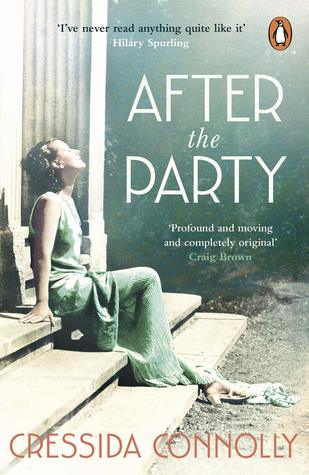
Title: After the Party Author: Cressida Connolly Publisher: Viking Publication Date: 7th June 2018 Pages: 272
I have such mixed feelings about this book. For the first half I was absolutely loving it and couldn’t wait to see where it was headed – but by the time I got to the last 90 pages or so it became an uncomfortable slog, so much so that I seriously considered not finishing it.
After the Party opens in 1979 with a woman called Phyllis Forrester describing being reunited with her children after a stint in prison – although her crime is not disclosed at this point. We then move back to the 1930s, where Phyllis and her family have returned to England after spending a few years abroad.
Phyllis and her family move in very high circles, with lots of internal politics going on between her two sisters as they jockey for position in the political organisation they are currently both members of, which we soon come to learn is Oswald Mosley’s British Union of Fascists. The tension between Phyllis and her sisters kept me intrigued throughout the first portion of the book, as did the glamour and opulence of the parties they attended.
With tension brewing and relationships straining as Phyllis and her husband also began to involve themselves with the British Union, I was very much given the impression of impending shock and drama – but the “dramatic events” promised by the blurb never really put in an appearance. I’d expected the imprisonment of Phyllis to form the nail-biting conclusion to the book, but instead it happened sooner than I expected, which instantly sapped all the intrigue out of the story for me.
The remainder of the novel displayed abundant evidence of Cressida Connolly’s historical research, but unfortunately it often read more like a textbook description of the fate of women like Phyllis who were imprisoned during the Second World War. I found myself completely disconnected from Phyllis as a character, and all the characters I’d previously been interested in seemed to fade into insignificance.
By the time the plot reached its unsatisfactory ending, I found myself thinking I must have completely missed the point of this novel. At its heart I think it is an exploration of how seemingly ‘nice’ and ‘respectable’ people such as Phyllis can end up becoming extremists. Through Phyllis it is demonstrated that nobody ever thinks of themselves as an extremist – her political views were perfectly sensible and reasonable as far as she was concerned.
I did very much like the themes explored in this novel, often finding that it resonated too closely with our current political climate – but in the end there wasn’t enough of interest to grip me all the way through.


 It seems I do a pretty good job of choosing holiday reads that I will enjoy! I’d heard a few people say that this was a good series to binge, so both my mum and I decided to read it – and I think we both frustrated my brother by being pretty much glued to our Kindles the entire week.


 Yup, I did it – I finished the Century trilogy before the end of the decade! Although I initially didn’t think this final instalment was as good as the previous two, I’ve found myself unable to stop thinking about it even months after I read it.


 Sepia Tinted Window
