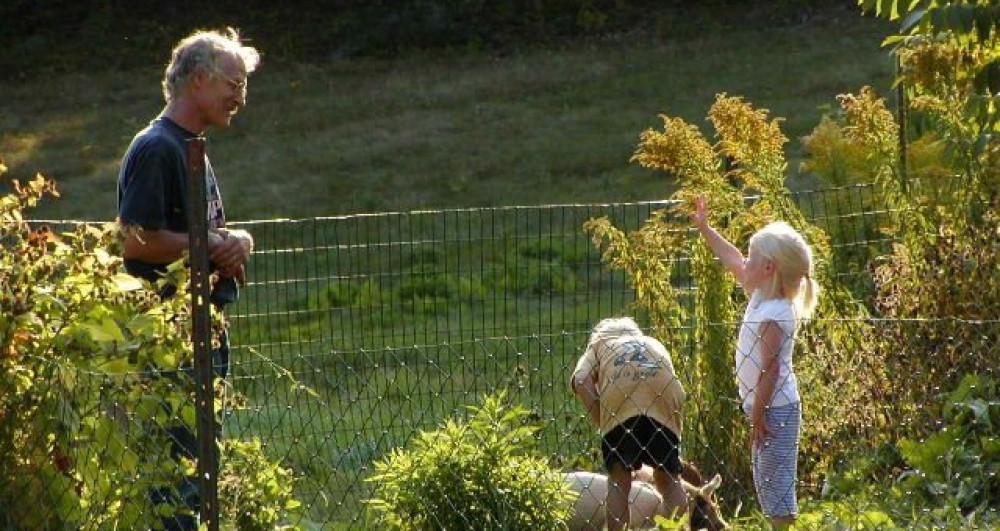

My COPD is a nuisance, but I can still stack my own wood. I am very slow at the job, but still derive a serene satisfaction as I watch my woodpile slowly grow.
In my case, aging has been like falling off a cliff. Only two years ago I was still sawing up logs and splitting them with a maul and loading the wood into my clunker pick-up (or the back of my clunker Jeep) and delivering it to my woodpile, but now I leave the delivering to another, and only do the stacking.
To arrange the delivery, I drive my Jeep over to an old friend’s business, which is to supply various households with split firewood. He inherited the business from his father, and his family has been around town so long that a road in town bears his name. He’s gotten old along with me, but as he got older he kept updating and modernizing his equipment, until now I sometimes visit even when I have no wood to buy, just to watch him at work.
All he does is sit in a comfortable seat and manipulate handles, and the miracle of gasoline engines and modern pneumatics does all the rest:
A long arm reaches out and plucks de-branched tree trunk, straight and thirty to forty feet long, from a burdened flatbed truck, and this huge, swinging trunk is adroitly lifted, swung around, and deposited in a long, tilted tray. At the bottom of the tray is a whizzing circular saw, and it drops and snarlingly cuts the bottom of the trunk off at a specified length. That log rolls to the side, where a splitting blade crunches it from one end, cutting the log like a pie into wedge-shaped eighths of a circle, and these eight split pieces of wood are swiped onto a conveyor belt, which hoists the wood up a ramp and then drops it in to the dump truck which will deliver the wood to my door. Meanwhile the original trunk sides down the tray, and the circular blade cuts the next log. This occurs over and over, until the trunk is all cut up, whereupon the next trunk is laid in the tray. Trunk after trunk is cut up until the dump truck is full, and my old friend hasn’t worked up a sweat. All he does is sit in a comfortable seat and manipulate handles.
This is not how we once did things. Once upon a time we worked out in the woods and did things by hand. Around forty years ago was when I first started to see small, pneumatic wood-splitters, but no one back then even dreamed of a gadget like my old friend now has.
Back then we had a certain scorn for the small pneumatic wood-splitters, deeming them for weaklings. A strong man used a maul, and had the wood split in the time it would have taken to go get a splitter, for less money than the splitter would cost, and without the cost of gasoline. However I will confess I did cast certain logs aside as too much trouble to split by hand. After two or three years, when that pile of twisted, forked, knotty misfit logs grew large, I might borrow a splitter, for the power of pneumatics could mangle even an un-splitable log to a useful sort of fibrous kindling, and could successfully split many other logs not even a he-man could rend.
However, for the most part firewood was he-man work. You worked up a sweat, your muscles bulged, and, if you were lucky, your wife gave you a back-rub at the end of the day. You were a hero, for the woodpile you built saved the family from freezing in the grim months ahead.
I took full advantage of my strength, for often I was paid to remove the wood I later burned. Firewood did not cost me a cent, and I might even charge others for gathering it. Rather than winter heat costing me, I often profited, which was one of the tricks I employed to raise five kids when my income was so small some might say I shouldn’t have married.
But now that strength is gone. Fortunately, my kids are grown up and self-reliant, and my mortgage is paid off. I have the ability to just have my old friend drive his dump truck to my home and deposit a huge heap of wood by my front steps. And then? And then I come doddering out and start to build my woodpile, huffing and puffing and often pausing to study the sky, or to listen to the birds, or the overpopulation of chipmunks chirping from every stonewall, or the crickets which have replaced the spring peepers as the shrill background symphony.
When I think about things, I am a fortunate man. There once was a time when I was so busy I never had time to stop and watch the goldenrod bob in a breeze, and a hummingbird whizzing about sipping the nectar from flowers. I used to grumble about how, when I was rich and famous, I would spend a whole year just watching the flowers bloom, transitioning from the first trillium of April to the last asters of October. Now I may not be rich nor famous, but I do have the time. How ungrateful I would be to complain I can’t be so busy as I used to be.
This is not to say I don’t like playing the violin, and milking the udder of self pity, or that I don’t invent things to fuel the furnace of fret, and worry. I guess it just goes to show you how much depends on our attitudes.
It also shows me that we too often put preconditions on life, and think we can’t be happy unless all those desires are fulfilled. It has occurred to me, while stacking wood, that I didn’t need to be rich and famous to be happy, and in fact I have been far happier than many rich and famous people seem to be. And with that I plunk another log on the pile.
Then I huff and puff a bit, catching my breath, and look up at the dappled clouds, and think about how the sky reveals its majesty to the rich and poor alike. You just need to remember to look up. I have seen beauty in even a slum. One time I saw beauty even in the bowels of a gurry room beneath a herring cannery, which is a place that meets few of the preconditions most have for happiness.
One thing which I saw clearly, back when I was a boy, was that money cannot buy happiness, nor even security. I grew up with a silver spoon in my mouth, but spat it out, and became very downwardly mobile. I might do things differently, if I had to do them over again, for I might use the opportunities offered by wealth more wisely. However, I was just wise enough to clearly see money cannot buy happiness, and then was fortunate enough to meet a woman who also disdained worshiping the almighty dollar. We over and over resisted the temptation to put money first, and instead put family first.
Shortly after we married we were confronted by our poverty, and then I had a chance to make $100,000.00 in six months. All I needed to do was to ditch the family and go to work on oil rigs in Kuwait. It would only be six months, and $100,000.00 was a lot more back then than inflation has made it be now. You could buy a nice house for $50,000. My income as a handiman was roughly $8,000.00 for an entire year, and going to Kuwait would make ten times as much in half the time.
We toyed with the idea, but only briefly. To ditch the family went totally against our beliefs. (Also we were so in-love that being apart was unthinkable.)
Therefore, I can’t say I didn’t have a choice. I did. And in a strange sense I chose to be poor. It was even a prerequisite of happiness. What followed was not an easy life, but we remembered to look up, and that makes all the difference.
I plunk another log on the woodpile, and chuckle to myself over what a fool I can be. I have such a propensity to gripe. For years I griped I had to work too hard to stop and smell the roses, but now I gripe I can’t work too hard any more. What a joke. I thank God that sometimes I look up and get the joke. Then I look down and ponder which log I should next hoist.
One way my wife and I chose to put family first was to refuse to commute to work. As a “landscaper” more than half my customers were within walking distance of my door, and the most distant customers were only a mile or two away. Only during the winter months was I forced to commute to temporary jobs in factories, and even those jobs were within ten miles of home. This enabled me to drive “clunkers,” which were definitely not status symbols, but amazingly inexpensive. The most I ever paid for a “new” vehicle was $1000.00, and there were several that only cost me a dollar; (the old owners were glad to be rid of them). Not including gasoline, I’d estimate I paid less than $1000.00 a year for my transportation; over the course of 35 years that comes to $35,000.
When we married in 1990 the average price of a new car was $14,483, and I paid a dollar for my pick up truck, and now in 2424 the average price of a new car is roughly $46,000, and my current rust-bucket Jeep cost me….a dollar.
Even when you include gasoline, our expenses were considerably less than those who work scores of miles from home; they would drive farther in a single day than I drove in a fortnight. (Due to these savings we were able to afford two vehicles; at first my wife also drove a clunker, but as we prospered, she eventually was able to afford better vehicles.) (I, however, never was impressed by the power of status to a degree where I stopped driving clunkers.)
I plunk another log on my woodpile and gaze fondly down the hill at my decrepit Jeep. It is so rusty it just failed inspection, but I’ve been through this before, and suspect I’ll either manage to befriend a welder, or find another very cheap clunker.
Perhaps the most important side to my lifestyle was the fact I was a father who was around a lot. If some stress developed in my children’s life, I didn’t expect my wife to deal with it, nor did I expect the schools to deal with it. I dealt with it.
When my wife worked it was as a “recreation director” at a nearby “town swimming pool”, and either she brought the kids with her, or I stepped in, even if it meant I had to delay mowing lawns, and be a part-time home-hubby.
Now at age 71 I pause, stacking wood, as a stray memory comes back to me.
One fall morning our baby had worn my wife out; perhaps he was teething. She had been up often in the night, and I could see she needed a break. So I went to work with the baby in a backpack, for my job was to rake the leaves in the yard next door.
To save money I didn’t use the newfangled leaf-blowers and vacuums. I used a rake that cost only $8.00 and a tarp which cost only $5.00. Though I was slower than other landscapers, I was also cheaper. I was also much quieter, without howling machinery, and this quietude enabled me to work with a baby on my back. I did manage to coo and sing to him, which other landscapers didn’t have to bother with, but, where they had to ditch their kids to work, I was “bonding.”
He-whose-name-is-mud describes me as a “Bitter Clinger”, (as if I cling to guns), but I didn’t own a gun (at that time.) What I was clinging to was the concept of “family”. And if I am bitter, it is because of how much harder Name-is-mud’s communism has made my life be.
All these years later, my eyes have fallen, and I stoop to lift the next split log to stack in the pile. But even as I straighten my creaky old back my eyes lift to the heavens, and I recall what a beautiful autumn morning that was, raking leaves with a baby on my back.
I had reasons to gripe. My wife was not the only one who had lost sleep due to the baby’s midnight screaming. And now I had to rake with extra weight on my shoulders. But for some reason my tendency to gripe was superseded by awareness of how beautiful the moment was. The leaves that hadn’t fallen were golden in the slanting streams of sunrise sunshine, and the sheer beauty of gold against the vividly blue sky seemed to please the infant on my back better than my cooing did. He became quieter than he’d been all night, though his babbling was proof he hadn’t passed out in exhaustion. I babbled back, reciting what I could recall of the “Ode To Autumn” by John Keats.
Season of mists and mellow fruitfulness,
Close bosom-friend of the maturing sun;
Conspiring with him how to load and bless
With fruit the vines that round the thatch-eves run;
To bend with apples the moss'd cottage-trees,
And fill all fruit with ripeness to the core;
To swell the gourd, and plump the hazel shells
With a sweet kernel; to set budding more,
And still more, later flowers for the bees,
Until they think warm days will never cease,
For Summer has o'er-brimm'd their clammy cells.

Who hath not seen thee oft amid thy store?
Sometimes whoever seeks abroad may find
Thee sitting careless on a granary floor,
Thy hair soft-lifted by the winnowing wind;
Or on a half-reap'd furrow sound asleep,
Drows'd with the fume of poppies, while thy hook
Spares the next swath and all its twined flowers:
And sometimes like a gleaner thou dost keep
Steady thy laden head across a brook;
Or by a cyder-press, with patient look,
Thou watchest the last oozings hours by hours.

Where are the songs of Spring? Ay, where are they?
Think not of them, thou hast thy music too,--
While barred clouds bloom the soft-dying day,
And touch the stubble-plains with rosy hue;
Then in a wailful choir the small gnats mourn
Among the river sallows, borne aloft
Or sinking as the light wind lives or dies;
And full-grown lambs loud bleat from hilly bourn;
Hedge-crickets sing; and now with treble soft
The red-breast whistles from a garden-croft;
And gathering swallows twitter in the skies.
I may have been poor, back then, but there is something glorious about being able to complete a job before breakfast, and then to walk across the street to deliver a quiet and content child to a grateful wife who has prepared a simple but nourishing repast. I pity those who have servants to watch their kids and servants to cook their meals. They miss such beauty!
I plunk another log on the woodpile, and thank God for the kids I’ve been blessed with. I expected a sort of pay-back time, with sons as rebellious as I was, but my sons rebelled by never smoking tobacco nor taking drugs. (Two seldom drink, and one is a complete teetotaler.) They have completely avoided a dangerous detour it took me fifteen years to navigate and extract myself from, and at age twenty were where I only arrived at age thirty-five. And I don’t think this is due to anything I intentionally taught them. Rather I think I merely was there. They had a father at home whereas I had a magnificent workaholic father who was seldom seen, which resulted in a divorce, which meant he was seen even less.
When Hilary Clinton waxed maudlin and stated, “it takes a village to raise a child”, her hidden insinuation was that parents are not good enough. Fathers like me need to be replaced by wiser bureaucrats. She dreamed she’d be the dictator, conducting the orchestra of bureaucracy, and deemed self-reliant people like me and my wife obstacles, and what she called “deplorables.”
But the government can’t help you do the simple, basic stuff, like wash dishes or burp a baby. They may say they will help you wash the dishes, but it takes so long to fill out the forms, and jump through the bureaucratic hoops, that every dish in your house will be filthy and moldy before they deliver a pathetic Green-energy dishwasher that, you discover, can’t do the job unless you run the dishes through the wash-cycle over and over and over again, which, in the end, makes your hot-water bill far higher than it would be if you did what I and my wife chose to do, which was to skip the dishwasher and do the dishes by hand.
Shortly after I married, facing our first autumn flat broke, I did break down and apply for “heating assistance.” It was very embarrassing, as a hale and hearty young man, to go into a bureaucratic office’s waiting room, and stand with far less fortunate widows and orphans, and, after a very long wait, to finally be ushered into a sterile office and be told by a persnickety bureaucrat that I needed to prove I was unemployed. When I told her I was self-employed landscaper, she told me I needed to bring forms to all of my summer customers, and they all needed to state I was not working for them any more.
Incredibly, I actually did this. I think I was angered that the bureaucracy was so unhelpful, and in a mood to beat them at their own game. And actually it was fun to go door to door, and to sit and have coffee or tea with many of my summer customers, and to fill out the forms while joking about what bozos bureaucrats are. And in the end I won the ridiculous paperwork battle. I returned to the office with a stack of forms filled out by something like fifteen customers, and the bureaucrats had to surrender disgruntled, and admit I did qualify for help. It was a hollow victory. I received a check, which heated my home for only around three weeks. It was then obvious to me that I would have gotten more heat out all the hours I wasted if, instead of seeking “heating assistance,” I had simply cut and split wood myself. And that is what I did, until quite recently, when I broke down and had my wood delivered.
I plunk another log onto my woodpile, thinking how great God is to give us the ability to heat our homes with logs and branches which some consider just litter in their backyard, which needs to be “cleaned up”.
My wife must have learned some similar thing, for she never applied for food stamps, though we qualified. Instead she spent an amazingly small amount of money to collect basic grains and vegetables and roots and fruits, and produce meals far more nutritious than TV dinners.
When it came to meat, it just seemed we knew enough farmers and hunters and fishermen to trade for meat fresher and more delicious (and freer of God-knows-what hormones) than you’d ever get from a grocery store’s meat.
I pause, stacking wood, thinking I really should write the story of my early married life, and how we lived like kings on next to nothing.
As a preview of that book, which I pray God lets me write, I’ll just say that, while I don’t hunt, I do know hunters, and do know that they often don’t care for the deer’s liver. However I also know that the liver of a deer that has eaten a lot of apples in an apple orchard is a delicacy. So, simply asking around, hanging around where hunters hang around, I might get two pounds of liver almost for free. (I did have to listen to the hunter go on and on about his hunt.) Then my wife would take this liver, which I relished but which my children despised, and she mixed it up with other stuff and created a goulash my children gobbled up, unaware they were eating liver. Such liver, free of hormones, is good for children, and is not a thing those on food stamps can expect to get. (Instead, it now seem the government lunches served to children at schools cause diabetes and liver disease.) (Though my wife and I didn’t suspect such malfeasance 34 years ago. We just felt we should be self-reliant.)
The bureaucrats of the swamp tend to disparage the very idea that the poor may eat better than they do. One phrase I have heard them use is “bush meat”, but “bush meat” is for the same stuff they call “venison” when they pay through the nose for it, at a fancy restaurant.
When I recently asked my wife how we managed to find so many sources of good food, and eat like kings, she merely shrugged and said we bothered to get to know our neighbors. We didn’t just go to a market. We made the effort to “be involved” with the owner. My wife was far better at this than I was. It didn’t take her long to know a great deal about a new teller at a market, and the next time she was there she might ask that teller, “So, how did your son Jerry do on his driving test?”
When people know each other in this way they are always exchanging information. They don’t need computers or newspapers, and it is impossible for a government to censor their exchanges. For example, suppose I, as a landscaper, work for a fairly rich person who has bought a house which has, due to a prior owner, ten big apple trees in the back yard. The new owner has no interest in apples, but the ten trees produce a huge surplus. If I know of this surplus, and have another customer who loves to make applesauce, how hard is it for me to clean the lawn of the first customer, deliver bushel baskets of apples to my second customer, and wind up with several big jars of applesauce for free? All I need to do is ask the first customer if he minds if I give away the apples his trees are producing and littering his lawn with. He is glad to have them gone, and is surprised when he gets a couple of jars of applesauce for free, in the bargain.
In my future book, which I pray God lets me write, I’ll describe other events, such as how my wife brought home three pounds of free, freshly-netted shrimp in the depth of winter, though we live sixty miles from the sea. But you’ll have to take me on my word: We ate well.
I think it infuriates some people in high places when little people eat well. They want peons beholden to them, and thankful for the crumbs from their tables, when they remember to bestow any. Therefore they are mad, when the poor discover plenty without them. However God seems to create bounty in unexpected places, and the first to know of such surplus are not bureaucrats in their musty offices. Bureaucrats are dependent on facts and figures which can only reach their cubical long after the surplus occurred. In fact the surplus is eaten, or rotten, before the a bureaucrat sees any sign of it in his or her precious statistics.
This is especially exasperating to bureaucrats because they want to be paid when I take a windfall of apples to an old lady who makes good applesauce. They want to tax me, as I have “sold” apples to the old lady, and they want to tax the old lady, because she has “sold” applesauce back to me. Never mind that no money changed hands, they declare a sales tax is owed. We are guilty of “tax evasion”. Why? Because without taxes the bureaucrats have no money to buy inferior, commercialized applesauce with, at the store.
How absurd the dynamic is! Bureaucrats do not gather the apples nor do they prepare the applesauce, but want to put both me and an old-lady in jail for tax evasion, because they didn’t get any applesauce. Why should they expect any? In the eyes of God, they did no actual work, and, to quote the Bible, “If you don’t work, you don’t eat.”
I plunk another log in the woodpile a bit savagely, thinking what utter weasels such people are. What good do they do? Abruptly I find my old voice is croaking an old song from a half century ago, when I was a teenager:
Let me tell you how it will be:
One for you nineteen for me,
'Cos I'm the taxman...
In order to understand the bitterness and elements of rage in the Beatles song “Taxman”, it is important to understand John Lennon formed the initial “Journeymen” band in 1957, when he was only 17, and there then followed six solid years of late-night toil and smoky- room hardship (made bearable by booze, babes, and the hilarity of youth), before fame exploded in 1963. Then, when, at long last, the money started flowing in, the British government wanted 95% of it. The result was the song “Taxman” in 1966. Few songs better express a working man’s complete contempt for bureaucratic weasels, without stepping across an invisible boundary which invites repercussions. In fact the Beatles were pressing the limits, and only their enormous popularity (I think) protected them from being conveniently “disappeared.”
However, this power of the weasels is ancient. There is music from 3000 years ago that confronts weasels very much like the Beatles did in 1966. Unfortunately the notes of the music were not recorded, in any way we can now decipher. No musical scores remain, so all we have are the words. Imagine if all we had of the Beatle’s “Taxman” song were the words, and the pounding, grinding music was lost. We’d only get a hint of the music’s power. In like manner the Psalms were likely far more powerful than we can imagine; all we have is the lyrics to lost songs.
But in Psalm 73 the psalmist Asaph goes on at length about how insidiously persuasive weasels can be, before abruptly understanding they are like a bad dream you dismiss at daybreak.
And in Psalm 37 King David sings, concerning weasels,
Do not fret because of those who are evil
    or be envious of those who do wrong;

For like the grass they will soon wither,
    like green plants they will soon die away.

Trust in the Lord and do good;
    dwell in the land and enjoy safe pasture.

Take delight in the Lord,
    and he will give you the desires of your heart.

Commit your way to the Lord;
    trust in him and he will do this:

He will make your righteous reward shine like the dawn,
    your vindication like the noonday sun.

Be still before the Lord
    and wait patiently for him;
do not fret when people succeed in their ways,
    when they carry out their wicked schemes.

Refrain from anger and turn from wrath;
    do not fret—it leads only to evil.

For those who are evil will be destroyed,
    but those who hope in the Lord
               will inherit the land....
The Psalmist sung further, but I have an urge to shut the radio off, for already I have flunked, for I do fret. In fact I am in the shoes of the Psalmist Asaph, when he sings,
...But as for me, my feet had almost slipped;
    I had nearly lost my foothold.

For I envied the arrogant
    when I saw the prosperity of the wicked...
It is not so much that I envy the evil, as it is I want to strangle them. I have no power, and am like an ant that wants to strangle an elephant.
I slam another log on the woodpile, working a little too fast for a man of my age, but some things really piss me off.
Then I take a few deep breaths and try to focus on the beauty all around me. Yet although the chorus of late summer crickets is beautiful it is a reminder winter is coming. Even this woodpile I am building is a reminder winter is coming. Already the robins have ceased welcoming the dawn; abruptly in August the daybreak is absent their song; winter is coming. It even seems fewer chipmunks are chirping.
This is not to say the waning of summer and the lengthening of shadows is without its own special beauty, but there is a stark reality spoken by the woodpile’s growth: Winter will kill you without the friendship of a fire, and to feed that friend you need wood (or fossil fuels.) Once you have that friendship even the coldest storm reveals its beauty, but it doesn’t come for free. You must work to gather the wood, and then you must feed the fire.
They say firewood warms you twice, once as you gather and stack it, and again as you burn it, but it warms you twice in another way, if your attitude is right. There is a beauty in the work of gathering it, and beauty in the burning and bathing in the warm orange light. This is not to say work should never be avoided (especially if you are 71 with COPD), but, beyond a certain point, avoiding work is adolescent, and perhaps this explains why a certain chill creeps into the cubicles of bureaucrats. Even when the thermostat is set at 78 that chill is there, born of wanting heat without gathering wood, which is an adolescent attitude.
In running our Childcare my wife and I have worked very hard to give children things their parents cannot, because often both parents have to work full time. (Or they think they do; few dare live like my wife and I have lived.)
At our childcare we do not seek to replace parents, but rather to do the things parents wish they had time to do, and want their children to enjoy: Hiking in the woods, fishing, digging up potatoes and carrots, feeding chickens, and so forth. Down to earth stuff. Both parents and kids seem to appreciate what we add to their lives. And so, in a small way, we have added beauty to the lives, over seventeen years, of some 300 children.
But compare that mere 300 to the sheer madness of allowing over 300,000 “unaccompanied children” to vanish, which is what our government has allowed to happen. 300,000 kids without parents (IE: Orphans), just vanish. And the weasels don’t give a damn.
I slam a log into the woodpile, and have to pause to huff and puff. One good thing about COPD is that it forces you to do what is called, “stopping and taking a few deep breaths.” It forces you to quit your raving and obey King David, when he says, “Refrain from anger and turn from wrath; do not fret; it leads only to evil.”
I must confess there is a part of me which wants to tell King David where he can go. I also want to tell John Lennon where he can go when he sings, “All we are saying is: Give peace a chance.” After all, we are talking about 300,000 children here. This is no small matter! And when Bobby McFairland sings Meher Baba’s “Don’t Worry; Be Happy” I slam another log onto the pile even though I’m already huffing and puffing. I can’t stand it. I’ve always wanted to die with my boots on, and today might well be the day.
After slamming a few more logs, my tantrum has not killed me and only has me huffing and puffing to a degree where I must pause to contemplate how small I am. It occurs to me it is likely good that I am small. If I had power, I’d likely fail to use it as God desires, and I’d likely become just another Hitler or Stalin, making millions miserable, even though I may have begun “meaning well”.
Now that I have so swiftly experienced becoming wizened, my lack of power is highlighted. I have not the pensions the bureaucrats get, but I still must deal with the challenges of life, one of which is bureaucrats. They are on my case for some infraction I was guilty of by not applying for Medicaid. (Why should I? I was perfectly healthy.) This involves an incredible amount of paperwork, and messes up my Social Security payments, which are funded by a tax I paid years ago but now are re-taxed because I’m still running a childcare at age 71. Blah. blah. blah. It is all bureaucratic bullshit that seems intended to cause dementia in old timers like me. They are weasels profiting off the poor.
But so are mice, chipmunks and flying squirrels. As I stack my firewood I am well aware of a yearly challenge that occurs because, the moment my old house is warmer than the outdoors, all sorts of rodents want to move in. Rather than stacking wood I should be setting mouse traps, all over my house, to stop the invasion of illegal aliens.
And if invasive mice aren’t bad enough, I also must deal with the fact that bureaucratic bungling has me dealing with invasive “emerald ash beetles”.

What these bugs are doing is killing the wonderful ash trees around my home and creating the danger of dead trees crashing down upon my rafters. This was not something I included in my plans for a quiet retirement, but something I had best deal with, (though I’ll admit I have the temptation to hope the trees don’t crash down until after I’m dead, so someone else has to deal with the problem.)
If you look back at my posts from a couple years back you’ll see that the first time I had to deal with the removal of a huge maple tree (which I would have done myself when younger) I employed a fellow who utilized a crane, and who bolstered the profit of the job by putting most of the wood through a gigantic chipper, because he could sell the chips at a profit. I got little firewood from the deal, and the firewood I did get was enormous logs that needed to be split many times, to be burned. I decided to look elsewhere for help, this time.
To my delight I chanced upon a young man of my own heart. He had no need for cranes. He mixed old fashioned lumberjack skills with modern mountain-climber nylon ropes and gadgets, and was a sort of Spiderman up in the tree-tops, at times seeming to levitate between trees with a quiet, electric saw, taking down the trees in small sections, without ever needing to shout “timber” and have an entire dangerous tree crash in a (hopefully) correct local. In the end he left me with a mess in my back yard and $1900 in his wallet, which is much less than the fellow with the crane would have charged.
Of course, being the thrifty old coot I am, I don’t see the mess in my yard as a mess. I see it as roughly $900.00 of free heat, this coming winter. (Ash wood does not have to “dry” as long as maple and oak, and some of this wood was already dead and “dry”, while the rest was helped towards being “dry” by being cut in a drought.)


The problem I now face is the fact that I am not the man I used to be. But I will go out there, with my tiny “grandpa chainsaw”, and start to clean up the mess, because that is how I am. I am thing called, “self reliant”. This irritates those who think we should be helpless peons and utterly dependent on the largess of the inept bureaucrats, but where they see me as a potential welfare dependent, I see a mess as potential firewood.
Yet even as I see this this potential I understand I will be hard pressed to get my old body to do the work. I haven’t even stacked the wood in the front of the house. How can I saw all this wood out back? I just don’t know. I just do what I can.
And so I stack the wood in the front, very slowly, watching August become September and the leaves start to change. I hear the crickets start to slow, singing slower and slower as the temperatures drop. The beautiful birdsong of robins is of course long gone, and now there are the strange new songs of birds just passing through, migrating from north of here to south of here. But one odd thing I notice is that is that I hear no chipmunks at all. This seemed a bit odd and unnatural to me, until I faced the weasel in my woodpile. As I stooped to pick up the next log, this little face popped up.

Actually the above picture is what a weasel looks like if you are a chipmunk. They are in fact a very small predator, smaller than a gray squirrel, and if they poke their head out of your woodpile and you are not a chipmunk, they look less fierce, and merely inquisitive.

The thing about a weasel is that it has a fierce metabolism that requires constant feeding to survive, so that, when it is inquisitive, it largely is curious about whether you are edible or not. Apparently it is hard-wired in a way that keeps it from attacking cows, horses or humans, because even though we are edible we are so large they would likely be crushed if they attacked us. However they will attack rodents twice their size, like muskrats and woodchucks and big, male rabbits, at which point a second hard-wiring kicks in: Once they attack they will not stop until the prey either escapes or stops twitching.
I have seen a video of a weasel attacking a large woodpecker who actually took off and flew erratically and finally crashed, with the weasel riding its back. The crash was so violent the weasel was flung away, which allowed the bird to fly off free, and the weasel was left with a mouth full of feathers, but an undaunted fire burning in its eye.
It is this fight-until-movement-stops hard-wiring that makes weasels such killers in chicken coops. They can’t differentiate between a chicken and the entire flock, and just go on killing until all movement stops. They will kill every chicken, which is far more than they can possibly eat, which causes some to think they kill for the joy of killing, when in fact they are simply hard-wired to fight until all movement stops.
We once had a chicken we called “Cow”, because it was at the bottom of the pecking order and its response to every threat was to be “cowed”. It would sort of hunch down and not move. The other chickens walked all over Cow, but when a weasel invaded the coop Cow was the only chicken that survived. While all the other chickens rushed about screaming until the weasel killed them, Cow hunched down and did not move. In fact she was still hunched down and not moving the next morning, when we discovered her among a heap of carcasses. At that point we changed her name to “Lucky,” for she lived another two years and became the matriarch of the replacement flock.
And the moral of this is? Hell if I know. Something like, “Don’t count your chickens until the weasel has his way.”
I have to admit a weasel is a good thing, when it absolves you of the need to set traps all over your ancient farm house to halt an invasion of chipmunks. Then a weasel is “ecology”, and praiseworthy.
However if you desire eggs and a good flock of hens, the hard-wiring of weasels is not so praiseworthy. Nor is the hard-wiring of the ordinary chicken who comes home to roost. What is praiseworthy is the hard-wiring of the lone chicken who, though lowest of the low, is the lone survivor.
We humans are not supposed to be hard-wired like beasts. We are supposedly able to think for ourselves. Even after battles, we fight being “triggered” by “post traumatic stress”, yearning for liberty and freedom.
I slam the last log into the woodpile, and start up my grandpa-saw to cut up the wood in the backyard. Better be careful, old man. Saws are dangerous. Work slowly and take many breaks. But keep on plugging.
The foliage grows so beautiful people come from all over the world to see what I call ordinary, and I am unnoticed by them. Then the branches grow bare and they stop coming. I keep slowly doing what I can. And the election draws closer and closer.
Forgive me, for I am just an old man ruminating, but the debating involved in this election in some ways reminds me of chickens with weasels in their coops, but with the chickens getting fed up with the status quo. Is there such a thing as a militant chicken? A chicken who can fight back, and even back off a weasel full of blood-lust?
This reminds me of a silly but charming Saturday Morning Cartoon from my youth which began with this song:
When you're threatened by a stranger;
When you feel your life's in danger;
When you fear that you may take a lickin',
Give a yell
For Super Chicken.
And then the cartoon would proceed with its weekly episode wherein a very good, very kind, but very absurd chicken defeated evil. This never occurred because the chicken was particularly smart, but rather because evil was more stupid than even the chicken was.
I hope the current election will reveal a similar dynamic, but, besides casting my single, lone vote, I only can do the little I can. At age 71, that amounts to somewhat feebly splitting ash logs in my back yard.


 Sunrise's Swansong
