We’ve suffered drought from summer into the fall, but we’ve been spared forest fires, so it only amounts to a whole lot of beautiful weather. It’s hard to complain about sunshine, especially if you have nothing to water. I did get a few things into the garden before I was hospitalized, but a friendly doe brought her twin fawns by to browse everything down to ground level, so I was spared the worry of watering. My daughter-in-law was meanwhile kept very busy with watering her section of the garden, which she had devoted to flowers. She had a plan to sell them. I was skeptical but kept my lip buttoned. Then a little stand appeared at the foot of our drive.
I remained skeptical, as she could not sit by her flowers and hawk her wares, because she had four small children to attend to. Therefore she just put up a sign by the bouquets stating they cost $15.00 each, with a box to put money into. Also she placed the stand where I was in the habit of backing up my vehicles for thirty-five years, and it was only a matter of time before I’d be careless and people would question whether I was getting too old to drive, as there would be a loud “CLUNK” and the poor woman’s flowers would be strewn on the street. But she was rather sweet about my eventual unhelpfulness, and about gathering up the mess and rearranging the bouquets, and also enthusiastic about the fact people had stopped and put money into her box, and she had swiftly paid for the packets of seeds she bought last spring.
And she was just getting started. Car after car pulled over to pick up a bouquet. I think she sold over thirty bouquets, and I told her it was the first time the farm showed any profit (besides Childcare) in around ten years. She was helped by the fact the weather stayed mild and the frosts were late, but the inevitable finally happened, and the happy colors in the garden were laid low and blackened by an abrupt blast from Canada. It promptly warmed up again, but once that first freeze hits, it’s all over for many blooms.
The maples of New England then go through an extraordinary process, not yet fully understood by naturalists, wherein they transform the chlorophyll in their leaves to other enzymes and chemicals and frantically produce sugar. This removes the green from their leaves and turns them red, orange and yellow. The leaves are still hard at work as they take on these colors, as is shown by the fact they are not blown from the trees even in gales and then, when their work is done, they drop from the trees even on a windless morning. Therefore I think to myself, as the landscape of New England becomes radiant with a beauty in the autumn, and people (called “leaf-peepers” by locals) travel from far and wide to see the radiance, that the trees are “making sugar”. Just as farmers harvest, reaping what they sow, trees are harvesting their crop of sugar.
There is a fair amount of mystery about the storage of the sugar. The trees apparently don’t draw it all down to the roots and then pump it back up in the spring, or, if they do, they employ some sort of engineering we don’t understand and therefore deem impossible. More likely is the possibility the sugar is extracted from the sap and stored in twigs and in sapwood, up where it will be needed in the spring, and the tree does not pump much water down at all. When water starts to rise in the usual manner in the spring the sugar is at hand to give maples (and some birches) a head-start over all other trees.
I like this idea as a symbol, because otherwise autumn can be a very depressing season. The growing darkness, the apparent cessation of growth, and even of life, is one reason Halloween has so many skulls and bones and creepy things. As I approach the end of my own life I don’t much like the idea of skulls, and prefer the idea of the creation of sugar for spring.
However this sugar-coating of the onset of winter creates a conflict with a grumpy and pragmatic side of me. In terms of the fable of the grasshopper and the ant, I, as an artist, have too often been the grasshopper, and have faced fall with no harvest other than songs that didn’t sell. I have battled through many winters flat broke, learning the hard way to work like the ants did back in the summer, but working in the cold as the ants happily warmed their toes by fires and consumed the food they stored. Even now, in my decrepitude, I get no pension and work in my feeble way, as the ants have second homes in Florida, and in some cases more than one pension. It seems wiser to be an ant than a grasshopper. Yet…the sugar-coating persists.
We should quake in our boots, for we've no crops.
We don't farm, instead eye-straining indoors
At screens. We've not strung onions at tops
Of our hovels, nor stored roots under our floors.
We've gathered nothing, as days grow shorter
And winds grow cold. We expect to drive warm cars
To stocked stores, but dread a news reporter
Speaking of empty shelves. Reality jars
Our common sense, for through windows we see
A landscape rejoicing. The crimson leaves
Announce maples make sugar for spring. Sweet glee
Defies dark with radiance. Darkness deceives
For it knows only want, ignoring the gold
Which shines in the light true harvesters hold.
One person who was likely aware a pension would do him no good was the poet John Keats. Though he likely hoped for longevity, he likely also knew he was doomed to die young, for he received training as a doctor and surgeon. He cared for his mother as she died of TB, and then his younger brother as he died of the same, and John also knew he had a persistent cough. At one point, coughing a spot of blood into his handkerchief, he apparently stated, “I know this blood. It is arterial blood. This spot is my death warrant.” And indeed he did die of TB before he was 26, and yet his poetry is in many ways a defiance of death. How so? Well, in many ways that is the mystery.
My best guess is that poets get a taste of the good life, when young, and then see it ruined by evil. A happy home gets smashed by death or divorce, and a joyous child is jolted into a posture of longing for what was lost. “You’ve got to pay the dues if you want to sing the blues.”
In the case of John Keats his father ran a prosperous carriage house on a late 1700’s highway, a stable and inn and also tavern, busy with comings and goings and chatter and laughter. Call it a Hilton Hotel of its era. But then the man died in some sort of accident, and the mother had to attempt to run the show alone, although her health was declining, and then she died. So John saw a happy situation become an unhappy one, but in some way he never gave up on the happiness he had lost. Poetry was his defiance. Beauty was his guide.
On September 13, 1819 John sat down and wrote “To Autumn”, which utterly amazes me. First, the rhyme scheme is difficult, but you hardly notice it as it makes the music more musical. (The poem deserves to be read aloud.) Second, his life was full of hardship, but he still whipped the three amazing stanzas off on a single afternoon. Be amazed. Third, it is the best appreciation I’ve seen of how there is a beauty in Autumn which overwhelms the doom and dread of an oncoming winter.
I would leave a link to the poem, but know some are too busy to chase links, and therefore will include the entire poem in this post. I urge people to read it aloud, softly in a secret corner if need be, and also to understand that, due to the petty politics of that time, the poetry publishers and their elite circle had decided John Keats was not worth reading.
TO AUTUMN

Season of mists and mellow fruitfulness,
   Close bosom-friend of the maturing sun;
Conspiring with him how to load and bless
   With fruit the vines that round the thatch-eves run;
To bend with apples the moss'd cottage-trees,
   And fill all fruit with ripeness to the core;
      To swell the gourd, and plump the hazel shells
   With a sweet kernel; to set budding more,
And still more, later flowers for the bees,
Until they think warm days will never cease,
      For summer has o'er-brimm'd their clammy cells.

Who hath not seen thee oft amid thy store?
   Sometimes whoever seeks abroad may find
Thee sitting careless on a granary floor,
   Thy hair soft-lifted by the winnowing wind;
Or on a half-reap'd furrow sound asleep,
   Drows'd with the fume of poppies, while thy hook
      Spares the next swath and all its twined flowers:
And sometimes like a gleaner thou dost keep
   Steady thy laden head across a brook;
   Or by a cyder-press, with patient look,
      Thou watchest the last oozings hours by hours.

Where are the songs of spring? Ay, Where are they?
   Think not of them, thou hast thy music too,—
While barred clouds bloom the soft-dying day,
   And touch the stubble-plains with rosy hue;
Then in a wailful choir the small gnats mourn
   Among the river sallows, borne aloft
      Or sinking as the light wind lives or dies;
And full-grown lambs loud bleat from hilly bourn;
   Hedge-crickets sing; and now with treble soft
   The red-breast whistles from a garden-croft;
      And gathering swallows twitter in the skies.
The zen-like peace of Keat’s transcendental state of mind is attached to rural farms, yet detached from my pragmatic side, which can make a miser out of counting cabbages and a pension from a heap of potatoes. I’m all too aware you can’t take your pension with you when you depart this veil of tears, and remember the allegory Jesus told, involving the farmer who planned to build bigger barns to store up his bountiful harvest so his soul could eat and be merry, but that very night his soul was required of him. It is not the heaps of produce that make autumn so beautiful.
The darkening sneaks up on the summer
Like a lion on a doe born too dreamy
To live long, who sniffs blooms though bees whir
Frantic to gather. Even bugs can foresee
The dark growing cold. The monarchs flitter south
Without maps.  But the dreamy doe lazes
And the lion halts, with opening mouth,
Puzzled by the way nothing fazes
The ludicrous doe. Soon a ludicrous
Lion has forgotten to eat, bemused
And perhaps enchanted. I'll not discuss
What just happened. I'm too confused.
The curtain of darkness descends on an act
With a rare gentleness and softest impact.
Drought has the lawn starting to sound a bit crisp, as I cross it doing my stupid COPD rehab exercises. I feel like a dog on a leash, with my oxygen tubing dragging along behind, and my range limited, but I prefer the long tubing of the stationary-oxygen-condenser to the portable-condenser’s short tubes and purse, which weighs ten pounds and makes an annoying growl and supplies less oxygen “on demand” than the stationary-condenser does “on steady flow”. They differ in their effect, even when set at the same level of “liters per minute.”
Fooling around with all my oxygen junk can be interesting, making my body into a sort of laboratory experiment, but at times it is just annoying. I rip the tubes from my nostrils, drop them on the lawn, and just go for a walk, in my doddering way, without any help, like an ordinary man. Then at least I can hear something besides stupid machines, (such as the lawn becoming crisp).
Going off the help of additional oxygen reminds me a little of swimming underwater as a boy. I once amazed my friends with how long I could stay under water, for I had good lungs, back before I discovered the joys of cigarettes. Also I learned a few tricks, involving a sort of hyperventilation before diving, that I gathered from reading about pearl divers. However I also learned to bear the discomfort, increasingly painful and panicky, of a body screaming for air.
It is important for a pearl diver not to panic about breathlessness for two reasons. First, he is suppose to be focused on looking for oysters, and not on his own body. Second, any sort of panicky thrashing uses up oxygen faster than moving serenely, and shortens the amount of time one can spend under water. In both cases the individual seeks to control the body, rather than the body being the boss.
While a pearl diver is motivated by the will to find material treasure, (which may be spiritual, if he is feeding his family by daring the depths and facing sharks), there are yogis who sit about depriving their body’s appetites for no material reason whatsoever. They deprive their appetite for food by fasting. Through celibacy they sacrifice the pleasure of gratification through sex. But it is through various sorts breathing exercises that they distort ordinary breathing in highly controlled manners, and reveal that, while they may not be after anything material, they do hanker after something. What are they after? Basically: visions.
To the worldly the pursuit of visions tends to look foolish, even laughable. It is synonymous with delusions and hallucinations. Also the ordinary man is made cynical by exposure to flashy salesmen who are forever promising heaven while delivering hell. One furthermore notices that so-called holy-men still need to eat, and the priest has his collection tray as the sadhu has his begging bowl. There seems no escape from the weight of the world, so I turn back towards my oxygen tubing. It seems ironic that, where I once would take a break from my deep thinking to fumble for a cigarette, I now stoop to pick up the forked tubing I thrust back into my nostrils.
I stand for a while just breathing, like a pearl diver coming up for air. Slowly the sense I am holding my breath fades away. I feel less bossed about, but surely I am still a captive, like a dog on its leash.
This seems to be the usual effect of worldly attempts to escape worldly appetites. One does not actually escape the desire. In some cases the desire becomes a monster, so that an alchoholic like Spencer Tracy could be tipped off the wagon simply by partaking in sponge-cake, if it was soaked in rum. The friar or nun live in constant danger of seduction. The fasting man looks with longing at the clock, towards the ending of his fast. Rather than seeing visions, the seeker sees the world becomes more loud and distracting.
Some feel the escape is to be found in gratification of the desire. The glutton is no longer a glutton while patting his paunch after a twelve course meal; his appetite is completely sated. In like manner it was felt the way to handle heroin addiction was to prescribe regular doses of methadone, avoiding withdrawal by keeping the addict sated. (In fact this was my own approach with cigarettes; I’d buy them by the carton and never really think of them, chain-smoking until the carton was empty, when I’d get worried and rush off for another carton.)
In either alternative there seems to be no genuine escape from the worldly, which remains the boss. While this does tend to back up the cynical attitude that the world is all there is, and visions are mere poppycock, there is also a longing deep down in the human spirit for something more. This tends to manifest in two ways.
First, being sated doesn’t last. One may be fed, but one will need to be fed again later. And then one often notices repetition does not make the heart grow fonder. Familiarity breeds contempt. The beautiful blond becomes a bore. This leads to doubling doses, and tripling doses, until one goes too far, seeking to bring back the initial pleasure and excitement, and it also leads one to seek elsewhere.
Second, despite all the evidence that the physical is all that there is, human beings have an odd propensity to turn to the non-physical on the completion of a task. After the work-week comes the weekend, and rather than make money one spends it. Nor does one spend it entirely sensibly. Sometimes after an arduous cruise one spends like a sailor. One sings and one dances.
It is at this point those who dislike the prospect of spiritual reality being real become downright arduous in their efforts to belittle humanity. They downplay men and woman’s gracious sides. They argue: Does not a bird of paradise dance a highly complex mating dance? And it never attends dancing school. And does not a humpback whale repeat a long and intricate song? And it writes no sheets of music. So might not human rejoicing merely be guttural grunting gussied up with ribbons and bows? Heck, even a deaf man can make music; Beethoven is just an advanced ape.
I need not reply; only remember the dirtiest, hardest jobs I ever worked: Shoveling manure; caring for the cancerous; wading gore in a fish cannery; and I can recall the laughter despite the hardship. And, while I never served in the trenches of World War One, I can read Wilfred Owen’s great poem, “Apologia Pro Poemate Meo”, that begins, “I, too, saw God through mud–” and I know verification: Despite all the world’s hardship something otherworldly is in the wings.
And with that I drop the tubing to the lawn again, and go pearl diving.
Down at the end of the lawn, out of the reach of my oxygen tubing, is a patch of raspberries which not only bear fruit during the ordinary season in late June, but have a second crop in September. They are the pearls I seek.
Those berries have been an unlikely success. Around a decade ago my sister gave me a very special raspberry root from some hybridized plant that makes berries that are golden rather than red, and which fruits twice a summer, and is absolutely delicious. I thanked her profusely, but as soon as her back was turned I rolled my eyes. I was already working an eighty-hour-week and needed more work like I needed a hole in my head. But, because I didn’t have the heart to throw the root away, I just sliced the earth with a shovel and stuck the root underground “until I had time to plant it properly” (which meant never.) Then, to my astonishment, the blame thing didn’t die. In fact it spread, and now we have a patch of raspberries right in the middle of the flower garden. Unless…
…Unless the drought killed them.
I was worried, as I crunched down the lawn, that they had gone the way of some of my phlox, and had more than wilted in the hot winds; some of my phlox were downright crisp; and you knew they could not spring back with a good rain; those phlox plants were door-nail dead. Had the raspberries suffered such a fate?
At the very least I expected some dry berries. (I think there are few things worse than a dry berry, when you are looking forward to a nice, plump, juicy one). I braced myself to wax philosophical: Not every dive brings up a pearl; sometimes a pearl diver just brings up an oyster full of slime and gore, without a pearl.
In fact the berries were still green and hard. They were unripe, but I was surprised none looked withered. Usually a stressed plant will sacrifice some of its fruit to save a few survivors, but all the fruit seemed sound, so far. In fact the phlox it grew amidst looked dry, but not terribly wilted, and the aster and globe thistle looked like they were managing to get by as well. It looked like someone had watered the plants, but I knew it was trouble enough to lug oxygen hoses about; it was too much for me to bother with heavier water hoses, and also I knew my wife was too busy running our business without me to be dillydallying in the back yard. Why did these plants look better than the rest?
The grass by my feet spoke to me, by not crunching. It was green and lush. Of course! The leech field! But this takes me off on a tangent:
My daughter had been driving me crazy by turning our house into her private laundromat. She was forever rushing in and disturbing my peace with heaps of children’s clothing. Like the old, cantankerous coot that I am, I had growled I’d put a coffee can by the washer and drier and she’d have to pay eight quarters for each wash and four for each load dried, so I could pay for the electricity, (let alone the wear and tear on the machines), but, as always seems to be the case, some hidden benefit appears like a sunbeam from clouds. The benefit was that all that laundry-water drained into the leech-field, which may have clogged the leech-field with lint, but watered the raspberries, and also fertilized them. But the subject of fertilizer made me smile, as my mind drifted off on another tangent.
I recalled the laughing face of an old timer who told me he could not eat fresh raspberries in cream, nor as jam on toast, nor drink raspberry shrub as a beverage, because he as a boy had to fertilize between the rows, and the fertilizer was human fecal matter. It was a terrible job, but someone had to do it, and he didn’t mind the jingle of the silver coins he was paid.
It was in the 1930’s and 1940’s, before flush toilets made it this far from the cities, and outhouses were still in use. Out on the farms a new hole would be dug, the outhouse shifted over it, and the old hole filled in, but this practice couldn’t be applied in the crowded village. In the village the fecal matter piled up in large trays beneath the outhouses, and in the spring the reeking trays had to be hauled out and brought to the nearest raspberry patch, and the person stuck with this job was my old friend, but he was just a boy when he did it. He said the stench was enough to knock over an elephant, and ever since he couldn’t face a raspberry without remembering the awful smell, and gagging.
This seems to suggest that even when a hidden benefit is revealed, as is the case when the reek of human manure is transformed into the delicious flavor of raspberries, the weight of the world can win out, and prevent enjoyment. However as that old man told me his tale he was laughing. Where did his joy come from? It certainly wasn’t from raspberries.
I could feel myself becoming breathless, but didn’t want to head back to my oxygen tubing. Instead I resorted to “pursed lipped breathing”, which is a technique the rehab nurses taught us to use if our equipment fails. (It compresses air deeper into your lungs so that you get more oxygen with each gasp.) I like to think of it as a sort of yoga. And it does allow you to breathe faster when you feel the tinges of panic, which is something a pearl diver can’t do. A pearl diver can’t huff and puff like I was doing. And perhaps it was for this reason I recalled Jimi Hendrick singing, “They said it was impossible for a man to live and breathe underwater.” (I had to look it up: It’s from his 1968 hit, “1983 (A Merman I Should Turn To Be“.)
The unexpected memory stunned me, and made me stand musing, midst the sullen shrillness of the drought’s crickets. It seems incredible that more than a half century has passed since Hendrick joined “The 27 Club” (so named because a tragic number of young musicians died at age twenty-seven, when I was a teenager.)
Twenty-seven seems very young to me now, but it was old enough for Hendrick to be a mentor when I was sixteen, and, whereas all the focus now seems to be on Hendrick’s guitar-playing, as teenagers we focused on his words, which were about a better world, an “Electric Ladyland,” which I suppose qualifies it as a “vision”, (and thus also as a “hallusination” or “delusion”, to mockers). (Hendrik did not withstand mockery very well, despite his front of egotistical arrogance).
People tend to theorize that all the creativity displayed by artists of those times was the product of drugs. This is not the truth. Hendrix was describing his “better world” before he discovered hallucinogens. For that matter, the Beatles had already read “Autobiography of a Yogi”, and had traveled to India seeking a miraculous guru, before they smoked marijuana for the first time in Bermuda. Drugs did not create the creativity or their vision of a “better world.” Drugs only inflamed the “visions” and, sadly, in the end, often destroyed the visionaries.
There are some dark places I do not want my mind to wander into, and, in my case, the death of Hendrik is one of them. Call it a sort of PTSD, but I avoid the topic, usually. It involves many dangerous thoughts, once I get going, so I try not to start. I rarely even remember Hendrick any more, though he was practically my guru at age sixteen. Why not? I’m working on figuring that out, in the proper time and place. Now was not the proper time, but it seemed only natural that, as soon as I recalled him, I heard, soft but definite, a roll of thunder to the west.
Thunder might seem a hopeful thing in a drought, but I felt cynical as I shuffled back up to where the lawn got crisp, and bent over to pick up my tubing. This storm would likely dry up, like the others.
One thing I can do, despite my COPD, is lean against the side of the house with my cellphone and scroll through various weather-geek sites and track thunderstorms, and watch how they tend to dry up approaching New England, when the summer gets dry.
This summer’s gotten dry. Sometimes you could hear the distant thunder approach, but with longer and longer intervals between rolls, and then stop entirely. One time, scrolling to the “lightning map,” I saw the closest bolt was only two miles away, but all we got from that storm’s arrival was the slightest pattering of drops, puffing the dust. Another cell flashed lightning right overhead, but miles up; you could count past ten, between the flash and the soft sky-thunder; that one gave us a brief but steady mist that wet the grass about as much as a morning dew, (though often we do not even get morning dew any more). None gave us the gully-washers we need to blunt the drought’s power.
After catching my breath I again dropped the tubing and again went pearl diving, this time heading straight across the lawn. I wanted to get away from the house and all its noise. Between the washer and drier and my oxygen pumps and the whirring refrigerator there was a constant racket that got on my nerves. I felt like I was getting cabin fever in the summer, which just isn’t right. I wanted to get away to where I could only hear the crickets, and the prowling of the thunder far away.
I actually found myself holding my breath, to hear, which is not the right thing to do, so I remembered to practice “pursed lip breathing”, albeit as quietly as I could. Again I heard distant roll of gentle thunder. Overhead I could see the silver feathers of cirrus from a big storm’s anvil top. I had reason to forecast that this storm would not be like the others, and we might get some free fireworks.
However one thing I have learned from my study of meteorology is that no forecast is ever 100% correct. Forecasting is too mortal, too human, too liable to contain projection and “wish-casting” and politics, and never as magnificent as what actually occurs. Not that I can’t be in awe of great forecasters who can be 90% correct, but I reserve my greatest awe for nature, as it actually exists. I enjoy seeing what I “got wrong” because I enjoy what is right. Perhaps I should capitalize that. I enjoy what is Right.
This has often put me at odds with Global Warming fanatics, because they are so focused on their forecast they seem blind to what actually occurs. Or what has occurred. They are forever claiming that the slightest ripples of grandeur in the tapestry of weather are “unprecedented” and “caused by Global Warming”, when all you need to do is study history and you see a Majesty that towers above their beliefs.
Of course, to avoid hypocrisy I need to apply the same standards to my self, and confess my own forecasts display a certain blindness. For one thing, I focused on hurricanes, and not on drought. It is interesting to look back to 2012, before I began this website, when the following was published on the Watts Up With That website.
Back then I was a young man of 59, still working like a horse and smoking like a chimney, feeling brave and invulnerable to all the cancel culture nonsense we’ve seen since then. It was before the peculiar website algorithms (which I like to call “Al Gore isms”) afflicted me with shadow banning, and I was delighting in hundreds of visitors to this website every day. I was seduced by the ways of the world, until I got marginalized. Then it was hard not to sulk and pout. But it didn’t afflict the weather one bit, that I could see. What, then, did I see?
One thing I saw, or seemed to be seeing, was that just because history could repeat itself, it might not do so in my lifetime. Ever since I first heard my father and mother describe their separate experiences of the 1938 hurricane, I think during the passage of Donna in 1960, and heard my father be a bit scornful of Donna (which had weakened to a tropical storm), I had wanted to see the real deal, a hurricane like the 1938 storm. I’ve now waited 65 years, and it occurs to me I might not ever see it. I’m now glad. I’m too old to deal with such a shambles.
Another thing that I saw, or seemed to be seeing, was that besides fretting and generating alarm-ism about hurricanes and floods, one could do the same with droughts and wildfires. Besides the 1938 hurricane, before I was born, there was the drought of 1947, and the terrible fires that wiped out entire towns in Maine, before I was born.
A growl of thunder rose above the shrilling cry of crickets, and I practiced “pursed lipped breathing” so I could wait a bit longed before returning to my air hose. But I was getting a little excited, which uses up a pearl diver’s oxygen faster. I was like a pearl diver who had discovered a whole bed of oysters. So I retreated to my hose to catch my breath, but then promptly dropped it to walk away and simply listen. I heard another roll of thunder, louder and braver.
One thing fascinating to watch is the powers of flood versus the powers of drought, fighting to control North America. I don’t claim to understand why one predominates one year and not the next. But I simply witness what they do, which at best is to balance out and give neither drought nor flood, but rather sunshine and rains in perfect measure. But how is the balance achieved?
I haven’t a clue. However I simply know that when a powerful “heat dome” gets established it needs a tropical storm to slam into it to interrupt its drought-self-perpetuation. On the other hand, when a hurricane gets too ferocious is needs some dry air injected into it to calm it down.
This year had seen no hurricanes or tropical storms or even tropical depressions moistening the heartlands, so the weak summer cold fronts had no muggy, moist air injected from the tropics to build big thunderstorms with. The summer baked the heartlands, and the only hope of moisture was the Great Lakes, which did intensify storms, but they then dried up heading east. The Adirondacks of New York and Green Mountains of Vermont squeezed the clouds like sponges, and there was nothing left. Meteorologists described such fronts as “washed out.” Any moisture drawn in from the Atlantic was cold and clammy and knocked the bottom from thunderstorms, killing storms more than helping them. But I felt this particular front might be different.
Why? Because, though no Atlantic hurricane was involved, a Pacific hurricane had curved northeast into Mexico and crossed into West Texas at El Paso and headed east. It had completely lost its identity as a tropical entity. It had lost its circular shape in satellite photos, and had broken into bits and pieces in radar imagery, but I had a feeling it was not “gone”. While some may dismiss former tropical entities as mere “junk”, or as mere moisture in the warm sector before a cold front, I always notice that, as the wreckage passes, rains are heavier than expected, and a few gusts of wind surprise you.
Thunder boomed more loudly to the west, and the sun abruptly vanished behind a silver lining. Then there were two more rumbles, quieter, one to the northwest and one to the southwest. This storm was not washing out. And then I heard it. In the dead calm there was a roaring like wind, but it was raindrops, marching my way through the crisp leaves of drought.
Western thunder announced it would stripe green
Through the brownscape of drought, and kept its word,
So that when the moon rose the night was clean
And dripping stars from twigs; a mockingbird
Sung after dark; mild night winds heaved a sigh
Of contentment. Yet five miles away the rains
Missed them; lawns still crunch when crossed; Don't try
Treading barefoot! A little child complains
He's banned from toasting by fire. Folk there don't fear
Thunder to the south, but the whiff of smoke
Makes them and deer alert. Five miles! It's made clear
I breath content while my neighbors choke.
I stand moonstruck, with no way of guessing
What I have done to deserve the rain's blessing.
I guess I’ll attempt an update, as I seem to have survived.
Around a month ago I suffered a bad case of CO2-poisoning due to misusing my COPD equipment, and was whisked by helicopter down to Portsmouth (where I suppose the Navy knows about too-much-CO2 due to submarines,) where I was bitterly disappointed to discover I had absolutely no memory of the first helicopter ride of my life. I do remember some kind young nurses, for too brief a time, before I was plunked back at home, weaker than a kitten and more humbled than I find it at all natural to be.
Writing has felt impossible. I think one has to possess a certain arrogance to think their opinions matter, and death has a way of puncturing such arrogance. In any case, here I am, still alive, and such a physical weakling that writing is just about the only thing I can do.
Irony of all sorts is involved. One irony is that, after years of saying CO2 is not a danger, it nearly kills me. Oddly, what create the overdose of CO2 was apparently an overdose of oxygen.
I can’t claim to fully understand how I screwed up the machinery that supplies me with extra oxygen, but apparently the platelets of red blood in my veins initially welcomed the oxygen, which is brought where it is needed and replaced by CO2, which must be expelled to make room for the next delivery of oxygen. The problem arises because the platelets take longer to expell the CO2 than they take to absorb the Oxygen. Your body then wants Oxygen, but the platelets lack room for more. One increases the supply, which is a short term solution which, in the longer term, increases the backlog of CO2 waiting to be expelled. It becomes a vicious cycle. The more Oxygen you inhale the more suffocated by CO2 you become. And I assure you the La-la land you then enter is sheer hell. Or it was for me. (And I am a veteran of some “bad trips” from dippy-hippy days, over fifty years ago.) This was worse. Words cannot describe how creepy it was. About the only good is: I apparently can still scare young whippersnappers! Even at age seventy-two! And they apparently decided it was wiser to just drug me than to deal with me. Next thing I knew I was in Portsmouth.
Now I’m in “rehab”, with nurses visiting my home twice a week. It is a been-here-an-done-that experience, so I guess it should be called “re-rehab.” It is also damn depressing, because I have to work to get back to where I already was. In some ways COPD is like a game of snakes and ladders where the snakes are always longer than the ladders. You never know what you will next discover is difficult, that never was difficult before. For example: Scrubbing the dirt off of a potato at the kitchen sink. I never thought of that as being a particularly rigorous exercise, but now I have to stop and catch my breath.
This arrives me at a second irony. As a writer, all my life I’ve tried to find a way around work, so I could sit back and nibble an eraser and contemplate clouds. I failed. No one was going to allow me to goof off in such a manner. I had to find ways to goof off while producing a bare minimum of actual grunt-work. And, as the decades past, I did learn a thing or two about singing while on the job, and you might even say I became good at it. Now all of a sudden I’m told I can’t work any more. What the…!!!
You’d think I’d be happy. Now at long last I don’t have to make up excuses for undone homework. I can park in handicap spaces. But I discovered that I’d become accustomed to the pace, and the ratty race, and actually didn’t want to avoid what I’d spent fifty years shirking. (Now, if that isn’t irony, I don’t know what is.)
My Creator made short work of my resistance, chopping me down with a one-two sequence of jabs, one during bitter blasts of winter which sent the so-called “Real Feel” temperatures crashing to -25, and the second during a torrid heat wave with “Real Feel” temperatures over 100 on Independence Day. Discovered I’m not so tough, twice winding up in the hospital, and twice requiring rehab to get back on my feet. And so here I now am, a man behind a desk, freed from physical work, declared independent.
Or…well…sort of independent. A desk is not a good shelter from bills.
I wonder what may come of this. We shall see what we shall see.
Creation is a highway to the Creator, and, like any other road, it has no value in and of itself. Creation derives its value though where it leads you. However herein lies the puzzle: The creation, which has no value, is what we see, whereas God, who is Invaluable, is invisible.
For this reason people pay far more attention to the world, and to worldly things, and pay very little attention to where they are headed. In fact it is impossible for people to see the proper route to take, and to arrive at the Otherworldly, for they use their worldly eyes to arrive at their judgements. In order to find the Way they require the guidance of God, who knows the Way, and who also is the Goal. However people are not libel to to take the advice of what they can’t see, nor to ignore what they see with their own eyes. And for this reason most people fail to embrace life’s potential.
Rather than escaping Creation to live with the Creator, people stay stuck. Where they could have escaped the ticking clock of time, (for time is a creation), and where they could have lived with God in timelessness, they remain stuck in time. In essence they chose the “everlasting” over the “Eternal.” Consequently most lives end in disappointment. Where life began with the radiance of hope and joy, so obvious in a little child, it ends collecting the wages of sin, which are death.
Again. Death again. For this is not the first time people have made this mistake. Though it is beyond the capacity of the physical brain to recall before it existed, we did exist before we were born. We had died, and were mulling things over, rejoicing over what we’d done right and agonizing over what we got wrong, until we were ready to give life another shot. And then, more often than not, the result was one more death. For that is what reincarnation is: Everlasting death. One remains stuck in time and never escapes to the Timeless, because one never accepts the offered hand of the Invisible, and only believes what they see.
This leads to the inevitable question: Why do we see what we see if it is not true? The answer is profound, and involves confessing we are selfish, and build walls of defense. These structures form our ego, which is a necessary evil.
Necessary? Yes, because if you go out and look at a rural sky at night you understand how small we are, and that we would be washed away, diluted to oblivion, unless we had some sort of walls to form the hull of our boat.
Evil? Yes, because walls make us small even as they shelter us; they incarcerate like a jail, limit our vision, and create veils which blind us from seeing the Truth.
I’ve read writings, by those who claim to know of such things, that there are 49 veils between us and God. Personally I can only claim to have peeked beneath the edge of one. The glory was so gigantic I fled. I wanted to get back to the humdrum, to the boring reality we can count on, but even a glimpse of such glory makes you in some ways demented. You have glimpsed a reality which makes what most call reality look like blindness. Of course, to those afflicted by such blindness, you look like a weirdo.
And that is what I shall attempt to describe: The autobiography of a weirdo.
*******
Autobiography begins with ancestors, and right off the bat I must be sacrilegious. How so? Well, I never was much good at math, but it seems to me that, as I look back, the number of people involved in my creation doubles. There is only one of me, but I have two parents, four grandparents, eight great-grandparents, sixteen great-great-grandparents, and so on and so forth doubling and redoubling, but never backwards to the number two, Adam and Eve, and instead forwards to a number which doubles and redoubles toward infinity.
I prefer to state to you that I was created by Infinity, to saying I am a mere twig on a tree splicing back to a single root-stock in Eden. After all, if we all came from two individuals the inbreeding involved would be awful. We’d all basically be inbred cretins. (Not that being a cretin is a bad thing. The word “cretin” came from Latin and basically meant “unfortunate”. It was derived from the word “Christian”, who were unfortunate at that time, because they were getting fed to lions by Nero.)
Not that I am the sort who bashes Christians who take the story about Adam and Eve literally. Doubling works the other way, and it is simple math to begin with two and arrive at over seven billion. Also faith is a beautiful thing, and I hesitate to crush it, whether it be a believer’s faith in his Torah or Bible or Koran, or a scientist’s faith in his data. I tend to keep my skepticism to myself, unless someone threatens my liberty, with their belief. (For what it’s worth, I personally believe Adam symbolizes the Creator and Eve symbolizes the creation, involved in a wondrous romance, created by Love for Love.)
Sadly, there is a wrench in the works, (if Liberty is seen as a good thing), and the wrench is that freedom isn’t free. It involves the dreaded word “discipline.”
Discipline is crucial to learning, and indeed the origins of the word “discipline” come from the Latin word for “pupil”, (as in “disciple”,) but few schoolboys like the loss of freedom involved in being a pupil.
Learning involves a mixture of joy and grief, seen quite clearly in the learning of an infant, laughing and bawling, and it is the grief that gives “discipline” a bad name.
Few boys liked the schools of my youth: The the word “schooled” developed a slang meaning, “taught the hard way” or “learned your lesson”; for example, “He stopped teasing her when he got schooled by her older brother.” Sometimes “schooled” was a synonym for “beaten to a pulp”, which doesn’t make discipline appear attractive. Nor is it attractive when it is being administered by a drill sergeant. However we will endure much pain, if we see some benefit will come of it. One will suffer gladly in a gym simply to develop the muscles one hopes will attract another. And that turns our mind away from grief towards joy.
The joy most often becomes apparent when the discipline brings out our gifts. For example, for a tone deaf person with no liking for music, few disciplines are more odious than being forced to practice the piano, but for a gifted musician the exact same discipline may be a joy he looks forward to.
I believe every person is born with a gift, or perhaps gifts, which, in a perfect world, would allow them to play a part in a harmony within whatever society they were part of. Sadly, our world is imperfect, and all too often people are placed in positions which ignore their gifts, in which case joy is diminished.
Who is in charge of the placement?
The Creator is actually in charge. He created the gifts, and also created the laws of action and reaction wherein either the gifts are appreciated and developed, or disdained and diminished. In the first case humble beginnings become mighty empires, and in the second case mighty empires crash and burn. All such rising and falling would be benign, as natural as the rise and fall of your chest while breathing, and lead to the flow of all towards glory, if only people were obedient to God’s will, but God Himself also created man’s free will, which is prone to being disobedient. Because of this, suffering is much worse than it needs to be. Suffering is largely unnecessary, although insisted upon.
Insistent upon suffering? Well, think of a person addicted to a bad habit. In my own case it was smoking cigarettes. Intellectually I knew I should quit, but didn’t. Now I have COPD. It is suffering I insisted upon. In like manner humanity is riddled with desires which people consciously and unconsciously insist upon, and these desires divert them from the smooth, straight channels of God’s will into long looping oxbows of delay, and even into stagnant swamps.
Why then would the Creator create free will? I suppose it is because, if we automatically obeyed God’s will’ we’d in some ways be little more than robots, and the Creator wanted more of a…..challenge? (No, I imagine He wanted to create His own image, which is Love.)
In any case, because we don’t accept the discipline of God’s will, we accept one of two imperfect disciplines: The judgement of our elders (or those we accept as role-models, who may be younger than us, but who become our kings or popes or priests or schoolmasters or dictators or emulated rock-stars) or else, rejecting authority, we turn to trusting only in our own judgements.
Inevitably this creates a quagmire out of a creation made to be beautiful. Reliance on the ego cannot facilitate an escape from the incarceration caused by the necessary evil of the ego, and the frustration caused by this dilemma is what breeds the destructive disciplines of despots and tyrants, and also the destructive disobedience of the revolutionary.
It seems to me that our world has always vacillated between obedient people, who I’ll call Loyalists, and rebels, who I’ll call Revolutionaries. Eurasia seems to currently attract souls who seek to study the view of Loyalists, whereas the Americas and especially the United States attracts souls who consider kings to be busybodies, and demand liberty. My soul was attracted to the latter, and to having ancestors who also fled the loyalty of Europeans. Every branch of my family tree seems to involve people whom the best governments of Europe would call “The Loyal Opposition”, and the worst would simply kill or send to a Gulag.
Not that those who love freedom cannot also resort to murdering those who oppose them. America’s Civil War is proof, and the American Revolution involved such cruelty between neighbors it might be called “America’s First Civil War.” Furthermore, the “Native American” societies which preceded the United States loved freedom, but were not known for loving their neighbors. Divided they fell.
The simple failure to love neighbors, which war dramatizes, is an example of how egos fail to honor God’s will, and of how the beauty of creation is polluted and becomes a swamp. There really is no excuse for it, but excuses abound. Often the differences that burst like an abscess into a war involve differences in nationality or religion, but people can war with those who are of the same nationality and religion, which caused such misery in Europe that my ancestors fled for their lives, and also for freedom, across a frightening ocean in small wooden sailing craft, to a land without welcome.
Like many I can trace my lineage back to the meek desperadoes aboard the Mayflower. How many Americans sprang from those slender roots? Amazingly, somewhere between five and ten million now can do so, including those who physically look like Asians, Hispanics and Blacks, (for example, the radical, black communist, Angela Davis, sprang from the lily white Pilgrim, William Brewster.) This is all the more amazing when you consider the fact less than a hundred Pilgrims survived the first winter. Nearly half of them died. (This population-rebound was possible because many Pilgrims had over ten children, and many of their their children and grandchildren also had over ten children.)
William Brewster appears in my family tree. Therefore Angela Davis is my cousin. She is even doubly my cousin, because William Brewster appears twice, atop two separate boughs of my tree.
When you look back 400 years a bit of accidental incest is bound to crop up. Doubling and redoubling creates a lot of branches. If you estimate 25 years for each generation, then I’d go back 14 generations to arrive at the year 1625, at which point I’d have 16,384 great-great-great-great-great-great-great-great-great-great-great-great-grandparents. Obviously you couldn’t fit that many aboard the Mayflower.
Besides William Brewster, at least four others who sailed on the Mayflower appear on the upper branches of my family tree. My favorite is Priscilla Mullins. I think I like her because she wound up in a situation where family trees don’t matter much. Why? Because her mother, father, and big brother had all died during the Pilgrim’ first dreadful winter. She alone survived to see the spring of 1621. She was left alone on the wrong side of an ocean. The Mayflower was about to set sail back to England.
Priscilla was a teenager who had every reason to quit the colony, and head back to Europe, but she chose to stay and watch the Mayflower sail away. John Alden watched the same boat sail away, though he was not a Pilgrim. He was a member of the Mayflower’s crew, a cooper in charge of the barrels which held provisions.
Maybe John and Priscilla were holding hands, as the Mayflower vanished over the horizon, leaving them behind. They did marry in 1621, and later lived to grow old and have ten children and see fifty grandchildren. They didn’t live to see they also produced two American presidents, the poet Longfellow, and, most importantly, me. But I don’t admire them for that. I admire them for the guts it took to stand there and watch the Mayflower sail away. They had nothing to rely on but their faith and themselves. Their family trees didn’t matter a hill of beans.
No that our forebears don’t matter. Our faith is to some degree impressed upon us by our parents and grandparents, (or some other elders, if we’re orphans,) but it is interesting to note that we know little about the family tree of Priscilla and next to nothing about the family tree of John Alden. They had landed themselves in a situation which largely disproves the maxim, “It’s not what you know, but who you know,” because they were far from influential sponsors, (who later turned out to be disinclined to help them, deeming them “a bad investment.”)
When push comes to shove, we have to fall back on self-reliance. This doesn’t exclude God, for it includes any advice we get from our conscience and intuition. Even for an atheist this involves talking to yourself, and therefore, whether we admit it or not, it involves our relationship with our Creator. It also includes our willingness to work like hell. And lastly it includes “luck”, which the Pilgrims must have felt was working against them when contrary winds refused to let them sail south to Virginia, and exhaustion and starvation turned them north of Cape Cod.
There then followed a remarkable series of coincidences, including the fact 95% of the local tribes had died off in a nightmarish pandemic the year before their arrival, giving them cleared fields without farmers, and also giving them Squanto, an Indian who had spent years in Europe and spoke fluent English, who came walking from the woods and saved their pitiful hides. The Pilgrims themselves were amazed by what they didn’t call “luck”, but rather “Providence.”
I am well aware that so-called Critical Race Theory, in its festering paranoia and hate, sees no coincidence at all in the fact roughly 20,000 Indians died and 20,000 Puritans replaced them, by 1640. Instead they see genocide.
Such malcontents irked me greatly, for they utterly spoiled what should have been a celebration of a triumph of the human spirit, on the 400th anniversary of the Pilgrims landing, in 2020. Rather than studying the actual documents, which still exist in the Pilgrim’s handwriting, they made stuff up that wasn’t even in the lore of a family traditions, (which is what the poet Longfellow did). Rather it was revisionist balderdash, largely fueled by hatred, vengeance, and even good, old-fashioned envy.
I am also well aware that some people get snobby about having ancestors on the Mayflower. Such snobs can be annoying, and my grandmother, who had no ancestors on the Mayflower (that she knew of) could at times be depended upon to ruffle such snob’s feathers, when her in-laws went on and on about their family trees in a condescending way. My grandmother would make my grandfather blush by blurting something along the lines of, “Your shit is the same color as mine is”, at a socially inappropriate time and place.
I was less offended by such snobs, because I was eager to glean any tidbits of family lore I could get about the Pilgrims and early Puritans. While such oral traditions are not acceptable to strict historians, historians are aware of obscure documents which support the reality of incidents you’ll never read about in grade school, or even high school, history books.
However I did sort of accidentally offend, or perhaps only alarm, such a snob. She was actually a very kind old lady, and did not mean to be snobby. But it bolstered her ego in some way to announce to me that she had William Brewster as an ancestor. Little did she know that he was my ancestor as well.
It was over thirty years ago and (for me) a time of joy, but also of quiet desperation. I had gone, in four short years, from being a good-old-boy bachelor who could sleep in his car to being a responsible father-of-five. Before you say this is impossible, I’ll add I married a mother of three and we then had two more. Prior to this marriage I had not bothered focus on learning how to make money, but rather was a student of history, and of poets such as Shakespeare. Now making money was abruptly much more important, because its hard for a family that large to sleep in a car. I made ends meet by hustling up work as a handyman.
Eventually my customers included quite a cadre of sweet, little old ladies. My wife referred to them as “your harem”. I think they liked me because I could talk about Shakespeare, and knew all sorts of historical dates, places and figures, and could chatter away about such things even while working: mowing and weeding and trimming and transplanting roses or painting a fence. I liked the old ladies because when a woman has lived that long they have seen some history first hand, and, if encouraged, can tell a good tale. (For example, I know what it was like to work for IBM when the electric typewriter was first invented).
This particular old lady wanted me to plant some expensive peony roots in a bed infested by witch-grass. I had to not merely to turn the soil, but also to remove the white, witch-grass roots, which wound about like slender electrical cords, and I knew were each capable of sending up a blade of grass, one blade for every inch of root you left behind. The job required both turning and picking through the soil, and it was a hot day, and the sweat dripping off my nose was made muddy by dust. And it was at that point I saw the kindly woman crossing the yard, bringing me some iced tea.
For some reason she didn’t just bring a plastic mug, but rather a crystal tray with a crystal pitcher and a tall and elegant glass with a slice of lemon on its brim. The ice-cubes in the tea made a clinking melody. I knew she was spoiling me rotten, and tried hard not to be annoyed, though there is something downright incongruous in being served like his lordship when you are grimy and dripping with muddy sweat. Also it interrupted the rhythm of my work. There is simply no way to continue preparing a peony bed with one hand while pouring a crystal pitcher of iced tea with the other. However my ability to handle such awkward situations was one reason old ladies liked me, and was how I kept my family fed.
I basically took a coffee break, only it involved iced tea, and I chattered away holding a fancy glass with my pinkie raised, and got the woman talking about her childhood, and parents, which is how her reminiscing hit a springboard and soared all the way back to William Brewster. And as she did so, I don’t know what the devil got into me. I simply spread my arms in a welcoming way, and exclaimed, “Cousin!”
Maybe the prospect of embracing such a sweaty, grimey, muddy young man is why her face took on such a look. She could not hide her dismay. I swiftly changed the subject. But what disturbed the kind lady was a truth, and a good reason to love neighbors, enemies, and even sweaty landscapers: We’re all cousins.
*******
I’ll move on to a discussion of my eight great-grandparents, but at this point I should be honest, and confess this post is a “tease”. It is meant to ensnare you, so that you are willing, at some future date, to shell out a few bucks when my tale abruptly becomes “pay to view.” I’m not prepared to do it yet, but I’m warning you in advance.
At this latitude the subtropical westerlies tend to dominate, and if any attention is paid to easterlies it is to the tropical sort, which cruise hurricanes west until they curve up into the westerlies and sometimes bump our coast, but usually curve out to sea, towards Eurrope. However there are polar easterlies as well, which tend to be ignored, or seen as inconsequential unless they form the north side of huge Atlantic or Pacific gales. They tend to mind their own business up in the tundra, unless the jet stream gets loopy and what some call “The Arctic Vortex” comes south. Even this is seen as a west-to-east jet stream, and the east-to-west winds get ignored, but I could see them coming.
I suppose I am always on the lookout for the typical wrench in the works of our frail hopes. We hope for an early and balmy spring, but such hopes are often dashed, for New England is notorious for being colder than any other area in the east, right into June.
This is largely due to the ocean, which remembers the chill of winter long after even the Canadian prairies are baking under the high and blazing sun. The ocean creates a glorified sea-breeze called “a back door cold front”, which pushes inland, and then its cold maritime air is hard for balmy southern breezes to scour out, due to mountain ranges lifting the warm air and allowing “cold air damming” to occur.
Because I am wary of the ocean’s influence, I am always watching to see what part of the ocean east winds are coming from. From the southeast they can even be pleasant, for their origins may include the tropical Gulf Stream, but from the northeast they come from over the Gulf of Maine, which is still so cold that swimmers at beaches are warned of the dangers of hypothermia. However even those waters are warmer than the waters off Newfoundland, or curving around Cape Farewell on Greenland, which are still clotted with winter’s sea-ice. It takes a long and steady fetch to bring that air all the way to our shores, and then inland to my hills. This is exactly what I saw develop, and explains why I was pessimistic we’d see any semblance of balmy weather.
When such cold air from the northeast clashes with warm air from the south and southwest it can brew up a winter-like nor’easter, and occasionally we even see snows after the leaves are out. This can be a complete disaster for the trees, which cannot bear the burden of sticky snow on their leaves. One of the saddest walks of my life was to return to my boyhood neighborhood in Massachusetts, I think it was in 1977, and to see all my favorite branches, and sometimes favorite trees, were ruined. One of the most uncomfortable times of my life was during a May snow during a fishing derby I was involved with, I think in 2006, when I wound up drenched and shivering so uncontrollably that I had to flee to my truck and just sit with the engine idling and the heat turned up to its highest, and, even with all the windows steamed up, still shivered.
I’ve always been lean. Fat people may envy me, but I envy them, for they don’t know cold the way I know cold. One thing I like about May is that I am freed from needing to feed wood into my wood stove. It is so nice to get up in the morning and not bother with slippers or socks, or with clunking logs into a stove, and getting it roaring. I’d rather be a modern man, and have nothing to focus on but my coffee.
Therefore I was not glad to see the nor’easter developing off the coast and coming my way. If it was winter I’d be ready, with stacks of wood by the fire and on the porch, but in May I try to free my wife of all the ants, sow bugs and beetles that tend to come in with the wood, so I faced a nor’easter totally unprepared. If I was going to have a cozy armchair by a cozy fire, I’d have to go out and get wet in the blustering wind and rain. Either that or turn on the propane heat.
After my morning shift at the Childcare I walked into my home and glanced at the thermometer. Fifty-one degrees indoors. (11 Celsius). A man of instantaneous decision, I immediately decided to both turn on the propane heat and get the wood-stove roaring.
Outside it was forty-two (5.5 Celsius). No birds were singing. It’s the wind that bothers them, more than the cold or wet. No spring peeper frogs were peeping. Its the cold that silences those little imps. The only sound was wind roaring through leaves, so different from the sound of wind in naked branches in winter.
The wind hit me like a slap in the face, so I ducked away to pick up logs at the woodpile, which was so wet all sorts of saw-dust and dirt stuck to me. I wryly glanced about, trying to see some poetry in the discomfort.
Well, the storm might set records. And in fact (as I now write later) in Portland the coldest high temperature for May 22 was 50 in 2011 and in Concord the coldest was 51 in 1939. In recorded history temperatures on May 22 always at least got to 50, but today both Portland and Concord only got up to 48, (which is why “Global Warming” is now called “Climate Change”.) So I suppose you could say I went out into record-setting cold, and I could make a poem of the adventure, and what a hero I am, but what actually struck me, and caused me to pause despite the shoving wind and pelting rain, was how bright the foliage was. The leaves are more of a yellow green than the deep forest green they develop in summer, and they are less able to cast a deep shade. Therefore even on a gloomy day the shade is less gloomy, in May.
Bingo. Suffering turns into sonnet.
You can't stop the spring, but someone's trying.
From the cold Gulf of Maine chilled winds come sighing.
In the ponds spring peepers have quit their crying
And I don't garden. I've quit trying.

Look at the bright side. The black flies don't bite
When there's ice in the rain. Look for the light
When life is a pain. Don't quit the fight
When the weather's insane. Use God-given sight
And do not complain, for there is beauty
In the way spring leaves toss in the wet wind,
Their hues so unlike summer's.  My duty
Is to sing in the rain, and to have grinned
Seeing how May's golden green roof has made
Light unlike summer's, with gold in the shade.
My farm has gone silent. Yesterday Lydia, my last goat, died. For the first time in over two decades I have no birds or beasts to feed, (besides myself.) You’d think I’d be glad to be freed from the responsibility, but I’m not. But I’ve time to write sonnets.
Despite her age, last spring the old goat pranced
And frolicked in the field, but when this fall
Came, something in her eye: Disdain; enhanced
Displeasure; told me she was done. Of all
Her expressions, displeasure was her best.
In any case, she lay down in her stable
And after sixteen years found her final rest.

Sixteen years! Milk on my table; able
To endure three hundred different kids
At my Childcare; full of much mischief.
I'll miss her nagging, but an old beast bids
Adieu unlike humans. There's far less grief.
They're glad to let go and be done with the groan
As my farm silently winters alone.
Like the dome of a white skull, I can see
Another winter rear its grim, bleak head.
There is no sledding for old men like me.
No snowball fights. No glee. Just fires fed
Over and over. I'm fed up with feeding.
My path has led me into a thicket
Of monotony. A voice is pleading,
"Why can't you just die and be done with it?"
And its not even Christmas. Winter
Hasn't even officially started.
Already my defensive walls splinter.
It's hard to look up when you are downhearted.
I look to my Lord for mercy and pity
For there's none in the country; none in the city.
As friends flee to Florida, I remain
Old in the north. I cannot afford
Retirement. To my friends I explain
I retired when young, when I blithely toured
Far places not needing an old man's cane.
Pensions can't purchase legs to climb steep slopes.

But now that I'm old, youth's wit seems insane.
The smart flee to Florida, while old dopes
Like me stay behind shivering. Friends leave
When foliage is still flaming; I see
The stark trees claw frozen sky. Should I grieve
I never clung to jobs for security
And a pension? Why bother? It's too late
And none can escape the fate all await.
O winter, stay open, with russet woods
Stirring leaves. Bring not the burden of white
That presses leaves down; that buries the goods
Of beechnut and acorn, so squirrels fight
Down to find them, and deer give up wading
Through deep drifts and hide in packed-snow yards.
Let me walk to my car without spading
A white path. Though snow may be in the cards
Delay it, O winter. You can freeze ponds
And I've skated snowless ice in cruel winds
And praised your cold, for northern blonds
Will shovel to skate, but prefer that white skins
Escape the white snow, for cheeks know a glow
When skating is snowless at twenty below.
I'm not humble; not shaped like potter's clay.
I can be crushed, but keep right on singing.
I'm not useful. My play's like otters play
Sliding down slippery slopes. Who's bringing
Home the bacon when otters slide like that?

It's like singing in the shower: No pay
Is needed; when notes squeak sharp or fall flat
The lone critic is myself, and such play
Makes my heart happier than any dork
Publisher ever could. Joy is my song.

Who cares if I do or don't eat your pork
If I am exactly where I belong?
You can protest, but I am what I am,
And frankly, Charlotte, I don't give a damn.
I am wondering if, now that there has been such an earthquake-like change in what the voters of America desire, there will be change in the degree I personally am shadow-banned on line.
I am not at all sure who banned me, nor which particular politically-incorrect deed I did that got me banned, or even how it was done. All I am sure of was that my “views” decreased from 200-300/day to 20-40/day.
My understanding is that someone somewhere somehow tweaks what is called “algorithms”, (perhaps in honor of Al Gore), which made my posts sink far down the lists that appear when certain subjects are entered into search engines.
For example, a rather funny post I once wrote called “Why We Don’t Domesticate Deer” had over 10,000 views, so originally, if you typed “domesticate deer” into a search engine, it was near the top of options the search engine would produce, but then it abruptly was four pages deep down in the list of options, even though it had more views than many of the options that appeared ahead of it. Because few people search so deeply, far fewer people chanced upon the post, and had a good laugh. Quite often, (before the shadow-banning), after a good laugh they had texted the link to friends, and I’d then get a cluster of “views”, even years after the post had been posted, but all that stopped, once the shadow banning occurred
Nor was “Why We Don’t Domesticate Deer” the only post-from-the-past which stopped garnering views. Other posts seemed to be liked by people, often to my surprise, and gathered more and more “views”, long after the original posting, which lifted them higher and higher in the ranking of a search engine based upon “views”. One such post was “Why Fog Hates The Snow”, which I personally thought was way too maudlin and long-winded, but which didn’t die the swift death of my usual lamer posts, (twenty views and then viewed no more), but instead was maudlin in some way that must have charmed people, for with each passing year it was getting more and more views until abruptly, very few.
I assume this occurred because, originally, if you typed “snow fog” into a search engine, my post had accumulated enough views to be on the first page of the search engine, but then shadow banning placed it on page twelve.
I will confess to being initially dismayed, when I first became aware an obscure blogger like myself had attracted the attention of a Karen Gatekeeper somewhere, and cancel culture had cancelled me. I had hoped my obscure rants and ramblings would gradually accumulate a group of people who liked my oddities, and maybe would even buy a volume or two of my works, if I ever got around to assembling them. Now that dream was down in flames.
However I shook it off. One does not live a lifetime as a writer in the modern world without awareness of the idiocy of the gatekeepers. Even at age sixteen I was aware advertisers and publishers were not at all interested in art for art’s sake, but rather money for money’s sake (or fame for fame’s sake, or lust for lust’s sake). I was initially hurt and horrified by their preference, but gradually came to pity them, for they lived sterile lives devoid of art, while I lived my life, without publishers, but full of poetry.
The sterility of such gatekeeper’s artless lives does seem to become dementia, at certain points in history, and the historian Victor Davis Hanson recently mentioned, in passing, that the dementia of America’s cancel culture in some ways resembled the French Revolution when the crazed French leaders felt they had to rename the days of the week and to guillotine any who were “traditional.” Our modern dementia will cancel you if you say the truth about Global Warming, the truth about the China-virus and masks and vaccines, or even the truth that there are two sexes. Somehow they have made truth into their enemy, and I was nervous about what they might do if they got their hands on guillotines.
My writing has not had much to do with ending the dementia, but rather it was the common sense of American voters that delivered a stinging blow to the snout of the demented. In a way the people said, “you will not cancel us, for we cancel you”.
How the demented will respond to this stinging blow remains to be seen.
It also remains to be seen how the internet may respond, if the shadow banning stops. It could be a nice thing, even a renaissance, a national awakening with all sorts of interesting, talented and fascinating people stepping out of the shadows.
(This being Sunday, I decided to go off on a esoteric tangent.)
It seems a cynical thing to say, but one thing I have learned in my time is that often the surest route to a complete debacle is to try to improve myself. My New Year’s Resolutions usually end in embarrassment.
Not that we should stop striving. I just had my seventy-first birthday, and I’m still striving to stop being such a moron. And I’m certain our efforts don’t go unnoticed in heaven: “No good deed goes unrewarded.” However we don’t live in heaven, which has led to the sardonic, earthy counter: “No good deed goes unpunished.”
Often our punishment is self-inflicted. Our vision of a better way involves a degree of arrogance, and pride is a dirigible just begging for a pin. Many times, when I became aware that my vanity was getting out of hand, I resolved to stop being vain. I strove in vain.
It turns out that, while egotism may be selfishness, it is a sort of necessary evil. The wild winds of this world would disperse us like a puff of cigarette smoke in a gale if we didn’t have some way of standing our ground. So we become like turtles, and our ego is our shell.
Living in a shell gets old. For one thing, it gets lonely.
Long, long ago, when I was a teenager, men were very tough, but perhaps some began wondering if there might be some way to escape the lonely suit of turtle-armor they were clanking about in. “Peter and Gordon” had a hit song called, “The Knight In Rusty Armor,” back in 1967, which, though in some ways risque for it’s time, typified an unspoken restlessness men felt with being turtles, forever tough and “macho”.
Personally, I wasn’t all that macho to begin with, and my sensitivity was worsened by the fact I had skipped a grade and was the youngest boy in my class. Consequently I went to great lengths to prove I wasn’t a weenie, doing things I didn’t much want to do, to prove I wasn’t a coward. For example, at age fifteen I hitchhiked from the coast of Maine up into Quebec to Montreal, and then southwest to the far eastern suburbs of Toronto. While in Montreal I spent 25 cents to take pictures of myself in a “photo booth”, (the equivalent of a “selfie” in those departed days,) putting on my toughest face, but when the strip of four pictures came out I was slightly horrified. I didn’t look tough, but instead terrified. (I looked like a fifteen-year-old all alone in an alien city where many didn’t even speak the same language.) I think I invested a second 25 cents to do a better job of looking tough.
Experiences such as this made me aware, early on, that there was a gentler, kinder side of myself. I wrote a slightly absurd poem at age 16 describing myself as, “a peach, but a peach in a gravel pit. I bruise too easily.” I recognized I wasn’t as tough as I pretended, and even acted. I could crash five cars, just about kill myself with drugs, be involved with drug smugglers and thieves, but another side of me could sob like a baby, when I was hidden within the dark of a movie theater, watching a tearjerker. Which was the real me?
By age nineteen my life was wreckage. All my efforts at being “tough” were a miserable failure. Therefore I went the opposite direction, and became a miserable failure at becoming a “sensitive male.” I studied all sorts of psychologies and religions, and joined “men’s groups” where we deflated our toughness by punching pillows and weeping about how Mommy was mean, and Coach made us run an extra lap. Beyond doubt this put us in touch with a side of ourselves which being “Macho” denied, and even (somewhat accidentally) connected us to the lower echelon of some sort of spiritual hierarchy which had a vague idea of an Almighty, whom one couldn’t see, far above. But this involved an added humiliation, for I had started to see myself as “religious”, but swiftly also saw I failed to live up to my new, high standards. In fact, when push came to shove, I behaved in a downright unspiritual manner.
Perhaps the worst, and most humorous, failure involved a time I was preaching to an elder brother that “peace is the answer,” and he responded that I was only saying that because I was a prissy little mamma’s boy with wrists too limp to fight. I then attempted to punch his lights out, which wasn’t too peaceful of me, was it now?
Now it is fifty years later, and I seldom try to punch anyone’s lights out anymore, for two reasons. First, my withered testicles are failing to produce enough of the hormones which fuel blind fury, and second, if I got into a physical fight I’d very likely get knocked out in fifteen seconds.
I still do enjoy a good brawl on intellectual levels, but an odd detachment seems to have possessed me. I have the awareness that we mortals lack the brains to find our way out of the mess we’ve gotten ourselves into:
Yes, there is a difference between good and evil, but they are of the same coinage. They need each other to be defined. Good is “less evil” and evil is “less good”, but neither achieves the Absolute. The only way to the Absolute is through the Absolute, which is why Jesus said, “The only way to the Father is through Me,” which was the Christ’s way of declaring he was not a mere philosopher of this world, nor a particularly zealous idealist willing to sacrifice His life for His idealism, (which was how I was brought up to view Jesus), but instead Jesus was from Beyond this world.
Beyond this world? What is Beyond this world?
This world is creation. Beyond this world is the Creator.
The Creator didn’t just create small stuff like galaxies; the Creator created time. The Creator is beyond time.
Can any of us imagine what life is like is without time? I think not. And this is one reason we cannot escape the trickery of this world. We require help. Our own efforts are doomed to failure.
As an optimist, it is hard for me to say we are all doomed, but we are, as long as we insist we can do it on our own. We use creation’s standards to envision what the purpose of life is, but the purpose of life is join our Creator, who is utterly beyond worldly imagination. Our minds create many mental tools which are helpful within creation, but they are of no use when it comes to getting out of creation. In fact the mind itself, like time, is a creation, and something short of the Creator.
Artists, when inspired, gain hints of glory beyond ordinary imagination, and strive to share this amazing beauty with their fellow man, and quite often wind up in some way crucified. They are in some ways like small children copying their father. Their creations are nowhere near as grand as God’s; are like a cardboard box is when a child emulates his father’s truck; but this world has a nasty response, when you in any way, shape or form dare say creation is merely a road, a passageway you walk upon, and that the real goal is the Creator. In a sense you are daring to tell the world it is useful, but like a Kleenex is useful; in the end it will be wadded up and thrown away. And none of us likes being treated like a Kleenex.
I could embark on a long digression at this point, describing in intricate detail the various ways this world insists it matters, and its Creator does not. I’ll skip that, and just say whatever your worldly goal is, it is not the End. You may sweat and strain and strive to be world champion, and even if your dream comes true and you become world champion, it is not the End. Your achievement of the pinnacle is followed by a decline. You get old, as I am now, and then you point out (to people who want to be world champions) that such a worldly goal is not the End, and how do people respond? It is as if you have spoken blasphemy. How dare you! How dare you say being world champion doesn’t matter! Are you trying to discourage our youth?
No, but as an artist I see that what really reaches “the people” is not worldly, but otherworldly. Most artists can’t explain it. They just do it. And when they succeed it is glorious, but besides the ecstasy there is agony. “You gotta pay the dues if you’re gonna sing the blues.” If you take on the role of creator you must also accept the crucifixion.
You may say this world does reward it’s best artists, with millions of dollars, and appreciative audiences roaring approval, and adoring groupies, but in my life I’ve watched how such great men suffer. John Lennon got shot. John Baluchi died of debauchery. And the delightful Robin Williams hung himself. If that is the reward success gains you, I feel blessed to be unsuccessful. It seems even in the small world of art, people prefer the creation more than the Creator. People will spend millions for a painting by Van Gogh, but if they ever had met the agonized man, they likely would have found him weird, and wouldn’t give him the time of day. And, if that is true in the small world of art, is it any wonder that, in the giant world of Absolute Reality, the Creator himself got crucified?
However the Good Book states the Creator bounced right back. Jesus rose from the grave. Creation cannot obliterate its Creator, nor negate the reason for being created, which is to join the Creator in “timelessness”.
And what is the punishment for refusing the Creator’s compassionate invitation? It is to remain in time, which is called the “everlasting.”
In other words, we are given the choice to leave creation and join our Maker in the bliss of Timelessness, or of staying stuck in time. Most chose to stay stuck.
The fact we are given free will, and tend to prefer the known to the unknown, is frustrating to some preachers, who want people to Love God, and accept God’s invitation, and therefore they attempt to bully their congregations into submission. Rather than “everlasting” they like to add horror, and say “everlasting hell” and “everlasting lake of fire.” They desire to scare the bejeezes out of you, which makes them quite different from our compassionate Creator, (and in many cases makes they themselves become candidates for hell). Our Creator does not bully; he gave us free will; He wants us to follow His advice because we adore Him, not because we are cowering in dread.
As a person attempting to be a poet, I have blundered into some inspirations that can only be described as “heavenly.” However they did not last. They obeyed the Law of time, which is that nothing in creation is Eternal. All created things have beginnings and ends, in terms of time. “This too must pass.”
In other words, “everlasting heaven” would still be within the traps of time, and less than the bliss of joining our Creator outside of the trap of creation called time. Therefore, as attractive as such heaven might be, it would still hold the pangs of separation from the Creator. Even as one reaped the rewards which the virtuous deserve, one would know they were still on the road; they had not shed the shell of a turtle and become absorbed in What We Cannot Imagine.
Seen in this light, a person enjoying “everlasting heaven” is not that far removed from “everlasting hell.” The former are experiencing enjoyment as the latter experience suffering, but they are stuck in time.
One of the most intriguing statements in the Bible is where Saint Peter states what Jesus did during the time between when his body was “dead” and when his body was “resurrected”. Peter states Jesus went to hell to “preach to the sinners of Noah’s time.”
(If Christianity had the eraser of “cancel culture”, this statement would be scrubbed from scripture. It has caused problems. Why would Jesus preach to the damned? Were they not “everlastingly” damned? Or is there an escape from hell? Jesus would not preach just to rub it in that the damned were forever doomed, but rather to save them from doom. So there must be an escape hatch from hell, which led to the concept of “purgatory”, which is “derived but not mentioned” in Christian scripture, and has led to one heck of a row.)
Personally I’ve tended to retreat from all religious squabbling. It has gotten out of hand. I study history, and know “the Pope”, (actually many Popes over 2000 years), has authorized the deaths of roughly fifty million Christians. Hitler only killed six million Jews, and he could claim they were “not Christian”. As the “Pope” killed fifty million he knew they were fellow Christians, but didn’t agree with Rome. God may have given such free thinkers free will, but the “Papacy” did not approve of freedom. In response Protestants have killed millions of Catholics. Likely their numbers are less, but only because Protestants have only had five hundred years to butcher within. And the peculiar thing is both sides insist they are not aggressive, but merely “defending” their faith.
Islam is no different. Millions have died in wars between Sunni and Shiite. They are no different from Catholics and Protestants. They took otherworldly Love and made it dirty and worldly. They used scriptures of Love to make war.
And if Christians can’t even get along with Christians, and Muslims can’t even get along with Muslims, it is little wonder that when these two supposedly spiritual groups meet the sparks fly, and our planet sees all the pleasantries of crusades and jihads.
That is why I tend to retreat from all religious squabbling. The “experts” so obviously miss the point. I want to use the free will God has blessed me with to be a free thinker.
What I have concluded, with my puny intellect, is that there is a big difference between the “everlasting” and the “eternal.” The “everlasting” exists within time and space, but the “eternal” exists in timelessness and spacelessness. And, around the time my thinking gets this far, there is smoke and the reek of burning rubber, and my brains burn out. For even the perfected mind of a mastermind cannot comprehend God, and therefore my puny intellect hasn’t got a prayer, (yet, oddly, when you haven’t got a prayer tends to be when you pray most.)
The mind too is a creation. It is the most useful tool of all (when it properly integrates the heart) for traversing creation, but in the end it is shed, like a useful knapsack is shed at the end of a long, long journey. But who can imagine this? The very idea of losing our minds tends to fill us with dread.
(I warned you at the start this would be an esoteric tangent. The definition of “esoteric” is “a subject few understand.” I am not one of the few who understand. I am one of the many who don’t. But I do like to look at Infinity, and be humbled by wonder.)
When I was young my poems used the word "O".
(I dropped the "H" to make "Oh" poetic.)
Wind was my friend. I'd write, "O breezes! Blow!"
"O" spoke my heart, when life left me heartsick.
But though I loved heaven, down to hard earth
I came. I needed a job. My wishes
Made no money. In shame I lost my mirth.
Me, a great artist, had to wash dishes!
Yet God shepherded me. Against my wish
I learned to use "O" when things went wrong.
I could pick up a plate and say, "O dish!"
No circumstances could keep me from song.
Evil may snicker and try to destroy
But it can't stomp a star's twinkling joy.
“I have learned the secret of being content in any and every situation, whether well fed or hungry, whether living in plenty or in want.” Philippians 4:12
I’m sitting in a rocking chair by a window with the fire roaring inside and the wind roaring outside, watching the snow swirl. A squall is moving through. In the summer we’d be having thunder and a heat wave would be ending. This being January, thunder is unlikely, but the sharp drop in temperatures is the same. Thaw is ending, and a cold wave’s in the cards.
I prefer being inside, watching the weather. I might go out as far as the porch, just to sniff the wind and hear the pines roar atop the hill, and perhaps grab a couple logs for the fire, but my hot-blooded youth is around the bend in my rear view mirror. Once I’d be drawn out to stride through such storms. Now getting me out is like pulling teeth.
Not that I don’t remember testing the limits, for in a sense I’m still testing them, only the limits are a lot less. Limits hit closer to home, as you grow grizzled. Walking up a long staircase is my modern Mount Everest, and the second beer now like the tenth. Life has its troubles, all the way through; it’s just that the ordeals of the old seem a bit pathetic to the young, who bound up staircases three steps at a time.
And I must admit I like getting texts from my second son, who lives on the coast of Maine, and must escape his stuffy office when it storms. He’s still hot blooded, and will go out to walk in the screaming wind to witness the wave’s fury at Maine’s stubborn granite shores. His ordeal is actually the stultification of an office, and he experiences an odd envy towards those who push the limits, driving trucks through highway hypnosis, with the wipers lulling and the hurricane gusts shoving the truck towards the verge, or the fishermen out in a storm, rocked drowsy by seas that would make anyone else sick and terrified. `How can one be so exhausted they fall asleep at the wheel in a hurricane?
Think of that, next time you order broiled haddock at a restaurant. We are beholden to people who push the limits.
But age reels in the limits. I can’t push my luck to the degree I once could. The time has come to sit by the fire and write memoirs. I should be retired, but of course Bidenflation has people afraid to stop earning, myself included. I haven’t shut down the Childcare I run, though I don’t hike with the kids as much or as far, and rarely get on sleds with them and go screaming down hills. I may even finally act my age. When the winds cut like a knife, I increasingly find things to do indoors.
I especially didn’t want to go out yesterday morning. I was cozy, in bed, watching the black window slowly purple with the day. The wind was roaring, but from the south, as we were on the east side of the storm that’s now departing. Rain was pelting the window, and the daybreak was late due to the thick overcast, but I didn’t have to get up. It was Saturday, I didn’t have to worry about my Childcare opening. I could drift back to dreamland. I snuggled down into my pillow, and just then there was the loud blaring of a horn.
It went on and on unceasingly. My wife jolted awake and uttered the two words without the third, “What the…” I swung from the bed and lurched blearily to the window. “Guess it’s the neighbor’s car. I can see it’s lights flashing”. Then I collapsed back into thankful sheets.
The horn went on and on. My wife gave up and got up to get coffee, as I tried to hide under my pillow. As my wife left she looked out the window. “Their car’s lights are still flashing. Whatever they are doing with their remote, it isn’t working. They’re going to have to go out into this filthy weather.”
“Poor souls,” I muttered sleepily, nestling back down.
The horn went on and on. I could hear it through the pillow. Finally I said all three words, and whipped out of bed to drag on my pants and my tee shirt and angrily stomp to the front door. Out on the front porch I could see the neighbor’s car wasn’t flashing its lights any more. What’s more, the horn’s blaring didn’t seem to be coming from that direction. In fact…could it be…
Quickly I slipped on shoes without socks and a heavy, cloth coat, and hurried out through the wind and rain and, sure enough, my Jeep was the culprit. The wind must have driven rain through the grill and wet the wiring under the hood. I opened the door and tried putting the key in the ignition. The horn kept baring. I sat down in the car and turned on the engine. The horn kept blaring. I tried to think, but its hard to think when a horn keeps blaring. Desperately I tried opening the door and slamming it very hard. The horn kept blaring. I tried locking and unlocking the locks, turning the engine off and on again, and then even insanely tried the radio and wipers, but nothing would stop that horn. I was going to have to disconnect the battery.
I pushed the buttons and pulled the knob to unlocked the hood and the tailgate (where my toolbox is), removed the key, opened the door and got a face-full of cold, stinging rain. Wincing I swung from the car, and came face to face with my wife, who had come out in a warm, especially fluffy bathrobe, big boots, and a broad rain-hat, and was studying her cellphones screen. “It says you should try locking and unlocking your doors”.
“Tried that.”
“Try starting the engine?”
“Tried that.”`
“Tried…um…” she squinted against a blast of wind, consulting her cellphone, “…um…disconnecting the battery?”
There are times an ungrateful streak appears in me. During such times I find kind, helpful people annoying, even if they are my wife. One of those times is when I’m standing in a wind-whipped rain in a coat designed for snow and not rain, which is rapidly becoming drenched and heavier, with a horn blaring and blaring and blaring. But I fought off a wave of sarcastic replies (my wife has trained me well) and responded, “I’m doing that exact thing right now.”
I turned to get an adjustable wrench from my toolbox, and came face to face with my oldest son and his wife hurrying up in bright raincoats. Wryly I thought to myself, “At least they had the brains to dress appropriately”. My son shouted over the noise, “Hi Dad! We came to see if you had passed out over your steering wheel!” His wife shot him a glance and said, “Actually we thought there had been an accident. Often that is what gets horns stuck.”
“Nope. I haven’t a clue what gives with this stupid horn. Wet wires I guess.” I was fishing about in my messy toolbox at the back of the jeep. “Oh, here it is.” I walked to the front and busily loosened the cable from the battery, as my son looked on in interest. Behind him the two women were chatting, one in a raincoat and one in a bathrobe, in a howling rainstorm. Not a thing you see every day. Even in my bad mood I wished I had a camera.
Abruptly there was silence, blessed silence.
I had an odd and perhaps crazed hope that by stopping the horn I might have fixed the problem. Even twenty-four year old jeeps have computer chips, and maybe those newfangled things just needed to be shut down and rebooted. It works with my laptop, when it goes crazy; maybe it would work with a crazy Jeep. I touched the disconnected cable back to the battery in an exploratory manner. “Blaaa!”
Enough! I disconnected for good, and turned to go. Before I could slam the hood my son reached in to tuck the cable a safer distance from the battery terminal, which I appreciated. Then he withdrew to immediately begin chatting with the women about the abysmal weather.
My wife was quite merry, in her rain-hat and rapidly wilting robe, laughing about how we had thought it was the neighbor’s car, and how they likely thought it was their car as well, which was why we saw the lights in their car flashing. They were desperately trying to stop their horn with their remote, when it wasn’t their horn at all. How funny!
I decided some people have a peculiar sense of humor. Slamming my jeep’s hood, I muttered something sardonic about finding a better place to talk, and headed dripping back through the rain towards the house, the chatterboxes trailing along behind me
My son and daughter-in-law were heading home, but seemed to feel it would be impolite to depart without civilities, so they walked up the drive and climbed the steps and we paused on the porch. I had worked hatless in the rain, which is never a good idea, and I felt on the verge of shivers. The porch was not good enough, so I was about to invite them in, when apparently the civilities were over, and they turned to go. I thanked my son for checking up on me to see if I had died, and he laughed. But I saw him scrutinizing the shrunken size of my porch woodpile. Ordinarily between knee-deep and chest-deep, it was down to six logs. I had my excuses, but was in no mood to make them.
Stepping in the house, I immediately noticed it wasn’t much warmer than it was outside. The roaring south wind had us in a veritable heat wave, for January, and it was nearly up to fifty (ten Celsius). Meanwhile indoors the wood stoves had burned low, and I hadn’t restocked them first thing in the morning, because I was enjoying oversleeping. Inside the heat was nearly down to fifty, which is when the propane heat automatically kicks on. I walked up to the thermostat that controls the propane heat, and cranked it up to seventy. (Twenty-one Celsius.) I’d be darned if I was going to hustle about tending fires and then waiting for them to heat the house up. So what if the propane bill was ten dollars higher? Sometimes a man just needs to splurge.
I hadn’t even had my first cup of coffee. That stupid, blaring horn had stripped my life of any semblance of extravagance. Well, I’d had enough. No more Mr. Nice Guy. I was going to put my foot down, and, come hell or high water, have my coffee.
Problem with putting your foot down is that you, in one way or another, usually step in it. The coffee in the pot was cool, and, even when I heated my cup in the microwave and slouched to my armchair, the wood-stove next to my chair was barely warm. Far away I could hear the propane furnace rumbling to life, but it would take time for that heat to reach my chair. So it looked like I would have to tend fires, after all.
I put my coffee cup atop the stove, crouched down and opened the stove’s door and poked around, gathering the remaining coals to a small pile near the door. Then I fished around in the wood box for scraps of kindling and bark, lay them on top of the coals, and carefully, split side down, put three small logs on top as a triangle. Then I wheezed at the coals with what is left of my lungs.
Something about starting a fire always improves my mood. Maybe its only because I used to get in trouble for playing with fire, as a boy, and now I don’t get in trouble any more. Or maybe not. I still get in trouble, for getting ashes and dirt and bugs on my wife’s clean floor. And also, come to think of it, I enjoyed starting fires even when I got in trouble for it, as a boy.
Instead I think there is something very ancient, even Neanderthal, about starting a fire. It involves power. Once the fire was blazing, even the most wimpy cave-man could cow a sabre toothed tiger, simply by waving a burning branch in its face.
As I sat on my haunches watching my fire grow my mood improved. I stood up and took off my wet coat and hung it on the coat-hooks we have by that fire to dry clothes. I sipped my coffee. I could hear words collecting as sentences in the back of my mind, and a post growing, revolving about the power of a fire. After all, fire also has power as a spiritual symbol.
If our pride, vanity and egotism is seen as the wood, then the fire that reduces such wood to ashes can be seen as a Spiritual Master’s rebukes and/or suggestions, which, in a sort of spiritual “chemical reaction”, breaks down wooden selfishness and frees up the selfless power of heat and light.
Hmm. This could get interesting. I squatted back down to poke intently at the fire.
I toyed with weaving in an image employed by Persian poets: Heat and light has the power to attract moths to circle inward, closer and closer to the flame, despite the danger of their imminent destruction. What might that symbolize?
I reached out, took a sip from my hot coffee cup atop the stove, and considered weaving a more down-to-earth-power into my braid of thought:. Arabs can embargo your oil heat, governments can ration your propane heat, electric companies can cut off your electric heat, but the only way to stop you from burning wood from your own back yard is to step onto your turf, which often, throughout history, has proven to be a bridge too far, for busybody bureaucrats.
As I crouched down and again poked at the fire I sipped my coffee, and decided this Saturday might not turn out to be so bad after all. A really cool post was brewing up in my mind. Even if I flopped at getting my ideas into a cohesive form, it would be fun to try. If I just hurried to finish my chores in my Jeep….
My Jeep. That was one thing Neanderthals didn’t have to deal with. A burning branch might stop a sabre toothed tiger, and back off a gigantic woolly mammoth, but it wouldn’t stop a Jeep from blaring its horn.
I couldn’t make the weekly Childcare deposit at the bank in a Jeep with a blaring horn. I couldn’t drive the trash to the dump the recyclables to the recycling center in jeep with a blaring horn. That meant the only doable chore was to bring wood up onto the porch from the woodpile, before the next storm. I glanced over at the window. The sky seemed darker, not lighter, as the sun rose, and the rain fell harder than ever. Not a good day for an old man with bad lungs to work outside.
My good mood popped like a bubble. Was there nothing I could do?
I supposed I could take my inability to do anything as a “sign”, an excuse to retreat and withdraw from the challenges of life, and be a “poet”. However, after doing this roughly sixty thousand times in my life, I know it only makes my problems, if not worse, then just sit there, looking at me. And I’ve also discovered it is very hard to write well when a problem is just sitting there looking at you, waiting.
With a sigh I faced the last thing I wanted to do: How to stop a Jeep from beeping. I typed that into the search engine of my computer, “How to stop a Jeep from beeping.”
Initially I plodded through various websites cursing my cruel fate. Did Keats or Shelley ever have to face such indignity? The good die young, but I get dragged into my old age dealing with inanity after inanity, until now in my decrepitude I’m reduced to dealing with beeping Jeeps. To think that I ever complained about washing dishes!
Then, abruptly and to my surprise, I found myself enjoying myself. I chanced across a website holding garrulous geezers who were very fond of their old Jeeps, even when the vehicles qualified (like mine) as “clunkers.” With wonderful humor they talked about all the problems they faced, keeping their rusted hulks running.
It turned out I wasn’t the only one faced with a horn that started blaring and wouldn’t stop. Unlike most other problems discussed on the site, no one had a clear answer to the problem. The two solutions to the problem didn’t actually identify what the problem was.
One solution was to pull the fuse for the horn. A old Jeep’s horn apparently was on a circuit all by itself, and no other functions would be effected if you pulled that fuse. However this involved finding the location of the fuse box, and then involved finding the location within the fuse box of the right fuse, and lastly of extracting that fuse, which isn’t always easy after it has been in place for over twenty years.
Easier was the second solution, which was to let the engine dry. This would solve the problem until it got wet again. Usually this happened when the owner’s spouse was borrowing the Jeep, which led to lots of funny stories. However this solution filled me with hope, especially as the window abruptly brightened from purple to gold, and the sun burst out.
The warm front had passed, and we were in the storm’s “warm sector.” It was still humid, and wisps of snow-eater fog appeared and disappeared over the snow-pack, but I ventured to hope my Jeep’s engine might dry enough to stop the horn from blaring.
Waiting for an engine to dry seemed like a chore I could handle, and I sat back to do it. I figured I could multitask by considering my brewing post, “Neanderthal Fires”. But just then my wife came bustling in, and began to regard me in an evaluating way. I hardened my jaw. My wife doesn’t always approve of how I spend my time. Just the way she looks at me makes me fear several items are being added to my Honeydew List.
This is another thing Neanderthal’s didn’t have to deal with. It is very hard to write when my wife is just watching me, waiting.
I decided to head outside and stack a little wood, quickly, before she could add to my list. The effort would get me huffing and puffing, and its harder to add onto an old man’s list when he’s huffing and puffing.
However even as I arose I heard an approaching engine, growing louder and then pausing in front of my woodpile, followed by a clanging. I went to the window and saw my grandson throwing logs into the big bucket of his Dad’s front-end-loader.
The sight made me smile, and it wasn’t just because I like it when my son and his sons stack my wood for me. It was also because we usually use the front-end-loader to transport the firewood greater distances than the fifteen yards from the woodpile to the front porch. It actually would have been faster to carry it armload by armload by hand, than to load it and unload it, into and out from the loader’s bucket. But my younger grandson just turned sixteen, and just loves to drive anything he can get his hands on.
My wife came and stood beside me at the window, and I adroitly switched the subject from my Honeydew List to reminiscing. I far prefer reminiscing to doing actual work, (unless you define my “work” as reminiscing on paper). (As I do.)
In my most sentimental voice I sighed how it didn’t seem that long ago when that grandson was thigh high, and now he’s abruptly big as I am. In her least sentimental voice she said I should pay our grandson something for all his hard work, reminding me this was the third time he’d stacked wood for us.
A spasm of irritation hit me. Since when do you get paid for stacking a old cripple’s wood? I never got paid for stacking my Dad’s wood when he got old. If there is such a thing as “child support” then there also should be a thing called “grandpa support”. In fact, a decent definition of “family” is, “Hard work you don’t get paid for.” But my wife only understands the sacrificing part, and not the receiving part. Fifteen devils leapt onto my left shoulder, suggesting sarcastic replies I could speak to her.
I’ve been well trained. I swiped all fifteen demons aside, scattering them, and I did not speak a single sarcastic reply, but I’ll confess I did sigh. And my wife’s eyes narrow when I sigh, as if a sigh spoke fifteen devils. I sighed, but said, “I agree. He deserves an allowance.” I took out my wallet from my back pocket and opened it. It held slim pickin’s. “Do you have cash?” She went to her purse and returned with two twenties. I had extracted two rumpled fives from my emaciated wallet, and accepted her contribution. Then I turned to the window and reminisced, “I worked for $1.60 an hour, back in ’71…”
My wife didn’t want to reminisce. The front door closed, and in the view out the window my grandson looked up from the woodpile and smiled. My wife entered from stage left, cheerfully exuberant in the sunshine. Meanwhile the devils were crowding back back onto my shoulders.
I don ‘t know what I expected to happen when I reached age seventy, but I did think I’d somehow outgrow thinking crabby thoughts. No such luck. If you want to defeat the habits of a lifetime you’d best begin when you are young, before they become the habits of a lifetime.
A racket was going in my head, sort of like a Jeep’s stuck horn. Out the window a grandmother and grandson were chatting happily in the fits of sunshine, as clouds scudded over in a springlike breeze, but I was fomenting a gloom, thinking up reasons to be offended.
I looked down at the money in my hands. Why didn’t my wife carry it out? Because maybe my son wants my grandson to work for free, out of the goodness of his heart, and maybe we’ll get a lecture for tipping the young man. Or I will. My wife will escape because she didn’t hand him the money. So she doesn’t even have to think about such reverberations.
Nor does she have to brood about inflation, and how the so-called “elite” are screwing the hard working salt-of-the-earth, the people who actually do the work that makes comfort possible. It is as if the “elite” are “clipping” the edges of silver coins, making the coins slightly smaller, and thinking no one will notice. But that was the original reason for “milling” the edges of silver coins, to keep such sneak-thieves at bay. And for the first hundred-forty years the United States existed there was no inflation. A man worked for “a dollar a day”. But then came the taxing and the tax collectors, and money was “clipped” in a new and technically devious way.
I sighed. My wife doesn’t like it when I get all political, but in my life I’ve watched the sneak-thieves prosper. When my generous grandfather gave me five dollars for Christmas it could buy a hundred candy bars, but if I give my grandchildren the same bill, they are lucky if they can buy two. More than ninety percent of the value of a five dollar bill has vanished in my time. Where has it gone?
Basically it has gone into the power (and pockets) of politicians, who do not have to create wealth; they just print money. But the money they print actually has no real value, though people salivate over it and are able to be bribed and compromised. And this worthless money dilutes the value of the real money made by real work. Inflation is to work what adultery is to marriage.
Neanderthals didn’t have to think about such stuff. They had no reason to save, or to save for long, for if you don’t eat the mammoth meat it goes bad. Even a flint spear-point must be used to have value, and if you hurl a spear the flint tip may smash if it hits the rocky ground. They lived more in the Now than we do.
But what was my Now? It was a stupid Jeep with a malfunctioning horn. I went back to the website and glanced for the location of the fuse-box, and then headed out the door.
My wife and grandson were still merrily chatting. Not much wood was getting stacked. I handed my grandson the money, a bit gruffly stating, “I can’t tell you how much I appreciate your help.”
His face lit up. Youth does like praise, and also money. But then I added, “And if you don’t want to accept it, give it to your Dad, to pay for the loader’s gasoline.” His eyebrows shot up, and he looked a bit anxiously towards the front end loader, which was idling. “Oh, Yes, Absolutely. Gasoline is important. Absolutely.” Apparently I’d touched upon a sensitive topic. What couldn’t I keep my big mouth closed?
Avoiding my wife’s eyes, I continued on to my Jeep, and looked under the glove compartment for the fuse-box. There was no sign of a fuse-box anywhere under the dashboard. With a sigh I opened the hood and dared to reconnect the battery. To my delight the horn didn’t come on. Problem solved.
I ambled back up into the house to see if the web could tell me where the fuse-box was in “certain models”. Or maybe I just wanted to get back to the Jeep website, and enjoy the faceless brothers who knew the joys of being garrulous. My wife was bustling about in her highly efficient manner, but paused in front of me, and inquired, “Should I wait to go shopping to drive you to the bank?” I dreamily looked up, and murmured, “Bank? No need. The horn is fixed.”
No sooner had she driven off when I abruptly heard, “WAAAAAA!” Leaping up, I hurtled out the door and down the steps, nodding at my grandson as I hurried by to stop the awful noise. It didn’t take long to bring back the blessed silence, but as I turned to walk back to the house I had things besides Neanderthals to think about.
Obviously the wiring hadn’t completely dried. However the engine had heated up, so perhaps the engine’s heat would hasten further drying. I just needed to be patient.
Walking back to the house I found I was huffing and puffing. I had hurried down to stop the blaring faster than the prescribed speed-limit for seventy-year-old men. At the bottom of the stairs I nodded at my grandson, and pretended to scan the sky for signs of the approaching cold front. In actual fact those stairs have recently become steeper.
It is taking me a while to get back in shape, after being hospitalized with pneumonia. I’m off the oxygen, and my wife has shifted all the bottles and tubes and other paraphernalia into a back room where it doesn’t disturb the aesthetics of her interior, but I still remain more of a weakling than I like. As I took a deep breath and labored up the steps I wryly thought to myself I wasn’t doing a very good job of, ` “gracefully surrendering the things of youth.”
For some reason that phrase has stuck in my head, from a poster that was on the walls of many college dorms and hippy communes fifty-five years ago. It was an old sage’s serene advice, from something called the “Desiderata”, supposedly written in 1692 and left in a church in Baltimore and only recently rediscovered, (but in fact written in 1927 by Max Ehrmann). In any case, when my father was crippled by polio at age 34 he did not gracefully surrender. He fought like hell, and I seem to have inherited some of his ferocity. There is a Dylan Thomas mood in me,
Do not go gentle into that good night,
Old age should burn and rave at close of day;
Rage, rage against the dying of the light.
This tends to clash with the serenity I inherited from my mother, who understood rest is a great healer. She was a nurse, while my father was a surgeon and understood running laps is also a great healer. Little wonder they divorced, but I’m stuck with them in my head.
With a sigh I sagged by my laptop again, clicking back to the Jeep website, but my mind off with the Neanderthals. Judging from their bones, they lived brutal lives, yet cared for their injured, (and I suppose injuries are common when you hunt woolly mammoths without a gun). The cold was constant, and caused arthritis. Yet their elders lived after they were able to hunt, and when they died they were sometimes buried with flowers. They sat by fires that burned for decades in caves, talking about what? Jeeps?
How did Jeeps get into my thinking? Oh, yes, my laptop was open to that website, and some practical part of my brain was idly scanning comments the way some people play solitaire when midst deeper thought, and I was noticing something that distracted me from Neanderthals.
Here and there contributors had noticed that their blaring horn occurred in tandem with other electrical problems. Perhaps a radio quit or the heater’s fan quit. They could get by without a radio or fan, but when wipers quit the driver had to grab the bull by the horns and solve the problem, which apparently lay in something called the “wiring harness”. After a couple decades of jouncing across the landscape a Jeep’s wires frayed and then short circuited, and this might allow electricity to invade the circuit that supposedly was dedicated to the horn and only the horn.
I sat back with the serenity that comes from finding an answer. The driver’s side window of my Jeep had quit rolling up or down a few months ago, which was something I could live with, but I could not live with that horn. If drying the wires didn’t work, then I could….I glanced at the clock….
Yikes! The bank would be closing in 55 minutes, and I hadn’t even started on the receipts. And the dump recycling center would close in 120 minutes, and they’d slam the gate in your face if you were ten seconds late!
I’ll skip the details of the frantic rush that followed, except to say that when I reconnected the battery the wires were dry and I made it to the bank on time and without a blaring horn. Then I had to hustle to load all the trash from my home, and head over to the Childcare to grab that trash as well.
Having to hurry annoyed me no end. I like to saunter in and chat with the young ladies at the bank, but I had to fly in and out like the rudest capitalist. Then I always get irritated by how I have to spend time separating our trash for the various recycling bins, when it seems other, unnamed people could show some consideration and themselves do the separating, for an old man like me. Especially annoying are dirty kleenex in the paper bin, which is not allowed, and unwashed jam jars, which are not allowed, and so forth, which seems to indicate people are too prissy to dirty their fingers, and leave stuff to rot and become covered in maggots, for me to deal with. It’s not fair, and soon fifteen devils are on my shoulder, sawing away at the violins of my self pity, and my mind is soon blaring like a stuck horn.
Against all those devils is one sane angel on my other shoulder, telling me not to make a big deal out of minor offenses. I’d like to say this angel is the result of becoming old and wise, and that I’ve learned to be detached and objective, but to be brutally honest I think that angel has been there all along, even back when I was a wild teenager.
The comedian Bill Cosby once described a time he drank too much and became sick, and a conversation he had with a toilet bowl. Apparently we all have an objectivity within us, even when we are at our worst. Even Saint Paul describes how he knows what is good, but does bad things, (in the seventh chapter of Romans,) and I figure that, if a superman like Paul can blow it, it gives me an excuse to ignore the good angel and listen to the fifteen bad ones.
And I have to confess I derive a sort of pleasure out being crabby. I try not to be crabby out loud, or to hurt another, but privately, in secret, I need to express myself. I need to express how it sometimes feels like I go the extra mile for people who won’t go an inch for me. The good angel on my shoulder can remind me I’m not the only soldier in the trenches, and that millions die never thanked, never given a Medal of Honor or even a Purple Heart. The baked haddock I enjoy may involve a wrecked fishing boat. But they are not me. I’m the one suffering here, and therefore I’m the one crabby.
I was especially crabby as I arrived at the Childcare to grab it’s trash. Usually it is a quick job, but my younger daughter insists on living in a romantic novel rather than reality, and the current drama has her destitute with two small children. (I’ll allow you to fill in the details.) The State of New Hampshire, in a rare bit of legislative sanity, refuses to pay welfare for housing when family is available. Therefore rather than serenely retired I am a “support”. In some ways it reminds me of the Robert Frost poem where a hired hand returns to a certain farm to die, and the following exchange occurs between the farmer and his wife,
‘Home is the place where, when you have to go there,
They have to take you in.’

                           ‘I should have called it
Something you somehow haven’t to deserve.’
In any case, she has come home, which irritates me for two reasons.
The first reason involves the fact I have a surgeon and a nurse echoing in my skull, the first saying healing involves exercise and the second saying healing involves rest. Simply avoiding schizophrenia forced me to marry the contradictions, and see both are correct. Furthermore, doctors can’t function without nurses, and nurses can’t function without doctors, and therefore most quarreling between the two is a waste of time, and divorce is the greatest waste of all. Consequently all the drama of romantic novels, and most of the angst in pop music on the radio, bores me. It is all a waste of time, compared to harmony. (Which makes me look like a hypocrite for being so discordantly crabby about romantic drama.)
The second reason for irritation involves the fact a poor old man like myself has to deal with extra trash. Furthermore, because she has little free time with two small children and a job, rather than shopping my daughter orders much through Amazon, which means her trash includes an amazing number of cardboard boxes. However the dump recycling center will not accept boxes unless they are broken down. But did my daughter find the time to break down the boxes? No. And lastly, I had arrived at nap time, (not only for the two little ones but for the exhausted Mom,) so I was expected to work on tiptoes.
But what about the exhausted grandfather?
Externally I try to appear sympathetic, empathetic and magnanimous to a saintly degree, but internally the violins of my self pity were sawing so fast the strings were smoking. Did Shelley or Keats or Shakespeare ever have to break down boxes on tiptoes? I very much doubt it. How am I ever to write my great work about Neanderthals when I have to be nice, and nobody’s nice to me? Worst was that I had to work so fast I was huffing and puffing, because the recycling center was about to close. But did anyone pity me?
Right at this point a text came in from my ten-year-old granddaughter, asking me why the word “polka-dot” has an “L” in it. I had no time to answer, and the irony of the situation staggered the devils on my shoulder backwards. Even they were amazed by the language I used to express my exceptional ire.
The irony is this: For some reason my granddaughter does respect my opinions, (but my daughter has a mind of her own). My granddaughter got her first cellphone for her tenth birthday, and I immediately received a gibberish of imogis. With my replies I hoped to teach her there was such a thing as the English language, and therefore her latest reply delighted me, as it expressed an interest in the language’s peculiarities. But did I have time to dote on this delightful granddaughter?
Noooo. Instead I had to tiptoe at top speed and break down boxes quietly for a daughter who does not want my opinion, which may be a reason she’s housed in the attic of a Childcare. It was utterly unfair. I had to deprive one who cares for me to pamper someone who can’t even break down boxes for me?
It was right when I had achieved the highest state of high dudgeon that, “WAAAHHHH”, the horn went off. Anyone napping in the attic of the Childcare left dents in the ceiling. I, meanwhile, experienced a near instantaneous shift from abused to abuser.
I did some quick calculating. I had ten minutes to drive to a dump that was six minutes away. If I didn’t make it in time I’d have to drive around all week with my Jeep stuffed to its ceiling with trash. I came to an instantaneous decision. Fixing the horn could wait.
Off I drove, horn blaring, past friends and neighbor’s houses, through the town, gradually shrinking down in my seat. Past the mall, past the post office, “WAAAHHHH”. People turning to look at me, in my highly recognizable Jeep, “WAAAHHHH”! Past the doctor’s office, past the Junkyard, past old Widow Simpson’s, “WAAAHHHH!” The six minute drive took as eternally long as the final period Math Class, back in high school, but a last I pulled through the gate and made it into the dump. Once I was through that gate they were stuck with me, “WAAAHHHH!” I hopped out by the glass recycling bins and popped the hood open, and there was sudden and blessed silence.
It seemed odd I was huffing and puffing so much. After all, how much effort is it to drive a car?
While leaning against the hood I noticed a box over at the side of the engine that looked suspiciously like it might be a fuse box. I pred off the lid. It hadn’t been opened in twenty-four years, and looked surprisingly fresh and new inside. It had a clear chart identifying which fuses did what, and the fuse for the horn was number 23. It behaved like a fuse will behave after twenty-four years: It seemed frozen in its socket, and wouldn’t budge. The dump officially closed, and I still worked at wiggling it free. The dump workers regarded me with disapproval.
It occurred to me that, even without the horn blaring, I was a sort of unwelcome noise in their lives. Right then the fuse came out. I reconnected the battery, closed the hood, and in blessed silence went about putting the paper in the paper place, the plastic in the plastic place, the tin cans in the tin can place, all the while getting stern frowns of disapproval. (Gosh! You’d think they could be nicer. After all, my taxes pay their wages.)
I rolled my eyes skywards to the Big Man upstairs. If a superman like Saint Paul could get knocked off his high horse, I supposed a fathead like me could benefit from getting my obese ego trimmed a bit, but there are certain Saturdays when I think I will not mind departing this foolish world in the slightest.
Lord, you are eternal, but I am not.
I am less lasting than the mists of dawn.
I'm no mountain; I'm firm as a stray thought
And as lasting as an echo. I'm gone
To begin with, compared to Your power,
Yet I've endured dawn after dawn after dawn
Going nowhere. I've no fleeting flower
To garland You with. I look back upon
My life, and my name's writ upon waters,
But to You even mountains become beach sand
In the blink of Your eye. Sons and daughters
Of a thousand generations demand
Less of You than a million galaxies,
So what am I, but some dust in the breeze.
It has stung me when my Lord's pointed out
How false are the false gods I've been fond of.
I don't like feeling like a fool. I pout
And sulk, but I needed to see my love
Should be for the Creator, and not for
His creation. Indifference has stung
When I sing, and never hear the crowds roar.
I feel a fool, for all my life I've sung
To earwax. Yet thus God has taught me well.
What good's Hollywood on the day you die?
Maybe the media can make this world hell
But death proves their judgement is a big lie.
When I die I shall see if I have been fake
Or if my Lord's pleased by the music we make.
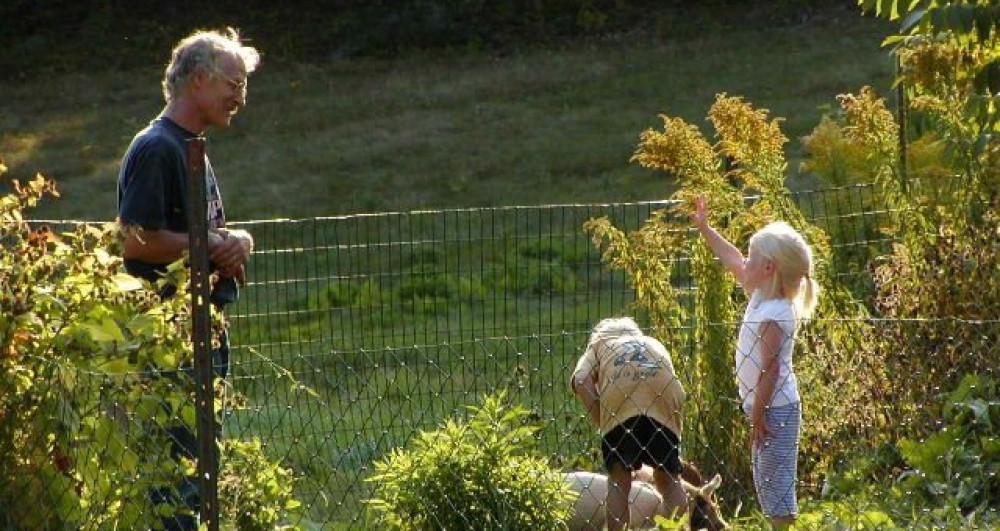


 Sunrise's Swansong
