Key takeaways:
- A change management process reduces organizational friction by defining decision-makers and setting boundaries for acceptable change levels.
- Effective communication and empathy build trust and engagement, and project managers must explain the reason for change and create space for open conversations to address team concerns.
- Successful change management depends on alignment and capability-building, not just communication. Teams must be equipped to operate differently and supported through the transition.
Handling organizational change often falls under a project manager’s responsibility, guiding teams through transitions such as technology migrations, company restructuring, and process updates. Each situation demands a tailored approach, but some strategies consistently lead to success. In this article, we explore insights on change management in project management from four experienced professionals who have led transformations and coached teams through complex change.
Featured partners
Expert contributors
 | Alan Zucker, PMP, PMI-ACP Founding Principal at Project Management Essentials Find Alan on LinkedIn |
 | Leslie Ellis Founder & CEO at Meaningful Change Consulting Find Leslie on LinkedIn |
 | Sara Gallagher President at The Persimmon Group Find Sara on LinkedIn |
 | Zhanna Semenets Web Marketing Project Manager at Mobilunity Find Zhanna on LinkedIn |
How do experienced project managers prepare teams for change?
Preparing teams for organizational or project change takes careful planning and steady leadership. It’s about helping people understand what’s shifting and how they can succeed in the new environment.
So, how to manage change as a leader? Below, we compiled tips from real project managers to help you guide your team through transitions.
1. Define a clear change management process
“The first and most important step in managing project change is defining the process that will be followed,” said Alan Zucker. Many projects struggle not because of the change itself, but because the team lacks a clear structure for managing it. Zucker emphasized that having an established process prevents confusion and frustration among stakeholders. He also cautioned that “critical processes, like change management, are not clearly defined, leading to execution problems.”
A well-defined process outlines how change requests are submitted and approved. It prevents scope creep and ensures every change is assessed for time, cost, and impact. By setting predefined acceptable change levels and identifying decision-makers, teams reduce friction and maintain control.
2. Understand the change before analyzing impact
Gallagher emphasized the importance of clarity before execution. She said, “The first step in managing change should always be to understand the exact nature of the change, as specifically as possible.”
Many teams rush to estimate costs and timelines without fully grasping what’s changing. By clarifying what’s different from the original plan and why the change is being made, project managers can avoid rework and confusion later in the project.
3. Define how change will be led
Ellis pointed out that before any planning begins, teams must “define how change will be led.” She explained, “Teams often have a project plan, but not a change strategy. Establishing a shared ‘how’ creates clarity, accelerates decision-making, and prevents rework.”
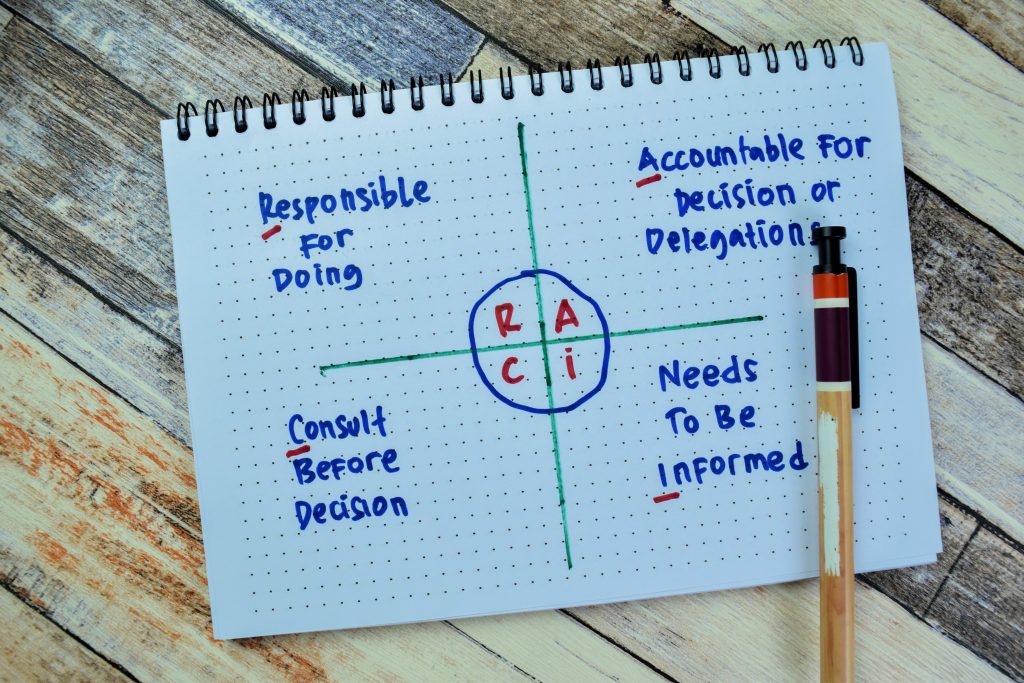
This step ensures everyone understands who leads, who decides, and how success will be measured. A strong change strategy connects the human and operational sides of the project.
4. Explain the story behind the change
According to Semenets, “When we have even slight changes in the project, the very first thing I do is ask myself, ‘Have I told my team the story behind this change?’” Explaining the context helps team members understand why the change is necessary and how it supports the project’s vision.
Semenets emphasized that open communication fosters alignment and prevents confusion. When people understand the “why” behind the change, they become more engaged and committed to the outcome.
5. Help stakeholders visualize trade-offs
Zucker also highlighted the importance of transparency in managing scope changes. Project managers should “draw a line showing what can be achieved within the allotted time and budget.” When new items are added, others may fall below the line, showing stakeholders the trade-offs in real time.
This visualization technique makes it easier for teams to prioritize changes based on value. According to Zucker, using Agile techniques like ordering change requests from most to least valuable promotes accountability and informed decision-making.
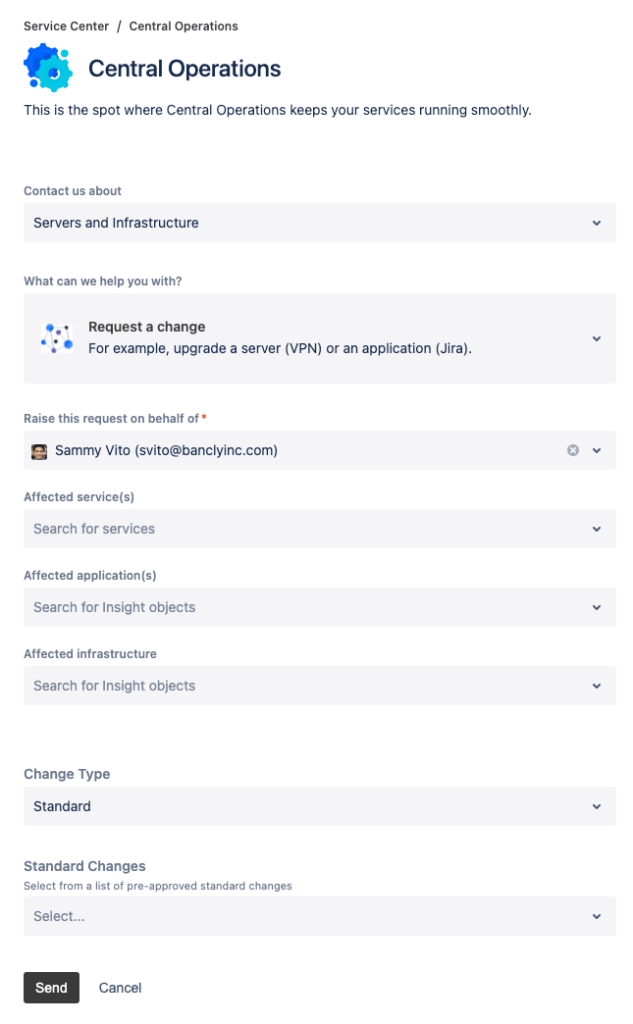
Jira Service Management is an Agile-oriented project management platform that includes powerful self-service forms for capturing change requests. In the example above, IT teams can select from different request types, such as pre-approved maintenance tasks or production system upgrades that need additional planning and review.
6. Implement change gradually, not all at once
Semenets warned against pushing change too fast. “The biggest and most common mistake a company might have is to launch a change at full speed.” Instead, she recommended implementing change “in waves and making even a small win visible.”
Gradual implementation allows teams to test processes, fix issues, and build momentum. It also gives leaders a chance to celebrate incremental progress, which motivates the team and strengthens adoption.
7. Start with a pilot before scaling up
To demonstrate this approach, Semenets highlighted a success story: “We had to migrate a major marketing platform across three countries. We started with one pilot team, making sure they had extra support for two weeks, and then rolled the change to other teams.”
This method helped the company identify challenges before expanding the rollout. By treating the pilot as a testing ground, project managers can refine processes and minimize disruption during full implementation.
8. Communicate change requests transparently
Gallagher noted that stakeholder alignment comes from transparency. She recommended that PMs “proactively communicate what the request is, who requested it, why it’s considered a change, and what trade-offs are required to accommodate it.”
This approach builds trust and prevents misunderstandings. Clear and honest communication turns potential resistance into cooperation, which helps teams move forward.
9. Track change progress with shared dashboards
To maintain visibility, Ellis recommended using “simple dashboards that integrate project milestones with change milestones—readiness, adoption, sustainment.” She made clear that “the tool matters less than shared ownership of what’s tracked.”
Dashboards help align cross-functional teams and keep everyone accountable for both technical and behavioral change outcomes.
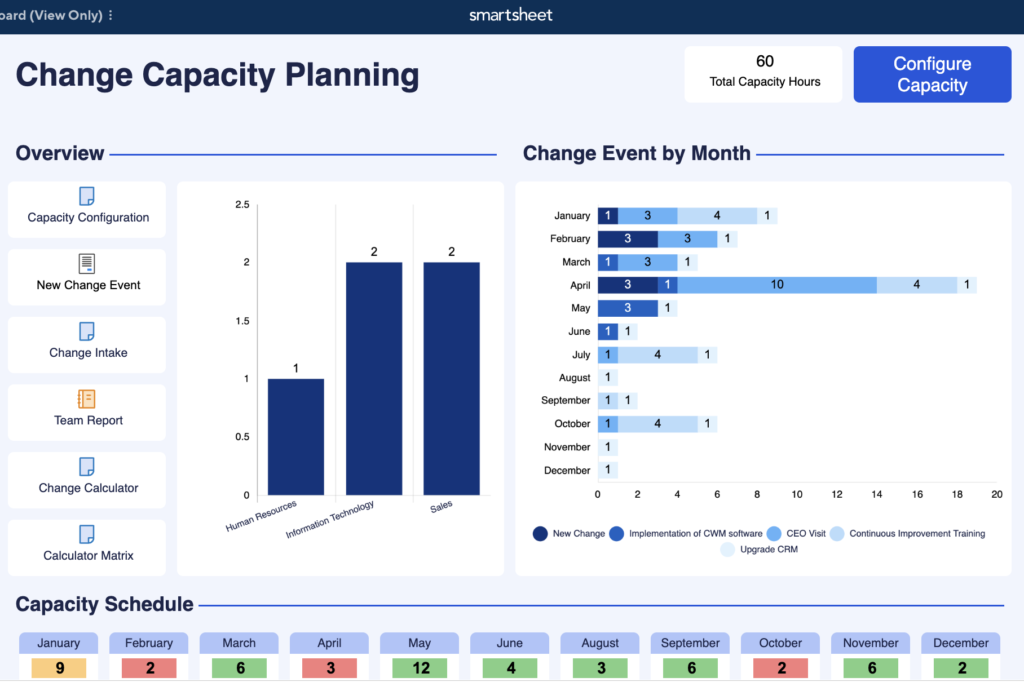
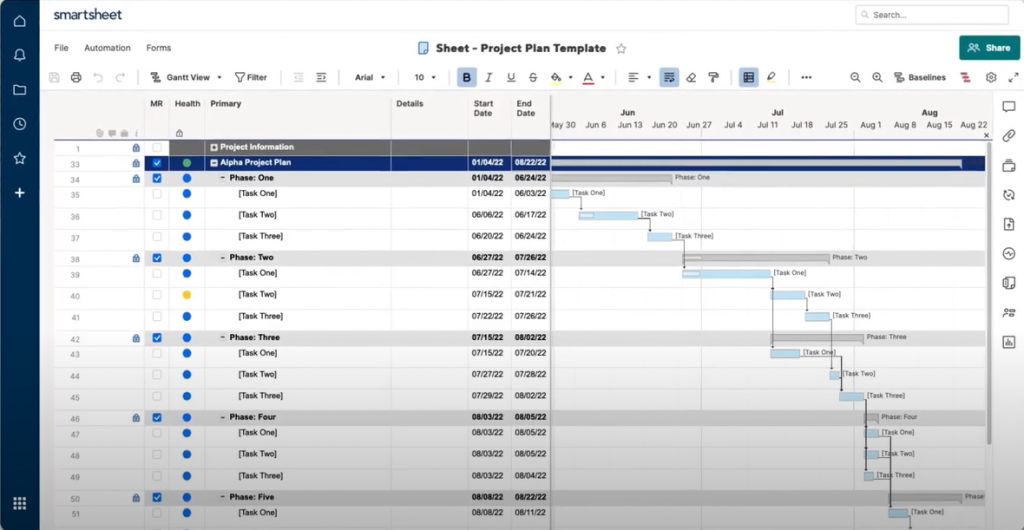
Smartsheet is a project management platform that offers standardized tools that help organizations plan and execute changes efficiently. Its dashboards work as change management tools to measure the scale of each change, assess your organization’s capacity to manage it, and include customizable forms to collect change events from across teams.
10. Rebuild stakeholder confidence during implementation
Gallagher cautioned against assuming that a request always results in a change. “Stakeholders often quietly feel that the ‘change’ was actually a project team miss.” To address this, she advised PMs to “rebuild stakeholder confidence through active listening, clear updates, and a shared sense of urgency.”
By acknowledging perceptions and communicating progress openly, project managers can strengthen relationships and maintain alignment throughout the change process.
11. Build stakeholder alignment through shared purpose
Ellis emphasized that stakeholder buy-in is earned through alignment, not persuasion. She stated, “Buy-in isn’t a single conversation; it’s earned through alignment. I coach PMs and sponsors to align early on the why, not just the what.”
When leaders communicate a consistent purpose, engagement cascades naturally across the organization. This alignment ensures that all parties support the change both intellectually and emotionally.
12. Embed change leadership early in the project
Ellis highlighted an example where early change planning made a measurable impact: “On a multi-year HR transformation, we reduced rework by 40% in the first year by embedding change leadership upstream of project planning.”
By defining stakeholder readiness before system design began, the team stayed on schedule and improved trust across departments. This shows that early integration of change management leads to stronger results and smoother adoption.
What change management skills do project managers need?
Understanding which change management skills to develop helps project managers lead teams more effectively during transitions and organizational shifts. Below are key skills that real-world project managers identified as essential for managing change with confidence and long-term success.
- Emotional intelligence and empathy: Semenets’ insights point to the value of emotional intelligence in guiding teams through change. She emphasized that “not for everyone changes might be easy,” reminding project managers that individuals react differently to disruptions. Recognizing those emotional dynamics helps managers provide reassurance, adjust communication styles, and maintain morale under shifting priorities.
- Decision-making under pressure: According to Ellis, clarity is the foundation of flexibility. She advised, “Clarity first, flexibility second. The clearer everyone is on intent and success measures, the easier it is to flex without losing integrity.” This skill combines critical thinking and calm decision-making. In complex projects, clear communication about goals and priorities allows the team to adapt without compromising outcomes or project integrity.
- Effective communication: For Semenets, communication is at the heart of effective change management. She shared, “I ask teammates what worries they might have due to the changes in the project.” This empathetic approach turns resistance into collaboration and ensures people feel supported throughout transitions.
- Flexibility and adaptability: Gallagher noted that “Great project managers see themselves as facilitators of change, not protectors of scope. Change is inevitable—especially in longer projects.” This perspective reflects adaptability that balances control with openness to adjustment. Being flexible allows project managers to reframe change as a strategic opportunity, not a disruption.
- Capability building and coaching: Ellis highlighted that strong project managers focus on building capability, not just delivering communication or training. She emphasized, “Projects fail when stakeholders are informed but not equipped to operate differently. Build readiness into the work, not after it.” This skill means integrating learning and development into every stage of the project. A skilled project manager doesn’t just explain change, but they also prepare people to sustain it long-term.
Bottom line: A consistent change management process creates predictability
Trevor Greenberg, PMP, explained that “a consistent change management process creates predictability in how the changes are implemented and also makes sure everyone understands that the process is not changing as the project evolves.” This consistency gives teams a reliable path to follow and removes uncertainty about how decisions are handled. It also strengthens trust because stakeholders know the approach will remain steady throughout the project.
FAQs