Image
  • Pinhoti 100–The DNF that was an epiphany. We are measuring ourselves by the wrong metrics.

    This was my third and likely final time trying to get a Pinhoti buckle. I was convinced that this was the year it was going to happen. I was running with my best friend, my accountability partner, the person who I’ve known since 2008, who actually got me running crazy distances. Over the last year both of us fought through some personal struggles. I had some mental health issues to deal with and she discovered that some great new friends were actually major league pricks.

    We lost track of who we were and what we were supposed to be as humans and as runners. This past June we agreed to get our collective shit together. We both had gained weight. In August 2022 family crises led me to weighing 204. Spending time in prickville caused her to gain weight and feel preyed upon and unsupported. We both needed our best friends to remind us who we really were. We have been friends for 15 years but drifted apart last year. We renewed the friendship And rekindled our love of trail running and our discipline to be as fit as possible. I lost 40 pounds and she lost 25. We remembered what it was to feel joy while running. To feel the pain and euphoria of a hard ass day on the trails. We pushed each other to work harder, climb higher, and run happier than we have in years.

    We finally had returned to our leaner and meaner and happier running selves. Our friendship grew to its past strength as we disposed of the pressure, sadness, and pricks in our lives. When she got covid at the Bear 100 I entered her in Pinhoti 100. We planned to run together like we trained all summer: smiles, laughs, more than a few “fuck this shit!”, and great conversation.

    We had it all going for us. We had worked harder, climbed higher, and lost more weight than in the past 8 years. but this race is a weird one. The race starts with a bottleneck of 300 people trying to get onto a single track trail that has no space for you to pass for at least 3 miles. By the time you get on the trail, you are 5,6, or 7 minutes behind the pace. For the rest of the 10 or 12 miles after that, you are struggling to get back on pace in the dark over rooty leaf-covered trail. It is not fun but that’s the game. I was convinced we would claw back that time and get back on pace for our Finish. But the more we ran, and the harder we worked, we kept losing time. For some reason we could not catch up on the pace. We got to mile 13 and then my friend tripped and aggravated her back, which slowed us down a bit.

    For close to 20 miles we barely said a word as we hustled to catch up on the pace. We did not dawdle, we spent less than a minute at aid stations, we ate on the run, we did everything the way we were supposed to do. And we certainly were not chatting, laughing, or enjoying this day. But we never clawed back any time because of that bottleneck. She was miserable from pain and from fighting against this race. And I was miserable because I wasn’t having fun. This became a job, a chore, something that felt like pressure. It felt like an obligation rather than a choice. I am not afraid of hard work. If you know me then you know that by now. But this race became a chore.

    We were 15 minutes ahead of the cut off at mile 21 when we made a decision to call it. Her back was getting worse. We were both miserable. The fun we imagined when we signed up never materialized nor would it. There was no joy in looking at another 78 miles of misery and having no fun. We would have been cut at some point later down the line I’m sure. We slowed down. and walked the next few miles as we talked about goals and the type of runners we want to be and the type of races we want to support.

    We called it quits. We went back, cleaned up, and agreed that we weren’t the type of runners who wanted to chase cut offs because that was no longer fun. We have enough shit in our lives, we have enough pressure in our lives, we have jobs already. It’s not right to make trail running a chore and a job and misery. So we’ve decided that we only will run those races that have generous cut offs that are long and tough. Let’s have fun while working our ass off.

    But let’s have time to enjoy being out there. Take in the views. Remember why we do this. We will run together in our races. We’re going to smile, have fun, and work our asses off. The most fun we had this year was at our own training camp where we ran and climbed our asses off for three days. We worked hard, but we smiled and laughed, and we got to enjoy amazing Colorado scenery. We want to run the races that don’t get the attention of mainstream trail and ultra media. The races that don’t give you a lottery ticket for one chance in 25,000 to enter a race that you’ll never get into. The races that don’t have 3 times the amount of film crews as runners. The races run by small families or companies that don’t offer prize money, don’t appear on the big podcasts, that don’t have golden tickets. But they give their runners a great time, they appreciate each and every one, and they make you feel like part of a family. Those are the races that we will sign up for.

    We want hard work, but we also want to have joy while working hard. I’ve only got so many days left on this earth and I don’t plan to spend them being miserable doing the thing that I adore and look forward to. Some people might call this quitting, and some people might cry “death before DNF”, but I think that’s bullshit. Where’s the nobility in forcing yourself to finish and feeling miserable the whole time just so you don’t have a DNF? I no longer will do things that aren’t fun. I’ve had enough misery. I’ve had enough pressure.

    My mental health depends on trail time where I feel safe and welcome and joyful. I will not make myself miserable in pursuit of something shiny that I will rarely wear around my waist. Racing is not about the fucking buckle. It’s about what happens to your mind, body, and soul as you run on dirt. Trail running is supposed to be fulfilling, enriching, empowering. Trail running is supposed to be fun. Shiny metal objects do not define trail runners. Finish lines do not define trail runners. Lottery tickets do not define trail runners. The last weekend in June does not define trail runners. UTMB stones do not define trail runners.

    What defines trail runners is loving life on dirt. Of smiling at the end of a long and damn hard working day on the trail. Of looking at a friend and saying, “hey, we did a damn hard thing! Let’s do it again tomorrow!” And looking at that friend again saying “I’m damn proud of you”. It’s not about a buckle. It’s not about a finish line. It’s about what it does to our spirit. We made the decision to call it at mile 24. We sat at the aid station, and we finally ate the food that we had packed to nourish us during the race. We hung with the aid station workers while waiting for a ride, and we were at peace for the first time all day. And that should tell you something about how that race went and why we pulled the plug. The only time we were happy the entire race was after we let it go.

    There’s been a lot of good, frank talk about mental health and trail running the past couple of years. We sometimes forget that we put pressure on ourselves and damage ourselves in the pursuit of something that other people think we should have. The only thing that we should pursue is joy on the trail and the happiness of a day spent outside.

    I suffer from anxiety and depression, and something called cyclothymia, a mild mood disorder that has mood swings like those with bipolar disorder, but not as severe and not as long-lasting. Getting a handle on what I have, and how to treat it was big for me. it took a while to acknowledge that I needed help. It almost destroyed a beloved friendship. And it made running hard because in my low swings, I wanted to do nothing especially not run.

    We spend our life striving in the things we do for the things we buy or for the jobs we have. But sometimes we make our beloved activities and hobbies into chores and jobs. And we never find the happiness that we’ve been pursuing since we were children. I want to work hard in races, but I want to be able to stop and look over the landscape and marvel at the gift nature has given us.

    In some races I barely can look around because I am focusing on my feet and the trail 5 feet ahead of me. I’m too busy trying to get across an arbitrary finish line, get a buckle, gain a qualifier, earn tickets for race lotteries. We are measuring ourselves by the wrong metrics.

    We have turned trail and ultra into a transaction. Give the RD money and you get to qualify for Western States or Hardrock, or whatever popular race that we’ve been taught to revere as if it is the end-all, be-all of trail and ultra where nothing else matters—certainly not races that don’t earn you a ticket or “stones” for entry into a lottery for a race that you’ll likely never run. We chase “qualifiers” like hamsters on a wheel. We forgot why we run. We forget why trail and ultra speaks to our souls. We’ve made trail running a process of consumption, accumulating lottery tickets, kudos, stones, buckles, sponsorships and ambassadorships.

    I just want to run on dirt and climb mountains with my friend. I want to look over magnificent mountain views, take in all that nature has given us, and realize that I am but a speck on this big blue marble. But I am one happy speck because I run for joy, and I run for smiles, and I run for myself, and for no one and nothing else.

    I have now only three goals for every run and race that I do: Did I work hard? Was it an adventure? Did I smile and have fun?Those are the runs for which I’ll get up at 4 on a Saturday morning. Those are the runs that move my soul. Those are the runs worth running.
  • Image

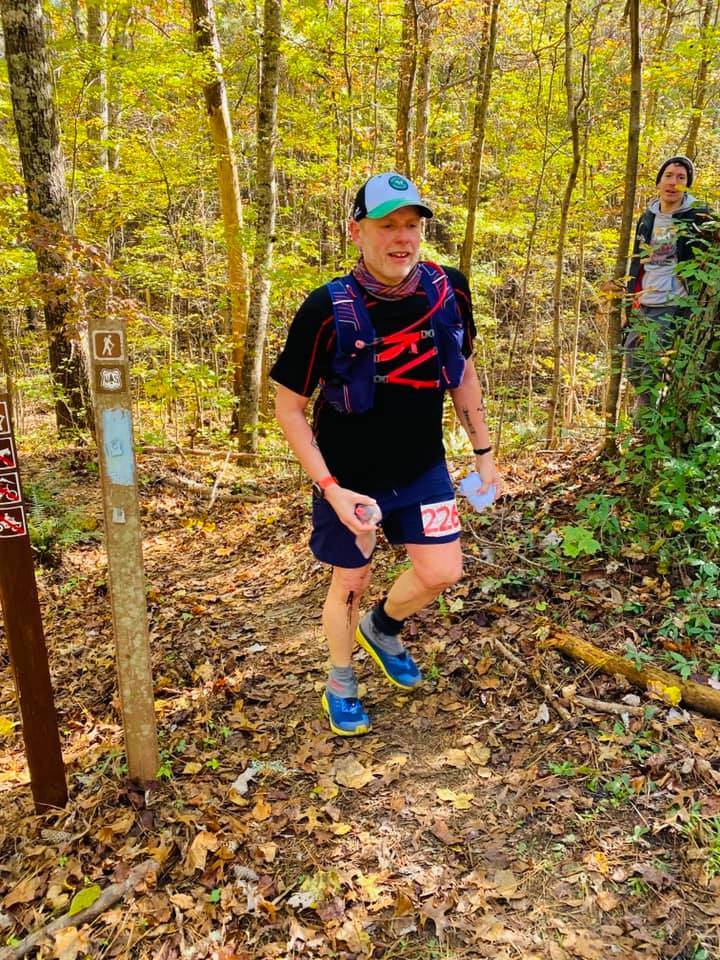
    More on the race later. But for those interested, this is what I posted over several days on the Pinhoti 100 Facebook page about my race and DNF.

    I posted this in August in a search for a new and pacers:

    In early November on the Friday before the 2020 edition of Pinhoti 100, I ran a solid 20 miles on the Pinhoti Trail. I was scheduled to photograph the race and wanted to get my long run over with before the weekend. I felt good. It was a solid run. That weekend, I took race photos and celebrated this crazy thing we adore called ultra. The following Monday, November 9, inspired by the ultra runners I photographed over the weekend, I headed to the track to do a little speedwork in preparation to run the Blood Rock 50 in December. After a short 4 miles on the track, I felt wasted. Sure, track work is not the ultra runner’s favorite thing, but I shouldn’t feel like THIS. I chalked it up to a lack of sleep over the weekend, and went about my day. As I drove to work, my truck acted weird, so I dropped it off at the shop and walked 4 miles back home with a full work backpack. That was hard. Harder than it should’ve been. Again, I was tired from the weekend, I thought. The next morning, November 10, 2020, I went out for an easy early morning run. Strangely, I had the worst case of heartburn during the run. I thought nothing of it, really. I’m at the age where my dad developed his struggle with heartburn. That dude ate antacids and drank milk BEFORE meals just to prep his stomach! I got home, took a shower, then rode my bike the 4 miles back to the shop to get my truck. By the time I arrived, I was covered in sweat and couldn’t stand without leaning on something. As I drove away from the shop, I called my friend Megan, who is training to be a nurse, and asked her what she thought. “How close is the ER?” She asked. Not very. I went instead to the local fire station to get an EKG from the paramedics. A young paramedic helped me that day because the rest of the fire house was playing with a new army surplus hum-vee that they had received. The kid ran me through the EKG and said that it looked like something might have happened but I was fine now and told me to make an appointment to see my doctor in a couple of weeks. Chalking it all up to heart burn, I went and bought a LOT of pepto bismal, Gaviscon, etc. Nothing was working. The fire kid had thrown my EKG strips in the trash, and for some reason as I left, I retrieved them and put them in my pocket. I went home, crawled in bed and waited for the heartburn to pass. The boys were off at college and Marie was in Florida caring for her parents. I was alone in the house. Megan texted and asked if I sent the EKG strips to my doctor. No, I hadn’t. “I think you should.” An hour later, my doc called and told me to “get to the ER NOW, you’re having a cardiac event and don’t drive yourself!” My friend Paul took me to the ER. Three hours later I had three stents in my heart. My heartburn was, in fact, a mild heart attack. My LAD artery was more than 90% blocked. The LAD is called “the widowmaker” because when it’s blocked, you die. The incident was relatively mild. I didn’t suffer the extreme chest pressure or the dramatic movie-like chest clutching that has shaped our common perception of what a heart attack “looks” like. Ultrarunning literally had saved my life. It had strengthened my heart such that I was able to withstand the blockage and get to the hospital. Had I been a normal sedentary southern male, I would be dead. For the last decade, I’ve run and lost a lot of weight (I’m 5’9” and I weighed 262 in 2007) and eaten better than ever. But the first 44 years of my life were a study in junk food, laziness, sugar, and obesity. That and the stress from my job over the past three years created the perfect conditions for a heart attack. Ten years of active health couldn’t undo 44 of unhealthy living. I’ve since removed a lot of stress in my life. I stepped down from a department chair position that I held for 14 years and returned to the faculty to teach and write. I feel happier about my job than anytime in the last decade. I forgot how much I love being a Professor, just teaching and writing. I slowly returned to running under the watchful eye of cardiac rehab. In June, I passed my 6 month stress test with flying colors and got clearance from my cardiologist to think big once again. Facing mortality reminded me that we need to live the lives we want to live. Do the things we keep putting off. Chase happiness rather than a larger paycheck. We have such a finite time on this planet. Seek happiness and adventure. Running and I haven’t gotten along these past three years. Anxiety, depression, stress pushed me away from it. I lost the love. I forgot my “why.” Running out of obligation is depressing—it feels like a job. But something clicked in late spring as I felt more enthusiastic about running. By late June, I had returned to the weekday volume that I enjoyed in the mid-2010s. I actually looked forward to running. I no longer found excuses to cut runs short or sleep in. I found myself running a little extra. I remembered what falling in love with running felt like. And I decided to shoot for something big.My heart attack was on November 10, 2020. The 2021 Pinhoti 100 will take place on November 6, 2021. I want to finish this 100 mile race 361 days after suffering a heart attack. I PLAN to finish this race. I WILL finish this race. When I asked my cardiologist if I could do Pinhoti, he replied in his French-Canadian accent “Gordon, let’s run 100 miles!”But I need help. I need a crew. I have one volunteer (thanks Pam!) but I need a couple of more people to help me get there—to keep me going in the overnight hours, to suffer the inevitable low points with me, to force feed me PBJ and fig newtons and Gu, to sing Johnny Cash songs in the wee hours of the morning, to join me on a journey. To Never let me stop. To remind me that second chances in life are precious and must be earned. Most of us are familiar with the centuries-old symbol “Memento Mori.” Symbolized by images of skulls and dancing skeletons on gravestones, the phrase is Latin for “remember that you will die.” Memento mori remind us of our finite time here on Earth. Memento Mori also reminds us to “memento vivere:” “remember to live!” They were reminders that we should live our lives well. For me, this means removing the things that bring me stress or unhappiness and to seek the challenging things that caution might otherwise convince me to put off to later days. So, I choose Pinhoti 100 as my big thing. (This will be my second 100 mile race.) Why? Because I’m alive. Because why the hell not?! Because life is short and there’s nothing like the feeling of crossing the finish of a 100 mile race. Because in suffering there is joy. As Dylan Bowman said recently, “suffering is a gift.” The 100 miler is a transcendent experience. It moves you beyond your self-defined limits and suffering threshold and into another level of sentience. It is life in a day. Joy, struggle, pain, sadness, seeking, loneliness, fellowship, euphoria, and introspection. It is, as David and Megan Roche call it, a “big, scary, impossible goal.” And when you reach the finish line the tears are sweet and the euphoria like a drug. Anyone up for an adventure with me?
    What I posted on race eve:

    On Nov 9, 2020, the Monday after I photographed Pinhoti 100, I had a heart attack and had stents placed in my widowmaker artery. The fitness from ultrarunning saved my life. Tomorrow I will run Pinhoti 100–almost a year to the day since having that heart attack. I will finish. I have a second chance at living a great life. Pinhoti is a victory lap. If you see me out there, do not let me stop. If I can survive a heart attack, I can go 100 miles! Remind me how lucky we are to do this. My goal tomorrow: smile, be mindful of each and every mile, and grab that damned buckle on Sunday morning.

    What I Posted after the DNF (This is what we were discussing on the Trailrunner Nation Podcast):

    I didn’t cross the finish line today. I didn’t hold my buckle in pride as my crew congratulated me. I didn’t sleep the sleep of a 100-miler. My night ended at mile 52. A sour stomach left me unable to eat for a good part of the day, I found myself growing weaker by the hour, and depleted and broken by the time I hobbled into the Hubbard Creek aid station. A narrow cutoff and a broken body ended my hopes and dreams of calling myself a Pinhoti finisher. Race day is a crapshoot. But it doesn’t reflect on who you are or the joy of ultra. Ironically, this was the best race I’ve had in a long time. I really invested in serious training more so than in the past few years. I was excited to train. I haven’t looked forward to that in a while. I rediscovered my love of trail running. I was running this race exactly the way I wanted to. Strong on climbs. Running flats with a steady and even pace. Spent very little time in aid stations. I was smiling. I was happy. I felt joy. It was a great day in the woods. This is the first race in years that I could visualize myself moving strong along the trail, cruising through the night, rolling from aid station to aid station, smiling and talking, and finally crossing the line and weeping as I held the buckle. I could see it like it had already happened. I knew this day would be mine. I wanted so badly to hold that buckle today. I wanted to celebrate survival and rebirth. I wanted to hold my second buckle as proof that I was back; that my first buckle wasn’t a fluke. But I realized the buckle doesn’t prove anything. It is what I feel inside that means the most. I love this sport. I love the people I have met and the lives we have shared. I love the feeling of race day, the thrill of the event, the feeling of excitement as runners move through the night toward the finish. Dedicated volunteers waiting at aid stations. Friends who devote their time to get a runner through the race. I love the incredible soreness and zombie walk after a race that says “you did something hard and worthy!”I am not one who easily accepts kindness or generosity. I resist it because I fear I’ll let the giverdown. I am humbled by my crew. Four of the nicest and most encouraging people you’ll ever meet. ( Lori LyonsTony FioreLaurie Nichols WilbanksPamela Sanford Costenaro)They set aside their time to help me. They made me feel like an all-star. They put their faith in me and I wanted so much to see them as I crossed the line. I fantasized about a group picture with OUR buckle. I am most disappointed that i couldn’t do this for them. They’ll never know how much it means to me that they were there for me. Anytime, anyplace, if these wonderful people called me for anything, I’d be there for them. I wanted that buckle for all the aid station volunteers who invest as much emotionally in our successas we do. They spend hours making us eat, moving us along, and sending us off with encouragement and cheer. I wanted to do it for Jamie and Todd, who make us feel like part of a family. I wanted to do this for people who think heart disease means an end to adventure. I wanted this for our trail friends who encourage us, run with us, and live and die with our adventures. I wanted to do this for myself to show that I can still run 100 miles, that I can be stronger after a heart attack than I was before. To all of you, I am sorry that I let you down. It takes special people to live in the world of ultra. Equal parts crazy, devoted, and selfless. Ultra truly is life in a day. All your hopes and fears. Sadness, joy, determination, frustration. Lows and highs. Anxiety and confidence. Ultra is never not teaching us a lesson. What did it teach me yesterday? That the journey is the most important thing. Finish or not, if you cant enjoy the journey, then you aren’t doing it right. Your friends will blow you away with generosity and kindness such that as you write words like these, the tears make it hard to see the keyboard. That to try is to win. The courage to hang yourself out there with a ballsy goal is more important than anything. That’s why I wrote what I did on Friday. I needed to hang out myself out there. To let everyone know I wasn’t stopping until Sylacauga. Ultra will break your heart. You can give it all your love and devotion, but it will take your heart and stomp on it like a cold and feckless lover. But those of us who love ultra knew going in that this is a one-way love affair. Whatever love you get from ultra must be earned with sweat, tears, work, and devotion. And even then, ultra will say to you “not today.” The great days and race finishes make the heartbreak worth it. And those of us who love ultra know that every race has one of two endings: heartbreak or triumph. Without the physical and emotional pain, the struggle and sadness, or the potential for incredible triumph, then it isn’t worth toeing the line. The important thing is what we take out of each race whether it was a glorious finish or a tragically quick end. I toed the line. Had the courage to start. And while all that is true, it still hurts like hell. But I still love you ultrarunning. And I’ll be back
    What I posted a few days later:

    When i DNFd Pinhoti last week, I thought to myself that perhaps I should give up on This race. Two Pinhotis, 2 DNFd. But as the week went along, and I had some sleep and recovery time, I decided that I’m not stopping until I get that buckle. The hard things are worth trying, and possibly failing. But the trying is what makes us alive. So. Pinhoti 2022. Here I come. #unfinishedbusiness“Great moments are born from great opportunity.”

  • Most of this appeared in Ultrarunning Mag, but because of space limitations they could not include all of it.  Here it is in its entirety

    In the early morning of Sunday November 5 a lone runner sits before the fire at Wormey’s aid station at mile 80 of the Pinhoti 100.  He’s exhausted and depleted.  Unseasonably warm temperatures the day before wrought havoc on the field, causing up to 40% of the entrants of the Pinhoti 100 to drop or miss cutoffs.  But here, more than 24 hours after the race began sat Jason. He had missed a cutoff and wouldn’t finish. He was slowly coming to terms with running so far for a dream only to see it die a slow and irreversible death.   Taking a sip of coffee, he looked up at the person sitting across the fire and said “I had a good 80 miles,” and cracked a faint smile.  He returned his gaze to the fire.  No regrets.  No anger.  Only quiet acceptance of a good day in the woods.

    A few hours earlier at the  Adams Gap aid station at mile 55 a runner stumbles out of the woods to a smattering of applause.  He lies down on the road.  Within a minute he is sound asleep.  The folks around him wonder if this is it for him or just a power nap to get him through the last half of the race.  He, too, slogged through a hot Alabama November Saturday and expended too much energy, lost too much sweat, and had little left.  After ten minutes he stands and faces a decision.  Can he, should he, push on?  Or does he surrender to the pitfalls and challenge of the 100 mile distance?   He  reaches for the latches on his hydration pack. In that moment the decision becomes clear. The pack loosens on his shoulder and slips off. He sits back down. Too tired for emotion.  Too exhausted to speak. Simple resignation. An acceptance of the end of a dream and the beginning of the mental gymnastics that all ultra runners go through when their race ends short of the finish line.  In the background, stereo speakers at the aid station play Billy Joel’s classic hit “Only the Good Die Young.”

    For every story of disappointment or failure at Pinhoti there is one of triumph. The next morning dozens of runners will cross the finish line.  For some this is their first buckle.  They cry and smile and then fall asleep in the car on the way home only to be awakened by the incredible hunger that comes a few hours after a 100 mile race.  The veterans smile too as they get their buckle that will join their collection.  Whether the first or the tenth 100 miler, the feeling is the same: equal portions of pride, disbelief, relief, and exhaustion.

    Welcome to northeast Alabama and the Pinhoti 100.  In its tenth year Pinhoti 100 has lured runners from all over the U.S, and many foreign nations to the Pinhoti Trail for a point-to-point 100 mile race from Heflin, Alabama to the track of the football stadium in Sylacauga, Alabama, where Race Director Todd Henderson lives and where he dreamed up the race a decade ago to give Alabama trail runners a home-race along some of the most beautiful trail and scenic vistas in the state.  The race takes runners to the top of Alabama, its highest point at Bald Rock on top of Mt Cheaha and back down again across the undulating trails that make up the Pinhoti trail system that runs through Alabama and Georgia.

    Pinhoti 100 attracts elite runners and those seeking their first buckle.  Karl Metzler has run and won three times.  Yassine Diboun ran it a few years ago.  Regional elites swarm to the race.  It’s attraction, aside from beautiful vistas and trails, is that it is a qualifying race for Western States.  More than a few people have earned their WS100 lottery ticket along the Pinhoti.

    Pinhoti is Creek for “turkey home” (the trail marker is a blue blaze and a turkey footprint) and runners often see rafters of wild turkey along the trail, which 335 miles runs from its southern terminus at Flagg Mountain just southeast of Birmingham, Alabama to its northern terminus in Georgia where it meets the Benton-McKay trail at Springer Mountain.

    Henderson started the race, in fact a whole series of Pinhoti races, in 2006 noting the lack of any signature trail events in the area.  He wanted to be able to see his friends compete without having to travel.  And he wanted to showcase the beauty, and difficulty, of the Pinhoti.  He knew that local runners wold not only run the race, but crew and pace for it as well.  In fact, with so many drops this year there were almost a dozen pacers who had lost their runners early in the race from drops, that they were driving around looking to help anyone who needed it.  That kind of running spirit is what makes Todd and Jamie Henderson proud of this trail family they’ve created and what attracts runners from all over the country.

  • I’ve written about Ruffner Mountain before.  You can read those pieces below.  Here now are a few images form this year’s Crusher Ridge 42K at that beautiful mountain in Birmingham

    Ruffner Mountain Trail Running Festival

    Crusher Ridge 42K Race report

  • I planned to pace a friend at Pinhoti 100 earlier this month. But an unseasonably warm November day wrought havoc on the course, and many racers, including y friend, missed cutoffs.  So I hung around and volunteered a bit and swept a couple of sections of the course.  Here are a few images.


  •  

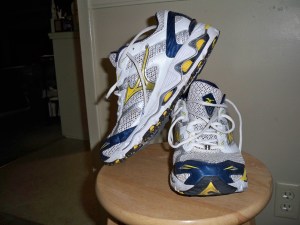
    I’ve always had an on-again-off-again relationship with Mizuno.  I ran my first marathon in a pair of Renegade 4 (2009).

    Ran my first marathon in these. The Renegade 4
    Ran my first marathon in these. The Renegade 4

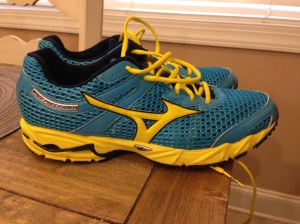
    Five years later I went Mizuno-crazy looking for a fresh running start after bilateral inguinal hernia repair.  I fell in love with the Precision 13.  They had a Robin’s egg blue and Canary color way that I love to this day. (I still wear these shoes for knocking around town)


    Mizuno Wave Precision 13. LOVE these colors. A great shoe
    Mizuno Wave Precision 13. LOVE these colors. A great shoe


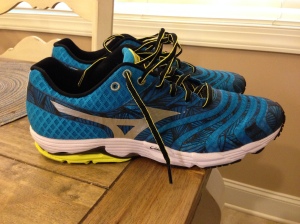
    I then drifted to the Sayonara, which replaced the Precision in the liineup.  I ran a good chunk of mileage in them, but also found them incredibly comfortable for walking around Walt Disney World for a week.

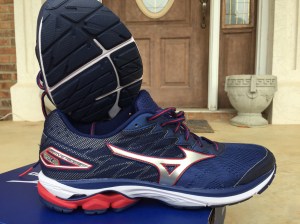
    Mizuno Wave Sayonara. Back in Mizuno after 4 years in Brooks
    Mizuno Wave Sayonara I.

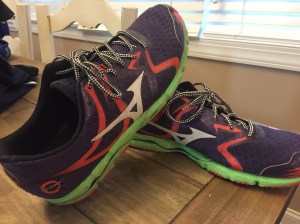
    And later sampled the Hitogami, which was fine for short, fast runs, but I needed a lot more shoe.  Still wear them around town.

    Hitogami
    Hitogami


    (Note: with the exception of the Riders, I bought all the shoes pictured on this page.  This is the first time Mizuno has responded to my many requests to sample their shoes.  I’m thankful they did.)

    That same year I took a chance on the Rider 17.  While the Hitogami was not enough shoe for me, I loved and missed the Precision and wanted to try the Rider, the brand’s flagship shoe.  I purchased the Rider 17 with the hopes that this would be my new go-to road shoe, replacing the Brooks Ghost, which Brooks engineered me out of.

    img_3972


    Unfortunately the Rider iteration that I decided to start with was one of their worst received.  To many Rider devotees the 17 was a bust.  And they let Mizuno know about it, such that Mizuno itself made a public statement about the shoe and what they had changed from 17 to 18.  For me, it felt as if my big toes were falling over the side of the shoe.  At first I though the sock liner was crooked.  Then I thought my sock was all out of sorts.  Then I realized that the fit was just weird.


    img_3368 img_3367

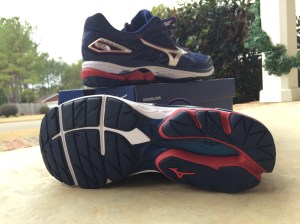
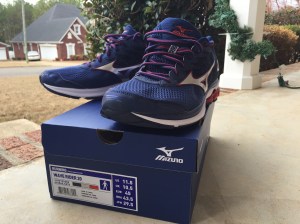
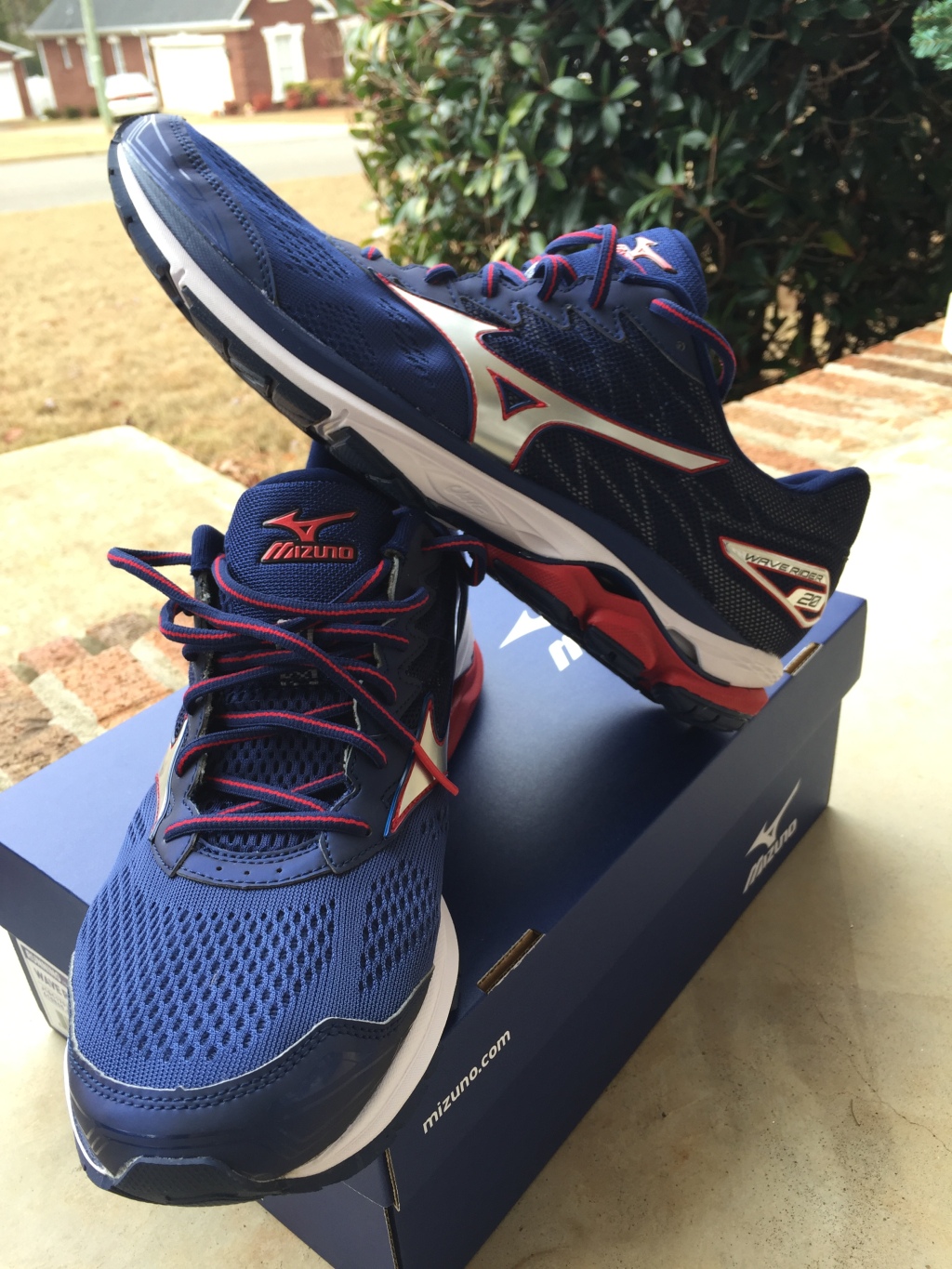
    I took a couple of years off from the Rider, a little jaded by my 17 experience.  But when the 20th anniversary of the Rider was relased to great reviews, I knew I had to give the shoe a second chance.  And thanks to Mizuno for providing a review pair gratis.  This Rider 20 is a whole new shoe, it feels like.  Gone is the phantom “toe ledge” that I felt in the 17.  The shoe is lighter and peppier.  Walking around in the shoe feels cushier than running in it.  Odd, but makes sense really.  There’s enough cushion there with the wave plate to soften your footstrike so you don’t feel like a barefoot runner on pavement, but not so much that you feel like you are running on cotton balls.  You could knock out a 20 miler in these shoes, or a few mile repeats on the track.  It’s that versatile of a shoe.  And I think thats why it is a beloved shoe among Rider devotees.

    img_3398 img_3371


    Aside from some new technical aspects (“Cloudwave technology” on the wave plate) the Rider claims a more durable midsole.  And this was my biggest problem with the Rider 17 was that thee shoe seemed to “die” much earlier than a shoe of that quality and cost should.  This model promises something different, and so far I’ve seen that difference.  I have about 100 miles on the shoe already and very little wear has occurred.  The funny thing about the Rider is that it feels like it is less of a shoe than it really is.  And I think that’s the intent here.

    A note about color.  Mizuno has led the pack in terms of being unafraid to use bold colors for thsir shoes.  When many companies were reverting to greys and blacks and white as base color for their shoes, Mizuno gave us orange, purple, green , Canaray yellow, Robin’s egg blue.  I love that.  Why shouldn’t we wear shoes that set us apart?  Why do all running shoes have to follow the same pallette?  What’s wrong with being bold?


    Men’s Wave Rider 20

    Women’s Wave Rider 20


    Image
  • It’s an endless pursuit for the runner.  A search that never seems to end.  Like the peak of an endless climb, the search for a rain shell that repeals the rain, weighs little, and doesn’t produce sauna conditions when worn seems endless. Oh, and doesn’t cost 200 dollars.

    Does such a jacket exist?  Like the mysterious yeti, can the lightweight, affordable rainshell be located by the budget-conscious runner?

    img_3944

    Brooks believes they have provided the answer with their uniquely designed Cascadia Shell.

    Brooks sent this jacket to me back in the early fall, at a time with Alabama was in the midst of a massive drought. I didn’t get to test this shell in a race in rainy conditions until December.  And it was put to the test in a big way at Pine Mountain Trail Race at FDR State Park, and around my neighborhood on a couple of rainy runs.

    img_3955

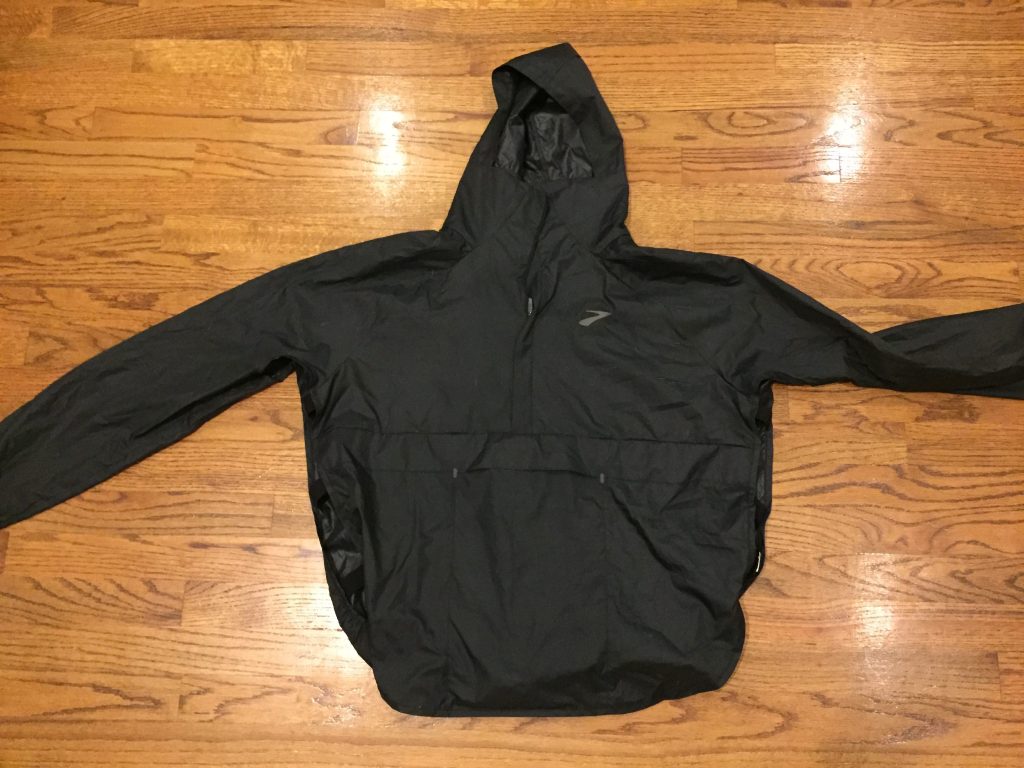
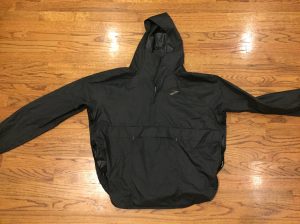
    Brooks offers a unique set of design innovations with the shell.  This is a pullover shell, a quarter zip adirondack-type jacket.  It has a chest pocket just below the zipper, which comes in handy.  The sidepanels of the shell are open with three pieces of elastic, each about 1.5 inches wide, which offers ventilation on warmer, rainy runs.

    The REI blog has the perfect description: think of a semi-fitted poncho with arms.

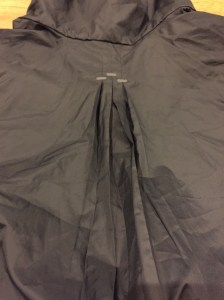
    The really cool design feature in this shell is the “hump” that’s built in to the back, which allows you to wear it over a hydration or day-pack.  Too many rain shells require you to take the pack off to put the jacket on.  Not the Cascadia Shell.  The extra space in the back allows for a solid fit over the pack as opposed to trying to wear a conventional rain shell over a pack, making it feel like you’re being squeezed.

    img_3846

    I’ve worn this shell in light rain and heavy downpour.  The Cascadia Shell is at its best in light to moderate rainfall.  It sheds water and ventilates well.  To be sure, this is not a waterproof jacket.  It is water resistant, so light rain or misty days are perfect for this shell.

    img_3954

    At Pine Mountain the weather called for light rain for most of the day. Perfect, I thought, I’ll wear the Cascadia Shell and pack it away when the rain stops.  The “light” rain turned into a monsoon and soon the Cascadia Shell soaked through.  Here’s where the venting on the Cascadia Shell becomes a detriment.  When the shell is soaked through, like most shells are apt to do in rainfall of Biblical proportions, the shell should block wind and keep in body heat.  The venting on the shell, and the smock like design, prevent the storing of body heat and hasten cooling, which leads to a miserable experience.  This was only a 19 mile trail race and I thought about dropping at mile 10 because I was so cold and wet.

    fullsizerender

    If I were to redesign this shell, I’d add sipper or velcro vent closures so that the venting could be managed.  But overall, I love the design aggressiveness here.  Not just another zip-up shell that doesn’t fit over a pack.  Kudos to Brooks on thinking outside the norm.

    Men’s Cascadia Shell at REI

    Women’s Cascadia Shell at REI


    Image
  • Brooks new Trail Collection
    Brooks new Trail Collection: Cascadia Shorts

    Brooks has had a foot in the trail running scene for quite some time with its flagship trail shoe the Cascadia, now in its 11th iteration.  Along with the Puregrit series, the Adrenaline ASR and the newer Mazama lightweight trail racing shoe, brooks is showing an increased devotion to the trail.

    Now they’re producing trail-specific apparel.  While most folks might not see a difference in shorts worn on the road or the trail, there are things you want in apparel that road runners won’t necessarily need.  Durability, pockets, comfort. For many rail runners, durability is key.  Softer and lighter shorts designed or road running might not cut it on a technical trail.  Likewise, many road shorts have little to no storage space for keys gels, or whatnot.  Brooks is trying to cater to specific trail running needs with this collection.

    Side sipper pocket is water resistant and spacious
    Side sipper pocket is water resistant and spacious

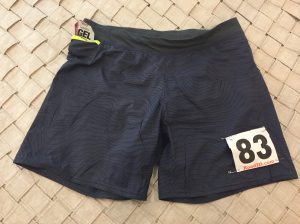
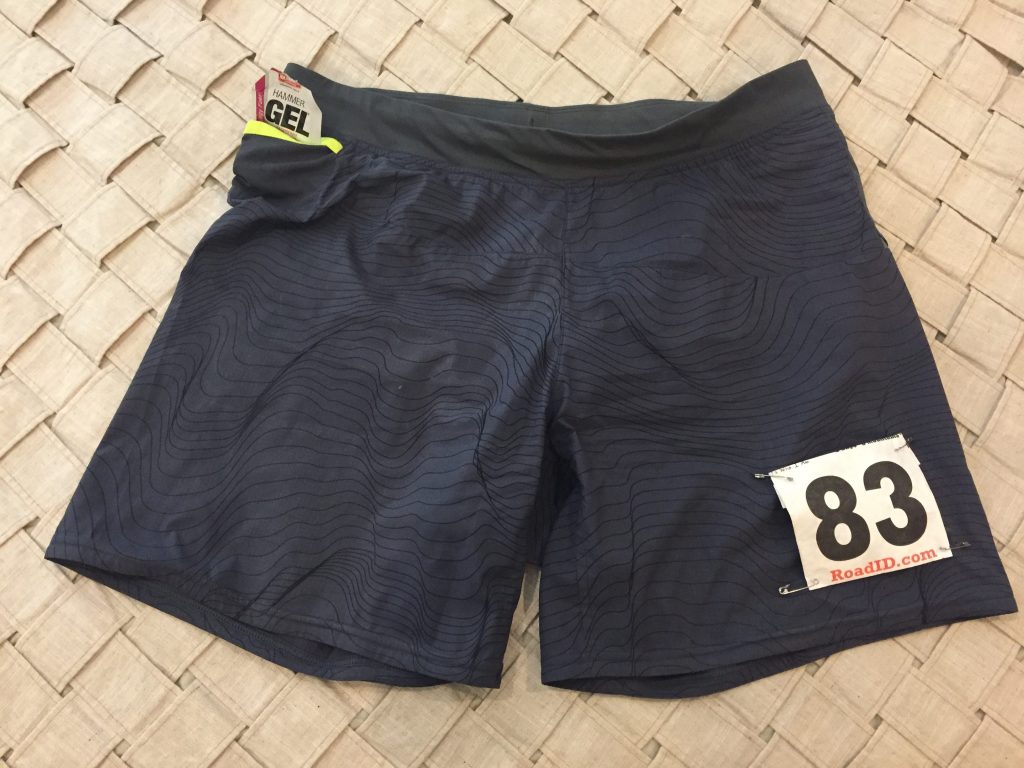
    Brooks was kind enough to send me a pair of the Cascadia shorts.  With a 7 inch inseam you won’t be flashing all your thigh as you climb the nearest mountain.  The fabric is a ripstop, water shedding material that really doesn’t carry water at all.  I’ve worn these on two long trail races and two long training runs and was pleased with their performance.  I didn’t notice them.  That’s my requirement.  I don’t want to have to fiddle with my shorts or the waistband, or the drawstring after the race begins.  That I wasn’t reminded of their presence the whole race is a major plus for me.

    Thick waistband. Comfortable in long races.
    Thick waistband. Comfortable in long races.

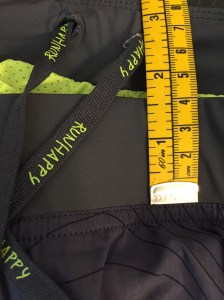
    The waist band is thicker than normal and isn’t your normal elasticized waistband. This is for comfort, for long races where you might want a not-so-snug fit for a day of running. The drawstring is elasticized and the waist fit is true to size.

    Thick waistband and mesh brief lining
    Thick waistband and mesh brief lining

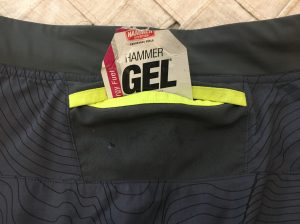
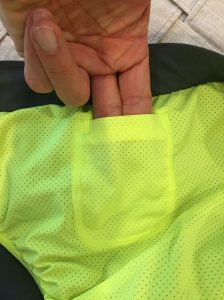
    There are two small pockets on either side.  One side has a water resistant zipper pocket which the other has an envelope style pocket.  I could get three gels in each without too much difficulty.  The zipper pocket does keep moisture out.  I carried a tissue in that pocket on a humid warm run a few days ago and the tissue stayed dry.  While I wouldn’t put unprotected electronics in the pocket, you can feel safe to put your car’s key fob in it without fearing totally moisture disaster.  I was at a trail race one day and owed money to a guy I knew would be working an aid station.  I put the money in the zippered pocket, humped and sweated myself across 13 miles, then ran into the guy and gave him dry money.  Not bad.

    Mesh key pocket inside the shorts
    Mesh key pocket inside the shorts


    I’ve worn these on all my long trail races or training runs since receiving them from Brooks.  They are now my go-to shorts for trail. Durable, comfortable, and dependable.

    As for now part of the collection is an REI exclusive, which you can find here: Men’s and Women’s


    Up next: a review of thermally sharp looking  Cascadia Shell.  Funnily, we are in a drought and haven’t had rain for a long time.  If we don’t get rain soon, I’ll test the shell by having my son spray me with the hose.


    Image
  • [See My view of the Launch 2 here]

    IMG_0679.jpg


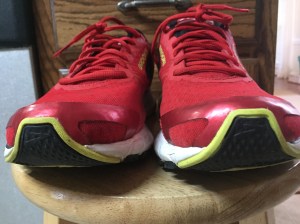
    For a shoe that was on the cutting line a couple of years ago, the Brooks Launch has enjoyed quite a resurgence. The Launch 2 updated the shoe with the most recent Brooks shoe technology.  The Launch 3 offers little revision from the second version of the shoe, but it opens the doors wide to new color ways and provides further evidence that the Launch is here to stay.  A neutral trainer that is suitable for any distance or type of road run, the Launch should be considered a Brooks “classic.”

    What I like about the Launch is that the more you run in them the better they feel.  Running shoes these days require little if any “break-in.”  But there are shoes that are like a good baseball glove–the more you use them the better they perform.  I’m up to 208 miles in the Launch 3, which Brooks graciously sent for review.  Up to about 50 miles they felt fine, like any new shoe. But after 50 they felt like a glove.  A well worn, feels like second skin, glove.

    There are some things in life that feel like home.  Comfortable. Secure. Welcoming.  Grandma’s house where she gives you the snacks your parents won’t.  Thanksgiving dinner with family.  Christmas morning.  At the risk of becoming guilty of purple prose, I feel this way about the Launch.  Versatile.  You can do a track workout and then run 20 miles in them a few days later.  A solid, all-around, neutral trainer that is good for daily runs and big races.
    208 miles
    208 miles

    What’s new?

    Not a heck of a lot changed from the Launch 2 iteration.  They’ve tweaked a little, added some style in the color way, and made this an even more solid trainer that you could also race in. It might be just me, but the toe is slightly narrower than the Launch 2, and much narrower from the original Launch.  It is a minor quibble.  I’ve spent a lot of time over the past year on trails in larger/wider shoes that when I get a “normal” running shoe, it feels narrower.

    A note on durability.  A lot of reviews talk about how the shoe could be lighter with a smaller offset or less sole material. But this is a tough shoe that will last someone 300-400 miles easy, if not more.  I’m into the 200s already and I feel great in them.  Many of us can’t afford multiple shoes for different types of runs.  We need a single shoe that can serve many purposes.  The Launch 3 plays that role very well.

    launch 3 front

    Details: Brooks launch 3.  Size 11.5 D.  10MM offset

    Weight: the Launch 3 weighs 11 ounces for my size 11.5.  This is slightly lighter than my Launch 2, which weighed 11.2 oz.

    $100-110 at the Brooks website.

    Colorways

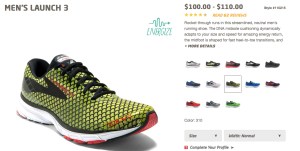
    Brooks went from two color ways for the Launch  and Launch 2 to thirteen for the men and ten for the women.  Some really nice looks here.  Of course running shoe color ways have moved from the conservative from 5-6 years ago to the fun varieties of the present.

    The Men's :lunch 3 and color ways
    The Men’s Launch 3 and color ways (I LOVE this color way!!  Gonna have to buy a pair of this one)


    Women's Launch 3 and color ways
    Women’s Launch 3 and color ways