
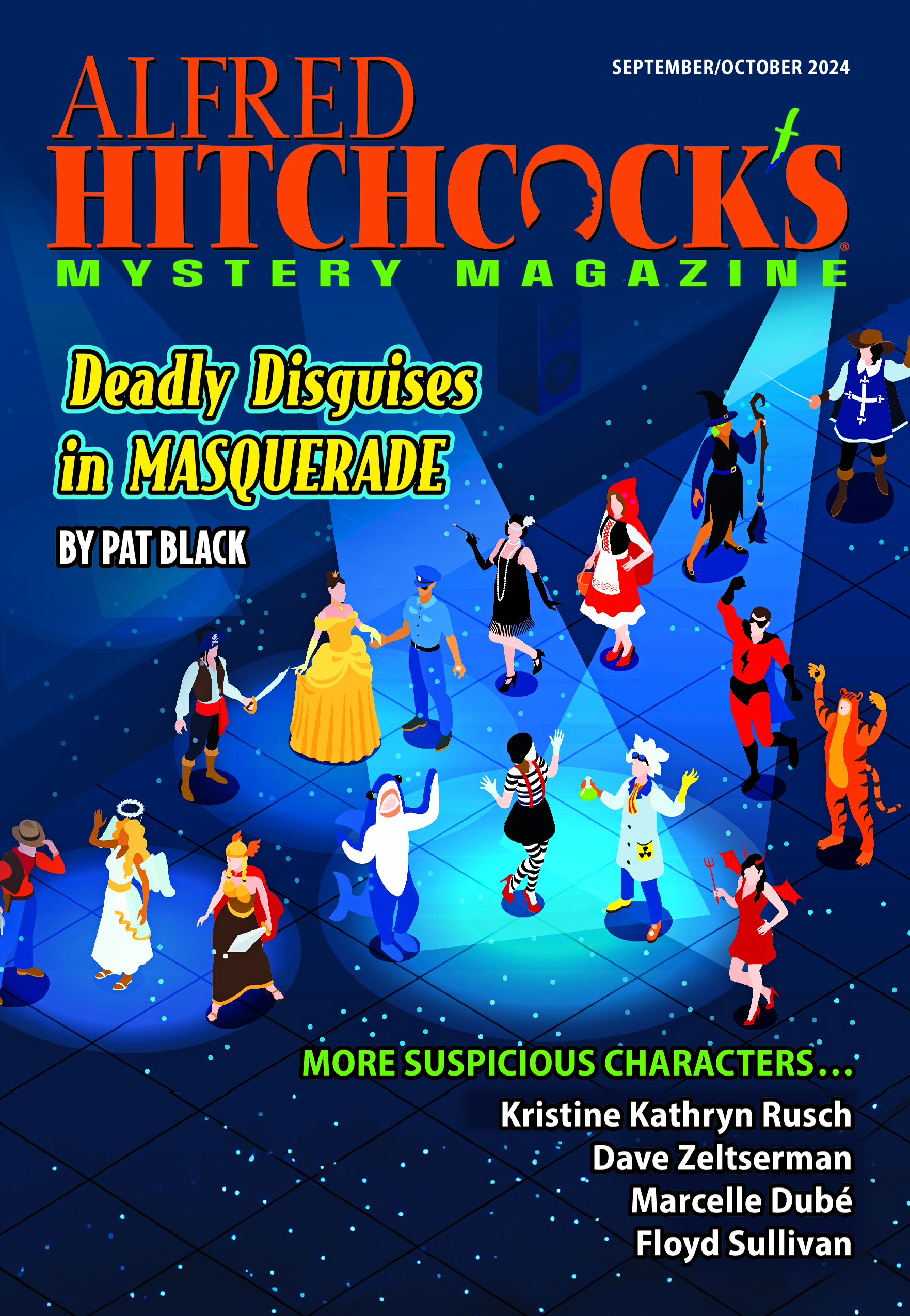
A story which appeared in the January/February 2020 issue of Alfred Hitchcock’s Mystery Magazine had a profound emotional impact on me. “The Boy Detective & The Summer of ’74” by Art Taylor. I guess I wasn’t alone. It was named a finalist for the Agatha, Anthony, and Macavity Awards. It won the Derringer Award and became the title story for a fabulous collection of Art’s stories. A puzzling mystery, a heart-felt tale of lost innocence, a period piece, and a clear-eyed commentary on social injustice, the story weaved together more beautifully crafted elements than I had previously believed possible in short crime fiction.
I loved the way Art firmly anchored the action in time and place, somehow rendering the themes more universal in the process. Of course, I wanted to emulate his work in that way and many others, but for a couple of years, I couldn’t discover any germ of a story that carried sufficient gravitas.
Then, in 2022, an old friend and veteran of The US Marine Corps described how he experienced the Cuban Missile Crisis at age eight, stocking up on peanut butter sandwiches and chocolate milk, crawling under his family’s front porch with the girl from down the street, waiting for the flash. I knew that I had to build a story around that moment.
Weaving in a crime element and finding unifying themes took a while, and my first efforts were a hot mess.
“You don’t want to be too precious with your work.” That’s how one respected short crime fiction author responded when I told her about my story in progress, two years and thirty major drafts later. One excellent author-editor gave me some disbelieving side-eye.
They both meant well. We’ve all met that aspiring author, the one trapped in the hamster wheel of unending revision, their debut and magnum opus never complete.
As a modern author, you must embrace deadlines. You must relish the opportunity to write with a gun to your head. The Amazon halo effect following a successful book release grows shorter in duration with each passing year. Short story authors need to crank out more titles to make up for the ever-dwindling returns in the sea of financially challenged online and print markets.
But how precious is too precious? The question is not new to our time. A hundred and eighty years ago, a relatively unknown author by the name of Nathaniel Hawthorne penned a short story called “The Artist of the Beautiful” that wrestled with the same idea. His protagonist, Owen Warland, a craftsman, pursues an all-consuming passion to create something of extraordinary beauty, even as his youth and the love of his life slowly drift away. Hawthorne’s keen observations on the intersection between art and mortality are every bit as valid today as they were in his century.
“. . . he was incited to toil the more diligently by an anxiety lest death should surprise him in the midst of his labors.”
“So long as we love life for itself, we seldom dread the losing it. When we desire life for the attainment of an object, we recognize the frailty of its texture.”
Hawthorne values passionate devotion to a single creative vision, even in the absence of any material reward, even if it takes a lifetime to fulfill.
Of course, not every vision requires a lifetime. Art Taylor took twenty-five years to complete “The Boy Detective,” started in 1995, but he’s also completed stories in a single evening.
When I told him that I was revising a piece inspired by his own work, he graciously agreed to read “The Bank Heist Before Armageddon.” He offered encouragement and his own invaluable insights. A few revisions later, I was delighted to receive an acceptance from Linda Landrigan, editor of Alfred Hitchcock’s Mystery Magazine. She said the story was beautiful. I fervently hope that readers agree.


 Trace Evidence
