11,000+ people responded to a question asking “Are you currently taking part in the Xbox boycott?” with 64% of responders choosing the option labeled “I don’t know what that’s referring to.” He goes on to add that many of the comments from those who voted “Yes” misunderstood the boycott to be about recent Game Pass price hikes and not Microsoft’s active effort to profit off of the mass surveilance of Palestinians.
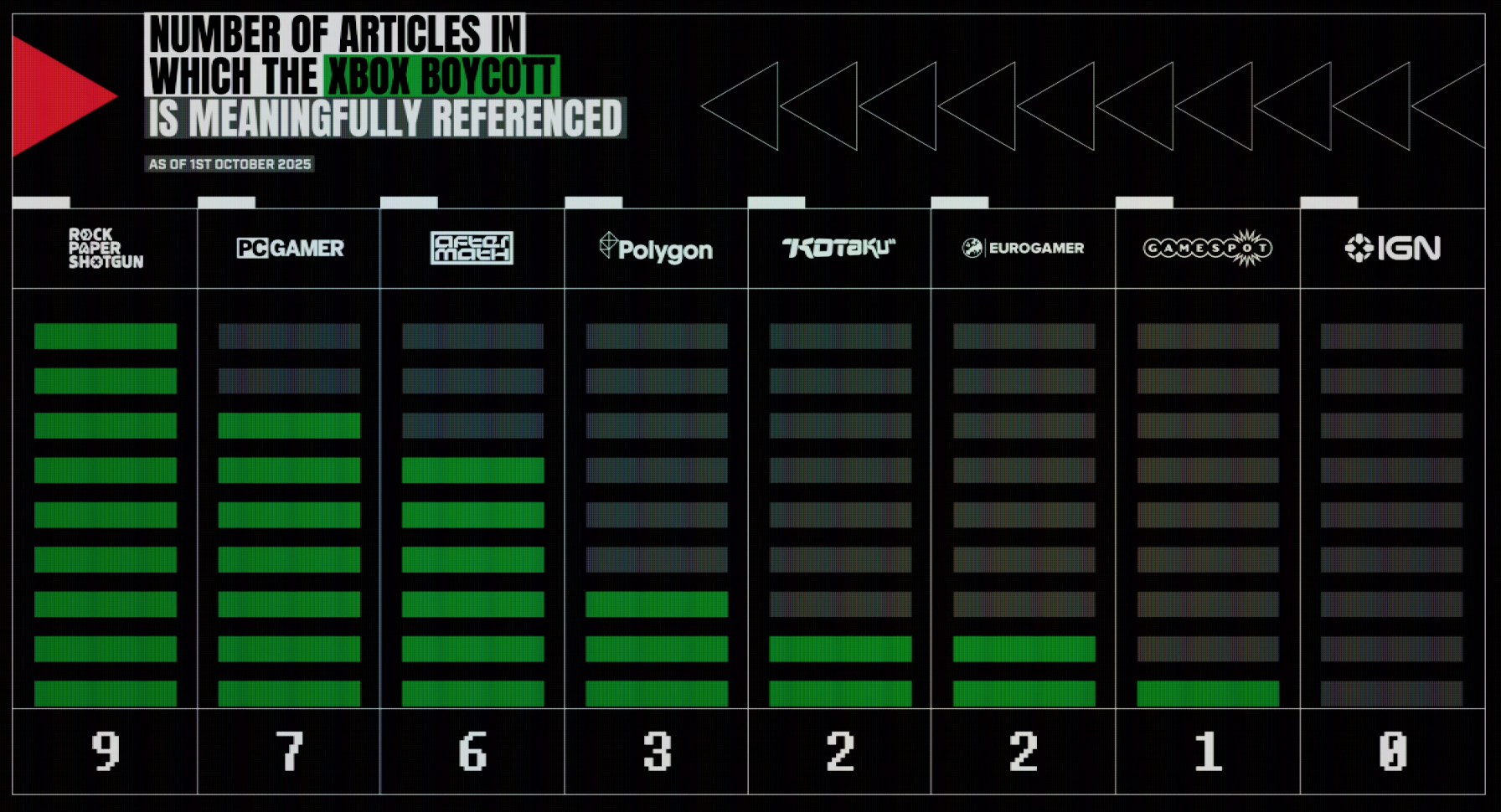
“How would the average video game enjoyer even come across news that this boycott was underway?” he asks before showing the above infographic displaying the number of articles on major video game websites that reference the BDS boycott of Xbox.
It’s worth considering the number of articles posted on these sites on a daily, or weekly basis when referencing this graph.
It’s worth considering our algorithm-fueled social media machine and how unlikely it already is for an article to appear across your feed on any given day.
It’s worth considering using your platform — no matter the size — as a means to get the word out to even one more person.
A mea culpa for Glass Onion, Wake Up Dead Man tackles almost all of the same ground with a much more deft hand. While this thing is still too of-its-time in some of its dialogue to be timeless in the way I’d personally prefer from a murder mystery, it is successful enough at tackling the present moment to make that aspect the true beating heart of the film.
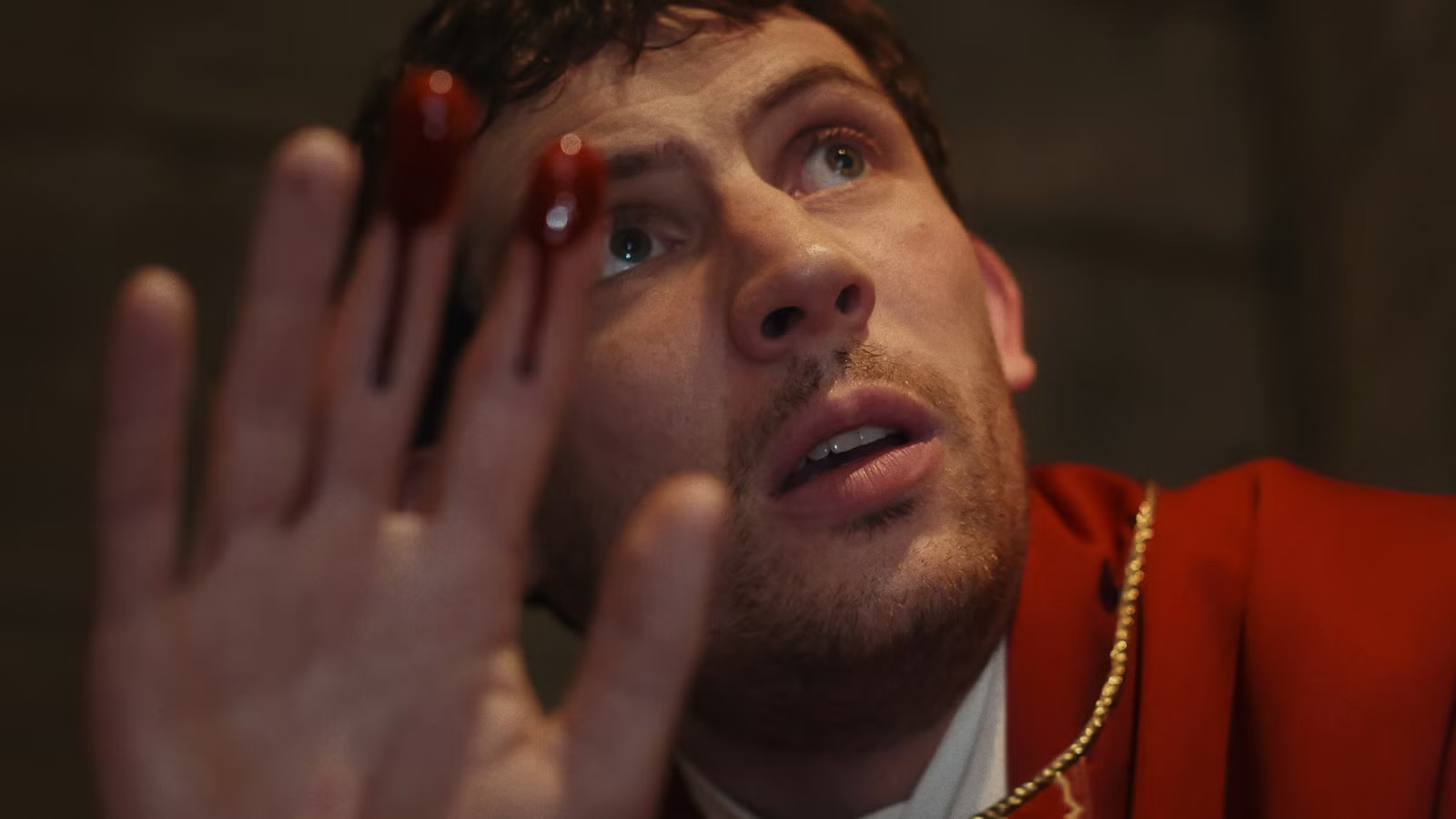
That does mean the whodunnit of Wake Up Dead Man is maybe its weakest building block — leaving Daniel Craig surprisingly sidelined in this Benoit Blanc mystery1 — but it instead allows for Josh O’Connor’s Father Jud to shine and to soul-search within not only himself but within the hearts of everyone his light can reach.
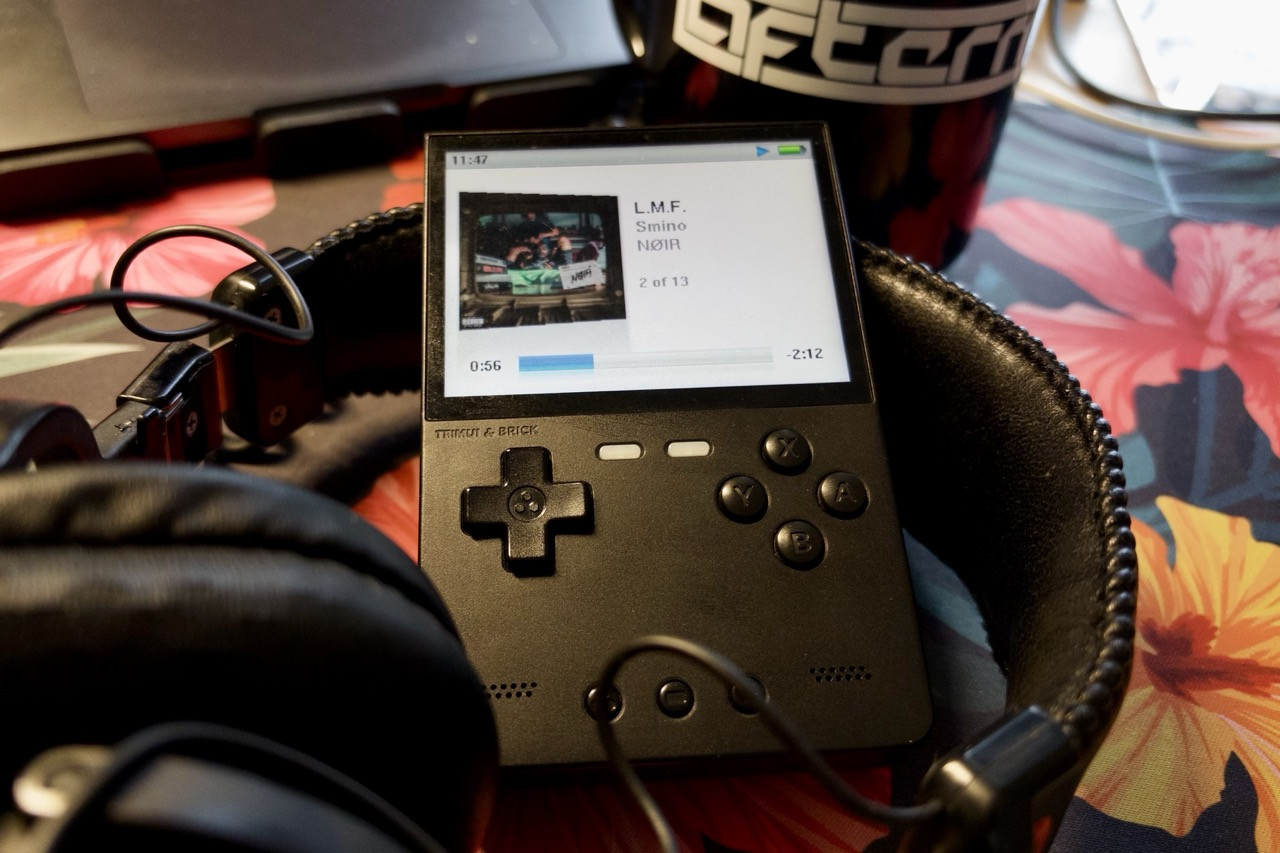
I’ve been obsessed with mp3 players recently, although the hobbyists in the space all refer to them as “DAPs” now which stands for Digital Audio Players… I guess because everyone wants to listen to FLAC files these days. That said, I’ve been looking into iPod modding, the history of the Zune, newer options like the Snowsky Echo Mini everyone seems to love, and generally figuring out which direction I want to head in as I begin divesting myself from music streaming services going into the new year.
If you’re reading this, you probably know I write about, talk about, and review gaming handhelds pretty frequently. The handheld scene is like any other super-niche tech hobby online — including the DAP scene, as it turns out — in that everyone is constantly trying to find something slightly better than the thing they already have and will argue about the specifics of each device until they’re blue in the face.
But because I have a bunch of devices lying around the apartment sitting in their boxes and waiting to be used for comparison videos or testing or whatever, I’m always glad to find alternative uses for them so they don’t just languish on my shelf like sad Toy Story characters.
So imagine my surprise when my two current obsessions met in the middle of a perfect Venn diagram: There’s a way to turn your gaming handheld into a DAP thanks to the work of some incredible open-source developers.
I made a shortform video about this and had a few people reach out asking how to do this on their own handhelds, so I thought I’d write up a little guide about it!
What drives our desire to play a game like Silksong? It feels counter to a lot of the reasons we play video games in the first place. There’s a dourness to its world building. Its combat is crushing. Platforming is unforgiving at best. Silksong positions itself at a remove from the player in every possible moment and the message it sends is clear:
You’re not meant to be in Pharloom.
An immediate decision which sets Silksong apart from its predecessor is Hornet, a protagonist who speaks, is self-motivated, and will physically turn around and head back into Pharloom’s grasp if you — justifiably — try to escape. Hornet is not a self-insert in the slightest, and she is withholding information from you, the player, insofar as it wouldn’t make sense to just drop exposition at moments when it would be convenient to inform us about “what’s really going on here.” Most people don’t monologue out loud about their circumstances, and most bugs don’t either.
During the very first cutscene, Hornet is kidnapped by disciples of the god that reigns over the realm. After escaping through divine intervention she aims to find out why, and eliminate this deity if the answer proves unsatisfactory. While her motivations may seem unrelatable, the underlying reason for her confidence is the true heart of Silksong:
It’s a game about faith.
More importantly, it’s a game about what faith really means.
Hollow Knight released on Switch the day after I was laid off from what I considered to be my dream job. Immediately thrust into a crisis of self-worth, I started the game without much thought. It was something to do instead of coping with what had happened or filling out job applications. I had enough savings to survive for exactly three months.
I can only describe my first playthrough of the game as transformative. The many challenges of Hollow Knight — combat, navigation, and otherwise — all found themselves intertwining with my own self-identity. The more difficult the game got, the more I felt a burning need to overcome whatever it threw my way. I needed to prove I was capable of something.
Of anything, really.
I eventually rolled credits with over 100% completion and felt not that something had changed within me, but more that I’d found myself again. I started applying to jobs. I spent more time outside of my apartment with friends and I kicked off new creative projects.
What primal desire pulled me through Hollownest’s crooked tunnels? In some ways it felt like a sure thing. I’d played difficult games before. I’d beaten difficult games before. I’m no stranger to metroidvanias or soulslikes.
As much despair as I felt in reality and as bleak as Hollow Knight’s world could be, I knew I had it in me.
Deep down, I had faith in myself.
Pilgrim.
You are blessed to walk the foundations of Pharloom.
Humble yourself before the shells of those who gave their lives to hold the kingdom’s weight.
Silksong is broken into three acts, and the first is surprisingly linear for a metroidvania. Hornet must ascend through multiple regions of Pharloom to reach the Citadel at its peak, and that path is largely straightforward all things considered. You’ll find yourself wandering, slowly filling in the map but inevitably heading towards the supposedly gilded city. As with all metroidvanias, barreling into every unmarked passageway on the map will inevitably get you there in time. Making navigation more of an afterthought in the early hours allows Silksong’s characters and kingdom to shine, with stunning art and a truly all-timer score by Chris Larkin to lay the foundation of your journey. Throughout this first act, Hornet comes face to face with many of the kingdom’s pilgrims who intend on attempting the same climb.
Almost all of them will die in the process.
You’ll almost immediately discover that Pharloom as it stands is a decrepit kingdom, its glory days are long gone — and it’s honestly up in the air if there even were glory days in the first place.
It’s bleak!
These pilgrims are embarking on such a treacherous climb because their faith in the splendor of the Citadel and its ruler is absolute. They trade in rosary beads as currency — a bit on the nose, but effective at hammering home the societal and economic forces which tore through its fabric and left it in such visible squalor. But even if that squalor is obvious to us as wayward travelers, those who reside in Pharloom still see it as it once was, resplendent in its majesty. Their faith and their being has become intertwined, so much so that the act of paying to rest on a bench is second-nature — this is just how things are, and it’s a pittance in comparison to the glory of god.
Take fan-favorite Sherma, a pilgrim who spends his days climbing and singing songs of prayer and is almost certainly pushing the true terror and strife surrounding him along his path so deep down as to appear ignorant to the dangers he confronts along his quest. The very first meeting has him singing his joyful little tune at the closed and locked door that stands between Bone Bottom — a destitute tent city filled with pilgrims hoping to also one day make the ascent — and literally the entire rest of the climb. He believes his song and the power of his prayer will be the force that opens the gate, and still believes as much when you explore a roundabout path to the opposite side and open it for him.
“Did you see it, red maiden? The great gate heard my song, and in its infinite kindness, has opened the way forward for us!”
Despite being a protagonist who speaks, Hornet doesn’t respond to this. I bristled a bit at Sherma thanking divine intervention for what was very clearly my intervention, but I also thought it notable that Hornet chooses not to interject at all. She’s on our wavelength, but maybe knows better than to argue. You’re not going to change Sherma’s mind any time soon. That or — more insidiously — Hornet thinks herself so above Pharloom’s people as to not even think this small bug warrants a response.
As your journey continues, Sherma will appear occasionally and make light of the climb. As you face obstacle after obstacle, Sherma’s dialogue is still somehow generally rosy and optimistic. No matter what dangers you face or hardships you overcome, Sherma is always there singing and reveling in his holy ascent.
His faith is unwavering — until act 2, that is.
Silksong’s second act takes Hornet into and through what remains of The Citadel, and this is where the game opens up in a big way. Gone is the invisible, guiding hand of the game’s first act that silently leads you towards the Grand Gate. The Citadel is a sprawling, labyrinthine place haunted by its own people and filled with its own set of guardians, its own transportation system, and its own mini-settlements.
By ringing a bell and opening a shrine on the outermost edge of the city, Hornet creates a new settlement known as Songclave. Those whose minds haven’t been warped by silk, hearing the sound of the shrine’s bell, make Songclave a place to rest, tend wounds, and live as best as possible given the circumstances. It’s here where Sherma makes his final appearance.
Sherma: Rising at last to the heights of the Citadel and being amongst so many of my brothers and sisters... it is a blessing indeed. Yes, a blessing.
Hornet: Your voice belies some hesitation in that belief, little pilgrim. You have seen now the reality of this broken place. What do you make of it, truly?
Sherma: D-do not judge me a doubter! The Citadel is a holy place indeed, resplendent and vast beyond my wildest hopes! But yet... the grand halls ache with silence, and I see suffering in the shadows wherever I peer too deeply.
Fear, and pain... why were these things allowed into our paradise? Have my brothers and sisters not yet earned their holy reward?
A more cynical game would end the exchange here. It would write off the idea of Sherma’s faith as something to belittle, the ramblings of a fool. These pilgrims are so warped and corrupted by the powers that be that arguing is pointless, why not let their susceptibility to blind faith be their own downfall?
But Silksong is not a cynical game, and it’s not a game devoid of growth for its central character either. While Hornet silently rejects Sherma’s beliefs way back at Bone Bottom’s gate, she miraculously makes a more concerted effort to push him in the right direction.
Sherma: This place is holy, yes... but I worry at the suffering of our fellow pilgrims. So many are hurt or exhausted!
Hornet: Your doubts and worries will not heal them, little one. If you would aid your fellows, you can start by dressing their wounds. The simple rags found around the settlement will do for bandages.
Sherma: Oh, that's an excellent idea, red maiden! Normally I'd think a song would suffice, but... yes, more direct action is certainly needed. And the Citadel itself shall provide the materials! Praise be to this holiest of holy places!
This conversation is the fulcrum point atop which the entire game rests. While traveling along a path of pilgrimage throughout the game’s first act, you faced countless obstacles by way of bosses and platforming challenges and likely died many, many times. Hornet is also going through these trials, and sees Sherma too rise above them all largely unscathed.
From the very beginning of this quest, Hornet has been of the belief that nothing in Pharloom could hold a candle to her prowess as a fighter. She would ascend to the highest peak and slay whatever god sat upon the throne and that was that. In essence, Hornet’s faith in herself is no different than Sherma’s in Pharloom as a kingdom. They both stand staunchly by their conviction, undeterred by the many horrors they confront along their journey.
I would even argue that the very act of playing as Hornet is the only place where doubt finds a way to creep its way in. We as players are a corrupting force. Hornet is absolutely capable of defeating anything the world throws at her, but our own disbelief or need to walk away from the game could very well be the reason she never accomplishes her goals. We are the nagging voice in the back of her skull unsure if we have what it takes to eliminate the Savage Beastfly or climb Mount Fay.
Silksong is constantly in conversation with the player and with the genre at large. It posits that our own influence is as crucial to the narrative as our own protagonist’s self-assuredness. What Silksong is asking, on a certain level, is for you to rise to meet Hornet’s expectations of herself. And not in some shitty “get good” way, but in a way that asks players to reflect upon themselves and push a little bit harder. Be better, not at playing Silksong, but at everything.
Act 2’s climax is where the game takes this abstract concept and makes it real.
It’s worth taking a brief aside here to say — and if you’re this far in already, it might not apply to you — that there are obviously hundreds of reasons that Silksong won’t work for you. Be it the game’s lack of difficulty options, its lack of accessibility features, or even just your own general distaste for this style of game. I’m not here to convince you that Silksong is this perfect video game and that it’s completely immune from criticism.
I’m also not here to say Silksong is a game for everybody because — once again — the gatekeepy “gut gud” mentality has done irreparable damage to the fandom of this entire genre of video game. There are absolutely tons of valid reasons to not connect with this thing on the outset.
If Silksong isn’t for you, that’s totally cool.
At the end of Act 2 Hornet does what she set out to do: She kills the god perched atop Pharloom’s Citadel. Grand Mother Silk as the architect of the kingdom’s woes goes down after a huge cinematic battle calling to mind images of The Radiance from Hollow Knight. After her demise, Hornet settles into the silken web the god has left behind and becomes one with it, absorbing its power and becoming the new ruler over Pharloom. Blinded by revenge, captivated by a sense of superiority, and without much by way of a path forward, Hornet shifts into the very role she swore to destroy. She extends even more silk outward across the kingdom, burying the entire thing in her thrall.
The credits roll.
The game ends.
And players are probably left with one of two thoughts:
The first is that the ending is just another cryptic cutscene to cap off 20-30 hours of other cryptic cutscenes and lore dumps and confusing bits of dialogue. Silksong is an impenetrable lock-box of secrets and only by replaying it and watching other YouTube videos will you ever parse it out. And then these players move on, happy to have beaten the game but unsure of how to feel about it.
Then there are the people like me who immediately recognize this moment for what it is:
It’s the bad ending.
There must be more.
And it turns out there is for those who take an active interest in Pharloom as a kingdom. See, players can easily spend their time with Silksong as they do with most soulslikes and metroidvanias — they can wander around until they find the key to unlock the next area and fight the big boss that unlocks the next ability and so on and so forth until the credits roll and the game ends. Or, alternatively, they can spend their time poking at the kingdom’s edges and allowing their own natural curiosity to take control over their journey. Grand Mother Silk isn’t going anywhere anytime soon, so whatever time pressure one feels is completely self-imposed. There’s nothing stopping you from finding the fleeting, glimmering beauty of Pharloom, stopping and smelling the roses as it were. I’ve always been a sucker for stories that find hope within the end of the world, and Silksong joins their ranks in a big way.
And just as we as players take on the role of the nagging voice that undermines Hornet’s certainty, we can also act as a positive force in her growth. Silksong is packed to the brim with sidequests and small settlements and recurring characters in need of help or an ear for their troubles, and watching Hornet’s interest in these matters shift from that very first callous meeting with Sherma to the end of a completionist-adjacent run through Act 2 is one of the keys to the entire journey.
It’s worth asking yourself why Team Cherry would have players endeavor to complete every single available sidequest before moving onto the third act, what doing so says about Hornet, and what it evokes on the highest possible level.
The short answer?
Empathy.
It’s a rebuke of wandering through the world in an apathetic haze, of only relying on yourself. By connecting with those around us and taking an active interest in our surroundings, we enrich everyone’s lives in the process — our own included. In the case of Silksong, Hornet’s individualistic mindset will only get her so far. Ignoring the true splendor of Pharloom — the splendor washed clean of Grand Mother Silk’s deceptions — will see your journey halted before it truly ends. Hornet becomes god and causes an apocalypse. Everything dies, including whatever hope there was of Hornet’s emotional growth.
So what is your reward for forging true bonds with Pharloom and its people? For seeking out and bringing small glints of light to its darkest caverns?
Yet another apocalypse.
Act 3 is a nightmare. The entire kingdom is ravaged by silk and void. Enemies are significantly more brutal, bosses more dangerous, and the world itself is falling apart. After feeling like I had a solid handle on the game’s difficulty, the very first encounter of Act 3 kicked my ass multiple times.
That’s because Act 3 is truly for the sickos. It’s for the people like me who feel they can handle anything Silksong throws at them, and in this way also serves as the game’s truest test of faith. It’s the culmination of Hornet’s unwavering confidence and her newly discovered sense of concern for the pilgrims throughout the land. This is a version of Hornet who would not assume a seat on the silken throne, but is instead a Hornet who desires to see these bugs freed from the oppressive forces that tie them to false gods and ideologies. Unblinded by deference to Grand Mother Silk and her Weavers, Pharloom’s inhabitants can focus their faith in a new direction: Betterment. Hope. Each other.
By forcefully removing those whose thrall is cast across the kingdom, Hornet’s influence on Silksong’s narrative is an active one. By taking an interest and exuding her own effort, Hornet helps Pharloom wake up from its collective pall.
Hornet betters others by bettering herself.
Hornet’s faith in herself extends into a faith in others.
Others’ faith is where community thrives, and faith in community can grow into anything.
I am thirty-three years old and feel like I’ve lived thirty-three lives. I was a terrible student in high school. I dropped out of college at film school to join a band. The band broke up and I worked at three different Blockbusters as they each went out of business. I sold refurbished desk phones on Amazon for two years. I hosted a short-lived, six episode radio show on Sirius XM. I worked for the biggest entertainment companies on earth then quit that job to make videos like this. Not once have I known what my next step would be in life, and not once did I feel like the path was an easy one. And when my depression takes hold, it feels like there is no next step at all.
So why do we continue on through all of these hardships? Whether consciously or unconsciously, what convinces us to get out of bed every morning and keep moving forward?
Playing Silksong in 2025 reminded me what Hollow Knight had in 2018: I am capable of putting my mind to something and seeing it through. I can challenge myself and come out the other end knowing more, having learned more, and maybe helping others along the way.
It’s easy to trivialize the media we consume, especially video games. But if experiencing any art gives you a spark of hope, that spark can cut through everything else. If playing Silksong gives you even a fraction of the hope it gave me, then playing it is a worthwhile endeavor. That feeling is real. That glint of light can be a powerful reminder of the possibility that comes with perseverance, and it can instill a belief in the invisible, potential outcomes of tomorrow.
Stubbs over at Retro Handhelds’ YouTube channel has a 90-minute hands-on video showing off the upcoming Anbernic RG DS and… it’s a mess, folks. If this was a different kind of blog I would write something like “the DS stands for DiSaster” but it’s not, so I won’t.
What I will write is that the RG DS seems to follow the now-time-honored tradition of Anbernic launching a device that should be incredible but has one fatal flaw that makes it completely worthless. In this case it’s that the dual screen handheld built for playing Nintendo DS games isn’t powerful enough to run Nintendo DS games.
As Stubbs puts it in the video:
I can’t get any games to run full speed for any length of time.
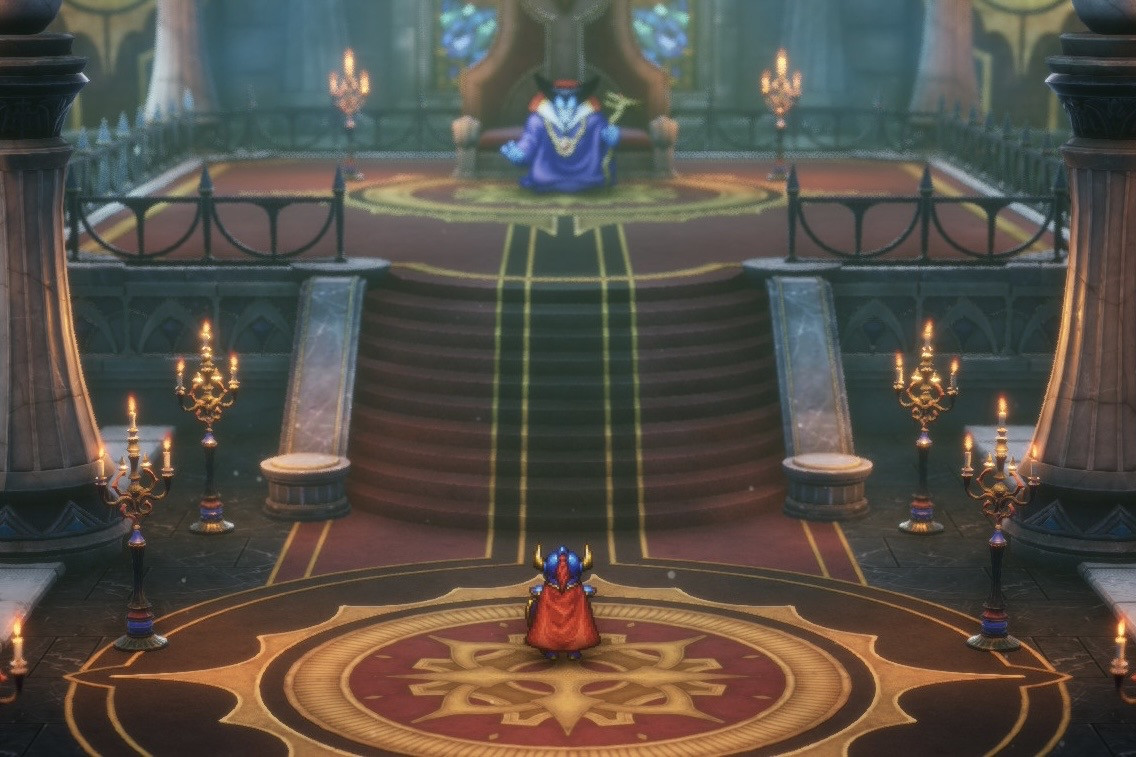
Neither game in Dragon Quest I+II HD-2D Remake is profound in ways I’ve never seen before. I can point to games with better stories, better battle systems, games that are better at whatever criteria we use to discuss a game’s quality. Yet I found myself regularly tearing up playing these games, even during banal moments that shouldn’t elicit an emotional reaction. These games aren’t facsimiles of what they were before. But as I interrogated that deep response I was routinely getting, I realized that’s the essence of Dragon Quest—simple, poetic adventures that give us the space to slow down and reflect on our lives, taking whichever shape will reach us in the moment.
Such a wonderful reflection of these remakes. I’ve been absolutely floored by them, having just rolled credits on the first game earlier in the week. I’m roughly five or so hours into the remake of Dragon Quest II and I really resonate with how overwhelming the emotional core of this thing can be — which is all the more shocking given the original game's reputation as "the worst one."
Loved this video by YouTube channel Like Stories of Old about the shift in big budget filmmaking and how it’s popping up as a perceived lack of “realism” in movies — even ones shot on practical sets with few-to-no visual effects.
The first concept is referred to as “perceptual realism” and aims to answer that nagging voice in the back of your head while watching a film like Frankenstein which wonders what about the cinematography or direction gives it that Netflix-like quality. I was lucky enough to see Frankenstein in theaters and wrote in my Letterboxd blurb “gorgeous sets, beautiful costuming, spectacular performances, and a great script all shot in the most boring way possible” because I could feel that the visual language of the film was at odds with the craft behind the scenes. While some shots absolutely sung, they made it all the more apparent how much fell flat by comparison.
My takeaway here is that the use of shallow depth of field to achieve a “cinematic” and “high budget” look actually does exactly the opposite, because the best use-cases of shallow depth of field serve to highlight character or narrative beats. Separating a character from the background they occupy can let the viewer into their headspace in myriad ways. We can see how disoriented they feel, or we can feel as though we’re let in on the most private of moments.
In actuality, it’s the shots with the largest depth of field that feel the most tangible to the viewing eye. The grand vistas or the carefully blocked interiors where every facet of the frame is visible to the audience portray an understanding that the smallest textures and details can be the ones which settle into — consciously or not — our memories of the film after the fact. These are also the shots that are the least achievable in a modern studio setting.
When the requirement is to shoot in a way that allows for relighting, recostuming, and millions of other alterations in post, it makes for the flattest kind of filmmaking possible and undoes the perceptual realism that allows us to let the imagery and story permeate completely.
Demonschool is being compared to Persona constantly, which is a very kind comparison to make! Persona is good! Persona 3 is one of my favorite games of all time!
On the surface it makes sense: The calendar system, the relationship meters, the “we’re fighting demons… in school” of it all. But the more I’ve played, the more I’ve come to realize that the ways in which Demonschool differs from Persona are the ways it works best.
Valve announced the Steam Machine today — a console / PC hybrid device running SteamOS and reportedly “six times as powerful as the Steam Deck.” This is a huge deal to me, a person who says into every microphone I’m in front of “hey doesn’t it seem like consoles are becoming less enticing as the PC gets more interesting?”
Expect to hear a LOT more about this on both NPC and the Wavelengths podcast soon, but I really felt like I needed to just get a billion thoughts out of my head as soon as this happened. And now I have to go eat some food!!
One of the more surprising shifts I’ve noticed in the past six months is just how much TikTok has become my primary music discovery tool. Maybe it’s just my algorithm, but this app absolutely loves sending me tiny accounts run by bands throwing their latest singles into the void and hoping to god people listen. Because of the way the platform functions, I’m generally getting to hear what I would consider to be “iTunes-circa-2008” snippets of these tracks which — as ever — is usually enough to at least gauge an immediate interest or disinterest. More often than not though, I’ll look the artist up on Apple Music and check out the full song if it interests me, and then move on to the rest of the album or whatever.
Point being: Occasionally the algorithm can be good, I guess?
The most recent TikTok algorithm-provided obsession on my end is the self-titled EP by LA punk supergroup NULL. At least, that’s how NULL describes themselves. I don’t know any of the members or their other projects, but I do know this five-track EP is twelve minutes long and absolutely melts into and straight through your brain. It’s punk by way of Jet Set Radio, Mindless Self Indulgence by way of being like… good and significantly heavier. NULL classifies itself as “heavy techno punk” and you’ll clock that as the perfect description before the first track even wraps up.
This week my guest is Stephen Hilger — my co-host on Into the Aether, a great artist and writer, and creator of the YouTube channel Memory Card Manuscript. I brought Stephen on to discuss a question sent in by a listener about the current hyper-polarization of video game discourse, from how to navigate algorithm-led spaces to not letting the media consume define your authentic being.
It's a far-reaching conversation, and I hope it's as interesting, thought provoking, and engaging for you as it was for me!!
Zohran Mamdani was elected mayor of New York City on Tuesday, capping a stunning ascent for the 34-year-old state lawmaker, who was set to become the city’s most liberal mayor in generations.
More than 2 million New Yorkers cast ballots in the contest, the largest turnout in a mayoral race in more than 50 years, according to the city’s Board of Elections. With roughly 90% of the votes counted, Mamdani held an approximately 9 percentage point lead over Cuomo.
Mamdani’s unlikely rise gives credence to Democrats who have urged the party to embrace more progressive, left-wing candidates instead of rallying behind centrists in hopes of winning back swing voters who have abandoned the party.
It’s true! I joined Jeff Cannata and Christian Spicer for this week’s episode of DLC where I — gasp — kept on-brand as an Xbox doomer before expousing the many virtues of Ball x Pit.
I love bringing indie games that normally wouldn’t get a spotlight to shows I appear as guests on, so I also made a hard sell for the upcoming Q-UP which has maybe developed into my most anticipated game for the rest of 2025?
I’ve been trying to wrap my head around what a “Pokémon Legends” game is over the past few weeks. 2022’s Pokémon Legends Arceus was set almost 200 years before any mainline game, a time when people and pokémon didn’t coexist in the saccharine way frequently depicted in media. You spend your time researching pokémon in Jubilife City where many of its citizens will outright proclaim their fear of the creatures living right outside its heavily guarded walls.
Arceus also takes place right after the invention of the Pokéball which allows humankind the opportunity to head out into the wild to watch these creatures in their natural habitats, capture them, and continue much-needed Pokédex research. Your job in this world is to bring people and pokémon closer together and literally have a hand in creating the world we’ve seen in every other game, anime episode, and film.
I loved it, and I looked forward to future Legends entries exploring the untold histories of this world.
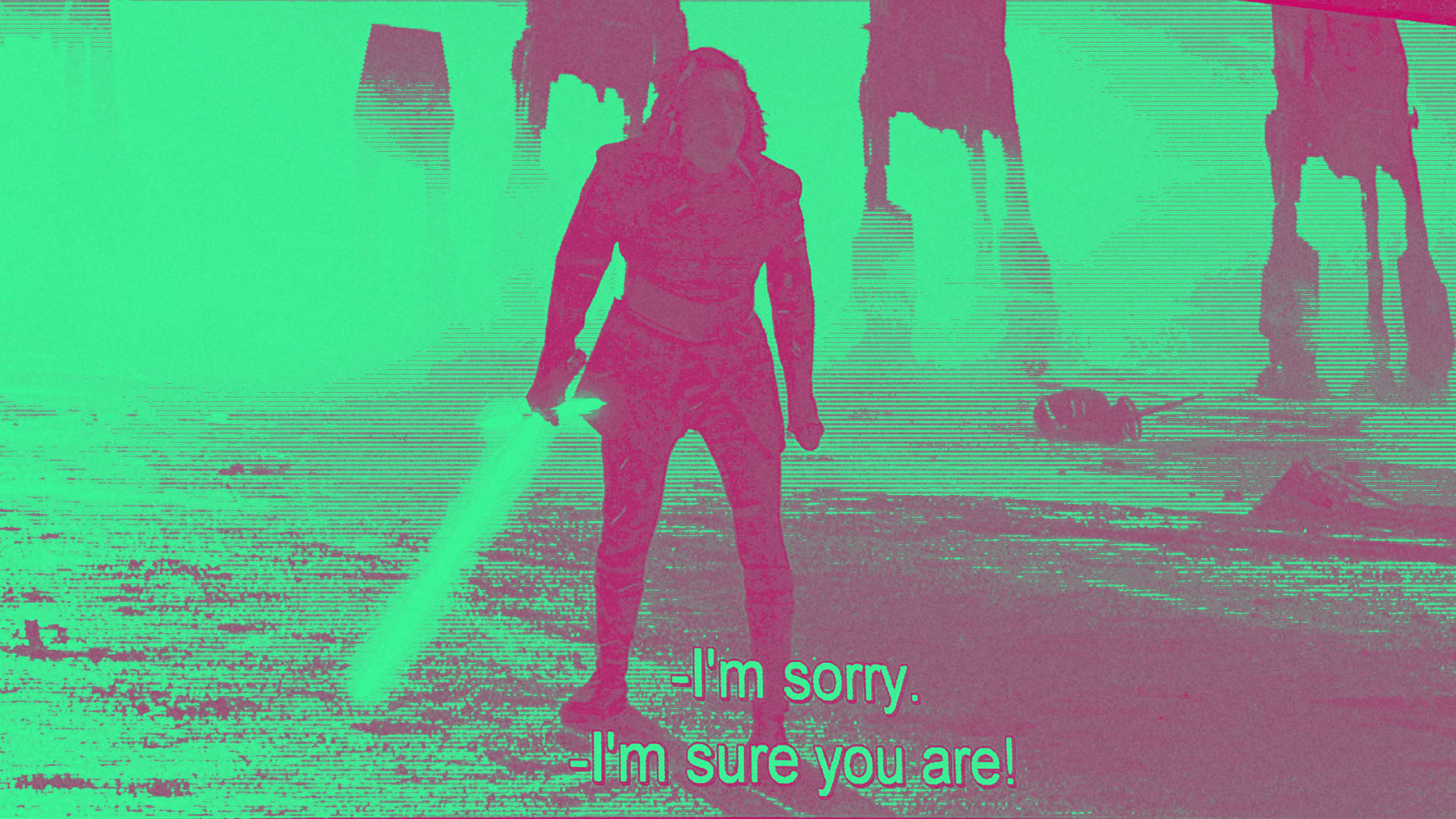
I watched The Last Jedi again tonight — my fifth time overall, although my first in an attempt to watch the entire sequel trilogy again. I still find the movie electrifying. I can’t stop steeping moments of awe. It’s an incredible thing.
On this viewing I had three things bouncing around my head. Here they are:
Welcome back to the show! Would you be surprised to learn that this week’s episode kicks off with yet ANOTHER segment about Xbox? Turns out every single week a Microsoft executive gets on the horn and says something wild.
Also in the episode: A few Nintendo Switch 2 games all announced at once, Ball x Pit is still great, and Pokemon Legends Z-A is extremely growing on me!
I’m late to this one!! I first heard Frost Children when I went to see Porter Robinson last year — they were the opener but also showed up mid-set to sing a bit and hop around and be fun on stage during one song — but I’d never really sat down to listen to their stuff in earnest.
Welcome back to the show! This week I can't NOT talk about Xbox again — sorry!! But also I gush about Ball x Pit and dig into my (very) early impressions of Pokemon Legends Z-A before talking through the huge Pokemon roadmap leak that hit the internet earlier this week.
Nextfest is legitimately one of the most exciting events in the industry. As a preview of the indie games we'll all be losing our minds about in a few months' time, I love to just download a ton at random and dive in with (almost) no prior knowledge.
I've played roughly 25 demos from Nextfest this time around, and here are my ten favorites which I will absolutely be picking up when they launch for real and also one terrible game that needed to be seen to be believed.
I’ve been a Jay Som fan for a longer time than I’d realized. Turn Into, Melina Duterte’s first album under the Jay Som name in 2016, is an all-timer in my eyes. A true no-skip release with moments big and small that have weaseled their way into my long-term memory and never left. It’s inventive and atmospheric and euphoric and made me a fan for life.