
Great story by CNN reporter Brenda Goodman. Reporting is important to help protect the public from stores that sell us food when they cannot seem to be unable to do the basics.
Image

Here is Brenda’s story:

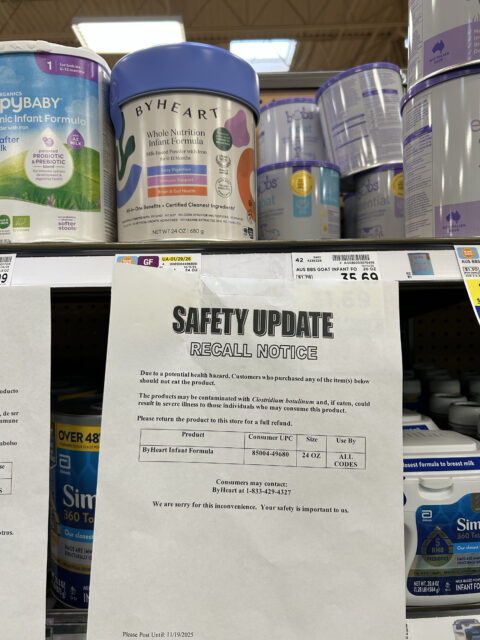
I was doing my regular weekly grocery shopping just before Christmas when I happened to cut through the baby formula aisle to get to the dairy section at the back of the store.

Looking up, I saw something that made me double back: at least one can of ByHeart powdered infant formula on the shelf of my local Kroger, with its recall notice from November taped underneath .

I stopped and snapped a photo with my cell phone.

I quickly sent it to my editor and several experts I work with on food safety stories, thinking I’d missed some development, but they all had the same reaction.

“This is nuts,” responded food safety attorney Bill Marler, who is representing several families of babies who developed infant botulism after drinking ByHeart formula. Coincidentally, that same day, he was amending the complaints he had filed to include the retailers where his clients purchased the formula, saying they hadn’t acted fast enough to get it off shelves.

Full Story – https://www.cnn.com/2025/11/25/health/infant-formula-recall-botulism-investigation
Image

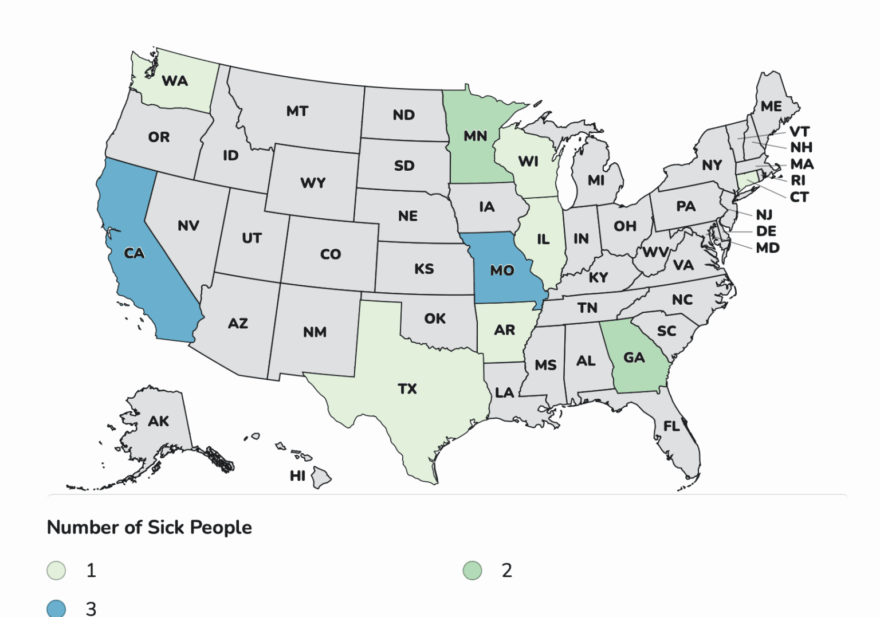
Arkansas 1, California 3, Connecticut 1, Georgia 2, Illinois 1, Minnesota 2, Missouri 3, Texas 1, Washington 1, Wisconsin 1.

CDC and public health officials in several states are investigating a multistate outbreak of Salmonella infections linked to certain home delivery meals made by Metabolic Meals. Do not eat affected Metabolic Meals products while the investigation is ongoing. As of September 5, 2025, 16 people infected with the outbreak strain of Salmonella have been reported from 10 states. Illnesses started on dates ranging from July 24, 2025 to August 15, 2025. Of the 15 people with information available, 7 have been hospitalized and no deaths have been reported.

Image

Metabolic Meals home delivery service products:

Select meals delivered during the week of July 28, 2025

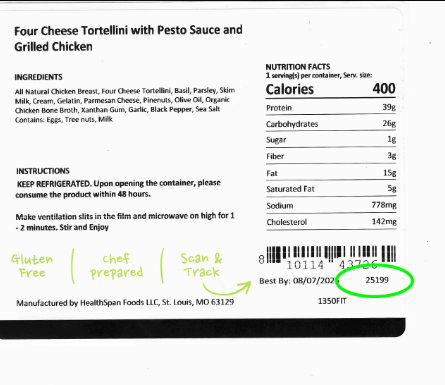
  • Four Cheese Tortellini with Pesto Sauce and Grilled Chicken
    • Lot Code: 25199
    • Best By: 08/07/2025
  • Low Carb Chicken Teriyaki and Vegetables
    • Lot Code: 25202
    • Best By: 08/05/2025
  • Black Garlic & Ranch Chicken Tenders with Roasted Vegetables
    • Lot Code: 25205
    • Best By: 08/08/2025
  • Sliced Top Sirloin with Roasted Peanut Sauce and Summer Vegetables
    • Lot Code: 25203
    • Best By: 08/06/2025
  • Additional meal lot codes include: 25199, 25202, 25203, 25204, 25205

Sick people in this outbreak reported eating ready-to-eat, home delivery meals made by Metabolic Meals. Investigators are working to determine a specific source of contamination.

William “Bill” Marler has been a food safety lawyer and advocate since the 1993 Jack-in-the-Box E. coli Outbreak which was chronicled in the book, “Poisoned” and in the recent Emmy Award winning Netflix documentary by the same name. Bill work has been profiled in the New Yorker, “A Bug in the System;” the Seattle Times, “30 years after the deadly E. coli outbreak, A Seattle attorney still fights for food safety;” the Washington Post, “He helped make burgers safer, Now he is fighting food poisoning again;” and several others

Dozens of times a year Bill speaks to industry and government throughout the United States, Canada, Europe, Africa, China and Australia on why it is important to prevent foodborne illnesses.  He is also a frequent commentator on food litigation and food safety on Marler Blog. Bill is also the publisher of Food Safety News.

Salmonella:  Marler Clark, The Food Safety Law Firm, is the nation’s leading law firm representing victims of Salmonella outbreaks. The Salmonella lawyers of Marler Clark have represented thousands of victims of Salmonella and other foodborne illness outbreaks and have recovered over $900 million for clients.  Marler Clark is the only law firm in the nation with a practice focused exclusively on foodborne illness litigation.  Our Salmonella lawyers have litigated Salmonella cases stemming from outbreaks traced to a variety of foods, such as cantaloupe, tomatoes, ground turkey, salami, sprouts, cereal, peanut butter, and food served in restaurants.  The law firm has brought Salmonella lawsuits against such companies as Cargill, ConAgra, Peanut Corporation of America, Sheetz, Taco Bell, Subway and Wal-Mart.  

If you or a family member became ill with a Salmonella infection, including Reactive Arthritis or Irritable bowel syndrome (IBS), after consuming food and you’re interested in pursuing a legal claim, contact the Marler Clark Salmonella attorneys for a free case evaluation.

Additional Resources:

Salmonella is widely distributed in nature and can be found in the intestinal tract of wild and domesticated animals and in humans. Salmonella poisoning can occur when a person ingests contaminated fecal particles transmitted by another infected human or animal.

Image

CDC, public health and regulatory officials in several states, and the U.S. Food and Drug Administration (FDA) are collecting different types of data to identify the food source of a multistate outbreak of Salmonella Telelkebir infections.

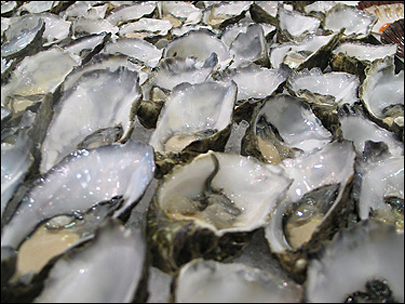
Epidemiologic data show that oysters may be contaminated with Salmonella and may be making people sick in this outbreak. CDC and FDA are working to determine the source of these oysters.

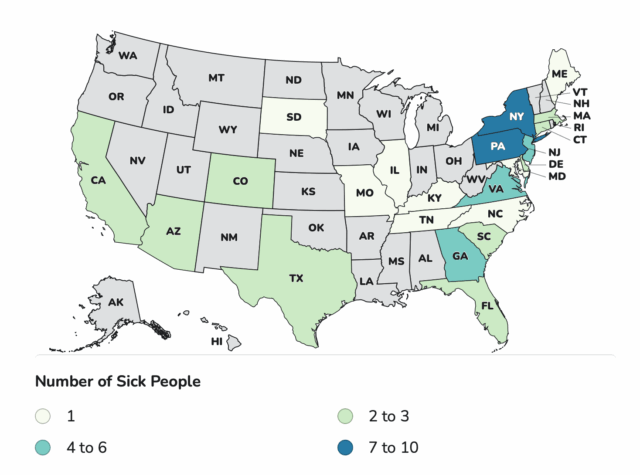
As of December 23, 2025, 64 people infected with the outbreak strain of Salmonella have been reported from 22 states: Illinois 1, Kentucky 1, Maine 1, Missouri 1, North Carolina 1, South Dakota 1, Tennessee 1, Maryland 1, Arizona 3, California 2, Colorado 3, Connecticut 2, Delaware 2, Florida 3, Massachusetts 3, South Carolina 3, Texas 2, Georgia 4, New Jersey 6, Virginia 6, New York 7, Pennsylvania 10.

Image

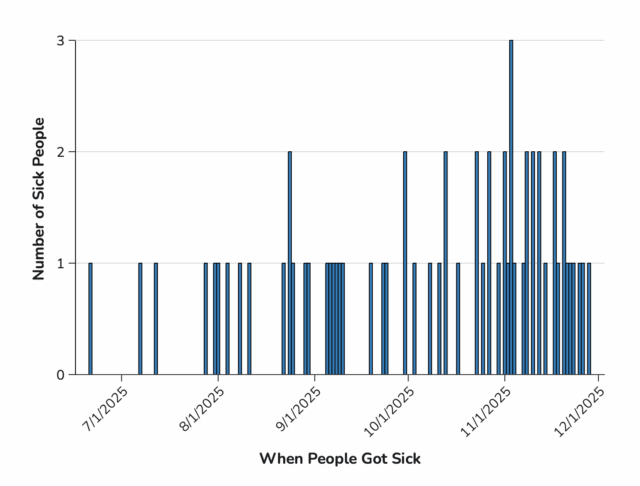
Illnesses started on dates ranging from June 21, 2025, to November 28, 2025. Of 44 people with information available, 20 have been hospitalized. No deaths have been reported.

Image

The true number of sick people in this outbreak is likely much higher than the number reported, and the outbreak may not be limited to the states with known illnesses. This is because many people recover without medical care and are not tested for Salmonella. In addition, recent illnesses may not yet be reported as it usually takes 3 to 4 weeks to determine if a sick person is part of an outbreak.

Public health officials collect many different types of information from sick people, including their age, race, ethnicity, other demographics, and the foods they ate in the week before they got sick. This information provides clues to help investigators identify the source of the outbreak.

State and local public health officials are interviewing people about the foods they ate in the week before they got sick. Of the 27 people interviewed, 20 (74%) reported eating raw oysters. This percentage was significantly higher than the 1.6% of respondents who reported eating raw oysters in the FoodNet Population Survey—a survey that helps estimate how often people eat various foods linked to diarrheal illness. This difference suggests that people in this outbreak got sick from eating raw oysters.

Public health investigators are using the PulseNet system to identify illnesses that may be part of this outbreak. CDC PulseNet manages a national database of DNA fingerprints of bacteria that cause foodborne illnesses. DNA fingerprinting is performed on bacteria using a method called whole genome sequencing (WGS).

WGS showed that bacteria from sick people’s samples are closely related genetically. This suggests that people in this outbreak may have gotten sick from the same food.

Based on WGS analysis, bacteria from 59 people’s samples did not predict resistance to any antibiotics. More information is available at the National Antimicrobial Resistance Monitoring System (NARMS) site.

Raw oysters can be contaminated with germs at any time of year. Cook oysters before eating to reduce your risk of food poisoning.

Image

ByHeath Botulism Infant Formula – 51 Sick and Hospitalized

Image

As of December 17, 2025, this outbreak includes 51 infants with suspected or confirmed infant botulism from 19 states. Laboratory confirmation for some cases is ongoing. Illnesses started on dates ranging from December 24, 2023, through December 1, 2025.

All 51 infants were hospitalized and treated with BabyBIG®. No deaths have been reported. The infants range in age from 16 to 264 days and 22 (43%) are female. ByHeart’s and FDA’s investigations into the root cause of the outbreak are ongoing, and at this time, FDA cannot rule out the possibility that contamination might have affected all ByHeart formula products. In response, CDC broadened the case definition for the outbreak investigation to include any infant with botulism who was exposed to ByHeart formula at any time since the product’s release in March 2022.

Nate’s Fine Foods Listeria Pasta Meals – 27 Sick, 25 Hospitalized and 6 Deaths

Image

A total of 27 people infected with the outbreak strain of Listeria have been reported from 18 states. Sick people’s samples were collected on dates ranging from August 1, 2024, to October 16, 2025. Of 26 people with information available, 25 have been hospitalized and 6 deaths have been reported. One death from each of the following states: Hawaii, Illinois, Michigan, Oregon, Texas, and Utah. One pregnancy-associated illness resulted in a fetal loss.

Ill people purchased these products from the refrigerated section at Walmart and Kroger. Two people also reported deli salads, that contained pasta, from other stores. Public health investigators continue to gather information on what ill people ate before getting sick to determine if additional products are linked to the outbreak.

Prairie Farms Listeria Supplemental Shakes – 42 Sick, 41 Hospitalized and 14 Deaths

Image

A total of 42 people infected with the outbreak strain of Listeria monocytogenes were reported from 21 states. Illnesses started on dates ranging from August 17, 2018, to March 13, 2025. Of 42 people with information available, 41 were hospitalized. A total of 14 deaths were reported from 9 states: California, Illinois, Indiana, Michigan, Minnesota, North Carolina, New York, Tennessee, Texas, and Washington. Most people in this outbreak reported living in long-term care facilities or were hospitalized prior to becoming sick. 

FDA traced food records from long-term care facilities. These records showed that supplement shakes made by Prairie Farms were a common food served at the long-term facilities. On February 4, 2025, FDA conducted an onsite inspection and collected environmental samples at Prairie Farms for testing. On February 19, 2025, WGS showed that the Listeria in the environment were closely related to the bacteria from sick people.

Bedner Salmonella Cucumbers – 69 Sick and 22 Hospitalized

Image

As of June 30, 2025, a total of 69 people infected with the outbreak strain of Salmonella were reported from 21 states. Illnesses started on dates ranging from April 2, 2025, to May 29, 2025. Of the 60 people with information available, 22 were hospitalized and no deaths have been reported.

People reported buying and eating cucumbers from a variety of locations including grocery stores, restaurants, hospitals, and on cruise ships. FDA’s traceback investigation identified Bedner Growers Inc. as the common grower of cucumbers in this outbreak. The outbreak strain was identified by FDA in cucumber samples collected from a distribution center in Pennsylvania. Another Salmonella strain was identified from the samples taken at the distribution center linked to some illnesses from a 2024 outbreak

August Egg Salmonella Eggs – 134 Sick, 38 Hospitalized and 1 Death

Image

A total of 134 people infected with the outbreak strain of Salmonella were reported from 10 states. Six sick people reported traveling to California or Nevada in the week before they got sick. Illnesses started on dates ranging from February 24, 2025, to June 6, 2025. Of the 112 people with information available, 38 were hospitalized. One death was reported from California.

People reported buying many different brands of eggs from multiple stores. FDA conducted a traceback investigation based on where the ill people reported shopping or eating during the timeframe of interest. August Egg Company was identified as a common supplier of eggs. Ill people in Kentucky, New Jersey, and Washington reported traveling to California and Nevada before they got sick.

Salmonella Oysters – 64 Sick and 20 Hospitalized

Image

As of December 23, 2025, 64 people infected with the outbreak strain of Salmonella have been reported from 22 states. Illnesses started on dates ranging from June 21, 2025, to November 28, 2025. Of 44 people with information available, 20 have been hospitalized. No deaths have been reported.

See ya in 2026.

Image

CDC, public health and regulatory officials in several states, and the U.S. Food and Drug Administration (FDA) are collecting different types of data to identify the food source of a multistate outbreak of Salmonella Telelkebir infections.

Epidemiologic data show that oysters may be contaminated with Salmonella and may be making people sick in this outbreak. CDC and FDA are working to determine the source of these oysters.

As of December 23, 2025, 64 people infected with the outbreak strain of Salmonella have been reported from 22 states: Illinois 1, Kentucky 1, Maine 1, Missouri 1, North Carolina 1, South Dakota 1, Tennessee 1, Maryland 1, Arizona 3, California 2, Colorado 3, Connecticut 2, Delaware 2, Florida 3, Massachusetts 3, South Carolina 3, Texas 2, Georgia 4, New Jersey 6, Virginia 6, New York 7, Pennsylvania 10.

Image

Illnesses started on dates ranging from June 21, 2025, to November 28, 2025. Of 44 people with information available, 20 have been hospitalized. No deaths have been reported.

Image

The true number of sick people in this outbreak is likely much higher than the number reported, and the outbreak may not be limited to the states with known illnesses. This is because many people recover without medical care and are not tested for Salmonella. In addition, recent illnesses may not yet be reported as it usually takes 3 to 4 weeks to determine if a sick person is part of an outbreak.

Public health officials collect many different types of information from sick people, including their age, race, ethnicity, other demographics, and the foods they ate in the week before they got sick. This information provides clues to help investigators identify the source of the outbreak.

State and local public health officials are interviewing people about the foods they ate in the week before they got sick. Of the 27 people interviewed, 20 (74%) reported eating raw oysters. This percentage was significantly higher than the 1.6% of respondents who reported eating raw oysters in the FoodNet Population Survey—a survey that helps estimate how often people eat various foods linked to diarrheal illness. This difference suggests that people in this outbreak got sick from eating raw oysters.

Public health investigators are using the PulseNet system to identify illnesses that may be part of this outbreak. CDC PulseNet manages a national database of DNA fingerprints of bacteria that cause foodborne illnesses. DNA fingerprinting is performed on bacteria using a method called whole genome sequencing (WGS).

WGS showed that bacteria from sick people’s samples are closely related genetically. This suggests that people in this outbreak may have gotten sick from the same food.

Based on WGS analysis, bacteria from 59 people’s samples did not predict resistance to any antibiotics. More information is available at the National Antimicrobial Resistance Monitoring System (NARMS) site.

Raw oysters can be contaminated with germs at any time of year. Cook oysters before eating to reduce your risk of food poisoning.

Image

Chair Cassidy Raises Concerns on Infant Formula Safety, Impact on Children’s Health

WASHINGTON – U.S. Senator Bill Cassidy (R-LA), chair of the Senate Health, Education, Labor, and Pensions (HELP) Committee, demanded answers from ByHeart for selling potentially unsafe infant formula that infected 51 infants across 19 states with infant botulism.

“Ensuring that parents and their infants have access to safe formula is essential for us to protect our most vulnerable population,” wrote Dr. Cassidy. “There should never be any question about the quality of these products. The ongoing safety recall affecting ByHeart products undermines access to safe, quality infant formula by putting pressure on the overall supply of infant formula.”

Read the full letter here or below:

Dear Mr. Belldegrun and Ms. Funt,

Ensuring that parents and their infants have access to safe formula is essential for us to protect our most vulnerable population. There should never be any question about the quality of these products. The ongoing safety recall affecting ByHeart products undermines access to safe, quality infant formula by putting pressure on the overall supply of infant formula.

On November 8, the Food and Drug Administration (FDA) and the Centers for Disease Control and Prevention (CDC) recommended that ByHeart conduct a voluntary recall due to an outbreak of infant botulism “among infants consuming ByHeart powdered infant formula.”1 While FDA and CDC continue to investigate the outbreak, a total of 51 infants who consumed ByHeart products across 19 states have been identified with suspected or confirmed infant botulism.

As Chairman of the Senate Committee on Health, Education, Labor, and Pensions (HELP), I am concerned about the release of inspection reports finding that ByHeart facilities had numerous safety deficiencies, including failing to take steps to limit contamination or adulteration of product manufactured in those facilities. 3 It is important for the public to not only understand how infants were infected with botulism, but to determine what steps should be taken to strengthen protections and to ensure the safety of infant formula. To that end, I request answers to the following questions, on a question-by-question basis, by January 14, 2025.

1. When did ByHeart first become aware of safety concerns regarding its infant formula?
2. How is ByHeart engaging with retailers to ensure that any recalled infant formula batches are no longer being sold?
3. How is ByHeart engaging with state and federal entities to limit any supply chain impact associated with ByHeart’s safety recall?
4. What safety processes, including testing frameworks, does ByHeart have in place to ensure infant formula products are safe?
a. Does ByHeart work with any third-party entities to review and improve safety processes?
b. Does ByHeart conduct any proactive inspection of its facilities?
c. In the last five years, has ByHeart identified any safety hazards at its facilities in Allerton, IA, Portland, OR, or Reading, PA. If so, please provide a list of any identified hazards and steps ByHeart took to address those.
5. FDA recently released records for inspections conducted between 2022 and March 2025 finding non-compliance with requirements for good manufacturing practices (GMPs), including “Not maintaining a building used in the manufacture, processing, packing or holding of infant formula in a clean and sanitary condition.” 4
a. Between 2022 and March 2025, how many GMP deficiencies did FDA note as part of their inspections? Please provide a list of each identified deficiency.
b. For each identified deficiency, please provide a list of how ByHeart resolved those deficiencies.
6. Has ByHeart voluntarily removed any infant formula batches manufactured in the United States sold in foreign markets?
a. Has ByHeart received any engagement regarding safety with foreign product regulators?

Sincerely,
U.S. Senator Bill Cassidy (R-LA)

Image

The New York State Department of Agriculture and Markets (AGM) today warned consumers not to consume unpasteurized raw milk from Horning Family Farms LLC because tests showed Campylobacter jejuni contamination. 

On Dec. 15, the New York State Department of Health reported two illnesses to AGM with possible associations to consuming raw milk purchased from Horning Family Farms LLC.

In response, a sample of raw milk was collected by an inspector from AGM and it was discovered to be contaminated with Campylobacter jejuni. 

On Dec. 19 the producer was notified of a preliminary positive test result. Further laboratory testing, completed on Dec. 22 confirmed the presence of Campylobacter jejuni in the raw milk sample. The producer is now prohibited from selling raw milk until subsequent sampling indicates that the product is free of harmful bacteria.

The AGM recommends that any consumers who purchased raw milk from Horning Family Farms LLC immediately dispose of it. The raw milk is labeled and sold as Country Cousins Farm Raw Cow Milk.

Image

Public Health is investigating an outbreak of Shiga toxin-producing E. coli O157 (called STEC) associated with food from Tokyo Stop Teriyaki. We are aware of five King County residents who have gotten sick with the same type of STEC using DNA fingerprinting (whole genome sequencing or WGS) after eating food from Tokyo Stop Teriyaki in Bellevue before becoming sick. It is likely these five people became sick from contaminated food served at Tokyo Stop Teriyaki.

There is one additional person in King County whose illness matches the other five cases by WGS and did not report eating food from Tokyo Stop Teriyaki. This means their illness may have come from another source that is unrelated to Tokyo Stop Teriyaki or may be due to a contaminated food product served at this restaurant and elsewhere. 

The investigation is still in progress, and we need your help. 

If you ate at Tokyo Stop Teriyaki in November or December 2025, and later developed symptoms such as nausea, vomiting, stomach cramps, diarrhea (including bloody diarrhea), or fever, please fill out our survey: STEC Outbreak Questions. This may help us identify the potential source of STEC infections and prevent future outbreaks.

The sick people reported signs of STEC, including nausea, vomiting, stomach cramps, diarrhea (including bloody diarrhea), and fever. Four people were hospitalized and recovered. 

We have not found any sick restaurant workers at Tokyo Stop Teriyaki.

On December 12, 2025, we asked the restaurant to close. We visited the restaurant on December 13 and found several problems that could have contributed to this outbreak:

  • Sinks for washing raw meat and vegetables were placed too close together
  • Tools and surfaces used for raw meat like chicken, weren’t sanitized properly

We worked with the restaurant to improve their food safety practices and do a full cleaning and disinfection. When we returned on December 15, we confirmed that the cleaning was done properly and that they were following required food safety procedures. Based on this, they were allowed to reopen.

All six people who became sick tested positive for the same type of STEC (O157), using DNA fingerprinting (whole genome sequencing or WGS).

Image

Historical associations between powdered infant formula and pathogens such as Cronobacter spp., Salmonella, and Clostridium botulinum should be considered when designing and implementing controls for the safe manufacture of all foods for infants and young children.

In a letter from the FDA – Infant Formula Manufacturers, Packers, Distributors, Exporters, Importers, and Retailers were warned.

March 8, 2023Copy of Letter

Dear Infant Formula Manufacturers, Packers, Distributors, Exporters, Importers, and Retailers:

This letter is directed to manufacturers, packers, distributors, exporters, importers, and retailers involved in the manufacturing and distribution of powdered infant formula. In late 2021 and early 2022, a series of Cronobacter spp. illnesses among infants in the U.S. was associated with feeding a certain brand of powdered infant formula. The U.S. Food and Drug Administration (FDA or “the Agency”) inspection of the associated manufacturing facility revealed the presence of Cronobacter spp. within the production environment, as well as other insanitary conditions, leading to a nationwide recall. This recall and the temporary shutdown of the plant was a major contributing factor to the infant formula shortage experienced across the U.S. in 2022. In response, the FDA developed a strategy to prevent future Cronobacter spp. Illnesses associated with powdered infant formula and is issuing this letter to share current information to assist industry in improving the microbiological safety of powdered infant formula.

Call to Action

The FDA is calling on all members of the infant formula industry to help protect our most vulnerable population. Specifically, FDA asks that you:

1) Evaluate your established system of production and in-process controls (which must cover all stages of processing, from the receipt and acceptance of the raw materials, ingredients, and components through the storage and distribution of the finished product) and ensure that appropriate controls are implemented in accordance with 21 CFR 106.6(c) at any point, step, or stage in the production process where control is necessary to prevent adulteration of infant formula;

2) Ensure full compliance with all relevant regulations – including the Infant Formula Requirements Pertaining to Current Good Manufacturing Practice, Quality Control Procedures, Quality Factors, Records and Reports, and Notifications rule (21 CFR part 106) and the Current Good Manufacturing Practice, Hazard Analysis, and Risk-Based Preventive Controls for Human Food rule (21 CFR part 117);

3) Consider the concerns shared in this letter when evaluating your established system of production and in-process controls, including when taking corrective actions; and

4) Ensure adherence to the notification requirement of an adulterated or misbranded infant formula any time product has left the facility, in accordance with 21 CFR 106.150. Lastly, FDA asks that firms voluntarily notify the Agency any time a product sample is found to be positive for Cronobacter spp. or Salmonella, even if the affected lot(s) have not been distributed.

Areas of Concern at Powdered Infant Formula Manufacturing Facilities

The FDA has reviewed conditions during recent inspections of powdered infant formula manufacturers, including routine surveillance inspections, for-cause inspections to follow up on consumer complaints, and other interactions with manufacturers.1 FDA has identified the following areas for improvement across the infant formula industry (summarized here and expanded in the letter below):

1. Controlling water in dry production areas

2. Verifying the effectiveness of controls through environmental monitoring

3. Implementing appropriate corrective actions following the isolation of a pathogen from an environmental sample or a product sample

4. Implementing effective supply-chain controls for biological hazards

5. Identifying all relevant biological hazards

FDA is sharing this information with you with the expectation that you will act to mitigate potential food safety risks in powdered infant formula in accordance with FDA regulations while further striving to improve operations, especially given the critical nature of these products.

1) Controlling water in dry production areas

The food industry acknowledges that reducing the presence of water in dry production environments for low moisture foods is essential to controlling environmental contamination, e.g., from Salmonella and Cronobacter spp. In several inspections at powdered infant formula manufacturing facilities, FDA observed water present during production in areas that were intended to remain dry (at least during production). The sources of the water included leaks from roofs or other exterior facility features, leaks from equipment (during production and/or during sanitation), and condensation. Records of water observed by employees in the dry processing areas, and the identified sources can help a firm analyze trends or identify recurring problems. 

However, not all firms adequately record this information. The incidence of water in dry production environments should receive prompt consideration by the industry. Poorly maintained equipment that leaked during clean-in-place (CIP) procedures was identified as one source of water in the dry production environment. However, sanitation activities, specifically, CIP procedures used on certain equipment, introduce a large amount of water to equipment surfaces. Ensuring that equipment surfaces are fully dried following a CIP procedure and before starting production is also important for equipment used to process low moisture foods, such as powdered infant formula. Several firms had either poor or no documentation that their dry-out procedures following a CIP procedure or other sanitation activity were capable of fully drying equipment surfaces, including food contact surfaces. FDA further noted that CIPs were being performed at greater frequencies than previously observed. Leaks in equipment, unverified dry out procedures, and increased CIP frequency raise concerns with the management of water related to sanitation activities and represent potential areas for improvement.

2) Verifying the effectiveness of controls through environmental monitoring

Environmental monitoring is an important verification measure to ensure that sanitation and hygiene controls are effectively preventing pathogens from entering or persisting in dry production areas. Inspections of powdered infant formula manufacturers revealed that, while facilities had implemented some form of environmental monitoring programs (EMPs), there were differences with regards to where in the facility sampling and testing was conducted specifically for pathogens, e.g.Cronobacter spp.

Some firms have EMPs that limit the collection of environmental samples for Cronobacter spp. while relying heavily on monitoring for Enterobacteriaceae (EB) within the production area. Monitoring EB populations on environmental surfaces in dry production areas may serve as a useful indicator that unexpected water may have been introduced or some other breakdown of hygienic control may have occurred. However, FDA is not aware of sufficient data demonstrating a correlation between EB populations and the presence of Cronobacter spp. On environmental surfaces. Environmental samples collected by FDA investigators during these inspections recovered Cronobacter spp. from environmental surfaces where the firms were only conducting routine environmental testing for EB.

Manufacturers of powdered infant formula must establish a system of process controls covering all stages of processing that are designed to ensure that the product does not become adulterated due to the presence of microorganisms in the formula or in the processing environment. A well-designed and implemented EMP should provide information about the hygienic conditions at all stages of processing, while focusing the greatest amount of sampling on surfaces from which the risk of contamination to the product is greatest. While testing environmental surfaces for EB provides some information on the conditions within the facility, the presence or absence of EB on environmental surfaces is not a reliable indicator for the presence of Cronobacter spp.2 Therefore, FDA encourages the direct testing for Cronobacter spp. at some frequency within the processing environment for powdered infant formula.

3) Implementing appropriate corrective actions following the isolation of a pathogen from an environmental sample or a product sample

When verification testing detects a pathogen, e.g.Salmonella or Cronobacter spp., in an environmental or product sample, firms must implement a corrective action plan as required under 21 CFR 106.6. The goals of a corrective action plan are to prevent affected product from entering the market and to determine the root cause of the problem to prevent recurrence. Effective corrective action plans often involve conducting a root cause investigation (RCI), (i.e., performing an investigation to determine the source of the contamination) to inform appropriate containment and corrective action activities. 

During our inspections, FDA investigators reviewed and/or observed corrective actions taken in response to detecting Cronobacter spp. in environmental and product samples. As part of their RCI, some facilities disassembled certain equipment, collected environmental samples from food contact surfaces, and tested those samples for indicator organism populations, e.g., total aerobic plate counts, total coliforms, or total EB. The presence or absence of EB on environmental surfaces is not a reliable indicator for the presence of Cronobacter spp. In other instances, when responding to the detection of Cronobacter spp. in a product sample, some facilities immediately initiated sanitation activities on suspected environmental or equipment surfaces and then collected samples from these surfaces to verify sanitation effectiveness This approach limited their ability to determine whether those surfaces contributed to the contamination event. FDA encourages firms conducting an RCI to thoroughly investigate the potential sources of contamination by collecting environmental samples before performing sanitation activities, in addition to other RCI activities such as evaluating incoming ingredients and reviewing production records.

During the production of powdered infant formula where the product is in a dry powder form, manufacturing activities may operate for extended periods of time between complete sanitation activities. Although limited dry cleaning may be conducted between some production lots (e.g., vacuuming, brushing, tapping, sweeping, or flushing equipment surfaces), FDA has observed during inspections that many production lots may be processed on such equipment without an intervening sanitation break that would involve the application of a sanitizing treatment to all food contact surfaces (hereafter referred to as sanitation break). The best current available science demonstrates that the only adequate remediation for food contact surfaces contaminated by a bacterial pathogen is the application of a sanitizing treatment (e.g., a thermal treatment or a chemical treatment). To date, other remediation procedures, such as physical dry-cleaning techniques, have not proven effective against eliminating pathogens from equipment surfaces. Additionally, the widespread availability of whole genome sequencing (WGS) has offered an unprecedented opportunity for conducting RCIs following the detection of a pathogen in an environmental or product sample. In reviewing product testing plans and EMPs, FDA investigators noted that some facilities do not use technologies such as WGS to investigate pathogen isolates to help determine the root cause. Samples collected during some of our investigations identified more than one strain of Cronobacter spp. within the same facility. FDA strongly recommends using WGS (and the public database of genomes available at the National Center for Biotechnology Information) to analyze and investigate any pathogen isolated from a production environment or product. The data from this analysis can provide the most complete information available to identify and implement appropriate and effective corrective actions.

4) Implementing effective supply-chain controls for biological hazards

Some facilities involved in the manufacturing of powdered infant formula have processes or process steps that use raw materials or other ingredients in a manner that does not apply a treatment to these raw materials or other ingredients that would be lethal to bacterial pathogens, such as Salmonella or Cronobacter spp. An example of this process would be the dry blending of an ingredient into an infant formula base to produce a finished powdered infant formula product. The powdered infant formula manufacturer must evaluate any known or reasonably foreseeable hazards associated with these raw materials or other ingredients, determine if they require control at the supplier, and if they do, establish a supply chain program for those raw materials or other ingredients (see 21 CFR 117.405(a)(1)).

In addition to inspections of powdered infant formula manufacturers, the FDA has also conducted inspections of domestic and foreign suppliers of raw materials and ingredients used in the manufacturing of powdered infant formula. FDA observed that the supply-chain program at the powdered infant formula manufacturer did not always fully characterize the risk associated with bacterial pathogens, such as Cronobacter spp., at the supplier’s facility. Suppliers of raw materials or other ingredients that will not receive a lethal treatment at the powdered infant formula manufacturing facility are an extension of the infant formula manufacturing process, particularly when it comes to sanitation controls for production and maintaining a production environment in conditions suitable for producing infant formula. Verifying these conditions at the supplier, as well as informing the suppliers of the intended use of their raw materials or other ingredients, are the responsibility of the powdered infant formula manufacturer.

5) Identifying all relevant biological hazards

Although much of the recent focus has been on Cronobacter spp., FDA reminds the industry that there are other known or reasonably foreseeable biological hazards associated with powdered infant formula. FDA has conducted follow up investigations in response to complaints related to Cronobacter spp. infections, Salmonella infections, and infant botulism cases among infants who consumed powdered infant formula from a variety of manufacturers.

Historical associations between powdered infant formula and pathogens such as Cronobacter spp., Salmonella, and Clostridium botulinum should be considered when designing and implementing controls for the safe manufacture of all foods for infants and young children. Our regulations define an infant as a person not more than 12 months of age (21 CFR 106.3). However, many infant formula manufacturers also produce powdered drinks intended for other young children, such as toddler drinks intended for persons aged 12 to 36 months. Although the risk of certain pathogens, such as Cronobacter spp., may be lower for persons in this age range than for infants, there is still a risk for some who may have certain medical conditions or reduced immune function. Accordingly, FDA encourages industry to evaluate its practices to mitigate the potential risk of Cronobacter spp. and other biological hazard contamination in all foods for infants and young children.

In Closing

This letter is intended to assist industry in improving the microbiological safety of powdered infant formula. The information shared includes certain observations from recent FDA inspections at facilities involved in the manufacturing of powdered infant formula and subsequent dialogue with those firms. While this letter focuses on certain observations FDA found concerning, the Agency also observed many procedures and practices that were performed in compliance with the applicable regulations.

As stated above, FDA calls on all members of the infant formula industry to use the information in this letter to take prompt action to improve processes and programs for the protection of our most vulnerable population. FDA will continue conducting inspections and working with industry to ensure the safety of all infant formula in the U.S. market. In closing, FDA thanks industry members for improvements made thus far and everyone’s continued efforts to ensure the safety of infant formula products in the United States.

Sincerely,

Robert M. Califf, M.D.

Commissioner of Food and Drugs

Susan T. Mayne, Ph.D.

Director Center for Food Safety and Applied Nutrition U.S. Food & Drug Administration

1 Information relating to publicly disclosed inspectional findings is available on the FDA website. See, e.g., Infant Formula Information and Ongoing FDA Efforts to Increase Supply. Where appropriate, based on concerns from inspectional findings, FDA also conducted regulatory meetings with certain firms, during which the Agency engaged in detailed discussions with those firms concerning their corrective actions to cited deviations and reminded them of their obligations to comply with all applicable FDA regulations. In addition to gaining information through inspectional activities and exchanges about corrective actions, FDA gained information through the review of manufacturing and related processes related to FDA’s issuance of its May 2022 guidance providing increased flexibilities regarding infant formula to help facilitate the availability of safe and nutritionally adequate infant formula products in the U.S. marketplace on a temporary basis to address the formula shortage.

2 See e.g., Current Good Manufacturing Practices, Quality Control Procedures, Quality Factors, Notification Requirements, and Records and Reports, for Infant Formula, 79 Fed Reg 7934, 7983-7984 (Feb 10, 2014).

Thanks to CSPI.