These promotions will be applied to this item:
Some promotions may be combined; others are not eligible to be combined with other offers. For details, please see the Terms & Conditions associated with these promotions.
Your Memberships and Subscriptions
Download the free Kindle app and start reading Kindle books instantly on your smartphone, tablet or computer – no Kindle device required.
Read instantly on your browser with Kindle for Web.
Using your mobile phone camera, scan the code below and download the Kindle app.
Follow the authors
OK
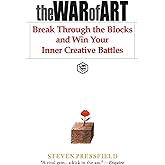
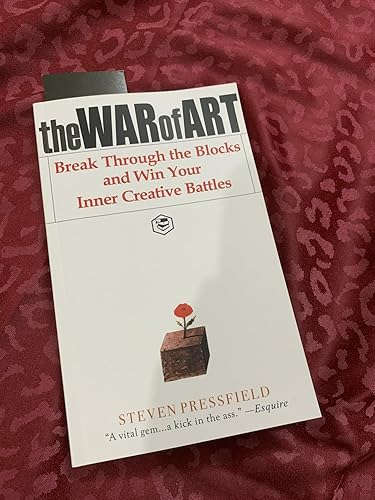
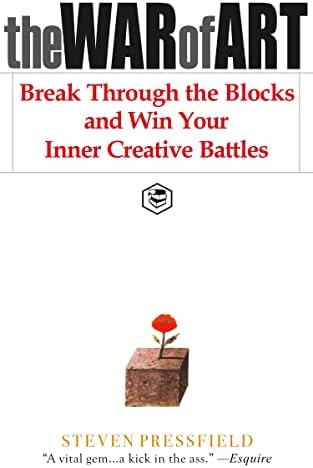
The War of Art: Break Through the Blocks and Win Your Inner Creative Battles
What keeps so many of us from doing what we long to do?
Why is there a naysayer within? How can we avoid the roadblocks of any creative endeavor—be it starting up a dream business venture, writing a novel, or painting a masterpiece?
Bestselling novelist Steven Pressfield identifies the enemy that every one of us must face, outlines a battle plan to conquer this internal foe, then pinpoints just how to achieve the greatest success.
The War of Art emphasizes the resolve needed to recognize and overcome the obstacles of ambition and then effectively shows how to reach the highest level of creative discipline.
Think of it as tough love . . . for yourself.
Whether an artist, writer or business person, this simple, personal, and no-nonsense book will inspire you to seize the potential of your life.
- LanguageEnglish
- PublisherSANAGE PUBLISHING HOUSE LLP
- Publication date5 May 2023
- File size1.6 MB
Related products from stores
- The War of Art: Break Through the Blocks and Win Your Inner Creative BattlesPaperbackFREE Delivery by AmazonGet it by Wednesday, July 15
- Psycho-Cybernetics (Updated and Expanded)PaperbackFREE Delivery by AmazonGet it by Wednesday, July 15
- Meditations by Marcus Aurelius | Ancient Wisdom on Purpose, Calm & Personal Growth | Philosophy, Stoicism & Self-Mastery | A Stoic Classic for Mental Strength & Inner Clarity | Wisdom for Modern Living | Original Premium Paperback Edition | Best SellerPaperback45% offLimited time dealFREE Delivery by AmazonGet it by Wednesday, July 15
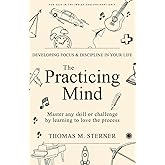
- The Practicing Mind: Developing Focus And Discipline In Your Life: Master any skill or challenge by learning to love the processPaperbackFREE Delivery by AmazonGet it by Wednesday, July 15
Rule of thumb: The more important a call or action is to our soul's evolution, the more Resistance we will feel toward pursuing it.Highlighted by 32,970 Kindle readers
Remember our rule of thumb: The more scared we are of a work or calling, the more sure we can be that we have to do it.Highlighted by 27,987 Kindle readers
The counterfeit innovator is wildly self-confident. The real one is scared to death.Highlighted by 26,423 Kindle readers
Most of us have two lives. The life we live, and the unlived life within us. Between the two stands Resistance.Highlighted by 24,397 Kindle readers
Product description
Review
From the Publisher
Robert McKee
Bestselling Author of STORY: Substance, Structure, Style, and the Principles of Screenwriting
On The War of Art
Steven Pressfield wrote The War of Art for me. He undoubtedly wrote it for you too, but I know he did it expressly for me because I hold Olympic records for procrastination. I can procrastinate thinking about my procrastination problem. I can procrastinate dealing with my problem of procrastinating thinking about my procrastination problem. So Pressfield, that devil, asked me to write this foreword against a deadline, knowing that no matter how much I stalled, eventually I'd have to knuckle down and do the work. At the last possible hour I did, and as I leafed through Book One, "Defining the Enemy," I saw myself staring back guilty-eyed from every page. But then Book Two gave me a battle plan; Book Three, a vision of victory; and as I closed The War of Art, I felt a surge of positive calm. I now know I can win this war. And if I can, so can you.
To begin Book One, Pressfield labels the enemy of creativity Resistance, his all-encompassing term for what Freud called the Death Wish-that destructive force inside human nature that rises whenever we consider a tough, long-term course of action that might do for us or others something that's actually good. He then presents a rogue's gallery of the many manifestations of Resistance. You will recognize each and every one, for this force lives within us all-self-sabotage, self-deception, self-corruption. We writers know it as "block," a paralysis whose symptoms can bring on appalling behavior.
Some years ago I was as blocked as a Calcutta sewer, so what did I do? I decided to try on all my clothes. To show just how anal I can get, I put on every shirt, pair of pants, sweater, jacket, and sock, sorting them into piles: spring, summer, fall, winter, Salvation Army. Then I tried them on all over again, this time parsing them into spring casual, spring formal, summer casual... Two days of this and I thought I was going mad. Want to know how to cure writer's block? It's not a trip to your psychiatrist. For as Pressfield wisely points out, seeking "support" is Resistance at its most seductive. No, the cure is found in Book Two: "Turning Pro."
Steven Pressfield is the very definition of a pro. I know this because I can't count the times I called the author of The Legend of Bagger Vance to invite him for a round of golf, and although tempted, he declined. Why? Because he was working, and as any writer who has ever taken a backswing knows, golf is a beautifully virulent form of procrastination. In other words, Resistance. Steve packs a discipline forged of Bethlehem steel.
I read Steve's Gates of Fire and Tides of War back-to-back while traveling in Europe. Now, I'm not a lachrymose guy; I hadn't cried over a book since The Red Pony, but these novels got to me. I found myself sitting in cafés, choking back tears over the selfless courage of those Greeks who shaped and saved Western civilization. As I looked beneath his seamless prose and sensed his depth of research, of knowledge of human nature and society, of vividly imagined telling details, I was in awe of the work, the work, all the work that built the foundation of his riveting creations. And I'm not alone in this appreciation. When I bought the books in London, I was told that Steve's novels are now assigned by Oxford history dons who tell their students that if they wish to rub shoulders with life in classical Greece, read Pressfield.
How does an artist achieve that power? In the second book Pressfield lays out the day-by-day, step-by-step campaign of the professional: preparation, order, patience, endurance, acting in the face of fear and failure-no excuses, no bullshit. And best of all, Steve's brilliant insight that first, last, and always, the professional focuses on mastery of the craft.
Book Three, "The Higher Realm," looks at Inspiration, that sublime result that blossoms in the furrows of the professional who straps on the harness and plows the fields of his or her art. In Pressfield's words: "When we sit down each day and do our work, power concentrates around us...we become like a magnetized rod that attracts iron filings. Ideas come. Insights accrete." On this, the effect of Inspiration, Steve and I absolutely agree. Indeed, stunning images and ideas arrive as if from nowhere. In fact, these seemingly spontaneous flashes are so amazing, it's hard to believe that our unworthy selves created them. From where, therefore, does our best stuff come?
It's on this point, however, the cause of Inspiration, that we see things differently. In Book One Steve traces Resistance down its evolutionary roots to the genes. I agree. The cause is genetic. That negative force, that dark antagonism to creativity, is embedded deep in our humanity. But in Book Three he shifts gears and looks for the cause of Inspiration not in human nature, but on a "higher realm." Then with a poetic fire he lays out his belief in muses and angels. The ultimate source of creativity, he argues, is divine. Many, perhaps most readers, will find Book Three profoundly moving.
I, on the other hand, believe that the source of creativity is found on the same plane of reality as Resistance. It, too, is genetic. It's called talent: the innate power to discover the hidden connection between two things-images, ideas, words-that no one else has ever seen before, link them, and create for the world a third, utterly unique work. Like our IQ, talent is a gift from our ancestors. If we're lucky, we inherit it. In the fortunate talented few, the dark dimension of their natures will first resist the labor that creativity demands, but once they commit to the task, their talented side stirs to action and rewards them with astonishing feats. These flashes of creative genius seem to arrive from out of the blue for the obvious reason: They come from the unconscious mind. In short, if the Muse exists, she does not whisper to the untalented.
So although Steve and I may differ on the cause, we agree on the effect: When inspiration touches talent, she gives birth to truth and beauty. And when Steven Pressfield was writing The War of Art, she had her hands all over him.
About the Author
Excerpt. © Reprinted by permission. All rights reserved.
Robert McKee
Bestselling Author of Story: Substance, Structure, Style, and the Principles of Screenwriting
On The War of Art
Steven Pressfield wrote The War of Art for me. He undoubtedly wrote it for you too, but I know he did it expressly for me because I hold Olympic records for procrastination. I can procrastinate thinking about my procrastination problem. I can procrastinate dealing with my problem of procrastinating thinking about my procrastination problem. So Pressfield, that devil, asked me to write this foreword against a deadline, knowing that no matter how much I stalled, eventually I'd have to knuckle down and do the work. At the last possible hour I did, and as I leafed through Book One, "Defining the Enemy," I saw myself staring back guilty-eyed from every page. But then Book Two gave me a battle plan; Book Three, a vision of victory; and as I closed The War of Art, I felt a surge of positive calm. I now know I can win this war. And if I can, so can you.
To begin Book One, Pressfield labels the enemy of creativity Resistance, his all-encompassing term for what Freud called the Death Wish-that destructive force inside human nature that rises whenever we consider a tough, long-term course of action that might do for us or others something that's actually good. He then presents a rogue's gallery of the many manifestations of Resistance. You will recognize each and every one, for this force lives within us all-self-sabotage, self-deception, self-corruption. We writers know it as "block," a paralysis whose symptoms can bring on appalling behavior.
Some years ago I was as blocked as a Calcutta sewer, so what did I do? I decided to try on all my clothes. To show just how anal I can get, I put on every shirt, pair of pants, sweater, jacket, and sock, sorting them into piles: spring, summer, fall, winter, Salvation Army. Then I tried them on all over again, this time parsing them into spring casual, spring formal, summer casual... Two days of this and I thought I was going mad. Want to know how to cure writer's block? It's not a trip to your psychiatrist. For as Pressfield wisely points out, seeking "support" is Resistance at its most seductive. No, the cure is found in Book Two: "Turning Pro."
Steven Pressfield is the very definition of a pro. I know this because I can't count the times I called the author of The Legend of Bagger Vance to invite him for a round of golf, and although tempted, he declined. Why? Because he was working, and as any writer who has ever taken a backswing knows, golf is a beautifully virulent form of procrastination. In other words, Resistance. Steve packs a discipline forged of Bethlehem steel.
I read Steve's Gates of Fire and Tides of War back-to-back while traveling in Europe. Now, I'm not a lachrymose guy; I hadn't cried over a book since The Red Pony, but these novels got to me. I found myself sitting in cafés, choking back tears over the selfless courage of those Greeks who shaped and saved Western civilization. As I looked beneath his seamless prose and sensed his depth of research, of knowledge of human nature and society, of vividly imagined telling details, I was in awe of the work, the work, all the work that built the foundation of his riveting creations. And I'm not alone in this appreciation. When I bought the books in London, I was told that Steve's novels are now assigned by Oxford history dons who tell their students that if they wish to rub shoulders with life in classical Greece, read Pressfield.
How does an artist achieve that power? In the second book Pressfield lays out the day-by-day, step-by-step campaign of the professional: preparation, order, patience, endurance, acting in the face of fear and failure-no excuses, no bullshit. And best of all, Steve's brilliant insight that first, last, and always, the professional focuses on mastery of the craft.
Book Three, "The Higher Realm," looks at Inspiration, that sublime result that blossoms in the furrows of the professional who straps on the harness and plows the fields of his or her art. In Pressfield's words: "When we sit down each day and do our work, power concentrates around us...we become like a magnetized rod that attracts iron filings. Ideas come. Insights accrete." On this, the effect of Inspiration, Steve and I absolutely agree. Indeed, stunning images and ideas arrive as if from nowhere. In fact, these seemingly spontaneous flashes are so amazing, it's hard to believe that our unworthy selves created them. From where, therefore, does our best stuff come?
It's on this point, however, the cause of Inspiration, that we see things differently. In Book One Steve traces Resistance down its evolutionary roots to the genes. I agree. The cause is genetic. That negative force, that dark antagonism to creativity, is embedded deep in our humanity. But in Book Three he shifts gears and looks for the cause of Inspiration not in human nature, but on a "higher realm." Then with a poetic fire he lays out his belief in muses and angels. The ultimate source of creativity, he argues, is divine. Many, perhaps most readers, will find Book Three profoundly moving.
I, on the other hand, believe that the source of creativity is found on the same plane of reality as Resistance. It, too, is genetic. It's called talent: the innate power to discover the hidden connection between two things-images, ideas, words-that no one else has ever seen before, link them, and create for the world a third, utterly unique work. Like our IQ, talent is a gift from our ancestors. If we're lucky, we inherit it. In the fortunate talented few, the dark dimension of their natures will first resist the labor that creativity demands, but once they commit to the task, their talented side stirs to action and rewards them with astonishing feats. These flashes of creative genius seem to arrive from out of the blue for the obvious reason: They come from the unconscious mind. In short, if the Muse exists, she does not whisper to the untalented.
So although Steve and I may differ on the cause, we agree on the effect: When inspiration touches talent, she gives birth to truth and beauty. And when Steven Pressfield was writing The War of Art, she had her hands all over him.
Product details
- ASIN : B0C5DZWZL8
- Publisher : SANAGE PUBLISHING HOUSE LLP
- Accessibility : Learn more
- Publication date : 5 May 2023
- Edition : 1st
- Language : English
- File size : 1.6 MB
- Screen Reader : Supported
- Enhanced typesetting : Enabled
- X-Ray : Not Enabled
- Word Wise : Enabled
- Print length : 163 pages
- ISBN-13 : 978-8119216345
- Page Flip : Enabled
- Best Sellers Rank: #2,167 in Kindle Store (See Top 100 in Kindle Store)
- #3 in Creativity Self-Help eBooks
- #49 in Creativity (Books)
- #137 in Personal Transformation
- Customer Reviews:
About the authors

Steven Pressfield is the author of The War of Art which has sold over a millions copies globally and been translated into multiple languages. He is a master of historical fiction with Gates of Fire being on the required reading list at West Point and the the recommended reading list of the Joint Chiefs. His other books include A Man at Arms, Turning Pro, Do the Work, The Artist's Journey, Tides of War, The Legend of Bagger Vance, Last of the Amazons, Virtues of War, The Afghan Campaign, Killing Rommel, The Profession, The Lion's Gate, The Warrior Ethos, The Authentic Swing, An American Jew, Nobody Wants to Read Your Sh*t, and The Knowledge.
His debut novel, The Legend of Bagger Vance was over 30 years in the making. He hasn't stopped writing since.
Steve lives and writes in California. You can following him on IG @steven_pressfield. Sign up for his weekly writing newsletter at stevenpressfield.com
"It is one thing to study war, and another to live the warrior's life."

Discover more of the author’s books, see similar authors, read book recommendations and more.
Customer reviews
Customers say
Generated from the text of customer reviewsSelect to learn more
Reviews with images
A must-read for anyone who wants to stop thinking and start doing
Top reviews from India
- 5 out of 5 stars
No excuses, just do the work
Reviewed in India on 5 August 2025The War of Art is one of those books that hits you right where you need it. It’s a sharp, no-fluff look at why we avoid doing the work that really matters to us; whether that’s writing, painting, starting new course, or anything creative.
Pressfield introduces this idea of “Resistance”that inner force that shows up every time we try to step into something meaningful. He doesn’t sugarcoat it; Resistance is real, and it’s brutal. But he also gives a clear path to fighting it: you show up, you do the work, like a professional.
The book is broken into three parts:
1. What Resistance is and how it works.
2. How to beat it by committing fully.
3. How creativity connects to something bigger than us.
It’s super easy to read, short chapters, direct language, and full of lines that stick with you. Some parts feel almost spiritual, but in a grounded, motivating way.
Why I loved it:
It doesn’t try to “inspire” you- it challenges you. It called me out on every excuse I’ve ever made and reminded me that doing the work isn’t about being in the mood or feeling ready. It’s about showing up.
If you’re stuck, procrastinating, or constantly doubting yourself creatively- read this. It’s a kick in the soul in the best possible way.


The War of Art is one of those books that hits you right where you need it. It’s a sharp, no-fluff look at why we avoid doing the work that really matters to us; whether that’s writing, painting, starting new course, or anything creative.
Pressfield introduces this idea of “Resistance”that inner force that shows up every time we try to step into something meaningful. He doesn’t sugarcoat it; Resistance is real, and it’s brutal. But he also gives a clear path to fighting it: you show up, you do the work, like a professional.
The book is broken into three parts:
1. What Resistance is and how it works.
2. How to beat it by committing fully.
3. How creativity connects to something bigger than us.
It’s super easy to read, short chapters, direct language, and full of lines that stick with you. Some parts feel almost spiritual, but in a grounded, motivating way.
Why I loved it:
It doesn’t try to “inspire” you- it challenges you. It called me out on every excuse I’ve ever made and reminded me that doing the work isn’t about being in the mood or feeling ready. It’s about showing up.
If you’re stuck, procrastinating, or constantly doubting yourself creatively- read this. It’s a kick in the soul in the best possible way.
3 people found this helpfulSending feedback…Sending feedback...HelpfulThank you for your feedback.Sorry, we failed to record your vote. Please try againThank you. We'll investigate in the next few days.Sorry, We failed to report this review. Please try again - 5 out of 5 stars
A book that gets things moving.
Reviewed in India on 15 May 2026This book is all you need to get things rolling in your life if they are static. Every chapter in there slaps you and wakes you up to who you really are. Who you really are meant to be. It speaks to your soul. Your Muse will speak to you now.
3 people found this helpfulSending feedback…Sending feedback...HelpfulThank you for your feedback.Sorry, we failed to record your vote. Please try againThank you. We'll investigate in the next few days.Sorry, We failed to report this review. Please try again - 4 out of 5 stars
Quality of pages are good and the core topic is perfect
Reviewed in India on 19 June 2026This book is amazing. The core topic is how to stop procrastination and the book it well but i gave it 4 star beacuse i tgink it is little overpriced

4 out of 5 starsQuality of pages are good and the core topic is perfect
Reviewed in India on 19 June 2026This book is amazing. The core topic is how to stop procrastination and the book it well but i gave it 4 star beacuse i tgink it is little overpriced
Sending feedback…Sending feedback...HelpfulThank you for your feedback.Sorry, we failed to record your vote. Please try againThank you. We'll investigate in the next few days.Sorry, We failed to report this review. Please try again - 5 out of 5 stars
A must-read for anyone who wants to stop thinking and start doing
Reviewed in India on 18 December 2025It's a powerful and punchy guide for anyone striving to create whether that’s writing a book, building a business, or pursuing a personal dream.
The author introduces the concept of Resistance, the inner force that keeps us from doing the work that truly matters. It shows up as procrastination, fear, doubt, perfectionism anything that stops us from taking action.
Pressfield writes in short, impactful chapters that feel like motivational punches. He encourages us to shift from being amateurs to professionals; people who show up every day, regardless of excuses or fears. The tone is direct, honest, and often confrontational in the best way. It reminds us that creativity isn’t just inspiration rather it’s discipline, courage, and persistence.
Whether you are an artist, entrepreneur, or someone who knows they are capable of more, this book acts as a wake-up call. This book is not just about creativity, it’s a manifesto for overcoming the battles within and finally unleashing your true potential.
5 out of 5 starsA must-read for anyone who wants to stop thinking and start doing
Reviewed in India on 18 December 2025It's a powerful and punchy guide for anyone striving to create whether that’s writing a book, building a business, or pursuing a personal dream.
The author introduces the concept of Resistance, the inner force that keeps us from doing the work that truly matters. It shows up as procrastination, fear, doubt, perfectionism anything that stops us from taking action.
Pressfield writes in short, impactful chapters that feel like motivational punches. He encourages us to shift from being amateurs to professionals; people who show up every day, regardless of excuses or fears. The tone is direct, honest, and often confrontational in the best way. It reminds us that creativity isn’t just inspiration rather it’s discipline, courage, and persistence.
Whether you are an artist, entrepreneur, or someone who knows they are capable of more, this book acts as a wake-up call. This book is not just about creativity, it’s a manifesto for overcoming the battles within and finally unleashing your true potential.
One person found this helpfulSending feedback…Sending feedback...HelpfulThank you for your feedback.Sorry, we failed to record your vote. Please try againThank you. We'll investigate in the next few days.Sorry, We failed to report this review. Please try again - 5 out of 5 stars
Gives you shivers
Reviewed in India on 21 April 2025Before reading this book, I set so many goals but failed to achieve even a single one of them. I felt worthless and powerless even though I was always ambitious. After reading this book, I got the culprit, it was my RESISTANCE, which always comes before your work and the only cure to it is ACTION.
Literally this book changed my life for good and I hope who ever read this, his/her life also gets changed for good...
4 people found this helpfulSending feedback…Sending feedback...HelpfulThank you for your feedback.Sorry, we failed to record your vote. Please try againThank you. We'll investigate in the next few days.Sorry, We failed to report this review. Please try again - 3 out of 5 stars
Check for piracy
Reviewed in India on 12 June 2026Make sure that if you pay for the original book, you actually receive the original copy. I initially received a pirated copy. The cover was greyish-white instead of bright white, the back cover printing was poor, and the cover itself felt very flimsy. Some elements also appeared misaligned and untidy.
After requesting a replacement, I received the genuine original copy, which had a clean white cover, proper printing, correct alignment, and much better overall quality.
So, make sure you check your copy carefully and ensure you’re getting the original book for the price you’re paying.
3 people found this helpfulSending feedback…Sending feedback...HelpfulThank you for your feedback.Sorry, we failed to record your vote. Please try againThank you. We'll investigate in the next few days.Sorry, We failed to report this review. Please try again - 5 out of 5 stars
Just keep all the Self-help, Strategy books aside and READ this.
Reviewed in India on 28 June 2016I know you wanna change. You wanna improve your self. You read all the classics in the self-help niche, all the success stories of the greatest personalities, and learn all the strategies.
And you feel that HIGH once a book is finished, eager and enthusiastic to apply all the knowledge you've gained and to see some results.
And the days go by... you slowly realize you're actually going nowhere, atleast not as much as you desire and expected.
You know what to do, you know how to do, but you won't seem to be able to apply the knowledge in realtime. And it sucks, i know that feeling.
And you slowly fall into the vicious circle.
You slowly take some other book that you hope atleast will help with your problem.
You pick a book.... you'll read... feels motivated.... days go by.... you realize.... it sucks... you start again( i hope)
THIS IS WHERE "TheWARofART" is a LIFE SAVING BOOK.
When you see that you're going nowhere even after knowing what to do. You'll slowly fall into the depressing thought process that may be YOU WILL NEVER BE THAT GUY YOU WANNA BE.
In every self-help book that we read hardly anyone was able to put the problem we are facing in such a way like in WARofART, where it truly kicks in your ass and makes you aware of the RESISTANCE you're facing ever since you know your self.
if you suck at taking ACTION about anything, and feeling how to do it. Just pick up this book and read it... take the book with you, when ever you're feeling of resistance or its disguised forms, read few pages from the book.
I bet you wont be sitting there idle once you finish this true gem of a book.. but will go and do your long held unfinished, undared stuff.
This is my first review ever since i'm puchasing books/anything from amazon. I thought of writing for some.. but you see RESISTANCE is a b***h. but now I did.
It's all those simple actions that makes a difference in a long run. And WarOfArt will help you beat the RESISTANCE and take that ACTION.
All the best. :)
238 people found this helpfulSending feedback…Sending feedback...HelpfulThank you for your feedback.Sorry, we failed to record your vote. Please try againThank you. We'll investigate in the next few days.Sorry, We failed to report this review. Please try again - 4 out of 5 stars
Nonsense "psychology" section but otherwise really good
Reviewed in India on 15 May 2024If you're a creative or just generally a go-getter, then there's nothing in this book that you don't already know from your own experiences. However, it's still nice to have it all in one place. I found the book very helpful because it reminded me of all the important stuff I already know but which I forget to pay heed to in the chaos of my every days.
About one fifth of the book was a little unreadable for me. It was the section where he talks about the self and the ego. I skimmed through those parts because they reeked of new-age speak which has never helped me and which I found very off-putting in what was otherwise an excellent and quick read.
8 people found this helpfulSending feedback…Sending feedback...HelpfulThank you for your feedback.Sorry, we failed to record your vote. Please try againThank you. We'll investigate in the next few days.Sorry, We failed to report this review. Please try again
Top reviews from other countries
philip little5 out of 5 starsThe War of Art: A Manual in Winning at Life
Reviewed in the United States on 11 November 2020The cover of The War of Art has a quote by Esquire Magazine. It reads, “A vital gem… a kick in the ass.” Flip the book open and the reader will see the book is published by a firm called Black Irish Entertainment. It’s logo is a single boxing glove. While reading this book, I couldn’t help but constantly think back to this quote and image. Each chapter felt like a punch to the gut, a wake up call, a kick in the ass. Steven Pressfield titled his book The War of Art: Break Through the Blocks and Win Your Inner Creative Battles and he presents his readers with just that. A manual on fighting and defeating the opponent of life and resistance. I strongly recommend this book to anyone looking for the tools necessary to overcome life’s greatest obstacles, develop yourself into an accomplished professional, and become the ultimate versions of yourself. Here's why:
The book was first published in 2002 and written by Steven Pressfield. Pressfield is most known for his historical fiction but has also produced many award winning non-fiction works and screenplays. His first book, The Legend of Bagger Vance, was made into a reputable film in 1995. His writing often draws parallels between historical classics, religious archetypes, and motivational revelations about his struggles and others’. His tales have motivated multitudes of individuals to conquer their fears, reach their potential, and accomplish their dreams.
The War of Art is split into three books. The first book is called Resistance: Defining the Enemy. He uses this chapter to call out what he believes as the root to most of our problems. He defines Resistance as “The enemy within” and a “Force of nature”. It’s a “repelling force. It’s negative”, “Resistance will tell you anything to keep you from doing your work”, and “Resistance aims to kill.” He says everyone has had a battle with Resistance and it’s the root to many of the issues we face and develop in our lives. Substance dependence, unhappiness, and anger are just some of the effects caused from our internal battle with this self-sabotage energy. Each chapter is poetically written to describe the way resistance can infiltrate our lives and destroy us from within. The goal of this chapter is to identify to readers Resistance’s characteristics so they can recognize and fight it when face to face with this malevolence.
The second book is called Combating Resistance: Turning Pro. Pressfield uses the terms professional and amateur to describe the battle with Resistance. He explains that those defeated by Resistance think like amateurs, and professionals are equipped with the tools to overpower their Resistance and reach their potential. Some of these chapters describe a professional's attributes. They’re titled: A Professional is Patient, A Professional Acts in the Face of Fear, A Professional Reinvents Himself, etc. He uses stories and accounts of his own life and others, such as golfer Tiger Woods, to paint the picture of perseverance, focus, and strength. My favorite quote from this book comes from his chapter How to be Miserable. A marine himself, he briefly talks about how Marines are trained to love being miserable, to embrace the struggle, and fight to the death. The last line reads: “Because this is war, baby. And War is hell.”
Book Three is called Beyond Resistance: The Higher Realm. This chapter aims to harness the psychic powers needed to fight the Resistance he described earlier. He uses terms such as angels, demons, and muses, but offers his more secular audience the option to think of these forces as abstract and impersonal, such as gravity, instincts, or universal forces. He claims we need these allies if we are ever to defeat the enemy of Resistance. He mentions the Athenian Xenophon who would make sacrifices to the gods and call for their aid before any expedition. His own version of this he calls invoking the Muse, a Greek mythology term used to describe the nine Goddesses, or even a person or personified force used as a source of inspiration to artists. Additionally, Pressfield goes on to describe the difference between the Ego and Self. With quotes from famous psychologists such as Freud and Jung, he believes the Ego is where Resistance lies, while the Self is where the angles, or good forces, live. He describes the characteristics of the ego and how it is the “part of the psyche that believes in material existence” and nothing more. While the Self is our deepest being, united to God, and is ever-growing and ever-evolving. The Ego hates the Self, Pressfield writes, and is the perpetrator for growth, progression, and success. He goes on to describe what the Authentic self looks like, how to defeat the hierarchical orientation, and how to unleash the artist within us.
As a young aspiring professional on the cusp of a career and “the rest of my life”, this book struck the deepest cord in me and immediately earned its place in my list of books to re-read every year. It’s an easy read and I read it cover to cover in about three hours. It’s organized like a manual, with short chapters, and important titles and messages that will resonate with you at different points in your life. While reading its entirety is do-able, one can just as easily flip through the chapters and meditate on the headline and chapter that speaks to you most. It makes for the ultimate bed-side book for any artists looking for daily motivation to break through their creative struggles. Pressfield also seemed to speak to me specifically. I have long been a lover of Greek mythology and culture, Xenophon, and the Bhagavad-Gita, all which he mentions and parallels in his chapters. I was also a fan of the spiritual take-aways in his third book. The War of Art is a self-help book, but differs to many I have read. It is straight to the point, raw, and hard-hitting. While many self-help books rely on abstract and vague themes, Pressfield tells his readers his truth with his own words, as blunt as possible. It’s entertaining, easy to read, and powerful to anyone seeking help.
Typically, I try to stay away from definitive statements, such as “Everyone would enjoy or resonate with this book.” We are all individuals that react differently to everything. But I do firmly believe this book would provide everyone of it’s readers a piece of something they have been looking for. We are all artists, and without unlocking the creative power within us, we find ourselves riddled with dilemmas and obstacles that are far from conquerable. For all willing, this book will help you identify the enemy, equip you with the tools to fight, and unlock the mystical powers that will help you live a fulfilling life.
Sending feedback…Thank you. We'll investigate in the next few days.Sorry, We failed to report this review. Please try again
Rodrigo M.5 out of 5 starsAll this criticism about its religious tone is misleading
Reviewed in Brazil on 6 February 2022First, my criticism: the author claims indeed that some mental disorders are a product of marketeers; and that looking for support is an excuse to procrastinate. This is complete nonsense. That opinion may reflect a view which used to be more common when the book was written. But here he abuses his poetic license, in my opinion, especially considering that this book will be read by people who are struggling with DDA, depression and other conditions. If that’s your case, I really recommend that you seek treatment first and, when your symptoms are under control, then you take the advice in this book. Otherwise, I believe its suggestions won't feel very doable to you.
That being said, I think there are some very good points in this book.
I’ve been reading self-help books on procrastination for some time. Most of them written by PhDs, containing science-based information (which I find good), but also with that irritating inclination to repeat themselves to exhaustion and to fill several pages with vaguely related trivia, apparently as a mere attempt to make the book longer. Then I heard about The War of Art and it immediately caught my attention.
The book is short and I read it in three or four hours. And it exerted a very positive impact on me. Time will tell whether such impact will last long enough or if I’m just benefiting from the effects of novelty and recency. But I think there’s something powerful about mentalizing your own procrastination as an external entity (the Resistance) and personalizing it. By thinking of it as a bully who annoys you and celebrates your failures, it gets more approachable. It gets easier to get away from it the same simple way you do about annoying people. It turns into an external thing you will wrestle with, instead of a part of you which you will resent.
The commenters claiming that he’s trying to push a religious view about the world are mistaken: right at the very beginning of the third part (the most criticized for its religious tone), the author states very clearly that, if you don’t feel comfortable thinking of Muses and Angels, think of them in more abstract terms instead, or as products of the unconsciousness, or whatever that works for you. I invite the commenters who said otherwise to actually read and reassess it.
Granted, the author is a religious person – and he points that explicitly. But it doesn’t take more than a very little effort to realize that there are some basic underlying aspects in his rituals: it’s all about habits to put oneself in a favorable disposition for the work. The book Daily Rituals: How Artists Work, by Mason Currey, is full of other famous examples along those same lines.
I suspect that some of the commenters who didn’t like his allegories would have embraced them enthusiastically if it were a monk using concepts from an eastern religion. The use of a christian religion might have led readers educated under a christian system to take it overly literally.
Sending feedback…Thank you. We'll investigate in the next few days.Sorry, We failed to report this review. Please try again
Lucy D.5 out of 5 starsUnterhaltsam, absolut treffend und motivierend zugleich.
Reviewed in Germany on 17 June 2011Was uns C.G. Jung über den Schattenarchetypen erzählen konnte, kann uns Pressfield über die Tiefen des kreativen Daseins berichten. Dieses Buch ist nicht nur spezifisch auf den blockierten Künstler ausgerichtet.
Es werden auch Menschen, die ihre Lebensträume vor sich herschieben, was daraus gewinnen können.
Kenne deinen inneren Feind, denn gegen das eigene Ego kann man sehr gut vorgehen.
Das macht ungefähr 2 / 3 des Buches aus.
Dann gibt es aber noch den 3. Abschnitt; da kommen dann das höhere Selbst und Lösungsstrategien ins Spiel und überhaupt hilft einem ja (wie immer) das gesamte Universum, wenn man es nur lässt - das hat die vorangehende Rezensentin, die diesem Buch nichts abgewinnen konnte, wohl nicht mehr an sich ran gelassen.
Wer "Der Weg des Künstlers" von Julia Cameron mochte, aber keine Lust auf die darin enthaltenen Aufgaben hat und sich lieber in englischsprachigen, verbalen Ergüssen ob Tragik und Komödie des (Künstler-)daseins suhlt, als tiefgehend an sich zu arbeiten, der ist mit diesem Buch bestens bedient.
Ich war es - und werde bei Bedarf mal wieder drin blättern, denn Selbsterkenntnis hilft.
(Ich glaube, "Der Weg des Künstlers" hat mir noch mehr geholfen; das nur so am Rande und für die, die an sich arbeiten wollen.) Dieses Büchlein tuts auch.
Kleine Happen (oder Bisse) - große Wirkung.
Die Botschaft "lass das Große Ganze durch dich hindurch arbeiten" à la Cameron steckt hier auch drin, allerdings in einer ruppigeren, abgespeckteren, "in your face" Version, da einem an den meisten Stellen des Buches der Spiegel vorgehalten wird.
- Und diese Art der Selbsterkenntnis kann sehr effizient sein!
Fazit: Man blockiert sich stets selbst, ist immer selbst schuld, und man könnte diese ganze negative Energie genauso gut konstruktiv nutzen.
Alles bestens.
Sending feedback…Thank you. We'll investigate in the next few days.Sorry, We failed to report this review. Please try again
Bosco Gamiz5 out of 5 starsThe hype was deserved
Reviewed in Spain on 14 April 2023Ok. I read or heard about this book enough times to be intrigued and I went and read it. And yeah, I get it. It's not what I'd usually consider would appeal to me, but it did. A great deal actually. Just a few underlines, but very powerful ones. I'm not too keen on the machoesque undertones, but nothing to really trip over. Just a stylistic choice. The message comes through loud and clear. And it's one worth hearing.
Sending feedback…Thank you. We'll investigate in the next few days.Sorry, We failed to report this review. Please try again
Luis Antonio Snell5 out of 5 starsExcellent and insightful book
Reviewed in Mexico on 26 August 2024The package arrived with no problem, the book is full with reflections on how to turn pro as an artist or creative and get working on your craft.
Sending feedback…Thank you. We'll investigate in the next few days.Sorry, We failed to report this review. Please try again