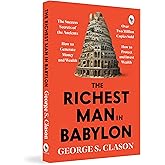
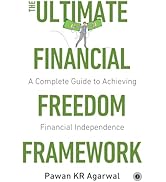
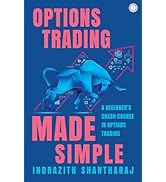
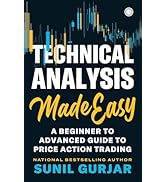
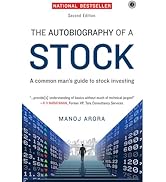
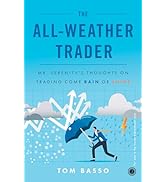
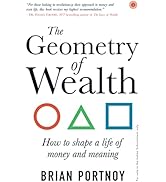
Customers who viewed this item also viewed
Deal price
-33%
₹269.00₹269.00
Ships from: Amazon Sold by: Cocoblu Retail
Regular Price
-23%
₹307.00₹307.00
FREE delivery Monday, 13 July on your first order
Advertisement
Advertisement
Ships from: Amazon Sold by: Cocoblu Retail
Sorry, there was a problem.
There was an error retrieving your Wish Lists. Please try again.Sorry, there was a problem.
List unavailable.
Download the free Kindle app and start reading Kindle books instantly on your smartphone, tablet or computer – no Kindle device required.
Read instantly on your browser with Kindle for Web.
Using your mobile phone camera, scan the code below and download the Kindle app.

Follow the author
OK
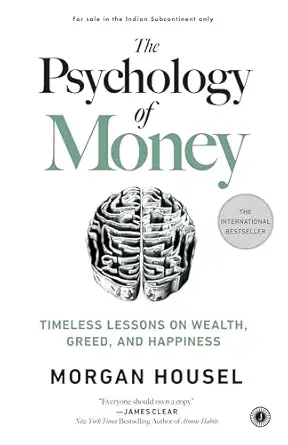
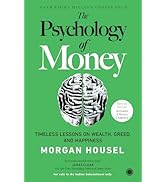
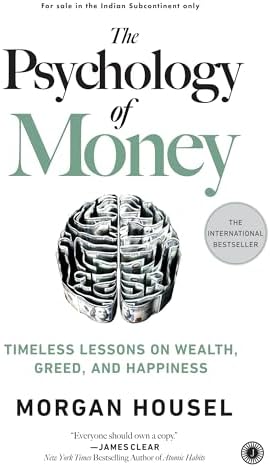
The Psychology of Money
Save Extra with 3 offers
10 days Replacement
| Replacement Reason | Replacement Period | Replacement Policy |
|---|---|---|
| Physical Damage, Defective, Wrong and Missing Item | 10 days from delivery | Replacement |
Replacement Instructions
Read full returns policy
10 days Replacement
| Replacement Reason | Replacement Period | Replacement Policy |
|---|---|---|
| Defective, Physical Damage, Wrong and Missing Item | 10 days from delivery | Replacement |
Replacement Instructions
Read full returns policy
- ISBN-109390166268
- ISBN-13978-9395970334
- PublisherJaico Publishing House
- Publication date1 September 2020
- LanguageEnglish
- Dimensions14.2 x 0.9 x 21.7 cm
- Print length252 pages
Related products from stores

World’s Greatest Books For Personal Growth & Wealth (Set of 4 Books) : Perfect Motivational Gift Set | How to Win Friends and Influence People | Think and Grow Rich | The Richest Man in Babylon | The Power of Your Subconscious Mind | Premium Paperback for GiftingGeorge S. Clason Dale Carnegie, Napoleon Hill, Dr. Joseph MurphyPaperback50% offPrime Day Mega Deal
Humility, kindness, and empathy will bring you more respect than horsepower ever will.Highlighted by 6,708 Kindle readers
Therefore, focus less on specific individuals and case studies and more on broad patterns.Highlighted by 6,326 Kindle readers
From the brand
Product description
About the Author
Morgan Housel is a partner at The Collaborative Fund. He is a two-time winner of the Best in Business Award from the Society of American Business Editors and Writers, winner of the New York Times Sidney Award, and a two-time finalist for the Gerald Loeb Award for Distinguished Business and Financial Journalism.
Product details
- Publisher : Jaico Publishing House
- Publication date : 1 September 2020
- Language : English
- Print length : 252 pages
- ISBN-10 : 9390166268
- ISBN-13 : 978-9395970334
- Reading age : Customer suggested age: 17 years and up
- Item Weight : 224 g
- Dimensions : 14.2 x 0.9 x 21.7 cm
- Country of Origin : India
- Net Quantity : 1 Count
- Importer : Jaico Publishing House, JA-1, Jash Chambers, Off Sir Phirozshah Mehtra Road, Fort, Mumbai, Maharashtra 400023 Phone: 022 4030 6767
- Packer : Jaico Publishing House, JA-1, Jash Chambers, Off Sir Phirozshah Mehtra Road, Fort, Mumbai, Maharashtra 400023 Phone: 022 4030 6767
- Generic Name : Paperback Book
- Best Sellers Rank: #8 in Books (See Top 100 in Books)
- #1 in Personal Transformation
- #1 in Analysis & Strategy
- Customer Reviews:
About the author

Morgan Housel is a partner at The Collaborative Fund. He is a two-time winner of the Best in Business Award from the Society of American Business Editors and Writers, winner of the New York Times Sidney Award, and a two-time finalist for the Gerald Loeb Award for Distinguished Business and Financial Journalism. He lives in Seattle with his wife and two kids.
Customer reviews
Customers say
Generated from the text of customer reviewsSelect to learn more
Reviews with images
Ordered hardcover and got hardcover
Top reviews from India
- 5 out of 5 stars
Not a typical finance book
Reviewed in India on 18 February 2026The Psychology of Money is not a typical finance book about formulas or stock tips; it is about how human behavior shapes financial decisions. Morgan Housel explains money through simple stories, showing how emotions, habits, and mindset matter more than intelligence or income.
The book highlights that wealth is built through patience, discipline, and long-term thinking rather than quick profits. It teaches that risk, luck, and timing play a bigger role in success than most people admit. Each chapter is short, clear, and practical, making it easy for beginners and experienced readers alike.
What makes this book powerful is its focus on real-life thinking patterns—fear, greed, and confidence—and how they affect saving and investing. Instead of telling you what to buy, it teaches you how to think.
Overall Verdict:
A thoughtful, easy-to-read book that changes how you see money. Perfect for anyone who wants financial wisdom, not just financial advice.
35 people found this helpfulSending feedback…Sending feedback...HelpfulThank you for your feedback.Sorry, we failed to record your vote. Please try againThank you. We'll investigate in the next few days.Sorry, We failed to report this review. Please try again - 5 out of 5 stars
A good read on how to manage money
Reviewed in India on 18 April 20234.5 Stars. A curveball by Morgan Housel. With a twist in the middle, this book opened certain viewpoints that changed my financial conceptions.
Being from a third world country, My views regarding money were very much different.
Still,money is a subject which every person in this world sees as an object of wealth, greed & happiness. Hard work & dedication is one of the main principles to it.
What you get is how you think of it.
Here are some aspects I searched out to be useful and actionable :
> It’s never as good or bad as it seems in finance. Going out of your way to find Humility when things seem right and Forgiveness/Compassion when things go wrong is the way to find peace with money.
Respecting the power of money mixed with luck and risk will help you focus on the things that you can control.
To be honest -> I am still to find it, I take calculated steps to find peace with my money. I am a bit whimsical when it comes to money. Need to control my urges
> Saving money is the gap b/w your ego and your income. Wealth is something created by suppressing the urge to buy now; so as to have more stuff in future.
‘No matter how much you earn today, it won’t create wealth unless you discard the thought of how much fun you can have with your money today.’
Save, just save. You don’t need to a specific reason.
> Manage your money in a way that helps you sleep at night. It is different for different people. Some won’t sleep until they see higher returns on their money; for others it may be investing conservatively. To each their own.
> For every investor, the single most powerful thing is to increase the time horizon. It pushes results closer to what people deserve. We can be wrong half the time, and yet make a fortune. It’s OK to be have lots of things wrong, you’re human. Chillax.
> Using money to gain control over your time & the ability to do that gives you independence. What you want, when you want, how you want, with who you want, for as long as you want to, pays the highest dividend in money matters.
> Being nicer & less flashy with money helps infinitely. No one else’s as much impressed of your possessions as you are. What you most Want is Respect & Admiration, which can ONLY be achieved by Kindness & Humility, not horsepower and chrome.
> Defining the cost of success & paying it is obvious coz nothing worthwhile comes free. Uncertainty, doubt & regret are common costs of money world. We must view costs as fees, not fines. Getting one thing for another is a way of life in finance.
> Worship room for error is a conservative hedge that gives us endurance. It happens by the gap b/w what could happen in future versus what you think that should happen in future. Incentives are huge motivators in life. So, try to get more out of life.
> Avoid extreme ends of financial decisions at all costs helps us get over a feeling of regret as we evolve. All our goals & desires change over time.
In our childhood & youth, we crave to consume.
In our adulthood, we crave to consume and provide.
In our retirement zone, we try to consume again.
Consumption and Creation are parts of life.
Minimize the wastage of money.
> Conservative risks taking help us, it pays off in time. Being reasonable, not overly rational, helps the most in our financial decisions. They are mostly taken, not in boardrooms or on spreadsheets, but at the dining table, with family.
> Define the game you are playing & make sure your actions are not being influenced by others who’re playing a different game. Keeping the ball in your court is crucial.
Respect the mess coz smart & reasonable people can disagree on your decisions, as they vary in their thought process.
165 people found this helpfulSending feedback…Sending feedback...HelpfulThank you for your feedback.Sorry, we failed to record your vote. Please try againThank you. We'll investigate in the next few days.Sorry, We failed to report this review. Please try again - 4 out of 5 stars
Nice read
Reviewed in India on 5 June 2026What I liked most was live below the status you can actually afford, that will increase your savings rate and in turn independence
2 people found this helpfulSending feedback…Sending feedback...HelpfulThank you for your feedback.Sorry, we failed to record your vote. Please try againThank you. We'll investigate in the next few days.Sorry, We failed to report this review. Please try again - 5 out of 5 stars
the compounding of wealth, health and time
Reviewed in India on 19 June 2026Reading The Psychology of Money felt, in many ways, like a confirmation of beliefs I had already begun to develop through experience. Much of what Morgan Housel discusses aligns with how I now approach money and investing, although, as the book repeatedly reminds us, knowing what to do is far easier than consistently doing it.
Like many investors, I learned some lessons the hard way. After losing money by following stock tips and chasing recommendations from others, I made a commitment to myself: I would only invest in businesses I truly understand. Today, before making a long-term investment decision, I spend time understanding the company, reading its annual reports, and evaluating its fundamentals. My focus has shifted away from trying to make quick money and toward building sustainable wealth—a distinction that sits at the heart of this book.
One of the most powerful ideas in the book is the role of time. Compounding is often described as a financial concept, but its real magic lies in giving it enough time to work. The longer the runway, the greater the outcome. However, having that runway requires more than financial discipline. It requires good health, emotional stability, and the ability to stay the course through life’s inevitable ups and downs.
This led me to a broader realization. Wealth is not built in isolation. To benefit from long-term compounding, we must invest not only in our finances but also in our health, our relationships, and our peace of mind. Being present for family, maintaining physical and mental well-being, and staying humble enough to prioritize what truly matters are all part of the equation.
What I took away from The Psychology of Money is that wealth is ultimately about creating options and buying time. And the most beautiful cycle is this: take care of your health and relationships so you can benefit from long-term compounding; build wealth patiently over time; and then use that wealth to gain more control over your time, allowing you to invest even more deeply in the people and things that matter most.
That, to me, is the real psychology of money.
4 people found this helpfulSending feedback…Sending feedback...HelpfulThank you for your feedback.Sorry, we failed to record your vote. Please try againThank you. We'll investigate in the next few days.Sorry, We failed to report this review. Please try again - 5 out of 5 stars
A Paradigm Shift! "The Psychology of Money" is Essential Reading for Everyone!
Reviewed in India on 11 June 2025I've always believed that managing money was about math and formulas – how much to save, where to invest, and optimizing returns. But "The Psychology of Money" by Morgan Housel completely shattered that notion and opened my eyes to a much more profound truth: financial success isn't primarily about what you know, but about how you behave.
This book is an absolute revelation. Housel doesn't just present dry financial advice; he masterfully weaves together captivating stories and timeless principles to explain why our emotions, biases, and unique personal experiences play such a crucial role in our financial decisions. Each short chapter is a powerful lesson, making complex concepts incredibly accessible and engaging. You'll find yourself nodding in agreement, reflecting on your own past choices, and realizing how much of financial advice overlooks the messy, human element.
What truly stands out is the book's emphasis on simplicity and common sense. It's not about getting rich quick, but about building sustainable wealth through patience, understanding risk, and defining "enough." Housel distills decades of financial wisdom into actionable insights that are relevant whether you're just starting your financial journey or are a seasoned investor. I particularly appreciated the focus on humility and the acknowledgment that luck and risk often play larger roles than we admit.
This book has changed my perspective on money, investing, and even my own relationship with wealth. It's a powerful reminder that controlling your emotions and adopting a rational, long-term mindset are far more valuable than chasing the latest stock tip. If you're looking for a book that will not only improve your financial understanding but also profoundly impact your financial behavior for the better, then "The Psychology of Money" is an absolute must-read. It’s clean, insightful, and delivers on its promises. This is undoubtedly a 5-star product that has earned its permanent spot on my bookshelf and in my mind. Highly, highly recommended!
30 people found this helpfulSending feedback…Sending feedback...HelpfulThank you for your feedback.Sorry, we failed to record your vote. Please try againThank you. We'll investigate in the next few days.Sorry, We failed to report this review. Please try again - 5 out of 5 stars
Only if I could advocate this more!
Reviewed in India on 14 February 2026This book is my favourite book of all time now. It has short stories that author brings up of public figures to share their lessons - I believe narratives are quite good for teaching you lessons like these. Plain self help books with no stories lose their meaning after you finish the book and your subconscious mind stores them in the back of the head. I personally found this book to be very helpful. The book is not necessarily about money or finances but as the title says, the psychology of human nature and how it responds to varying degrees of money in life.
6 people found this helpfulSending feedback…Sending feedback...HelpfulThank you for your feedback.Sorry, we failed to record your vote. Please try againThank you. We'll investigate in the next few days.Sorry, We failed to report this review. Please try again - 4 out of 5 stars
Good
Reviewed in India on 14 June 2026Good book... valve for money
One person found this helpfulSending feedback…Sending feedback...HelpfulThank you for your feedback.Sorry, we failed to record your vote. Please try againThank you. We'll investigate in the next few days.Sorry, We failed to report this review. Please try again - 5 out of 5 stars
decent book
Reviewed in India on 28 June 2026decent book but overrated.
rating the book quality as great for the price
Sending feedback…Sending feedback...HelpfulThank you for your feedback.Sorry, we failed to record your vote. Please try againThank you. We'll investigate in the next few days.Sorry, We failed to report this review. Please try again
Top reviews from other countries
pars5 out of 5 starsMakes you rethink money in a very real way !
Reviewed in the United Arab Emirates on 21 January 2026I bought The Psychology of Money expecting another finance book full of rules and strategies, but it turned out to be very different, well, in a good way. It’s not really about how much money you make or which stocks to buy, but about how we think and behave around money.
What I liked most is how simple and relatable the examples are. Morgan Housel uses short stories that actually make you stop and think, especially about patience, risk, and how emotions play a much bigger role in money decisions than we like to admit. I found myself recognizing my own habits in a lot of the chapters.
The book is easy to read, not technical at all, and you don’t need a finance background to get value from it. I’d read a chapter at a time and still feel like I learned something useful. Some ideas seem obvious at first, but the way they’re explained really makes them stick.
If you’re looking for a book that helps you build a healthier mindset around money not just investing tips this one is definitely worth reading. I’m glad I picked it up.
Sending feedback…Thank you. We'll investigate in the next few days.Sorry, We failed to report this review. Please try again
Maggie5 out of 5 starsGood book,highly recommend
Reviewed in Australia on 27 June 2026Good book. Highly recommended
Sending feedback…Thank you. We'll investigate in the next few days.Sorry, We failed to report this review. Please try again
Skirmantas Maulevicius5 out of 5 starsInvesting Starts in the Mind
Reviewed in Germany on 31 May 2026Excellent book on the psychology behind financial decisions. Simple, practical, and full of timeless insights about risk, wealth, behavior, and investing. Highly recommended for both beginners and experienced investors.
Sending feedback…Thank you. We'll investigate in the next few days.Sorry, We failed to report this review. Please try again
Jesus5 out of 5 starsInteresante lectura y fácil de digerir
Reviewed in Mexico on 23 June 2026Me gusto mucho la forma en que explica todo, con ejemplos e historias para entender el punto de cada capítulo
Sending feedback…Thank you. We'll investigate in the next few days.Sorry, We failed to report this review. Please try again
cesar carneiro penna5 out of 5 starsUm livro sobre a psicologia do dinheiro, campo novo e incrível que vem redefinindo conceitos
Reviewed in Brazil on 11 December 2020Este é um livro sobre como você se relaciona com o dinheiro. Não apenas sobre como você investe, mas sobre o que te faz gastar e o que te faz querer mais. Sobre quando gasta, o que espera sentir e como você pode se planejar para o futuro. A abordagem não é calculista, muito pelo contrário, ela é humana.
Vemos diariamente pessoas nos dizendo como ficar milionários fazendo investimentos. Morgan Housel dá uma dica muito importante: descubra qual jogo cada um está jogando e tente identificar se o jogo da pessoa que está te dando conselhos é diferente do seu.
Você vive fazendo o jogo de surfar no "momento" dos investimentos que hoje estão em alta e fazer uma "grana rápida" ? Você investe pensando em qual horizonte de tempo: meses, anos, década, ou no dia de hoje?
Como você lida com riscos?
As ações são voláteis, você é do tipo que tenta driblar esta volatilidade, comprar na alta e vender na baixa? Você tem dificuldade em lidar com as perdas, e assim que seu portfólio sofre uma queda, começa a tomar medidas emergenciais? Você investe de maneira que se tudo der errado acabou, ou vai ainda ter um plano e conseguir seguir em frente?
Talvez este livro seja para você. Housel prega uma mudança completa de mentalidade. O que ele busca trazer é uma forma de te dar autonomia, controle sobre o que fazer, quando fazer, como fazer, mantendo uma segurança apesar da inerente volatilidade dos investimentos.
Seguem duas outras lições que, num primeiro momento, foram mais marcantes para mim:
Riqueza vs. ser rico (rich people vs. wealthy people)
Você precisa aprender o que é o suficiente para você e a restringir seus gastos a partir deste ponto. Os estudos mostram, que quando atinge certo padrão de vida, gastar mais dinheiro te traz muito pouca felicidade a mais. É um mindset, mas é exatamente o oposto do que todo o marketing que somos bombardeados o tempo todo diz para a gente. É o oposto do que o Instagram fica tentando esfregar na nossa cara ao estimular constantes comparações. Para salvar um percentual significativo da sua renda com consistência e guardar ao longo dos anos e décadas, é essencial que você pare de aumentar seus gastos simplesmente porque aumentou sua renda e "pode" gastar mais.
Você possui seus vícios e manias, não é um robô que consegue disciplinadamente executar tudo que é bom para você sem qualquer falha ou recaída. Por isso, Housel fala sobre deixar espaço para coçar as coceiras. Assim como um nutricionista precisa incorporar um respiro em suas dietas (aquele domingo ou viagem quando você pode comer à vontade), você precisa entender aquela mania sua. É trocar de carro mais do que deveria? Trocar a mobília da casa? Trocar o celular todo ano? Tenha um espaço para isso e mantenha a mentalidade do "suficiente" para todo o resto.
Não faça a besteira de ler alguns reviews e achar que entendeu o que este livro ensina. Para mim o Housel está no mesmo nível dos ganhadores do Nobel D. Kahneman e R. Thaler. A diferença sendo que ao invés de realizar experimentos para ampliar o conhecimento, Housel é especialista em investigar o conhecimento disponível, juntar os pontos e tornar a informação acessível e acionável. O livro é carinho (chegamos a 70 reais em um ebook!), mas o investimento se paga muitas vezes. Caso queira algo gratuito você pode também ler o blog do Housel (o blog chama collaborativefund, procure no Google, porque a Amaozn não permite links aqui). Eu sou um grande fã e este é, sem dúvida, seu melhor trabalho até hoje. Uma verdadeira obra de arte.
Sending feedback…Thank you. We'll investigate in the next few days.Sorry, We failed to report this review. Please try again