Bio
Nothing here!
Earned Badges

1 Years of Service
Being part of the Backloggd community for 1 year

Roadtrip
Voted for at least 3 features on the roadmap

Replay '98
Participated in the 1998 Replay Event

GOTY '25
Participated in the 2025 Game of the Year Event

N00b
Played 50+ games

Replay '15
Participated in the 2015 Replay Event
Favorite Games
Recently Played

Recently Reviewed
This review contains spoilers
Huge spoilers
Heya, Detective-san. I want you to find something… Me. My true self.
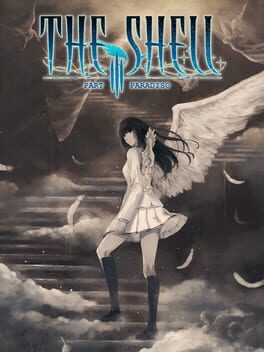
Kara no Shoujo Part III: Paradiso is the final entry in one of the most atmospheric visual novels I’ve ever read. In structure and delivery, it’s closer to the second part: slow-paced storytelling, alternating perspectives between two characters. The main theme of the entire series - obsession - reaches its climax here. The story is split into two halves: the first picks up immediately after the ending of Part II, while the second takes place some time later. The first half is easier to follow, but after the timeskip, the answer to the mystery turned out to be more challenging for me. The pacing is slow at times, but here it works in favor of the atmosphere - especially in a couple of the bad endings.
The biggest flaw of Part II, its sluggish pace, actually fits perfectly this time. Also, there’s noticeably less slice-of-life content in Part III, which might be why it feels more engaging.
The main characters are once again Reiji and Masaki.
Reiji, despite the years and his losses, is still obsessed with Toko. While the story mentions that he fell into depression after finding Toko, I didn’t feel any major change in him compared to the previous parts. His move regarding Iroha in the ending felt very predictable to me, I somehow knew from the start that he wouldn’t tell her he was her father. On the bright side, this made the true route ending emotionally powerful.
Masaki, although he often takes over the narrative, doesn’t really get much development here. Understandable, considering Part II was dedicated to him, but still a bit disappointing.
I also want to highlight Iroha is a character who only appears in the second half of the novel. In the second playthrough, new scenes from her perspective are added, and in the third playthrough, those scenes receive voice acting and new artwork. At first, I didn’t quite get why her voicelines and art only appear in the third run, but now it makes sense. In the ending required for the true finale, her identity is revealed, and during the third playthrough, the exact same scenes feel completely different. A brilliant move - though it didn’t click for me right away.
A few words about Naori: I didn’t like how he was ultimately handled. He’s basically an empty shell whose sole purpose is to kidnap Reiji’s daughter, and nothing more. His motivation feels flat.
As the conclusion to the entire story, this VN is excellent. I really liked the callback to the beginning of Part I in the true ending. I was a bit disappointed that Reiji never called Iroha “Ruri” in the end - but that’s just my personal expectation, and I think most players wouldn’t even notice.
Regarding the bad endings: most of them didn’t work for me, feeling like abrupt cuts to the main route. But there are two endings, similar to each other and occurring at the same point in the story - Fumia’s Obsession and Chizuru’s Obsession - that were truly outstanding and emotional.
The atmosphere is consistent throughout the whole series. But the emotional impact of the true ending deserves special mention: somehow, it blends two opposite emotions - sadness and awe. Sadness, because the scene mirrors the opening of Part I - the meeting with Toko, which can never happen again. Awe, because of how incredibly well the story’s finale is executed.
Heya, Detective-san. I want you to find something… Me. My true self.
Kara no Shoujo Part III: Paradiso is the final entry in one of the most atmospheric visual novels I’ve ever read. In structure and delivery, it’s closer to the second part: slow-paced storytelling, alternating perspectives between two characters. The main theme of the entire series - obsession - reaches its climax here. The story is split into two halves: the first picks up immediately after the ending of Part II, while the second takes place some time later. The first half is easier to follow, but after the timeskip, the answer to the mystery turned out to be more challenging for me. The pacing is slow at times, but here it works in favor of the atmosphere - especially in a couple of the bad endings.
The biggest flaw of Part II, its sluggish pace, actually fits perfectly this time. Also, there’s noticeably less slice-of-life content in Part III, which might be why it feels more engaging.
The main characters are once again Reiji and Masaki.
Reiji, despite the years and his losses, is still obsessed with Toko. While the story mentions that he fell into depression after finding Toko, I didn’t feel any major change in him compared to the previous parts. His move regarding Iroha in the ending felt very predictable to me, I somehow knew from the start that he wouldn’t tell her he was her father. On the bright side, this made the true route ending emotionally powerful.
Masaki, although he often takes over the narrative, doesn’t really get much development here. Understandable, considering Part II was dedicated to him, but still a bit disappointing.
I also want to highlight Iroha is a character who only appears in the second half of the novel. In the second playthrough, new scenes from her perspective are added, and in the third playthrough, those scenes receive voice acting and new artwork. At first, I didn’t quite get why her voicelines and art only appear in the third run, but now it makes sense. In the ending required for the true finale, her identity is revealed, and during the third playthrough, the exact same scenes feel completely different. A brilliant move - though it didn’t click for me right away.
A few words about Naori: I didn’t like how he was ultimately handled. He’s basically an empty shell whose sole purpose is to kidnap Reiji’s daughter, and nothing more. His motivation feels flat.
As the conclusion to the entire story, this VN is excellent. I really liked the callback to the beginning of Part I in the true ending. I was a bit disappointed that Reiji never called Iroha “Ruri” in the end - but that’s just my personal expectation, and I think most players wouldn’t even notice.
Regarding the bad endings: most of them didn’t work for me, feeling like abrupt cuts to the main route. But there are two endings, similar to each other and occurring at the same point in the story - Fumia’s Obsession and Chizuru’s Obsession - that were truly outstanding and emotional.
The atmosphere is consistent throughout the whole series. But the emotional impact of the true ending deserves special mention: somehow, it blends two opposite emotions - sadness and awe. Sadness, because the scene mirrors the opening of Part I - the meeting with Toko, which can never happen again. Awe, because of how incredibly well the story’s finale is executed.
This review contains spoilers
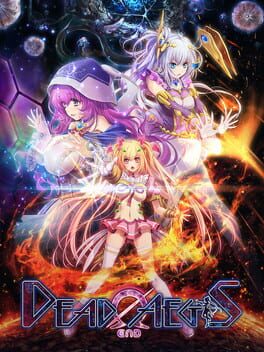
When I started reading this visual novel, I knew absolutely nothing about it — no author, no synopsis. All I knew was the genre: utsuge. So I didn’t expect much.
Actually, I enjoy going into things blind like this — it helps me form my own opinion, untouched by reviews or community hype.
What was my first reaction when I launched it?
... I honestly don’t remember. It’s been too long — I read it slowly.
I liked the opening song, and as I got deeper into the story, it seemed to fit even better. This really is a dark magical girl tale, and I’d say the emphasis here is on dark.
That said, the ending isn’t as bleak as you might expect.
A quick rundown of the three main characters:
Iizuka Minori — the protagonist — was born on Mars and saved as a child by the heroic Lisette Augére during an alien invasion. She has a strong will but low self-esteem. Her entire life has been devoted to studying so she could join the special forces — to become closer to the image of the hero she admires. Her psychological evolution throughout the story is the most compelling part of the VN, in my opinion. What I loved is that her core trait — her inner strength — never really changes. Now that I think about it, the author emphasized that from the very start. It’s basically the engine that drives the whole story.
Minori is the ideal mahou shoujo archetype.
Ilyusha Petrovna — an idol sent to the Cathedral through a military contract. Also a model magical girl, but more rational and calculated than Minori. She’s a key character for the plot — and for Minori’s development, too.
Kisaragi Nana — Minori’s second partner. A nymphomaniac, a bit naive, kind of airheaded. As a character, she really comes into her own only after Ilyusha’s death. Early on, she doesn’t influence Minori much, but she’s necessary to build the sense of connection that makes her relationship with Minori hit so hard near the end.
A quick refresher for those who’ve read it but forgot the premise:
Humanity is at war with a mysterious alien race. A group of young girls is sent to the front lines, where they accept the alien power into their own bodies and gain tremendous abilities. Subjected to abuse by the enemy, they absorb its power and use it to fight back. As I mentioned, Minori joins the special forces to battle the invaders who destroyed her home.
The novel focuses heavily on its dark, oppressive atmosphere.
I thought the pacing was perfect — slow enough to let the atmosphere and character shifts breathe, but never so sluggish that it gets boring.
Structurally, it’s simple: two full endings and one bad one. By the end of your first playthrough, you’ll likely have unlocked over 90% of the CGs.
Minori’s internal monologues are a highlight — they feel like an endless battle: first in space, then in the Cathedral with the men, and simultaneously a psychological war inside Minori herself.
The balance between action and hentai is… fine, I guess. There’s way more hentai, but it never really gets in the way.
The visuals are absolutely gorgeous — now I understand why Ueda Metawa has such a fanbase. Just look at the CGs — they’re literal works of art. The sprite design is also strong — you can infer a lot about the characters just from how they look.
The music is equally great. There were several moments where I stopped reading just to listen to the OST.
Here’s the playlist. https://www.youtube.com/playlist?list=PLp6FocNjP15pscPTWk21V-_cYPJlFDT1S
One of the core themes of the VN is dehumanization — the special forces girls are treated as tools, stripped of their agency. And the process of becoming that tool is portrayed incredibly well.
Interestingly, despite how heavy the setting is, the central message isn’t despair — it’s resistance.
There’s a clear contrast: those who break disappear, while those who hold on remain human, even if their bodies are no longer fully their own.
The idea of connection becomes vital — not friendship in the generic mahou shoujo sense, but a willingness to suffer for others.
That makes the bond between Minori and Ilyusha hit especially hard — and later, her relationship with Nana as well.
A few words about imagery:
The Cathedral, the novel’s main setting, can be seen not just as a military base or humanity’s last stronghold — but as a kind of purgatory. A place of pain and suffering, but also of trials.
Minori’s character symbolizes a spirit that refuses to break — someone fighting against despair and her own inner demons.
Her ongoing internal conflict, presented through monologues and actions, shows how hard it is to remain human when everything around you pushes you to give up.
Even the scenes of violence and hentai carry symbolic weight — they reflect a twisted world where pleasure and pain blur together, where there’s no clear boundary between the two.
Okay, maybe I got a bit pretentious there. I'm no philosopher — I just wanted to put it into words.
Dead End Aegis is a rare mix of mahou shoujo and utsuge — and that alone makes it stand out from the usual VN fare.
If you compare it to one of the most iconic dark magical girl stories, Puella Magi Madoka Magica, you’ll find both similarities and differences.
Like Madoka, Dead End Aegis plays with the contrast between bright magical girls and the grim reality of their world.
Both feature characters going through severe psychological trauma and confront themes of sacrifice, fate, and choice.
But while Madoka often balances on the edge of tragedy and hope, Dead End Aegis rarely gives you room to breathe — it leans fully into the utsuge territory, with more focus on pain, loss, dehumanization, and emotional decay.
As for the prequel, Dead End Aegis: Gaiden — I don’t think it’s required reading beforehand. I read it afterward and it worked fine.
It fleshes out a few characters (including the main antagonist, I guess you could call them that) and expands on some backstory mentioned in the main VN.
Honestly, it holds up on its own.
All in all — I’ve never read anything quite like this. No regrets — the experience was unique.
Actually, I enjoy going into things blind like this — it helps me form my own opinion, untouched by reviews or community hype.
What was my first reaction when I launched it?
... I honestly don’t remember. It’s been too long — I read it slowly.
I liked the opening song, and as I got deeper into the story, it seemed to fit even better. This really is a dark magical girl tale, and I’d say the emphasis here is on dark.
That said, the ending isn’t as bleak as you might expect.
A quick rundown of the three main characters:
Iizuka Minori — the protagonist — was born on Mars and saved as a child by the heroic Lisette Augére during an alien invasion. She has a strong will but low self-esteem. Her entire life has been devoted to studying so she could join the special forces — to become closer to the image of the hero she admires. Her psychological evolution throughout the story is the most compelling part of the VN, in my opinion. What I loved is that her core trait — her inner strength — never really changes. Now that I think about it, the author emphasized that from the very start. It’s basically the engine that drives the whole story.
Minori is the ideal mahou shoujo archetype.
Ilyusha Petrovna — an idol sent to the Cathedral through a military contract. Also a model magical girl, but more rational and calculated than Minori. She’s a key character for the plot — and for Minori’s development, too.
Kisaragi Nana — Minori’s second partner. A nymphomaniac, a bit naive, kind of airheaded. As a character, she really comes into her own only after Ilyusha’s death. Early on, she doesn’t influence Minori much, but she’s necessary to build the sense of connection that makes her relationship with Minori hit so hard near the end.
A quick refresher for those who’ve read it but forgot the premise:
Humanity is at war with a mysterious alien race. A group of young girls is sent to the front lines, where they accept the alien power into their own bodies and gain tremendous abilities. Subjected to abuse by the enemy, they absorb its power and use it to fight back. As I mentioned, Minori joins the special forces to battle the invaders who destroyed her home.
The novel focuses heavily on its dark, oppressive atmosphere.
I thought the pacing was perfect — slow enough to let the atmosphere and character shifts breathe, but never so sluggish that it gets boring.
Structurally, it’s simple: two full endings and one bad one. By the end of your first playthrough, you’ll likely have unlocked over 90% of the CGs.
Minori’s internal monologues are a highlight — they feel like an endless battle: first in space, then in the Cathedral with the men, and simultaneously a psychological war inside Minori herself.
The balance between action and hentai is… fine, I guess. There’s way more hentai, but it never really gets in the way.
The visuals are absolutely gorgeous — now I understand why Ueda Metawa has such a fanbase. Just look at the CGs — they’re literal works of art. The sprite design is also strong — you can infer a lot about the characters just from how they look.
The music is equally great. There were several moments where I stopped reading just to listen to the OST.
Here’s the playlist. https://www.youtube.com/playlist?list=PLp6FocNjP15pscPTWk21V-_cYPJlFDT1S
One of the core themes of the VN is dehumanization — the special forces girls are treated as tools, stripped of their agency. And the process of becoming that tool is portrayed incredibly well.
Interestingly, despite how heavy the setting is, the central message isn’t despair — it’s resistance.
There’s a clear contrast: those who break disappear, while those who hold on remain human, even if their bodies are no longer fully their own.
The idea of connection becomes vital — not friendship in the generic mahou shoujo sense, but a willingness to suffer for others.
That makes the bond between Minori and Ilyusha hit especially hard — and later, her relationship with Nana as well.
A few words about imagery:
The Cathedral, the novel’s main setting, can be seen not just as a military base or humanity’s last stronghold — but as a kind of purgatory. A place of pain and suffering, but also of trials.
Minori’s character symbolizes a spirit that refuses to break — someone fighting against despair and her own inner demons.
Her ongoing internal conflict, presented through monologues and actions, shows how hard it is to remain human when everything around you pushes you to give up.
Even the scenes of violence and hentai carry symbolic weight — they reflect a twisted world where pleasure and pain blur together, where there’s no clear boundary between the two.
Okay, maybe I got a bit pretentious there. I'm no philosopher — I just wanted to put it into words.
Dead End Aegis is a rare mix of mahou shoujo and utsuge — and that alone makes it stand out from the usual VN fare.
If you compare it to one of the most iconic dark magical girl stories, Puella Magi Madoka Magica, you’ll find both similarities and differences.
Like Madoka, Dead End Aegis plays with the contrast between bright magical girls and the grim reality of their world.
Both feature characters going through severe psychological trauma and confront themes of sacrifice, fate, and choice.
But while Madoka often balances on the edge of tragedy and hope, Dead End Aegis rarely gives you room to breathe — it leans fully into the utsuge territory, with more focus on pain, loss, dehumanization, and emotional decay.
As for the prequel, Dead End Aegis: Gaiden — I don’t think it’s required reading beforehand. I read it afterward and it worked fine.
It fleshes out a few characters (including the main antagonist, I guess you could call them that) and expands on some backstory mentioned in the main VN.
Honestly, it holds up on its own.
All in all — I’ve never read anything quite like this. No regrets — the experience was unique.
This review contains spoilers
Per correr miglior acque alza le vele
omai la navicella del mio ingegno,
che lascia dietro a sé mar sì crudele;
e canterò di quel secondo regno
dove l’umano spirito si purga
e di salire al ciel diventa degno.
— Dante Alighieri, Purgatorio, Canto I, 1–6
And so ends the seemingly endless pursuit of Touko.
Not that the finale was unpredictable — on the contrary, it had been obvious from the beginning. But even knowing that a happy ending was off the table, I still hoped for something… less soul-crushing.
The story isn’t exactly full of twists. From quite early on, you can guess who the killer is this time. Sure, family tangles, generational incest, and a war-lost lineage add some confusion, but overall, the characters’ roles are easy to piece together. The pacing is slow, occasionally even sluggish. The flashback chapters about Ayato’s past especially dragged for me — important, yes, but dull at times.
The overarching plot doesn’t really move until the true ending. And even then, “move” might be too strong a word — it’s more of a partial resolution with a teaser for the next part. Ayato’s goal was achieved in those snowy mountains, and that’s what really matters here.
The atmosphere is complicated. On one hand — detailed murder scenes steeped in darkness. On the other — melancholic, sorrowful moments. But then again, maybe those are just two sides of the same coin. The true ending is the culmination of everything. Painful, yes — but logical.
Now, the art. Compared to the first game, the CGs in the sequel are on a completely different level. The visual style is stunning. I don’t know who was responsible for this direction, but it’s hard to imagine a better visual delivery. The sprites, though, felt a bit too sterile — more generic, less personality. In that regard, I preferred the first game.
MANYO once again proves himself a genius — the OST is excellent, hitting the mood perfectly. Traditional Japanese motifs during scenes in Hitogata, uneasy tones during murder scenes — everything lands where it should. That said, personally, the first game’s soundtrack left a deeper impression.
As for gameplay — the investigation system is the same: point-and-click, a notebook with clues, a map for moving around. Just like before, the map isn’t intuitive, and choices on it feel more like guessing than actual decision-making. Though, it felt like there were fewer such choices overall — perhaps because of the large number of linear flashback scenes.
Most of the characters are well-developed. This entry seems to focus heavily on psychological trauma — there’s quite a few characters with deep-seated issues. Interestingly, Touko isn’t the only one displaying obsessive behavior — several others show similar patterns.
Playing the first game is absolutely required. This isn’t a spin-off or a loose sequel — it’s a direct continuation. Without it, you won’t understand the characters’ motivations, the emotional weight of the events, or the meaning of the ending. And Purgatorio’s finale directly leads into the third installment — everything here is part of one tightly connected structure.
Don’t mind my rating on VNDB — I docked a point for the choice/map mechanics. The story itself? 10/10. (Though I might change the score later — the review stays.) Speaking of complaints — the hentai scenes are handled far better here than in the first game. There’s actual buildup, actual logic behind them. The CGs are pretty standard slide-show material, nothing too extreme. Which might be enough for some people. Personally, I was disappointed by the lack of guro. Just one CG of a sewn-up gut — that’s it. There’s a character with a limb fetish, but we don’t get to see anything. Even the amputation scene has no CG at all. Seriously? I’m going back to rewatch scenes with the best girl from part one.
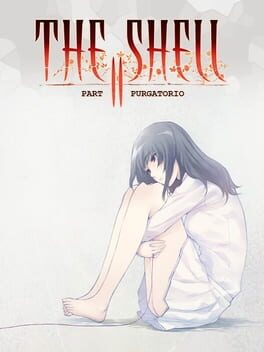
Kara no Shoujo 2 is a slow, grim, and merciless continuation that punishes emotional investment.
As a fan of the first game, I was satisfied.
I recommend it to anyone who finished the first and wants more than just a resolution — who wants emotional depth.
This isn’t a story meant to entertain. It’s a story meant to show you how it all ends.
omai la navicella del mio ingegno,
che lascia dietro a sé mar sì crudele;
e canterò di quel secondo regno
dove l’umano spirito si purga
e di salire al ciel diventa degno.
— Dante Alighieri, Purgatorio, Canto I, 1–6
And so ends the seemingly endless pursuit of Touko.
Not that the finale was unpredictable — on the contrary, it had been obvious from the beginning. But even knowing that a happy ending was off the table, I still hoped for something… less soul-crushing.
The story isn’t exactly full of twists. From quite early on, you can guess who the killer is this time. Sure, family tangles, generational incest, and a war-lost lineage add some confusion, but overall, the characters’ roles are easy to piece together. The pacing is slow, occasionally even sluggish. The flashback chapters about Ayato’s past especially dragged for me — important, yes, but dull at times.
The overarching plot doesn’t really move until the true ending. And even then, “move” might be too strong a word — it’s more of a partial resolution with a teaser for the next part. Ayato’s goal was achieved in those snowy mountains, and that’s what really matters here.
The atmosphere is complicated. On one hand — detailed murder scenes steeped in darkness. On the other — melancholic, sorrowful moments. But then again, maybe those are just two sides of the same coin. The true ending is the culmination of everything. Painful, yes — but logical.
Now, the art. Compared to the first game, the CGs in the sequel are on a completely different level. The visual style is stunning. I don’t know who was responsible for this direction, but it’s hard to imagine a better visual delivery. The sprites, though, felt a bit too sterile — more generic, less personality. In that regard, I preferred the first game.
MANYO once again proves himself a genius — the OST is excellent, hitting the mood perfectly. Traditional Japanese motifs during scenes in Hitogata, uneasy tones during murder scenes — everything lands where it should. That said, personally, the first game’s soundtrack left a deeper impression.
As for gameplay — the investigation system is the same: point-and-click, a notebook with clues, a map for moving around. Just like before, the map isn’t intuitive, and choices on it feel more like guessing than actual decision-making. Though, it felt like there were fewer such choices overall — perhaps because of the large number of linear flashback scenes.
Most of the characters are well-developed. This entry seems to focus heavily on psychological trauma — there’s quite a few characters with deep-seated issues. Interestingly, Touko isn’t the only one displaying obsessive behavior — several others show similar patterns.
Playing the first game is absolutely required. This isn’t a spin-off or a loose sequel — it’s a direct continuation. Without it, you won’t understand the characters’ motivations, the emotional weight of the events, or the meaning of the ending. And Purgatorio’s finale directly leads into the third installment — everything here is part of one tightly connected structure.
Don’t mind my rating on VNDB — I docked a point for the choice/map mechanics. The story itself? 10/10. (Though I might change the score later — the review stays.) Speaking of complaints — the hentai scenes are handled far better here than in the first game. There’s actual buildup, actual logic behind them. The CGs are pretty standard slide-show material, nothing too extreme. Which might be enough for some people. Personally, I was disappointed by the lack of guro. Just one CG of a sewn-up gut — that’s it. There’s a character with a limb fetish, but we don’t get to see anything. Even the amputation scene has no CG at all. Seriously? I’m going back to rewatch scenes with the best girl from part one.
Kara no Shoujo 2 is a slow, grim, and merciless continuation that punishes emotional investment.
As a fan of the first game, I was satisfied.
I recommend it to anyone who finished the first and wants more than just a resolution — who wants emotional depth.
This isn’t a story meant to entertain. It’s a story meant to show you how it all ends.
