

Shop Viral Mens Fashion Now
Enjoy fast, free delivery, exclusive deals, and award-winning movies & TV shows.
$15.76 with 37 percent savings
List Price: $24.95 Image
Get Fast, Free Shipping with Amazon Prime
FREE delivery Tuesday, June 30 on orders shipped by Amazon over $35
Or Prime members get FREE delivery Saturday, June 27. Order within 15 mins. Join Prime
In Stock
$$15.76 () Includes selected options. Includes initial monthly payment and selected options. Details
Price
Subtotal
$$15.76
Subtotal
Initial payment breakdown
Shipping cost, delivery date, and order total (including tax) shown at checkout.
Shipper / Seller
Amazon.com
Amazon.com
Shipper / Seller
Amazon.com
Returns
FREE 30-day refund/replacement
Quick refund
Usually issued within 24 hours. See exceptions
FREE return
At least one free return option available.
Convenient dropoff
At any of our 50,000 US locations.
See return policy
Gift options
Available at checkout
Available at checkout This item is a gift. Change
At checkout, you can add a custom message, a gift receipt for easy returns and have the item gift-wrapped
Payment
Secure transaction
Your transaction is secure
We work hard to protect your security and privacy. Our payment security system encrypts your information during transmission. We don’t share your credit card details with third-party sellers, and we don’t sell your information to others. Learn more
Added to

Sorry, there was a problem.

There was an error retrieving your Wish Lists. Please try again.

Sorry, there was a problem.

List unavailable.
Kindle app logo image

Download the free Kindle app and start reading Kindle books instantly on your smartphone, tablet, or computer - no Kindle device required.

Read instantly on your browser with Kindle for Web.

Using your mobile phone camera - scan the code below and download the Kindle app.
QR code to download the Kindle App

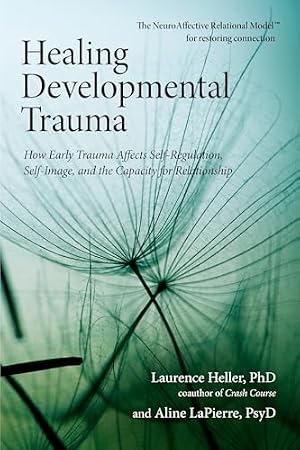
  • The Practical Guide for Healing Developmental Trauma: Using the NeuroAffective Relational Model to Address Adverse Childhood Experiences and Resolve Complex Trauma

Follow the authors

Get new release updates & improved recommendations
Something went wrong. Please try your request again later.

The Practical Guide for Healing Developmental Trauma: Using the NeuroAffective Relational Model to Address Adverse Childhood Experiences and Resolve Complex Trauma

4.9 out of 5 stars (299)

{"desktop_buybox_group_1":[{"displayPrice":"$15.76","priceAmount":15.76,"currencySymbol":"$","integerValue":"15","decimalSeparator":".","fractionalValue":"76","symbolPosition":"left","hasSpace":false,"showFractionalPartIfEmpty":true,"offerListingId":"c9f9dIhNy%2BOvUcNZEBQSHcJmXXEPUR7mQoefv0RSYmk6ZQjCcqc3qI2RfsQcOMrzcWygyq6PWvN7Apjjy6Pvb6LFrK%2BMVZbW60rP2FYkf7KDBSBckBwuTwY870oYFCBALVw0gC%2BdegUxJ%2BW4EaJ%2BwA%3D%3D","locale":"en-US","buyingOptionType":"NEW","aapiBuyingOptionIndex":0}]}

Purchase options and add-ons

A clinician's guidebook for treating developmental trauma--Apply the NeuroAffective Relational Model (NARM) to help clients overcome complex post-traumatic stress disorder (C-PTSD), recover from adverse childhood experiences (ACEs), and map post-traumatic growth.

The Practical Guide for Healing Developmental Trauma introduces a cutting-edge therapeutic model for addressing attachment, relational, and developmental trauma in a clinical setting. NARM is an integrated mind-body framework that identifies and treats the complex ways childhood trauma can manifest in interpersonal difficulties, maladaptive patterns, identity issues, and disrupted affect regulation.

Integrating the latest research on adverse childhood experiences, or ACEs, it arms psychologists, psychiatrists, social workers, and trauma-informed therapists with the skills and tools they need to help clients break free from the lasting effects of childhood trauma.

The
Guide is a go-to tool that explains:
 
  •   The four pillars of the NARM therapeutic model
  •   Cultural and Intergenerational trauma
  •   Shock vs. Complex trauma
  •   Adverse Childhood Experiences and Complex Post-Traumatic Stress Disorder
  •   How to differentiate NARM from other therapeutic modalities
  •   NARM's organizing principles 
  •   How to integrate NARM into your therapeutic practice
Books with Buzz
Discover the latest buzz-worthy books, from mysteries and romance to humor and nonfiction. Explore more

Great on Kindle
Great Experience. Great Value.
iphone with kindle app
Putting our best book forward
Each Great on Kindle book offers a great reading experience, at a better value than print to keep your wallet happy.

Explore your book, then jump right back to where you left off with Page Flip.

View high quality images that let you zoom in to take a closer look.

Enjoy features only possible in digital – start reading right away, carry your library with you, adjust the font, create shareable notes and highlights, and more.

Discover additional details about the events, people, and places in your book, with Wikipedia integration.

Get the free Kindle app: Link to the kindle app page Link to the kindle app page
Enjoy a great reading experience when you buy the Kindle edition of this book. Learn more about Great on Kindle, available in select categories.

Customers also bought or read

Loading...

From the Publisher
banner graphic with light blue background and dark blue text
graphic banner with light blue background and dark blue text
banner with a light blue background and dark blue text

Editorial Reviews

Review

 
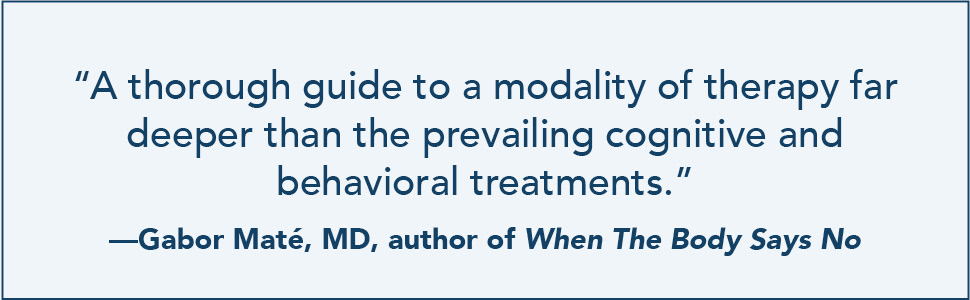
"This book, from two experienced and insightful practitioners, offers a thorough and clear guide to a modality of therapy far deeper than the prevailing cognitive and behavioral treatments. It is highly promising because it goes beyond the surface manifestations to the root causes and dynamics of human distress."
—Gabor Maté MD, author of
When The Body Says No
 
"This new book, written by Dr. Laurence Heller and Brad Kammer, presents the clinical approach to the NeuroAffective Relational Model (NARM), created by Dr. Laurence Heller, and continues NARM’s important contribution to the rapidly evolving field of traumatology. As a follow up companion to the groundbreaking book
Healing Developmental Trauma, this practical manual offers step-by-step guidance to those wishing to work with some of the most hard-to-treat patients who suffer from the heartbreak of developmental trauma. This book is designed mostly for therapists wanting to better understand NARM but also for some trauma survivors who want to educate themselves about how the NARM method works. While trauma experts scratch their heads about how to best treat early developmental trauma, and while finding consensus among the experts can be challenging, NARM offers a much-needed tool in the integrative trauma therapist's medicine bag."
 —Lissa Rankin, MD, New York Times bestselling author of
Mind Over Medicine
 
“Heller and Kammer’s essential guide expertly translates our best science into the therapeutic skills-building roadmap we need to heal the complex developmental trauma so prevalent among our children, families, communities, and world today. This book reminds us that building our capacity to heal others heals us as well, as we support the innate human capacity to grow and flourish through adversity. The comprehensive NARM approach is a coherent pathway to build the knowledge, skills, and joyful work of healing by restoring an embodied sense of connection, belonging, and ongoing sense of confidence to meet life’s challenges."  
—Christina Bethell, PhD, MBA, MPH, professor of Child Health, Bloomberg School of Public Health, Johns Hopkins University

From the Back Cover

A therapeutic guide for treating developmental trauma—Apply the NeuroAffective Relational Model (NARM) to help clients resolve complex post-traumatic stress disorder (C-PTSD), recover from adverse childhood experiences (ACEs), and facilitate post-traumatic growth.

The Practical Guide for Healing Developmental Trauma presents one of the first comprehensive therapeutic models for addressing complex post-traumatic stress disorder (C-PTSD). The NeuroAffective Relational Model (NARM) focuses on attachment, relational, developmental, cultural and intergenerational trauma. NARM is an integrated psychobiological framework that works with the complex ways unresolved childhood trauma manifests as disruptions in self-regulation, self-image, and the capacity for relationship.

Inspired by cutting-edge research on trauma, attachment, and interpersonal neurobiology, the guide provides counselors, psychotherapists, psychologists, social workers, and trauma-informed helping professionals with the theoretical background and practical skills they need to help clients transform complex trauma.

This book is a go-to guide that explains:
  • The four pillars of the NARM therapeutic model
  • The differences between shock trauma and developmental trauma
  • The psychobiological impact of complex post-traumatic stress disorder (C-PTSD)
  • The role of emotions in transforming complex trauma
  • Working with client intention, agency and embodiment
  • A relational framework for supporting greater capacity for connection with Self and others
  • How to integrate the organizing principles of NARM into your therapeutic practice

Product details

  • Publisher ‏ : ‎ North Atlantic Books
  • Publication date ‏ : ‎ July 26, 2022
  • Language ‏ : ‎ English
  • Print length ‏ : ‎ 400 pages
  • ISBN-10 ‏ : ‎ 1623174538
  • ISBN-13 ‏ : ‎ 978-1623174538
  • Item Weight ‏ : ‎ 1.34 pounds
  • Dimensions ‏ : ‎ 5.98 x 1.1 x 8.98 inches
  • Best Sellers Rank: #60,381 in Books (See Top 100 in Books)
  • Customer Reviews:
    4.9 out of 5 stars (299)

About the authors

Follow authors to get new release updates, plus improved recommendations.

Customer reviews

4.9 out of 5 stars
299 global ratings

Customers say

Customers find this book insightful and relatable, with one review describing it as a potent dive into the journey of being human. Moreover, the book is highly readable and deeply relational, with its non-jargony language making it accessible to both clinicians and laypeople. Additionally, customers appreciate how it helps them be more effective with clients, and one review notes how it helps clients expand their emotional capacity.
AI Generated from the text of customer reviews

Select to learn more

63 customers mention content, 61 positive, 2 negative
Customers find the book insightful and relatable, with one customer describing it as a potent dive into the journey of being human.
...me how to shift from pressuring myself into the inner knowing of how powerful and reparative attuned presence itself truly is....Read more
...The reader is held in respect and compassion, invited to be at once client and therapist, acknowledging we all have the capacity for greater...Read more
...As a human, it is not only insightful and depth oriented but provides a supportive and heartfelt way of honoring the ways that we adapt to survive...Read more
...It's a profound, heartfull, and nuanced approach to healing complex trauma which has given me tools for coping with my own trauma, as well as help...Read more
55 customers mention informative, 55 positive, 0 negative
Customers find the book informative, describing it as a great tool for understanding and a valuable resource, with one customer noting its wealth of knowledge for the mental health community.
...It's both practical and full of helpful perspectives that can challenge and help shift basic assumptions of how we can engage our clients....Read more
...Brad and Larry were able to translate a model like NARM into an informative, but often spiritual and poetic book....Read more
...Great to see the nuance of this model captured. The reflective exercises and client transcripts really drive the learning home....Read more
...health professionals, this book can also provide much insight, awareness, and expansion of emotional capacity to anyone willing to take the journey...Read more
33 customers mention readability, 33 positive, 0 negative
Customers find the book incredibly readable and essential, with one customer noting it is accessible for the general public to understand.
...It is a readable, and understandable both for a clinician and for the lay person working on their own trauma although it might take a little more...Read more
...trauma, and the authors masterfully address complex topics in an accessible and readable manner....Read more
...It is essential reading for anyone seeking to understand NARM principles, how those principles differ from conventional treatment perspectives, and...Read more
...It is well-written, easy to read, interesting, relevant, profound, touching, and reflective....Read more
18 customers mention relationship, 17 positive, 1 negative
Customers find the book deeply relational and highly relatable, with one customer noting how it helps improve interpersonal connections.
...that it provides a humanizing approach that allows for true healing, connection and heartfulness....Read more
This books brings together attachment, relational, somatic and experiential approaches in such a way that speaks to humanity, to our pathologies,...Read more
...at the top of the reading heap as it has meant the most to me, personally, and professionally....Read more
...a very complex subject and makes the information understandable, relatable, and usable....Read more
12 customers mention language, 12 positive, 0 negative
Customers appreciate the book's language, finding it accessible and non-jargony, with one customer specifically noting the helpful lists of NARM language.
...authors masterfully address complex topics in an accessible and readable manner. NARM therapy is a game changer, and this book lives up to that....Read more
...as nuanced and rich as NARM, I am impressed by the clear and accessible language in this practical guide....Read more
...are by their nature nuanced, it is written with accessible and precise language....Read more
...With the help of reflective exercises, transcripts, and very clear, digestible, non-jargony language they sought to give an experiential taste of...Read more
11 customers mention writing style, 11 positive, 0 negative
Customers appreciate the writing style of the book, finding it intelligent and well-articulated, with one customer noting it is written for both clinicians and laypeople.
...The Practical Guide for Healing Transformational Trauma is clearly written with excellent clinical case examples. Easy and smooth read!Read more
...It is well-written, easy to read, interesting, relevant, profound, touching, and reflective....Read more
...This book is written in an accessible and supportive way....Read more
...I found the writing very clear and easy to follow and particularly enjoyed the client demo session transcript and annotated breakdown of the model...Read more
10 customers mention emotional, 10 positive, 0 negative
Customers appreciate the emotional content of the book, describing it as heartfelt, with one customer noting how it expands emotional capacity and helps connect more deeply to oneself.
...around me, and am able to tend to both with more gentleness and heartfulness. I believe this should be required reading for everyone!Read more
...only insightful and depth oriented but provides a supportive and heartfelt way of honoring the ways that we adapt to survive in childhood, while...Read more
This book is a clear, heartfelt, articulate capture of a journey from the painful experience of being misattuned as a child to the splendor of being...Read more
...It is well-written, easy to read, interesting, relevant, profound, touching, and reflective....Read more
9 customers mention client support, 9 positive, 0 negative
Customers appreciate how the book helps them be more effective with clients, with one customer noting its support for countertransference awareness and another mentioning its ability to create sustainable change.
This book is really helping me be more effective with clients. So many gems I had to pull out a highlighter and use it from the very first chapter....Read more
This practical guide helps clinicians support their clients in a way that empowers the client, helps the practitioner grow personally, and achieves...Read more
...relationship or the “R” in NARM, heart connection, and awareness of countertransference, all such crucial aspects of this model....Read more
...The NARM model has helped me understand and support my clients and myself in ways I could not have fathomed before....Read more
A heartfelt breath of fresh air for the field!
5 out of 5 stars
A heartfelt breath of fresh air for the field!
As a parent and therapist committed to addressing the intense degree of suffering and oppression in the world, the daunting question of “where to begin?” can feel like an uphill battle. Some would even consider it an unrealistic ideal to attempt to bring a more humanizing approach to the current clinical framework and culture that has become increasingly pathologizing and objectifying, (unfortunately often reinforcing the deep states of shame and disconnection inherent to trauma adaptations). For these reasons, I find this practical guide to be such an invaluable resource in showing us how to actualize this possibility into reality. The Practical Guide For Healing Developmental Trauma elucidates straight-forward methods of refining our own relationship to ourselves to facilitate deep healing and growth in relationship to others on an identity level, rather than a temporary behavioral or symptom-reducing level. True to the experiential nature of NARM therapy, this guide includes several opportunities for the reader to pause and reflect on their internal experience as a means of deepening capacities for presence, exploration, and connection. I find these exercises not only interesting, but so essential in the practice of learning to be with myself as a subjective human-being so that I can increasingly show up in true curiosity and connection with others without pressure or an agenda. For a model as nuanced and rich as NARM, I am impressed by the clear and accessible language in this practical guide. In fact, though primarily written for clinicians, I have shared passages of the book with clients and friends who reported deeper understanding of their own life patterns and experiences from a new, illuminating perspective. Though I have completed one of the NARM therapist trainings and participate in NARM-specific continuing education, I found that the simple breakdown of the core NARM principles and concepts outlined in this text has allowed for greater ease, less effort, and significant self-trust in how to balance being directive and intentional while holding an open space for discovery with a wide variety of clients presenting across differing levels of capacity for self-organization/regulation. I particularly appreciate chapter eight, which emphasizes the relationship or the “R” in NARM, heart connection, and awareness of countertransference, all such crucial aspects of this model. This chapter reminds me how to shift from pressuring myself into the inner knowing of how powerful and reparative attuned presence itself truly is. I especially value being able to apply these principles and concepts as they unfold in real sessions by studying the provided annotated transcripts. So much is emerging each moment in a session and I find it highly useful that the authors provided this detailed breakdown of what was occurring “behind the scenes”, including key choice-points of direction, languaging, and attention to countertransference. As a NARM student, these annotations are inspiring, as they demonstrate how one can learn the techniques and interventions of NARM until the expression and artistry of the craft become spoken in their own authentic voice and style. What a breath of fresh air and encouragement this model and guide are to the field of mental health, to our communities, and to the present-day world at large. I feel hopeful thinking of the many healers, educators, parents, and human beings who may read this guide and integrate such heartfelt understandings into their moment to moment interactions with clients, students, children, and loved ones.
Thank you for your feedback
Sorry, there was an error
Sorry we couldn't load the review

Top reviews from the United States

  • 5 out of 5 stars
    A heartfelt breath of fresh air for the field!
    Reviewed in the United States on August 19, 2022
    Brief content visible, double tap to read full content.
    Full content visible, double tap to read brief content.

    As a parent and therapist committed to addressing the intense degree of suffering and oppression in the world, the daunting question of “where to begin?” can feel like an uphill battle. Some would even consider it an unrealistic ideal to attempt to bring a more humanizing approach to the current clinical framework and culture that has become increasingly pathologizing and objectifying, (unfortunately often reinforcing the deep states of shame and disconnection inherent to trauma adaptations). For these reasons, I find this practical guide to be such an invaluable resource in showing us how to actualize this possibility into reality.

    The Practical Guide For Healing Developmental Trauma elucidates straight-forward methods of refining our own relationship to ourselves to facilitate deep healing and growth in relationship to others on an identity level, rather than a temporary behavioral or symptom-reducing level. True to the experiential nature of NARM therapy, this guide includes several opportunities for the reader to pause and reflect on their internal experience as a means of deepening capacities for presence, exploration, and connection. I find these exercises not only interesting, but so essential in the practice of learning to be with myself as a subjective human-being so that I can increasingly show up in true curiosity and connection with others without pressure or an agenda.

    For a model as nuanced and rich as NARM, I am impressed by the clear and accessible language in this practical guide. In fact, though primarily written for clinicians, I have shared passages of the book with clients and friends who reported deeper understanding of their own life patterns and experiences from a new, illuminating perspective. Though I have completed one of the NARM therapist trainings and participate in NARM-specific continuing education, I found that the simple breakdown of the core NARM principles and concepts outlined in this text has allowed for greater ease, less effort, and significant self-trust in how to balance being directive and intentional while holding an open space for discovery with a wide variety of clients presenting across differing levels of capacity for self-organization/regulation.

    I particularly appreciate chapter eight, which emphasizes the relationship or the “R” in NARM, heart connection, and awareness of countertransference, all such crucial aspects of this model. This chapter reminds me how to shift from pressuring myself into the inner knowing of how powerful and reparative attuned presence itself truly is. I especially value being able to apply these principles and concepts as they unfold in real sessions by studying the provided annotated transcripts. So much is emerging each moment in a session and I find it highly useful that the authors provided this detailed breakdown of what was occurring “behind the scenes”, including key choice-points of direction, languaging, and attention to countertransference. As a NARM student, these annotations are inspiring, as they demonstrate how one can learn the techniques and interventions of NARM until the expression and artistry of the craft become spoken in their own authentic voice and style.

    What a breath of fresh air and encouragement this model and guide are to the field of mental health, to our communities, and to the present-day world at large. I feel hopeful thinking of the many healers, educators, parents, and human beings who may read this guide and integrate such heartfelt understandings into their moment to moment interactions with clients, students, children, and loved ones.

    A heartfelt breath of fresh air for the field!
    5 out of 5 stars
    A heartfelt breath of fresh air for the field!
    Reviewed in the United States on August 19, 2022

    As a parent and therapist committed to addressing the intense degree of suffering and oppression in the world, the daunting question of “where to begin?” can feel like an uphill battle. Some would even consider it an unrealistic ideal to attempt to bring a more humanizing approach to the current clinical framework and culture that has become increasingly pathologizing and objectifying, (unfortunately often reinforcing the deep states of shame and disconnection inherent to trauma adaptations). For these reasons, I find this practical guide to be such an invaluable resource in showing us how to actualize this possibility into reality.

    The Practical Guide For Healing Developmental Trauma elucidates straight-forward methods of refining our own relationship to ourselves to facilitate deep healing and growth in relationship to others on an identity level, rather than a temporary behavioral or symptom-reducing level. True to the experiential nature of NARM therapy, this guide includes several opportunities for the reader to pause and reflect on their internal experience as a means of deepening capacities for presence, exploration, and connection. I find these exercises not only interesting, but so essential in the practice of learning to be with myself as a subjective human-being so that I can increasingly show up in true curiosity and connection with others without pressure or an agenda.

    For a model as nuanced and rich as NARM, I am impressed by the clear and accessible language in this practical guide. In fact, though primarily written for clinicians, I have shared passages of the book with clients and friends who reported deeper understanding of their own life patterns and experiences from a new, illuminating perspective. Though I have completed one of the NARM therapist trainings and participate in NARM-specific continuing education, I found that the simple breakdown of the core NARM principles and concepts outlined in this text has allowed for greater ease, less effort, and significant self-trust in how to balance being directive and intentional while holding an open space for discovery with a wide variety of clients presenting across differing levels of capacity for self-organization/regulation.

    I particularly appreciate chapter eight, which emphasizes the relationship or the “R” in NARM, heart connection, and awareness of countertransference, all such crucial aspects of this model. This chapter reminds me how to shift from pressuring myself into the inner knowing of how powerful and reparative attuned presence itself truly is. I especially value being able to apply these principles and concepts as they unfold in real sessions by studying the provided annotated transcripts. So much is emerging each moment in a session and I find it highly useful that the authors provided this detailed breakdown of what was occurring “behind the scenes”, including key choice-points of direction, languaging, and attention to countertransference. As a NARM student, these annotations are inspiring, as they demonstrate how one can learn the techniques and interventions of NARM until the expression and artistry of the craft become spoken in their own authentic voice and style.

    What a breath of fresh air and encouragement this model and guide are to the field of mental health, to our communities, and to the present-day world at large. I feel hopeful thinking of the many healers, educators, parents, and human beings who may read this guide and integrate such heartfelt understandings into their moment to moment interactions with clients, students, children, and loved ones.

    44 people found this helpful
    Sending feedback...
    Thank you for your feedback.
    Sending feedback...
    Thanks, we'll investigate in the next few days.
  • 5 out of 5 stars
    Profoundly impactful "must read" for clinicians and others in the trauma field
    Reviewed in the United States on July 26, 2022
    Brief content visible, double tap to read full content.
    Full content visible, double tap to read brief content.

    In “ A Practical Guide to Healing Developmental Trauma” …. Brad Kammer and Larry Heller, with humanity, optimism, and a vision to bring trauma-informed treatment into the mainstream of therapeutic practice, offer a remarkably accessible and comprehensive guide to the application of the principles of the NARM model, an approach to working with individuals who have experienced attachment and developmental trauma. The model, explicated fully in this book, examines the experience of connection and disconnection from oneself, others and the environment that results from complex trauma and which is addressed by the NARM approach.

    After 40 years as a clinical psychologist, I was moved and inspired to encounter NARM, which offers a unique integration of relational, psychobiological, and psychodynamic approaches that has transformed and enlivened my clinical work. NARM’s emphasis on working in the here and now, informed by clients’ deep intentions for themselves, in a process which supports their agency, and their reconnection to disowned or dissociated needs, feelings, aspects of self, and to their life force, offers a powerful process of healing in which the curiosity, authenticity and presence of the therapist plays a significant role. The importance placed on the relational field in NARM, and on the self-reflection of the therapist, facilitates not only the client’s growth, but also that of the clinician.

    The authors offer an understanding of the foundations of the NARM model, and a clearly articulated guide to how to apply NARM principles in clinical practice. Without compromising the complexity of the approach, the authors successfully present the essence of NARM in a way which is as relational as the model itself—with attunement to the challenges the reader may have learning new clinical skills, with language that is not intimidating, and with a priority on making it accessible to diverse groups of readers, including both the beginning and seasoned practitioner. The book is enriched by the inclusion of abundant clinical examples, with excerpts from actual therapeutic sessions, as well as by thoughtful exercises which invite the reader to reflect on the material presented, in support of their deeper understanding or integration. In this way, the book does what is rare in a clinical guides - it teaches in a way that parallels the important themes being taught.

    If you are a therapist looking for an integrated, inspiring and effective model for treating complex, developmental trauma, with an approach to working with clients from a place of more curiosity and collaborative exploration and less “efforting” (and burn-out), while supporting ongoing professional and personal growth, this book is a must read.

    15 people found this helpful
    Sending feedback...
    Thank you for your feedback.
    Sending feedback...
    Thanks, we'll investigate in the next few days.
  • 5 out of 5 stars
    Invaluable resource for both therapists and laypeople
    Reviewed in the United States on July 26, 2022
    Brief content visible, double tap to read full content.
    Full content visible, double tap to read brief content.

    I had the privilege of reading an advanced copy of this book and am thrilled it is now out in the world. This book does an excellent job of laying out the map of the NARM model for working with developmental trauma. While the model is complex, the book presents it in a comprehensive, clear, easy-to-understand, and user-friendly way. For those who have already read the first book Healing Developmental Trauma, The Practical Guide is a wonderful companion. For those who haven't read the first book, be assured this book stands on its own.

    Throughout the book are practical, self-reflective exercises that the reader can use for their own personal growth as well as bring into therapeutic work with a client. There are also 2 transcripts of client sessions that each author conducted. These transcripts do a wonderful job of giving us an inside look at the thought process of each author as they share their reflections informing their thought process and interventions - a peek behind the curtain so to speak. We can see how the different concepts described in the book show up in actual sessions. This is invaluable learning for me.

    I especially appreciated the discussion on trauma and the distinction between shock trauma and developmental trauma and how they each require a different approach to support healing. The chapter on agency (chapter 5) is pure gold for therapists especially and no doubt helpful for laypeople. I also especially love the chapter on the relational model (chapter 8). As a NARM therapist, one of my favorite things about the model is the emphasis on the relationship between therapist and client. For therapists struggling with burnout or feeling stuck with clients, this chapter will be incredibly useful. Therapists are in high demand these days and clients' lives are complex and challenging. It can be easy to feel like we're trying to empty the ocean with a teaspoon at times. This book overall, and especially this chapter, can help therapists support themselves and their clients more effectively.

    I would love to see this book be required reading for all grad students in helping professions as well as all therapists. Yes, I may be biased :). That said, I cannot say enough about how helpful I have found NARM to be for me personally and professionally and I am thrilled this book is now out and more people will have access to this powerful and profound model. As we heal developmental trauma we become more fully human and help heal the world.

    "Our vision is to bring humanity to the transformation of complex trauma. In this book, we have presented an embodied, relational, and depth-oriented model that we hope will advance greater humanization in the healing process. NARM is a therapeutic approach that supports reconnection to one’s lived experience, so that clients can feel more fully alive—and become more fully human."

    30 people found this helpful
    Sending feedback...
    Thank you for your feedback.
    Sending feedback...
    Thanks, we'll investigate in the next few days.
  • 5 out of 5 stars
    Incredible Resource for Clinicians, Helping Professionals, and Those Seeking Help/Personal Growth
    Reviewed in the United States on August 28, 2022
    Brief content visible, double tap to read full content.
    Full content visible, double tap to read brief content.

    I have eagerly awaited the release of this book! Ten years ago, Healing Developmental Trauma, which introduced The NeuroAffective Relational Model (NARM), changed my life personally and professionally. The Practical Guide for Healing Developmental Trauma does a fantastic job detailing the major principles of this cutting-edge model. The book is written for clinicians and laypeople alike and is an invaluable resource for anyone wanting a deeper understanding of how to address the far-reaching effects of developmental, relational, and generational trauma.

    The Practical Guide for Healing Developmental Trauma not only contributes to the growing body of trauma-informed literature, but presents a pragmatic approach for clinicians and practitioners in other helping professions interested in learning how the NARM perspective facilitates trauma-informed care. The book also includes Reflective Exercises for the reader aimed at developing a sense of curiosity about potential impediments in their own developmental history. It is essential reading for anyone seeking to understand NARM principles, how those principles differ from conventional treatment perspectives, and how they can be applied across a broad spectrum of clinical and non-clinical scenarios.

    Full disclosure: I am a psychotherapist that specializes in treating developmental trauma and a Training Assistant with the NARM Training Institute. Even after studying the NARM model for the last 8 years and incorporating its principles in my psychotherapy practice, this book offered fresh insights that support me in deepening my work with clients. I especially appreciated the chapters on “Reinforcing Agency” and the “NARM Relational Model.”

    Anyone curious about what a NARM session is like may be interested in the two clinical transcripts of NARM sessions given by each of the authors in the back of the book. For the layperson who may be interested in this book for their own personal growth and understanding, I will share that many of my clients have started reading The Practical Guide for Healing Developmental Trauma and find it an illuminating and inspiring resource in their healing process.

    2 people found this helpful
    Sending feedback...
    Thank you for your feedback.
    Sending feedback...
    Thanks, we'll investigate in the next few days.
  • 5 out of 5 stars
    Wonderful resource!
    Reviewed in the United States on December 8, 2025
    Brief content visible, double tap to read full content.
    Full content visible, double tap to read brief content.

    This book takes a very complex subject and makes the information understandable, relatable, and usable. Explaining the components and rationale of NARM (NeuroAffective Relational Model), this book even provides "scripts" for counselors and helping professionals to address adverse childhood experiences in their clients and gives them information to help their clients resolve complex trauma. This book is written with empathy and heart, and gives therapists hope in helping their clients heal.

    I highly recommend this book.

    I hope you find my review helpful!

    Wonderful resource!
    Wonderful resource!
    Wonderful resource!
    Wonderful resource!
    Wonderful resource!
    Wonderful resource!
    Wonderful resource!
    Wonderful resource!
    Wonderful resource!
    Wonderful resource!
    Wonderful resource!
    5 out of 5 stars
    Wonderful resource!
    Reviewed in the United States on December 8, 2025

    This book takes a very complex subject and makes the information understandable, relatable, and usable. Explaining the components and rationale of NARM (NeuroAffective Relational Model), this book even provides "scripts" for counselors and helping professionals to address adverse childhood experiences in their clients and gives them information to help their clients resolve complex trauma. This book is written with empathy and heart, and gives therapists hope in helping their clients heal.

    I highly recommend this book.

    I hope you find my review helpful!

    2 people found this helpful
    Sending feedback...
    Thank you for your feedback.
    Sending feedback...
    Thanks, we'll investigate in the next few days.
  • 5 out of 5 stars
    I highly recommend this book to anyone interested in deeper healing.
    Reviewed in the United States on August 26, 2022
    Brief content visible, double tap to read full content.
    Full content visible, double tap to read brief content.

    This is a crucial book, and a must-have for anyone treating trauma or interested in further healing their own. It provides a complete description of the key elements needed to resolve complex trauma. It provides a roadmap to the Self, the challenges we encounter as we reconnect with Self (called Survival Styles or Identifications), the centrality of disrupted attachment and involving the physical body in healing, and describes in detail the clinical process needed to progress through the journey. Something that is particularly appealing to me, is that the book shares how the NARM therapeutic process is deeply relational and compassionate. NARM also de-pathologizes trauma symptoms and positions them as adaptive, a notion that is itself healing.

    The book is practical, and while the topics are by their nature nuanced, it is written with accessible and precise language. While it is clinical in its approach, I highly encourage interested non-clinicians to pick this book up, as the concepts and how they are presented are so valuable and vital for addressing C-PTSD. The book contains many self-reflection exercises that at first may appear simple, but upon reflection go deep. Also, NARM is inquiry-driven and the book provides many helpful example questions that a provider can ask clients to help them go deeper and resolve complex trauma. Finally, annotated client cases provided moment-by-moment commentary on therapeutic choices.

    Therapists who are interested in treating complex trauma in their clients will find clear and helpful descriptions of key treatment processes, as well as how they are used together to help the client move through their healing process. Of particular note are Agency and Protest Anger which are described here. I am a therapist who uses NARM, and so may be biased, but I find both of these concepts are absolutely vital to treatment of complex trauma. Anger has at times been pathologized in therapeutic circles (and society and families), but NARM recognizes it as a vital source of energy that once integrated can lead to authentic self-esteem and greater self-regulation. Good stuff! Also, through discussion of Survival Styles the book provides a basis for therapists (and lay people) to conceptualize how we are organized in response to trauma, and so what our central challenges will be to healing, and it also goes deep and discusses links between trauma and personality disorders, something which is crucial to understand when treating complex trauma, and a vital clinical topic that many practitioners are challenged by.

    To sum up, this is a book that is designed to serve as a practical resource, and one that brings together what I believe are the most vital concepts for treatment of C-PTSD.

    19 people found this helpful
    Sending feedback...
    Thank you for your feedback.
    Sending feedback...
    Thanks, we'll investigate in the next few days.
  • 5 out of 5 stars
    Cutting-Edge and Accessible
    Reviewed in the United States on August 15, 2022
    Brief content visible, double tap to read full content.
    Full content visible, double tap to read brief content.

    With the growing body of research around the impact of adverse childhood experiences (ACEs) and complex trauma on physical and mental health, there is a critical need for techniques and resources to address it. This text, "The Practical Guide for Healing Developmental Trauma," is a significant step, not just to increase the breadth of knowledge, but also its accessibility. In it, Heller and Kammer speak from more than a half-century of collective experience to present the NeuroAffective Relational Model (NARM), which ties in several prominent psychological theories (Attachment, Polyvagal, interpersonal, somatic, psychdynamic, among others) within a holistic and integrative approach for addressing the impacts of complex and developmental trauma.

    As a practicing counselor in a university setting, I witness widespread and profound the impacts of trauma every day in my clients and have seen firsthand how other models tend to belittle, invalidate, or pathologize them. Instead, Heller and Kammer observe the wisdom and strength that evolve out of traumatic experiences and seek to draw on those as resources for change. Of note as well is how readable and applied this text is designed to be. Many counseling and psychology books are laden with esoteric concepts and jargon such that they are challenging for even those of us with years of training and experience. In "Healing Developmental Trauma," the authors distill a complex therapeutic model into clear, succinct concepts that are relatable for both new and seasoned NARM practitioners, and even for clients as a resource on their own journeys toward post-traumatic growth.

    Throughout the text, Heller and Kammer draw not only didactic style to present skills and principles, but also anecdotes, diagrams, session transcripts, and experiential practices to create a varied an engaging reader experience. In particular, the exercises distinguish this book from many others in that they invite the us to connect more deeply to ourselves, our past experiences, our resources, and even our triggers and traumas. In so doing, they align with an essential NARM principle, that by engaging in our own growth and reflection, we are also more available to support our clients on their healing journeys. At its heart, therapy is an interaction - physical, cognitive, emotional, and spiritual - between two individuals, and NARM stands among only a few therapeutic models that speak to and prioritize the power of this relationship.

    All in all, I am thrilled with the publication of "The Practical Guide for Healing Developmental Trauma," and the growth of the trauma-informed movement more broadly. This text is a significant step in the growth and formalization of the NARM model, committed to depathologizing and instead present a framework and clinical practice that recognize and build on client strengths and seeks to support the whole person in growing and effecting the life they want, rather than simply mitigating "symptoms."

    This text is a great step for our field and many others, and I cannot recommend it highly enough.

    Cutting-Edge and Accessible
    5 out of 5 stars
    Cutting-Edge and Accessible
    Reviewed in the United States on August 15, 2022

    With the growing body of research around the impact of adverse childhood experiences (ACEs) and complex trauma on physical and mental health, there is a critical need for techniques and resources to address it. This text, "The Practical Guide for Healing Developmental Trauma," is a significant step, not just to increase the breadth of knowledge, but also its accessibility. In it, Heller and Kammer speak from more than a half-century of collective experience to present the NeuroAffective Relational Model (NARM), which ties in several prominent psychological theories (Attachment, Polyvagal, interpersonal, somatic, psychdynamic, among others) within a holistic and integrative approach for addressing the impacts of complex and developmental trauma.

    As a practicing counselor in a university setting, I witness widespread and profound the impacts of trauma every day in my clients and have seen firsthand how other models tend to belittle, invalidate, or pathologize them. Instead, Heller and Kammer observe the wisdom and strength that evolve out of traumatic experiences and seek to draw on those as resources for change. Of note as well is how readable and applied this text is designed to be. Many counseling and psychology books are laden with esoteric concepts and jargon such that they are challenging for even those of us with years of training and experience. In "Healing Developmental Trauma," the authors distill a complex therapeutic model into clear, succinct concepts that are relatable for both new and seasoned NARM practitioners, and even for clients as a resource on their own journeys toward post-traumatic growth.

    Throughout the text, Heller and Kammer draw not only didactic style to present skills and principles, but also anecdotes, diagrams, session transcripts, and experiential practices to create a varied an engaging reader experience. In particular, the exercises distinguish this book from many others in that they invite the us to connect more deeply to ourselves, our past experiences, our resources, and even our triggers and traumas. In so doing, they align with an essential NARM principle, that by engaging in our own growth and reflection, we are also more available to support our clients on their healing journeys. At its heart, therapy is an interaction - physical, cognitive, emotional, and spiritual - between two individuals, and NARM stands among only a few therapeutic models that speak to and prioritize the power of this relationship.

    All in all, I am thrilled with the publication of "The Practical Guide for Healing Developmental Trauma," and the growth of the trauma-informed movement more broadly. This text is a significant step in the growth and formalization of the NARM model, committed to depathologizing and instead present a framework and clinical practice that recognize and build on client strengths and seeks to support the whole person in growing and effecting the life they want, rather than simply mitigating "symptoms."

    This text is a great step for our field and many others, and I cannot recommend it highly enough.

    20 people found this helpful
    Sending feedback...
    Thank you for your feedback.
    Sending feedback...
    Thanks, we'll investigate in the next few days.
  • 5 out of 5 stars
    AMAZING RESOURCE !
    Reviewed in the United States on August 2, 2022
    Brief content visible, double tap to read full content.
    Full content visible, double tap to read brief content.

    Neuro Affective Relational Model (NARM) is an amazing model that gives us a very comprehensive framework in understanding developmental trauma and its effects on our lives. Although it seems so simple at first sight, you are fascinated more and more as you perceive its depth. It is a very compassionate and humanistic approach and most importantly it has a non-pathologizing language. This new book is a very comprehensive manual for the therapists. It enables them to integrate this framework with their practice, widen their perspectives in making sense of developmental trauma, how it effects individuals’ development and their adulthood. In addition, it is an amazing support because it teaches how to develop a good relationship with the clients by respecting their boundaries and agency. The authors, Heller and Kammer, explained in considerable detail how NARM is used in the sessions and how change happens in the process, with actual case examples. As a NARM therapist, I find it very useful in understanding the framework and in applying it during the therapy session. The book also contains some reflective exercises which deepens the readers’ experience. I recommend it not just to psychotherapists, but also to anyone who is interested in self-growth. The Model’s view of the development makes it easier for us to understand ourselves, people around us and our relationships better, which might be an excellent starting point for changes that we want. Amazing resource for everybody.

    7 people found this helpful
    Sending feedback...
    Thank you for your feedback.
    Sending feedback...
    Thanks, we'll investigate in the next few days.

Top reviews from other countries

    Translated by Amazon
    See original
  • 5 out of 5 stars
    Great book
    Reviewed in Spain on September 23, 2024
    Brief content visible, double tap to read full content.
    Full content visible, double tap to read brief content.

    Really happy with the book! Im a therapist and it helped treat my clients

    Sending feedback...
    Thanks, we'll investigate in the next few days.
  • 5 out of 5 stars
    Transforming Trauma Through Human Disorganisation
    Reviewed in the United Kingdom on August 13, 2025
    Brief content visible, double tap to read full content.
    Full content visible, double tap to read brief content.

    Short review (Full version follows):

    NARM (NeuroAffective Relational Model), created by Larry Heller, is a revolutionary approach to trauma therapy. Rather than chasing cathartic release, it focuses on containment, agency and integration, helping clients safely process core emotions like anger and grief. By strengthening the nervous system and fostering adult consciousness, NARM transforms unresolved emotions into resilience and authentic self-expression. Accessible for therapists, trauma survivors, and seekers alike, it offers a compassionate, structured, and transformative pathway to healing without emotional flooding or endless revisiting of the past.

    Full version

    In the 1970s and 80s, therapies like Primal Scream Therapy drew attention for their intense cathartic releases – crying, screaming, shaking – as a supposed route to healing. Larry Heller, founder of the NeuroAffective Relational Model (NARM), trained during this era alongside Neo-Reichian bodywork, psychotherapy, and existential therapy. While these approaches rightly highlighted how early relational wounds shape adult suffering, they often equated emotional discharge with transformation. Even Aaron Beck recognised that catharsis alone does not equal genuine change.

    NARM is different. It does not chase release; it prioritises containment, agency and integration. Its Emotional Completion Model offers a structured pathway to core emotions – but only after two critical foundations are in place: the client’s clear intent and a sense of agency. Without this scaffolding, clients risk regressing into child consciousness, repeating maladaptive patterns, or destabilising rather than healing.

    The model unfolds across three main stages: first, identifying the primary emotion to uncover what lies beneath surface reactions; second, reflecting on the emotion’s communication to explore its truth and meaning; and third, supporting a new relationship to unresolved emotional conflicts, inviting clients to remain present with the energetics of their feelings so they can be integrated rather than suppressed or discharged.

    Step three aligns with NARM’s Pillar 4, in which therapists help clients stay attuned to psychobiological shifts. Using somatic mindfulness, slowing down, and reflective inquiry, therapists strengthen the nervous system and expand tolerance for authentic emotional experience. A clinical example illustrates this beautifully: one client initially expressed self-blame. With guidance, he recognised that beneath this lay anger. Reflecting on what the anger was trying to convey, he said, “I don’t deserve this.” When invited to notice how it felt to say this, he immediately responded, “Confident!” This shows NARM’s central principle: unresolved emotions – particularly anger and grief – can become sources of strength and self-connection when contained and integrated rather than discharged.

    Early trauma leaves unresolved emotions embedded in the nervous system, creating disorganisation of the Self. For children, anger and grief feel too threatening to experience because they signal attachment risk. Survival depends entirely on caregivers, so relational loss is perceived as a mortal threat. Over time, these disavowed emotions harden into incomplete neural and somatic patterns.

    This focus on containment distinguishes NARM from other models. IFS engages dialogue with parts and builds trust with protectors before accessing exiles. CRM uses imagery and layered anchors to establish safety. NARM instead strengthens the nervous system’s internal capacity to tolerate affect without overwhelm. Healing comes not from discharge but from structural resilience – remaining present, integrating experience, and transforming. Cathartic approaches risk destabilising clients like a dam cracking under too much pressure; CRM scaffolds the dam, IFS opens the gates cautiously, but NARM reinforces the dam itself, cultivating adult organisation and resilience.

    To deepen this work, NARM introduces the Personality Spectrum: Ten Traits of Psychobiological Capacity, akin to a “window of tolerance.” When coherent, these traits operate in harmony, supporting resilience, health and vitality. When disrupted, they manifest as psychobiological symptoms. Many clients with unresolved trauma display dysregulation across multiple traits. Importantly, the Spectrum is not pathologising: unlike psychiatric diagnoses, which carry stigma, it illuminates how trauma shapes the Self and guides humane, effective intervention.

    A common clinical challenge is that therapists overestimate a client’s internal organisation. External achievement – as a politician, doctor, teacher, or business leader – can mask deep disorganisation. Overfunctioning often serves as a protective strategy, concealing unresolved trauma.

    This aligns with Richard Schwartz’s IFS framework, which highlights how trauma parts – often hidden within socially validated roles – can drive so-called success while remaining dysfunctional. Such roles may offer recognition and protection, but they also risk perpetuating destructive behaviour, particularly when paired with personality tendencies aligned with dark triad traits. Trauma-adapted parts can fuel ambition and prominence while simultaneously amplifying relational dysfunction. Recognising this dynamic allows therapists to move beyond surface competence, avoid misjudging clients, and cultivate a deeper, more compassionate understanding of inner organisation.

    The NARM Personality Spectrum reframes personality disorders as extreme expressions of universal human disorganisation. Narcissism, borderline traits, sociopathy, dependency, or schizoid tendencies are not “others” – they are variations along the continuum of human adaptation to relational trauma. The same chaotic material underpins all trauma responses; it simply manifests differently depending on context. This insight transforms how clinicians understand personality, behaviour, and therapeutic potential.

    Ultimately, NARM, IFS, and CRM share core principles: respect for protective mechanisms, avoidance of retraumatisation, and trust in the psyche’s innate capacity for healing. NARM’s emphasis on containment, present-moment agency and embodied integration, however, gives it a unique position. It bridges traditions – IFS’s respect for protectors, CRM’s scaffolding, Gestalt’s here-and-now presence, attachment theory, interpersonal neurobiology and existential inquiry – while even hinting at transpersonal dimensions akin to Psychosynthesis. It offers a path from survival styles to authentic, embodied adult consciousness.

    Reflecting Heller’s breadth of experience, NARM functions as a mentorship model spanning the five “waves” of psychotherapy – psychoanalysis (intrapsychic), behaviourism/CBT, humanistic/Existential, Systemic/Relational (interpersonal), and Transpersonal-Mindfulness – while gesturing toward a sixth! It moves beyond the simplistic notion that remembering trauma equals healing, emphasising transformation through a new relationship with oneself in the present.

    NARM is not a quick fix or a symptom-suppression manual. It is an invitation to step fully into adult consciousness, loosen outdated survival patterns, bring disavowed emotions into awareness, and reclaim authentic Self-expression. In what Heller calls a “collective failure of empathy”, it offers a profoundly humane and practical roadmap.

    I strongly recommend this book to therapists seeking to learn from a master of the field. Heller has created a cutting-edge trauma therapy model that reinterprets the entire history of psychotherapy – not just IFS and CRM – positioning NARM as a pioneering movement. Over time, it deserves recognition as a core, in-depth training programme, rather than a supplementary add-on to post-graduate curricula. Its precision, versatility, and transformative potential mark it as one of the most consequential therapeutic evolutions of the 21st century.

    At the same time, NARM offers tremendous value for trauma survivors and seekers who wish to engage in healing without emotional flooding or endless revisiting of the past. Compassionate, structurally sound and transformative, NARM represents a genuine breakthrough in trauma therapy.

    Sending feedback...
    Thanks, we'll investigate in the next few days.
  • 5 out of 5 stars
    Contains many of the most impactful insights and exercises from the NARM training
    Reviewed in the Netherlands on August 5, 2022
    Brief content visible, double tap to read full content.
    Full content visible, double tap to read brief content.

    I've been through the NARM training in Cologne and use this as my main modality for coaching and counseling. Obviously this biases my review here, since I've experienced and used NARM intensively over the past 6 years or so. That being said, this practical guide is a fantastic resource, not only in working with my clients, but also to continue the unique self-inquiry process that is so central to the NARM training.

    The book contains the most up-to-date models used in NARM which have transformed my work with clients, in particular the Emotional Completion Model. Since working with complex trauma is, well, complex, it is a relief to get some core principles that can be a fantastic 'red thread' throughout session work and which have saved me from getting stuck with clients or falling into transference traps. Being able to use these author's accumulated knowledge and expertise of many decades, distilled into powerful core principles and tools, gives an incredible advantage and avoiding unnecessary pitfalls or suffering -- again, both for yourself and/or your clients.

    All in all, this is an amazing resource for anyone encountering developmental trauma in their work or personal life. Even if you don't work with clients, the many insights and unique self-reflection exercises will propel your personal growth -- especially if you do them with a safe and trusted partner, which is a core piece of the NARM training.

    Sending feedback...
    Thanks, we'll investigate in the next few days.
  • 5 out of 5 stars
    An eminently practical guide to a profound and effective clinical model
    Reviewed in Germany on July 30, 2022
    Brief content visible, double tap to read full content.
    Full content visible, double tap to read brief content.

    For mental health practitioners and non-specialists alike, The Practical Guide to Healing Developmental Trauma should become a momentous publication in the world of mental health. This rich and accessible guide is suitable to introduce the NeuroAffective Relational Model (NARM) to mental health professionals, clients, and anyone motivated to work on themselves toward living in greater alignment with their deepest wishes.

    While Heller’s previous book, Healing Developmental Trauma, focused on theory, providing a detailed developmental psychological model for understanding the effects of early trauma, this book is practice-oriented. It provides clear overviews of the NARM organizing principles and the four pillars of the therapeutic model. Annotated excerpts from session transcripts illustrate in concrete detail the explanations in the body of the text. In addition, there are questions for personal reflection in each section, which encourages experiential engagement with the material. The NARM Training Institute excels at providing experiential learning opportunities for trainees, and here this indispensable aspect of learning any modality is woven into the book format.

    At the end of the book, there are two full-length transcripts of sessions with clients. The transcripts come with clear, precise annotations that make it easy to follow along. This gives the reader a look behind the scenes, showing how NARM is used in real-time. The transcripts give readers insight into how various interventions relate to the therapeutic model and into the thoughts and emotions of expert NARM therapists and how this informs their decision-making, as well as providing clues about how clients’ processes relate to the therapeutic model.

    For those who are new to the field, the book provides a clear, essential overview of the trauma-informed movement and contextualizes within recent history the diagnosis of Complex Post-Traumatic Stress Disorder (C-PTSD). The authors make a cogent case for the game-changing significance and value of trauma-informed care in mental health communities and in the world.

    Besides the book’s merit as a well-written practical guide, the NeuroAffective Relational Model offers blueprints and a spirit of relating for healing our world. The language is deceptively simple, using contemporary idiom to convey essential and indescribably deep dynamics of being human. The Buddha chose to teach in the vernacular over the language of the priests and educated classes. I would like to see a similar move here, where jargon and theoretical terminology do not get in the way of conveying a model which is relieving suffering both in the narrower context of clinical psychology and in the world at large. With that said, I have two degrees in philosophy and know that the philosophical, scientific and psychological underpinnings of this eminently practical modality are drawn from profound sources.

    Sending feedback...
    Thanks, we'll investigate in the next few days.
  • 5 out of 5 stars
    Interessantissimo
    Reviewed in Italy on March 17, 2024
    Brief content visible, double tap to read full content.
    Full content visible, double tap to read brief content.

    Libro sulla Tecnica N.A.R.M. per lavorare sui traumi dello sviluppo o età evolutiva. Scritto molto bene e molto chiara l'esposizione.

    Sending feedback...
    Thanks, we'll investigate in the next few days.
    Translated from Italian by Amazon
    See original