For 50 years, Negro History Week lived in the places we gathered—classrooms and sanctuaries, front porches and living rooms. For the last 50 years, Black History Month has been celebrated and carried by the people who knew our stories were our strength.
That’s a full century of remembering, teaching, celebrating, and passing it on.
Photos courtesy of the AFRO American Newspapers Archives/Afro Charities
50 years of negro
history week
50 years of black
history month
It began in 1926, when Dr. Carter G. Woodson partnered with teachers, churches, and community members to declare: we will remember, ourselves, and tell the world about it.
Image Credit: Courtesy of the Library of Congress — “Crispus Attucks,” Prints & Photographs Division (LC-DIG-ppmsca-15704)
1858
Crispus Attucks Day is organized.
Boston abolitionist William Cooper Nell, alongside fellow Black organizers, revived the memory of Attucks with a citywide commemoration on March 5, linking Black sacrifice to the nation’s founding story while demanding recognition of African Americans as equal citizens.
Image Credit: Celebration band, June 19, 1900 Photo by Grace Murray Stephenson via The Portal to Texas History
1865
Juneteenth: Freedom made public, community made lasting.
Black Texans turned June 19, 1865—the day General Order No. 3 announced emancipation in Galveston—into annual celebrations that spread nationwide; in our time, activist Opal Lee helped win federal recognition in 2021.
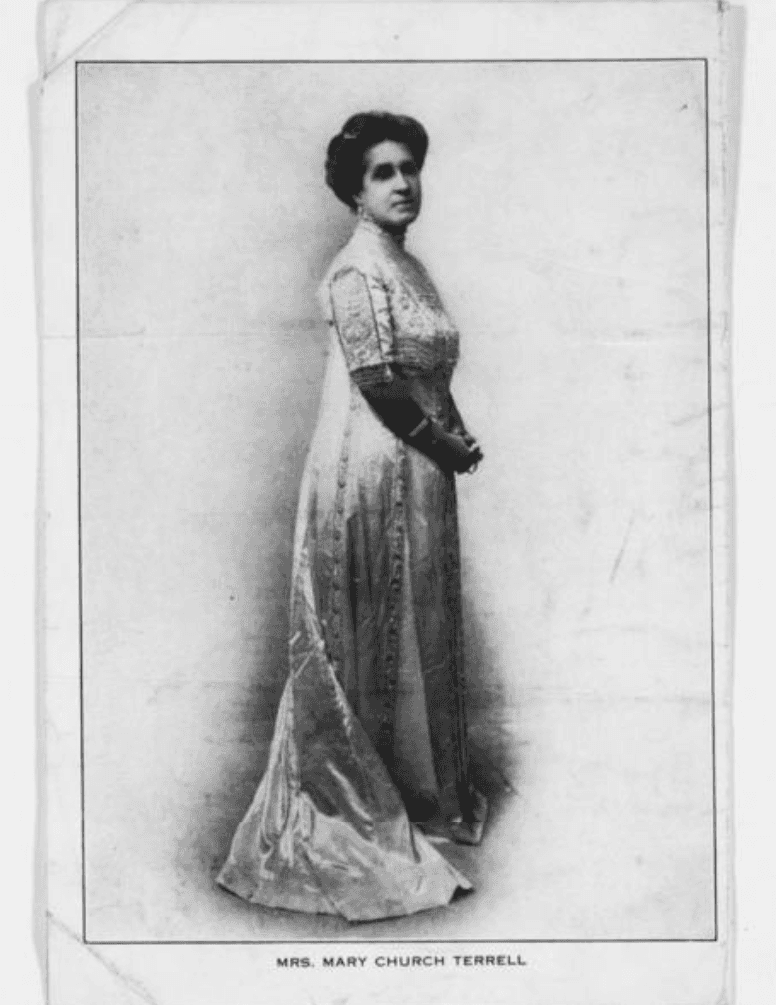
Image Credit: Library of Congress, Manuscript Division, Mary Church Terrell Papers.
1897
Frederick Douglass Day takes shape.
Activist‑educator Mary Church Terrell led efforts to mark Feb 14 (Douglass’s chosen birthday) as a day for schools and communities to study his life—an observance that later inspired Woodson’s selection of February for Negro History Week.
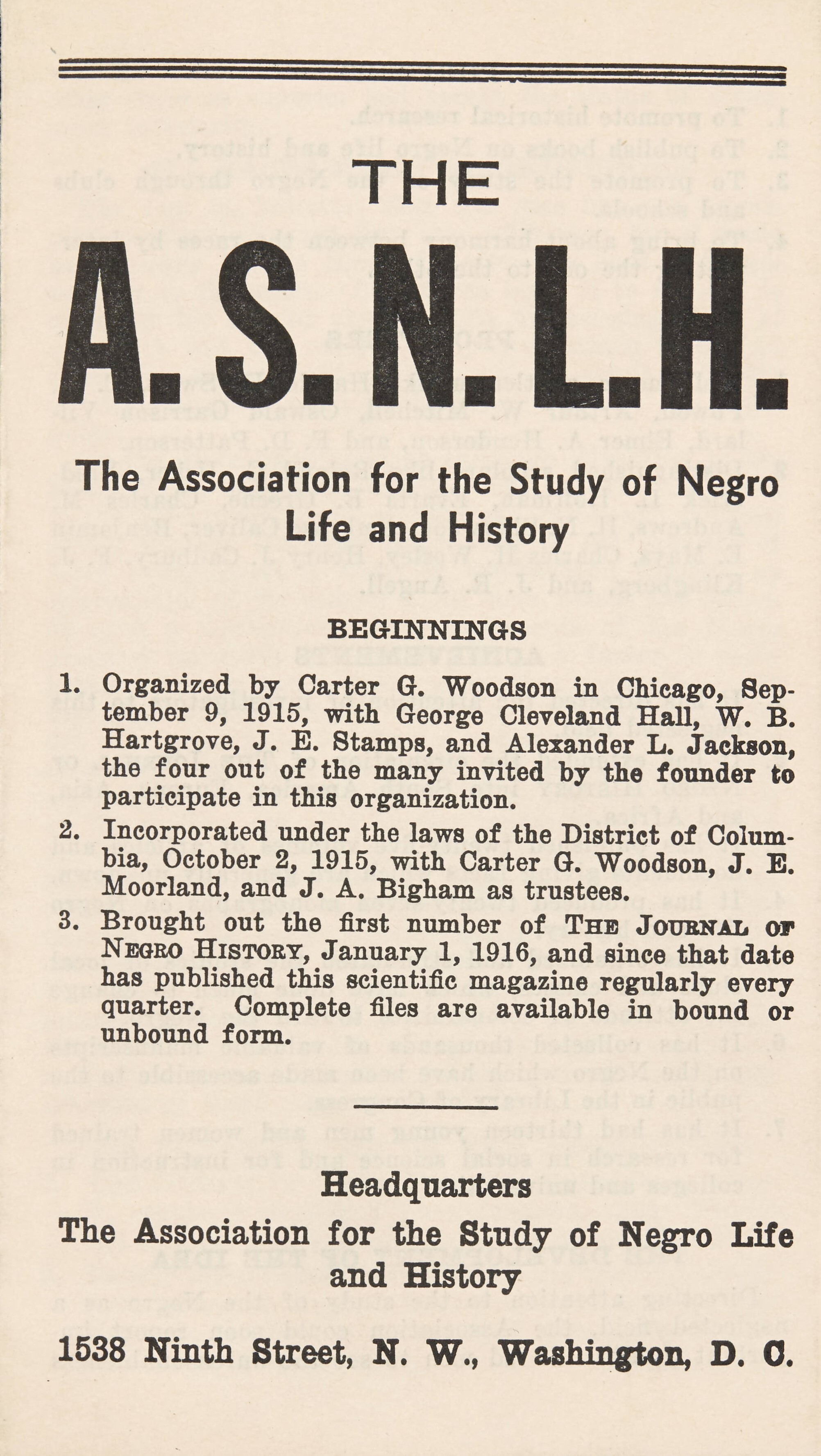
Image Credit: ASNLH membership pamphlet. George Cleveland Hall Branch Archives, Vivian G. Harsh Research Collection, Chicago Public Library
1915
The Association for the Study of Negro Life and History (ASNLH) is founded.
Later renamed the Association for the Study of African American Life and History (ASALH).
Historian Dr. Carter G. Woodson along with William B. Hartgrove, George Cleveland Hall, Alexander L. Jackson, and James E. Stamps founded the ASALH (formerly known as the Association For the Study of Negro Life and History) in Chicago on September 9th with the aim to research, preserve, and teach Black history.
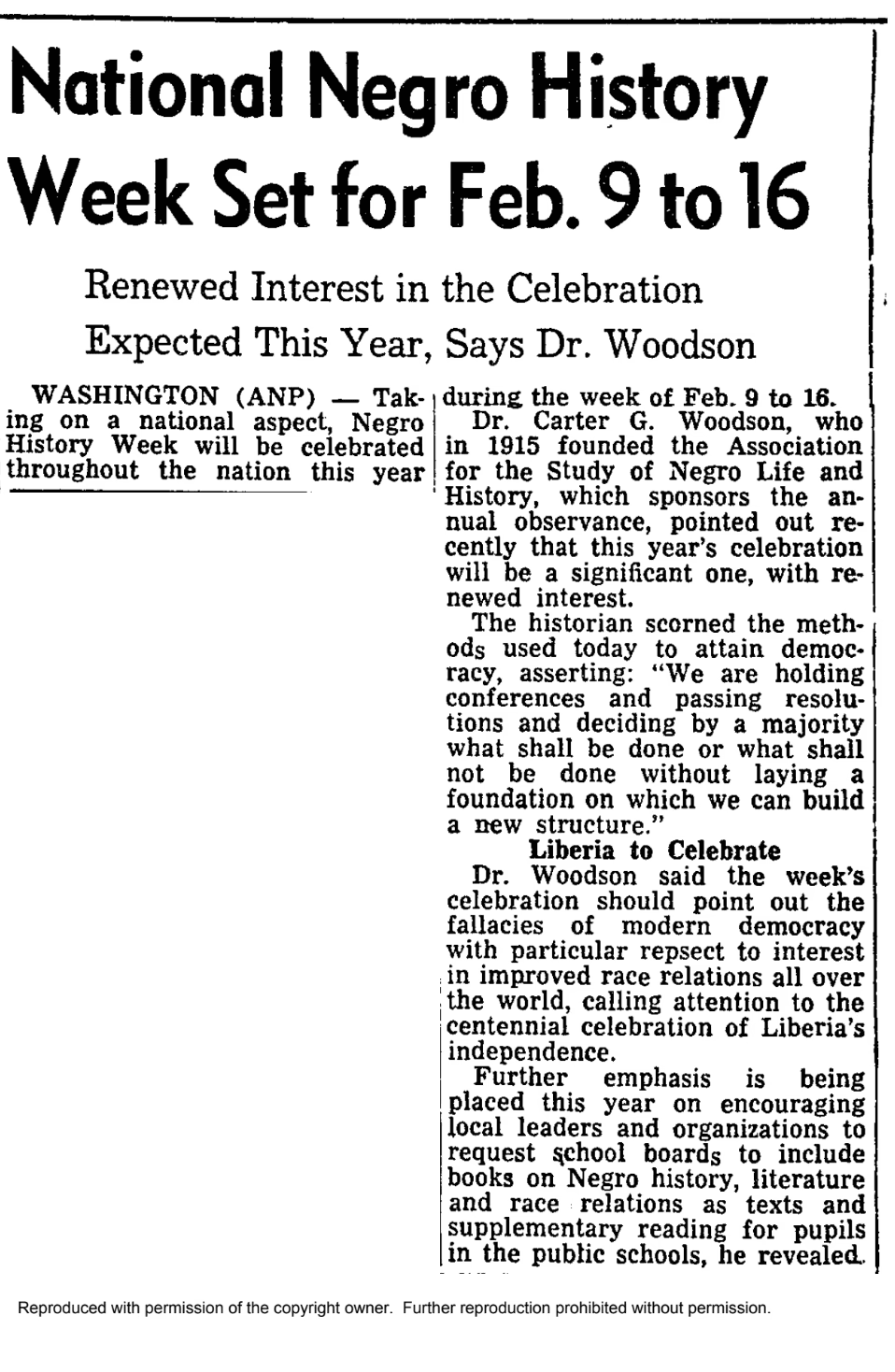
Image Credit: The Afro American — Front page, February 1, 1947 (via Google Books)
1926
Negro History Week begins.
Dr. Carter G. Woodson and ASALH launched a national week of study each February to energize communities around Black History and to make accurate history part of everyday learning year-round.
Photo courtesy of the AFRO American Newspapers Archives/Afro Charities
1937
The Negro History Bulletin is launched.
At the urging of Mary McLeod Bethune, Woodson started a practical, teacher‑focused journal (now Black History Bulletin) to spread accurate and culturally relevant history, in the form of lesson plans and history articles, to classrooms around the country.
Image Credit: Gerald R. Ford Presidential Library — “President Ford’s Message Recognizing Black History Month,” 1976, NAID 16637977 (Ford in Focus)
1976
Black History Month is nationally recognized.
After decades of grassroots growth led by Black scholars, educators, and communities, President Gerald R. Ford issued the first presidential message recognizing National Black History Month, amplifying ASALH’s expansion from the week to a month.
For 50 years, Negro History Week lived in the places we gathered—classrooms and sanctuaries, front porches and living rooms. For the last 50 years, Black History Month has been celebrated and carried by the people who knew our stories were our strength.
That’s a full century of remembering, teaching, celebrating, and passing it on.
Photos courtesy of the AFRO American Newspapers Archives/Afro Charities
50 years of negro
history week
50 years of black
history month
It began in 1926, when Dr. Carter G. Woodson partnered with teachers, churches, and community members to declare: we will remember, ourselves, and tell the world about it.
1858
Crispus Attucks Day is organized.
Boston abolitionist William Cooper Nell, alongside fellow Black organizers, revived the memory of Attucks with a citywide commemoration on March 5, linking Black sacrifice to the nation’s founding story while demanding recognition of African Americans as equal citizens.
Image Credit: Courtesy of the Library of Congress — “Crispus Attucks,” Prints & Photographs Division (LC-DIG-ppmsca-15704)
1865
Juneteenth: Freedom made public, community made lasting.
Black Texans turned June 19, 1865—the day General Order No. 3 announced emancipation in Galveston—into annual celebrations that spread nationwide; in our time, activist Opal Lee helped win federal recognition in 2021.
Image Credit: Celebration band, June 19, 1900 Photo by Grace Murray Stephenson via The Portal to Texas History
1897
Frederick Douglass Day takes shape.
Activist‑educator Mary Church Terrell led efforts to mark Feb 14 (Douglass’s chosen birthday) as a day for schools and communities to study his life—an observance that later inspired Woodson’s selection of February for Negro History Week.
Image Credit: Library of Congress, Manuscript Division, Mary Church Terrell Papers.
1915
The Association for the Study of Negro Life and History (ASNLH) is founded.
Later renamed the Association for the Study of African American Life and History (ASALH).
Historian Dr. Carter G. Woodson along with William B. Hartgrove, George Cleveland Hall, Alexander L. Jackson, and James E. Stamps founded the ASALH (formerly known as the Association For the Study of Negro Life and History) in Chicago on September 9th with the aim to research, preserve, and teach Black history.
Image Credit: ASNLH membership pamphlet. George Cleveland Hall Branch Archives, Vivian G. Harsh Research Collection, Chicago Public Library
1926
Negro History Week begins.
Dr. Carter G. Woodson and ASALH launched a national week of study each February to energize communities around Black History and to make accurate history part of everyday learning year-round.
Image Credit: The Afro American — Front page, February 1, 1947 (via Google Books)
1937
The Negro History Bulletin is launched.
At the urging of Mary McLeod Bethune, Woodson started a practical, teacher‑focused journal (now Black History Bulletin) to spread accurate and culturally relevant history, in the form of lesson plans and history articles, to classrooms around the country.
Photo courtesy of the AFRO American Newspapers Archives/Afro Charities
1976
Black History Month is nationally recognized.
After decades of grassroots growth led by Black scholars, educators, and communities, President Gerald R. Ford issued the first presidential message recognizing National Black History Month, amplifying ASALH’s expansion from the week to a month.
Image Credit: Gerald R. Ford Presidential Library — “President Ford’s Message Recognizing Black History Month,” 1976, NAID 16637977 (Ford in Focus)
For 50 years, Negro History Week lived in the places we gathered—classrooms and sanctuaries, front porches and living rooms. For the last 50 years, Black History Month has been celebrated and carried by the people who knew our stories were our strength.
That’s a full century of remembering, teaching, celebrating, and passing it on.
Photos courtesy of the AFRO American Newspapers Archives/Afro Charities
50 years of negro
history week
50 years of black
history month
It began in 1926, when Dr. Carter G. Woodson partnered with teachers, churches, and community members to declare: we will remember, ourselves, and tell the world about it.
Image Credit: Courtesy of the Library of Congress — “Crispus Attucks,” Prints & Photographs Division (LC-DIG-ppmsca-15704)
1858
Crispus Attucks Day is organized.
Boston abolitionist William Cooper Nell, alongside fellow Black organizers, revived the memory of Attucks with a citywide commemoration on March 5, linking Black sacrifice to the nation’s founding story while demanding recognition of African Americans as equal citizens.
Image Credit: Celebration band, June 19, 1900 Photo by Grace Murray Stephenson via The Portal to Texas History
1865
Juneteenth: Freedom made public, community made lasting.
Black Texans turned June 19, 1865—the day General Order No. 3 announced emancipation in Galveston—into annual celebrations that spread nationwide; in our time, activist Opal Lee helped win federal recognition in 2021.
Image Credit: Library of Congress, Manuscript Division, Mary Church Terrell Papers.
1897
Frederick Douglass Day takes shape.
Activist‑educator Mary Church Terrell led efforts to mark Feb 14 (Douglass’s chosen birthday) as a day for schools and communities to study his life—an observance that later inspired Woodson’s selection of February for Negro History Week.
Image Credit: ASNLH membership pamphlet. George Cleveland Hall Branch Archives, Vivian G. Harsh Research Collection, Chicago Public Library
1915
The Association for the Study of Negro Life and History (ASNLH) is founded.
Later renamed the Association for the Study of African American Life and History (ASALH).
Historian Dr. Carter G. Woodson along with William B. Hartgrove, George Cleveland Hall, Alexander L. Jackson, and James E. Stamps founded the ASALH (formerly known as the Association For the Study of Negro Life and History) in Chicago on September 9th with the aim to research, preserve, and teach Black history.
Image Credit: The Afro American — Front page, February 1, 1947 (via Google Books)
1926
Negro History Week begins.
Dr. Carter G. Woodson and ASALH launched a national week of study each February to energize communities around Black History and to make accurate history part of everyday learning year-round.
Photo courtesy of the AFRO American Newspapers Archives/Afro Charities
1937
The Negro History Bulletin is launched.
At the urging of Mary McLeod Bethune, Woodson started a practical, teacher‑focused journal (now Black History Bulletin) to spread accurate and culturally relevant history, in the form of lesson plans and history articles, to classrooms around the country.
Image Credit: Gerald R. Ford Presidential Library — “President Ford’s Message Recognizing Black History Month,” 1976, NAID 16637977 (Ford in Focus)
1976
Black History Month is nationally recognized.
After decades of grassroots growth led by Black scholars, educators, and communities, President Gerald R. Ford issued the first presidential message recognizing National Black History Month, amplifying ASALH’s expansion from the week to a month.
For 50 years, Negro History Week lived in the places we gathered—classrooms and sanctuaries, front porches and living rooms. For the last 50 years, Black History Month has been celebrated and carried by the people who knew our stories were our strength.
That’s a full century of remembering, teaching, celebrating, and passing it on.
Photos courtesy of the AFRO American Newspapers Archives/Afro Charities
50 years of negro
history week
50 years of black
history month
It began in 1926, when Dr. Carter G. Woodson partnered with teachers, churches, and community members to declare: we will remember, ourselves, and tell the world about it.








" transform="translate(4 2)" width="13.68px"/></svg>)