To save content items to your account,
please confirm that you agree to abide by our usage policies.
If this is the first time you use this feature, you will be asked to authorise Cambridge Core to connect with your account.
Find out more about saving content to .
To save content items to your Kindle, first ensure no-reply@cambridge.org
is added to your Approved Personal Document E-mail List under your Personal Document Settings
on the Manage Your Content and Devices page of your Amazon account. Then enter the ‘name’ part
of your Kindle email address below.
Find out more about saving to your Kindle.
Note you can select to save to either the @free.kindle.com or @kindle.com variations.
‘@free.kindle.com’ emails are free but can only be saved to your device when it is connected to wi-fi.
‘@kindle.com’ emails can be delivered even when you are not connected to wi-fi, but note that service fees apply.
This Element argues that the 2008 financial crisis marked a turning point for populism in Europe by extending economic insecurity to the middle class. As insecurity spread, trust in institutions and markets declined, bringing a large new group of disillusioned voters into the political arena. The authors show that this expansion of middle-class anxiety accounts for a substantial share of the rise in populist voting. The political impact was strongest in countries with limited fiscal space, where governments lacked credible tools to cushion economic losses. As voters' demand for protection grew, both new and established parties adjusted their platforms, with populist and protectionist positions becoming more prominent. Using a novel empirical strategy based on differences in occupational exposure to financial constraints, the authors identify the causal effect of crisis-driven insecurity and explain why populism has persisted in European politics. This title is also available as Open Access on Cambridge Core.
How and why are key Indo-Pacific states adapting respective foreign and defence policies to secure submarine cable networks amid heightened Sino-US network-based competition? States are driven to control submarine cable networks as these infrastructures transmit information between continents and islands, traverse vulnerable maritime zones, and constrict data through limited chokepoints. China's Digital Silk Road has challenged Western submarine cable dominance, prompting a suite of countermeasures by Western states individually and in coalition. This Element posits a nodes-flows-production typology to illustrate how states are attempting to control connectivity nodes, secure transmission flows and dominate production. The analysis highlights how states are pursuing central network positions to mitigate vulnerability – but this structural competition risks enabling weaponisation. This microcosm of network-based competition reveals how the contest to control submarine cable infrastructure is defining contemporary great power rivalry and re-wiring the Indo-Pacific's arteries. This title is also available as Open Access on Cambridge Core.
The rise of political extremism is often attributed to citizens' economic and cultural grievances. Less is known about how the state itself may facilitate extremism in contemporary democracies, despite frequent claims that elected leaders fail to contain it. How valid is this critique? Analyzing thousands of documents on the behavior of political parties, intelligence agencies, and the police in Germany across decades and states, the authors show that blind spots in combating extremism are widespread and deeply partisan. In parliamentary debates and election manifestos, right-wing parties devote less attention to right-wing extremist crimes than their prevalence warrants, while left-wing parties often downplay left-wing extremism. Similar divisions appear within ostensibly neutral intelligence agencies and the police. Across institutions, partisanship and ideology shape how state actors address extremist threats, raising concerns about the state's capacity to safeguard public safety and democracy. This title is also available as Open Access on Cambridge Core.
Quantile models are widely used across the natural and social sciences to analyze heterogeneous phenomena that conventional mean-based approaches often obscure. Yet, despite their growing importance in many disciplines, their adoption in political science has remained comparatively limited, in part because the field still lacks an accessible introduction tailored to its substantive questions and empirical practices. This Element addresses that gap by showing how quantile models can expand the methodological repertoire of political science and deepen our understanding of political phenomena. Combining methodological innovation with practical guidance, this Element introduces quantile models for both continuous and discrete response variables and illustrates their use with real-world political examples. All empirical applications are accompanied by publicly available data, code, and software, making the Element a useful resource for both teaching and research. This title is also available as Open Access on Cambridge Core.
This Element launches a broadside against the visual-centric approach that has dominated philosophical and scientific discourse about the senses. Considering the variety and breadth of sensory experiences, from the deceptively familiar territories of smell and taste to the frequently overlooked experience of touch and interoceptive processes, it challenges us to rethink the philosophical bedrock of our theories of mind. It advocates a shift towards a more multi-modal and embodied approach that values biological realities and cross-cultural insights. It analyses traditional criteria for classifying sensory modalities and examines how sensory augmentation technologies provide insight for theories of perception by virtue of sensorimotor learning. The Element also highlights the disconnect between current scientific advancements and philosophical inquiry, suggesting that refocusing on the senses more broadly defined, especially on kinesthetic experiences, illuminates new paths through the thorny 'hard problem' of consciousness. This title is also available as Open Access on Cambridge Core.
How do voters form left–right images of political parties? This Element applies the theoretical framework of ecologically rational heuristic inference to synthesize insights from the extensive literature on the meaning of left and right in politics. It proposes several hypotheses about cues that voters with varying levels of political sophistication use to infer parties' left–right positions. These expectations are tested through seven conjoint and factorial survey experiments in Germany, Denmark, Canada, and the UK. Findings show that many voters develop sensible left–right perceptions of parties by relying on small sets of highly predictive cues. However, voters differ in how they interpret these cues. Less politically sophisticated voters tend to infer party positions mainly from partisan signals, whereas more sophisticated voters rely on a broader range of indicators, including party policies, ideological values, and social group support. This title is also available as Open Access on Cambridge Core.
This Element offers a critical exploration of institutional health communication in an era marked by information overload and uneven content quality. It examines how health institutions can navigate the challenges of false, misleading, and poor-quality health information while preserving public trust and scientific integrity. Drawing from disciplines such as health communication, behavioral science, media studies, and rhetoric, this Element promotes participatory models, transparent messaging, and critical health literacy. Through a series of thematic sections and practical examples, it addresses the role of science, politics, media, and digital influencers in shaping public understanding. Designed as both a conceptual guide and a strategic toolkit, this Element aims to support institutions in fostering informed, engaged, and resilient communities through communication that is clear, ethical, and responsive to the complexities of today's health discourse. This title is also available as Open Access on Cambridge Core.
Based on interviews with thirty-one managers in community organizations and thirty-four court-ordered community service workers (CSWs) in Georgia, this Element asks whether community service programs are likely to achieve their stated goals of restitution, cost savings, and rehabilitation and what conditions support or undermine success. While some individuals perceive a benefit, these programs often shift costs to under-resourced nonprofits, impose administrative burdens, and fail to foster meaningful community connection or long-term rehabilitative outcomes. The Element indicates that cost savings are illusory, restitution is weakened by supervision demands, and rehabilitation is inconsistent across participants. For community service to realize its restorative potential, it must be restructured across the criminal legal system with attention to organizational capacity, both of probation offices and the community organizations working with CSWs. This title is also available as Open Access on Cambridge Core.
Absence in official records can have profound implications for social memory, civil rights, restorative and transitional justice, citizenship, social welfare, and redress for historical abuse. Scholars of archivistics and early modern New World imperial contexts have uncovered the epistemological problems that archival silences pose for historical research, and the author contends that absence deserves separate conceptual treatment. Archival absences, both permanent and temporary, have particular resonances for postcolonial countries, and are an ongoing threat under totalitarian regimes. Using Britain and Ireland as primary examples, this Element traces how absence took root in the domestic and subsequently the colonial archive, and how through legal mechanisms it became an accepted part of archival praxis. The aim of this Element is to raise awareness of archival absence in order to prevent more losses, particularly in the abundance of the digital age. This title is also available as Open Access on Cambridge Core.
This Element advocates the Majlis Curriculum as a culturally responsible framework for teacher education in Arabia. Rather than treating culture as a supplementary means of transmitting local values or reducing it to language instruction, the Element conceptualizes culture as an epistemic and pedagogical foundation for teacher training. It extends the Arab-Islamic tripartite model of Tarbiya, Ta'lim, and Ta'dib by introducing Al-Ra'y as a fourth component of deliberative reasoning. The Majlis is theorized as an educational space that cultivates deliberation and civic responsibility in conversation with the liberal arts. This Element, therefore, positions culturally responsible pedagogy as a precondition for culturally responsive teaching. Intercultural engagement requires identifying and activating local epistemologies that align with the aims of liberal arts. The Element offers a contextual approach that preserves cultural continuity and enables teachers in Arabia to engage with international educational discourses. This title is also available as Open Access on Cambridge Core.
Who cares for the ageing bodies of those who have long laboured for the wellbeing of others? This Element focusses on ageing migrant domestic workers who have spent decades abroad in Singapore and Hong Kong on precarious temporary contracts, and how they imagine and prepare for their ageing futures. As temporary migration regimes deny domestic workers long-term residence, citizenship, and family reunification rights, domestic workers are required to return to their countries of origin when they reach retirement age. These two impending dislocations – retirement and return migration – generate a range of financial and emotional insecurities among migrant women who have to confront questions around care, home, and livelihoods at this critical juncture in their lives. This juncture further generates new aspirations among domestic workers who seek to make their mid-to-later life years meaningful. This title is also available as Open Access on Cambridge Core.
Ageism, defined as stereotypes, prejudices, and discrimination based on age, is a pervasive phenomenon across individuals, settings, historical periods, and cultures. To address the universality of ageism, we explore three main questions: (a) Does ageism happen throughout the course of a person's life? (b) Does ageism permeate all spheres of life? (c) Does ageism exist all around the world? We conclude that although ageism is universal, there are substantial variations in its definition, manifestations, and impact over time and in different sociocultural contexts. The variability identified suggests that we cannot use a one-size-fits-all approach to conceptualize or target ageism, but instead we should adopt a personalized approach, which considers the sociocultural context, the personal attributes of the targets and agents of ageism, and the normative framework concerning ageism at the global and local levels. This title is also available as Open Access on Cambridge Core.
Human Factors and Ergonomics (HFE) is a discipline concerned with designing interactions in sociotechnical systems to improve both system performance and human well-being. This Element introduces the core principles of HFE, tracing its development from multidisciplinary efforts to solve practical problems in military operations during the Second World War to its current application in healthcare improvement. The Element acknowledges the growing role of HFE in areas such as the design of the physical environment, medical device design, learning from patient safety incidents, and safety investigations. A critical reflection highlights persistent challenges, including conceptual ambiguity, structural and practical barriers to HFE integration, and the need both for a stronger evidence base and a compelling business case. The Element concludes by identifying future priorities for advancing HFE in healthcare, including continuing professional development and career pathways, embedding HFE in regulation and policy, and adopting evaluation approaches suited to complex systems. This title is also available as open access on Cambridge Core.
Why do self-described gender egalitarians support the state's draconian birth restriction? Following China's universal relaxation of its one-child policy in 2016, this Element excavates an under-theorized and distinctly political dimension of the gendered work-family conflict: the incompatibility of rights. I demonstrate that young urban Chinese women have experienced the expansion of their civil right to mother-through birth quota relaxation-as intensifying labor market gender discriminations and undermining their civil right to equal employment. To cope, these women turned to various individualistic strategies of rights-trading, such as promising to limit childbearing when seeking to secure employment. In this process, young Chinese women have further come to perceive employment and motherhood as two incompatible moral claims of entitlement. This Element highlights how women's quotidian work-family encounters present a fruitful yet underexplored site for understanding their political ideations and citizenship struggles. This title is also available as Open Access on Cambridge Core.
Conservation covenants and easements are legal mechanisms for private landholders to contribute to long-term protection of natural values. This book furnishes a unique international legal and policy study of how covenants and easements in seven jurisdictions are supporting global biodiversity goals, and it considers how they may address new challenges associated with ecosystem restoration and climate change. It compares laws in Australia, Belgium (Flanders), Canada, Chile, New Zealand, South Africa, and the United States, countries where these mechanisms are increasingly used to support national and global goals of relevance to Earth System Governance. Through interjurisdictional comparison, the book analyses key themes, including recruitment and retention of landholders into conservation agreements, climate adaptation and compliance. This study also offers practical advice on potential directions for law reform or improved implementation of existing covenants and easements law. This title is also available as Open Access on Cambridge Core.
This Element critically examines the claim that United States economic sanctions on Venezuela constituted 'collective punishment' of the Venezuelan population, contributing significantly to the country's economic collapse and humanitarian crisis. Through comprehensive analysis of economic, developmental, and welfare indicators from 2013 to 2023, it demonstrates that the bulk of Venezuela's economic devastation - including 52 percent of GDP losses and 98 percent of import declines - largely occurred before financial sanctions were imposed in August 2017. Key welfare indicators such as infant mortality, undernourishment, and life expectancy had deteriorated substantially by 2017 and subsequently stabilized or improved following sanctions implementation, contradicting narratives that attribute Venezuela's collapse primarily to external economic pressure. The Element provides a timeline of Venezuelan economic and political events around sanctions and a critical review of the literature on their economic effects. This title is also available as Open Access on Cambridge Core.
Like many other world religious and spiritual traditions, the Sikh tradition is philosophically rich. However, its contributions have been wholly unrepresented in Western analytic philosophy. The goal of this Element is to present a central aspect of Sikh philosophy, its ethics, by using the tools and methods of analytic philosophy to reconstruct it in a form that is understandable to Western audiences, while still accurately capturing its unique and autochthonous features. On the interpretation of Sikh ethics this Element presents, the Sikh ethical theory understands ethics in terms of truthful living – in particular, living in a way that is true to the fundamental Oneness of all existence. Features of the Sikh ethical theory discussed include its account of vice and virtue, its account of right conduct, and the philosophical relationship between ethical theory and practice. This title is also available as Open Access on Cambridge Core.
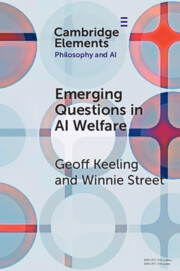
This Element investigates whether artificial intelligence (AI) systems could ever be welfare subjects. Some people argue that AIs could plausibly have or soon have features such as consciousness, agency and the capacity for social relationships, which could provide a basis for AI welfare. These arguments have massive significance for the societal conversation on AI, raising profound ethical and political questions about what if anything we owe to these new technologies. The authors here provide the philosophical groundwork for a scientific, philosophical and ultimately democratic inquiry into the potential for AI welfare, addressing key questions that cut across different arguments: what welfare is, how to interpret behavioural evidence of AI welfare, what kinds of entities might qualify as candidate AI welfare subjects, the potential grounds for welfare in AI and the practical ethical challenges that arise from our uncertainty. This title is also available as open access on Cambridge Core.
While bribery has been extensively studied, the dynamics of personnel corruption in the public sector, often known as 'buying and selling of government offices,' remain underexplored. This form of corruption involves leaders' accepting or soliciting bribes from subordinates to influence recruitment, appointment, and promotion decisions, significantly impacting political selection and governance quality. This Element employs a dual perspective – corruption and elite mobility – to analyze the distribution of office-selling across the Chinese administrative matrix and its various forms and implications. Using two novel self-compiled datasets, it proposes a tripartite framework of performance, patronage, and purchase to reimagine political selection in China, highlighting the coexistence of multiple governance models: a meritocratic state prioritizing competence, a clientelist state emphasizing loyalty, and an investment state bound by money. This title is also available as Open Access on Cambridge Core.
Generative artificial intelligence (AI) is becoming an integral part of children's lives, ranging from voice assistants and social robots to AI-generated storybooks. As children increasingly interact with these technologies, it is essential to consider their implications for developmental outcomes. This Element examines these implications across three interconnected domains: interaction, perception, and learning. A recurring theme across these domains is that children's engagement with AI both mirrors and diverges from their engagement with humans, positioning AI as a distinct yet potentially complementary source of experience, enrichment, and knowledge. Ultimately, the Element advances a framework for understanding the complex interplay among technology, children, and the social contexts that shape their development. This title is also available as Open Access on Cambridge Core.