

Bindii (Bindi Weed) in Australian Lawns: ID & Control
What Is Bindi Weed?
Bindii (Soliva sessilis), also known as bindi weed, Jo-Jo, or Onehunga, is a low-growing winter annual broadleaf weed in the daisy family. It is best known for its sharp, spiny seeds that embed in bare feet, puncture skin, and cause irritant contact dermatitis.
It germinates in autumn when soil moisture is adequate and temperatures drop. By the time you notice it in spring, it has already established a dense rosette and is approaching its seeding window. Once the burrs have formed, chemical control becomes unreliable. Any spray applied at that stage kills the plant but leaves the spines in the ground to cause problems through summer.
After reading this, you will be able to:
- Identify bindii and tell it apart from similar-looking winter weeds
- Know exactly when to spray for maximum effect
- Choose the right bindi herbicide for your turf type
Why Bindi Weed Is a Problem
- Spiny burrs. Each plant produces 5 to100 seeds with rigid spines that pierce skin and paws. Once a burr drops to the soil surface it stays there even after the plant dies.
- Rapid spread. Bindii forms a dense low-growing carpet that smothers desirable turf, especially in bare or thin areas.
- Prolific seeding. It can flower and set seed repeatedly through the season, building the soil seedbank fast.
- Skin reactions. Bindii causes bindii dermatitis and an irritant contact dermatitis from spine contact. It is a genuine health risk for barefoot use of lawns.
- Hard to control late. Once the spines form, killing the plant doesn’t remove the hazard. Timing is everything.
- Indicator of compact soil. Bindii thrives in thin turf over compact, low-fertility soil. This is also poor ground for desirable turf species to recover quickly.
How to Identify Bindi Weed
For a full photo ID guide to Australian turf weeds, see the Weed ID Chart.
Bindii is frequently confused with carrot weed (Cotula australis) and swinecress because all three produce parsley-like, divided leaves and grow as low rosettes over winter.
The easiest field separation:
- Carrot weed produces pale yellow flowers on stalks in early winter. Bindii flowers later and has no flower stalks.
- Swinecress has a strong skunk-like smell when crushed. Bindii does not.
- Bindii alone produces spiny burrs.
Key identification features
- Leaves: Low rosette, parsley-shaped, deeply divided, bright green. Spread to 150 mm across.
- Flowers: Small, bright yellow, no stalks, appear at ground level.
- Burrs: Spiny, produced from late spring. Each spine is rigid and pointed.
- Height: Up to 50 mm.
- Photosynthetic pathway: C3, Grows in the cool season, dies back in summer heat.
- Reproduction: Seed only. No vegetative spread.
Differences Between Bindii and Similar Winter Weeds
| Feature | Bindii | Carrot Weed | Swinecress |
|---|---|---|---|
| Roots | Fibrous | Weak taproot | Strong taproot |
| Flower | Yellow, no stalk | Pale yellow, on stalk | Small white, on stalk |
| Smell when crushed | No | No | Yes (skunk) |
| Spiny burrs | Yes | No | No |
| Flower timing | Late spring | Early winter | Winter–spring |
Habitat
Bindii favours compact, stressed, or worn turf and bare soil. It is a reliable indicator weed of compaction and low turf vigour. Check our weed ID chart for photographic confirmation.
Lifecycle and Timing
Understanding the lifecycle is the most important factor in control. Bindii is only reliably killable during a specific window.
| Month | Stage |
|---|---|
| Apr to May | Germination as seeds sprout as temperatures cool and soil moisture arrives |
| Jun to Jul | Best post-emergent window as rosettes are small, no burrs yet, herbicide uptake is good |
| Aug to Sep | Flowering as still treatable but window is closing |
| Sep to Oct | Burr formation. Chemical control kills the plant but spines remain |
| Nov to Dec | Plant dies; hard spines drop to soil surface |
| Jan to Mar | Dormant seedbank in soil |
The rule: Spray in June to July when rosettes are actively growing and before the plant reaches 50 mm across. Everything after that is damage limitation.
Cultural Control of Bindii
Cultural control reduces the seedbank over time and makes chemical programs more effective.
- Hand pull before seeding. Effective if done before any burrs form. Pull the entire root system — leaving root fragments does not cause regrowth (unlike perennial weeds) but disturbs soil and can create germination sites.
- Aerate compacted areas. Bindii favours compact soil. Core aeration improves turf vigour and makes the environment less favourable for this weed. See our soil compaction calculator.
- Maintain nitrogen fertility. Healthy, actively growing turf outcompetes bindii. Apply the correct N rate for your grass species and season — thin, underfed turf is where bindii establishes.
- Fill bare patches. Every bare patch is a bindii germination site. Overseed or turf any gaps as soon as they appear in late summer.
- Mowing: Not effective as bindii’s prostrate growth habit keeps it below mower height.
Pre-emergent Herbicides for Bindii
Pre-emergents applied in late summer to early autumn (February–April) before soil temperatures drop to 13 to 16°C at night can prevent bindii germination. This is the most cost-effective program for sites with heavy annual infestations.
Effective actives (registered in Australian turf):
| Active | Trade name example | Group | Notes |
|---|---|---|---|
| Prodiamine | Barricade, Onset 10GR | 3 | Apply before germination window |
| Dithiopyr | Dimension | 3 | Also has early post-emergent activity |
| Pendimethalin | Battalia 435 | 3 | Suppression only, not full control |
| Indaziflam | Specticle | 29 | Long residual; warm season turf |
| Isoxaben | Gallery | 21 | Broadleaf pre-emergent |
Note: Oxadiazon (Echelon) gives poor control of bindii and should not be selected for this target.
Timing: Apply when nights cool to 13 to 16°C, typically March to April in southern Australia. Late application is better than none as even a partially-timed application reduces seedling numbers.
Post-emergent Bindi Herbicides
The ideal post-emergent window is June to August as rosettes are small and actively growing, no burrs have formed, and systemic herbicides move well through the plant.
Key principles:
– Treat the entire affected area rather than spot-spraying. Bindii spreads from seed, so untreated patches refeed the seedbank.
– Plants are dead 7 to 10 days after spraying under good conditions.
– Once burrs are visible, control is still possible but the spines will remain in the lawn regardless.
– In cool weather, use higher label rates and allow extra time for visible symptoms.
– Always add a non-ionic surfactant (NIS) or appropriate adjuvant to this improves contact with the small rosette leaves.
Selective Post-emergent Herbicide Table
| Product | Active | Group | Rate/ha | Buffalo safe? | Comments |
|---|---|---|---|---|---|
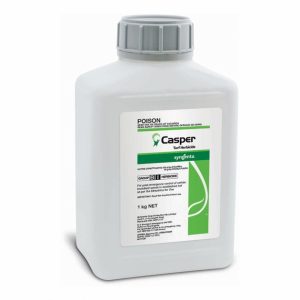
| Casper | Prosulfuron + Dicamba | 2 + 4 | 800g to 1 kg | No | Strong control; 4–6 weeks for full effect; use NIS at 0.25–0.5% v/v |
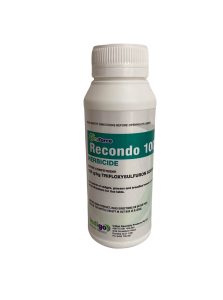
| Recondo 100WG | Trifloxysulfuron | 2 | 225g | No | Use NIS at 0.25% v/v; may need repeat at 4–6 weeks; allow 6 weeks before overseeding |
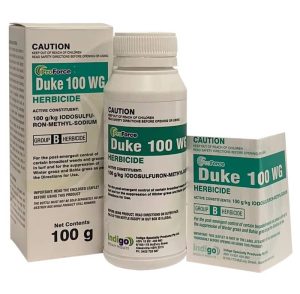
| Duke 100WG | Iodosulfuron | 2 | 100g | Yes | Always use NIS or Overtake Oil; use 200–500 L water/ha |
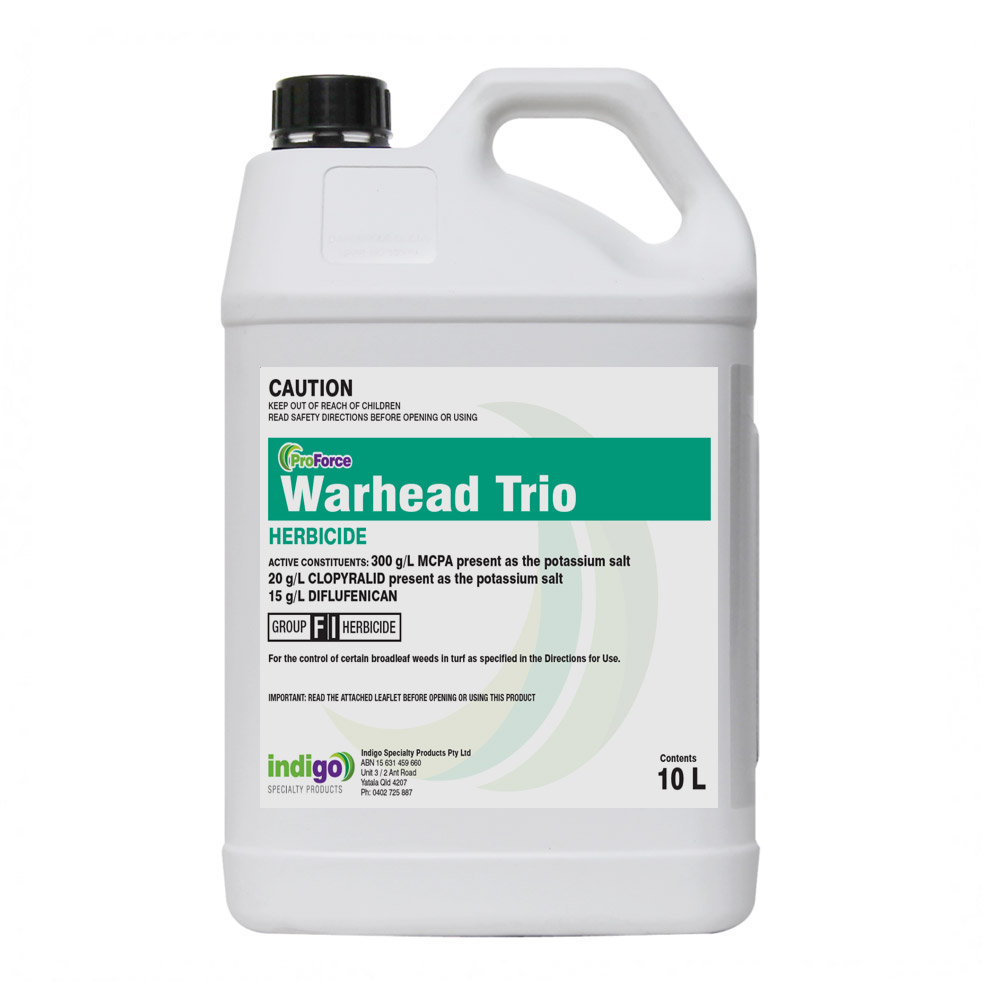
| Warhead Trio | MCPA + Clopyralid + Diflufenican | 4 + 12 | 5 L | Yes | May discolour kikuyu and QLD blue; use NIS; avoid overlapping |
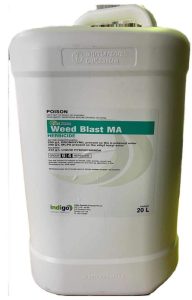
| Weed Blast MA | Bromoxynil + MCPA | 6 + 4 | 3 to 6 L | Yes | Min 500 L water/ha; do not mow 2 days after |
| Contra M | Dicamba + MCPA | 4 | 6.5 L | No | Do not mow 2 days before or after; do not fertilise within 2 weeks |
| Dicamba | Dicamba | 4 | 1.2 L + 3.2 L 2,4-D | No | Min 1,000 L water/ha; not for buffalo or bentgrass |
| 2,4-D Amine | 2,4-D | 4 | 1.8 to 3.2 L | No (WA only) | Wet foliage; no mowing 1 week before/after |
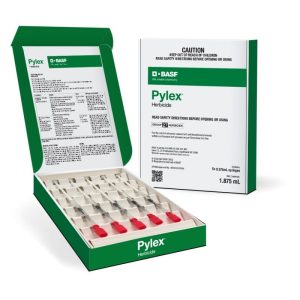
| Pylex | Topramezone | 27 | 0.375 mL/100 m² | No (cool season only) | Two applications 21–28 days apart; add MSO at 0.5%; bentgrass bleaching possible 7–14 days post-spray |
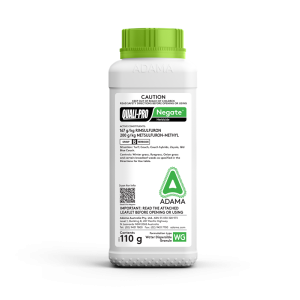
| Negate | Rimsulfuron + Metsulfuron | 2 | 110g | No | Apply to actively growing, non-stressed weeds |
Buffalo grass owners: Duke 100WG and Warhead Trio are your two safe selective post-emergent options for bindii. Casper, Recondo, Contra M, and Dicamba will damage buffalo.
Which product to choose?
For most lawn situations, Casper (prosulfuron + dicamba) is the strongest selective option where buffalo is absent. Apply in June to July with NIS, allow 4 to 6 weeks for full control, and follow up with a spot spray in August if any regrowth appears.
For buffalo lawns, Duke 100WG is the most reliable registered option. Apply with NIS and allow 3 to 4 weeks for visual symptoms to appear.
Non-selective Control
For total renovation, hardscape edges, or areas where turf is being removed:
| Product | Active | Group | Rate/ha |
|---|---|---|---|
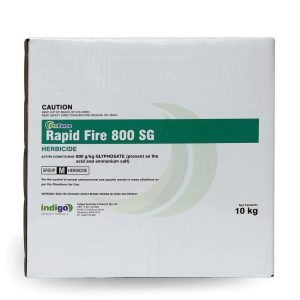
| Rapid Fire 800SG | Glyphosate | 9 | 0.9 to 1.35 kg |
| Glufosinate 200 | Glufosinate-ammonium | 10 | 1 to 6 L |
| Renegade 800WG | Bromacil | 5 | 3.5 to 6.5 kg (12-month residual) |
| Numchuk Quad | Terbuthylazine + Glyphosate + Amitrole + Oxyfluorfen | 5+9+34+14 | 20 to25 L |
| Cortex Duo | Nonanoic Acid + Oxyfluorfen | 14 | 7 L/1,000 L (3-month residual) |
What is the best herbicide to kill bindi weed in Australia?
For turf without buffalo grass, Casper (prosulfuron + dicamba) applied in June to July is the most effective selective option. For buffalo lawns, Duke 100WG is the go-to. For non-turf areas, glyphosate applied when rosettes are actively growing gives reliable knockdown. Timing matters more than product selection so treat before burrs form.
When should I spray for bindi weed?
June to August is the ideal window in temperate Australia. Rosettes are actively growing, no spines have formed yet, and systemic herbicides move well through the plant. Spraying in September to October still kills the plant but the existing burrs will remain in the lawn.
Does pulling bindii out make things worse?
Bindii reproduces only by seed and does not regenerate vegetatively, so hand pulling does not stimulate regrowth the way perennial weeds do. However, pulling plants that have already set seed will spread the burrs so always pull before any spines form, and bag the material rather than composting it.
Why does weed and feed not kill bindi?
Most weed-and-feed products contain MCPA or 2,4-D as the active broadleaf herbicide. These provide some suppression of bindii but are not reliable controls. Products with dicamba in addition to MCPA give considerably better results. Check the active ingredient list on your weed-and-feed label and if it doesn’t contain dicamba, it is unlikely to give satisfactory bindii control.
Is bindii weed dangerous?
The spines cause skin punctures and bindii dermatitis or an irritant contact dermatitis. It is also uncomfortable and potentially hazardous for pets and children using lawns. Bindii is not toxic if ingested in normal amounts but the spines are a genuine physical hazard.
Can a pre-emergent stop bindii from germinating?
Yes. Prodiamine (Barricade, Onset 10GR), dithiopyr (Dimension), and indaziflam (Specticle) all have registered activity against bindii when applied in late summer to early autumn before germination. This is the most cost-effective long-term strategy for heavily infested sites. Oxadiazon (Echelon) is not effective against bindii and should not be used for this purpose.
Written by Jerry Spencer, Principal Agronomist, Gilba Solutions Pty Ltd. BSc Hons Soil Science, former STRI agronomist, author of Nutrition of Sports Turf in Australia (CSIRO/Landlinks Press). 35+ years advising golf courses, stadiums and councils across Australia, NZ, UK and Europe.
Related pages: Weed ID Chart | Carrot Weed | Warhead Trio Herbicide | Broadleaf Weed Control in Autumn | Pre-emergent Herbicide Guide | Herbicide Resistance Chart

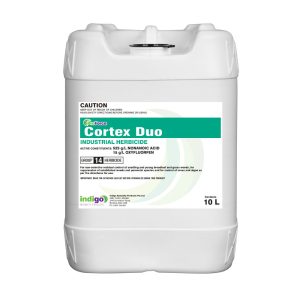
ProForce Cortex Duo Industrial Herbicide is a non glyphosate weed killer. It is both a non-selective knockdown & a residual herbicide. You can use this to kill seedling & young

Principal agronomist, Gilba Solutions Pty Ltd
BSc Hons Soil Science (Newcastle). Former STRI agronomist. Author of Nutrition of Sports Turf in Australia (CSIRO/Landlinks Press). 35+ years advising on sports turf, golf and stadia across Australia, NZ, UK and Europe.
