Image

Build smarter. Ship safely.
Grow at the speed of AI.

The warehouse-native platform used by modern product teams for experimentation, feature flags, and product analytics.
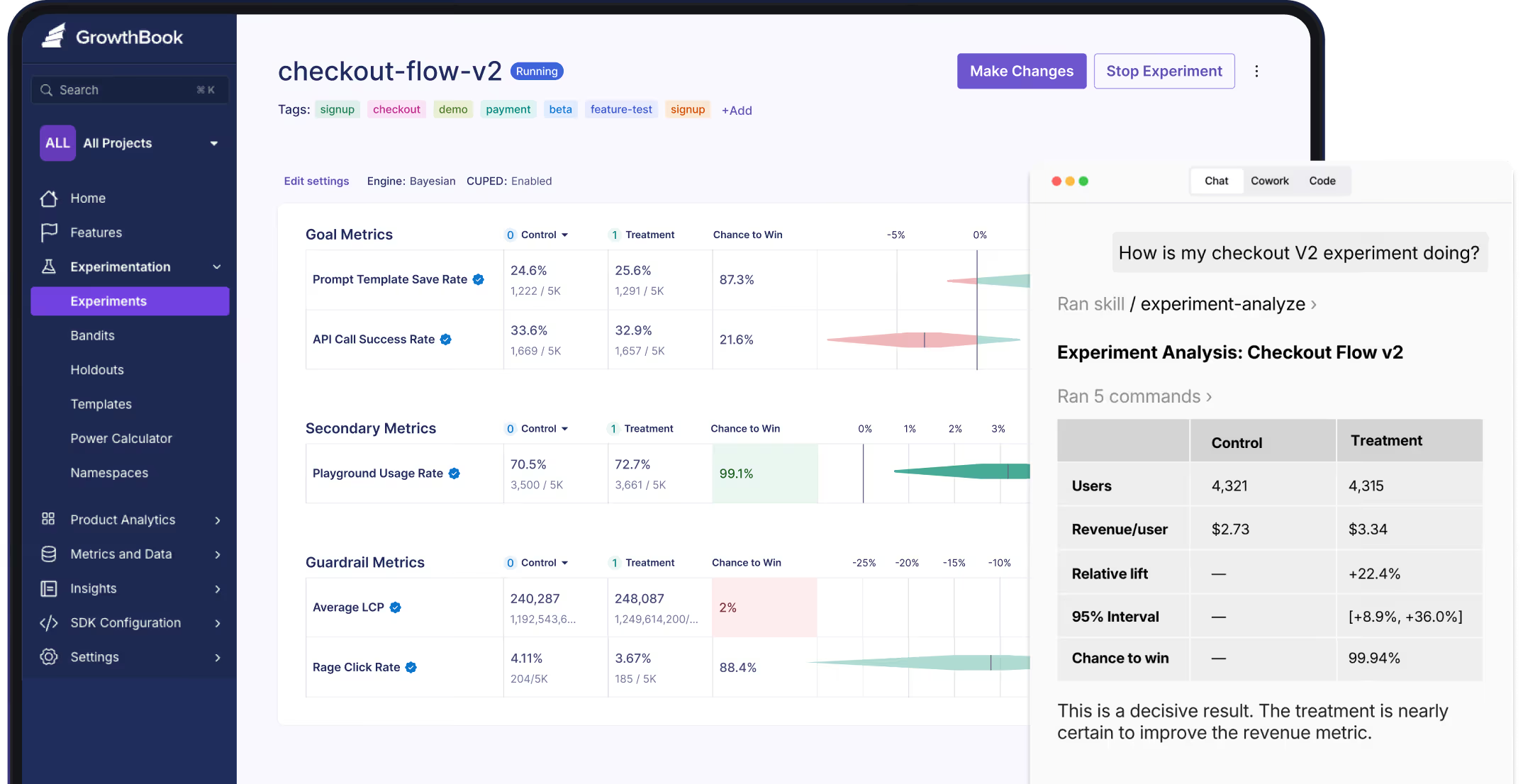
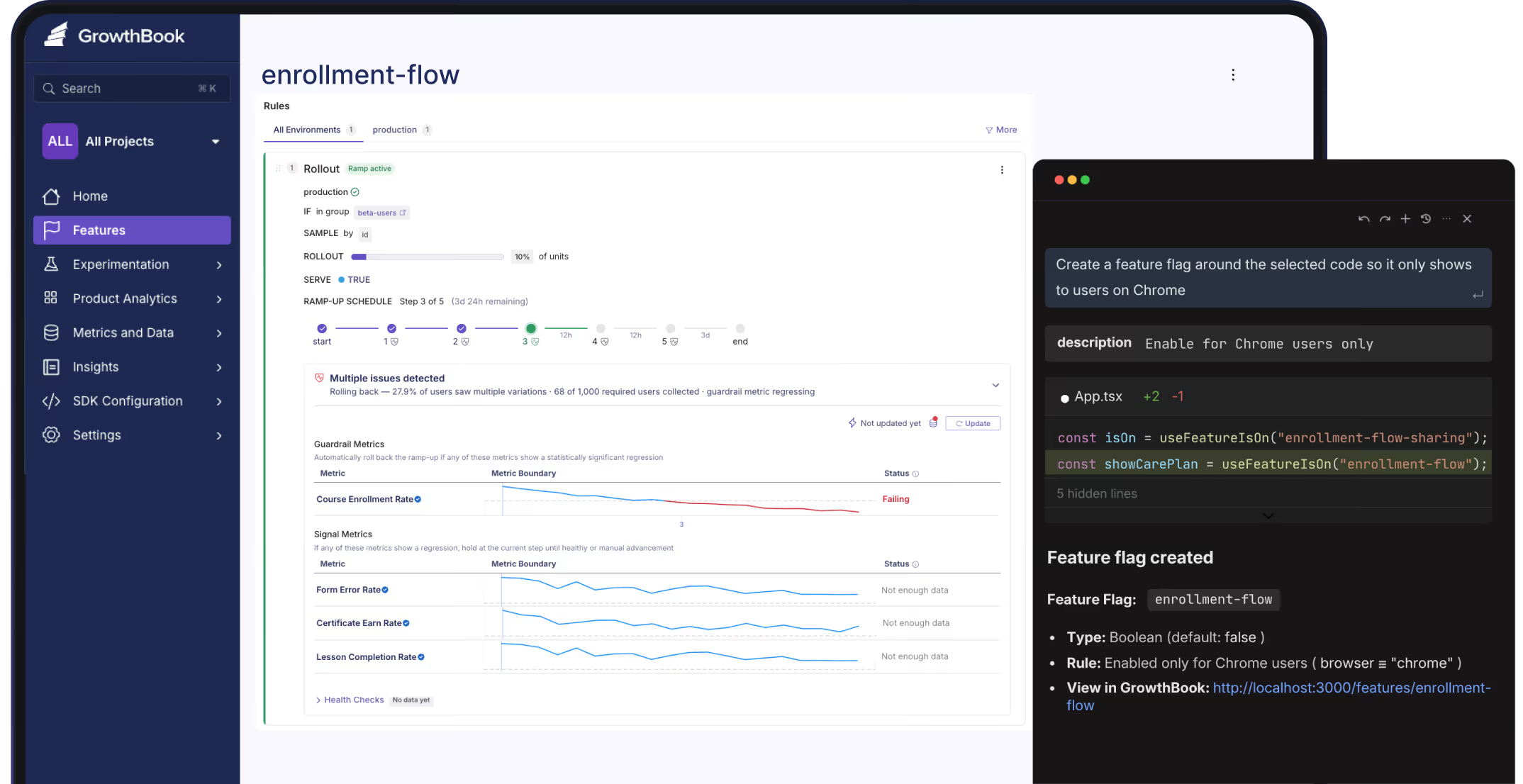
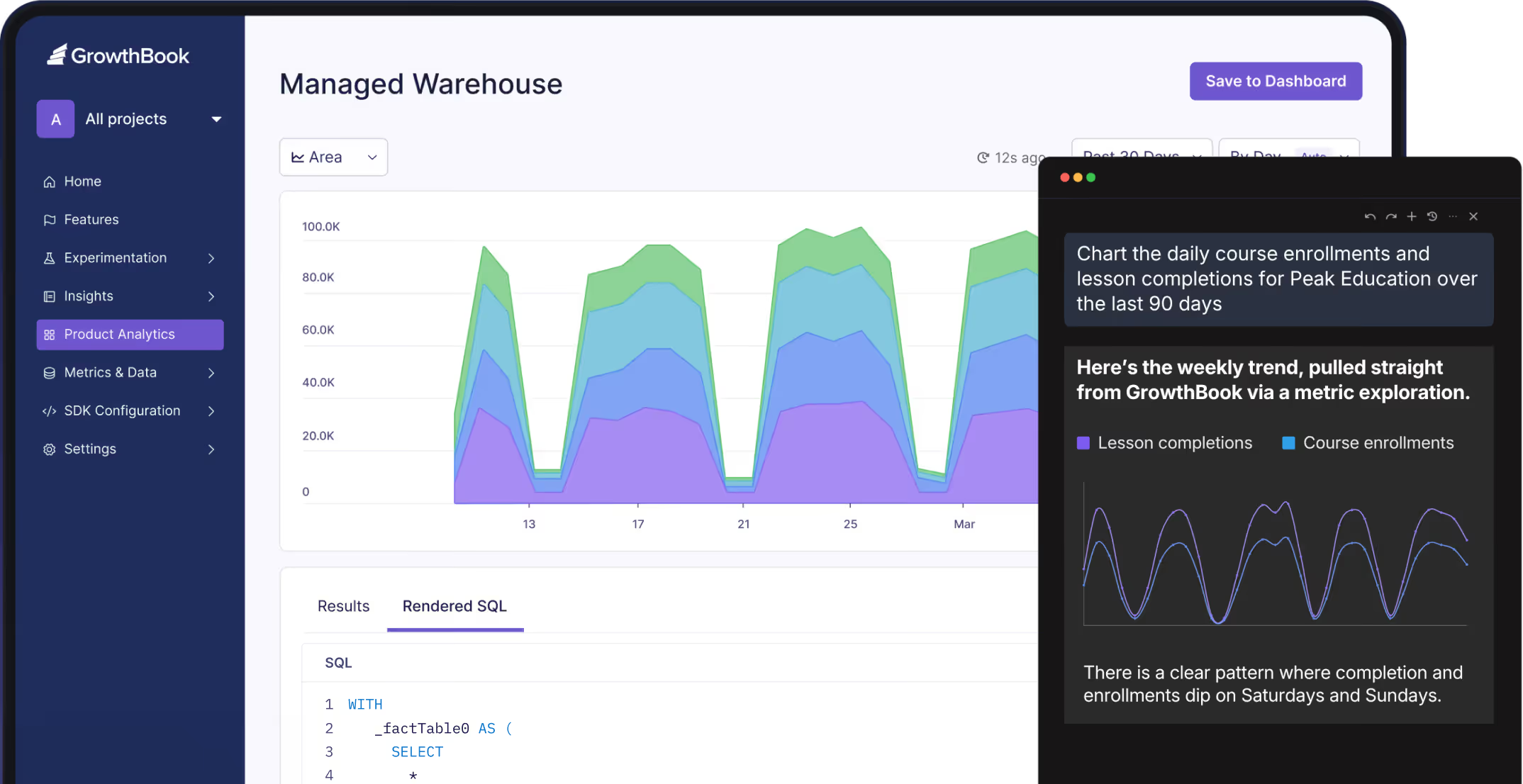
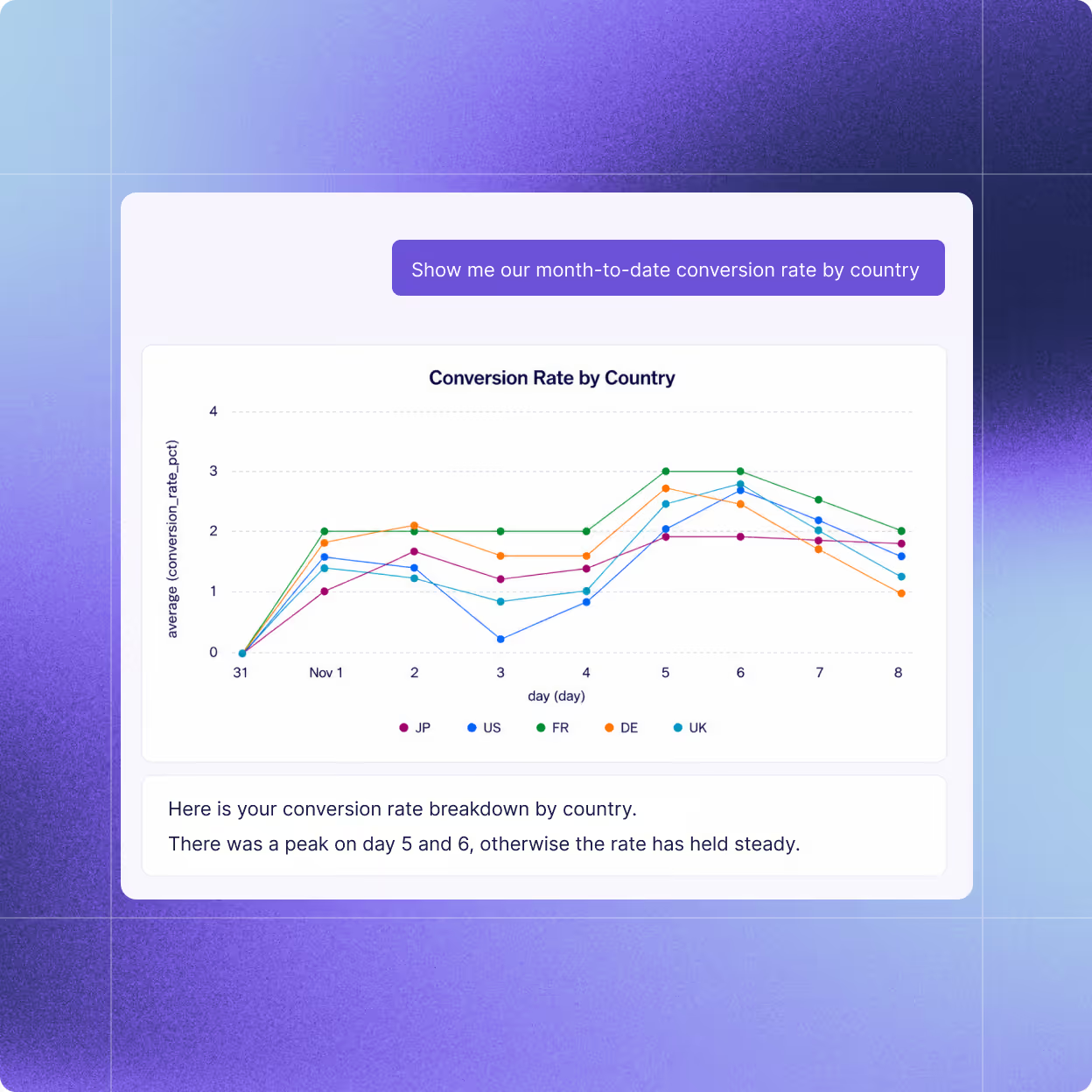
A screenshot of a computer screen with a graph on it.

Trusted by 3,000+ companies worldwide

Quizlet
Sony
Typeform
Deezer
Mistral AI
Breeze
Treatwell
Clickup
Wikipedia
Upstart
Masterclass
Dropbox
Khan Academy
LA Times
Opera
Pepsi
Quizlet
Sony
Typeform
Deezer
Mistral AI
Breeze
Treatwell
Clickup
Wikipedia
Upstart
Masterclass
Dropbox
Khan Academy
LA Times
Opera
Pepsi

One platform for your team
and your agents

Experimentation

Faster results, bigger impact

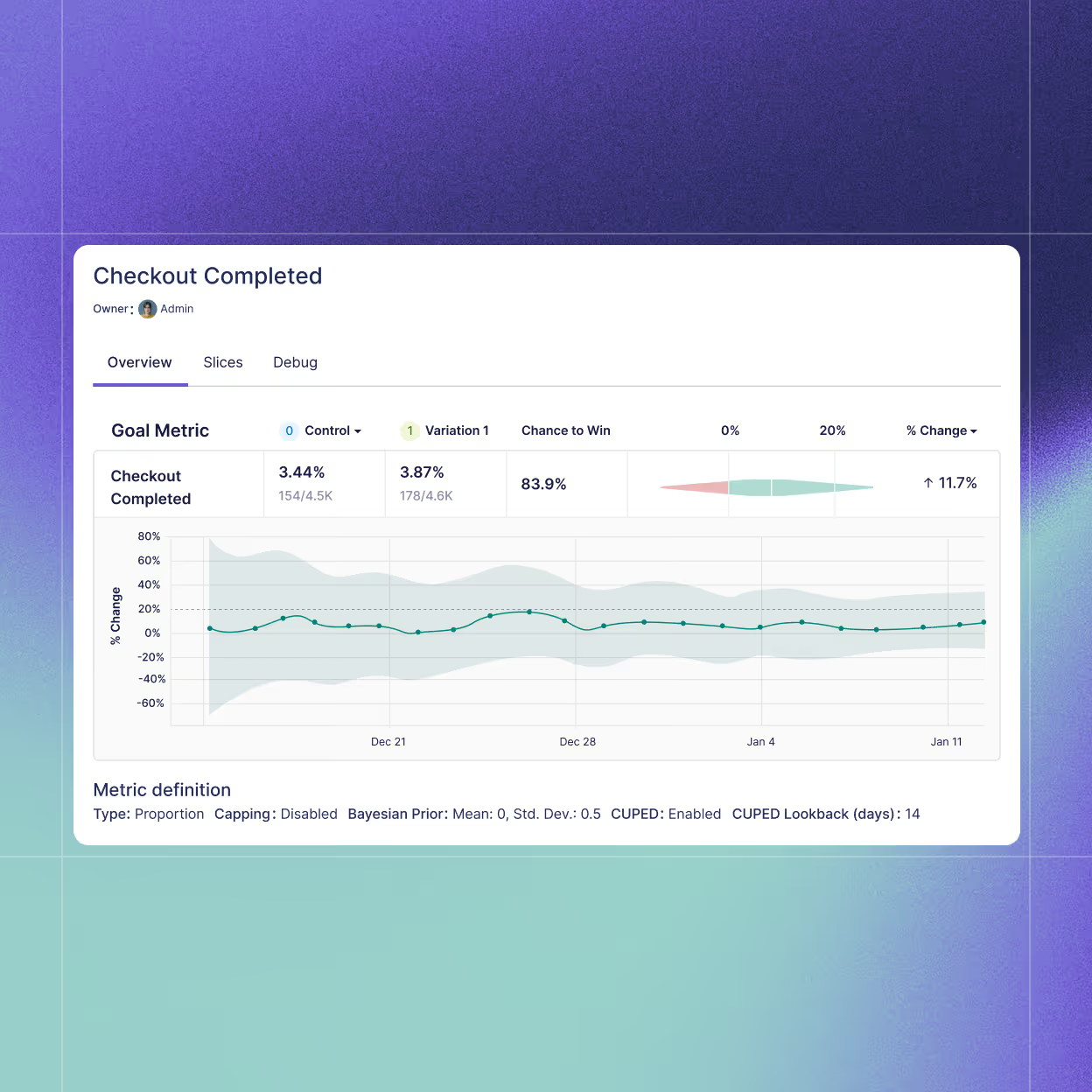
Trusted by the world's leading data science teams, GrowthBook is built for your teams and agents to run rigorous tests at scale and learn faster.
Explore Experimentation
A computer screen with a line graph on it.
Feature Flag Management

Ship fast with a safety net

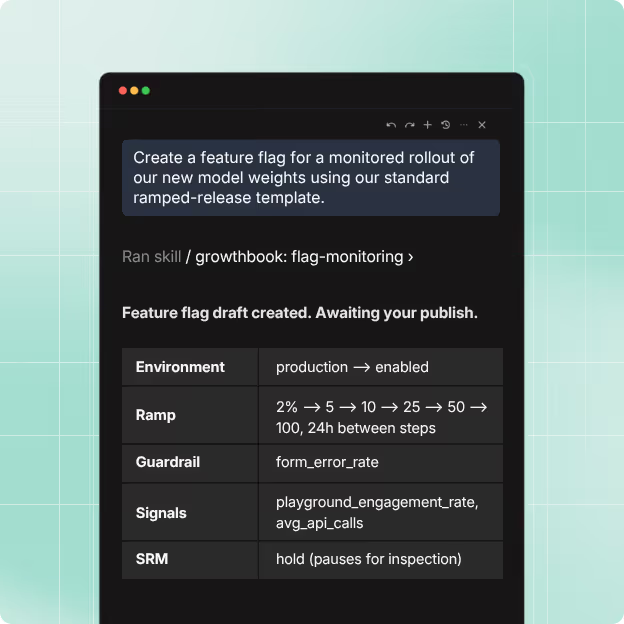
AI coding tools let your team (and agents) ship faster than ever. With auto-rollbacks and ramp schedules with guardrails, GrowthBook ensures you can still sleep at night.
Explore Feature Flags
Image
Product Analytics

Turn data into insights for growth

GrowthBook connects to all your product data, so your team can understand user behavior, track trends, and identify opportunities. Ask our AI Analyst or explore your data with your agents.
Explore Product Analytics
Image

Teams shipping today at the speed of AI

Dropbox uses GrowthBook to safely drive AI product development
3 billion
feature evaluations daily
Breeze Airways scales testing, avoids mistakes, and unlocks millions
$1MM+
incremental monthly revenue
TodayTix Scales Poster Experimentation and Lifts Show Page Views Up to 24%
24%
Page view lift
Khan Academy uses GrowthBook to improve AI tutoring
+6.1%
correctness
Oda Built a Faster, Smarter Experimentation Practice
400+
experiments run
Lingokids advances monetization experimentation
3.5M+
customers benefiting from tests
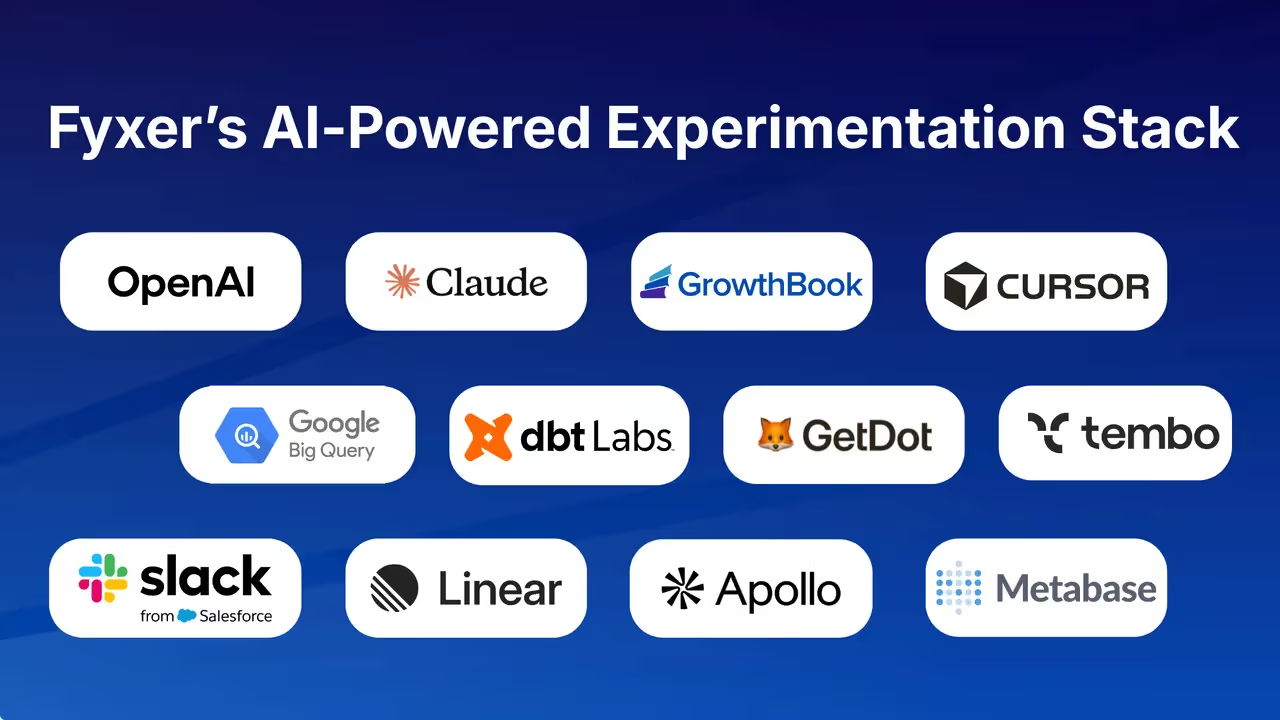
How Fyxer used AI-powered experimentation to grow from $1M to $35M ARR
5% to 35%
paid conversion
How Toom increased user learning with GrowthBook
95% uplift
loyalty card signups
How Floward drove double-digit revenue growth
YoY sales
revenue double-digit growth
100B+
Feature flag lookups per day
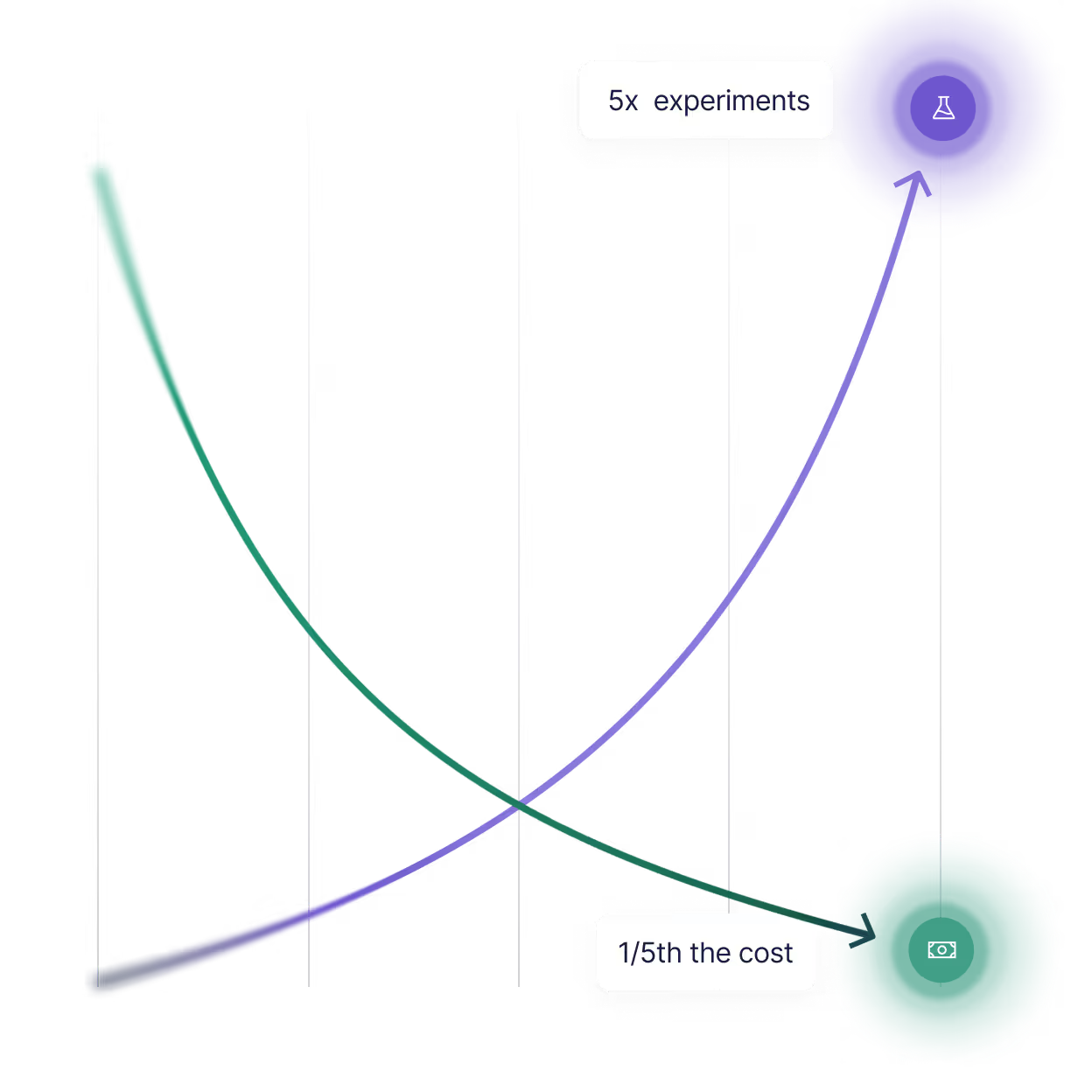
5x
More experiments
1/5th
The cost of other solutions
Two stylized blue and white clouds on a transparent background.

GrowthBook Cloud

Instant updates, low maintenance, and warehouse-native.
Start for Free
Icon of a teal database stack with three disks.

Self-Hosted GrowthBook

Same features, same product, 100% on your cloud or on prem.
Download Now

Speed and scale at 1/5th the cost

GrowthBook low-latency feature flags, high-velocity experimentation, and warehouse-native analytics scale with every team, every agent, every release.
Plans & Pricing
A diagram of a curve showing the number of experiments and the number of experiments.

Framework compatible SDKs

24+ SDKs designed for modern apps and websites with 50% smaller SDKs, zero network calls, plus server, client, mobile, and edge compatibility. JavaScript, Python, React, iOS.

Thank you! Your submission has been received!
Oops! Something went wrong while submitting the form.
HTML Script Tag
<script async
  data-client-key="YOUR_CLIENT_KEY_HERE"
  src="https://cdn.jsdelivr.net/npm/@growthbook/growthbook/dist/bundles/auto.min.js"
></script>

Read the Docs

JavaScript
npm install --save @growthbook/growthbook

Read the Docs

React
npm install --save @growthbook/growthbook-react

Read the Docs

Vue
npm install @growthbook/growthbook

Read the Docs

Kotlin (Android)

Add to `build.gradle` (Kotlin DSL):

dependencies {
    implementation("io.growthbook.sdk:GrowthBook:6.1.1")
    implementation("io.growthbook.sdk:NetworkDispatcherKtor:1.0.6") // or NetworkDispatcherOkHttp:1.0.2
}

Read the Docs

Flutter

Add to `pubspec.yaml`:

dependencies:
  growthbook_sdk_flutter: ^4.0.0

Read the Docs

Swift (iOS)

CocoaPods - add to `Podfile`:

pod 'GrowthBook-IOS'

Swift Package Manager - add to `Package.swift`:

.package(url: "https://github.com/growthbook/growthbook-swift.git")

Read the Docs

React Native
npm install --save @growthbook/growthbook-react

Read the Docs

Roku
ropm install growthbook-roku

Or manually copy `GrowthBook.brs` from the [GitHub repo](https://github.com/growthbook/growthbook-roku) into your `source/` directory.

Read the Docs

Node.js
npm install --save @growthbook/growthbook

Read the Docs

Next.js / Vercel (Flags SDK)
npm install --save @flags-sdk/growthbook

For front-end-only Next.js, use the React SDK instead.

Read the Docs

PHP
composer require growthbook/growthbook

Read the Docs

Ruby
gem install growthbook

Or add to your Gemfile:

gem 'growthbook'

Read the Docs

Python
pip install growthbook

Read the Docs

Java

Maven:

Add JitPack to your repositories, then:

<dependency>
  <groupId>com.github.growthbook</groupId>
  <artifactId>growthbook-sdk-java</artifactId>
  <version>0.10.6</version>
</dependency>

Gradle (Groovy DSL):

implementation 'com.github.growthbook:growthbook-sdk-java:0.10.6'

Read the Docs

Kotlin (JVM)

Add to `build.gradle` (Kotlin DSL):

dependencies {
    implementation("io.growthbook.sdk:GrowthBook:6.1.1")
    implementation("io.growthbook.sdk:NetworkDispatcherKtor:1.0.6") // or NetworkDispatcherOkHttp:1.0.2
}

Same package as the Android Kotlin SDK.

Read the Docs

C# / .NET
dotnet add package growthbook-c-sharp

Read the Docs

Go
go get github.com/growthbook/growthbook-golang

Read the Docs

Rust
cargo add growthbook-rust

Or add to `Cargo.toml`:

[dependencies]
growthbook-rust = "0.0.4"

Read the Docs

Elixir

Add to `mix.exs`:

{:growthbook, "~> 0.3"}

Read the Docs

Cloudflare Workers
npm install --save @growthbook/growthbook @growthbook/edge-cloudflare

Read the Docs

Fastly Compute
npm install --save @growthbook/growthbook @growthbook/edge-fastly

Read the Docs

Lambda@Edge
npm install --save @growthbook/growthbook

Currently in beta.

Read the Docs

Angular (Community SDK)
npm install ngx-growthbook

This is an open-source community SDK — not officially maintained by GrowthBook.

OpenFeature Provider Python
pip install growthbook-openfeature-provider

Repo

OpenFeature Provider Go
go get github.com/growthbook/growthbook-openfeature-provider-go

Repo

OpenFeature Provider .NET
dotnet add package GrowthBook.OpenFeature

Repo

OpenFeature Provider Java
com.github.growthbook:growthbook-openfeature-provider-java:0.0.1 

JitPack

Repo

The latest uplift

Ship fast with a safety net: Feature flag management for the agentic era
Feature Flags
Ship fast with a safety net: Feature flag management for the agentic era
How Fyxer ran 541 A/B tests and grew from 1m to 35m ARR in 1 year
Experiments
How Fyxer ran 541 A/B tests and grew from 1m to 35m ARR in 1 year
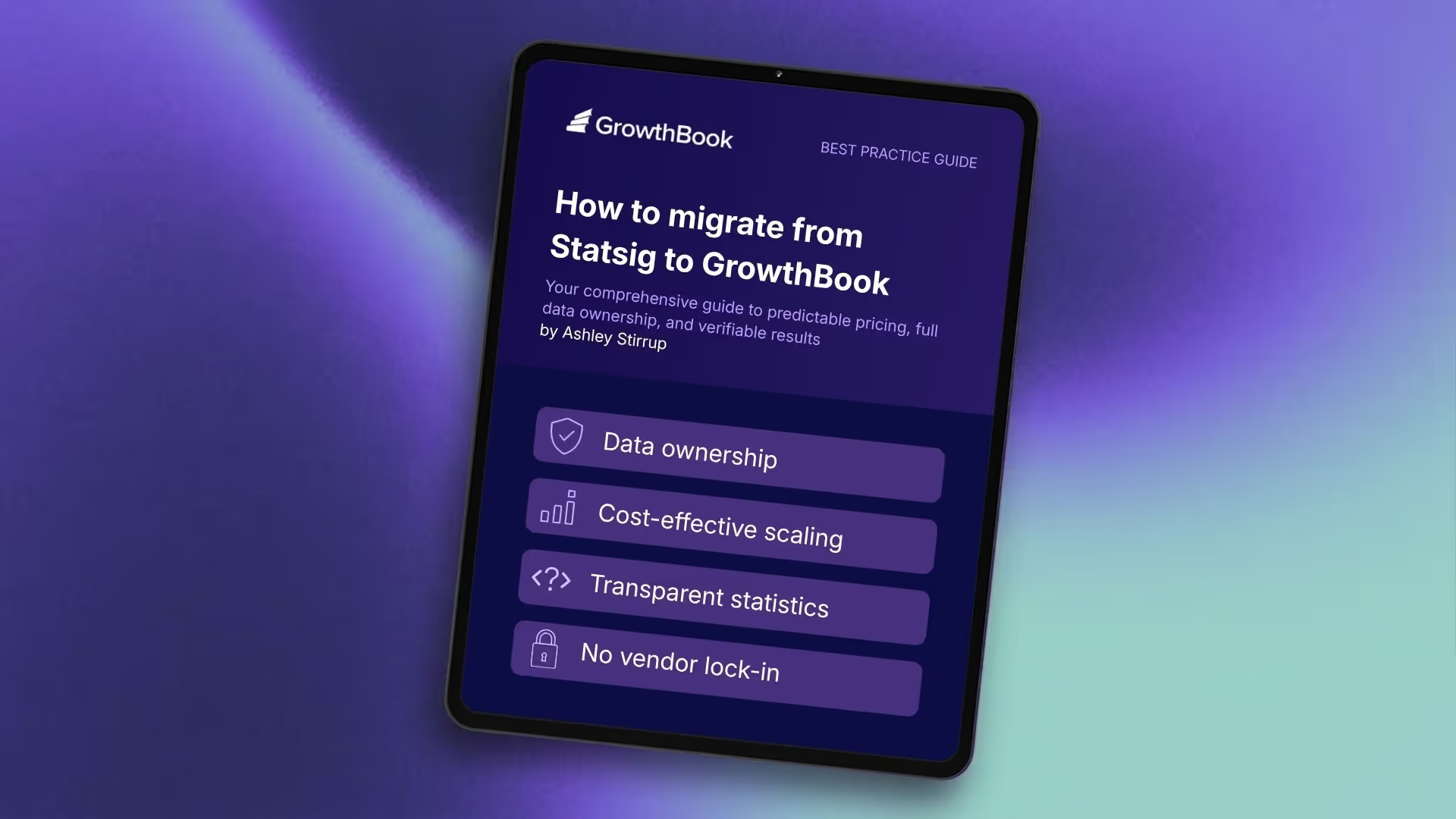
How to migrate from Statsig to GrowthBook
Guides
How to migrate from Statsig to GrowthBook

“GrowthBook gave us a modern experimentation and release platform that actually fits how Dropbox works. We can run analytics directly on our data lake, roll features out safely in stages, and support teams across different stacks without duplicating data or tooling.”

Alex Kalish
Engineering Manager, Dropbox

"A/B testing GenAI features has been an absolute game changer. Experimentation went from feeling like a speed bump to becoming a safety net."

Kelli Hill, Ph.D.
Senior Director, Data Insights, Khan Academy

“People only see the wins, but there’s actually greater value in avoiding losses. We’ve stopped changes that could have cost millions.”

Merritt Aho
Digital Analytics Lead at Breeze Airways

“GrowthBook has changed the way we think about experiments... It allowed us to uplevel our code, speed up decision-making, and focus on what we do best.”

Diego Accame
Director of Engineering, Upstart

"Experimentation is core to how Fyxer runs. GrowthBook gives us a way to measure what’s happening, learn from wins and losses, and avoid shipping every risky idea to 100%."

Kameron Jenkins
Head of Growth Engineering, Fyxer

“Experimentation showed what customers actually do rather than what we assume they’ll do.”

Marek Maciusowicz
Head of Engineering, Treatwell

“Being able to turn a feature on and off with a flip of a switch 
is fantastic... That’s so much easier than having to do a deploy or a roll-back.”

John Resig
Chief Software Architect, Khan Academy

“We don’t need any code changes, we don’t need an app release. We just configure the new tests and launch right away.”

Filipa Batista
Product Manager, Lingokids

"We are always experimenting now. It’s a natural part of product development. This is due to GrowthBook and the ease of usage both in the UX and in the seamless integration with Snowflake/DWH."

Fredrik Jørgensen
Head of Insight, Retail Platform, Oda

"GrowthBook's results speak for themselves. Every time we do a test, we see benefits for our audiences and our partners. These posters are our one shot, and we wouldn't want to fly blind."

Senior Director
Head of Insight, TodayTix

“GrowthBook lets us build experiments exactly how we want. The ability to target based on culture and geography, as granular as needed, is a major win for us.”

Eslam Samy
Data Scientist, Floward

"A/B testing GenAI features has been an absolute game changer. Experimentation went from feeling like a speed bump to becoming a safety net."

Kelli Hill, Ph.D.
Senior Director, Data Insights, Khan Academy

"Experimentation is core to how Fyxer runs. GrowthBook gives us a way to measure what’s happening, learn from wins and losses, and avoid shipping every risky idea to 100%."

Kameron Jenkins
Head of Growth Engineering, Fyxer

"GrowthBook's results speak for themselves. Every time we do a test, we see benefits for our audiences and our partners. These posters are our one shot, and we wouldn't want to fly blind."

Senior Director
Head of Insight, TodayTix

Ready to ship faster?

No credit card required. Start with feature flags, experimentation, and product analytics — free.


Simplified white illustration of a right angle ruler or carpenter's square tool.White checkmark symbol with a scattered pixelated effect around its edges on a transparent background.

FAQs

The Visual Editor works on any website viewed in a browser, including static sites, WordPress, Shopify, Webflow, and applications using the Script Tag, JavaScript, React, or Vue SDKs. For heavily client-rendered SPAs (React, Vue, Svelte), feature flags are recommended for the best experience.

Yes. Every visual change is fully inspectable and can be previewed in draft before anything goes live. Once a variation wins, the recommended path is to promote it into code or a feature flag. Role-based permissions and audit logs give engineering full oversight.

Yes. GrowthBook’s AI can help generate experiment ideas, refine hypotheses, summarize results, rewrite copy in different tones, and recommend future tests based on historical learnings.

No. The Visual Editor is built for non-technical users to easily run experiments via AI prompt. There is no coding or technical expertise required. Advanced users can optionally add custom CSS or JavaScript.

The Visual Editor is ideal for testing headlines, CTAs, copy, styling, and layout on static or server-rendered pages. The kind of changes marketing and product teams want to ship quickly without waiting for a deploy.

Preview changes instantly as you build to see exactly what users will experience. Each variant includes a detailed list of changes you can review, edit, accept, reject, or iterate on directly from the Chrome extension or within the GrowthBook UI.

No. GrowthBook’s SDK loads async and evaluates everything locally with no blocking network requests, and uses stale-while-revalidate caching. That means it won't hurt any of your core web vitals. Visual Editor changes also aren’t indexed by search crawlers. Once a test wins, implement it in code for SEO and long-term performance.

GrowthBook minimizes flicker by running visual changes through the same SDK you already use (no separate blocking script required). If you're using SSR or Edge SDKs, changes are applied before the page loads, eliminating flicker entirely.

A developer only needs to install the SDK/script tag once to configure your GrowthBook instance. After that, install the Visual Editor Chrome extension and start running no-code experiments right away. No technical skillset required.

Yes. A GrowthBook instance, cloud or self-hosted, is required before you connec either the MCP server or the REST API. Sign up free, then visit our MCP server docs for tool-specific setup instructions and API docs for the REST reference.

GrowthBook takes privacy and security seriously. The GrowthBook MCP server runs locally on your machine. It connects only to your GrowthBook instance using your API key, with no telemetry and no third-party calls. The REST API works the same way. Your prompts and source code stay between you and the AI tool you connect, so review that tool's privacy policy separately.

GrowthBook applies the same controls to AI agents that it applies to your team: role-based permissions, scoped API keys, approval workflows, environment limits, and audit logs. Every agent action through GrowthBook's MCP server or REST API goes through these guardrails automatically, with no extra configuration.

Yes, both the MCP server and the REST API work with self-hosted GrowthBook. Point your API key at your instance URL instead of api.growthbook.io, and the same code that runs in the cloud runs on your hardware. See the self-hosting guide.

Yes, GrowthBook's MCP server is 100% open source. You can inspect the code, verify the implementation, and contribute improvements at github.com/growthbook/growthbook-mcp. GrowthBook itself is fully open source at github.com/growthbook/growthbook. The REST API runs on code you can read.

The MCP server works with agentic clients that support the Model Context Protocol, like Claude Code, Cursor, VS Code, and Codex. The REST API works with any programmatic method, including scripts, CI jobs, internal tools, and custom agents you build yourself. Both hit the same backend with the same permissions, approval flows, and audit trail. Most teams use both: the MCP server lives in their editor, and the REST API powers their automation.

MCP (Model Context Protocol) is a standard that connects AI models with external software, databases, workflows, and tools. GrowthBook launched the first open-source production MCP server for experimentation and product development in early 2025. It brings feature flags and testing into AI development environments so engineering teams can measure what they ship without breaking flow.

Any AI tool that supports the Model Context Protocol works with the GrowthBook MCP server, including Claude Code, Cursor, VS Code, and Codex. For tools without MCP support, custom agents you build yourself, or any HTTP client, the REST API exposes the same functionality.

An agent-native platform exposes the same surface to agents that it exposes to humans, with the same permissions and audit trail behind both. GrowthBook does that through an open MCP server and REST API that connect to the same backend as the visual app. Your agents are not a side channel. They are first-class users of the platform.

GrowthBook is built agent-ready from the API up. Anything your team can do in the GrowthBook app, your agents can do through the MCP server or REST API. That includes creating and updating feature flags, managing revisions and approvals, configuring ramp schedules and targeting, setting up experiments from your org's templates, monitoring running experiments through the Decision Framework, querying product metrics and dashboards through MCP or REST, concluding experiments and shipping winners, and finding and archiving stale flags.

Yes, your AI agent can query GrowthBook product analytics. Every exploration is addressable through the GrowthBook MCP server and REST API. Agents working in Claude Code, Cursor, VS Code, or any HTTP client can deploy a feature, run an experiment, and read the analytics result in one continuous workflow — with the same metric definitions, the same permissions, and the same audit trail as your team.

Tools like Snowflake Cortex, Databricks Genie, and Hex Magic work against your whole warehouse — any table, any join. GrowthBook Product Analytics works from the metrics, fact tables, and experiment data you've already defined for experimentation. Charts, dashboards, and conversational answers all come from the same trusted source, not arbitrary SQL against unfamiliar tables. Narrower scope, more reliable results.

GrowthBook supports AI agent workflows through its REST API and MCP server, which lets agents work directly from tools like Claude Code, Cursor, Codex, and VS Code. Agents can create flags, configure targeting rules, set up ramp schedules, and draft changes — all without leaving the coding environment.

GrowthBook also exposes a REST API that delivers the same capabilities to any HTTP client, including custom agents, CI jobs, and internal tools. See our AI-native development page for the full picture of how GrowthBook supports humans and agents working together.

Split is no longer a standalone product. Harness acquired Split in 2024 and rebranded it as Harness Feature Management & Experimentation (FME). When people search for Split, they're now looking at a module within the broader Harness DevOps platform. If you're evaluating Split, you're evaluating Harness FME.

Yes. The Visual Explorer lets anyone build charts from metrics and fact tables without writing SQL. Shared dashboards and pivot tables can be distributed across the team. And the AI Data Analyst (Beta) handles plain-language questions against the same metric definitions. Engineers and data scientists who want full control can still write their own SQL and define custom metrics directly in the warehouse.

Warehouse-native means GrowthBook analyzes your data where it already lives, rather than copying it into a separate system. There are no data silos, no reconciliation headaches, and no paying twice for the same data. You also get full SQL visibility into every metric calculation. Because your analytics and experimentation data share the same warehouse, you can explore experiment results and product behavior together in a single source of truth.

Product analytics replaces gut feel with evidence. When everyone on the team sees the same dashboards built from the same metrics definitions, it's easier to align on what's working, what isn't, and what to prioritize next. GrowthBook is designed to make that data accessible to everyone. Our visual explorer, shared dashboards, and AI Data Analyst let anyone query the warehouse without writing code.

It depends on your product, but most teams track engagement metrics (active users, session depth, feature adoption), retention metrics (return rate, churn signals), and conversion metrics (funnel completion, goal events). With GrowthBook, you define metrics in SQL once and reuse them across both analytics and experimentation — so the same metric that powers your dashboard also powers your A/B tests, with no reconciliation headaches.

Traditional web analytics tools like Google Analytics track page views, sessions, and traffic sources. They answer "how many people visited?" Product analytics goes deeper: it answers "what did users do, why did they do it, and what happened to the metrics we care about?" GrowthBook's product analytics is also warehouse-native, meaning all your event data stays in your own data warehouse and is queryable with SQL, rather than living in a third-party system you can't fully inspect.

A product analytics platform is software that helps product teams understand how users interact with their product: from tracking behavior and measuring feature usage to surfacing trends that inform what to build next. Unlike basic web analytics, product analytics connects user actions to business outcomes, giving teams the data they need to make confident product decisions.

Yes. GrowthBook works with the attributes and segments your platform already defines. Whether your audience is K-12 students in managed classrooms, adult learners on a self-directed path, or both, you define the targeting rules, metrics, and guardrails that make sense for each context. You can run entirely separate experiment configurations for different learner populations within the same platform.

Use GrowthBook's configuration-driven feature flags to control feature behavior dynamically via JSON parameters. Your team can update content rules, onboarding flows, paywall layouts, and AI prompt configurations without shipping new code or waiting on app store approval. Lingokids used this approach to run 15+ experiments per month, roughly double their previous velocity, with no additional release cycles.

AI assistants are non-deterministic, so the same prompt can produce different outputs across learner types, content domains, and age groups. GrowthBook lets you run controlled experiments comparing prompt variations, model choices, or agent configurations against the metrics that matter: skill completion, session success, retention, and response latency. You can set guardrail metrics on cost and latency so tradeoffs are made with data rather than guesswork. If a new AI feature underperforms or violates safety thresholds, you can roll it back instantly without redeployment.

Yes. GrowthBook supports rollouts and experiments based on any attributes your application already tracks. If your data model includes classroom ID, school, district, grade level, language, age group, or subscription tier, you can use those directly as targeting rules with no custom engineering required. This is how Khan Academy targets features to specific student cohorts and how Lingokids manages experiments across different learner segments.

GrowthBook never ingests or stores your learner data. The platform connects to your existing data warehouse — Snowflake, BigQuery, Databricks, or Redshift — and runs analysis there using read-only SQL. No student PII is extracted, transmitted, or processed outside your infrastructure. For teams with strict data residency requirements, GrowthBook can be deployed fully self-hosted or air-gapped. GrowthBook is SOC 2 Type II certified and COPPA, GDPR, and CCPA compliant.

Enterprise agreements include priority SLA coverage, dedicated support channels, onboarding sessions, training, and optional business-associate agreements for HIPAA compliance.

Yes. Using server-side or remote evaluation for feature flags keeps sensitive data from reaching the client. All sensitive logic and data remain secure on your servers. Hashed attributes and encrypted payloads provide additional protection when client-side evaluation is necessary.

Enterprise customers can enforce required approvals, maintain exportable audit logs, and set environment-specific permissions so that production changes require review and are fully traceable.

Yes. Enterprise plans include SAML-based single sign-on and SCIM user provisioning to integrate with identity providers like Okta and Azure AD for automated access management.

GrowthBook is warehouse-native and connects directly to Snowflake, BigQuery, Redshift, Databricks, Clickhouse, and other systems. Enterprise plans offer fact-table optimization and incremental updates to reduce query costs and latency. A managed warehouse is available for our Starter and Pro plans so you can get up and running quickly.

Enterprise adds program-level features such as guardrail metrics, holdouts, incremental data refresh, custom experiment fields and launch checklists, and centralized insights dashboards for multi-team visibility.

Pro customers have access to the core statistical methods used in modern experimentation programs—CUPED, sequential tests, multi-arm bandits, and sticky bucketing—enabling faster and more accurate results without extra fees.

Yes. GrowthBook combines feature management and experimentation in one platform with product analytics, allowing teams to toggle features safely and measure their impact with the same dataset and SDKs.

GrowthBook offers flexible pricing to fit companies of all sizes, whether you're just evaluating feature flag platforms or running advanced experimentation at scale. Choose between cloud-hosted and self-hosted deployment, each with multiple plan options.

You will see a "CDN usage exceeded" warning in the UI. GrowthBook will work with you to find a solution that meets your needs, including increasing your limits, optimizing your usage, or moving to a custom plan. Overages apply only after you exceed included usage: CDN Requests at $10 per additional million requests, CDN Bandwidth at $1 per additional GB, and Managed Warehouse at $0.03 per 1K events after the first 2M free.

The Enterprise option is aimed at large teams with apps and websites that can serve millions of users and billions of events. Regulated industries choose enterprise for advanced governance, and custom security integrations (SSO, SCIM). Enterprise is ideal for organizations that require data-warehouse cost controls and formal support agreements.

The Pro tier adds more seats (up to 50 users) and advanced experimentation features such as sequential testing, CUPED variance reduction, sticky bucketing, URL split tests, and built-in product analytics. It is designed for product and engineering teams for more comprehensive release management and continuous learning from experiments.

GrowthBook uses a seat-based model rather than charging per monthly active user or API event. Teams pay for the people who run experiments and manage flags, not for the end users who see them—keeping costs predictable as products scale.

A seat equals a user. All users of the GrowthBook platform must have their own login/password. Our pricing is per user, which makes it more predictable, and this allows you to run an unlimited number of feature flags and experiments.

Yes. The Starter plan is free for up to three users and includes unlimited feature flags and experiments on GrowthBook's cloud platform, making it easy for small teams to create feature flags and set up experiments for free. The free self-hosted plan has unlimited users.

Self-hosted GrowthBook deploys as a single container on any major cloud or on-premises environment. Healthtech teams choose it when internal security reviews require full infrastructure control or data residency obligations prevent sending data to third-party services. Same product, same features as GrowthBook Cloud.

Yes. GrowthBook queries your data where it already lives — Snowflake, BigQuery, Databricks, or Redshift — with read-only access. No new pipelines, no copied data, no changes to your existing data models.

Run controlled experiments comparing model versions, prompt configurations, and recommendation logic against the outcomes that matter: session completion, match quality, satisfaction, and retention. Set guardrail metrics on latency and engagement so every tradeoff is made with data. Sensitive user data stays in your infrastructure throughout.

Set a GrowthBook flag, define your target audience, and start small. Monitor guardrail metrics alongside your primary success metrics, and roll back instantly from the dashboard if something goes wrong. No redeployment required.

GrowthBook connects to your existing data warehouse and runs analysis there using read-only SQL. No sensitive health information is extracted or processed outside your infrastructure. GrowthBook is SOC 2 Type II certified, GDPR and CCPA compliant, with fully self-hosted and air-gapped deployment options available.

GrowthBook is built for product experimentation, while Salesforce MC Personalization is built for marketing-led personalization. GrowthBook focuses on feature testing using your own data, while Salesforce centers on campaign-driven customer experiences, using the Cloud Data Platform.

Companies choose GrowthBook for faster, more transparent experimentation. GrowthBook provides clear statistical analysis with lower complexity than a marketing personalization platform.

GrowthBook is best for product and engineering teams running feature experiments. Salesforce MC Personalization is best for marketing teams focused on campaigns and targeted experiences that rely on the Salesforce CDP.

No. Salesforce MC Personalization supports basic testing but does not clearly document how experiment results are calculated. GrowthBook exposes SQL and documents its experimentation statistics so results can be audited and trusted.

GrowthBook is typically simpler and more predictable to scale. GrowthBook uses per-seat pricing with a free tier, while Salesforce MC Personalization is bundled into enterprise Salesforce licenses and often requires a dedicated team.

GrowthBook is a warehouse-native platform built for product teams, while Kameleoon focuses more on personalization and CRO. GrowthBook supports full-stack experimentation and feature delivery using your own data.

Companies choose GrowthBook to run more experiments with less overhead and more data control. GrowthBook avoids add-on modules and rising enterprise costs as experimentation scales.

Yes, GrowthBook is better for product teams running feature experimentation. GrowthBook supports full-stack experiments and feature flags, while Kameleoon is strongest in personalization and experience optimization.

GrowthBook pricing is more predictable and typically easier to scale. GrowthBook uses per-seat pricing with unlimited experiments and traffic, while Kameleoon relies on enterprise pricing with add-ons.

Yes, GrowthBook lets you keep experiment data in your warehouse. GrowthBook runs analysis directly in your data warehouse, while Kameleoon manages analytics inside its own platform.

Migrating from Kameleoon to GrowthBook is straightforward. Teams can integrate an SDK, connect their warehouse, and migrate incrementally while running both systems in parallel.

GrowthBook is better than ABsmartly for running lots of experiments across a product. GrowthBook stays predictable as you run more tests, while ABsmartly’s event-based pricing makes running more tests increasingly expensive.

Yes, ABsmartly typically requires engineers to launch and manage experiments. GrowthBook supports workflows that both engineers and non-technical users can use, including no-code options for feature flags, a visual editor, and URL redirects.

Both GrowthBook and ABsmartly platforms support data residency requirements, but with different approaches. GrowthBook offers maximum flexibility through open-source self-hosting with free and enterprise tiers. Companies have full control over data location and processing through Docker containers and Kubernetes. ABsmartly offers enterprise-grade managed options for on-premises deployment in your cloud or private cloud hosting.

GrowthBook offers more data ownership and transparency than ABsmartly. GrowthBook analyzes experiments directly in your data warehouse, while ABsmartly typically runs analysis and reporting inside its own platform.

Yes, GrowthBook is significantly cheaper than ABsmartly. GrowthBook is often around 1/5 the cost of ABsmartly, and pricing stays predictable as usage grows, while ABsmartly pricing increases with event volume.

ABsmartly focuses primarily on code-driven, A/B testingexperimentation. GrowthBook supports a broader range of experiment types, including multivariate tests and bandits.

GrowthBook analyzes experiments directly in your data warehouse and works for product teams across the organization with no-code options. Split is an engineering-first platform focused on server-side experimentation with code-driven workflows.

Companies choose GrowthBook over Split to run experiments faster across teams, keep experiment data in their warehouse, and support self-hosted deployment for privacy and compliance needs.

Moving is straightforward. GrowthBook supports the same server-side experimentation patterns you're already using with Split. When you migrate to GrowthBook, you add client-side, mobile, and edge testing options. Warehouse-native analysis can be used on existing experiments as you migrate to GrowtBook.

No. GrowthBook supports more experiment types and statistical approaches, including multivariate tests and holdouts, across server-side, client-side, mobile and edge use cases.

GrowthBook is built for full-stack product experimentation using your data warehouse, while AB Tasty is built for marketing-led client-side testing. GrowthBook is warehouse-native for product and engineering teams, while AB Tasty focuses on web and mobile UX experiments.

GrowthBook results are more transparent than AB Tasty’s. GrowthBook analyzes experiments in your data warehouse, while AB Tasty runs analysis inside its own platform. Also, GrowthBook has full SQL transparency. You can see the exact SQL query, verify, reproduce, and trust your results.

GrowthBook is typically much cheaper and more predictable than AB Tasty. GrowthBook pricing allows for unlimited traffic, while AB Tasty uses custom pricing that often increases as usage grows, and many teams see GrowthBook at around 1/5 the cost.

Switching from AB Tasty to GrowthBook is straightforward. Teams often run both in parallel, then migrate experiments gradually without rebuilding everything at once.

GrowthBook is better for strict privacy and data residency than AB Tasty. GrowthBook supports full self-hosting and keeps experiment data in your infrastructure, while AB Tasty does not offer a self-hosted deployment option.

GrowthBook is built for product and engineering teams to run experiments using their own data. Conductrics is built for advanced decisioning and optimization programs that often need specialized expertise.

Yes, GrowthBook is easier to use than Conductrics for most product development teams. GrowthBook supports self-serve experimentation, while Conductrics has a steeper learning curve for optimization setup and usually requires an expert to run well.

No, Conductrics is not warehouse-native. GrowthBook runs experiments directly from your data warehouse, giving teams more transparency and easier access to results in their BI tools.

No, Conductrics is not a dedicated feature flagging system. GrowthBook includes feature flags, safe rollouts, kill switches, and experiments in one workflow.

For many teams, yes. Conductrics is designed for advanced optimization workflows, while GrowthBook supports both simple and advanced experiments. Optimization is an option with GrowthBook, but not required to run an experiment.

Conductrics uses opaque enterprise pricing based on add ons and setup complexity. GrowthBook uses transparent per-seat pricing with free and open-source options, which is typically cheaper to run and scale.

GrowthBook is easier to use than SiteSpect for most teams. GrowthBook is built for self-serve experimentation with modern workflows, while SiteSpect is more complex and usually requires a centralized or dedicated team to operate.

Yes, but GrowthBook handles high stress experiments without SiteSpect’s complexity. GrowthBook supports high-traffic, server-side experimentation at scale, while SiteSpect is optimized for network-layer control that only some enterprises specifically need.

SiteSpect analyzes experiment data inside its own platform. GrowthBook analyzes experiment data directly in your data warehouse, which makes results easier to inspect, share, and audit across teams.

SiteSpect results are difficult to audit and explain internally. GrowthBook exposes experiment data and calculations in your warehouse, making results easier to trust and defend.

GrowthBook is more flexible than SiteSpect in how it is deployed. GrowthBook runs inside your application and data infrastructure and supports self-hosting, while SiteSpect operates at the network or proxy layer.

Yes, GrowthBook is significantly more cost-effective than SiteSpect. GrowthBook offers free and per-seat pricing with unlimited experiments, while SiteSpect uses expensive, traffic-based enterprise pricing with no free tier.

GrowthBook is built for warehouse-native product experimentation, while VWO is built for web-focused conversion optimization. GrowthBook supports full-stack experimentation for product teams, while VWO focuses on client-side website testing.

Companies choose GrowthBook to run full-stack experiments with more control and lower cost. GrowthBook is warehouse-native and developer-friendly, while VWO relies on client-side testing and heavier support workflows.

Moving from VWO to GrowthBook is straightforward. Teams can integrate an SDK, connect their warehouse, and start running feature flags and experiments quickly, migrating incrementally.

GrowthBook is built for full-stack and server-side experimentation. VWO focuses primarily on client-side web testing, which becomes limiting as product requirements grow. Full-stack experimentation requires their separate FME product, additional setup, and enterprise pricing.

VWO results are harder to verify independently than GrowthBook’s. GrowthBook analyzes experiments in your data warehouse, while VWO relies on platform-managed analytics.

GrowthBook is better for strict privacy and data residency requirements. GrowthBook supports full self-hosting and keeps experiment data in your infrastructure, while VWO does not offer self-hosting.

GrowthBook is built for fast product experimentation, while Adobe Target is built for enterprise personalization. GrowthBook uses warehouse-native analytics and flexible deployment, while Adobe Target is tightly tied to Adobe Experience Cloud and typically requires premium pricing and longer implementation.