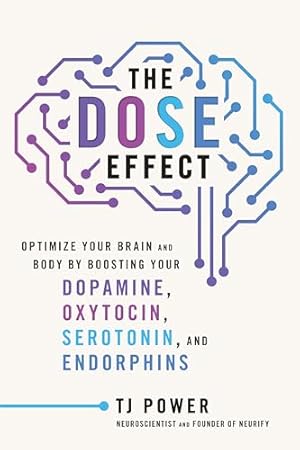

Customers who viewed this item also viewed
Used - Good
$55.82$55.82
FREE delivery June 2 - 4
Advertisement
Advertisement
Ships from: ThriftBooks-Phoenix Sold by: ThriftBooks-Phoenix
Used - Like New
$49.98$49.98
$5.85 delivery June 2 - 5
Advertisement
Advertisement
Ships from: ProMediaEtc Sold by: ProMediaEtc
Download the free Kindle app and start reading Kindle books instantly on your smartphone, tablet, or computer - no Kindle device required.
Read instantly on your browser with Kindle for Web.
Using your mobile phone camera - scan the code below and download the Kindle app.
Follow the authors
OK
The Molecule of More: How a Single Chemical in Your Brain Drives Love, Sex, and Creativity―and Will Determine the Fate of the Human Race Hardcover – August 14, 2018
Purchase options and add-ons
Why is addiction "perfectly logical" to an addict?
Why does love change so quickly from passion to indifference?
Why are some people diehard liberals and others hardcore conservatives?
Why are we always hopeful for solutions even in the darkest times--and so good at figuring them out?
The answer is found in a single chemical in your brain: dopamine. Dopamine ensured the survival of early man. Thousands of years later, it is the source of our most basic behaviors and cultural ideas--and progress itself.
Dopamine is the chemical of desire that always asks for more--more stuff, more stimulation, and more surprises. In pursuit of these things, it is undeterred by emotion, fear, or morality. Dopamine is the source of our every urge, that little bit of biology that makes an ambitious business professional sacrifice everything in pursuit of success, or that drives a satisfied spouse to risk it all for the thrill of someone new. Simply put, it is why we seek and succeed; it is why we discover and prosper. Yet, at the same time, it's why we gamble and squander.
From dopamine's point of view, it's not the having that matters. It's getting something--anything--that's new. From this understanding--the difference between possessing something versus anticipating it--we can understand in a revolutionary new way why we behave as we do in love, business, addiction, politics, religion - and we can even predict those behaviors in ourselves and others.
In The Molecule of More: How a Single Chemical in Your Brain Drives Love, Sex, and Creativity--and will Determine the Fate of the Human Race, George Washington University professor and psychiatrist Daniel Z. Lieberman, MD, and Georgetown University lecturer Michael E. Long present a potentially life-changing proposal: Much of human life has an unconsidered component that explains an array of behaviors previously thought to be unrelated, including why winners cheat, why geniuses often suffer with mental illness, why nearly all diets fail, and why the brains of liberals and conservatives really are different.
- Print length240 pages
- LanguageEnglish
- PublisherBenBella Books
- Publication dateAugust 14, 2018
- Dimensions6.25 x 1 x 9.23 inches
- ISBN-101946885118
- ISBN-13978-1946885111
Book recommendations, author interviews, editors' picks, and more. Read it now.
Explore your book, then jump right back to where you left off with Page Flip.
View high quality images that let you zoom in to take a closer look.
Enjoy features only possible in digital – start reading right away, carry your library with you, adjust the font, create shareable notes and highlights, and more.
Discover additional details about the events, people, and places in your book, with Wikipedia integration.
Customers who viewed this item also viewed
Dopamine Nation: Finding Balance in the Age of IndulgencePaperbackFREE Shipping on orders over $35 shipped by AmazonGet it as soon as Wednesday, May 27
Behave: The Biology of Humans at Our Best and WorstPaperbackFREE Shipping on orders over $35 shipped by AmazonGet it as soon as Wednesday, May 27
The Official Dopamine Nation Workbook: A Practical Guide to Finding Balance in the Age of IndulgencePaperbackFREE Shipping on orders over $35 shipped by AmazonGet it as soon as Wednesday, May 27
How Emotions Are Made: The Secret Life of the Brain―How We Create Emotions Through Brain, Body, and CulturePaperbackFREE Shipping on orders over $35 shipped by AmazonGet it as soon as Wednesday, May 27
Habits of a Happy Brain: Retrain Your Brain to Boost Your Serotonin, Dopamine, Oxytocin, & Endorphin LevelsPaperbackFREE Shipping on orders over $35 shipped by AmazonGet it as soon as Wednesday, May 27
Customers also bought or read
- Taming the Molecule of More: A Step-by-Step Guide to Make Dopamine Work for You
Hardcover$21.89$21.89Delivery Wed, May 27 - Behave: The Biology of Humans at Our Best and Worst#1 Best SellerScience Education Charts & Posters

Paperback$12.88$12.88Delivery Wed, May 27 - Six Easy Pieces: Essentials of Physics Explained by Its Most Brilliant Teacher
Paperback$15.25$15.25Delivery Wed, May 27 - Lifespan: Why We Age―and Why We Don't Have To#1 Best SellerGenetic Health
Hardcover$15.00$15.00Delivery May 31 - Jun 4 - Dopamine Nation: Finding Balance in the Age of Indulgence#1 Best SellerMedical Clinical Psychology
Paperback$12.19$12.19Delivery Wed, May 27 - How Emotions Are Made: The Secret Life of the Brain―How We Create Emotions Through Brain, Body, and Culture
Paperback$10.79$10.79Delivery Wed, May 27 - The Art of Spending Money: Simple Choices for a Richer Life
Hardcover$19.29$19.29Delivery Wed, May 27 - Spellbound: Modern Science, Ancient Magic, and the Hidden Potential of the Unconscious Mind
Hardcover$21.33$21.33Delivery Wed, May 27 - Habits of a Happy Brain: Retrain Your Brain to Boost Your Serotonin, Dopamine, Oxytocin, & Endorphin Levels
Paperback$9.60$9.60Delivery Wed, May 27 - Lifespan Why We Age and Why We Don’t Have To By Dr David A. Sinclair and 12 Rules for Life An Antidote to Chaos By Jordan B. Peterson 2 books Collection Set
Paperback$40.99$40.99$3.99 delivery Jun 10 - 25 - The Story of the Human Body: Evolution, Health, and Disease
Paperback$11.93$11.93Delivery Wed, May 27 - Your Brain on Dopamine: Heal Your Overstimulated Brain, Master Your Cravings, and Find Purpose and Meaning in a World of Distraction
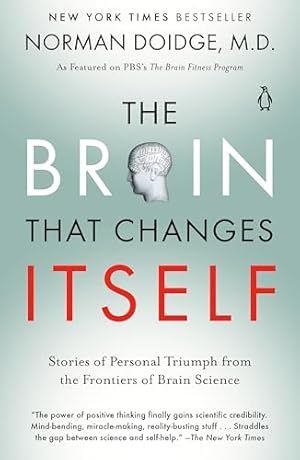
Paperback$16.97$16.97Delivery Wed, May 27 - The Brain That Changes Itself: Stories of Personal Triumph from the Frontiers of Brain Science#1 Best SellerMedical Neuropsychology
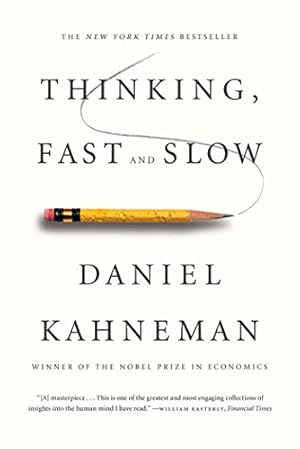
Paperback$9.90$9.90Delivery Wed, May 27 - Thinking, Fast and Slow#1 Best SellerMedical Cognitive Psychology
Paperback$11.83$11.83Delivery Wed, May 27 - Altered Traits: Science Reveals How Meditation Changes Your Mind, Brain, and Body
Paperback$12.90$12.90Delivery Wed, May 27 - The DOSE Effect: An Inspiring Self-Healing Guide About the Mind-Body-Hormonal Connection, Achieve Wellness and Happiness with Practical Techniques!
Hardcover$21.25$21.25Delivery Wed, May 27 - The Stupidity Paradox: The Power and Pitfalls of Functional Stupidity at Work
Paperback$14.87$14.87Delivery Wed, May 27 - The Psychobiotic Revolution: Mood, Food, and the New Science of the Gut-Brain Connection
Paperback$14.65$14.65Delivery Wed, May 27 - Sapiens [Tenth Anniversary Edition]: A Brief History of Humankind#1 Best SellerGeneral Anthropology
Paperback$22.31$22.31Delivery Wed, May 27
From the Publisher
Editorial Reviews
Review
I have been recommending this book to everyone - generals for leadership development, corporate executives for knowing their people, project managers for understanding their teams, and friends - lots of friends - who will love reading this book and talking about its contribution to the body of knowledge about humanity.
- Kathryn Fuller, PMP -- Leader, Writer, Educator
"Meet a molecule whose fingerprint rests upon every aspect of human nature - from desire and drugs to politics and progress. Lieberman and Long tell the epic saga of dopamine as a page-turner that you simply can't put down." - David Eagleman, PhD, neuroscientist at Stanford and New York Times bestselling author
Review
"One might consider it Freakonomics for the mind."
— Greg Roth, "The Idea Enthusiast"
"Daniel Lieberman and Michael Long have pulled off an amazing feat. They have made a biography of a neurotransmitter a riveting read. Once you understand the power and peril of dopamine, you’ll better understand the human condition itself.”
—Daniel H. Pink, author of Drive and When
“Meet a molecule whose fingerprint rests upon every aspect of human nature—from desire and drugs to politics and progress. Lieberman and Long tell the epic saga of dopamine as a page-turner that you simply can't put down.”
—David Eagleman, PhD, neuroscientist at Stanford and New York Times bestselling author
“I've worked as an artist for forty years, and the question ‘Why am I like this?’ has been a puzzle, a mystery, a plea, and an occasional cry to the heavens. Lieberman and Long have created a road map for all those wrestling between insatiable longing and the here and now.”
—Thomas F. Wilson, actor and comedian
“Why do we crave what we don’t have rather than feel good about what we do—and why do fools fall in love? Haunting questions of human biology are answered by The Molecule of More, a must-read about the human condition.”
—Gregg Easterbrook, author of It’s Better Than It Looks
“As a guy who creates musical stuff for a living and reads science books for kicks, I was doubly hooked by The Molecule of More. Lieberman and Long lay out the astoundingly wide-ranging effects of dopamine with nimble metaphors and fat-free sentences. And the research linking creativity and madness, with dopamine as the hidden culprit—let’s just say it hit home. Reading each chapter, I felt myself fitting a key smoothly into a locked door, opening onto a fresh-yet-familiar room.”
—Robbie Fulks, Grammy-nominated recording artist
“Jim Watson, who deciphered the genetic code, famously said, ‘There are only molecules; the rest is sociology,’ adding fuel to C. P. Snow's complaint that Science and the humanities are two fundamentally different "cultures" which will never meet. The authors argue provocatively, yet convincingly, that the molecule that allows us to bridge the chasm between them is dopamine. Though written for ordinary people, the narrative is sprinkled throughout with dazzling new insights that will appeal equally to specialists.”
—V.S. Ramachandran, PhD, professor at the University of California, San Diego, and at Salk Institute and author of TheEmerging Mind
About the Author
Daniel Z. Lieberman, M.D. is professor and vice chair for clinical affairs in the Department of Psychiatry and Behavioral Sciences at George Washington University. Dr. Lieberman is a Distinguished Fellow of the American Psychiatric Association, a recipient of the Caron Foundation Research Award, and he has published over 50 scientific reports on behavioral science. He has provided insight on psychiatric issues for the U.S. Department of Health and Human Services, the US Department of Commerce, and the Office of Drug and Alcohol Policy, and has discussed mental health in interviews on CNN, C-SPAN, and PBS. Dr. Lieberman studied the Great Books at St. John's College. He received his medical degree and completed his psychiatric training at New York University.
Trained as a physicist, Michael E. Long is an award-winning speechwriter, screenwriter, and playwright. As a playwright, more than 20 of his shows have been produced, most on New York stages. As a screenwriter, his honors include finalist for the grand prize in screenwriting at the Slamdance Film Festival. As a speechwriter, Mr. Long has written for members of Congress, U.S. cabinet secretaries, governors, diplomats, business executives, and presidential candidates. A popular speaker and educator, Mr. Long has addressed audiences around the world, including in a keynote at Oxford University. He teaches writing at Georgetown University, where he is a former director of writing. Mr. Long pursued undergraduate studies at Murray State University and graduate studies at Vanderbilt University.
Product details
- Publisher : BenBella Books
- Publication date : August 14, 2018
- Edition : First Edition
- Language : English
- Print length : 240 pages
- ISBN-10 : 1946885118
- ISBN-13 : 978-1946885111
- Item Weight : 14.4 ounces
- Dimensions : 6.25 x 1 x 9.23 inches
- Best Sellers Rank: #945,304 in Books (See Top 100 in Books)
- Customer Reviews:
About the authors

Daniel Z. Lieberman, M.D. is a Clinical Professor of Psychiatry and Behavioral Sciences at George Washington University. He is a Distinguished Fellow of the American Psychiatric Association, a recipient of the Caron Foundation Research Award, and has published over 50 scientific reports on behavioral science. He has provided insight on psychiatric issues for the U.S. Department of Health and Human Services, the US Department of Commerce, and the Office of Drug and Alcohol Policy, and has discussed mental health in interviews on radio, television, and podcasts. Dr. Lieberman studied the Great Books at St. John's College. He received his medical degree and completed his psychiatric training at New York University.

Trained as a physicist, Michael E. Long is an award-winning speechwriter, screenwriter, and playwright.
As a playwright, more than 20 of his shows have been produced, most on New York stages. As a screenwriter, his honors include finalist for the grand prize in screenwriting at the Slamdance Film Festival. As a speechwriter, Mr. Long has written for members of Congress, U.S. cabinet secretaries, governors, diplomats, business executives, and presidential candidates.
A popular speaker and educator, Mr. Long has addressed audiences around the world, including in a keynote at Oxford University. He teaches writing at Georgetown University, where he is a former director of writing. Mr. Long pursued undergraduate studies at Murray State University and graduate studies at Vanderbilt University.
Customer reviews
Customer Reviews, including Product Star Ratings help customers to learn more about the product and decide whether it is the right product for them.
To calculate the overall star rating and percentage breakdown by star, we don’t use a simple average. Instead, our system considers things like how recent a review is and if the reviewer bought the item on Amazon. It also analyzed reviews to verify trustworthiness.
Learn more how customers reviews work on AmazonCustomers say
Generated from the text of customer reviewsSelect to learn more
Reviews with images
When is more a good thing, and when is it detrimental?
Top reviews from the United States
- 5 out of 5 stars
Everything you can want from a book
Reviewed in the United States on January 23, 2023This book is what I want more nonfiction books to be like. A bunch of studies related to dopamine are explained. Each study's underlying scientific principles, original hypotheses, and possible interpretations are summarized, and each study is used to demonstrate how dopamine affects the many facets of humanity. I appreciated how the equipment used in the research or how the data is collected was always explained. The book is also written in a very accessible way and is a very pleasant read.
The book goes over a broad range of topics, such as politics, culture, mental disorders, creativity, and achieving happiness. It slowly builds evidence that much of what we see in our lives is the result of dopamine or the lack thereof. I personally see the subjects brought up upon in the book through the lens the book is written in now, and I am glad that I have a more informed and nuanced interpretation. The book uncovers the hidden world of dopamine very well, and I am eager to try out the lessons taught in the book for myself.
31 people found this helpfulSending feedback...Sending feedback...HelpfulThank you for your feedback.Sorry, we failed to record your vote. Please try againThanks, we'll investigate in the next few days.Sorry, We failed to report this review. Please try again - 5 out of 5 stars
Love this book!
Reviewed in the United States on January 30, 2026Such a great and easy read! Definitely would recommend if you’re interested in understanding human behavior.
Sending feedback...Sending feedback...HelpfulThank you for your feedback.Sorry, we failed to record your vote. Please try againThanks, we'll investigate in the next few days.Sorry, We failed to report this review. Please try again - 4 out of 5 stars
Interesting & informative
Reviewed in the United States on April 29, 2026Very informative, The book is about how our pursuit of dopamine influence our lives, both positively and negatively.. Dopamine is only future oriented it is about pursuit not enjoyment. What the author calls Here and Now brain chemicals allow us to experience life. The book is about the need to balance both dopamine and the here and now chemicals in order to develop a happy fulfilled life. The first 6 chapters are building a base of understanding. The last (7th) chapter is about action and developing a balance between the two classes of chemicals. Read the last chapter first then read the entire book. Very worthwhile reading.
One person found this helpfulSending feedback...Sending feedback...HelpfulThank you for your feedback.Sorry, we failed to record your vote. Please try againThanks, we'll investigate in the next few days.Sorry, We failed to report this review. Please try again - 5 out of 5 stars
When is more a good thing, and when is it detrimental?
Reviewed in the United States on November 5, 2021This book review took me a full week to write. Every time I sat down to collect my thoughts my phone would ping with a message from a friend and I would get swept up in whatever their drama was. One of those days I got a message from a young woman on a dating app, and the idea of meeting her for dinner consumed my mind to the point where I wrote nothing at all. Although frustrating, now that I am on day five of attempting to write this review, I have come to find it precisely appropriate that the dopamine mechanism in my brain kept me distracted for a full week. But let’s get to it.
Look at everything in your immediate vicinity. The chair you’re sitting on, the screen you’re reading this off of, the few other things you can smell and touch; this is your here and now. Everything else is inspired and manipulated by dopamine. Even an object that is across the room (one that you can see), the desire to go and pick it up is driven by dopamine, because dopamine is the molecule that allows us to imagine a potential future. It makes you believe that whatever you have at present is not as good as what you could potentially have later. Is the steak you’re eating for dinner right now really that good, or will the pizza you’ve got planned for tomorrow night be better? Have you finally found love, or is there a person even more suitable to you still out there waiting to be met and courted? Is this book review a good one, or will the next book be more interesting?
One of the most intriguing lessons I learned from this book was the connection between dopamine and creativity. Dopamine is the all important chemical for planning things in the future, and creativity is literally the process of imagining something new and creating it, therefore it makes sense that creative people have been found to have larger (or more populous) dopamine receptors in their brains. The world of science is similar. Scientists ask questions, imagine potential futures, and go in search of answers. Scientists have similarly been found to have more dopamine in their brains than the average person. Sometimes this can be a scary thing; how many great artists and scientists from history do we know who have had addictions or compulsions they were perpetually unable to overcome? Picasso and Einstein, both geniuses in their respective fields, are known to have philandered about with a variety of women (despite both being married several times throughout their lives). The line between madness and genius can indeed be a thin one. Nobel Prize winning mathematician John Nash made fundamental contributions to game theory, differential geometry, and economics, and also lived with schizophrenia (he is portrayed by Russell Crowe in the 2001 film A Beautiful Mind based on the book of the same name). There is a story about Nash in which he is asked how he can possibly believe that he is being contacted by aliens, to which he responds: “the ideas I have about supernatural beings come to me the same way that my mathematical ideas do.”
Another interesting anecdote is the idea that almost anything can become addicting if it triggers your dopamine circuits. I experienced this myself one year when I went on four separate multi-day vacations each precisely one month apart. After returning home from the fourth trip, I spent an entire week planning number five until I eventually talked myself out of it. I have personally found it true that any repeated behavior that gives me a positive hit of dopamine can become something that I crave again and again. For some people it’s an injection of heroin, for others it’s getting on an airplane to a vacation destination.
Here’s a question: Does Steven King still enjoy writing scary books? Or is he just chasing another dopamine hit? Do you think Meryl Streep and Tom Hanks still enjoy making movies, or are they simply looking for the rush of excitement they get from the next great script to be sent their way? Does Bob Dylan still get the same satisfaction from performing that he used to? Or is his dopamine drip firmly in control, always pushing him to play another show?
Our authors mirror all of this research with a study done on happiness, in which they found that people were less happy when their mind was wandering. “It didn’t matter what the activity was. Whether they were eating, working, watching TV, or socializing, they were happier if they were paying attention to what they were doing.” Especially with the rise of social media platforms, a lot of time spent mentally wandering is time spent comparing yourself to others who probably have more of what you want (or what you think you want). These platforms, and our cell phones in general, are the most addicting things ever invented—every ping triggers our dopamine receptors. The researchers concluded that “a human mind is a wandering mind, and a wandering mind is an unhappy mind.” Living in the moment makes a human happy, as does appreciating what you already have and doing your best not to pine for more. Turns out all of those spiritual gurus really are on to something!
On the one hand, dopamine has made us Homo Sapiens the dominate species on the planet by giving our ancestors “the ability to create tools, invent abstract sciences, and plan far into the future.” We have brought into being a world in which buildings scrape the skies, the internet unites communities across the oceans, and 8 billion humans coexist relatively peacefully. We have achieved wondrous accomplishments thanks to our internal desires for a better and more comfortable life. The question on the other hand, however, is where does it end? Our authors cautious us, noting that “in an environment of plenty in which we have mastered our world and developed sophisticated technology—in a time when more is no longer a matter of survival—dopamine continues to drive us forward, perhaps to our own destruction.”
Obviously we cannot renounce all sensual pleasures and plans for the future, we are not Buddha. We want things in life for ourselves and our loved ones and we want to contribute to the betterment and advancement of society. But we can recognize our addictions and find balance. Personally, I have gotten into the habit of leaving my phone on silent. In the past it was only when I was watching a movie or at the Thanksgiving dinner table, but now I leave it silenced almost exclusively. I don’t want my phone to be in charge of telling me when some ‘important’ message comes my way; I check my phone when I want to, not the other way around. It’s one small step towards living in the moment. (Don’t worry Mom, I got all six of your voicemails and I will call you back.) Are there areas of your life that you keep going back to, despite the knowledge that it is unhealthy for your mind or body? Dopamine is the molecule of more, which means the most important question to answer is this: When is more a good thing, and when is it detrimental? That is stability.
5 out of 5 starsWhen is more a good thing, and when is it detrimental?
Reviewed in the United States on November 5, 2021This book review took me a full week to write. Every time I sat down to collect my thoughts my phone would ping with a message from a friend and I would get swept up in whatever their drama was. One of those days I got a message from a young woman on a dating app, and the idea of meeting her for dinner consumed my mind to the point where I wrote nothing at all. Although frustrating, now that I am on day five of attempting to write this review, I have come to find it precisely appropriate that the dopamine mechanism in my brain kept me distracted for a full week. But let’s get to it.
Look at everything in your immediate vicinity. The chair you’re sitting on, the screen you’re reading this off of, the few other things you can smell and touch; this is your here and now. Everything else is inspired and manipulated by dopamine. Even an object that is across the room (one that you can see), the desire to go and pick it up is driven by dopamine, because dopamine is the molecule that allows us to imagine a potential future. It makes you believe that whatever you have at present is not as good as what you could potentially have later. Is the steak you’re eating for dinner right now really that good, or will the pizza you’ve got planned for tomorrow night be better? Have you finally found love, or is there a person even more suitable to you still out there waiting to be met and courted? Is this book review a good one, or will the next book be more interesting?
One of the most intriguing lessons I learned from this book was the connection between dopamine and creativity. Dopamine is the all important chemical for planning things in the future, and creativity is literally the process of imagining something new and creating it, therefore it makes sense that creative people have been found to have larger (or more populous) dopamine receptors in their brains. The world of science is similar. Scientists ask questions, imagine potential futures, and go in search of answers. Scientists have similarly been found to have more dopamine in their brains than the average person. Sometimes this can be a scary thing; how many great artists and scientists from history do we know who have had addictions or compulsions they were perpetually unable to overcome? Picasso and Einstein, both geniuses in their respective fields, are known to have philandered about with a variety of women (despite both being married several times throughout their lives). The line between madness and genius can indeed be a thin one. Nobel Prize winning mathematician John Nash made fundamental contributions to game theory, differential geometry, and economics, and also lived with schizophrenia (he is portrayed by Russell Crowe in the 2001 film A Beautiful Mind based on the book of the same name). There is a story about Nash in which he is asked how he can possibly believe that he is being contacted by aliens, to which he responds: “the ideas I have about supernatural beings come to me the same way that my mathematical ideas do.”
Another interesting anecdote is the idea that almost anything can become addicting if it triggers your dopamine circuits. I experienced this myself one year when I went on four separate multi-day vacations each precisely one month apart. After returning home from the fourth trip, I spent an entire week planning number five until I eventually talked myself out of it. I have personally found it true that any repeated behavior that gives me a positive hit of dopamine can become something that I crave again and again. For some people it’s an injection of heroin, for others it’s getting on an airplane to a vacation destination.
Here’s a question: Does Steven King still enjoy writing scary books? Or is he just chasing another dopamine hit? Do you think Meryl Streep and Tom Hanks still enjoy making movies, or are they simply looking for the rush of excitement they get from the next great script to be sent their way? Does Bob Dylan still get the same satisfaction from performing that he used to? Or is his dopamine drip firmly in control, always pushing him to play another show?
Our authors mirror all of this research with a study done on happiness, in which they found that people were less happy when their mind was wandering. “It didn’t matter what the activity was. Whether they were eating, working, watching TV, or socializing, they were happier if they were paying attention to what they were doing.” Especially with the rise of social media platforms, a lot of time spent mentally wandering is time spent comparing yourself to others who probably have more of what you want (or what you think you want). These platforms, and our cell phones in general, are the most addicting things ever invented—every ping triggers our dopamine receptors. The researchers concluded that “a human mind is a wandering mind, and a wandering mind is an unhappy mind.” Living in the moment makes a human happy, as does appreciating what you already have and doing your best not to pine for more. Turns out all of those spiritual gurus really are on to something!
On the one hand, dopamine has made us Homo Sapiens the dominate species on the planet by giving our ancestors “the ability to create tools, invent abstract sciences, and plan far into the future.” We have brought into being a world in which buildings scrape the skies, the internet unites communities across the oceans, and 8 billion humans coexist relatively peacefully. We have achieved wondrous accomplishments thanks to our internal desires for a better and more comfortable life. The question on the other hand, however, is where does it end? Our authors cautious us, noting that “in an environment of plenty in which we have mastered our world and developed sophisticated technology—in a time when more is no longer a matter of survival—dopamine continues to drive us forward, perhaps to our own destruction.”
Obviously we cannot renounce all sensual pleasures and plans for the future, we are not Buddha. We want things in life for ourselves and our loved ones and we want to contribute to the betterment and advancement of society. But we can recognize our addictions and find balance. Personally, I have gotten into the habit of leaving my phone on silent. In the past it was only when I was watching a movie or at the Thanksgiving dinner table, but now I leave it silenced almost exclusively. I don’t want my phone to be in charge of telling me when some ‘important’ message comes my way; I check my phone when I want to, not the other way around. It’s one small step towards living in the moment. (Don’t worry Mom, I got all six of your voicemails and I will call you back.) Are there areas of your life that you keep going back to, despite the knowledge that it is unhealthy for your mind or body? Dopamine is the molecule of more, which means the most important question to answer is this: When is more a good thing, and when is it detrimental? That is stability.
529 people found this helpfulSending feedback...Sending feedback...HelpfulThank you for your feedback.Sorry, we failed to record your vote. Please try againThanks, we'll investigate in the next few days.Sorry, We failed to report this review. Please try again - 5 out of 5 stars
Great book
Reviewed in the United States on September 4, 2025I loved this book. It’s a quick read and it’s packed with so much useful information. Now I know why we all spend so much time chasing the next shiny object. But more importantly I know how to stop it.
5 people found this helpfulSending feedback...Sending feedback...HelpfulThank you for your feedback.Sorry, we failed to record your vote. Please try againThanks, we'll investigate in the next few days.Sorry, We failed to report this review. Please try again - 5 out of 5 stars
Wonderful
Reviewed in the United States on November 6, 2025A captivating, thoroughly enjoyable read
Sending feedback...Sending feedback...HelpfulThank you for your feedback.Sorry, we failed to record your vote. Please try againThanks, we'll investigate in the next few days.Sorry, We failed to report this review. Please try again - 5 out of 5 stars
Very insightful
Reviewed in the United States on February 9, 2026Very insightful book
Sending feedback...Sending feedback...HelpfulThank you for your feedback.Sorry, we failed to record your vote. Please try againThanks, we'll investigate in the next few days.Sorry, We failed to report this review. Please try again - 4 out of 5 stars
Interesting topic and effective breakdown
Reviewed in the United States on May 25, 2025It’s an interesting topic and headings are interesting too but sometimes there is no connect between one passage to the next one. After each page, you wonder what is the author trying to say? Ok, understood that dopamine wants more but then what? There are stories in between and gray columns to increase distraction and make it more confusing.
2 people found this helpfulSending feedback...Sending feedback...HelpfulThank you for your feedback.Sorry, we failed to record your vote. Please try againThanks, we'll investigate in the next few days.Sorry, We failed to report this review. Please try again
Top reviews from other countries
Le Dac Anh Minh5 out of 5 starsTrès bon livre
Reviewed in France on September 2, 2025Très bon livre
Sending feedback...Thanks, we'll investigate in the next few days.Sorry, We failed to report this review. Please try again
Jessica Lugo5 out of 5 starsExcelente
Reviewed in Mexico on August 29, 2025Excelente
Sending feedback...Thanks, we'll investigate in the next few days.Sorry, We failed to report this review. Please try again
Roberto5 out of 5 starsDi grande aiuto!
Reviewed in Italy on June 20, 2025Libro che può davvero aiutarti se letto nel momento giusto
Sending feedback...Thanks, we'll investigate in the next few days.Sorry, We failed to report this review. Please try again
Karol Głomski4 out of 5 starsSimplifing everything to dopamine
Reviewed in Poland on January 6, 2023I give it 4 stars because this book tries to simplify very complex things just to dopamine (like politics, human migrations, and others). I feel like conclusions are drawn too hastily. But then there are descriptions of some interesting experiments which can be very exciting (like dopamine-depleted rats not willing to increase the effort to get more tasty food).
I enjoyed the book (especially couple of first chapters) and I recommend it, but towards the end of the book the chapters should be taken with a pinch of a salt.
Sending feedback...Thanks, we'll investigate in the next few days.Sorry, We failed to report this review. Please try again
Jow5 out of 5 starsRecommend for anyone dealing with with dopamine or ahedonia imbalances
Reviewed in Australia on March 13, 2025Great book about the neuroscience of dopamine written in a accessible way
Sending feedback...Thanks, we'll investigate in the next few days.Sorry, We failed to report this review. Please try again