-
-

title
-
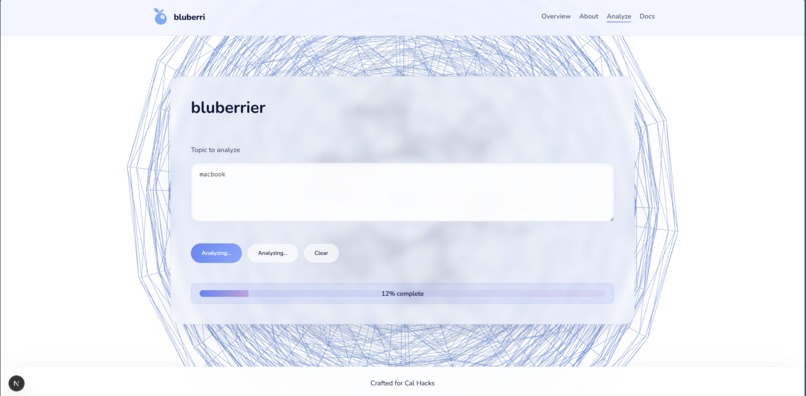
user input screen
-
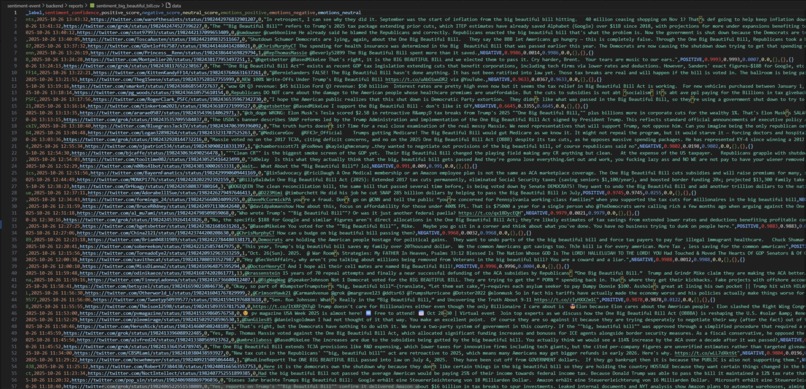
sample output from BERT+roBERTa sentiment analysis to be plugged into gemini
-
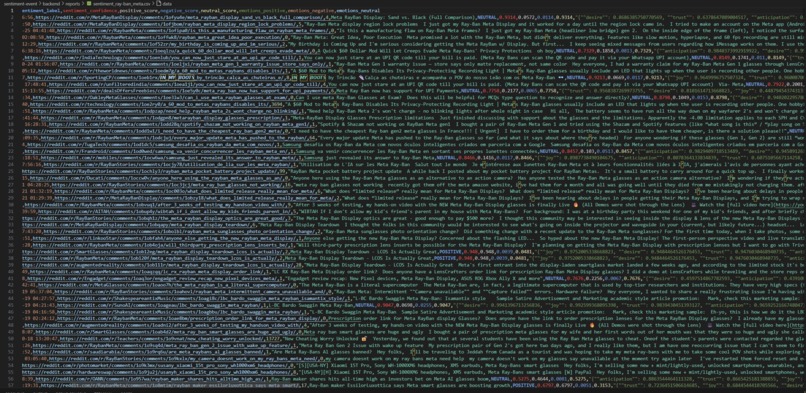
sample output from distilBERT fast sentiment analysis to be plugged into gemini
-
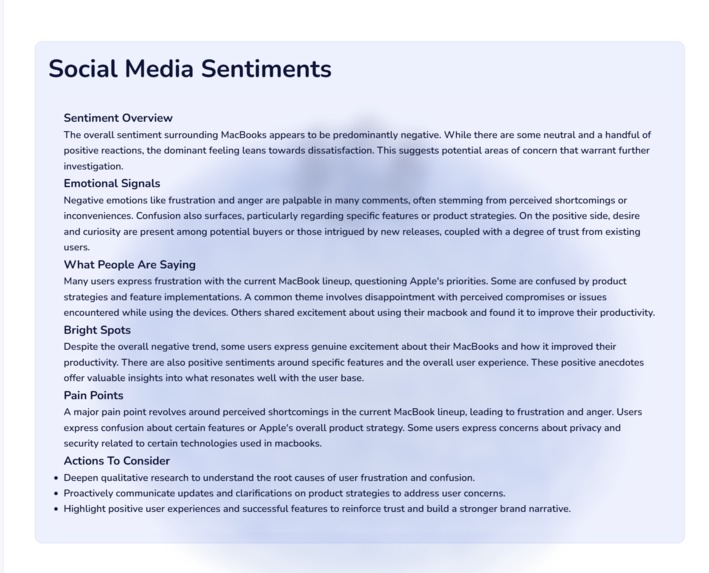
sample output from gemini to qualify quantitative sentiment analysis


Inspiration
We wanted to create a platform that unifies opinions and reviews from across the internet — from Best Buy and Amazon to Reddit and beyond. It’s hard to get a full picture when feedback is scattered across multiple sites, so our goal with bluberri was to make it simple to explore, analyze, and understand what people really think about any product or topic — all in one place.
What it does
bluberri collects and analyzes social media conversations and product reviews from multiple platforms. It uses AI-powered sentiment analysis to detect emotions and opinions, providing clear visual insights and downloadable CSV reports for any product, feature, or campaign. The frontend allows users to run analyses and view live results, while the backend manages scraping, data aggregation, and model inference.
How we built it
We built bluberri with a Python backend using FastAPI, SQLAlchemy, and transformer models like BERT and RoBERTa, with Google Gemini handling summaries.
The backend scrapes data from APIs and web sources, runs sentiment and emotion analysis, and streams progress and results to the frontend — built with Next.js and React.
We designed a modular pipeline to integrate multiple data sources, handle rate limits, and provide a real-time analysis experience.
Challenges we ran into
- Getting transformer models to run efficiently and reliably
- Handling rate limits and API restrictions across multiple platforms
- Building a unified pipeline that merges data from different APIs and formats
- Keeping real-time updates smooth while streaming results to the frontend
Accomplishments that we're proud of
- Integrated transformer models (BERT + fast sentiment models) for scalable analysis
- Created a modular, multi-source data pipeline
- Built a live, streaming frontend for progress and results
- Enabled AI-powered summaries and CSV exports for actionable insights
What we learned
- How to manage API rate limits and platform-specific restrictions
- Techniques for optimizing transformer model inference
- How to design robust error handling and streaming for a better user experience
- The importance of combining multiple data sources for richer insights
What's next for bluberri
- Integrate more public APIs (e.g., Threads, Bluesky)
- Add web scrapers for platforms without public APIs
- Optimize model performance to reduce full-analysis time
- Expand support for more content types and review formats


Log in or sign up for Devpost to join the conversation.