-
-
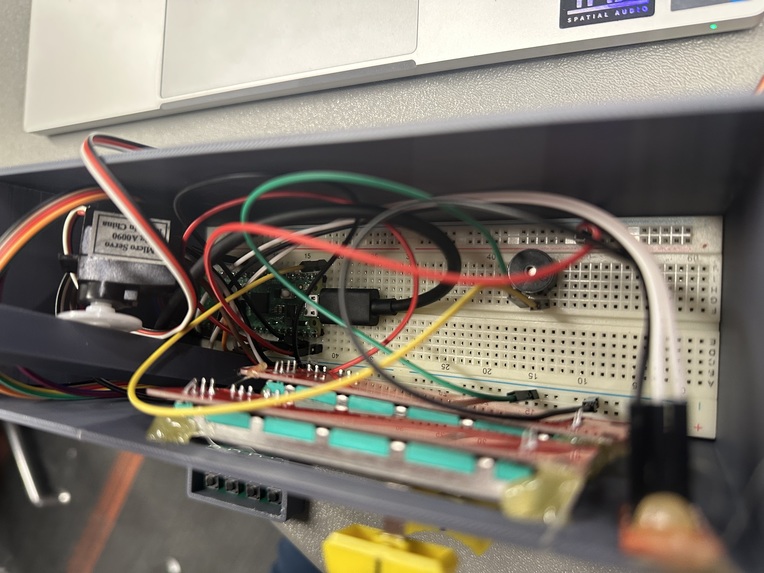
Embedded Circuitry
-
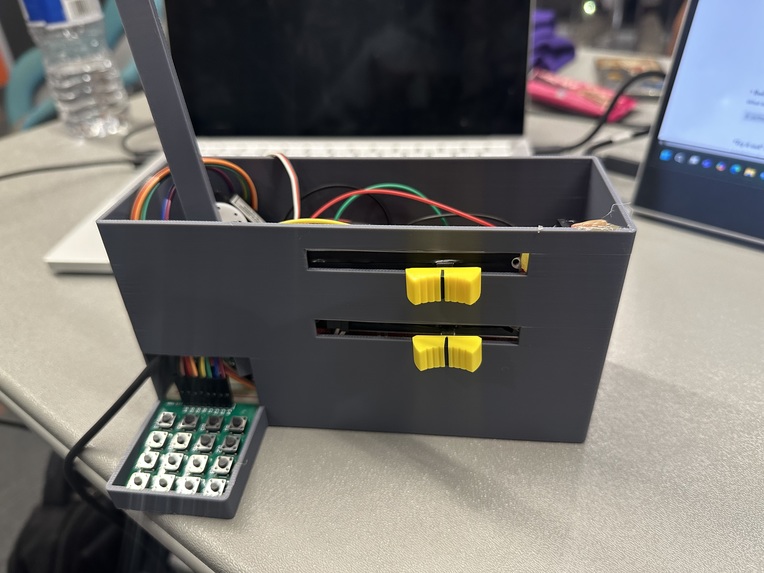
Putting Everything together
-
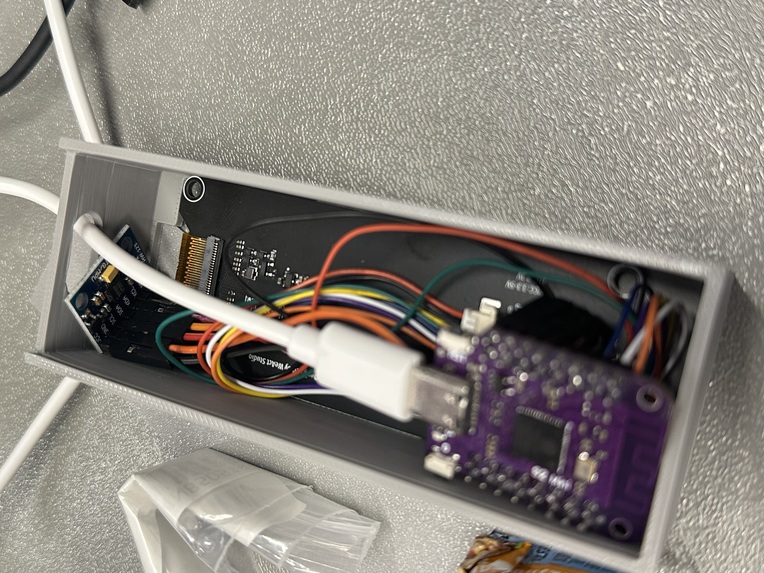
Monochrome Display Circuitry
-
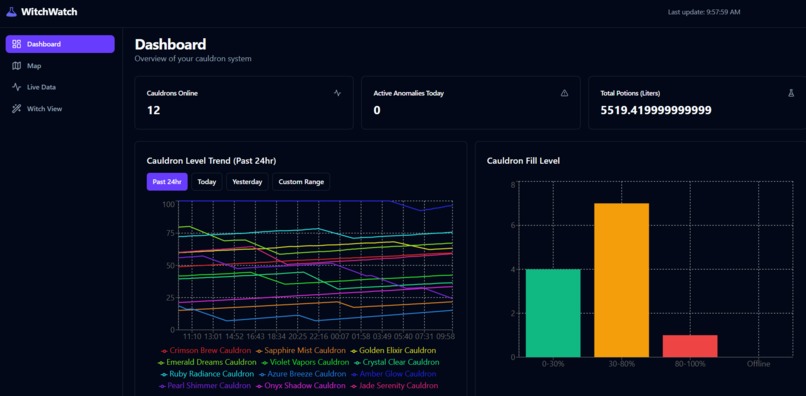
Dashboard Page
-
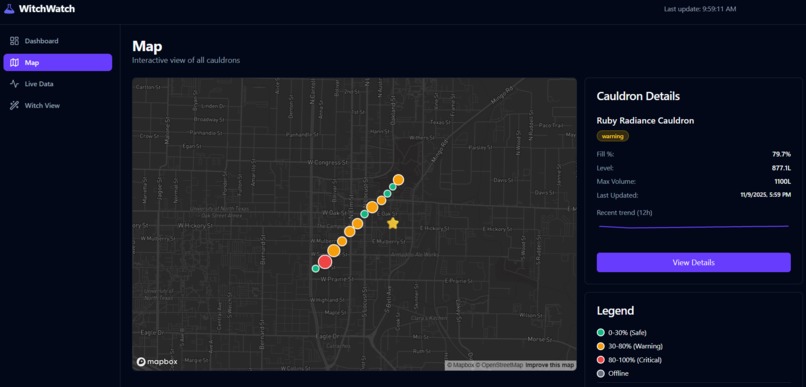
Map Page
-
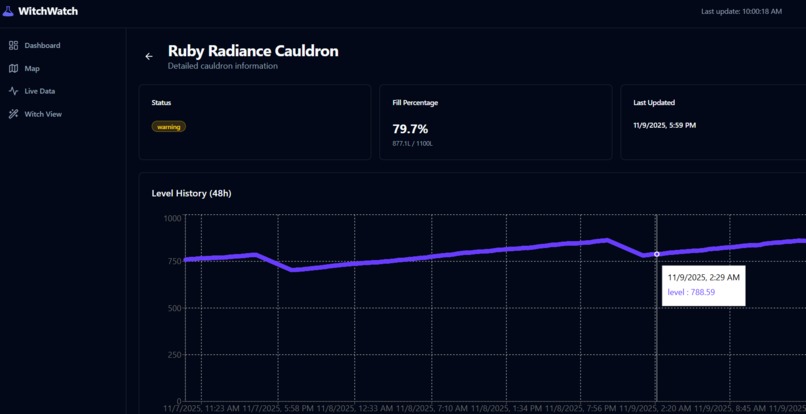
Individual Cauldron Page
-
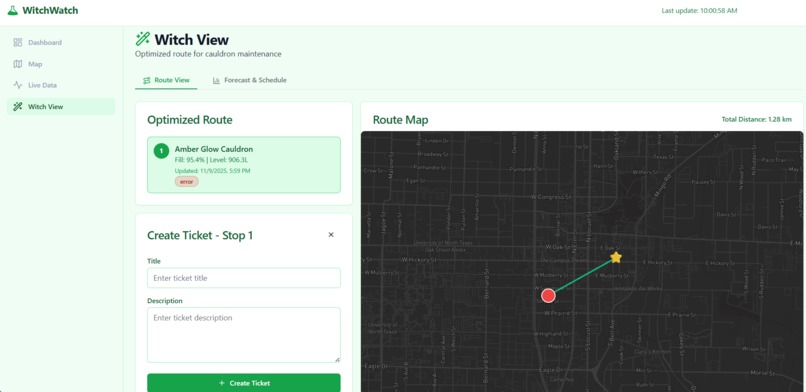
Witch View Pt1
-
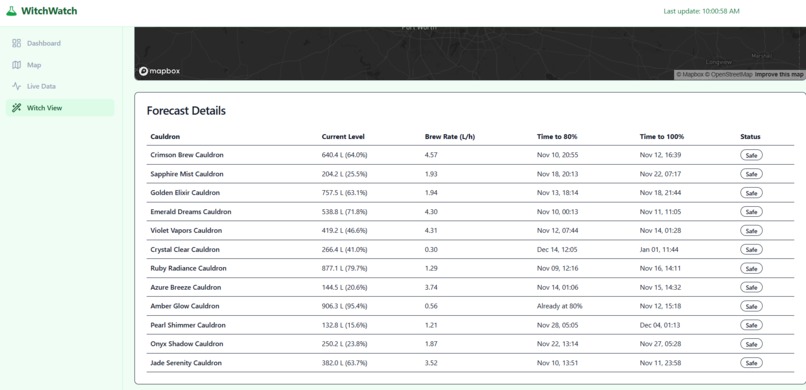
Forecast Details
-
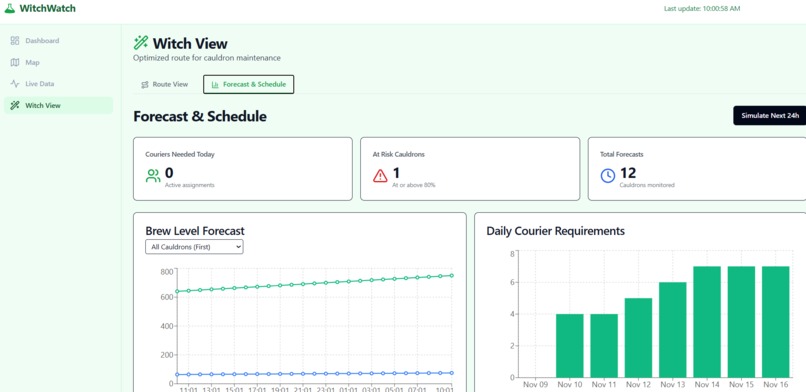
Witch View Pt2
-
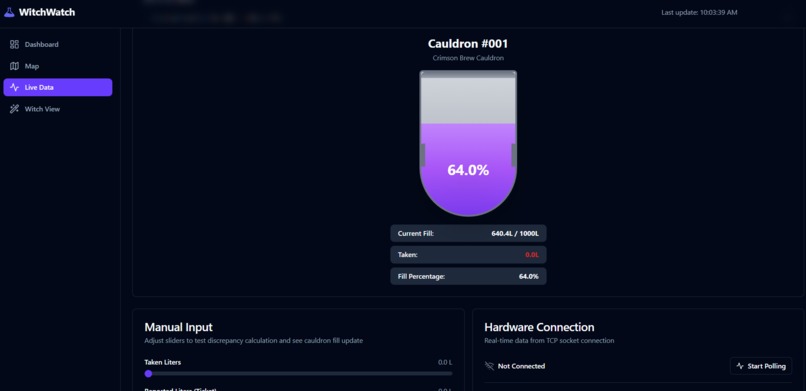
Live Data Page
-
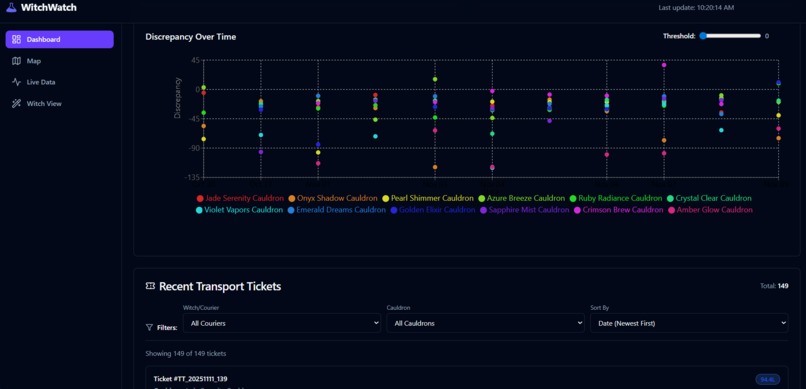
Discrepancies and Tickets


Inspiration
After talking to the judges during our first few hours at HackUTD, there was on track that specifically stood out to us. It was EOG with their playful, yet abstract prompt that got our gears going. With a team of different backgrounds, we wanted to create a hardware/software solution and this project seemed like the perfect fit to test our abilities and show how sensors can be used in the real world for tracking and efficiency.
What it does
WitchWatch monitors potion levels across magical cauldrons using real-time data from the EOG API. Our system:
- Detects when potion drains occur and checks if they match ticket records.
- Physically represents each cauldron with servo-controlled “fill levels.”
- Lets witch couriers “steal” potion via hardware controls (buttons + potentiometers).
- Flags suspicious activity visually (LEDs, buzzer) and digitally (dashboard alert).
- Displays live cauldron status on an efficient E-ink screen and web dashboard.
How we built it
Hardware: Built on a Raspberry Pi Pico 2 microcontroller using:
- Potentiometers to simulate potion collection and theft.
- A servo motor to represent potion level changes physically.
- A 4×4 keypad for cauldron selection.
- LEDs and buzzer for status and alarms.
- An OLED display for live cauldron data. Software & Backend: Python backend Typescript frontend Pandas Flask Mapbox API
Communication: The Pico sends live JSON updates (via serial → TCP) to the Python backend. The backend pushes state updates, alarms, and optimized routes back to the hardware and dashboard.
Challenges we ran into
Hardware:
- Getting consistent analog readings from the hardware and synchronizing them with cloud data.
- Timing issues between the “drain” events and ticket validations.
- Managing real-time bidirectional communication between embedded systems and a web dashboard.
- Designing a 3D-printed structure that moved smoothly with the servo for cauldron visualization.
Software:
- Building the most optimal algorithm for a complex optimal route with many efficiency parameters to think about
Integration:
- Getting the hardware to talk to linux machine with firewalls
Accomplishments that we're proud of
- Fully functional real-time hardware + software integration.
- Seamless ML-based discrepancy detection between live potion drains and transport ticket data.
- Robust embedded system that visually and audibly alerts users to “stolen” potion events.
- Fun, immersive presentation that bridges fantasy storytelling with serious engineering.
What we learned
- How to integrate IoT hardware with AI and live cloud data effectively.
- The importance of debounce handling, signal conditioning, and real-time responsiveness in physical systems.
- How collaboration between hardware and ML can create powerful, tangible demonstrations.
- A lot about debugging late at night with servos, LEDs, and witches.
What's next for WitchWatch
- Scale for businesses looking to track valuables/factories/machines, optimize workload, and keep track of inventory


Log in or sign up for Devpost to join the conversation.