-
-
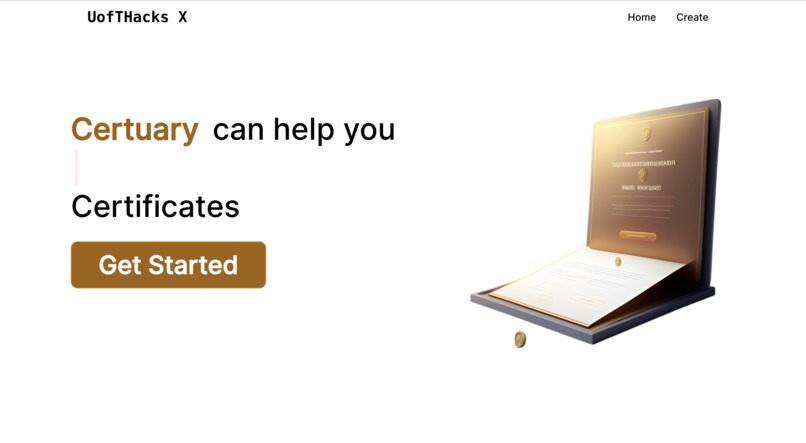
Home Page
-
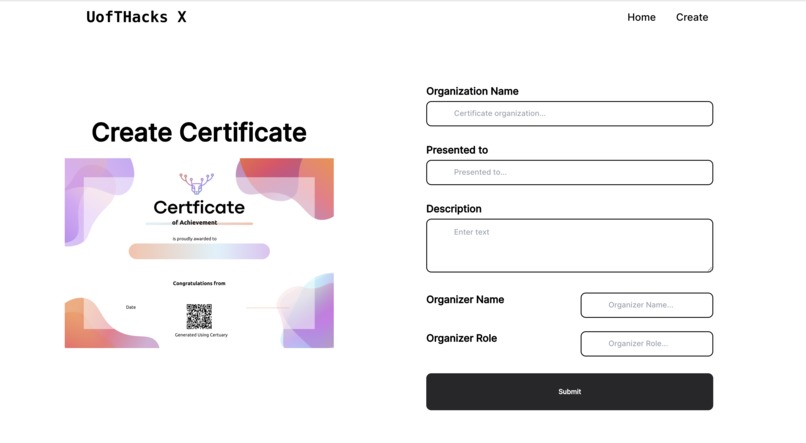
Create Certificate Page
-
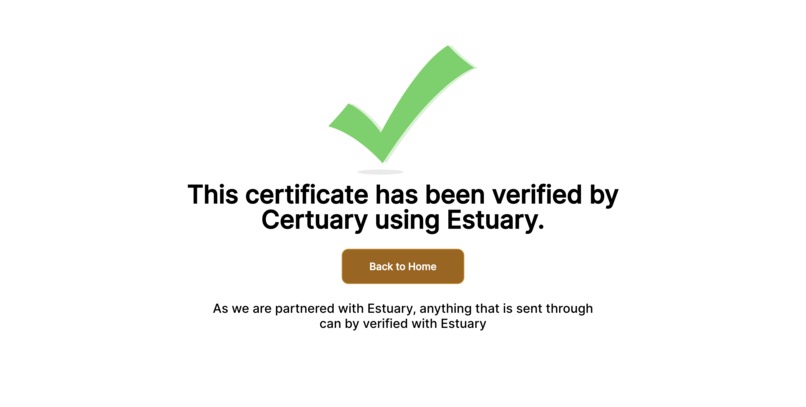
Certificate Verified
-
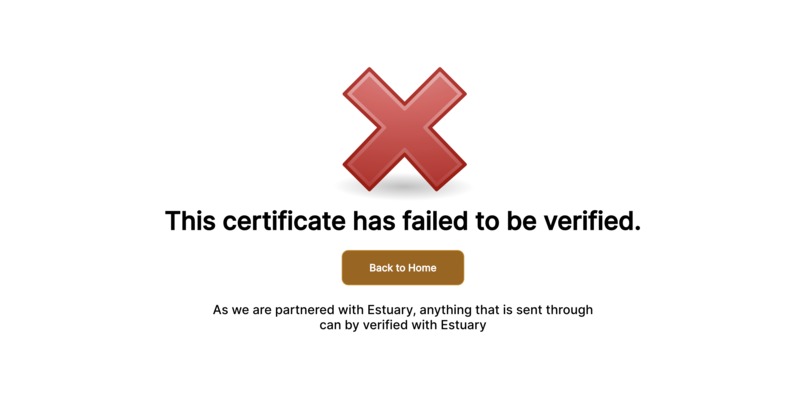
Certificate failed to verify
-
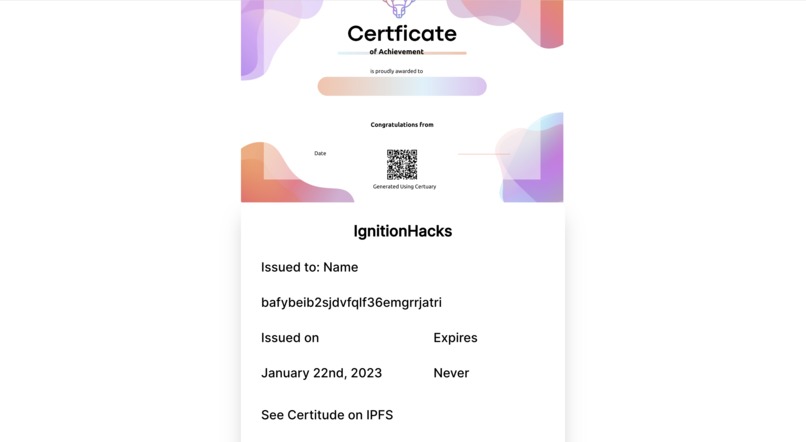
Certificate Display


Inspiration
- The project involves the exploration and implementation of new technologies such as IPFS for decentralized storage and blockchain technology for secure verification. The project also explores new use cases for these technologies, such as in the management of digital certificates, an area where traditional centralized systems have proven vulnerable to hacking and manipulation. It also explores new ways to solve the problem of digital certificate management by using decentralized and immutable architecture provided by IPFS and blockchain technology.
- We are creating a blockchain-based certificate verification system that will empower individuals and institutions to break free from the vulnerabilities and inefficiencies of traditional systems. With decentralization, immutability, and the use of cutting-edge technology, our system will provide a secure and reliable platform for the management of digital certificates.
- By implementing this solution, we will be enabling individuals to reach their full potential and institutions to operate with integrity. We are not just building a technology, we are building a better future.
What it does
Our project was a blockchain-based certificate verification system that was built using IPFS and Estuary. The main goal of the project was to create a secure and tamper-proof way for individuals and organizations to verify the authenticity of certificates. The project works by first creating a unique hash of the certificate using IPFS. This hash is then added to the Estuary blockchain as a new block. Each block on the Estuary blockchain contains information about the certificate, such as the issuer, recipient, and date of issuance, as well as the IPFS hash of the certificate. To verify a certificate, the recipient can use the Estuary blockchain explorer to search for the certificate's block by entering the unique hash or by searching for the recipient's name or other information. Once the block is found, the recipient can view the certificate's information, including the IPFS hash, and use that to retrieve the original certificate from IPFS. The use of Estuary in this project was essential for ensuring the immutability and security of the certificates. Estuary's decentralized architecture and consensus mechanism make it extremely difficult for anyone to tamper with or alter the information stored on the blockchain, thus making it impossible for anyone to counterfeit certificates. Additionally, by storing the certificates on IPFS, we can ensure that the certificates are stored in a decentralized and distributed manner. In summary, our project was a blockchain-based certificate verification system that used IPFS and Estuary to create a secure and tamper-proof way for individuals and organizations to verify the authenticity of certificates. Estuary played a critical role in the project by providing a decentralized and immutable platform to store and verify the certificates. The whole process was really smooth and easy due to the use of Estuary and it was a really good asset for our project.
How we built it
Our hackathon project was a blockchain-based certificate verification system that was built using IPFS and Estuary. To build this project, we split our team into two groups - two people working on the frontend, and the other two working on the backend. To ensure that everyone had a clear understanding of the project's objectives and workflow, we created a programming flow chart to divide the work flow and get the hang of the idea. On the frontend, we used React and Tailwind to build the user interface for our website. React allowed us to create a dynamic and responsive user experience, while Tailwind provided a set of pre-defined CSS classes that made styling our website a breeze. On the backend, we used Python and Flask to build the server-side logic and host our website. Flask provided a lightweight framework for building web applications in Python, which allowed us to quickly and easily set up routing and handle HTTP requests. However, the real backbone of our project was the use of Estuary and IPFS. Estuary provided a decentralized and immutable platform to store and verify the certificates, which was crucial for ensuring the security and authenticity of the certificates. IPFS was used to create a unique hash of the certificate which was then added to the Estuary blockchain as a new block. This allowed us to ensure that the certificates were stored in a decentralized and distributed manner. We faced many difficulties throughout the development process, but through teamwork and perseverance, we were able to overcome them and ultimately deliver a functional and polished product. It is an honor to say that without the use of Estuary, it would have been impossible to accomplish this project, it was an extremely valuable asset for us.
Challenges we ran into
One of the main challenges we ran into while building our project was with the backend. Specifically, we encountered difficulties when using IPFS and Estuary's API to add blocks to the blockchain and verify them. To overcome this challenge, we reached out to the Estuary mentors for help and guidance. They were a huge asset to our team, providing valuable insights and support throughout the development process.
Another challenge we faced was in the implementation of QR codes on our certificates. These QR codes can be scanned to verify the legitimacy of a certificate using Estuary's Verify API. We had to ensure that the QR codes were properly generated and that they could be scanned and verified without any issues.
Another challenge was in connecting the frontend and backend of our project and getting everything to work together seamlessly. This required a lot of testing and debugging to ensure that all the different components were communicating and functioning properly.
Additionally, we faced some CID issues due to Estuary downtime while building our project. However, thanks to the support and guidance of the Estuary mentors, we were able to overcome these challenges and deliver a functional and polished product.
Overall, Estuary played a key role in the development of our project. It provided us with the tools and resources we needed to create a secure and verifiable blockchain-based certificate system. The Estuary API was very useful and helped us in adding block on the chain and verifiying it, it also helped us in adding qrcode on our certificates to verify the legitimacy of a certificate.
Accomplishments that we're proud of
- Successful integration of IPFS and blockchain: We successfully integrated IPFS for decentralized storage of digital certificates with blockchain technology for secure verification and automation of certificate issuance, revocation, and validation.
- Development of a user-friendly interface: We created a user-friendly interface that allows individuals and institutions to easily issue, revoke, and verify digital certificates
- Enhancement of data security and integrity: By using IPFS and blockchain technology, We also have ensured the security and integrity of the certificate data stored on the system
What we learned
Our team was able to accomplish a lot during the hackathon. We successfully built a fully functional website over the weekend, which seemed unachievable at the start, but was completed due to our team's effort and perseverance. Additionally, we gained valuable experience and knowledge in building a verification system using Estuary's verification API, which is a powerful tool for creating secure and verifiable blockchain-based certificate systems. We also successfully implemented QR codes on our certificates that can be scanned to verify the legitimacy of a certificate using Estuary's Verify API. We were able to connect the frontend and backend of our project seamlessly, allowing for a smooth user experience. We also overcame the challenges we faced during the development process, such as the difficulties with IPFS and Estuary's API, CID issues and downtime, and successfully delivered a functional and polished product. We also learned and utilized new technologies such as React, Tailwind, Flask and Python in the process of building the project. Lastly, we are able to apply the knowledge and skills we gained during the hackathon in future projects and potentially in our professional careers.
What's next for Certuary
- Further development of the system: We will continue to improve and add new features to its system, such as support for additional blockchain platforms, integration with other systems, or the development of new smart contract functionality.
- Expansion to new industries: We will explore new industries or applications where the system could be used, such as in healthcare, finance, or government.
- Diversifying into other areas of Blockchain: We will also explore other areas of blockchain technology such as Decentralised finance, Supply Chain Management, Identity management, and more.
Built With
- flask
- javascript
- python
- react
- tailwind


Log in or sign up for Devpost to join the conversation.