-
-
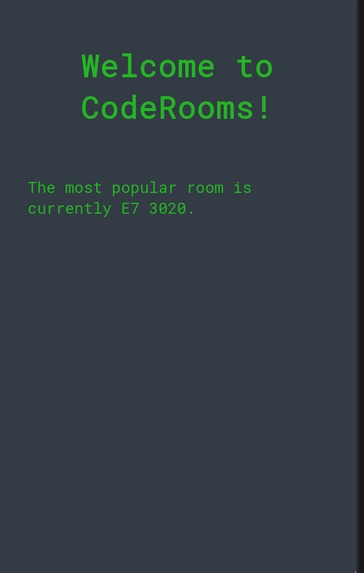
CodeRooms Homepage

Inspiration
We were inspired by moving around the hack space and brainstorming in different rooms. We thought, what if we were coding in here, is there some way we can develop the community at UW by bringing people together, even if they're not really talking to anyone and are being antisocial.
What it does
The whole system centers around a small QR code posted in each of the coding spaces, linking to the page corresponding to that room. This allows two important tasks to be carried out by anyone visiting the code space. First, anyone can visit the website and view what projects have recently been worked on there. Second, after coding something awesome and pushing it to GitHub, you can scan the QR code on the way out to sync your repo to the room you were in.
How we built it
The website was built with SvelteKit and TypeScript. All of the GitHub interaction runs through the API using octokit, making requests to query the validity of the entered username and to populate the recently edited repos page.
Challenges we ran into
At hackathons, running into unexpected challenges is expected, and our experience here was no different. One particularly frustrating issue is the lack of clear examples of GitHub ReST API authorization.
Accomplishments that we're proud of
finishing
What we learned
After we had an idea, we divided up roles based on past experience and desire to learn. This means each one of us was challenged and pushed throughout the event. I (Kegan) learned a few things about API calls, Ethan learned database setup, Tian learned about front-end development with Svelte and Xiang had a great time.
What's next for CodeRooms
The last big thing that CodeRooms needs is better data visualization. We'd like for an interface to discover hotspots and see personal trends in room choice. We also want a method for users to register rooms and QR codes, so they don't have to be individually created.
Built With
- firebase
- octocat
- svelte
- typescript





Log in or sign up for Devpost to join the conversation.