-
-
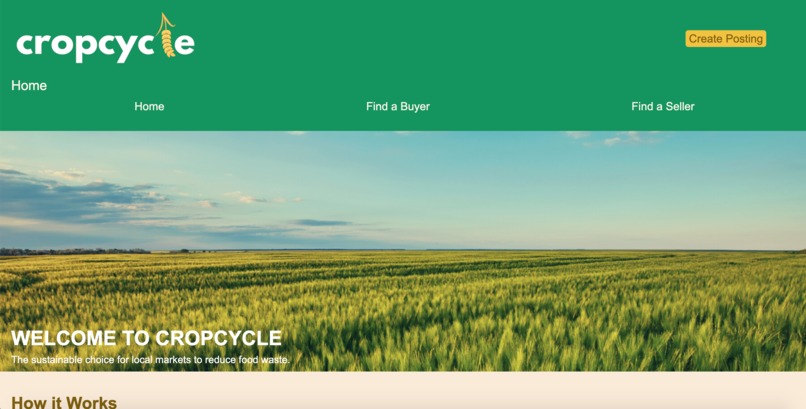
Homepage
-
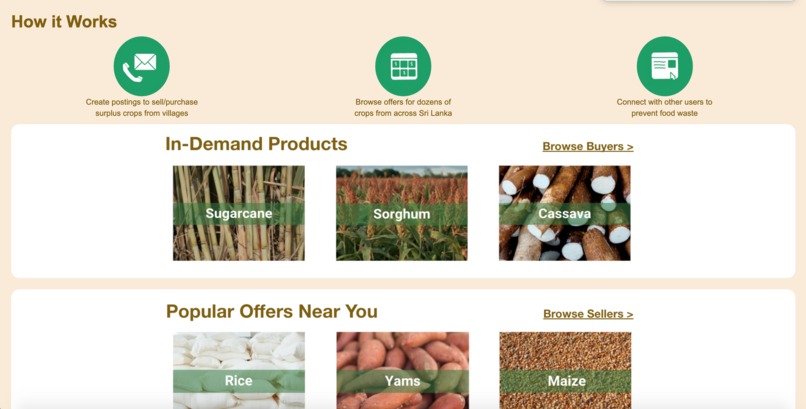
How it Works (Homepage)
-
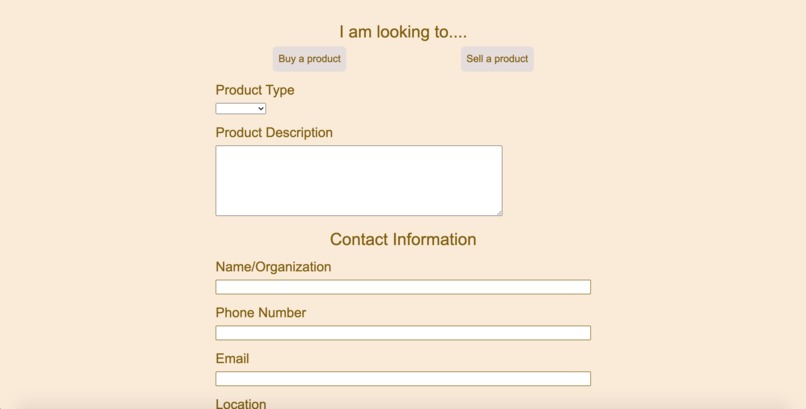
Create a Posting
-
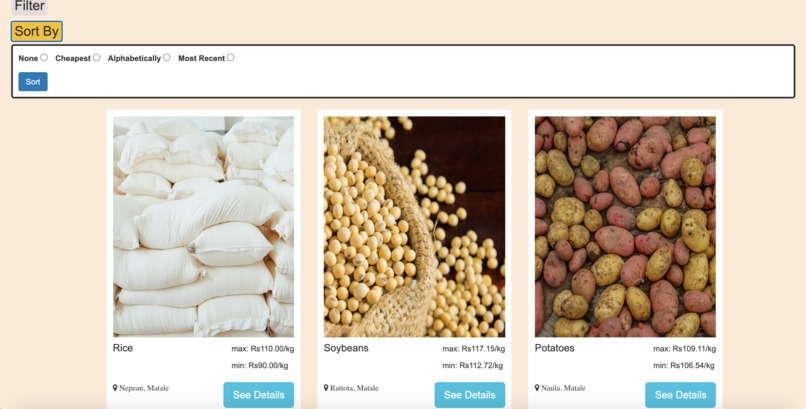
View Postings


For this project, we will be addressing the Basic Human Needs Category and focussing on the Zero Hunger SDG.
Inspiration
According to the United Nations Food Programme, food supply chains of developing countries are majorly threatened by an inefficient distribution of resources. Concerned by the amount of food that is wasted in developing countries due to this unequal distribution, we decided to develop an accessible platform that would connect village markets based on their crop demands. Markets would be able to sell their excess crops to other villages while those facing a shortage can easily gain contact information to purchase these otherwise wasted items.
How does Cropcycle work?
Cropcycle allows markets to sell their surplus of common agricultural products through postings, where they can list their price per kilogram and describe the details regarding their crops. Coincidently, buyers can create postings to request products in that they experience a shortage. After creating a post, all users can browse through nearby offers on the “Find a Buyer” and “Find a Seller” pages and acquire contact information to reach out to product listers. Through this platform, Cropcycle aims to balance the quantity of available crops across the nation and ensure that food does not go to waste.
Development Process
We brainstormed design drafts of our website and proceeded to prototype it using HTML. As usual, the stylings were done using CSS and Bootstrap and the interactions were implemented using JS and JQuery. The initial data and the data inputted by the user were all stored in the browser’s localstorage.
Challenges
We struggled to prioritize which features we could implement within the 24 hour timeframe. Although we would’ve liked to include more features such as allowing users to edit their postings and upload their own photos, we had to focus on other details first as we were still learning during the hackathon. Initially, our team was at a disadvantage because only two members were experienced with coding, but as the project progressed, the other team members were able to leverage their skills in creative design to improve the features of the project.
Accomplishments
From this experience, we’re proud of the new skills (coding AND soft skills) that we learned. More importantly, we’re proud that we were able to play to our strengths as a multidisciplinary team and collaborate effectively together! (we even got to see the sunrise together teehee)
Lessons Learned
From developing Cropcycle, we learned how to use JQuery and Bootstrap to increase efficiency as well as style our platform. We also learned about the Sustainable Development Goals and became more conscious of the necessary efforts for a brighter future.
Next Steps
Along with allowing users to edit their postings, the next steps for Cropcycle would be to expand to more developing countries and include more of their popular agricultural products. Additionally, we think it would be effective to have the ability to sort buyer and seller pages based on proximity, which would encourage more local market interactions. If access to a greater toolset, we would also like to integrate maps onto our website so that users can explore offers closest to them in a visually appealing manner. Finally, a future goal would be to scrape the web for reasonable market prices of the products to ensure ethical pricing measures between buyers and sellers.



Log in or sign up for Devpost to join the conversation.