-
-
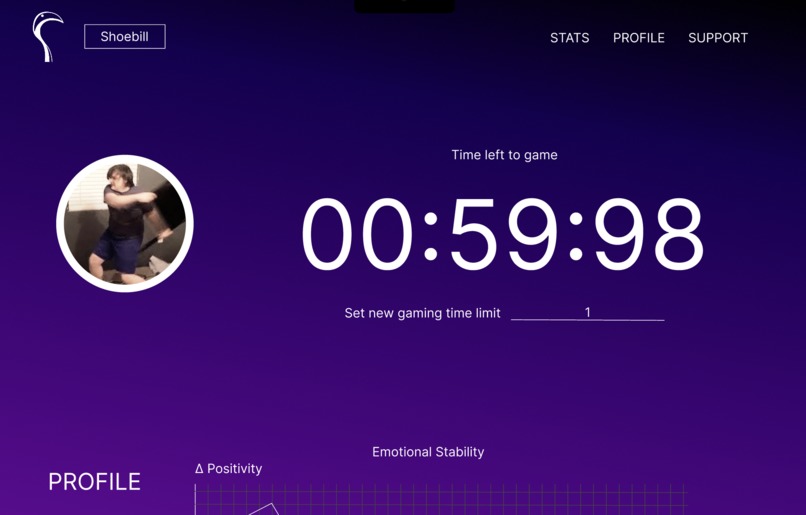
Profile (landing page): shows most recent screen capture from raging user's webcam and a customizable gaming timer
-
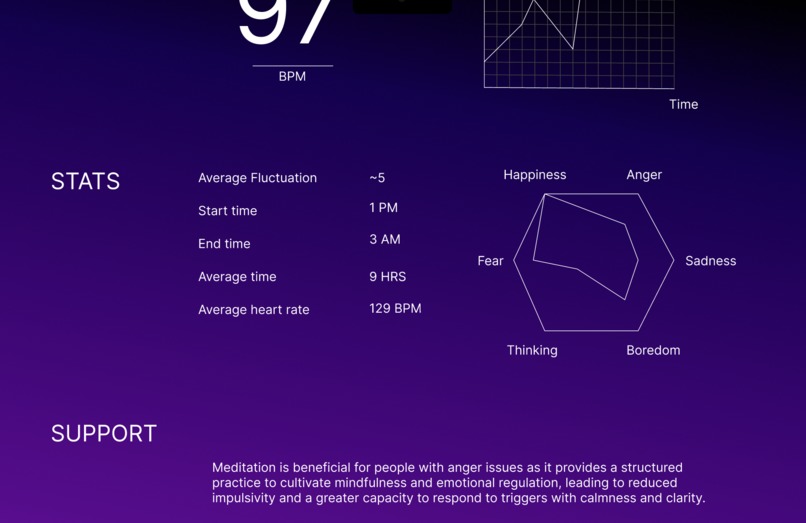
Stats: displays user's health data and analysis based on Zepp watch data
-
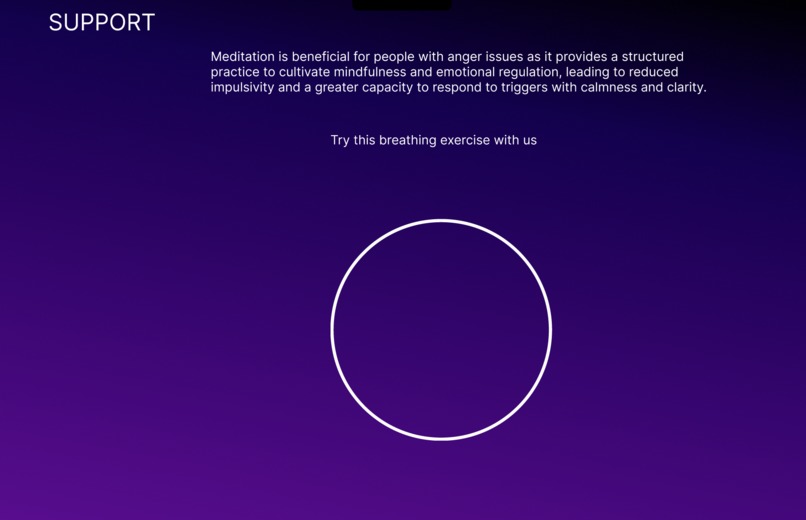
Support: animated oscillating circle to engage users in a meditational breathing session after raging in game
-
Support
-
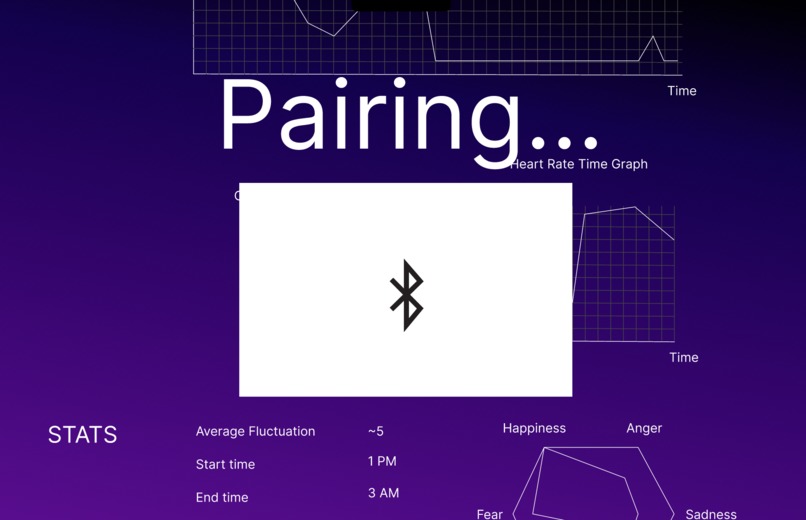
Bluetooth connection between Zepp watch and Shoebill
-
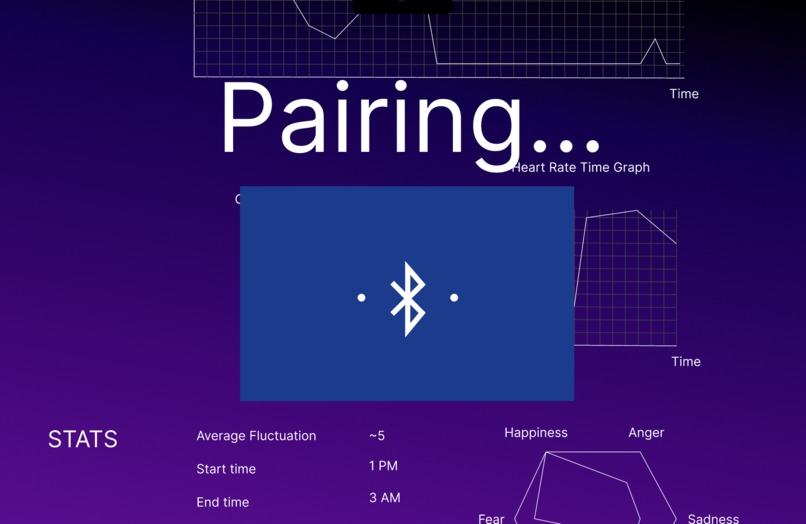
Bluetooth connection process


Inspiration
Growing up, our team members struggled with gaming addictions and how games affected our mind. Solutions that could help detect, document, and provide solutions for how games affected our mental health were poorly designed and few and far between. We Created this app as an aide for our own struggles, and with the hope that it could help others who share the same struggles as we did. Building on top of that though, we also wanted to increase our performance in competitive games and taste more of that sweet, sweet victory, Managing your temper and mood is a large contributor to competitive game performance.
What it does
Shoebill is a web application that tracks, detects, documents and provides solutions to gaming addiction. It's analytics are able to track your mental stability, mood and emotions while you game. It can help you discover trends in your temperament and learn what kind of gamer you are. Using Shoebill, we can learn what tilts you the most — and optimize and grow as a competitive gamer.
How is it built
React.js is the main framework on which we built our web application, supported by a Flask Python backend. We integrated Hume’s API to detect emotions related to game addiction and rage behaviour. We also tried integrating the Zepp watch to get user's health data for analysis.
Challenges we ran into
Navigating the React.js framework was a challenge for us as most of our team was unfamiliar with the framework. Integrating Flask with React was also difficult, as these two frameworks are implemented fairly differently when together versus when separately implemented.
More, initially, we experimented with pure HTML and CSS for the frontend, but then realized that React JS files would make the web app more dynamic and easier to integrate, so we had to switch halfway. We also had to pivot to Vite, since we ran into root bugs with the deprecated Create React App framework we initially used.
Also, navigating through the APIs were more difficult than usual due to unclear documentation. Notably, since there are so many hackers in the same venue, the provided wifi speed was exceptionally slow which decelerated our progress.
Accomplishments that we're proud of
Despite the challenges, our APIs have seamlessly integrated and in the last few hours we were able to piece together the backend and frontend - that were once only working separately - and make it a functioning web app. Our logo is also sleek and minimalistic, reflecting the professional nature of Shoebill. Equally important, we've formed stronger bonds with our teammates through collaboration and support, reaching for success together.
What we learned
We were able to learn how React.js and Flask worked together, and understand the fundamental functionalities of Git. We also learned the importance of optimizing our ideation phase.
We learned that frequent contributions to GitHub is vital, in that it is a fundamental aspect of project management and version control. Furthermore, we understand the significance of collaboration among team members, especially constant and effective communication. Lastly, we gained a deeper understanding of API integration.
What's next for Shoebill
Moving forward, we wish to integrate 3D graph visualizations with dynamic elements. We want to evolve from the hackathon project into a fully-fledged product, involving: the incorporation of user profiles, an integrated Discord bot, and extracting more health data from the Zepp watch (such as blood oxygen levels).


Log in or sign up for Devpost to join the conversation.