-
-
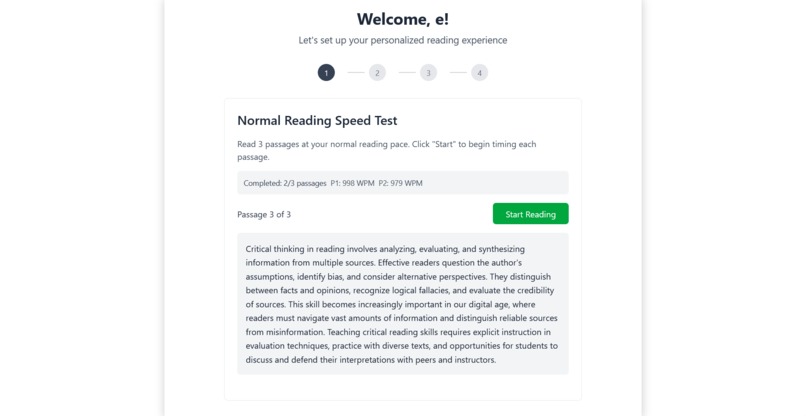
Upon account creation, users are guided through a brief diagnostics test to determine reading and skimming wpm
-
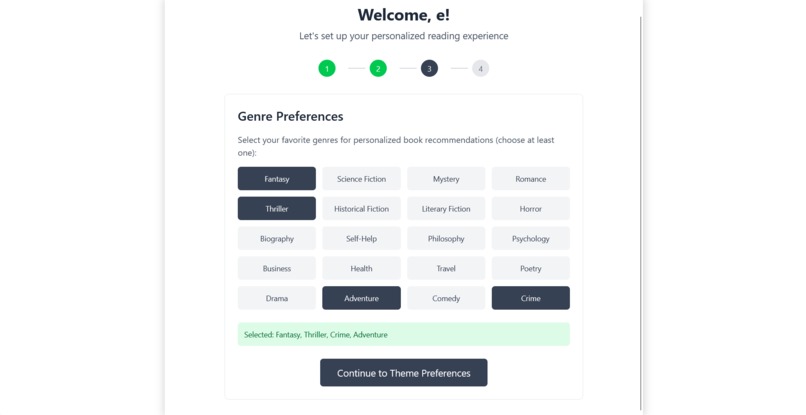
Users are asked to pick genres that they enjoy in order to create a curated book list
-
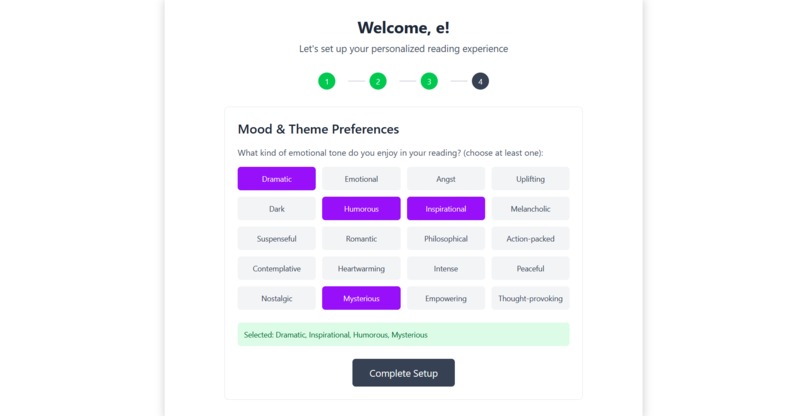
Users are asked to pick themes that they enjoy so that our automation engine knows what to emphasize and what to summarize
-
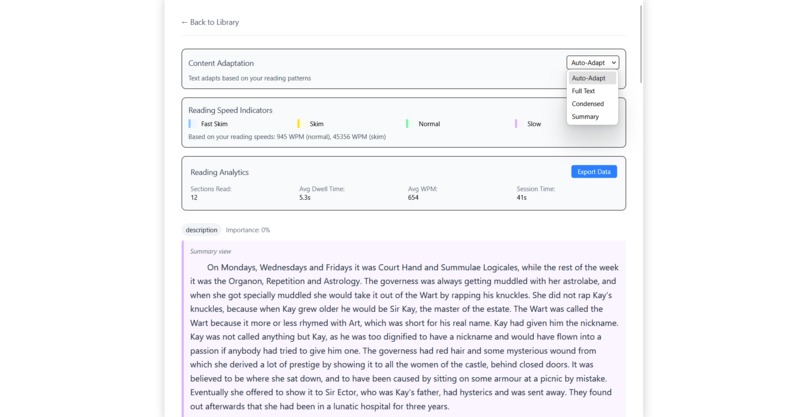
Our powerful real time analytics dashboard allows users to view statistics and improve reading abilities
-
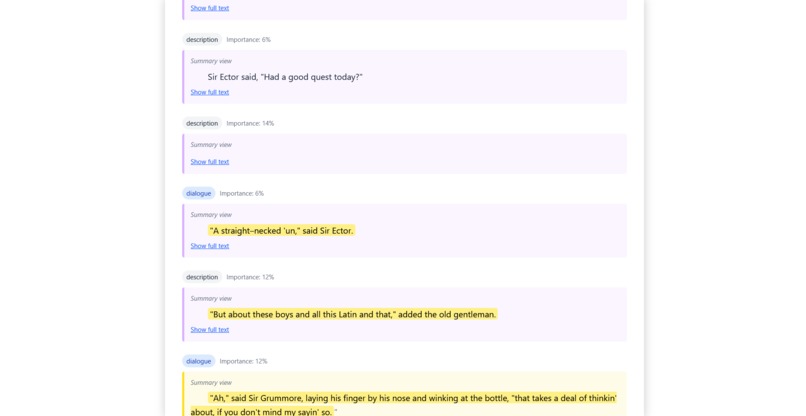
Our adaptive text intelligence engine emphasizes important plot points, themes that a user would enjoy, while summarizing other sections


Inspiration
In a growing digital age, books and other forms of literature are commonly being forgotten each day. Instead of continuing this pattern and actively losing information, our idea was to develop a solution that makes reading literature more easily accessible, entertaining, and time saving. Many people worldwide suffer from shortened attention spans due to the rapid consumption of short form content and information. We strive to correct this by providing a means for users to concentrate on text from books that they enjoy, while summarizing and/or replacing sections that are unimportant or not entertaining.
What it does
DynamInk analyzes a user's reading and skimming wpm, as well as understanding the different genres of literature and different themes that a user enjoys. Based off of this, it creates a curated list of books that our users can begin reading. As a reader reads, our live automation engine analyzes which sections our user is constantly going back to, which sections our user spends time on, and much more, allowing our learning algorithm to emphasize certain parts of the text, summarize other parts of the text, and much more. It also provides reading diagnostics for those looking to improve their reading speeds and such.
How we built it
We created a Vite app with React for our frontend due to its simplistic component based structure. To access our backend endpoints, we used Axios. To create our backend endpoints we used FastAPI via Python.
Challenges we ran into
Books are often not accessible online due to copyright restrictions. This makes it very difficult for DynamInk to be able to access the entire texts of books and to create our curated reading list, and we are actively looking for a workaround for this that is both legal and ethical. Our initial ideas revolving around our adaptive text intelligence was to use machine learning models and natural language processing to understand the underlying themes, however, due to time constraints we were unable to fully implement this and had to instead rely on simpler logic.
Accomplishments that we're proud of
We created a truly adaptive reading experience that feels magical - text that genuinely responds to how you read. Our analytics system captures nuanced reading patterns, and the progressive content loading ensures the app works even when enhanced features fail. The seamless navigation and personalized baselines create a genuinely unique reading experience.
What we learned
Real-time behavior tracking requires careful performance optimization. User experience is paramount - the best AI is invisible to the user. We learned the importance of progressive enhancement and graceful degradation, and how powerful the Intersection Observer API can be for creating innovative web experiences.
What's next for DynamInk
We're planning eye-tracking integration for even more precise behavior analysis, expanding our book library with licensing partnerships, adding collaborative features for book clubs, and developing mobile apps. We also want to integrate with e-readers and explore applications in educational content and accessibility tools.
Built With
- fastapi
- jwt
- python
- react
- tailwind
- typescript
- vite


Log in or sign up for Devpost to join the conversation.