-
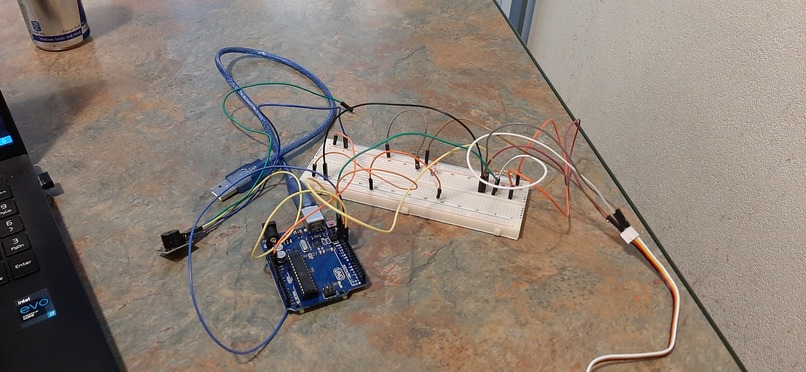
The hardware setup with Heart Rate sensor
-
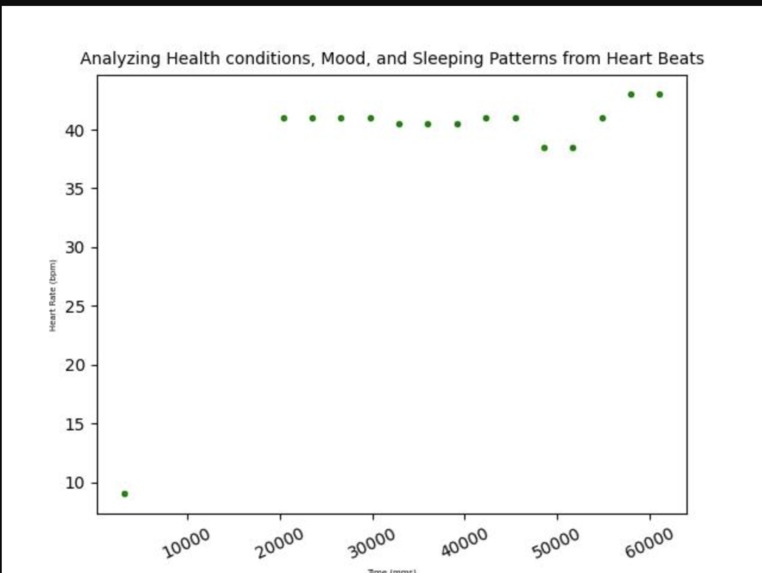
A graph of Heart Rate (bpm) vs Time (ms) of a person
-
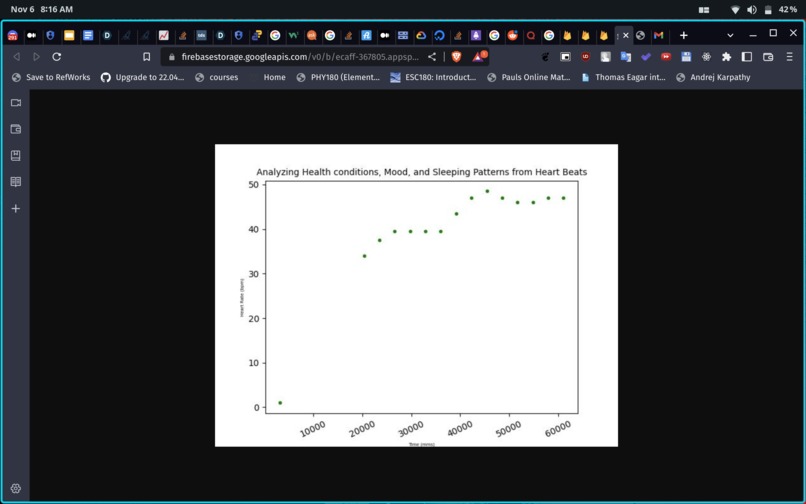
Another graph of Heart Rate (bpm) vs Time (ms) of a person
-
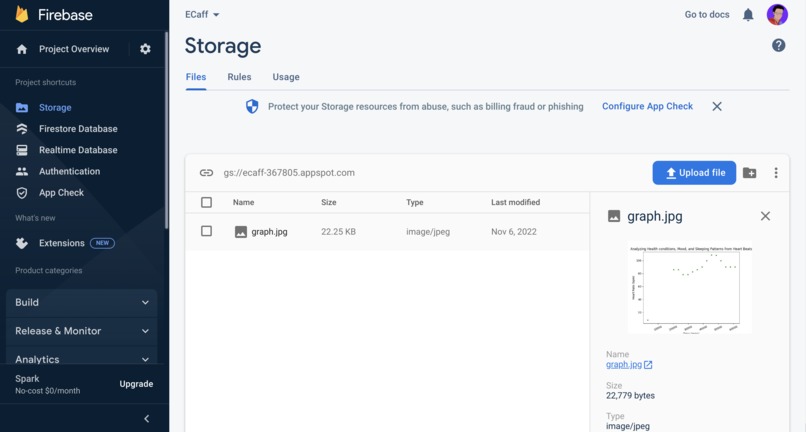
Firebase to store the graph generated from the data collected through the sensor
-
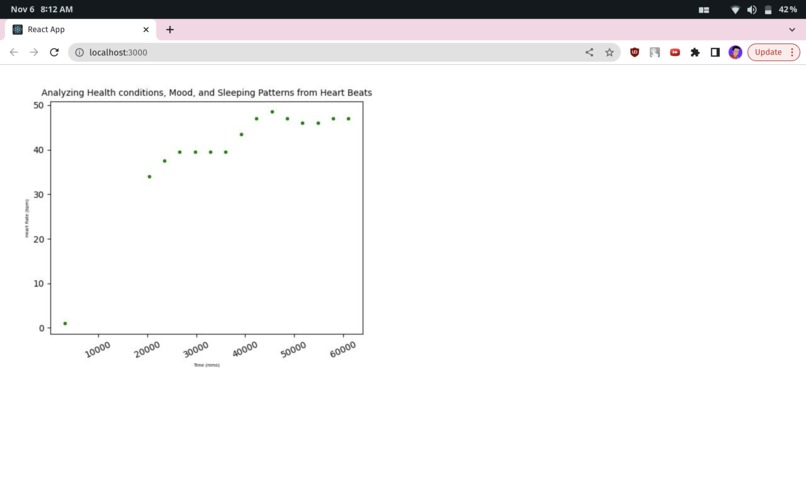
React app that shows the graph real time


Inspiration
The first hour of the Hackathon, we all got together and asked the question “What’s the most annoying thing about everyday life?”. Two of us wittingly answered “Waking up” in unison. After a good laugh at our sleep schedule troubles as engineering students, we talked about how our late night work sessions during the week caused us to be tired during the day. We shared embarrassing stories of us dozing off during a lecture out of tiredness, or falling asleep on the Go Train and end up missing our stop by a large margin, or even from the morning of the event where one of our team members accidentally fell back asleep after waking up. “Imagine if your alarm clock could sense if you fell back asleep when you’re not supposed to, and then wake you up again” one of us said. And thus, out of our collective sleep struggles as commuters and engineering students, ECaff was born.
What it does
The E-Caffe is a non-invasive device which wakes up the user when they start to unintentionally doze off during the day. It consists of a Pulse Oximeter and Heart-Rate Sensor, which tracks the user’s pulse and sends the information to an Arduino Uno. If the average heart rate over a 30 second period drops below 55 bpm (the average sleeping bpm of an adult) the Arduino turns on a buzzer which the user will wear, thus waking up. This device can be used during studying, driving, commuting, or other times when the user may feel sleepy, but wants to stay alert. Data is recorded and displayed to a website, allowing the user to access their heart rate analytics.
Challenges we ran into
Throughout our design, we had to stare down many hardware challenges. As one of the only teams working with hardware, we had issues finding exact components we needed. To add on to that, the sensors and data took an immense amount of time to integrate such that they were compatible with each other. Lack of the specific components we needed forced us to create spontaneous work-around solutions to get our design working in the expected manner. For example, our initial design involved having a vibrator go off when a person dozes off, in order to make the device’s operation more discreet in a shared environment. A vibrator was not present unfortunately, and as such we had to make do with a buzzer.
What we learned and Accomplishments that we're proud of
As first time hackers and beginner programmers, we learned how to use the Pandas library to filter through raw data, removing outliers in the bpm from the dataset. We also learned to use Matplotlib to create a graph of the CSV and upload it to a file base. This allowed us to bring the graphed data to a website and update it in real-time. One of our biggest accomplishments apart from learning tremendous amount about different data libraries was the design of our device. Many of our team members were novices to hardware design, but we did not hesitate to step outside our comfort zone and create something physical.
What's next for ECaff
An improved prototype would include features that allow the device to be personalized to it’s user. A setup feature would be implemented, including features such as a resting heart rate measurement to use as a comparator. ML algorithms could be implemented to learn from the users patterns and significantly improve accuracy and personalization of the product. Long term monitoring of health and sleep data would also be implemented. Given more accurate sensors and components, the size and compactness of the hardware design would be increased tremendously. This would make the device very practical and usable.


Log in or sign up for Devpost to join the conversation.