-
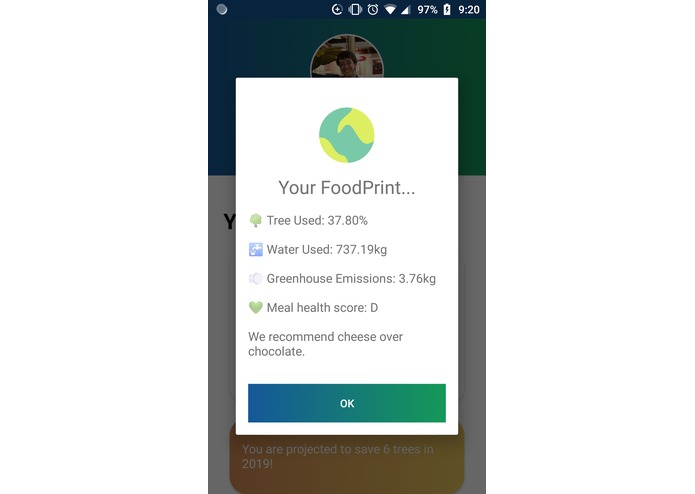
Foodprint calculation result
-
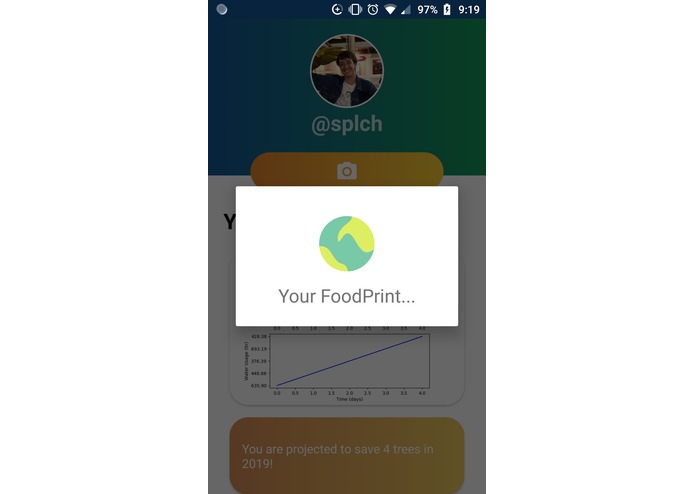
Calculating foodprint data
-
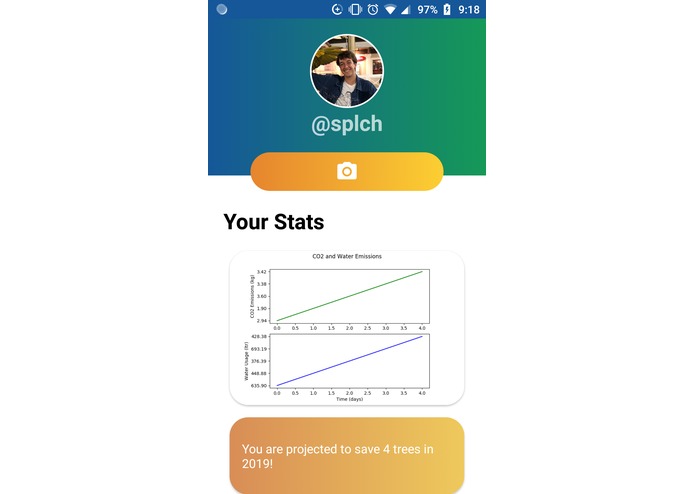
Personal historical data and motivation
-
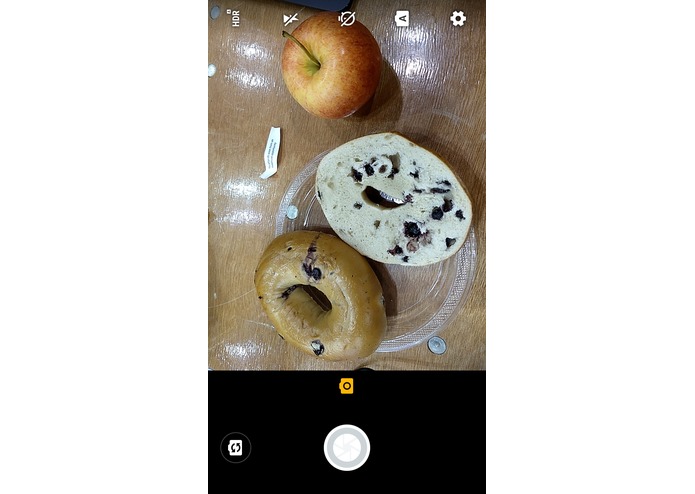
User taking a photo of plate for ingredient identification
-

EcoEat logo
-
Presentation-5
-
Presentation-1
-
Presentation-2
-
Presentation-4
-
Presentation-3


Inspiration
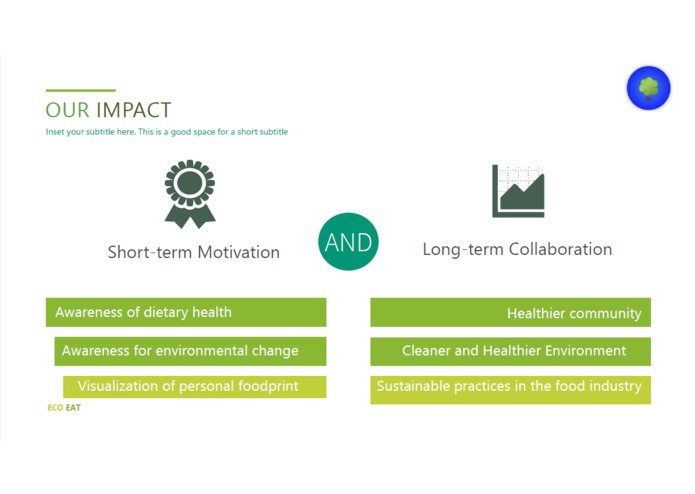
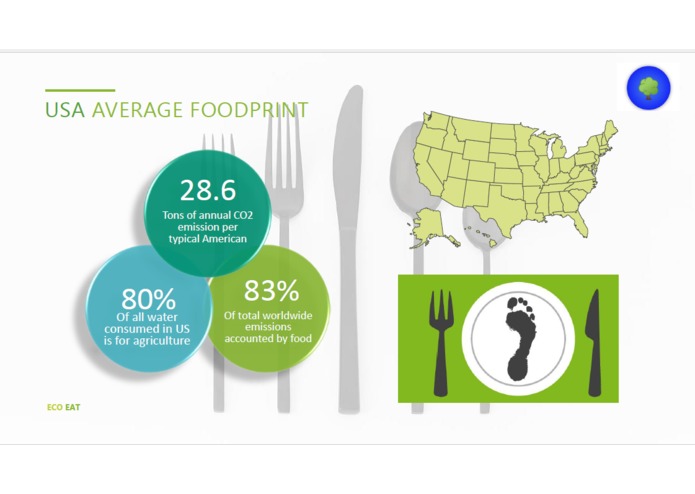
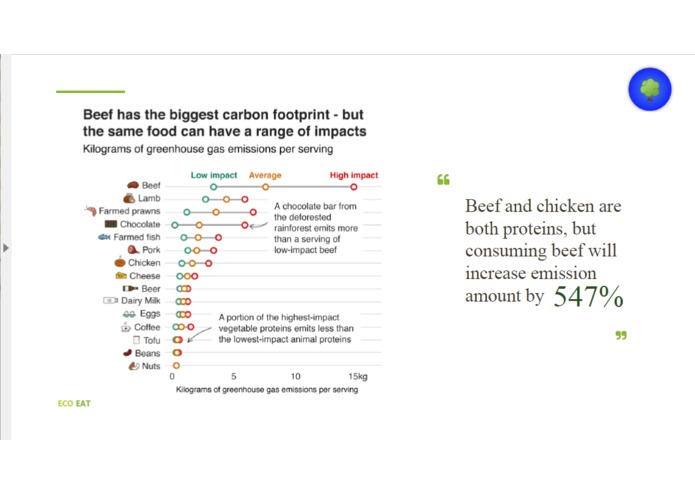
The impact of food we consume on our environment is considerably underestimated. The process of growing, processing, cooking, and transporting food not only consume natural resources like land and water, but also produce greenhouse gas that affect global climate. An average American has an annual carbon foodprint of over 12,000 pounds, and the number is still growing. Different food items have varying effect on environment. For example, the amount of emission produced by beef is four times greater than that of fish. To raise people's awareness of the issue, our group built EcoEat which makes estimating one's foodprint as easy as one click and encourages people to contribute to environmental sustainability through data-tracking and personalized food recommendations.
What it does
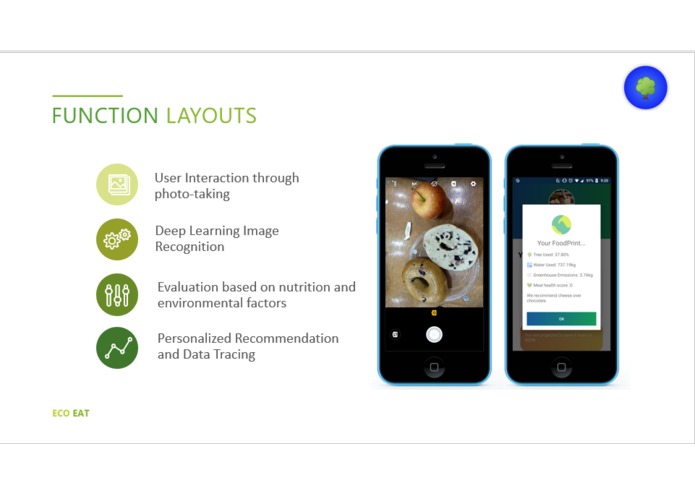
EcoEat is an interactive app that estimates users' carbon foodprints through an image recognition system and provides appropriate recommendations and evaluations of users' diets based on both environmental friendliness and macro nutritional values. When the user takes a photo of his or her plate of food, the system will identify the ingredients contained in the plate based on which the overall water consumption and carbon emission of the meal are analyzed. The software will then provide a healthiness score based on the nutrition of the meal and then provide recommendations on alternative food items that will reduce the users' carbon foodprint without sacrificing the nutritional value. The application can also track the user's daily foodprint and generate graphs that help users to measure the long-term impact of their commitment on the environment.
How we built it
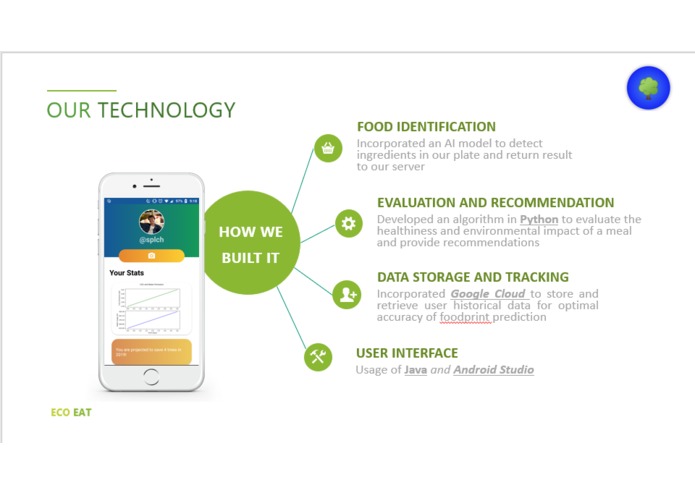
EcoEat requires great amount of data, analysis tools, and image recognition software that needed to be packaged into a mobile application. Spencer led the way in creating the algorithms and calculations to tabulate data using Python, while Moses took charge of implementing an optimal image recognition application. Sophia and Brian worked to collect and compile the necessary data needed for the project, and assist Spencer and Moses when necessary. Upon completion of the back-end requirements with Firebase and Android Studio, we then developed the User Interface using Java.
Challenges we ran into
From a logistical standpoint, we knew our concept idea was an ambitious task, with many pieces that needed to be weaved together seamlessly. The first challenge was ensuring that we didn't overwork ourselves to the point of exhaustion. We encouraged each other to take breaks, go for walks, and rest whenever was necessary. Our second challenge came during the front-end development. After spending over 5 hours pursuing an initial framework, we realized that it was safer to use a more familiar framework to prevent possible unforeseen problems in the project. Our final challenge came during the occasional bouts of slow to non-existent wifi. But, we improvised by temporarily relocating to other locations on campus that had better wifi.
Accomplishments that we're proud of
Our proudest accomplishment is developing our own database and predicting model for the evaluation of a diet, where we combined the concept of nutritional healthiness with environmental friendliness.
What we learned
Half of our group mates are participating in the Hackathon for the first time, so we learned how to collaborate and distribute assignments based on everyone's interests/ability as well as investing our time wisely on learning new stuff!
What's next for EcoEat
EcoEat has the great potential to integrate recipe recommendation systems and grocery shopping in the future to make this application a comprehensive food-related experience. It may collaborate with Amazon Fresh, Walmart, or Ralph to deliver groceries based on the user's dietary and environmental preferences.
Built With
- android-studio
- camera
- domain.com
- firebase
- google-cloud
- node.js
- python


Log in or sign up for Devpost to join the conversation.