-
-
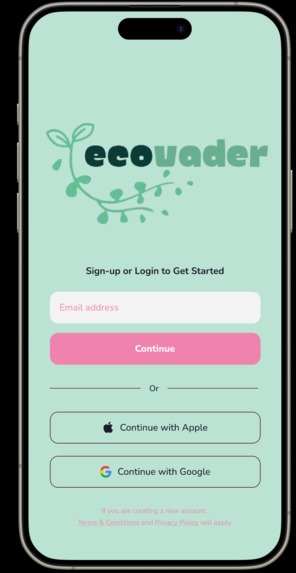
Log In Screen (Figma)
-
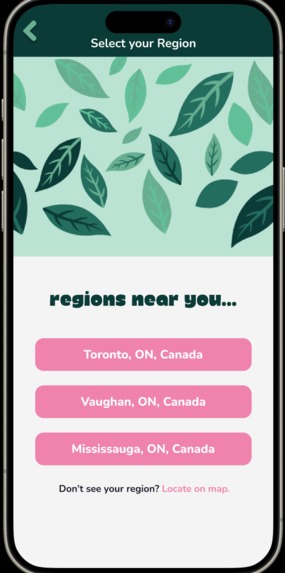
Region Selection (Figma)
-
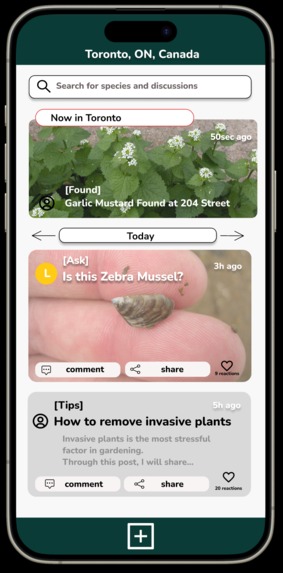
Homepage (Figma)
-
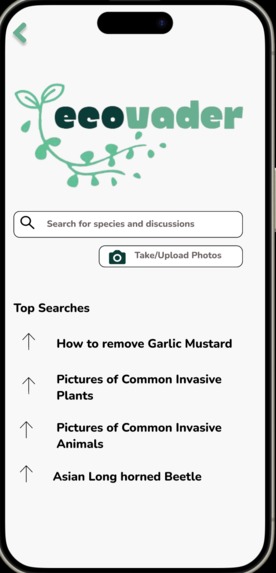
Search Engine (Figma)
-
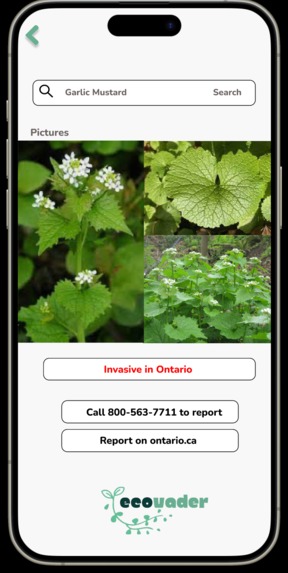
Result #1
-
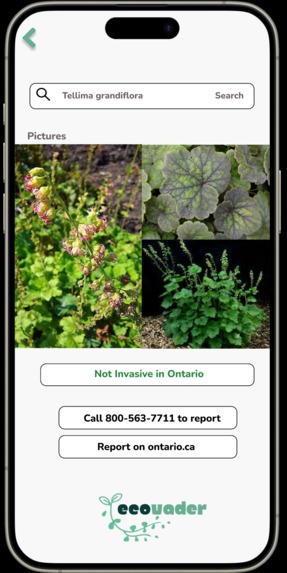
Result #2
-
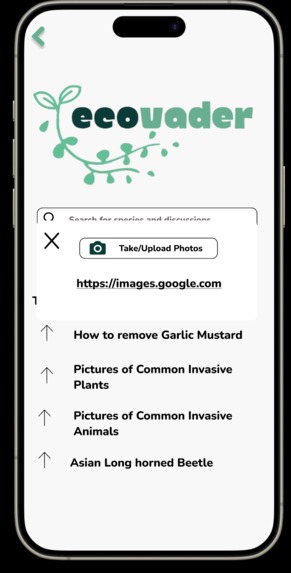
-
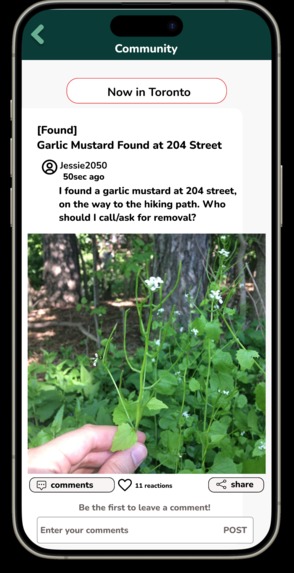
Post #1
-
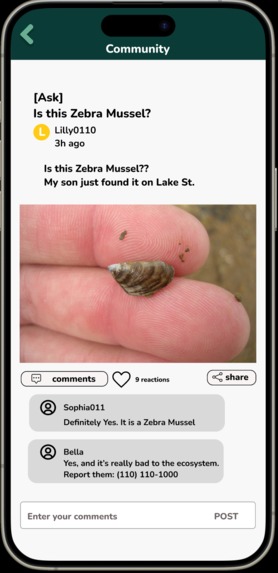
Post #2
-
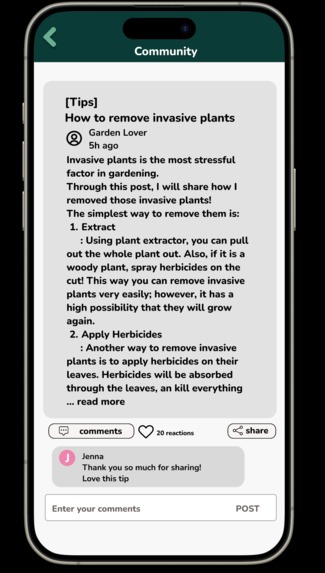
Post #3
-
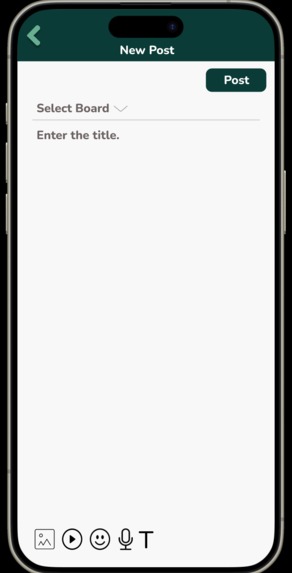
-
-
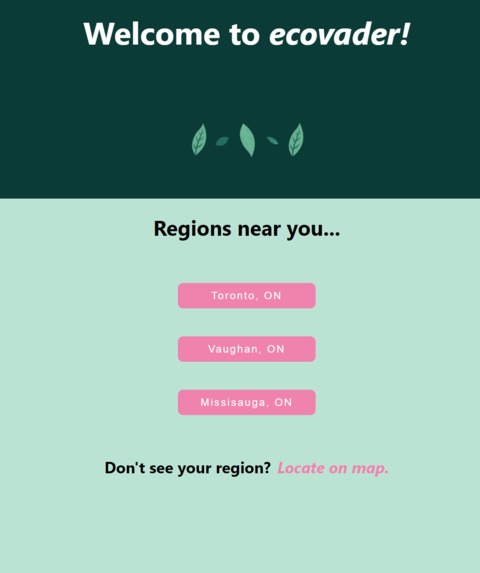
Region Selection
-
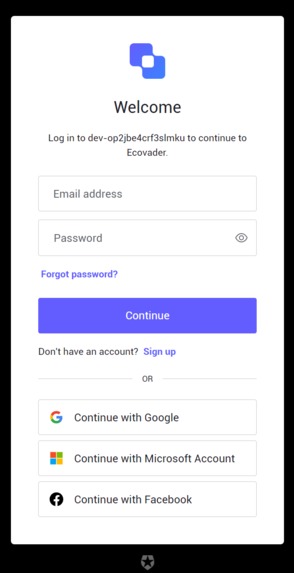
Login Page
-
-
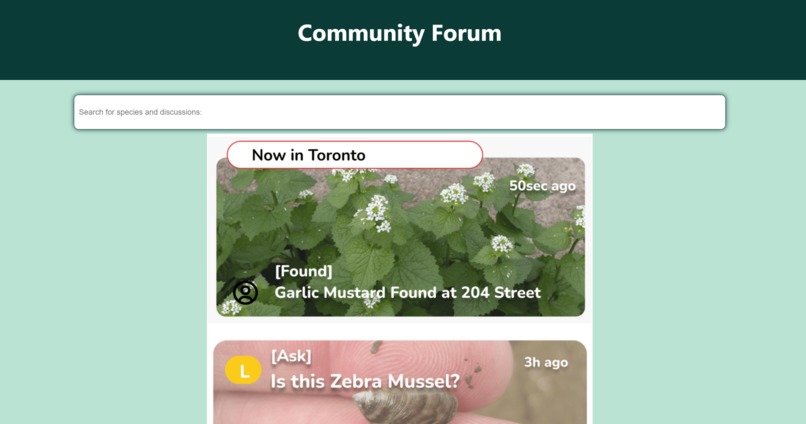


Inspiration
Invasive species cause extreme damage to the economy and the environment, and the threat is currently growing worldwide. The harm that invasive species inflict on native and domestic plants and animals not only destabilizes the ecosystem by reducing biodiversity but also affects agriculture and living things.
For this theme, we decided to choose a spring issue - the season where invasive species appear, thrive, and outcompete native species. According to The Canadian Council on Invasive Species, revenue lost per 16 invasive species is between $13 to $35 billion. Each year, Canada experiences $7.5 billion of lost revenue due to damaged agriculture and forestry industries.
Our team wanted to develop a tool that enables individuals to contribute to minimizing the environmental damage to each community caused by invasive species. That is why we wanted to invent a program that allows users to input and output the result of whether a species is invasive or not, which would be specific to their individual regional locations. By having communities collaborate to exchange ideas in a forum, utilizing this data can help motivate citizens to take immediate action and help us build a sustainable ecosystem for future generations; generating social community-led solutions!
What it does
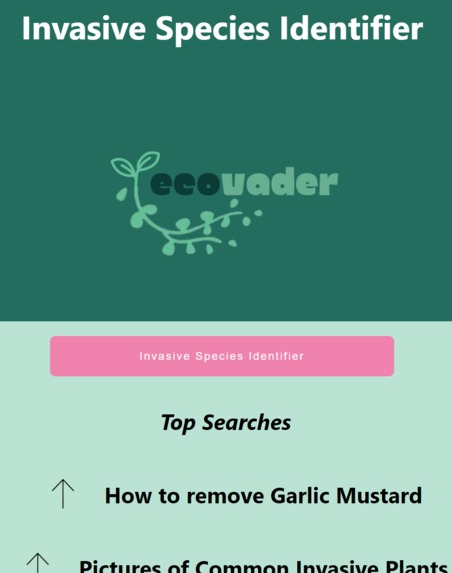
Ecovader is an application designed to assist users in quickly identifying invasive plants and animals and communicating this information within their community. It works as an easily accessible platform for community members to connect and work together to control invasive species and sustain the ecosystem.
Our application can be accessed through any type of device such as a phone, laptop, or library computer. Users will be prompted to create an account and choose their region using Auth0, and once they have completed registration, they can post, comment, and share. If the user wants to identify whether a species is invasive or not, they can upload a photo, and our program will identify it. Should a species be invasive, our app will provide potential removal processes and other contacts that individuals can use to report these species.
How we built it
Starting with the initial Figma prototype, we utilized that platform to plan out the design and user interface, ensuring that consistent user experience is streamlined throughout the app. From there, we created our app using the React.js framework, followed by HTML, JavaScript, and Tailwind CSS, to build the web front-end stack and mobile-friendly version.
Challenges we ran into
Some challenges that we had ran into was as a high school beginner hackathon team, we had minimal to no coding experience within our team members. As such, we were learning how to build this app from scratch, and we ended up watching hundreds of YouTube tutorials in order to implement other features like the addition of the domain name at ecovader.biz, the auth0 authentication system, and the other interactive features of our app.
Accomplishments that we're proud of
As a beginner high school hackathon team, we all met on the first day of the hackathon, not knowing each other at all. For most of our group members, this is the first hackathon we've ever attended. As a result of submitting this project, it displays our potential to succeed in the other hackathons. We faced obstacles together, and we overcame them, which ultimately made us a stronger team.
Another accomplishment we made was creating a mobile-friendly app and a web app version on a domain. We are also proud that our app features diversity, equity, and inclusion, and it tackles complex issues like invasive species that, from our research, Ontario has not been investing a lot to solve.
What we learned
Many of our group members learned how to use HTML, CSS, and JavaScript for the first time, and we were always relieved to solve any errors that we encountered. This is also our first time using React.js and Tailwind CSS as a framework and using Figma to design our website. Additionally, we learned how to set up multiple domains and do web hosting on Vercel.
What's next for Ecovader
Our next steps for Ecovader are to convert our use of AI into streamlined identification, bootstrap the mobile version so that it offers more services to users, and deploy the mobile version into an app that will be featured on Google Play and the App Store. We are also hoping to implement more accessibility features to make it more user-friendly for people with disabilities, such as the ability to enlarge text sizes.
Moreover, invasive species differ significantly from country to country. For example, plants considered invasive in Canada may not present any risks in Japan for instance, and vice versa. To address this, we will also implement GPS that enables change in AI and database based on the user’s location. Thus, wherever the user is, Ecovader will provide appropriate information when reporting invasive species.
Built With
- autho
- css
- figma
- google-lens
- html
- javascript
- react.js
- tailwind
- vscode


Log in or sign up for Devpost to join the conversation.