-
-
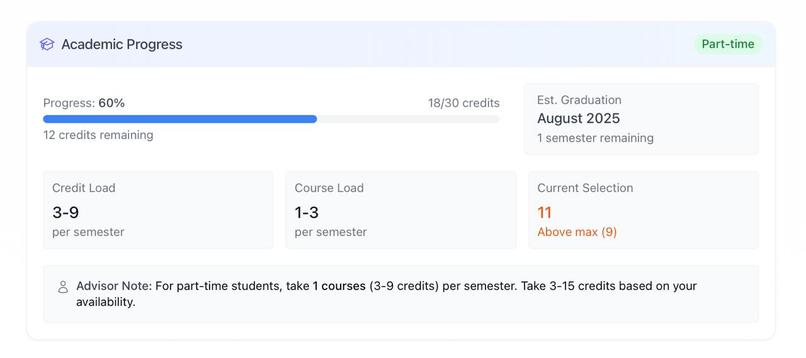
Academic Progress Tab
-
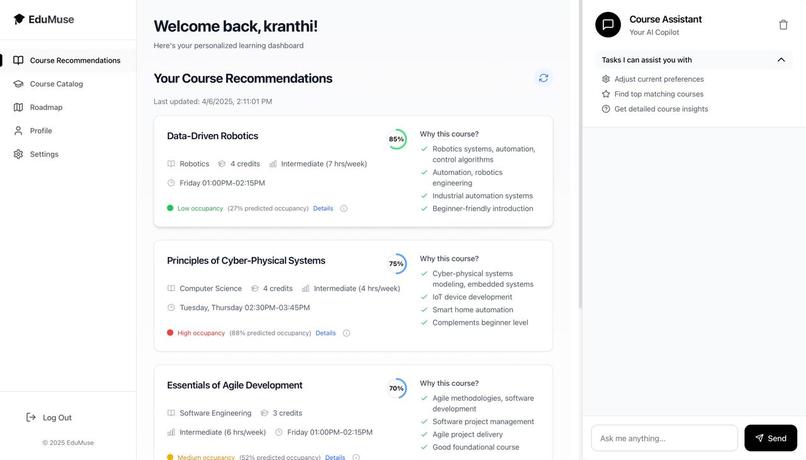
Course Recommendations
-
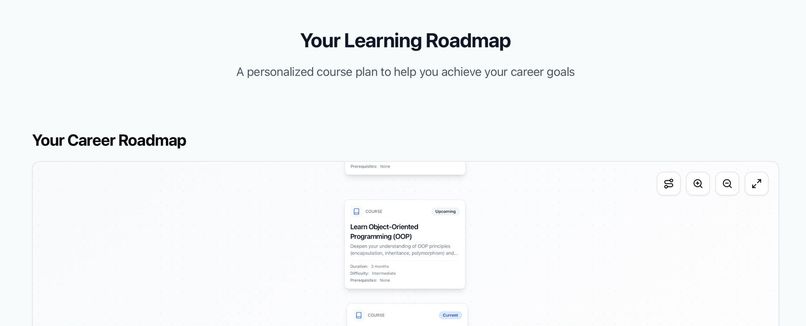
Roadmap
-
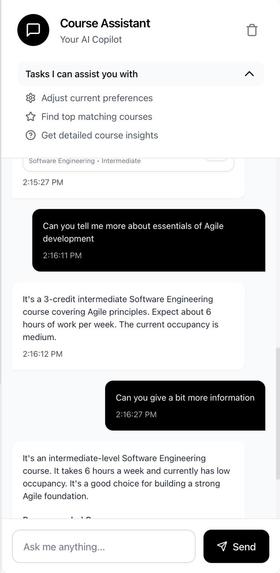
Interactive Chatbot
-
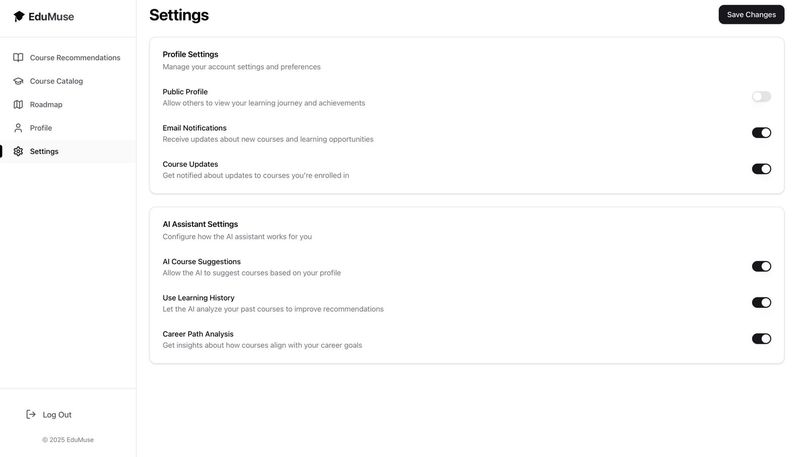
Settins tab
-
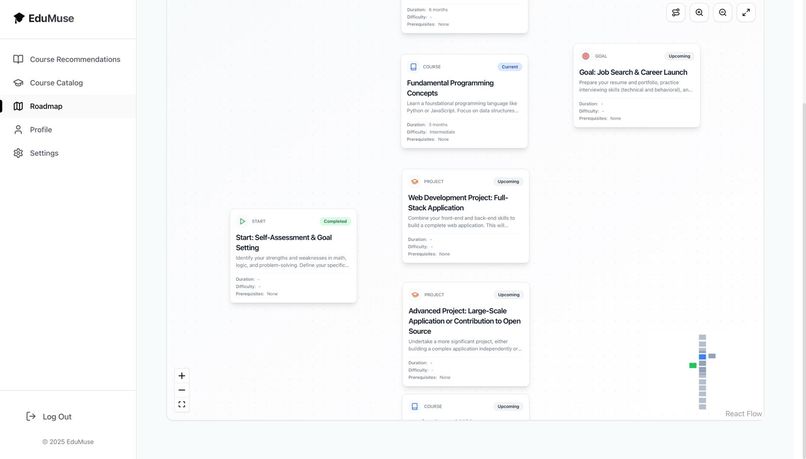
Roadmap
-
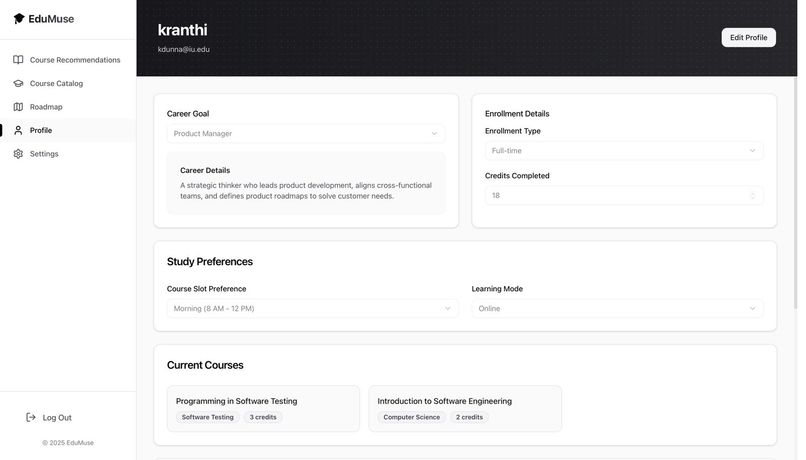
Profile Page
-
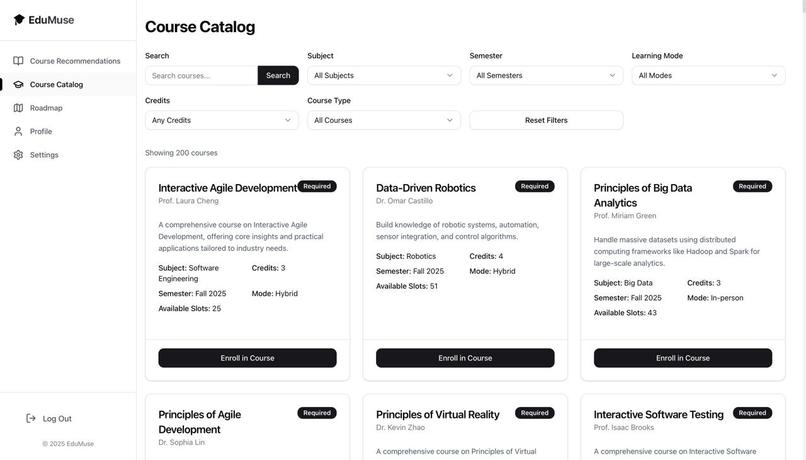
Course Catalog
-
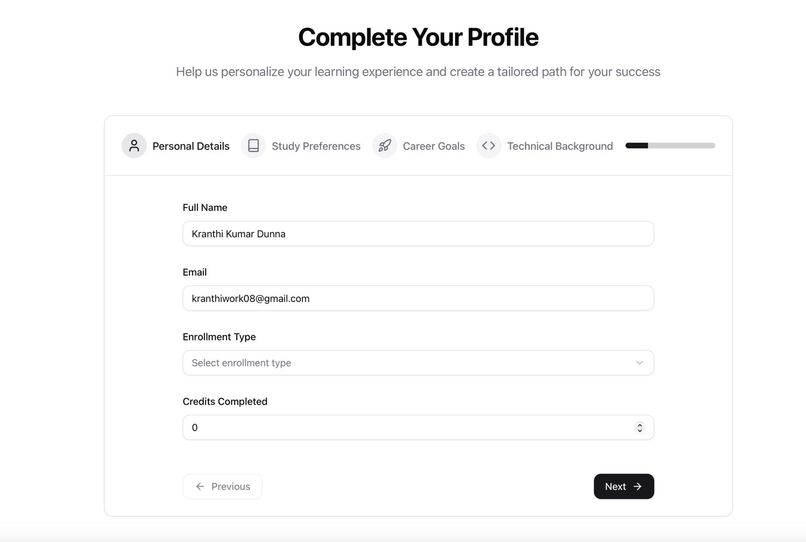
Complete Profile


Inspiration
As students ourselves, we often found the course selection process overwhelming. With so many variables like career goals, prerequisites, course timings, and credit requirements, it was hard to know which courses to take. We wanted to create something that would remove the guesswork and anxiety from academic planning — and that’s how EduMuse was born. We envisioned an intelligent companion that would guide students in selecting the best-fit courses with clarity and confidence.
What it does
EduMuse is an AI-driven course recommendation platform tailored to each student's individual goals and academic profile. It suggests optimal courses based on a variety of factors such as the student’s career aspirations, completed credits, current course load, preferred learning modes, time availability, and course prerequisites. Students can also explore a full course catalog with filters, enroll in courses directly, and receive insights from a built-in AI chatbot. One of EduMuse's most innovative features is the career roadmap — a visual flow that aligns a student's coursework with their long-term objectives like internships or job placements. Additionally, students can track their academic progress and manage preferences through a dedicated settings tab
How we built it
We built EduMuse using a modern and scalable full-stack architecture. On the frontend, we used Next.js for a fast and responsive experience, paired with Tailwind CSS to create a clean, consistent, and user-friendly interface. For the backend, we integrated Gemini models to power our conversational AI chatbot, enabling natural and intelligent dialogue with users. All user and course-related data is stored securely in Supabase, which provides a robust layer over our PostgreSQL database.
To make our course recommendation system smarter and more personalized, we utilized the Bart transformer model, which enhanced our ability to analyze user preferences and context for better suggestions. One of the highlights of the platform is the interactive career roadmap, and for that, we implemented React Flow. This allowed us to visualize a student’s academic journey in a modular, drag-and-zoom flow structure. Each component — from AI to database to UI — was carefully integrated to ensure a smooth, real-time user experience throughout the platform.
Challenges we ran into
While building EduMuse, we encountered several challenges. Fine-tuning the chatbot to understand academic contexts and provide meaningful, relevant responses required a lot of iteration and testing. Structuring the student and course data to allow flexible and efficient querying was another significant hurdle. Implementing logic for scheduling, time-slot conflicts, and credit validation was complex. Visualizing course sequences through React Flow, especially while accounting for prerequisites and future planning, also came with its own set of UI/UX challenges. Lastly, making sure that profile changes and preferences updated recommendations in real time involved a lot of careful state management and API tuning
Accomplishments that we're proud of
We’re proud of several key accomplishments in EduMuse. We successfully built an end-to-end course advisory platform that integrates AI, real-time analytics, and user-friendly design. Our interactive career roadmap was a major milestone — helping students visualize their goals and how to achieve them. We built a smart course recommender that adapts to each student’s context and goals, making enrollment decisions easier and more confident. The chatbot's ability to interact naturally and assist with course decisions added a real edge to the user experience. Additionally, using historical data to predict course availability gave our system a practical, real-world advantage.
What we learned
Throughout the process, we learned a great deal about building large-scale, real-world applications. We deepened our understanding of full-stack development, AI integration, and database design. We also learned how to transform complex academic rules — like prerequisites, credit limits, and course timings — into clear, functional logic. Working on EduMuse also taught us how to prioritize user experience and how to ensure a flexible system that can adapt to changing student preferences. Most importantly, we realized how powerful AI can be when used to solve practical, student-focused problems.
What's next for EduMuse
Moving forward, we have several plans to expand EduMuse. We want to integrate it with real university systems such as Canvas or PeopleSoft and potentially launch it as a mobile app. We’re looking into adding voice support for the chatbot, peer-based course recommendations, and even mentor matching to give students a richer, community-based experience. We also aim to enhance analytics, add real-time feedback mechanisms, and eventually scale EduMuse to support students at various institutions. The long-term vision is to make EduMuse a go-to academic assistant that empowers students at every stage of their education.
Built With
- bart
- geminillm
- github
- next.js
- reactflow
- supabase
- tailwindcss
- typescript


Log in or sign up for Devpost to join the conversation.