-
-
-
-
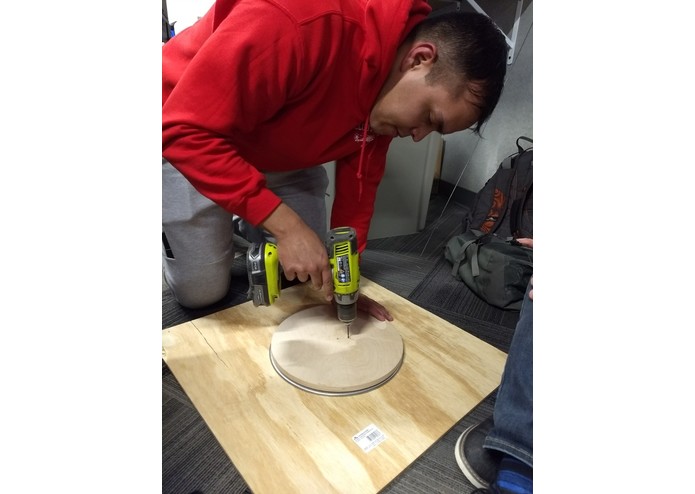
Mounting the Swivel Plate
-
-
-
-
-
-
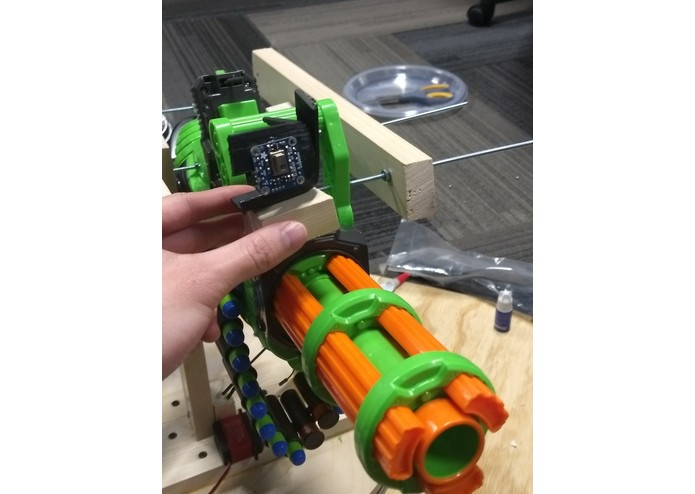
I see you!
-
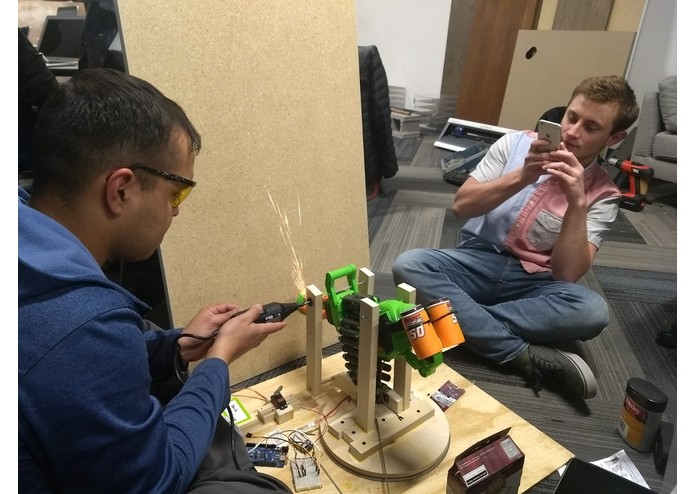
Working on Balance
-
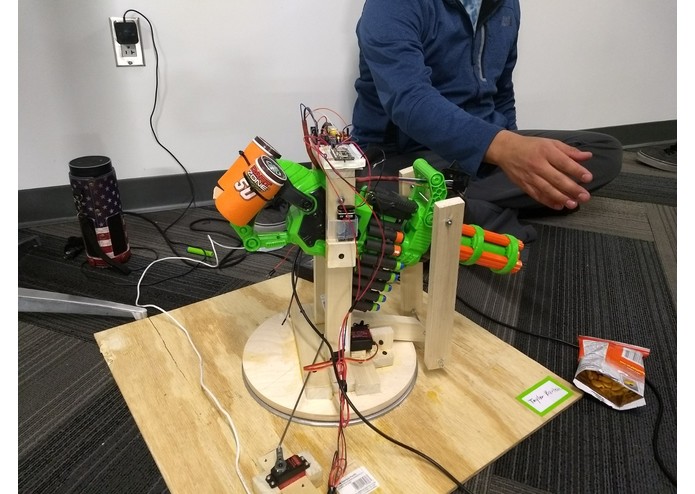
Locked and Loaded


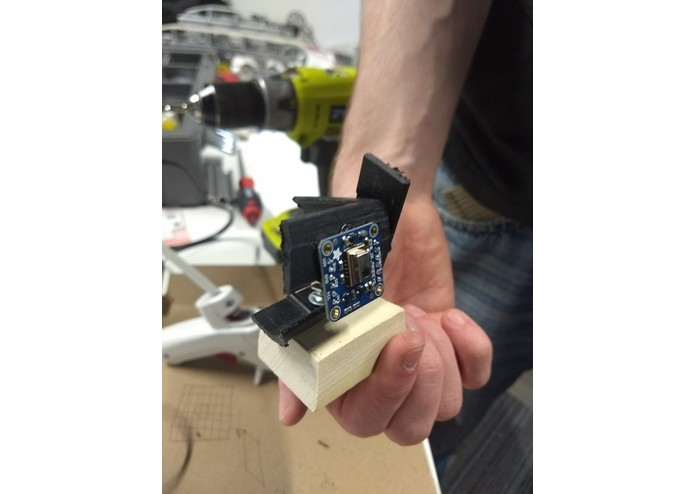
Adafruit had an extremely inexpensive thermal camera. Taylor always wanted to create a nerf turret for his basement wars. With Hack ISU approaching fast, he called his good friend Harlin, who called his good friend Abel. The team was born and they all bumped into Kacao. He joined in the team's excitement excitement as they all began brainstorming their project.
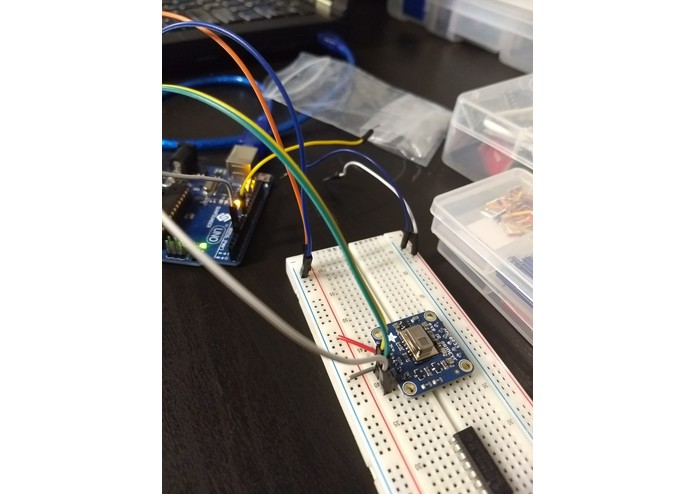
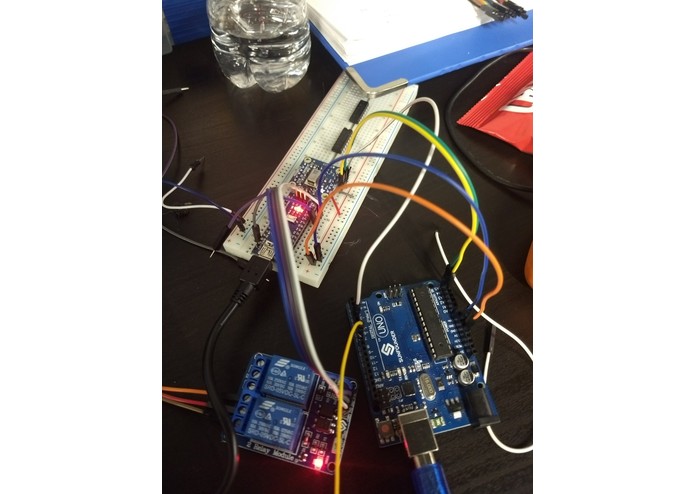
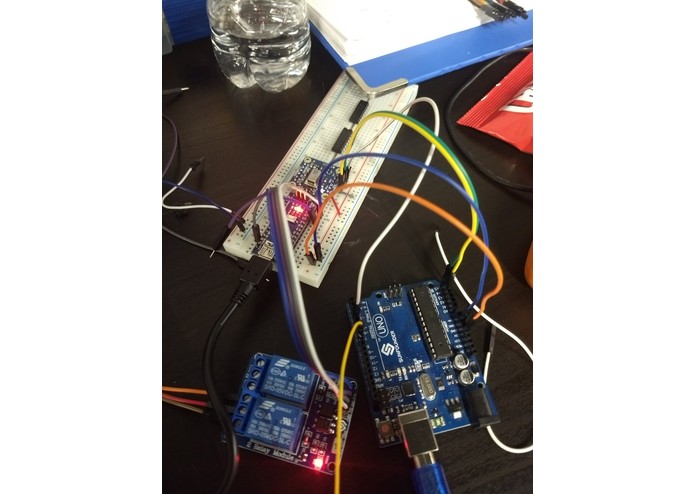
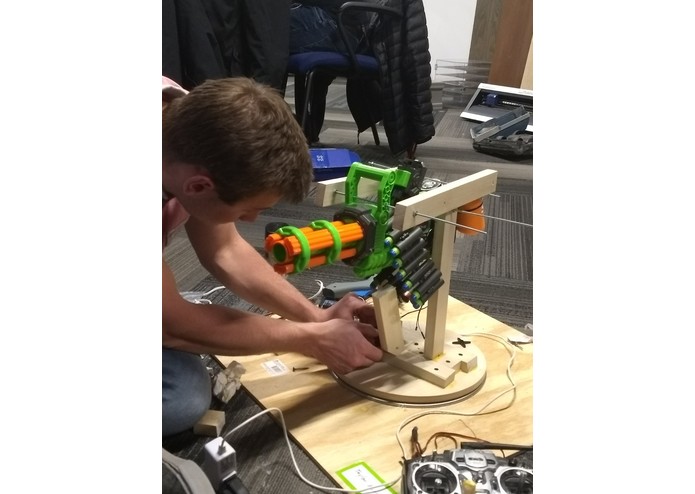
The turret we built tracks back and forth until it finds a target. Once the target is found, it fires. We used an arduino, two servos and a the thermal camera.
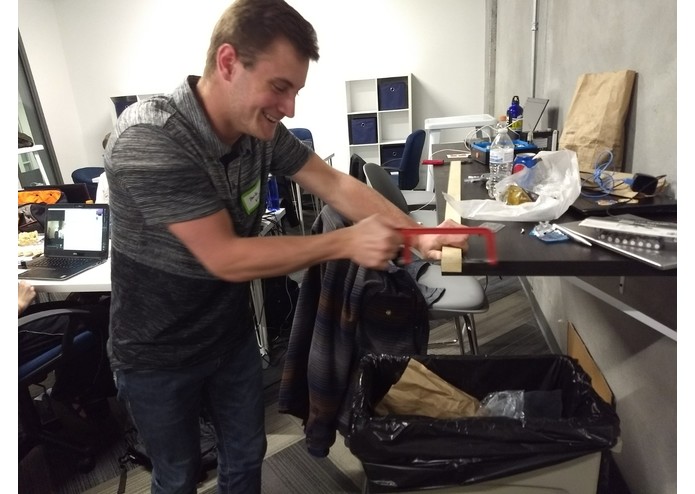
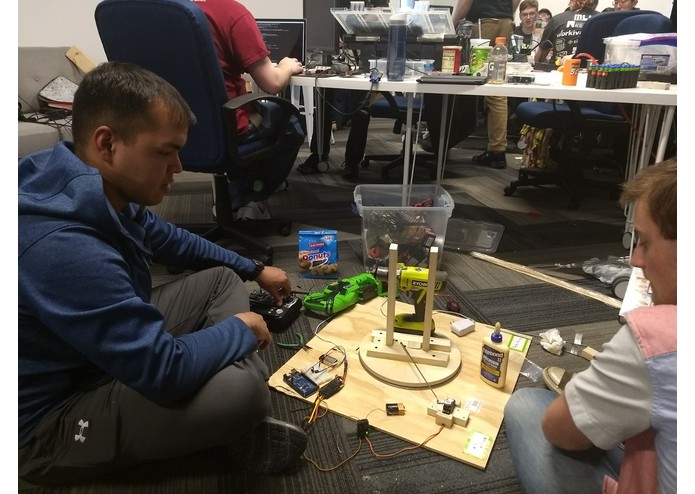
In building our project, we used mostly parts that we found at Lowes. Are large portion of our design process happened in that store. We sat down, drew pictures. But mostly, we grabbed things off of shelves and got creative.
We ran into many programming, mechanical and electrical issues. However, each team member was able to step outside their comfort zone. Abel, the mechanical engineer on the team, troubleshot and fixed a few circuits. Kacao and Taylor were struggling with programming. However, the aerospace engineer, Harlin, came in clutch and rewrote the firmware. Taylor, the electrical engineer, was instrumental in the mechanical design process. Kacao, more comfortable with software, worked with his hands anytime he got a chance. All members learned a lot in getting out of their natural element.
We are most proud of the simplicity in the mechanics of our design. It is simple, robust and very effective. It would be easy to recreate and reproduce. Also, the parts are very inexpensive. We had a 3D printer on hand, but we didn't have to use. All the parts that we used can be found at any local hardware store.
We plan on mounting our turret onto tank tracks. Then, with an rc controller and an FPV camera to win every nerf battle. You can probably say that we need to get nerfed.


Log in or sign up for Devpost to join the conversation.