-
-
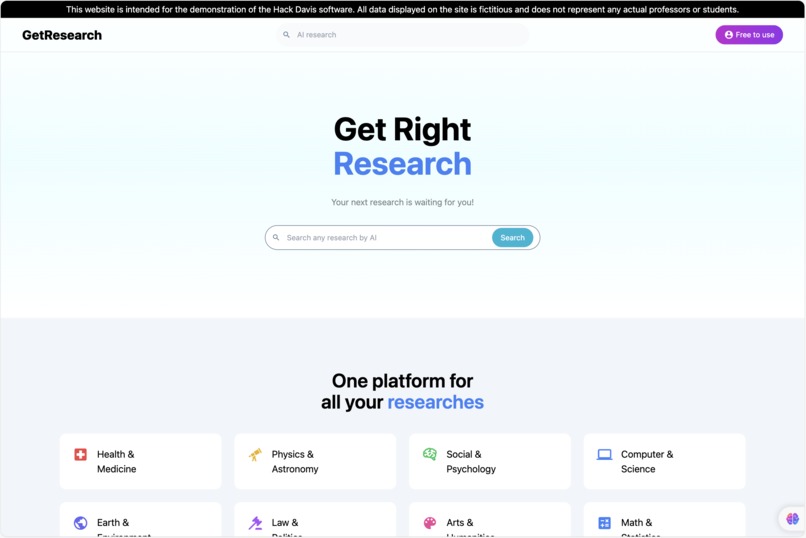
landing_1
-
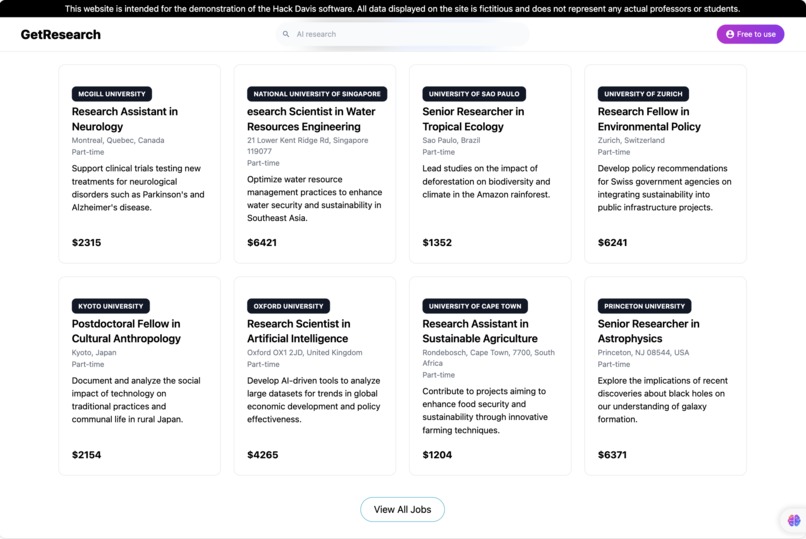
landing_2
-
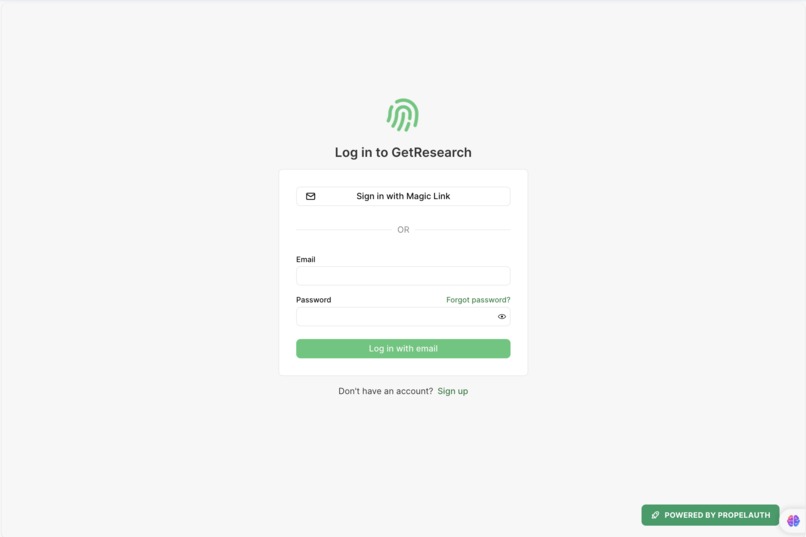
propelauth
-
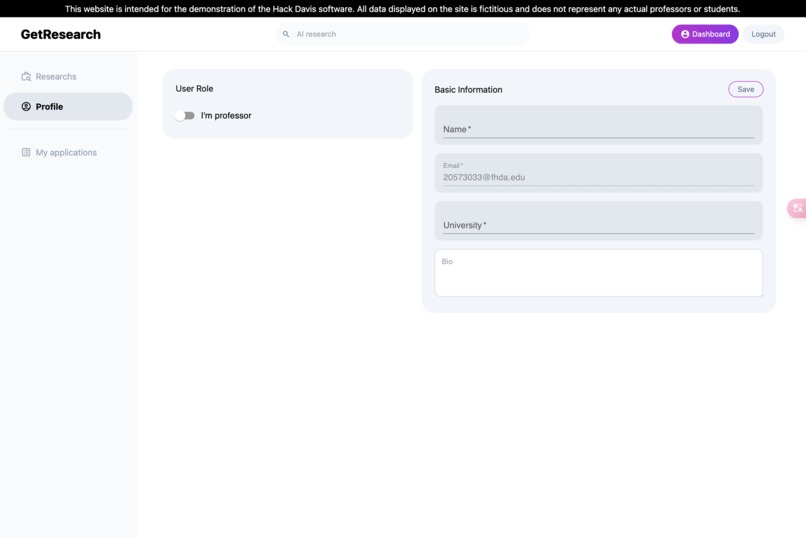
dashboard_profile
-
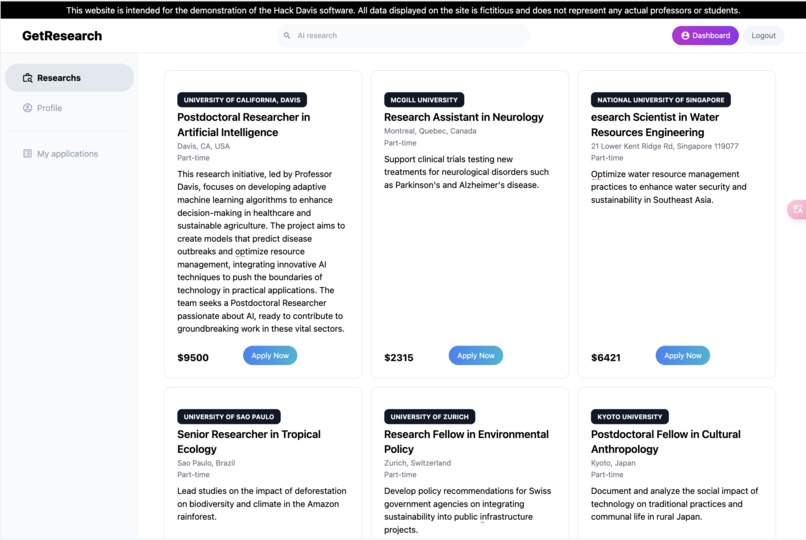
dashboard_research_list
-
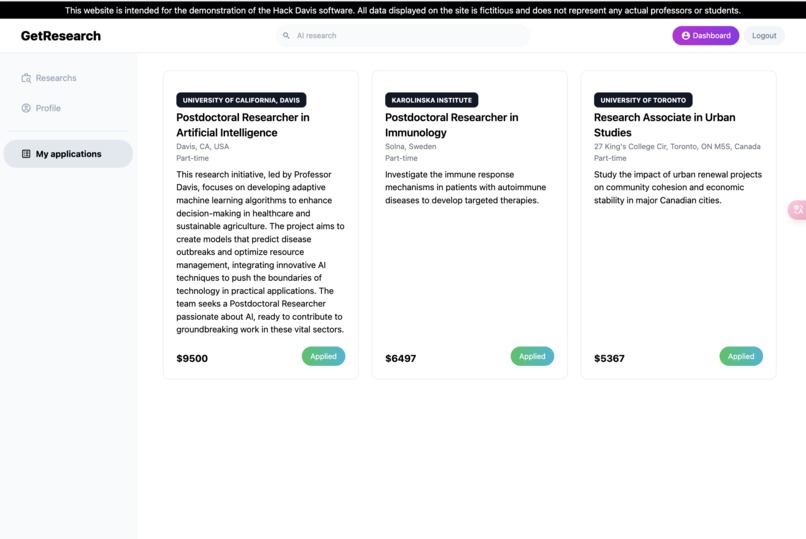
dashboard_apllication
-
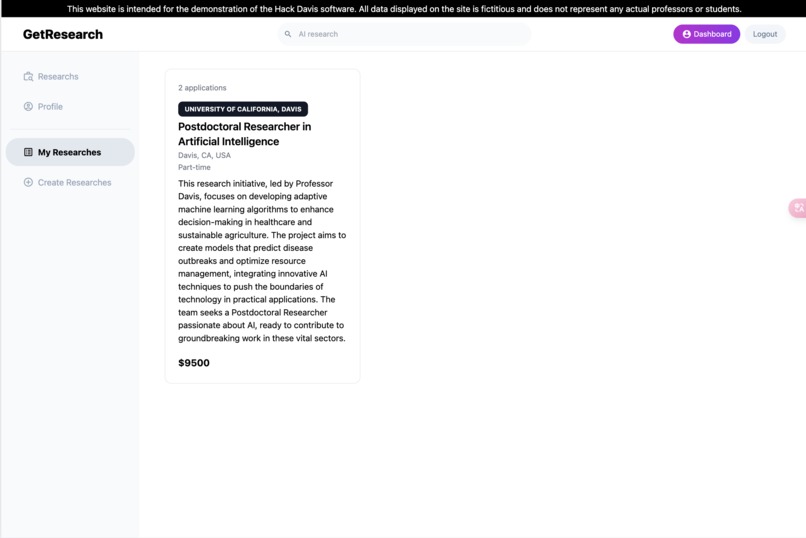
dashboard_professor_researchlist
-
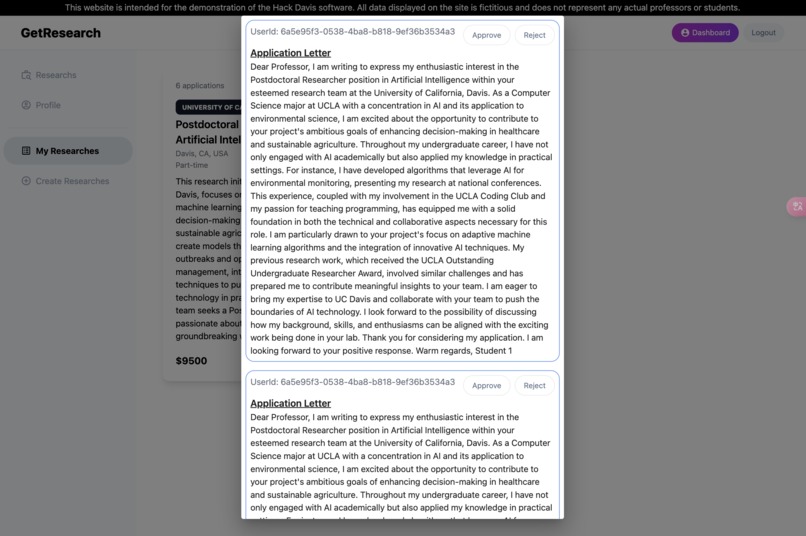
dashboard_professor_application
-
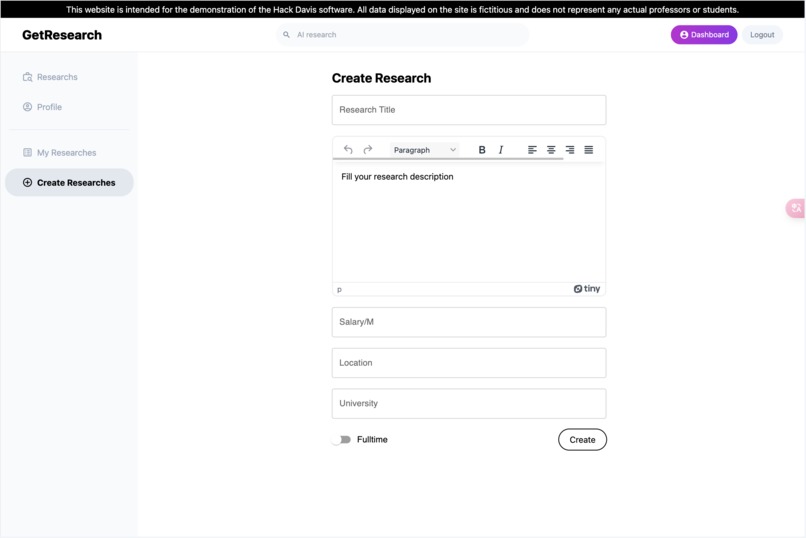
dashboard_professor_createresearch


Inspiration
GetResearch was inspired by our personal experiences as community college students eager to engage in academic research. We encountered numerous obstacles in finding suitable research opportunities—navigating complex school websites, sifting through outdated project listings, and repeatedly searching for specific research details. We also observed that many capable professors lacked visibility and access to a platform for recruiting team members. These challenges highlighted a gap in the academic research recruitment process that GetResearch aims to fill, making it easier for both students and professors to connect and collaborate on research projects.
What it does
Getresearch serves as a dynamic online platform tailored for academic research collaboration. It efficiently connects students seeking research opportunities with professors looking to recruit team members by: Real-Time Updates: Ensures all project listings and professor posts are current and relevant. Dual Functionality: Allows students to find research projects and professors to post recruitment ads. Streamlined Application Process: Enables professors to review applications seamlessly and make informed decisions on candidate selection. Enhanced Visibility: Provides a platform for less renowned professors to gain recognition and attract potential research candidates.
How we built it
We utilized PropelAuth for user authentication and FastAPI for backend development, ensuring robust security. Our frontend was built using React, enhancing user interaction with its dynamic components. The backend was linked to a PostgreSQL database, structured for complex data management. Finally, we deployed the application on an AWS Cloud Server to benefit from its scalable infrastructure and reliable performance. Each technology was pivotal in creating a secure, efficient, and user-friendly application.
Challenges we ran into
In this competition, we encountered several significant challenges. Not every teammate was a computer science major, which meant that we had to find ways to effectively integrate diverse skill sets. Moreover, we faced countless technical issues ranging from database construction to cloud server deployment. The different states between local and remote environments required us to modify our code repeatedly to ensure functionality.
Accomplishments that we're proud of
We are particularly proud of our teamwork and the resilience we demonstrated throughout the competition. Despite the diversity in our academic backgrounds and the technical hurdles we faced, our cooperative efforts enabled the project to recover and improve after each setback. Our ability to resolve these issues and get the project to run perfectly in the end stands as a testament to our dedication and skills.
What we learned
The experience was profoundly educational, not just in terms of technical skills, but also in understanding the importance of perseverance and collaboration. The 24-hour endless testing phases underscored the significance of willpower in overcoming adversity. We also gained practical knowledge in technical areas like database and server management, which are crucial for our future endeavors in technology.
What's next for GetResearch
The future of GetResearch is focused on expanding our capabilities to ensure that we are not only simplifies the recruitment process but also fosters a vibrant academic community, encouraging knowledge sharing and innovation through following enhancements: Networking Features: We plan to integrate networking functionalities, transforming GetResearch into a research-centric community platform similar to LinkedIn, where users can connect, share, and collaborate beyond mere recruitment. Academic Information Hub: Aim to incorporate a feature that aggregates valuable academic content and updates, making it a go-to resource for academic news, publications, and events. Global Expansion: We are looking to scale the platform to include institutions and users from around the globe, facilitating international research collaboration and diversity in academic projects. Advanced Matching Algorithms: Develop sophisticated algorithms to match students and professors based on research interests, skills, and educational background to optimize team compositions.
Demo Website
Built With
- .netcore
- amazon-web-services
- asp.net
- c#
- css
- fastapi
- html5
- javascript
- postgresql
- propelauth
- python
- react
- techdomain
- typescript
- vite


Log in or sign up for Devpost to join the conversation.