-

hit shuffle thumbnail
-
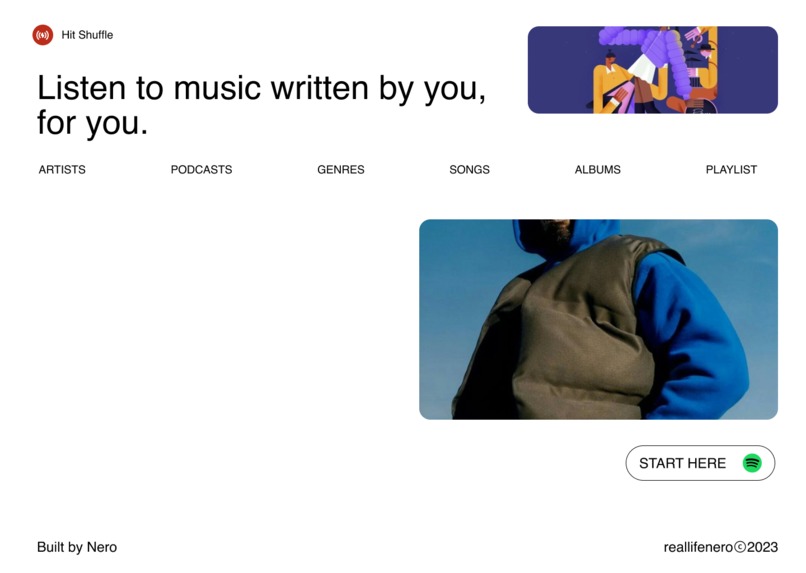
Home Page
-
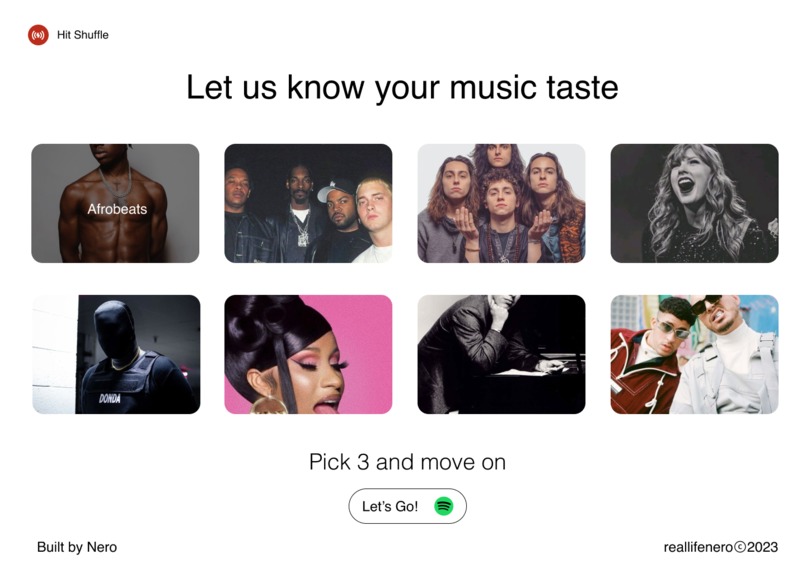
Data Collation page
-
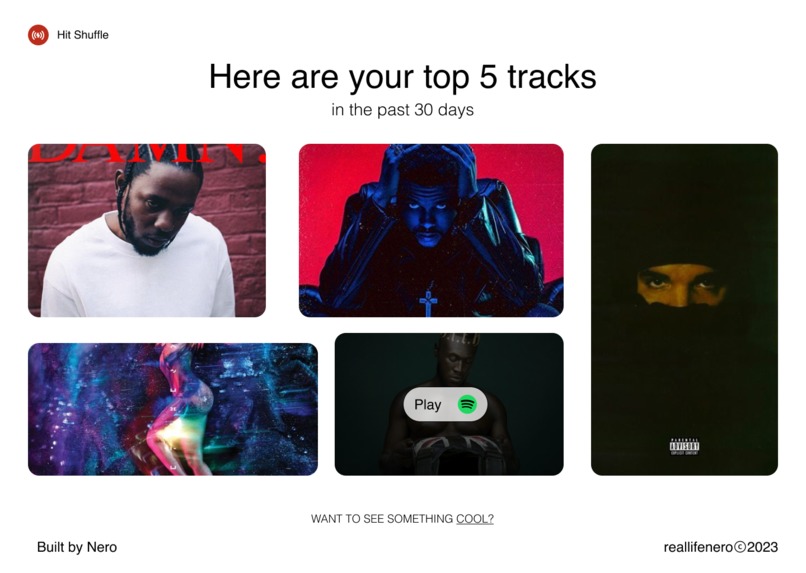
top 5 tracks


Inspiration
We hoped to build a tool that helps users discover new music based on their moods or emotions and interests. This application uses Spotify's vast library of music and metadata to analyze a user's listening history and create custom playlists that match their current emotional state. Additionally, the application provides features such as lyrics analysis, artist information, and song recommendations based on a user's favorite genres or artists.
What it does
The application uses Spotify's data and metadata to provide users with personalized and streamlined music experiences. The first version of the application would focus on music discovery and emotional connection, while the second version of the application would focus on music organization and management.
How we built it
For me to be able to build this application I set up your development environment with next Js, installed the necessary dependencies, built the component I needed for authentication of the application, use the Spotify API to fetch data, build your application UI using React components, before testing and deploying my application.
Challenges we ran into
Setting up authentication with the Spotify API was quite complex and required a good understanding of OAuth 2.0. It was challenging to properly authenticate my application and obtain a valid access token. The Spotify API also has some limitations, such as rate limits on requests and restrictions on certain endpoints. It wasn't easy to work within these limitations and optimize my requests to minimize API calls. The data structure returned by the Spotify API was in fact very complex and nested, which made it difficult to parse and work with.
However, it wasn't as challenging to properly map the data to your application's state and update my UI dynamically.
Accomplishments that we're proud of
Building a complex application like this showcases a strong understanding of web development, API integration, and UI/UX design principles. If successful my application can have a positive impact on users by providing them with a better music experience. Users may appreciate the personalized playlists or the ability to organize their music library more effectively.
What we learned
I primarily learned about the steps involved in building the application, including setting up my development environment, installing dependencies, authenticating my application with the Spotify API, using the API to fetch data, building your application UI with React components, and testing and deploying my application
What's next for Hit Shuffle
I would be working on version 2 which would focus on the organization and management of the react application. Making greater use of Node js and databases.


Log in or sign up for Devpost to join the conversation.