-
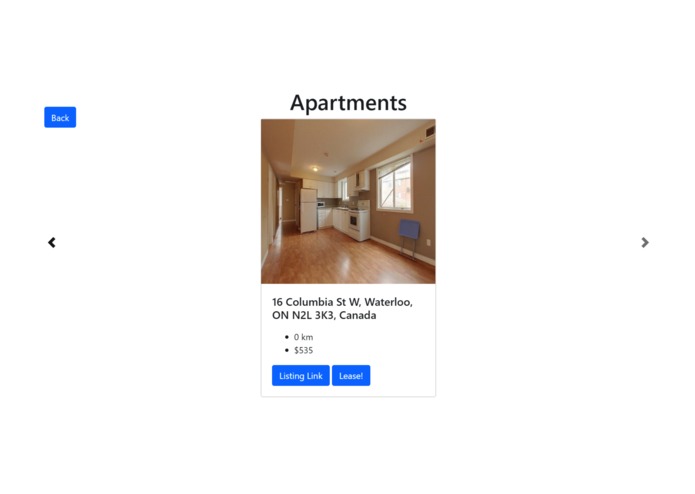
apartment card view
-
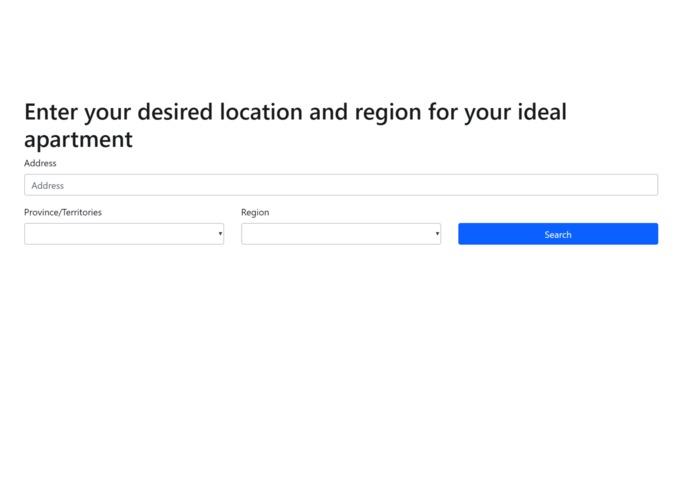


Inspiration
being students and always on the move between internships and school terms, finding good housing for the semesters have always been a tough task. We wanted to streamline and minimize the process, allowing users to have a more pleasant experience finding their next home.
What it does
User signs up for Housr and enters criteria for their ideal housing, Housr then scrapes kijiji (Canadian Craiglists). It also views the images linked to postings and uses computer vision based on GoogleNet Inception V2 to generate an overall rating for the posting.
How we built it
Housr is built on node.js with a native boot-strapped front end, authentication is handled by Firebase, and documentation signing is handled with docuSign APIs. The machine learning model was created in Tensorflow Keras, using image augmentation on a pretrained model to train it to recognize apartment quality.
Challenges we ran into
docuSign APIs were hard to setup and use. The online documentation was extremely vague and misleading, with code samples that are outdated and do not work. In addition, finding a good model to analyze pictures was very difficult. We initially had our own deep convolutional model in Keras, but our hardware was not good enough to make it sufficient complex. So, this model did not achieve the necessary accuracy.
Accomplishments that we're proud of
The model using Inception V2 achieved much better accuracy than the convolutional model


Log in or sign up for Devpost to join the conversation.