-
-
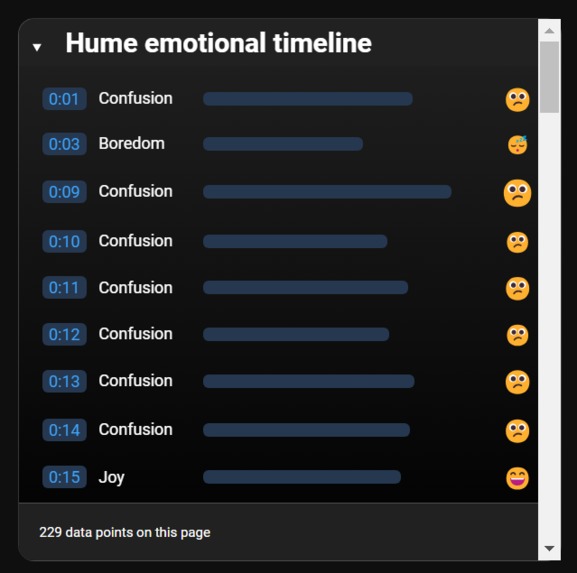
Close up of HTML injected from our browser extension containing features of timestamps, emotions of names/emojis/amplitude, and data points.
-
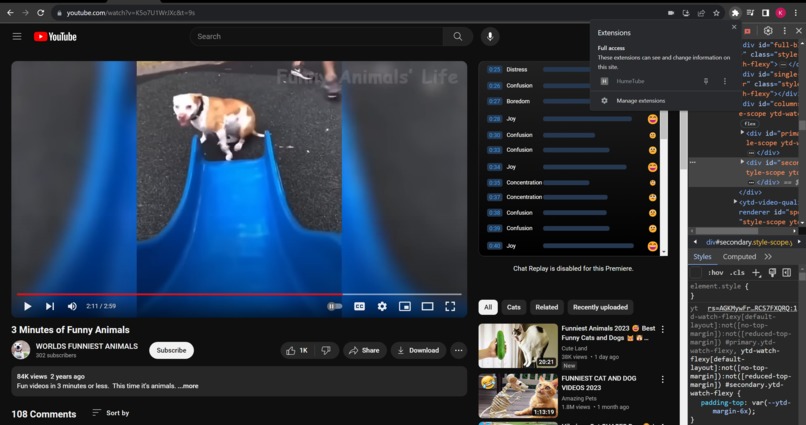
Browser extension working and showing the elicited emotions per scene in video.
-
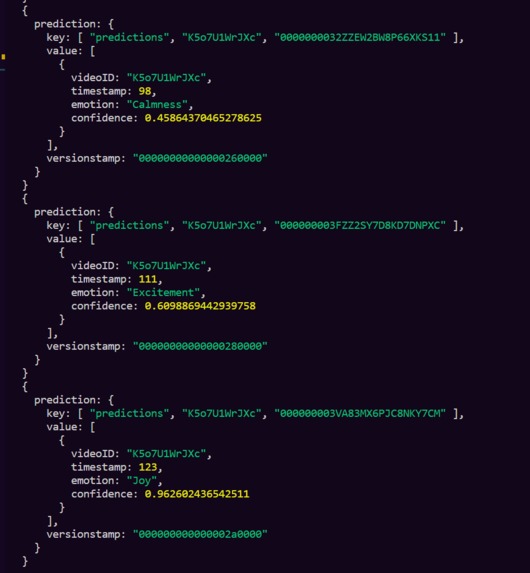
Hume AI classifying provided data of facial reactions towards a particular video.
-
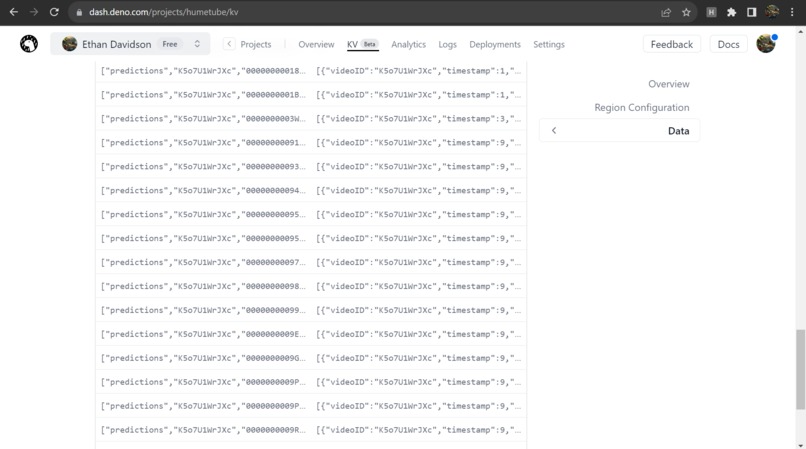
Storage and deployment on Deno Deploy.


Inspiration
Our inspiration for this project stemmed primarily from Hume AI. Upon seeing Hume AI's capabilities of capturing human emotions, we came up with the idea to analyze human expressions towards YouTube videos. Similarly to YouTube's "most replayed" analytics, we wanted to have the ability to see the most common emotion towards certain scenes in videos. For example, if someone was watching a scary movie on YouTube, they could see when the average person had evoked an emotion of fear during the video.
What it does
Our product will offer users a comprehensive timeline during which human emotions were evoked throughout the video. This feature allows viewers to gain insights into the collective emotional responses experienced by the average individual while watching specific moments in the video.
How we built it
HumeTube works as a chrome browser extension that captures data from the users by utilizing the front-facing camera. We then extract the timestamp of the YouTube video from the DOM and simultaneously collect the emotions of the client to then interpret using the Hume API for emotional classification.
The user can then load a YouTube video in which the browser extension will query the data layer to retrieve the emotional history playback list that indicates strong correlations between the average emotions observed throughout the video's timeline. This information will be accessible via a collapsible HTML table, directly injected next to the YouTube player.
Challenges we ran into
A couple challenges we ran into was navigating outdated documentation of creating a chrome browser extension and furthermore, providing access to the laptop to capture recordings of the user's emotions.
Accomplishments that we're proud of
The biggest accomplishments we've achieved come from overcoming our challenges. The initial milestone was developing the browser extension to record every timestamp of the video. The second achievement involved configuring the camera to capture a single frame, encapsulating our reactions attached to a specific timestamp.
What we learned
We learned a lot from this experience. We learned how to create browser extensions, manipulate data using Hume's batching API, and store data using CockroachDB.
What's next for HumeTube
We have a lot of features in mind to continue implementing further including aggregating emotions based on regions, providing a trend line based on the intensity of emotions evoked during specific scenes, and potentially creating a larger frontend to collect and analyze all data that retrieves the bigger picture (such as "video that had the highest average emotion of happiness", etc.).
Built With
- deno
- humeai
- javascript
- typescript


Log in or sign up for Devpost to join the conversation.