-
-
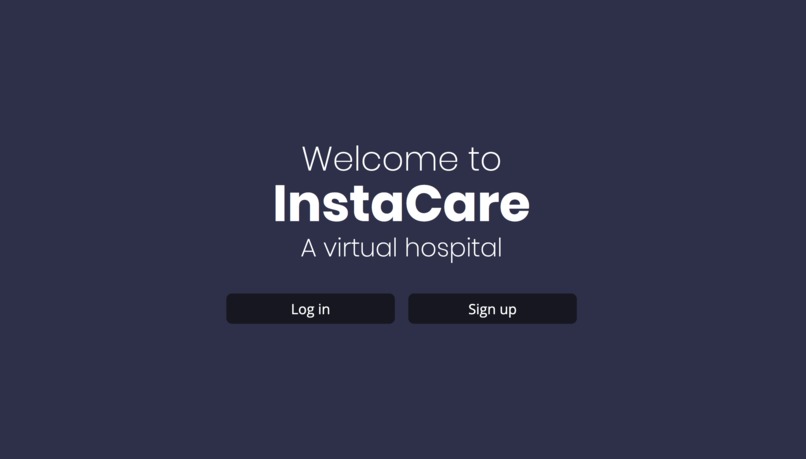
Opening page
-
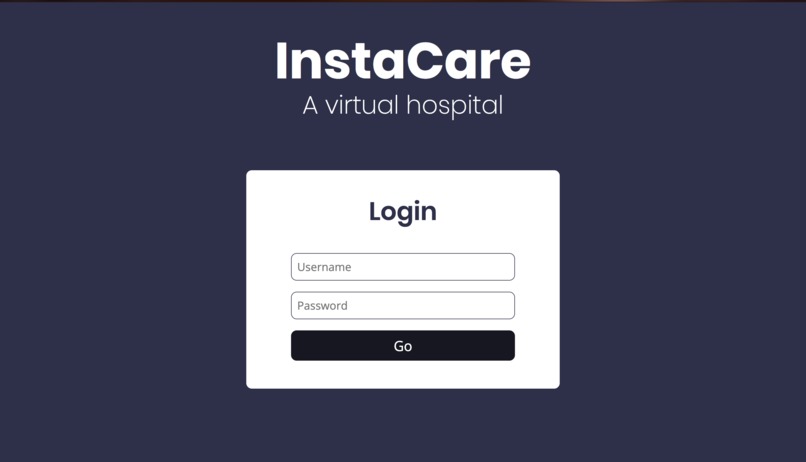
Login screen
-
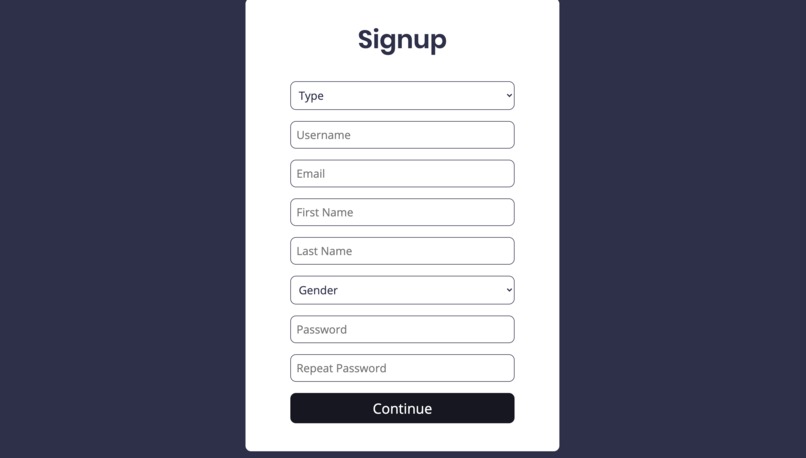
Sign up screen


Inspiration
During the COVID-19 global pandemic, hospitals are crowded with infected patients. Because of this, visiting the hospital for medical assistance isn't necessarily the safest option. However, the demand for healthcare assistance throughout this pandemic cannot be ignored. This is why we were inspired to create a virtual hospital.
What it does
Instacare is an online platform that connects available doctors to patients in need of assistance, from the care of their home. Doctors are required to provide proof of their certification, before being permitted to assist patients. On this platform, patients may enter a queue to get assistance from a doctor that specializes in the treatment they need. Through this platform doctors may also prescribe and email the prescription to patients if needed. This maximizes a doctor's assistance to a patient without the need to travel to a hospital. This platform also privately stores a user's medical history with the platform, so that all doctors who are treating the patient know their medical history on this platform, and can determine if any pharmaceutical drugs are ineligible for use or not.
How I built it
We used front-end technologies for the sign-in and login-page, and the database is made with MongoDB and NoSql. After the patient or doctor signs-in respectively, their information is stored on the Google Cloud. We used Heroku to host the website, and used WebRTC technologies to have a real-time chatting environment between users.
Challenges I ran into
Some of our biggest challenges while developing this platform was implementing the video chat feature, and, making the database read information from the website. For the video, we tried using multiple APIs to get a video chat to work. but none did, however we got the chat function to work, which is what is shown in the demo. Making the database read information from the website was a challenge, however we were able to make that work.
Accomplishments that I'm proud of
We are proud to successfully host the website and make it public. We are glad to make the backend and the various APIs integrate smoothly with the frontend to ensure that the intended functionalities of the application is not lost. We are also proud to successfully implement the WebRTC sockets between the clients for the purposes of communication. We even successfully integrated Google Cloud into our project for the No-SQL, and registered the domain intacare.space in domain.com.
What I learned
We learned more about using sockets, creating a nice User Experience and Interface. We learned more about new technologies such as WebRTC and how streams of video and audio work in various modern browsers. We also learned more about the capabilities of Google Cloud and how it is a great tool for developers to think less about configuring their projects but more about their actual implementations of the project itself.
What's next for Instacare
Within these 24 hours, a prototype for the website and its functionality has been developed. To make this interface easily accessible and helpful for everyone, there are many ideas and tools which we hope to implement to improve the platform. Some of these include:
- Text to speech & speech to text capabilities (For those who are hearing or visually impaired)
- Language translation capabilities (To make this platform useable globally by everyone, and so that people can get help from medical professionals everywhere)




Log in or sign up for Devpost to join the conversation.