-
-
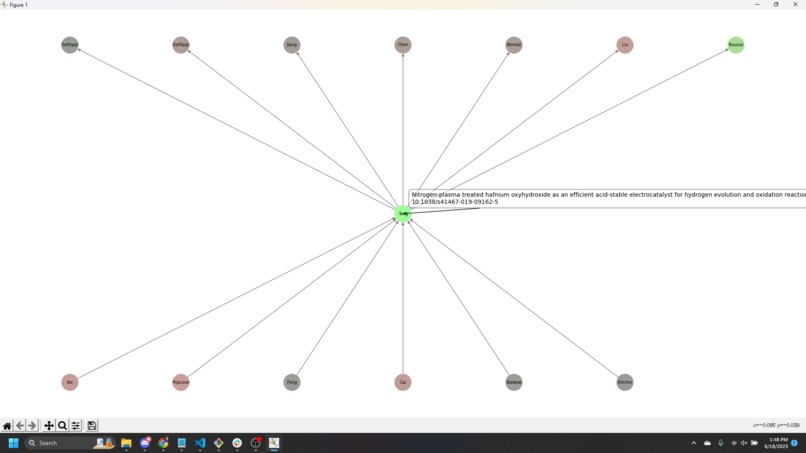
Visualization of a 1D Node Graph
-
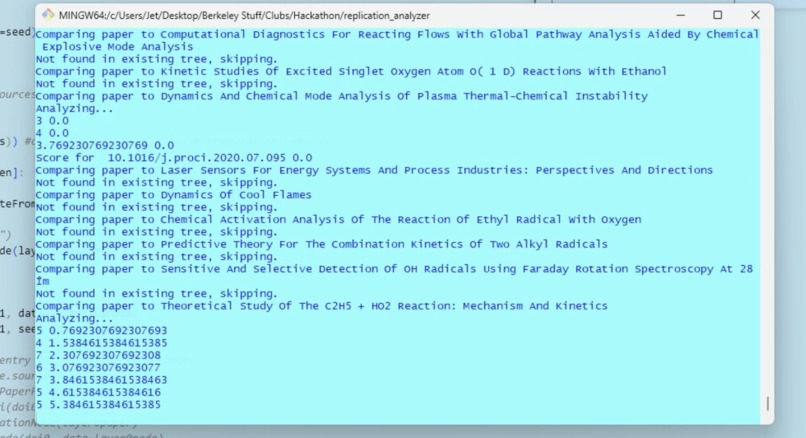
Exploring Paper Correlation: Analyzing Relationships between Two Research Papers
-
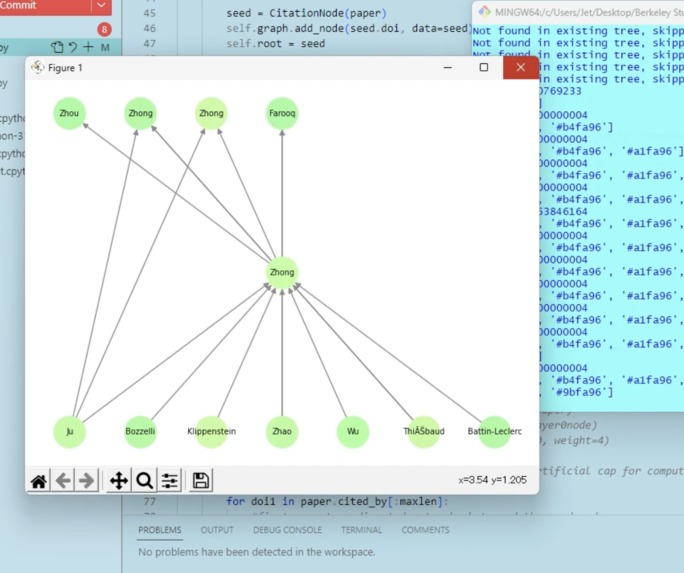


Poisoned Ivies: The First GPT Method to Determine Reproducibility of Princeton's Scientific Papers
Inspiration
In an era where the "publish or perish" mentality reigns, the issue of reproducibility in scientific research has become prominent. In 2016, a survey by Nature highlighted a jarring fact: 70% of scientists failed to reproduce their peers' experiments. The paradox is most prominent among physicists and engineers, who seem the most confident yet are often associated with high-profile cases of irreproducibility.
These alarming statistics motivated us to delve into the issue and propose a solution. We aimed to uphold the integrity of the scientific method and realized that addressing the reproducibility crisis could also benefit businesses, particularly in the tech sector, which invests heavily in research and development.
What Our Project Does
We centered our investigation on the Applied Physics department at Princeton, evaluating the work of 27 faculty principal investigators (PIs) from 2010 to 2020. We aimed to:
- Track citations of the PI's papers to identify attempted reproductions and their results.
- Analyze the correlation between reproducibility results and the social pressures faced by researchers.
How We Built It
Our project comprises several key stages:
Literature Review:
We started by reviewing relevant literature to understand the current status of irreproducibility in physics research.
Data Retrieval and Analysis:
We designed a custom Python script to automate the retrieval and analysis of scientific articles. The script fetches all accessible papers authored by the selected PI, stores important data, and generates a search tree based on the paper. For each paper, we generate a reproducibility score based on GPT-4 prompts.
Prompt Engineering:
The prompts were carefully designed to evaluate the level of reproducibility between papers. A score ranging from -1 (clear dispute) to 1 (clear support) is assigned to each paper.
Visualization Enhancement:
We enhanced our project's visualization to illustrate the network of papers clearly, making it easier for researchers to understand the relationships and credibility of the papers.
Challenges We Ran Into
The most significant challenges we faced during the project's development included locating appropriate APIs for data retrieval, efficient memory management, optimizing runtime, and gaining access to open-source research papers. The first few hurdles were addressed by refining our data structures and algorithms, and strategically reducing the layers in our tree structure to just one above and below the target nodes. We were also able to enhance our program's functionality by integrating it with the visualization code, judiciously adding and removing information to improve its intuitiveness and interactivity. However, the lack of open-source research papers was a persistent obstacle, highlighting the need for more accessible scientific literature to further enhance the scope and efficiency of such reproducibility analysis tools.
Accomplishments We're Proud Of
We take pride in our innovative use of prompt engineering, development of an automated AI web scraper for citations, memory management and runtime optimization, and enhancement of visualizations for an intuitive user experience.
What We Learned
The project enriched our skills in prompt engineering, memory management, runtime optimization, and user experience enhancement. We also learned the importance of continuous iteration, collaboration, and ethical considerations in research.
What's Next
Our future plans include broadening the scope of our project beyond Princeton's papers by integrating with the Princeton API and other diverse research sources. We also plan to investigate chains of related papers to understand the broader impact of any flawed research. We are committed to advocating for a shift from publication pressure to quality in research, fostering a culture that values thorough and reproducible studies. Collaborations with tech companies are also on the horizon, aiming to test and optimize our program on larger, real-world datasets. Additionally, we plan to devise an effective marketing strategy, emphasizing our program's potential in enhancing research outcomes and promoting a more reliable and trustworthy scientific community.
By addressing the reproducibility crisis, our project can significantly impact both academia and industry. It provides an effective way of evaluating the credibility of scientific research, which could potentially revolutionize how research is conducted and validated.


Log in or sign up for Devpost to join the conversation.