-
-
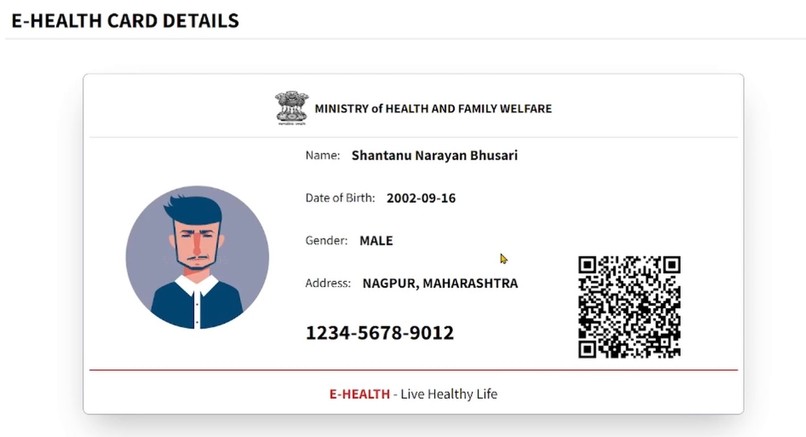
E health card
-


Inspiration:-
The inspiration for creating a medical blockchain system lies in the need to improve the security and privacy of medical data, while also making it more easily accessible to authorized parties. By using blockchain technology, medical data can be securely stored and shared among different healthcare providers, such as hospitals and clinics, without the need for a central authority. Additionally, patients would have greater control over their own medical data, and would be able to grant access to their data to specific healthcare providers as needed. Overall, the creation of a medical blockchain system would greatly enhance the efficiency and effectiveness of the healthcare system, and would improve the overall health and well-being of patients
What it does
A health data system built on blockchain technology would do the following:
Provide secure storage for patient information: The decentralized nature of blockchain technology would ensure that patient data is stored in a secure and tamper-proof manner, protecting it from unauthorized access or breaches.
Facilitate data sharing: The system would allow authorized healthcare providers and researchers to access and share patient data in accordance with patient consent and data privacy regulations.
Improve data interoperability: The system would enable the sharing of patient data between different healthcare organizations and systems, which would improve the continuity of care and medical research.
Automate healthcare-related processes: Smart contracts on the blockchain platform could automate various processes such as claims processing, medical research and medical billing.
Enable patient control over their data: Patients would have the ability to control and manage access to their personal health information (PHI) through the use of digital identity and consent management tools.
Improve transparency and trust: The system would provide transparency and immutability to the stakeholders, ensuring that the data is accurate and has not been tampered with.
Lower costs and improve efficiency: By reducing the need for intermediaries and automating processes, the system would lower costs and improve efficiency across the healthcare system.
How we built it
Tech stack that we use is known as MERN stack which comprise of MongoDB, ExpressJS, ReactJS and NodeJs and for web 3.0 tech truffle enviorment is used to create a blockchain.
For Patient and doctor registration we require a centralised database i.e mongodb which uses expressjs to create an api.
Metamask is used to create a connection between application and truffle enviorment.
Truffle provides 100 test ethreum to test our application.
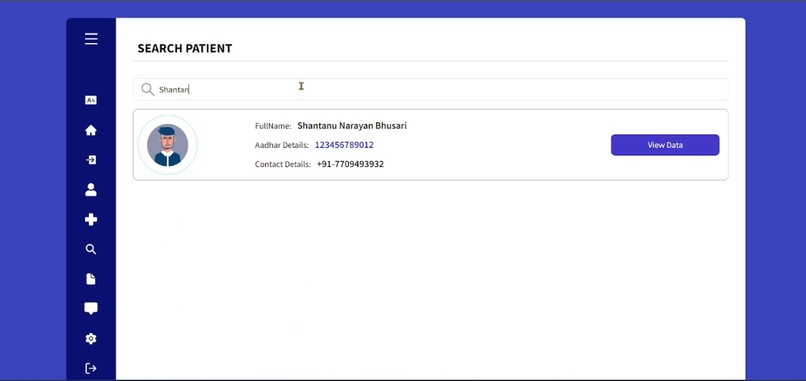
After successfully login application doctor can search patient data by thier name,email and adhar card number. Search functionality requires mongodb query and regex.
Patient have one E-Card that gives an url which redirect the server for health records.
Challenges we ran into
There are several challenges that may be faced when implementing a health blockchain system, some of which include:
Data privacy and security: Ensuring that patient information is stored and shared securely and in compliance with data privacy regulations such as HIPAA can be challenging.
Interoperability: Integrating a blockchain-based system with existing healthcare systems and ensuring data can be shared between them can be difficult.
Scalability: As more healthcare organizations and patients join the system, it can become difficult to maintain the speed and performance of the network.
Regulation and compliance: Navigating the complex regulatory landscape for healthcare and blockchain can be challenging and requires expertise in both areas.
Adoption and user acceptance: Gaining the trust and acceptance of healthcare providers, patients, and other stakeholders can be difficult and requires a thorough understanding of their needs and concerns.
Technical expertise: Building a blockchain-based health system requires a high level of technical expertise and resources, which can be difficult to acquire.
Quality of data: Ensuring that the data stored on the blockchain is accurate and of high quality can be challenging, as it might require a lot of human verification, validation, and data curation.
Integration with existing infrastructures: Integrating blockchain-based systems with existing healthcare infrastructures and ensuring data can be shared between them can be difficult and requires a lot of expertise.
Accomplishments that we're proud of
We made such a great project in just a day and a sleepless night.
What we learned
Integration of so many technologys together to form such a great project. Using Web3 and encrpyting the whole data.Also,we learned about time managment
What's next for MediSecure [Team no: 95}
Ml MODEL For disease prediction using the symptoms Integrating insurance functionalities
Built With
- css
- express.js
- mongodb
- node.js
- react
- tailwind
- web3



Log in or sign up for Devpost to join the conversation.