-
-
pallit logo!
-
-
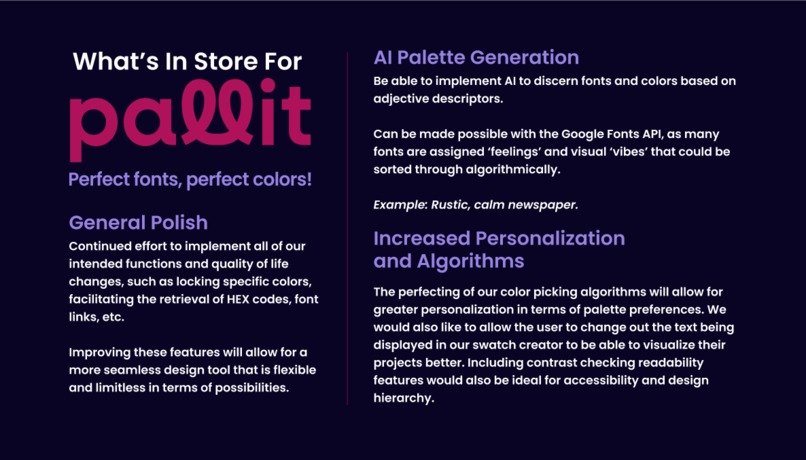
infographic for our next features!


pallit
By Sebastian Garcia, Elizabeth Pretto-Sotelo, Daniel Schevis, and Benjamin Quintero
pallit was inspired by the less design-inclined programmers and everyday individuals that need their design needs met!
What it does
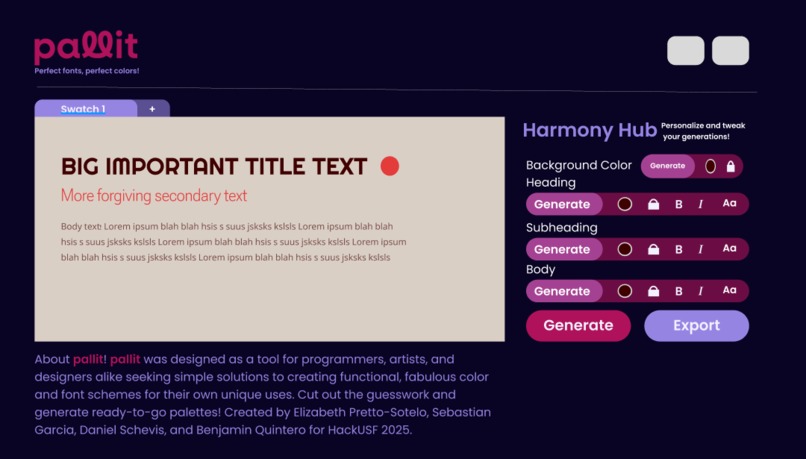
pallit creates color and font combinations based on color and font relationships.
How we built it
We created pallit with the next.js React framework, and implemented various libraries and APIS in order to create our program. We implemented Shadcn and Radix UI components, tinycolor2 & chroma.js JavaScript libraries, and the Google Fonts API.
Challenges we ran into
As first-time hackers, we had no idea where to even begin. Thankfully, we have the guidance of our KnightHacks peers who helped nudge us in the right direction. A lot of our hacking time was spent researching, undergoing trials, and endless errors, but at the end of the day, we were able to implement novel technologies in ways we would've never thought to before.
We unfortunately were unable to implement our AI Chatbot we had intended to create to help with our designs. Hopefully, we can get around to it in the future!
Accomplishments that we're proud of
We are so incredibly proud of the sheer fact we are submitting our project. It is not perfect, but with our limited experience, we were able to create a program that resembles our original vision and has the baseline functions of what we want pallit to become.
What we learned
We definitely are not Github masters, but we definitely went from complete novices to push and pull request warriors! We learned cooperation, new frameworks, technologies, and how to create something from nothing.
What's next for pallit
General Polish Continued effort to implement all of our intended functions and quality of life changes, such as locking specific colors, facilitating the retrieval of HEX codes, font links, etc. Improving these features will allow for a more seamless design tool that is flexible and limitless in terms of possibilities.
AI Palette Generation Be able to implement AI to discern fonts and colors based on adjective descriptors.
Can be made possible with the Google Fonts API, as many fonts are assigned ‘feelings’ and visual ‘vibes’ that could be sorted through algorithmically.
Example: Rustic, calm newspaper.
Built With
- next.js


Log in or sign up for Devpost to join the conversation.