-
-
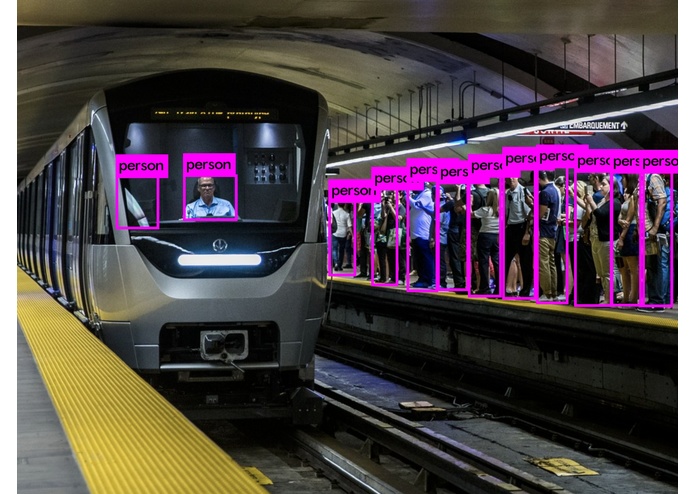
Detections within train stations
-
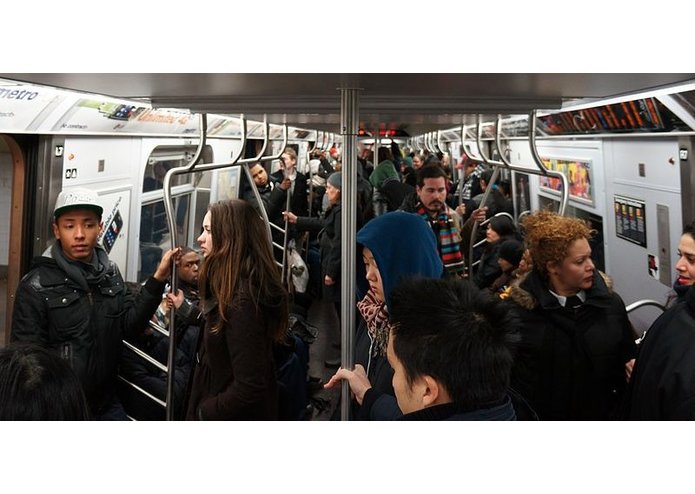
View inside crowded train car
-
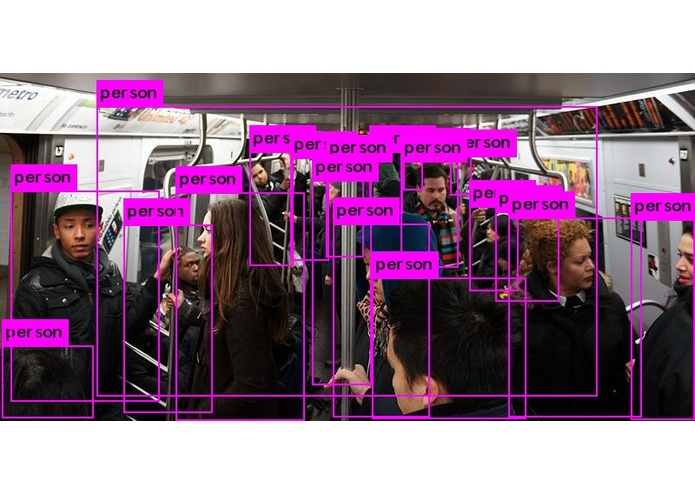
Detections
-
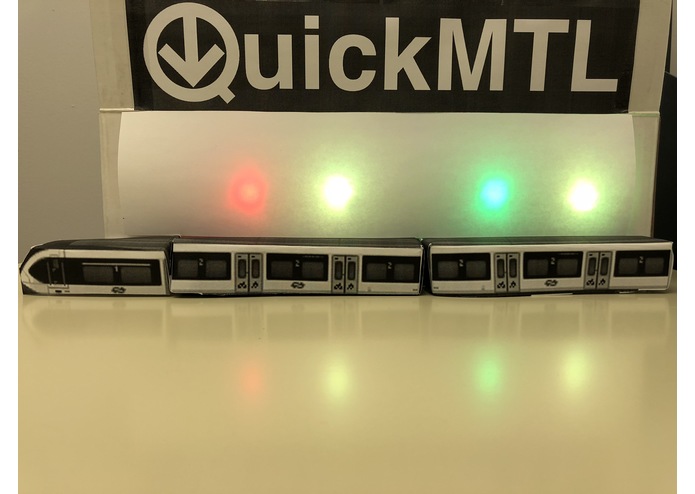
Prototype in a box
-

Little occupied train car
-

Detections


Inspiration
Inspired by daily life in Montreal and overcrowded metro cars, we decided to create a guiding system (prototype) that will allow people to find the least occupied train car while taking the crowd behavior on the platform into account.
What it does
Security camera feeds from inside metro stations and train cars are being used to analyze, predict and manipulate the movement of large crowds by guiding them via a light system. To achieve that we are using a Convolutional Neural Network that has been trained to detect people and bikes in live imagery.
How we built it
By combining OpenCV, CUDA, ROS, a raspberry-pi, and rgb-LEDs we built the prototype that we demonstrated during the hackathon. The processing pipeline uses artificial intelligence (CNN) to understand how occupied certain areas are. It then broadcasts the measurements to our main LED-display unit in the next station where in situ measurements of waiting people are perceived and included in our LED guiding system.
GREEN represents a combination of little occupied train cars and platforms. YELLOW and RED display a medium and high occupancy level, respectively.
Challenges we ran into
We ran into networking issues - networking is always the hardest part when it comes to IoT and robotics.
Accomplishments that we are proud of
Our simple, yet effective prototype and the effective processing pipeline that allows real-time operation.
What we learned
We learned how to function with little to no sleep and an overdose of caffeine.
What's next for QuickMTL
The next logical step would be to onboard STM, access their camera footage and conduct a real-life demo. QuickMTL has the capability to reduce boarding delays and simultaneously increases comfort level and happiness of commuters.
Thank you for traveling with QuickMTL!


Log in or sign up for Devpost to join the conversation.