-
-
Know where you're parking -- before you get there
-
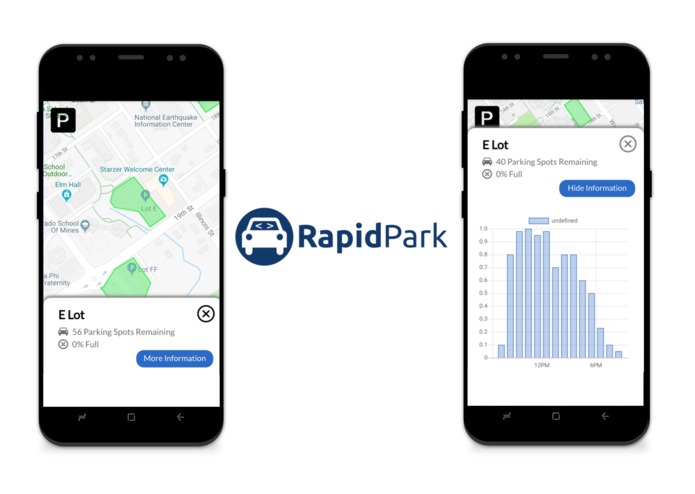
Know where you're parking -- before you get there
-
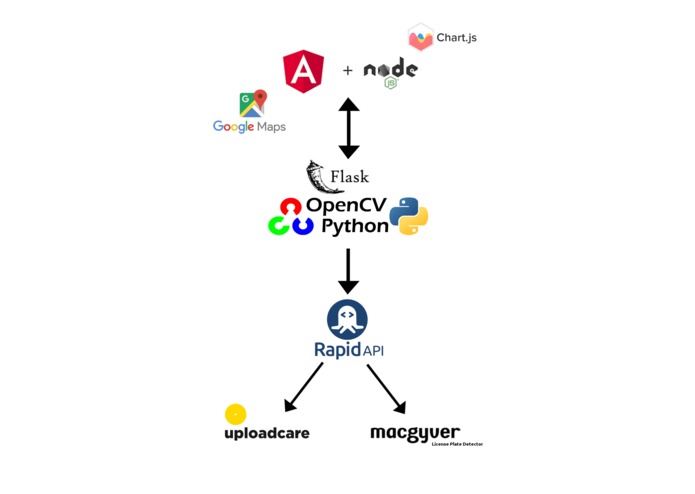
A plethora of tools were used to make this project a reality!
-
-
-


Inspiration
Parking at the Colorado School of Mines is always a tricky task-- our parking lots are on average 91% full during the week according to Mines' parking services. With so many cars and so little spots on campus, students often have to search for over 15 minutes to find a spot to park before class. We decided that it was time to put an end to this parking madness by taking a technological step in the right direction. Our solution-- RapidPark!
What it does
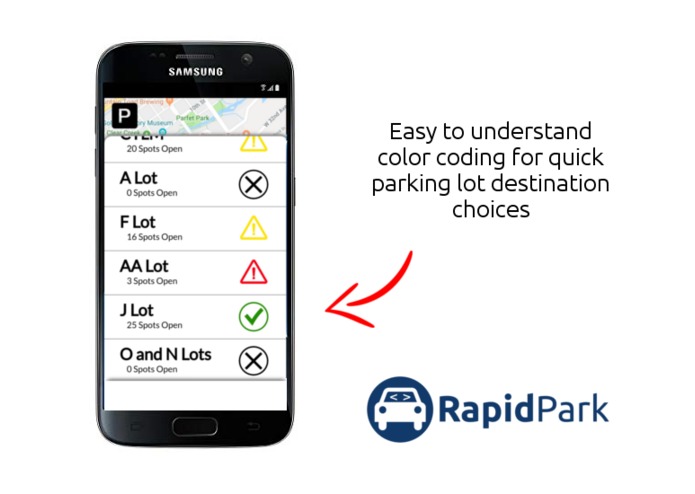
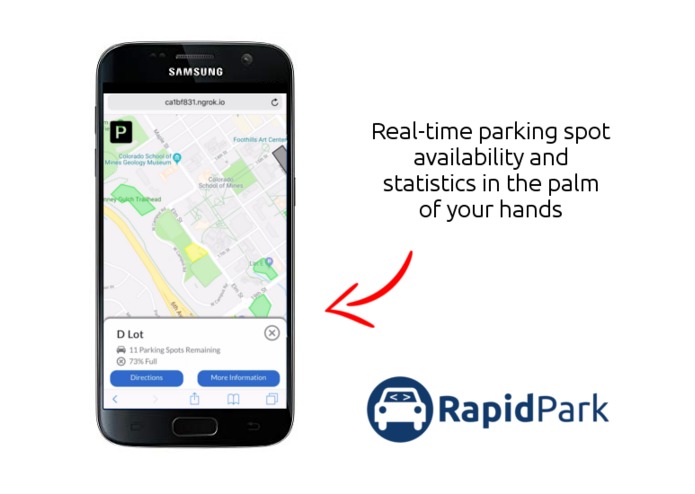
RapidPark provides both students and parking services with the technology necessary to lessen stress around parking on school campuses. For the student, RapidPark is a web-based application that acts as an easy reference for parking spot availability information. For parking services, it provides a system of license plate recognition and authorization to streamline ticketing and lot analysis.
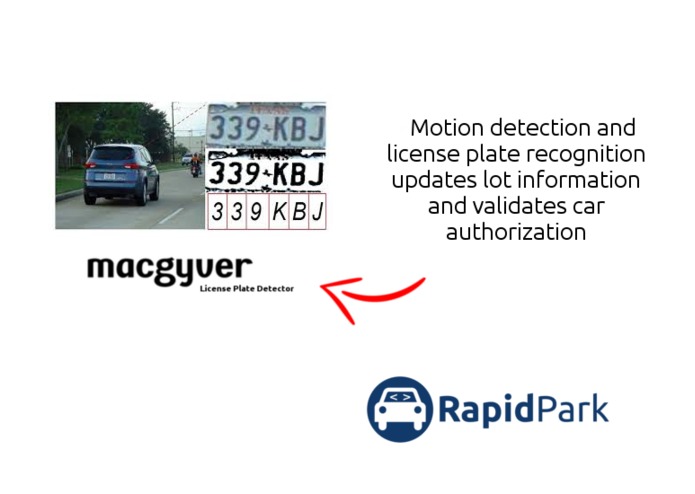
On the hardware front, RapidPark is a system of cameras stationed at entrances to parking lots that detects cars entering and leaving the parking lot. When a car is detected, it will update the current lot capacity on our heat-mapped google maps web application. The system updates in real-time, and uses fast computer-vision classification APIs to take the images of the cars and detects aspects of them, such as their license plates.
How we built it
We built RapidPark around an Angular webapp utilizing Python Flask on the backend. Any "detection system" that is capable of HTTP requests has the ability to update the parking lot availability. We used Python OpenCV for motion detection and frame parsing to detect direction and key frame grabs during the motion. We tested this system on a raspberry Pi 3, and subsequently created an entire detector for ~$50.
Challenges we ran into
Many of the challenges that we ran into centered around the use of APIs. We were thrilled to see how many APIs were available to us using the RapidAPI interface. Some APIs were harder to get started with than others, however. We wanted to use Google Cloud storage for our application-- however due to our unfamiliarity with API authentication, we couldn't to get Google Cloud strorage up and running couldn't implement it in the end.
Accomplishments that we're proud of
RapidPark is extremely fast and extremely intuitive. It also serves as a solution to a very real problem-- parking is consistently identified as one of the biggest problems on the Mines campus and we are confident it is similarly stressful on other campuses as well. RapidPark serves a very useful, inexpensive, and easily implemented tool to solve this parking issue. RapidPark was also very fun to develop, especially the more we got into it!
What we learned
Flask, Javascript, and rapidAPI! Before this project we were all novices in the use of APIs. Now, we feel much more confident in using them! Additionally, this application was a great mesh of frontend and backend development. Thus, we learned a lot about full stack development!
What's next for rapidPark
We would love to further implement the administrative side of RapidPark for real-time parking violation detection. Currently the system has the ability to identify license plates, we aim to streamline the authentication of these license plates for use with parking services.


Log in or sign up for Devpost to join the conversation.