-
-
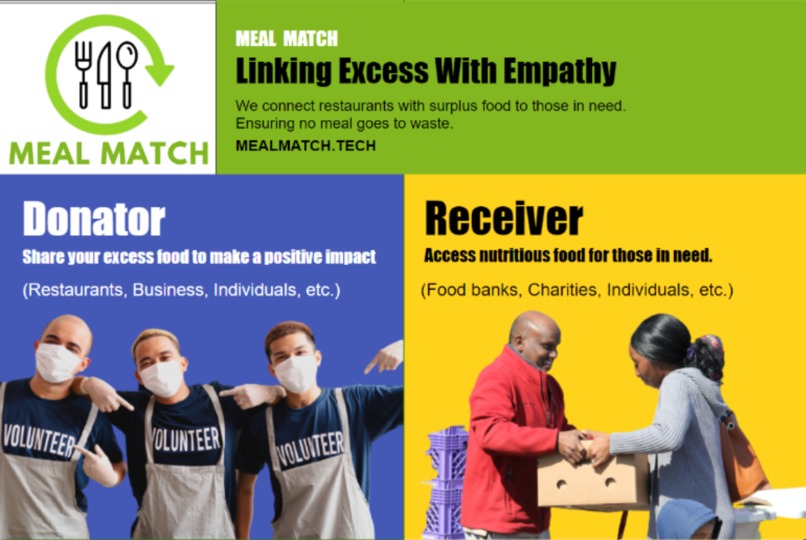
Main Page: Choose to be a Donator or Receiver
-
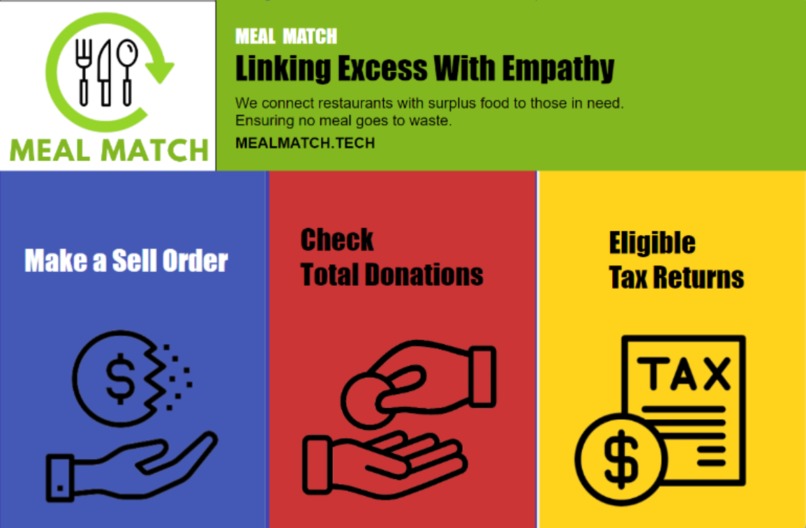
Main Page for Donators
-
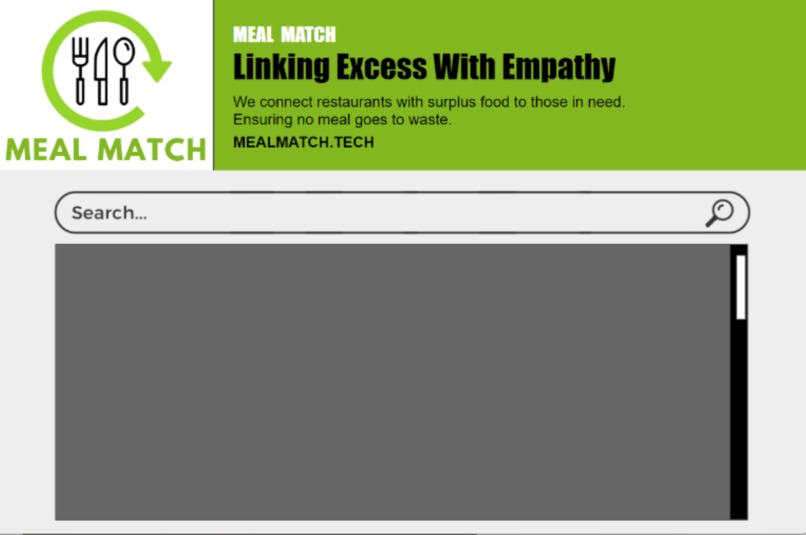
Receiver Search Screen
-
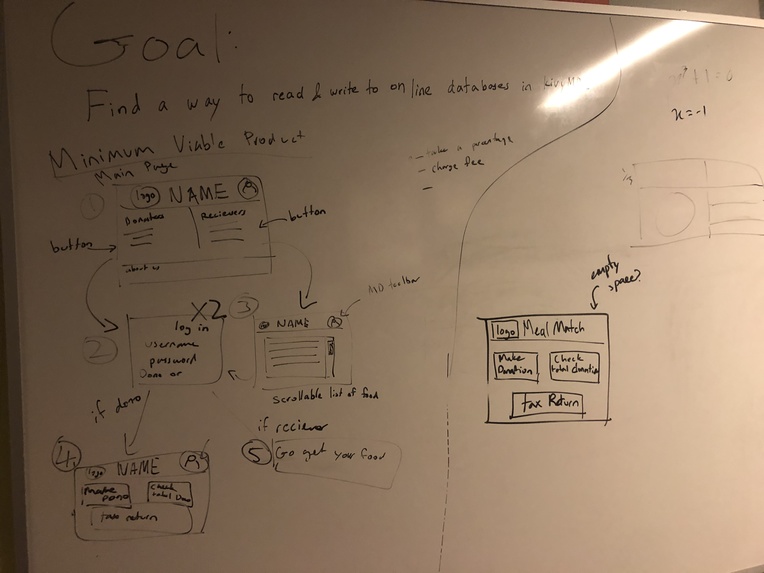
An Initial Map of the Screens that We Planned.


Inspiration
Have you ever wondered what happens to all the leftover donuts at Dunkin' Donuts at the end of the day? We did too. It was that moment, witnessing perfectly good food go to waste, that sparked our determination to create Meal Match. Inspired by the vision of rescuing surplus food and making it accessible to those in need, we built a platform that connects restaurants like Dunkin' Donuts with food banks and charities. Our connection to this issue drives us to ensure that no donut, no meal, goes to waste when there are people who could benefit from it. With Meal Match, we're on a mission to turn excess into empathy, one delicious bite at a time.
What it does
Meal Match is an application that connects businesses with excess food to charities and those suffering from food insecurity. We attract businesses with our tax exemption certification program and attract individuals/charities in need of food with free food. We split our users to be either a "donator" or "receiver". Donators can set up sell orders for excess food, check how much they have donated so far, and check how much tax exemption they are eligible for. Receivers can search for excess food postings so they can go receive them.
How we built it
We built it using the framework: Kivy/KivyMD and the languages: Kvlang and Python
Challenges we ran into
- Since we tried learning new frameworks during the hackathon, such as Kivy, KivyMD, Flask, MySQL, SQLite, and React, a large portion of our time was spent figuring out how to use these frameworks instead of working on our project.
- When working with Databases, we kept running into the specific error (super' object has no attribute 'getattr')
- Misalignment of images was caused by syntax mishaps with Kvlang
Accomplishments that we're proud of
Several achievements we are proud of include our now extensive knowledge of Kivy, KivyMD, and Kvlang and also successfully learning the basics of databases. More than that, however, was that we are all proud to finish our project on time, despite the time we spend learning other frameworks. Through our exceptional problem-solving capabilities and ability to collaborate efficiently, we made good use of everyone’s strong suits to complete this Hackathon.
What we learned
We learned MySQL, SQLite, Kivy, KivyMD, Kvlang, creating custom widgets, and a little bit of Flask and React. Most importantly, our team realized the importance of learning new frameworks before attending the hackathon rather than during one. We also learned how to effectively work on a team programming project as we had not done so previously (i.e. the implementation of pair programming).
What's next for Meal Match
There are 3 features we would love to implement:
- Gamification elements: Introduce gamification elements such as badges, rewards, and challenges to incentivize restaurants to participate actively and make a difference. (inspired by Michelin stars)
- Rating and feedback system: Enable users to rate and provide feedback on their donation experiences, helping to build trust and accountability within the community.
- Surplus prediction: Implement a predictive model that analyzes restaurant data, historical trends, and user behavior to anticipate surplus food availability, allowing food banks to proactively plan and allocate resources.
Built With
- kivy
- kivymd
- kvlang
- python


Log in or sign up for Devpost to join the conversation.