-
-
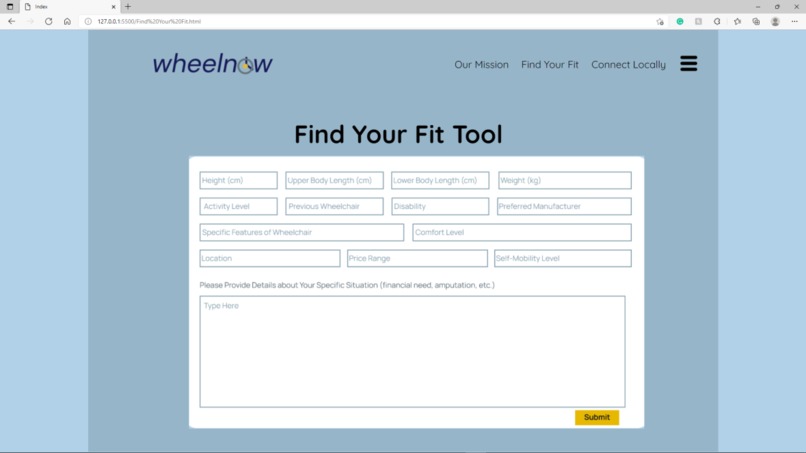
Find Your Fit Tool
-
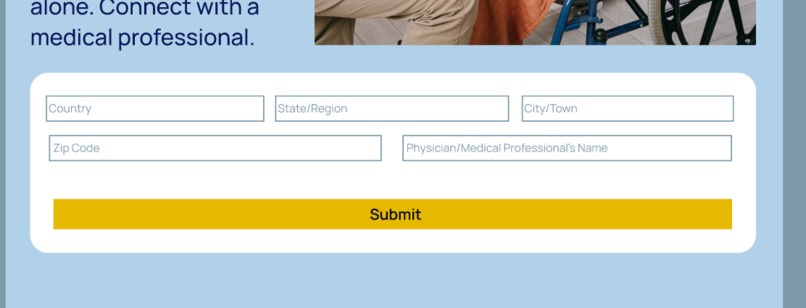
Connect Locally Page
-
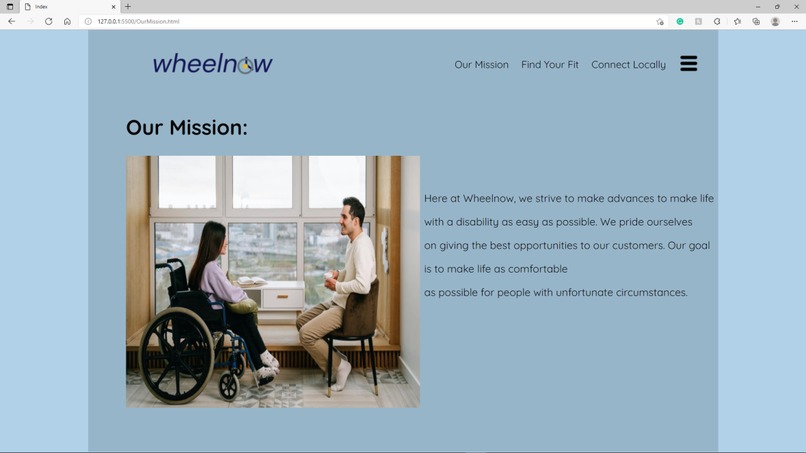
Our Mission Page
-
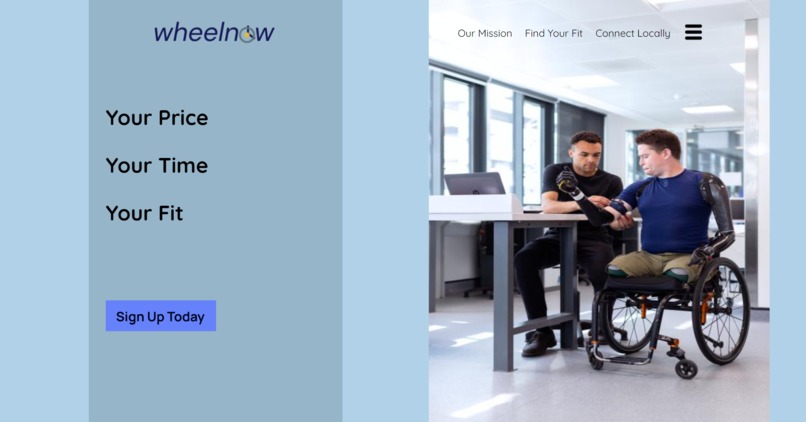
Homepage
-
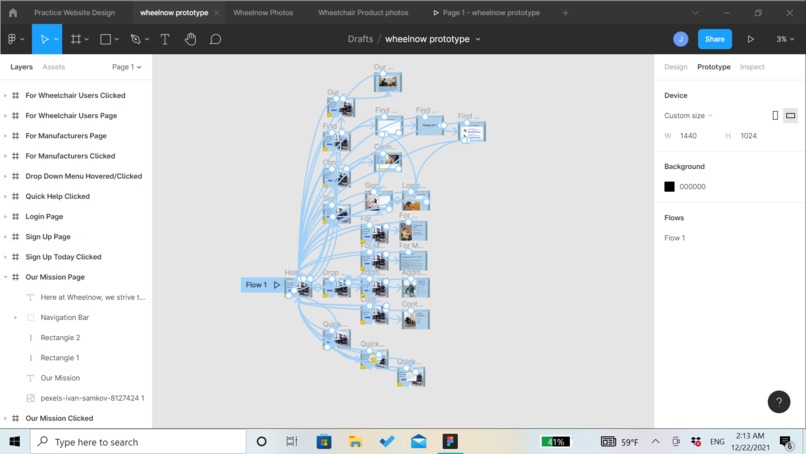
Entire Prototype
-
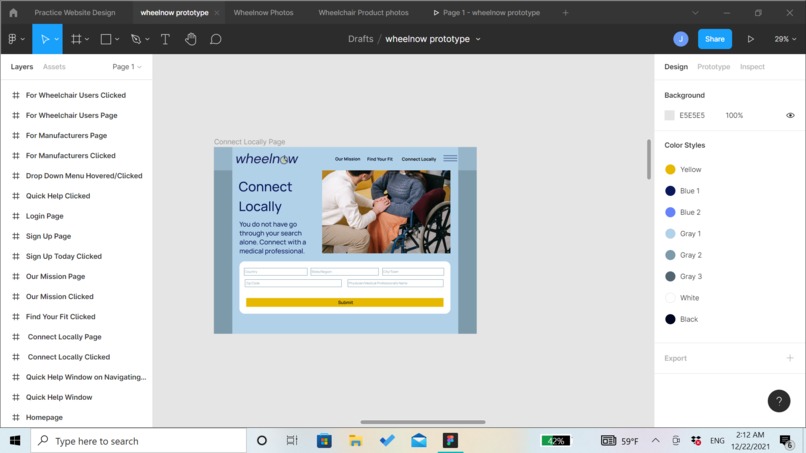
Connect Locally Prototype
-
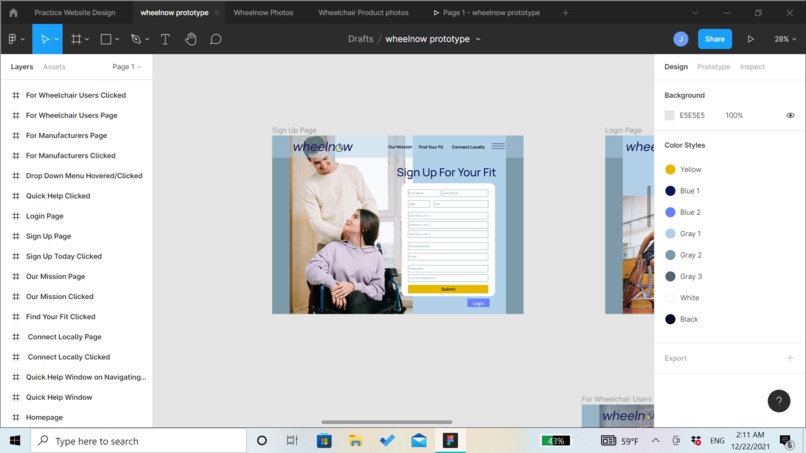
Sign Up Page Prototype
-
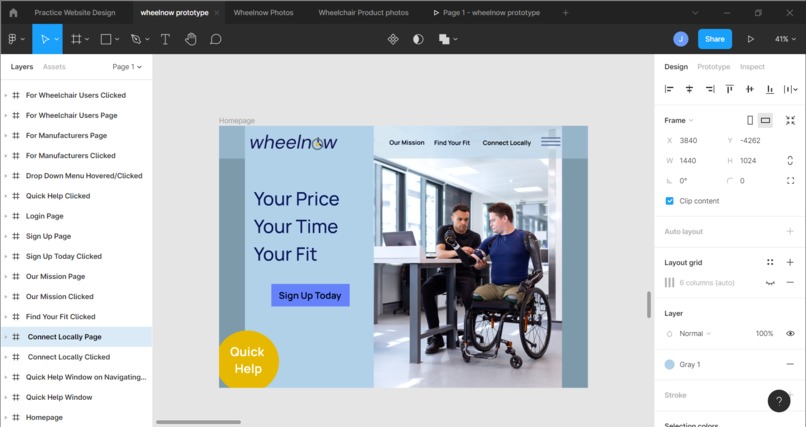
Homepage Prototype
-
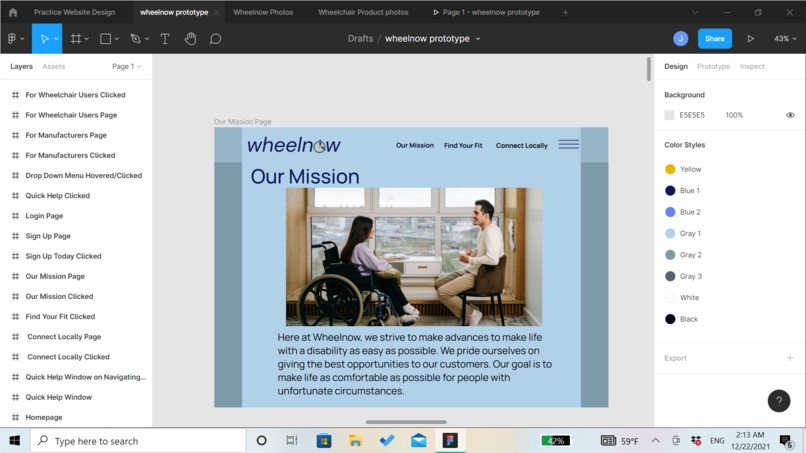
Our Mission Prototype


Inspiration
For this project, we wanted to help physically disabled people access wheelchairs without the burden of high cost or a long wait time to purchase. We decided to choose the diversity and inclusion track. We wanted to serve a typically underrepresented community with resources that are easy to access and allow individuals to move and live with comfort. Since I (Jonathan) was passionate about activism and social change, the idea for this project was not unusual. We (Jonathan and Breloi) shared possible solutions for inclusion within our world today. So, our passions for inclusivity and technology lead us to create a website where tools for accessibility are readily available.
What it does
Unlike many wheelchair retail websites, we strive to ensure a custom-fitted wheelchair for every individual. With our Find Your Fit Tool, we can provide you with wheelchair models that fit every dimension of the body, activity level, specific disability, and so much more. To use the Find Your Fit Tool, click on the "Find Your Fit" button. That button will take you to a page where you can input information about the user. When you click the submit button, you will receive your Find Your Fit Tool results in your email. There are other pages such as Quick Help and Additional Resources to better your understanding of each page on the website.
How we built it
We began our website creation by constructing a prototype on Figma. The prototype was crucial to creating our website to understand the look and feel that we wanted our website to bring. After the layout and design creation, we converted some parts of the prototype to CSS to have accurate colors for the website. With Visual Studio Code, code was created to adjust the website's features and add smoother functionality. Coding the website from the prototype created accessibility to everyone, no matter of disability.
Challenges we ran into
Well, some of the main challenges were managing it, time management was a crucial part of making sure it went smoothly and it was interesting to develop a time plan for this project. I (Breloi) feel like we could improve it by making the functions work by recording users' information and by expanding more into the backend, but because of the short time, we were only able to do so much. I (Jonathan) feel that my lack of understanding of HTML and CSS prevented me from making the website aesthetically pleasing. I felt that I spent too much time trying to research our problem that I forgot about the functionality of the website.
Accomplishments that we're proud of
Well, the prototype and the documents went smoothly and the website development and in general the coding went pretty well until we came close to the deadline then we had to make some sacrifices. We accomplished a pretty good prototype version with code and one without code where I feel like more time could be built upon to make something interesting with a lot of potential.
What we learned
I (Breloi) have learned that time management is very important, secondly, I learned how to make a website a bit more interesting and put some things I have learned recently into action. I (Jonathan) learned the importance of being fluid in HTML and CSS in order to strengthen the website design. I felt that I spent so much time trying to perfect every single feature that I lost functionality and specific design choices for the coding partition of the website. I learned that I should develop my skills in HTML and CSS to successfully execute my Figma Design.
What's next for wheelnow
We plan on working on specific details of the website to increase the functionality for all user, disabled and non-disabled. We want to strengthen the design as well as add more accessibility features to this website.


Log in or sign up for Devpost to join the conversation.