She was smart enough to want more but tired enough to accept the way things were.
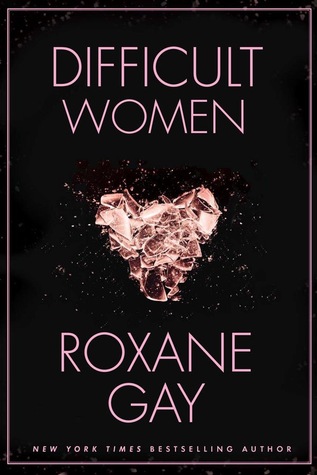
Someone on Goodreads wrote that this book could be equally well titled “Sad Women Having Sex.” They’re not wrong. They don’t mean it in a pejorative way, though, which is good because Gay’s stories shouldn’t be patronised or belittled just because they are, in fact, about sad women having sex. Plenty of critics, I think, have been taught that women, let alone sad women, let alone sad women fucking, aren’t serious subjects. One of the great significances of Gay as a writer is how she affirms that they are.
In Difficult Women, she circles the same thematic territory over and over again. Many of these stories feature sexual abuse, rape or molestation. Many of these protagonists conceive a child and lose it, through miscarriage or tragic accidents. Many of them work through their damage by demanding to be hurt: rough sex, verbal abuse, slapping, choking. Several of them are set in Michigan; one of my favourites, “How”, is about a woman of Finnish descent, Hanna, who finally shucks off the thankless life she has lived in the service of her parents and husband, in favour of escape with her sister and her female lover. Another, “North Country”, follows a light-skinned black academic as she moves to a Northern town, fields constant queries about where she’s from Detroit (why else, her white neighbours assume, would a black person be in Michigan?), and lets go of her protective carapace enough to fall in love with a woodsy guy called Magnus.
Those stories have happy endings, more or less, endings where people meet their trauma on their own terms and force it into a shape they can handle. There are other stories, like the first one, “I Will Follow You”, where a happy ending is contingent and constantly marked by the shadow of the past. The narrator here follows her older sister, Carolina, to Nevada, where Carolina’s husband Darryl works. Slowly, the secret of their past is revealed: the younger sister was kidnapped as a child by a paedophile known to them only as Mr. Peter. Carolina, instead of running for help, jumped into Mr. Peter’s van just before the door closed—”I couldn’t leave my sister alone,” she says when asked why she did this. The narrator recalls the settlement they were awarded by a jury, after Mr. Peter released them and was arrested:
The jury awarded us a lot of money, so much money we would never have to work or want. For a long time, we refused to spend it. Every night, I went online and checked my account balances and thought, This is what my life was worth.
The worth of women is another recurring theme in this collection, often intertwined with race and class. “La Negra Blanca” is a story about Sarah, who strips to pay her way through college and who goes by “Sierra” while she’s working. She’s mixed-race but has white features and straight Caucasian hair. One of her regular clients is a man named William Livingston III, a white guy from a Southern family for whom blood purity is an unshakable tenet of the universe, but who also has a fetishising obsession with street culture, African-American music, and black women’s bodies. It is not the subtlest story I’ve ever read, although there is something convincingly, pathologically pathetic about Livingston’s secret forays into the hood aesthetic:
When he’s not watching his housekeeper, William listens to his music and repeats the lyrics about skeeting and Beckys and backing that ass up and living the gangasta life. His office has a small closet where he keeps urban clothing he sends his assistant to West Baltimore to purchase—Sean John jeans and Phat Farm hoodies and Timberland boots. His understanding of what the kids are wearing is dated. Sometimes he poses in front of the full-length mirror, grabbing a handful of denim-clad crotch, and sets his chin to the side and tries to recreate gang signs with his fingers.
It’s not the kind of behaviour I can even remotely imagine someone in Livingston’s position actually engaging in, but the story works if you view him, not as an individual, but as an embodiment of the way black culture gets turned into something that Western companies can use to make a quick buck. Isn’t Livingston just a logical extension of the way white people have stolen black people’s words, stories, hair, clothes? (See: Bo Derek’s dreadlocks; Miley Cyrus twerking at the VMAs.) He happens, also, to be a literal rapist. When he finds out that Sarah/Sierra is actually half-black, he is consumed not with guilt but with horror: “He has done something generations of Livingstons have had the discipline to avoid.” The truth is that they probably haven’t: the supposed purity of white Southern women has always rested on the fact that their men have been able to satisfy themselves on the bodies of black women. Livingston may think his father “looked but didn’t touch”, but that’s naive.
“A Pat” is a very short story, only two pages long, but it’s one of the subtlest in the collection: the narrator sees a man eating a burrito alone in a fast food restaurant. She sits down across from him, keeps him company, invites him back to her house “for a proper meal”. She cooks for him and he eats her dinner and they have sex and then he leaves. The narrator remembers her mother’s advice from her first day of school:
“You make friends with the ugliest kids in your class and you make friends with the loneliest kids in your class, the ones off by themselves. They will be the best friends you’ve ever had and they’ll make you feel better about yourself.” With a pat on the head, she pushed me.
It’s so short and it works so hard, this paragraph: the way it shows you that kindness can be pity can be mercy; the way that generosity can be selfish; the way that, somehow, it doesn’t matter what it is.
There are a lot of stories in this collection—twenty-one—and some of them are better than others, more purposeful or more interesting or with more varied sentence structure. (This has been, for me, a semi-permanent stumbling block with Gay’s style: when she’s writing straightforward, linear, present-tense prose, it’s often not very interesting on the sentence level; the effect is more cumulative and thematic, and sometimes I don’t have the patience.) But let’s be honest: you’re probably going to read Difficult Women anyway, because it’s Roxane goddamn Gay and no one wants to miss one of her books. This is worth reading not just to keep up with the zeitgeist, but because it contains stories and endings like “A Pat” and “How” and “North Country” and “I Am A Knife” and “Break All the Way Down”, stories that approach pain and sex and humanity from many different angles, stories that are considered and honest and, in the most important sense, true.
Many thanks to Susan de Soissons and the team at Corsair Books for the review copy. Difficult Women is released in the UK on 3 January.


 Shylock Is My Name
 Ten Days
 The Improbability of Love
 Raw Spirit
 The Many
 Diary of an Oxygen Thief
 The Countenance Divine, by Michael Hughes
 The Other World, It Whispers
 TBR books. Some of the year’s best books were found this way, including Merritt Tierce’s Love Me Back, which should have received more attention: the story of a young single mother and waitress in Dallas, Texas whose experiments with drugs and no-strings sex are really elaborate forms of self-harm. Beautifully written and devastating. Ann Leckie’s Ancillary Justice and its two sequels, my Christmas presents from the Chaos, paved the way for more contemporary sci-fi this year. I especially loved Leckie’s use of the universal female pronoun, and the way she casually inverts standard tropes (a sexy bombshell character, who’s also a shrewd politician, is repeatedly described as being large, plump, etc., and the ruler of the known universe is, one realises late in the day, a black woman.)
 wonderful reading experience; it is, I think, the best “9/11” novel I’ve ever read, engaging with the aftermath of deployment in Afghanistan and the diversity of New York City and the fact that sometimes, despite your best efforts, you just can’t win. It’s disturbing and heart-breaking and every word, every detail, tastes real. I’m still thinking about it all these months later. I also loved Helen Stevenson’s Love Like Salt, a memoir of her daughter’s cystic fibrosis that also encompasses expatriation, marriage, music, and bereavement after her mother’s death. It was one of those rare books that seems to strike a chord because the author’s experiences and interests are so like my own.
 loved it. Every story is like a tiny novel, an ivory miniature to rival the perfect miniaturism of Austen. She writes about refugees and immigrants and minorities and foreigners and makes you feel that her characters are your aunts and uncles, brothers and cousins, sisters and friends. The Long Way to a Small Angry Planet by Becky Chambers was longlisted for the Baileys Prize and should have been on the shortlist (I can think of at least two worse books that did make it to the shortlist). Like Leckie’s trilogy, it’s part of a new breed of sci fi that celebrates diversity, tolerance, respect, and friendship, and I really like it for that. It doesn’t avoid big issues—the possibility of enfranchisement, or rather embodiment, for artificial intelligence is one of the novel’s major foci—and it isn’t preachy but
  simply, boundingly joyful. Kizzy and Jenks, spaceship mechanics, have a particularly great relationship. Finally, Lisa McInerney won the prize itself with her debut novel The Glorious Heresies, and oh my was it ever deserved. Heresies is a great book, outlining in detail a whole swathe of Cork City’s underbelly with the blackest of humour, an ear for dialogue that never fails, and just the right touch of poignancy. I wanted a sequel.
 century opera that I absolutely adored; it has its flaws, but I was definitely the right reader for this. Lucia Berlin’s A Manual for Cleaning Women, which I got to a year late, was as amazing as everyone said: her stories about laundromats and alcoholics and runaways and emergency rooms are never pessimistic or downbeat, though often bittersweet. Ian McGuire’s novel of whaling and pure human evil, The North Water, sticks in my head, though its level of violence made me feel sick at least once. It is, nevertheless, not a book that will leave you easily.
 they do all run together. That’s sort of the point; they are a literary box set. For all that they’re thinly veiled autobiography, they are also astonishingly delicate and ahead of their time, for the ways in which they handle child sexual abuse, emotional manipulation, post-partum depression, and the realities of a bad marriage. The way the story flips back and forth between the cousins, the way they develop and grow as characters, is utterly charming and addictive: pretty, vain Louise; sensitive Polly; passionate Clary; dashing Teddy; increasingly horrible little Neville. They feel like family.
 training, I discovered the novels of Tana French going for 99p each on Kindle, and snapped them up. (They were easy to read on my phone, during breaks in training. I maaayyy, in a minor way, be less violently opposed to the Kindle app now.) In the Woods and The Likeness, the first two, are perhaps the best: in the former, Detective Rob Ryan must catch a murderer in his hometown of Knocknaree, where two of his childhood friends went missing, presumed dead, in the woods. In the latter, Detective Cassie Maddox goes undercover to find out who stabbed a University College Dublin postgraduate. They’re not your run-of-the-mill thrillers: French writes detailed, precise, electric prose, and her understanding of human psychology is second to none. I’m a true convert to her work now.
 which, let’s not dissemble, struck pretty close to home. It should go on the same shelf as Alice Furse’s Everyone Knows This Is Nowhere, for consultation in the year 2216 by academics interested in artistic representations of the repercussions of global fuckuppery and malaise in the early twenty-first century. Treasure Palaces, edited by Maggie Fergusson, is a glorious compendium of essays by well-known authors on their favourite museums. Don Paterson’s piece on the Frick Collection is simultaneously reverent and ripe with detail; it makes me want to go straight there. So does Frank Cottrell Boyce’s on the Pitt Rivers in Oxford, and Aminatta Forna’s on the Museum of Broken Relationships in Zagreb. C.E. Morgan’s magisterial The Sport of Kings is, like The Queen of the Night, an enormous and flawed beast: for some, Morgan’s use of four words where one would do isn’t worth it. For me, it absolutely is; her exuberance is tempered by the fact that she does know how to write, and by her huge ambition in taking on subjects like race, racism and heredity in a Southern American setting. It feels a bit like a Faulkner novel had a threesome with Jaimy Gordon’s Lord of Misrule and Dickens’s Bleak House.
 through the books outstanding on my TBR before the New Year. Sarah Moss’s Signs for Lost Children is a hell of a book, dealing with trust, responsibility, emotional abuse, mental health and cultural disorientation, all in a nineteenth-century Cornish and Japanese setting. I’m now planning to read Moss’s entire back catalogue. And the two books most recently reviewed here—Chernobyl Prayer by Svetlana Alexievich and Golden Hill by Francis Spufford—couldn’t be more different, but couldn’t be more brilliant in their own ways: one a painfully beautiful literary documentary of life for the citizens of rural Ukraine and Belarus in the aftermath of Chernobyl, the other a glorious, voluptuous romp in eighteenth-century New York with writing that rings true as a bell. Both are unforgettable.


 Elle Thinks
