[Mark] shows off footage from a D1 master on the repaired deck

Reviving ReBoot With A Tape Deck Repair

Do you remember ReBoot? If you were into early CGI, the name probably rings a bell, since when it premiered in 1994 it was the first fully computer-animated show on TV. Some time ago, a group found a pile of tapes from Mainframe Studios in Canada, the people behind ReBoot, and the computer historians amongst us were very excited… until they turned out to be digital broadcast master tapes. Exciting for fans of lost media, sure, but not quite the LTO backups of Mainframe’s SGI workstations some of us had hoped would turn up. Still, [Mark Westhaver], [Bryan Baker] and others at the “ReBoot Rewind” project have made great strides, to the point that in their latest update video they declare “We Saved ReBoot

What does it take to revive a 30-year-old television project? Well, as stated, they started with the tapes. These aren’t ordinary VHS tapes: the Sony D-1 tapes, which were also known by the moniker “4:2:2”, are a format that most people who didn’t work in the TV or film industry will have never seen, and the tape decks are rare as hen’s teeth these days. Just getting a working one, and keeping it working, was one of the biggest challenges [Mark] and Reboot Rewind faced. In the end it took three somewhat-dodgy machines long past their service lives and a miraculously located spare read/write head to get a stable scanning rate.

The uncompressed digital output of these tapes isn’t something you can just burn to a DVD, either. The 720 × 576 resolution video stream is captured raw, but there are minor editing tweaks that need to be made in addition to tape errors that have cropped up over the years, and those need to be dealt with before the video and audio data gets encoded into a modern format. The video briefly glosses [Bryan Baker]’s workflow to do just that. At least they aren’t stuck with terrible USB video capture dongles VHS lovers have to deal with. Even if you don’t care about ReBoot, this isn’t the only show that was archived on D1 tapes so that workflow might be of interest to media fans.

We covered ReBoot Rewind when they were first searching for tape decks, so it’s great to have an update. Alas, the rights holders haven’t yet decided how exactly they’re going to release this fine footage, so if like this author you have fond memories of ReBoot, you may have to wait a bit longer for a reWatch.
Continue reading “Reviving ReBoot With A Tape Deck Repair”

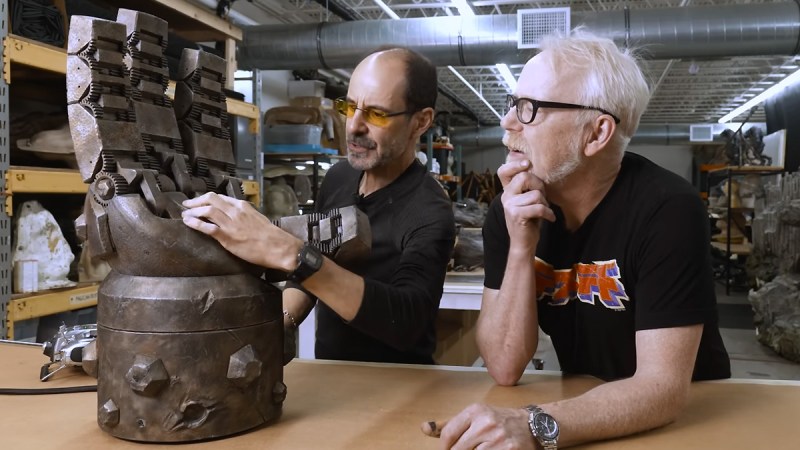
Mark Setrakian and Adam Savage investigate a massive prop hand

17 Year Old Hellboy II Prop Still Amazes

The AI effects we know these days were once preceded by CGI, and those were once preceded by true hand-built physical props. If that makes you think of Muppets, this video will change your mind. In a behind-the-scenes look with [Adam Savage], effects designer [Mark Setrakian] reveals the full animatronic glory of Mr. Wink’s mechanical fist from Hellboy II: The Golden Army (2008) – and this beast still flexes.

Most of this arm was actually made in 2003, when 3D printing was very different than what we think of today. Printed on a Stratasys Titan – think: large refrigerator-sized machine, expensive as sin – the parts were then hand-textured with a Dremel for that war-scarred, brutalist feel. This wasn’t just basic animatronics for set dressing. This was a fully actuated prop with servo-driven finger joints, a retractable chain weapon, and bevel-geared mechanisms that scream mechanical craftsmanship.

Each finger is individually designed. The chain reel: powered by a DeWalt drill motor and custom bevel gear assembly. Every department: sculptors, CAD modelers, machinists, contributed to this hybrid of analog and digital magic. Props like this are becoming unicorns.

Continue reading “17 Year Old Hellboy II Prop Still Amazes”

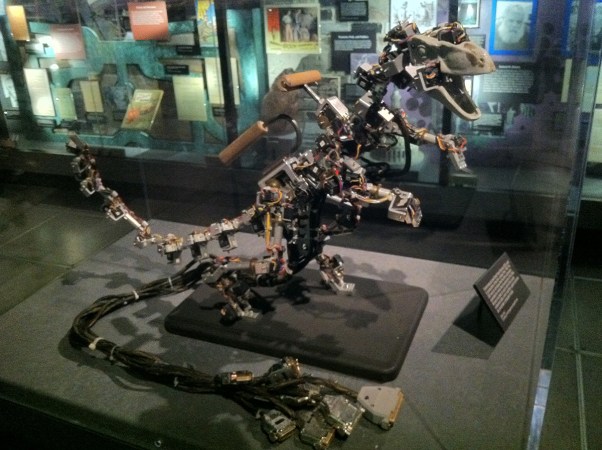
Raptor DID. Photo by Matt Mechtley.

How Jurassic Park’s Dinosaur Input Device Bridged The Stop-Motion And CGI Worlds

In a double-blast from the past, [Ian Failes]’ 2018 interview with [Phil Tippett] and others who worked on Jurassic Park is a great look at how the dinosaurs in this 1993 blockbuster movie came to be. Originally conceived as stop-motion animatronics with some motion blurring applied using a method called go-motion, a large team of puppeteers was actively working to make turning the book into a movie when [Steven Spielberg] decided to go in a different direction after seeing a computer-generated Tyrannosaurus rex test made by Industrial Light and Magic (ILM).

Naturally, this left [Phil Tippett] and his crew rather flabbergasted, leading to a range of puppeteering-related extinction jokes. Of course, it was the early 90s, with computer-generated imagery (CGI) animators being still very scarce. This led to an interesting hybrid solution where [Tippett]’s team were put in charge of the dinosaur motion using a custom gadget called the Dinosaur Input Device (DID). This effectively was like a stop-motion puppet, but tricked out with motion capture sensors.

This way the puppeteers could provide motion data for the CG dinosaur using their stop-motion skills, albeit with the computer handling a lot of interpolation. Meanwhile ILM could handle the integration and sprucing up of the final result using their existing pool of artists. As a bridge between the old and new, DIDs provided the means for both puppeteers and CGI artists to cooperate, creating the first major CGI production that holds up to today.

Even if DIDs went the way of the non-avian dinosaurs, their legacy will forever leave their dino-sized footprints on the movie industry.

Thanks to [Aaron] for the tip.


Top image: Raptor DID. Photo by Matt Mechtley.

Image

Digital Master Tapes Seek Deck

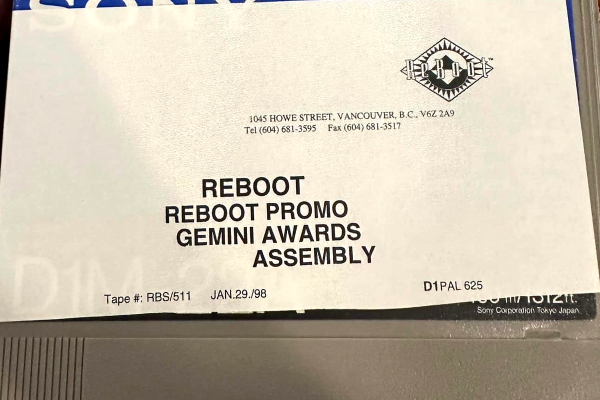
As a nerdy kid in the 90s, I spent a fair bit of time watching the computer-themed cartoon Reboot. During the course of making a documentary about the show, [Jacob Weldon] and [Raquel Lin] have uncovered the original digital master tapes of the show.

This is certainly exciting news for fans of the show, but there’s a bit of a wrinkle. These digital masters are all on D-1 digital cassette tapes which the studio doesn’t have a player for anymore. The dynamic duo are on the hunt for a Bosch BTS-D1 to be able to recapture some of this video for their own film while also heavily hinting to the studio that a new box set from the masters would be well-received.

As the first CGI TV series, Reboot has a special place in the evolution of entertainment, and while it was a technical marvel for its time, it was solid enough to last for four seasons and win numerous awards before meeting a cliffhanger ending. If you’re an expert in D-1 or have a deck to lend or sell, be sure to email the creators.

Feeling nostalgic for the electromechanical era? Why not check out some hidden lyrics on Digital Compact Cassettes (DCC) or encoding video to Digital Audio Tapes (DAT)?

[via Notebookcheck]

Hackaday Links Column Banner

Hackaday Links: December 25, 2022

Looks like it’s lights out on Mars for the InSight lander. The solar-powered lander’s last selfie, sent back in April, showed a thick layer of dust covering everything, including the large circular solar panels needed to power the craft. At the time, NASA warned that InSight would probably give up the ghost sometime before the end of the year, and it looks like InSight is sticking to that schedule. InSight sent back what might be its last picture recently, showing the SEIS seismic package deployed on the regolith alongside the failed HP3 “mole” experiment, which failed to burrow into the soil as planned. But one bad experiment does not a failed mission make — it was wildly successful at most everything it was sent there to do, including documenting the largest marsquake ever recorded. As it usually does, NASA has anthropomorphized InSight with bittersweet sentiments like “Don’t cry, I had a good life,” and we’re not quite sure how we feel about that. On the one hand, it kind of trivializes the engineering and scientific accomplishments of the mission, but then again, it seems to engage the public, so in the final rinse, it’s probably mostly harmless.

Continue reading “Hackaday Links: December 25, 2022”

Image

Those Bullet Effects In Terminator 2 Weren’t CGI

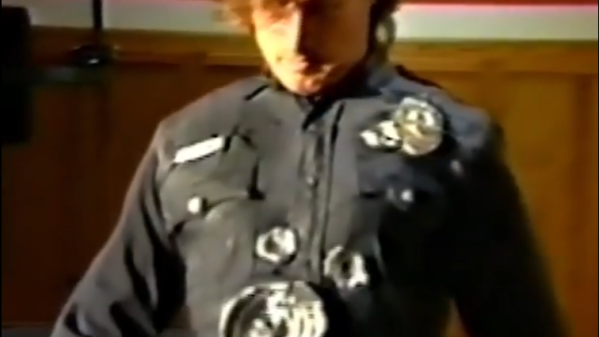
Remember Terminator 2? Guns were nearly useless against the murderous T-1000, played by Robert Patrick. Bullets fired at the “liquid metal” robot resulted only in a chrome-looking bullet splash that momentarily staggered the killing machine. The effects were done by Stan Winston, who died in 2008, but a video and short blurb shared by the Stan Winston School of Character Arts revealed, to our surprise and delight, that the bullet impact effects were not CGI.

ImageHow was this accomplished? First of all, Winston and his team researched the correct “look” for the splash impacts by firing projectiles into mud and painstakingly working to duplicate the resulting shapes. These realistic-looking crater sculpts were then cast in some mixture of foam rubber, and given a chromed look by way of vacuum metallizing (also known as vacuum deposition) which is a way of depositing a thin layer of metal onto a surface. Vacuum deposition is similar to electroplating, but the process does not require the object being coated to have a conductive surface.
These foam rubber splash patterns — which look like metal but aren’t — were deployed using a simple mechanical system. A variety of splashes in different sizes get individually compressed into receptacles in a fiberglass chest plate. Covering each is a kind of trapdoor, each held closed by a single pin on a cable.

To trigger a bullet impact effect, a wireless remote control pulls a cable, which pulls its attached pin, and the compressed splash pattern blossoms forth in an instant, bursting through pre-scored fabric in the process. Sadly there are no photos of the device itself, but you can see it in action in the testing video shared by the Stan Winston School, embedded below.

Continue reading “Those Bullet Effects In Terminator 2 Weren’t CGI”

Image

Obsessively Explaining The Visual Effects In Flight Of The Navigator

[Captain Disillusion] has earned a reputation on YouTube for debunking hoaxes and spreading a healthy sense of skepticism while having some of the highest production value on the platform and pretending to be some kind of inter-dimensional superhero. You’ve likely seen him give a careful explanation of how some viral video was faked alongside a generous dose of sarcastic humor and his own impressive visual effects. VFXcool is a series on his channel that takes deep dives into movies that are historically significant in the effects industry. For this installment, [Captain Disillusion]’s “intern”, [Alan], takes over to breakdown how filmmakers brought a futuristic spaceship to life in 1986’s Flight of the Navigator.

Making a movie requires hacks upon hacks, and that goes double in the era when the technology and techniques we now take for granted were being developed even as they were being put to film. The range of topics covered here is extreme: from full-scale props to models; from robotic motion control rigs to stop motion animation; from early computer graphics to the convoluted optical compositing that was necessary before digital workflows were possible. The tools themselves may be outdated, but understanding the history and the processes allows for a deeper insight into how we accomplish these kinds of effects today. And, really, it’s just so… cool.

[Captain Disillusion]’s previous VFXcool is all about the Back to the Future trilogy, and it’s a little shorter with more information on motion control rigs. We also love seeing how people make DIY effects in their own homes. LEGO actually seems like a pretty popular option for putting together whole scenes in amateur filmmaking.

Continue reading “Obsessively Explaining The Visual Effects In Flight Of The Navigator