Image

ESP32-P4 Powers Retro Handheld After A Transplant

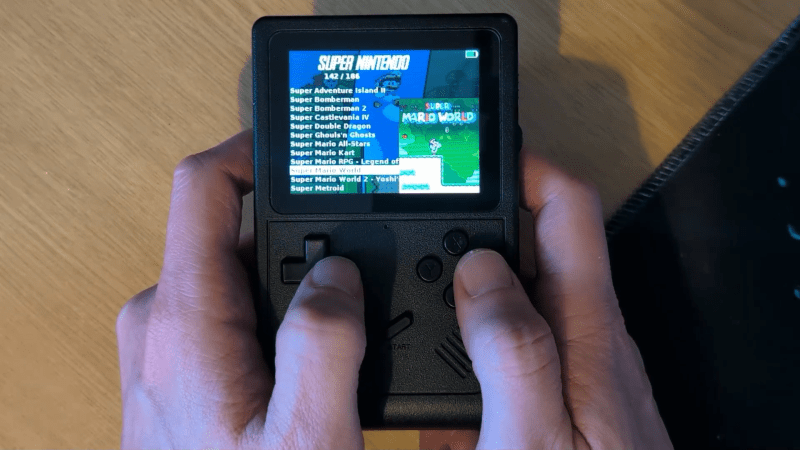
The ESP32-P4 is the new hotness on the microcontroller market. With RISC-V architecture and two cores running 400 MHz, to ears of a certain vintage it sounds more like the heart of a Unix workstation than a traditional MCU. Time’s a funny thing like that. [DynaMight] was looking for an excuse to play with this powerful new system on a chip, so put together what he calls the GB300-P4: a commercial handheld game console with an Expressif brain transplant.

ImageOlder ESP32 chips weren’t quite up to 16-bit emulation, but that hadn’t stopped people trying; the RetroGo project by [ducalex] already has an SNES and Genesis/Mega Drive emulation mode, along with all the 8-bit you could ask for. But the higher-tech consoles can run a bit slow in emulation on other ESP32 chips. [DynaMight] wanted to see if the P4 performed better, and to no ones surprise, it did.

If the build quality on this handheld looks suspiciously professional, that’s because it is: [DynaMight] started with a GB300, a commercial emulator platform. Since the ESP32-P4 is replacing a MIPS chip clocked at 914 MHz in the original — which sounds even more like the heart of a Unix workstation, come to think of it — the machine probably doesn’t have better performance than it did from factory unless its code was terribly un-optimized. In this case, performance was not the point. The point was to have a handheld running RetroGo on this specific chip, which the project has evidently accomplished with flying colours. If you’ve got a GB300 you’d rather put an “Expressif Inside” sticker on, the project is on github. Otherwise you can check out the demo video below. (DOOM starts at 1:29, because of course it runs DOOM.)

The last P4 project we featured was a Quadra emulator; we expect to see a lot of projects with this chip in the new year, and they’re not all going to be retrocomputer-related, we’re sure. If you’re cooking up something using the new ESP32, or know someone who is, you know what to do.

Continue reading “ESP32-P4 Powers Retro Handheld After A Transplant”
Image

A Very Tidy Handheld Pi Terminal Indeed

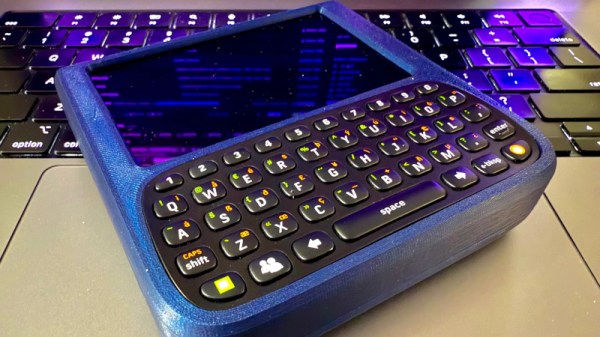
As single board computers have become ever smaller and more powerful, so have those experimenting with them tried to push the boundaries of the machines they can be used in. First we had cyberdecks, and now we have handheld terminals. Of this latter class we have a particularly nice example from [Random Alley Cat]. It takes a Raspberry Pi Zero 2W and a handful of other parts, and makes them with a 3D printed case into something very professional indeed.

One of the problems with these designs has always been tidily packing away all the parts with their cables, and it’s one she solves by making a chassis to hold all the parts, and a case which fits around that. In a stroke the case no longer has to provide a dual function, allowing for a much easier internal layout. Her screen is a Pimoroni Hyperpixel, the keyboard is an Xbox 360 accessory, and the power supply is an off the shelf Pi UPS board and battery.

We particularly like the accesses on the underside of this machine to access the Pi ports, and the ventilation holes and external case details. It’s not perfect, as she says in the video below it’s not the best Linux keyboard. but we could really see ourselves using this.

If you follow handheld cyberdecks, we have a few treats for you on these pages. Not all of them run Linux, for example.

Continue reading “A Very Tidy Handheld Pi Terminal Indeed”

Image

Unlocking The Potential Of A No-Name Handheld Game

The rise of inexpensive yet relatively powerful electronics has enabled a huge array of computing options that would have been unheard of even two decades ago. A handheld gaming PC with hours of battery life, for example, would have been impossible or extremely expensive until recently. But this revolution has also enabled a swath of inexpensive but low-quality knockoff consoles, often running unlicensed games, that might not even reach the low bar of quality set by their sellers. [Jorisclayton] was able to modify one of these to live up to its original promises.

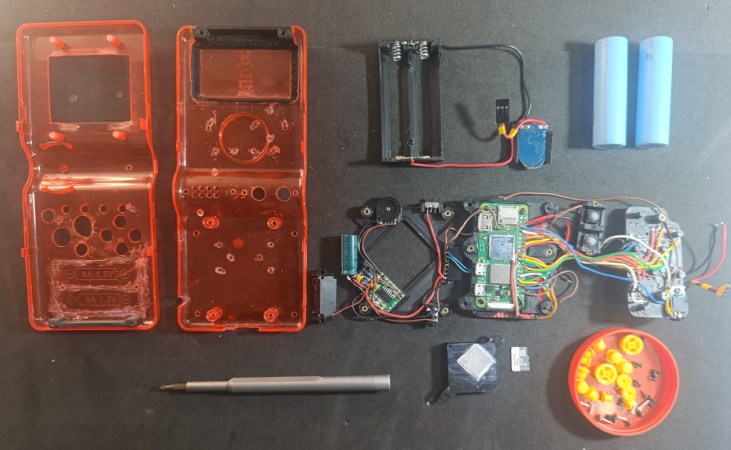
This Ultimate Brick Game, as it is called, originally didn’t even boast the number of games, unlicensed or otherwise, that it claimed to. [Jorisclayton] removed almost all of the internals from this small handheld to help it live up to this original claim. It boasts a Raspberry Pi Zero 2W now as well as a TFT screen and has a number of other improvements including Bluetooth support for external controllers and upgraded audio. A second console was used for donor parts, and some case mods were made as well to accommodate a few extra buttons missing on the original console.

Right now the project is in a prototype phase, as [Jorisclayton] is hoping to use the donor case to build a more refined version of this handheld console in the future. Until then, this first edition upgrade of the original console can run RetroPie, which means it can run most games up through the Nintendo 64 era. RetroPie enables a ton of emulation for old video games including arcade games of the past. This small arcade cabinet uses that software to bring back a bit of nostalgia for the arcade era.

Image

Game Boy? NES? Why Not Both!

If you’re a retro Nintendo fan you can of course carry a NES and a Game Boy around with you, but the former isn’t very portable. Never fear though, because here’s [Chad Burrow], who’s created a neat handheld console that emulates both.

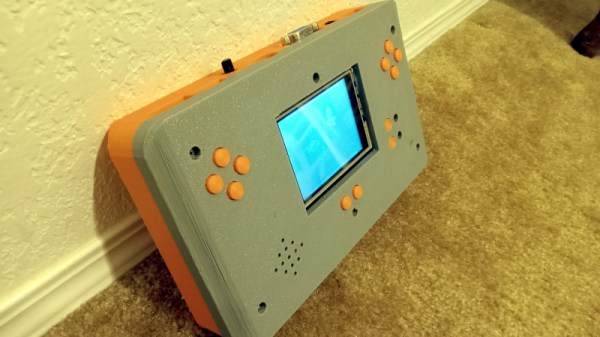
It’s called the Acolyte Handheld, and it sports the slightly unusual choice for these parts of a PIC32 as its main processor. Unexpectedly it can use Sega Genesis controllers, but it has the usual buttons on board for portable use. It can drive either its own LCD or an external VGA monitor, and in a particularly nice touch, it switches between the two seamlessly. The NES emulator is his own work, while Game Boy support comes courtesy of Peanut-GB.

Image

We like the design of the case, and particularly that of the buttons. Could it have been made smaller by forgoing some of the through-hole parts in favour of SMD ones? Quite likely, but though it’s chunky it’s certainly not outsized.

Portable Nintendo-inspired hardware is popular around here, as you can see with this previous handheld NES

Image

Nintendo Switch 2 Teardown, Let’s A-Go!

A new console challenger has appeared, and it goes by the name Nintendo Switch 2. The company’s latest iteration of the home console portable hybrid initially showed promise by featuring a large 1080p display, though very little official footage of the handheld existed prior to the device’s global release last week. However, thanks to a teardown video from [TronicsFix], we’ve got a little more insight into the hardware.

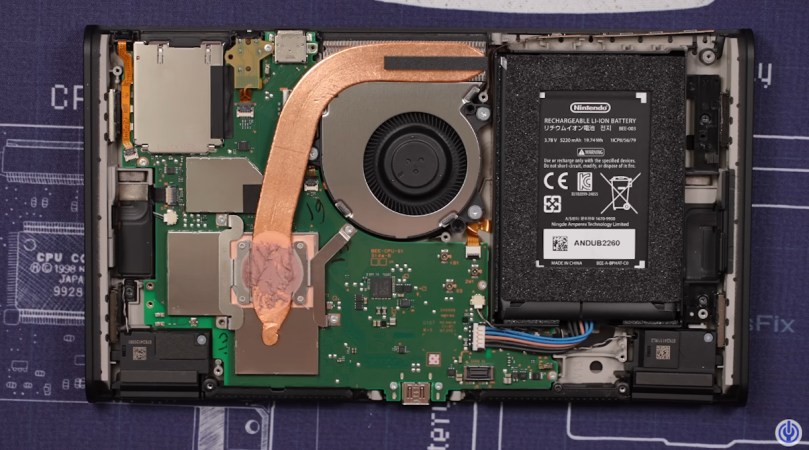
ImageThe technical specifications of this new console have been speculated on for the last handful of years. We now know NVIDIA is again providing the main silicon in the form of a custom 8x ARM Cortex A78C processor. Keeping the system powered is a 5220 mAh lithium ion battery that according to [TronicsFix] is held in with some seriously strong adhesive.

On the plus side for repairability, the onboard microphone and headphone jack are each attached by their own ribbon cable to the motherboard. The magnetic controller interfaces are also modular in design as they may one day prove to be a point of failure from repeated detachment. Speaking of which, [TronicsFix] also took apart the new version of the Joy-Con controller that ships with the system.

Arguably the biggest pain point for owners of the original Nintendo Switch was the reliability of the analog sticks on the diminutive controllers. There were widespread reports of “stick drift” that caused players to lose control as onscreen avatars would lazily move in one direction without player input. For the Switch 2, the Joy-Con controllers feature roughly the same number of dome switch buttons as well as haptic feedback motors. The analog sticks are larger in size on the outside, but feature the same general wiper/resistor design of the original. Many will cry foul of the continued use of conventional analog stick design in favor of hall effect sensors, but only time will tell if the Nintendo Switch 2 will repeat history.

Continue reading “Nintendo Switch 2 Teardown, Let’s A-Go!”

Image

Tune In To “Higher Lower”, The Minimal Handheld Electronic Game

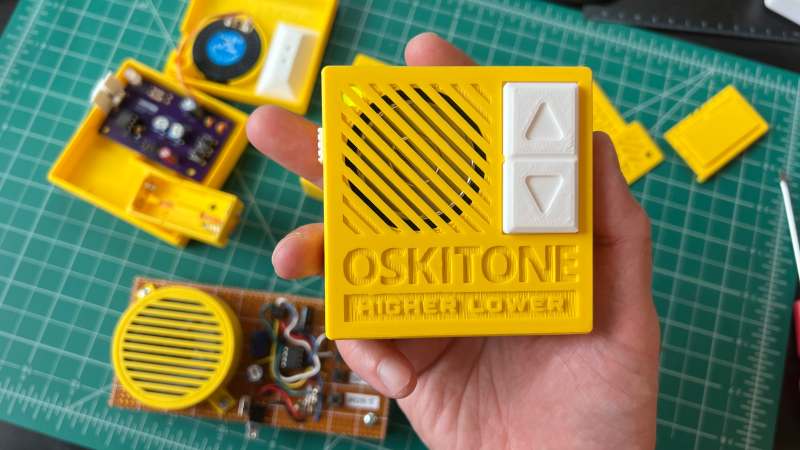
[Tommy] has a great write-up about designing and building a minimalistic handheld electronic game called “Higher Lower”. It’s an audio-driven game in which the unit plays two tones and asks the player to choose whether the second tone was higher in pitch, or lower. The game relies on 3D printed components and minimal electronics, limiting player input to two buttons and output to whatever a speaker stuck to an output pin from an ATtiny85 can generate.

Image
Fastener-free enclosure means fewer parts, and on the inside are pots for volume and difficulty. We love the thoughtful little tabs that hold the rocker switch in place during assembly.

Gameplay may be straightforward, but working with so little raises a number of design challenges. How does one best communicate game state (and things like scoring) with audio tones only? What’s the optimal way to generate a random seed when the best source of meaningful, zero-extra-components entropy (timing of player input) happens after the game has already started? What’s the most efficient way to turn a clear glue stick into a bunch of identical little light pipes? [Tommy] goes into great detail for each of these, and more.

In addition to the hardware and enclosure design, [Tommy] has tried new things on the software end of things. He found that using tools intended to develop for the Arduboy DIY handheld console along with a hardware emulator made for a very tight feedback loop during development. Being able to work on the software side without actually needing the hardware and chip programmer at hand was also flexible and convenient.

We’ve seen [Tommy]’s work before about his synth kits, and as usual his observations and shared insights about bringing an idea from concept to kit-worthy product are absolutely worth a read.

You can find all the design files on the GitHub repository, but Higher Lower is also available as a reasonably-priced kit with great documentation suitable for anyone with an interest. Watch it in action in the video below.

Continue reading “Tune In To “Higher Lower”, The Minimal Handheld Electronic Game”

Image

A Cute Handheld Gaming Device That You Can Build In An Altoids Tin

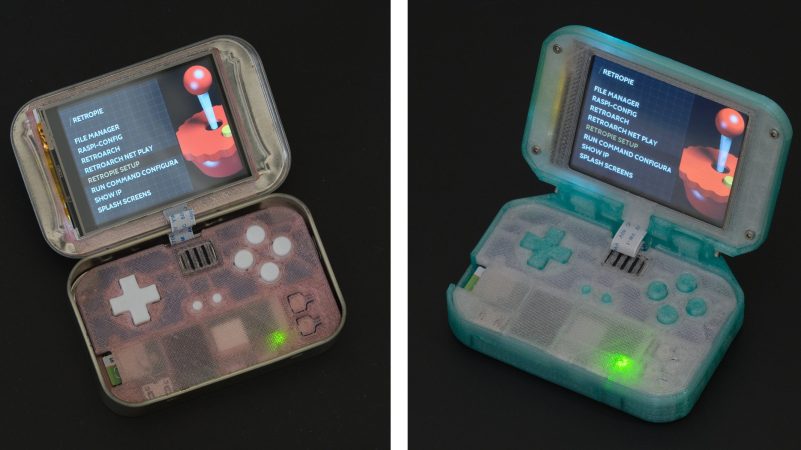
The MintyPi was a popular project that put a Raspberry Pi inside an Altoids tin to make a pocketable gaming handheld. Unfortunately, it’s not the easiest build to replicate anymore, but [jackw01] was still a fan of the format. Thus was born the Pi Tin—a clamshell handheld for portable fun!

Image
Neat, huh? More pocket-sized than the Game Boy Pocket.

The build is based around the Raspberry Pi Zero 2W, which packs more power than the original Pi Zero into the same compact form factor. It’s combined with a 320 x 240 TFT LCD screen and a 2000 mAh lithium-polymer battery which provides power on the go.

There are also a pair of custom PCBs used to lace everything together, including the action buttons, D-pad, and power management hardware. Depending on your tastes, you have two main enclosure options. You can use the neat 3D printed clamshell seen here in beautiful teal, or you can go with the classic Altoids tin build—just be careful when you’re cutting it to suit! Files can be found on GitHub for the curious.

We love a good handheld project around these parts; it’s particularly awesome how much gaming you can fit in your pocket given the magic of the Raspberry Pi and modern emulation. If you’re cooking up your own little retro rig, don’t hesitate to let us know!