Friday, February 13, 2026

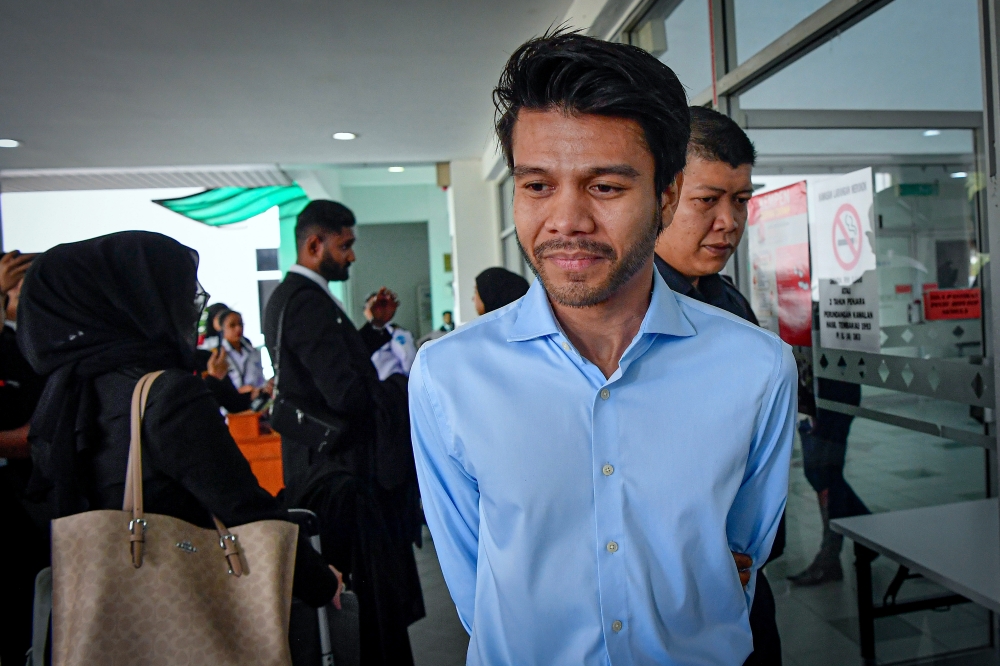
Celebrity preacher Da’i Syed granted interim release pending rape appeal

Image

Celebrity preacher Da’i Syed granted interim release pending rape appeal


Image
On August 30, 2024, the Shah Alam Sessions Court sentenced Da’i Syed, whose real name is Syed Shah Iqmal Syed Mohd Shaiful, to 10 years’ imprisonment and three strokes of the cane after finding him guilty of raping a 23-year-old woman. — Bernama pic

Friday, 13 Feb 2026 4:38 PM MYT


PUTRAJAYA, Feb 13 — The Court of Appeal today granted interim release to celebrity preacher Da’i Syed, whose real name is Syed Shah Iqmal Syed Mohd Shaiful, pending the disposal of his appeal against his conviction and 10-year prison sentence and three strokes of the cane for rape.

A three-judge panel comprising Justices Datuk Azmi Ariffin, Datuk Hayatul Akmal Abdul Aziz and Datuk Meor Hashimi Abdul Hamid unanimously allowed the 31-year-old’s application to stay the execution of the sentence imposed by the Shah Alam High Court on January 23 this year.

Delivering the decision, Justice Azmi said the court was satisfied that special circumstances existed to justify granting bail.

“We find that there are special circumstances warranting the applicant’s release on bail pending the disposal of his appeal. Among the reasons is that the applicant has never failed to attend proceedings at the Sessions Court and the High Court.


“We do not see any risk of non-appearance at the appeal stage. There is no evidence in the affidavit to suggest that the applicant had absconded or failed to attend proceedings previously. We also take into account that this is his first offence,” he said.

The court ordered Syed Shah Iqmal’s release on bail of RM40,000 with two sureties, and he is also required to surrender his passport and report monthly, beginning March 2026, to the Section 6 police station in Shah Alam, Selangor, until the appeal is concluded.

“If there is any breach of the conditions imposed, the bail granted today will be revoked,” Justice Azmi added.


The prosecution was represented by Deputy Public Prosecutor Atiqah Abdul Karim, while lawyers M. Athimulan, Datuk Abu Bakar Isa Ramat and Mohamed Baharudeen Mohamed Ariff appeared for Syed Shah Iqmal.

Syed Shah Iqmal filed the application after High Court Judge Adlin Abdul Majid on January 23, 2026, dismissed his application for a stay of execution of the sentence.

Earlier, Atiqah submitted that the prosecution objected to the application but urged the court to impose additional conditions should it allow bail.

Athimulan, meanwhile, argued that although his client is a public figure, he is entitled to equal treatment under the law.

Syed Shah Iqmal, who is currently serving his sentence at Kajang Prison, was present in court dressed in orange lockup attire. His wife, Nurul Hana Ismail, was seen in the public gallery.

On August 30, 2024, the Shah Alam Sessions Court sentenced him to 10 years’ imprisonment and three strokes of the cane after finding him guilty of raping a 23-year-old woman. Sessions Court Judge Norazlin Othman ordered that the sentence take immediate effect.

However, on September 20, 2024, the Shah Alam High Court allowed a stay of execution of the sentence, which had been running for 21 days, pending the disposal of his appeal at that stage.

Syed Shah Iqmal had pleaded not guilty on December 10, 2020, to raping the woman at a condominium unit in I-City, Section 7, Shah Alam, at about 1.35am on September 11, 2019.

He was charged under Section 376(1) of the Penal Code, which provides for a maximum prison term of 20 years and whipping upon conviction. — Bernama


Bersatu expels Hamzah Zainudin with immediate effect, cites constitutional breach


Image

Bersatu expels Hamzah Zainudin with immediate effect, cites constitutional breach


Image
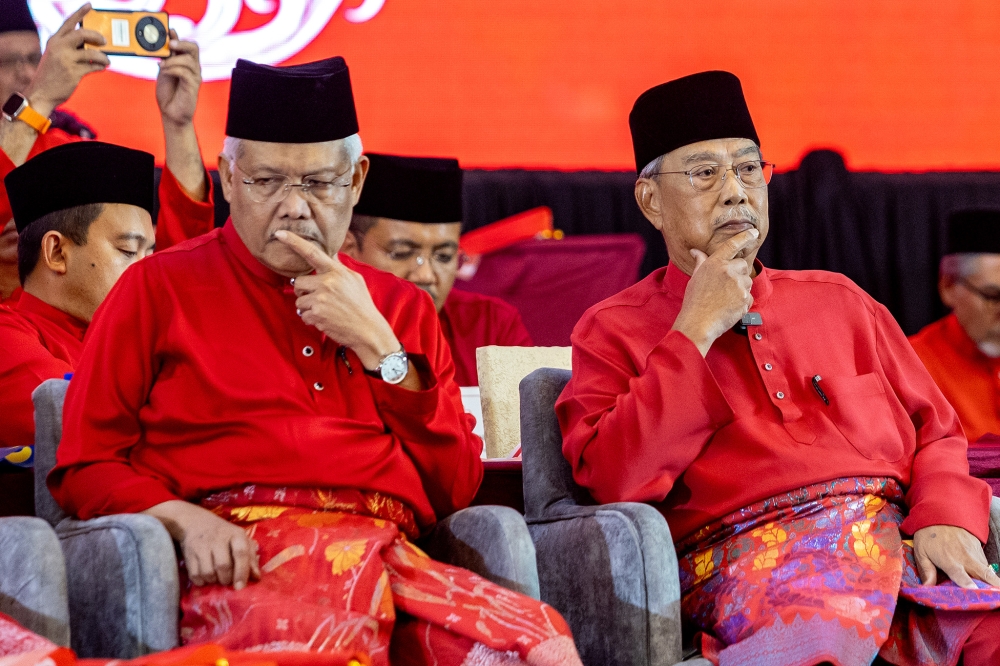
Bersatu deputy president Datuk Seri Hamzah Zainudin with party president Tan Sri Muhyiddin Yassin at Bersatu’s annual general meeting at the Ideal Convention Centre (IDCC) Shah Alam on September 6, 2025. — Picture by Firdaus Latif

Friday, 13 Feb 2026 4:38 PM MYT


KUALA LUMPUR, Feb 13 — Parti Pribumi Bersatu deputy president Datuk Seri Hamzah Zainudin has been expelled from the party, effective immediately, following a decision by the party’s disciplinary board.

In a notice issued to Hamzah, the disciplinary board, chaired by Datuk Mohd Radzi Manan, stated that it had convened yesterday and resolved that Hamzah’s party membership rights be terminated under Clause 22.5 of the Bersatu constitution due to a breach of Clause 9.1.4.

The notice emphasised that the expulsion takes effect immediately.

However, Hamzah has the right to submit an appeal to the party’s appeals board within 14 days of the notice for reconsideration.


Party secretary-general Datuk Seri Azmin Ali, in a statement, has confirmed the disciplinary board’s decision, stating that the Supreme Leadership Council had been informed of the outcome.

Clause 9.1.4 requires Bersatu members to comply with the party’s constitution as well as its Code of Ethics and Conduct.

Hamzah was reportedly summoned by the Disciplinary Board over allegations that he and several division chiefs were linked to attempts to sabotage the party and undermine the image of Bersatu president Tan Sri Muhyiddin Yassin.


Hamzah was also previously reported to have not attended the disciplinary board meeting as he was in Sydney, Australia, to enrol his daughter at a university.


Rafizi urges Bersih to lead anti-MACC rally over Bloomberg allegations


Image


Rafizi urges Bersih to lead anti-MACC rally over Bloomberg allegations


Image
Datuk Seri Rafizi Ramli said he plans to urge Members of Parliament from both sides of the aisle to engage with constituents on the controversy surrounding MACC, adding that he would write to MPs from DAP and Amanah to press Prime Minister Datuk Seri Anwar Ibrahim to suspend Tan Sri Azam Baki. — Bernama pic
Friday, 13 Feb 2026 1:20 PM MYT


KUALA LUMPUR, Feb 13 — PKR’s Datuk Seri Rafizi Ramli said he will formally approach electoral reform group Bersih to organise a rally expressing dissatisfaction with the Malaysian Anti-Corruption Commission (MACC) following allegations raised in a Bloomberg report.

According to Free Malaysia Today, Rafizi said he had received messages from several individuals urging him to spearhead a protest, but maintained that Bersih would be better placed to take the lead and determine a suitable date.

He added that the gathering could potentially be the first to be held during the fasting month.

The move comes after Bloomberg reported that MACC chief commissioner Tan Sri Azam Baki held 17.7 million shares, or a 1.7 per cent stake, in Velocity Capital Bhd based on the company’s annual return filed on February 3 last year.

The report also stated that his name appeared in the shareholder register maintained by the Companies Commission of Malaysia.

Azam has been accused of breaching a 2024 government circular that caps civil servants’ shareholdings in Malaysian-incorporated companies at five per cent of paid-up capital or RM100,000 in value, whichever is lower.

He has said the transaction was declared and that the shares were disposed of last year. Azam has also filed a RM100 million suit against Bloomberg over the report.


Rafizi claims possible MACC raid over RM1.11b probe, tells Anwar and Azam Baki he’s ‘ready’


Image

Rafizi claims possible MACC raid over RM1.11b probe, tells Anwar and Azam Baki he’s ‘ready’


Image
Pandan MP Rafizi Ramli said he was informed he may face a MACC raid over alleged misappropriation tied to an RM1.11 billion investment. — Picture by Firdaus Latif

Friday, 13 Feb 2026 1:51 PM MYT


KUALA LUMPUR, Feb 13 — Pandan MP Rafizi Ramli today said he had received information that he may be raided by the Malaysian Anti-Corruption Commission (MACC) over allegations of misappropriation linked to an RM1.11 billion investment.

According to Malaysiakini, Rafizi said MACC had not contacted him directly, but he had been advised by acquaintances to prepare for possible action.

“I want to tell Anwar and Azam — I am a veteran when it comes to being arrested, raided, or put in lockup, I’m ready to go through it all again if he dares to try,” he was quoted as saying, referring to Prime Minister Datuk Seri Anwar Ibrahim and MACC chief commissioner Tan Sri Azam Baki.

Earlier this week, a coalition of non-governmental organisations lodged a report with MACC alleging possible misappropriation linked to Malaysia’s agreement with UK-based semiconductor design firm Arm Holdings.

In a light-hearted remark, Rafizi said he had asked his wife to tidy up their home in anticipation of a possible search.

“I have also made sure that all my underwear is in order. You haven’t been locked up, so you wouldn’t understand,” he reportedly said.

He reportedly said the Arm Holdings agreement had been approved by the Cabinet and that the funds were under the Investment, Trade, and Industry Ministry rather than the Economy Ministry, which he headed, describing any attempt to implicate him as a “thoughtless move”.


“Maybe it is just to intimidate me, or perhaps it’s a perception war to give ammunition to critics to say, ‘look, Rafizi is corrupt’,” he was quoted as saying.

Yesterday, MACC deputy chief commissioner (operations) Datuk Ahmad Khusairi Yahaya said the commission would review the complaint to determine whether there were elements of corruption, misappropriation or abuse of power under the MACC Act 2009 before deciding on further action.

Azmin: Perikatan leadership disappointed after Muhyiddin announced resignation in London without consultation


Image

Azmin: Perikatan leadership disappointed after Muhyiddin announced resignation in London without consultation


Image
Bersatu secretary-general Datuk Seri Mohamed Azmin Ali said Tan Sri Muhyiddin Yassin’s decision to announce his resignation as Perikatan Nasional (PN) chairman while in London was made without prior consultation with coalition leaders. — Picture by Miera Zulyana

Friday, 13 Feb 2026 2:29 PM MYT


KUALA LUMPUR, Feb 13 — Parti Pribumi Bersatu Malaysia (Bersatu) secretary-general Datuk Seri Mohamed Azmin Ali said Tan Sri Muhyiddin Yassin’s decision to announce his resignation as Perikatan Nasional (PN) chairman while in London was made without prior consultation with coalition leaders.

According to Oriental Daily, Azmin said that even he, as secretary-general, had not been informed in advance and was disappointed, as the leadership then had to field questions from both the media and the public.

“We are managing a coalition, not just a single party. Even running a small branch can be challenging, let alone managing four parties with different ideologies and backgrounds.

“But Muhyiddin did succeed. For the past five years, he has led PN. Since its formation, he has been chairman and managed to unite various forces under the PN banner,” Azmin told the Chinese daily.


Azmin reportedly described the development as part of a growth and maturity process.

“We also want to give other partners the opportunity. However, when he announced his decision in London without consulting us, I, as secretary-general, received no communication. We were disappointed because we had to answer questions from the media and the people — ‘what exactly happened?’” he was quoted as saying.

Azmin said that once Muhyiddin returned to Malaysia, they finally sat down to discuss the matter.


He said party leaders accepted Muhyiddin had valid reasons for allowing other partners to take the lead and respected his decision.

He also explained that Muhyiddin remains PN chairman for now as the resignation process has not been completed.

Sibu shophouse block collapse shocks residents, eight units damaged but no casualties reported


Image

Sibu shophouse block collapse shocks residents, eight units damaged but no casualties reported


Image
The corner unit of a shophouse block in Sungai Merah here collapsed onto the road below early Friday morning. — The Borneo Post

Friday, 13 Feb 2026 12:15 PM MYT


SIBU, Feb 13 — The corner unit of a shophouse block in Sungai Merah here collapsed onto the road below early Friday morning.

Eight units were affected by the collapse but miraculously no injuries have been reported.

Sibu Zone 4 Fire and Rescue chief Andy Alie said the department received an emergency call at 2.46am and a team from the Sungai Merah fire station was dispatched to the scene.

“Upon arrival at 2.52am, the operation commander reported that the collapse involved eight shop units which appeared to have given way suddenly.


“A size-up was carried out to determine whether there were any victims trapped in the debris,” he said when contacted.

As of the time of writing, no casualties have been reported.

A total of six personnel, assisted by one Compact Fire Rescue Tender (CFRT) and one Emergency Medical Rescue Services (EMRS) vehicle, were deployed to the location about 5km from the station.


The operation was led by senior fire officer I Salaini Oda.

“Firefighters conducted monitoring and safety assessments at the site to ensure there were no further risks,” Andy added.

The cause of the collapse has yet to be established.

Police personnel were also present at the scene to assist with security and crowd control. — The Borneo Post

Fahmi: Cabinet orders probe into MACC chief Azam Baki, special committee led by Chief Secretary to Government


Image

Fahmi: Cabinet orders probe into MACC chief Azam Baki, special committee led by Chief Secretary to Government


Image
The Cabinet today agreed to form a special committee to investigate allegations involving Malaysian Anti-Corruption Commission (MACC) chief commissioner Tan Sri Azam Baki, Communications Minister Datuk Fahmi Fadzil said. — Bernama pic

Friday, 13 Feb 2026 1:47 PM MYT


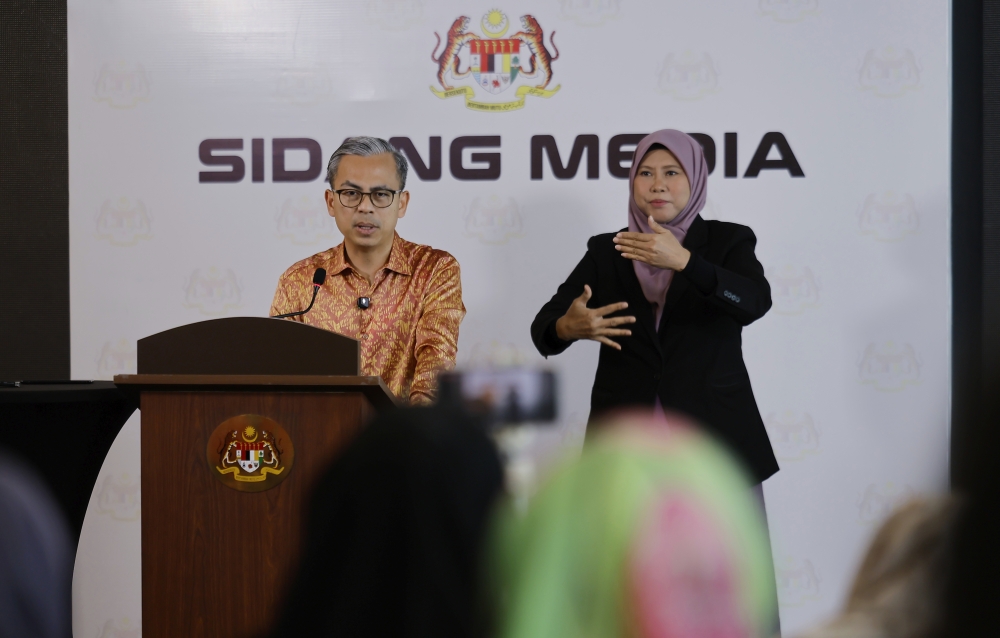
PUTRAJAYA, Feb 13 — The Cabinet today agreed to form a special committee to investigate allegations involving Malaysian Anti-Corruption Commission (MACC) chief commissioner Tan Sri Azam Baki, Communications Minister Datuk Fahmi Fadzil said.

Fahmi, who is also the government spokesman, said the committee will be chaired by the Chief Secretary to the Government, Tan Sri Shamsul Azri Abu Bakar and tasked with examining matters raised concerning Azam.

“The Cabinet today discussed issues involving the Chief Commissioner of the Malaysian Anti-Corruption Commission, Tan Sri Azam Baki, and has decided that a special committee to be chaired by the Chief Secretary to the Government will investigate the allegations that have been raised in relation to the MACC Chief Commissioner,” he said in his weekly post-Cabinet meeting here.

Fahmi said the findings of the probe will be presented to the Cabinet once the investigation is completed, after which follow-up action will be determined.


“This is part of our effort to ensure transparency and integrity in the investigative process,” he added.

When asked whether Shamsul Azri had been given a timeline to complete the investigation, Fahmi said the matter should be referred to the Chief Secretary himself.

Azam has come under scrutiny following allegations linked to shareholdings.


Bloomberg published a report on Tuesday alleging that Azam held stakes worth RM800,000 in Velocity Capital Partner Bhd — which the news portal claimed breached shareholding regulations for public servants in Malaysia.

Azam, however, maintained that the shares in question were properly declared to the Public Service Department in 2025 and fully disposed of within the same year.

The newswire later published another investigative report alleging that the agency was being used by a group of businessmen to force the sale of shares in targeted firms.

One of the businessmen was said to be close to Azam, Bloomberg reported citing internal MACC documents and whistleblowers still working with the agency.

The anti-graft agency chief has said that he has nothing to hide regarding his shareholdings and is open to scrutiny.

He stressed that all financial and asset declarations had been made in line with public service regulations and through the prescribed official channels.

Azam reiterated his commitment to transparency, accountability and the rule of law, adding that he would continue to cooperate fully with any legitimate mechanism properly established to examine the matter.

Japan seizes Chinese fishing boat, arrests captain in move likely to raise tensions


Image


Japan seizes Chinese fishing boat, arrests captain in move likely to raise tensions


Image
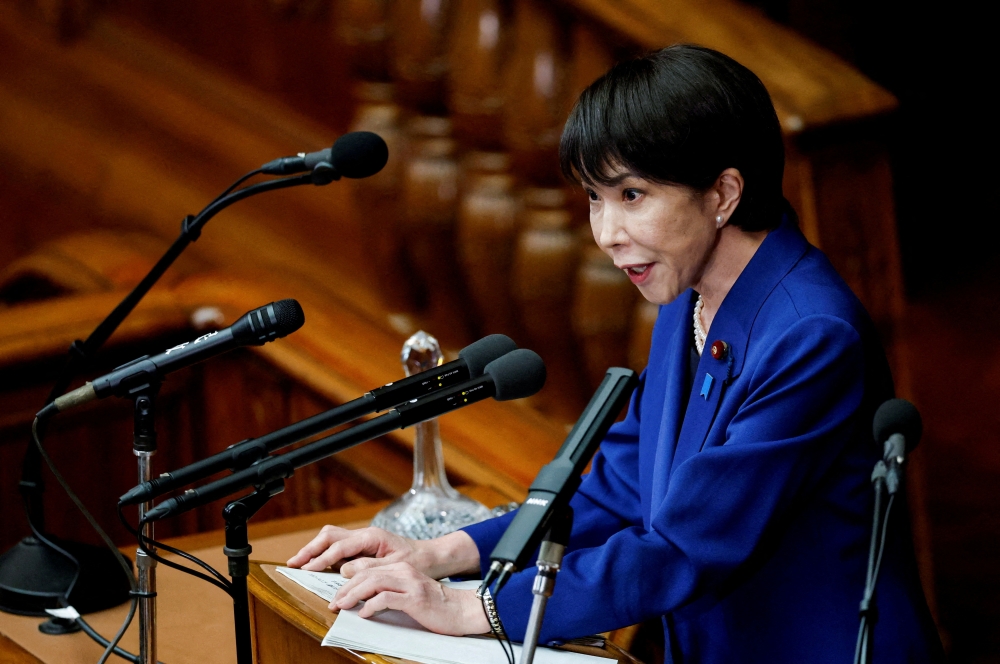
In November, Prime Minister Sanae Takaichi enraged China by suggesting that Japan would intervene militarily if Beijing sought to take Taiwan by force. — Reuters pic

Friday, 13 Feb 2026 9:34 AM MYT


TOKYO, Feb 13 — Japanese authorities seized a Chinese fishing boat and arrested its skipper, authorities said today, in a move likely to further heighten tensions with Beijing.

In November, Prime Minister Sanae Takaichi enraged China by suggesting that Japan would intervene militarily if Beijing sought to take Taiwan by force.


“The vessel’s captain was ordered to stop for an inspection by a fisheries inspector, but the vessel failed to comply and fled,” Japan’s fisheries agency said.

“Consequently, the vessel’s captain was arrested on the same day,” according to a statement.


The incident happened yesterday inside Japan’s exclusive economic zone off Nagasaki Prefecture, 89.4 nautical miles (165 kilometres) south-southwest of the island of Meshima, it added.


It was the first time since 2022 that the agency has seized a Chinese fishing boat.

The skipper in the latest incident is a 47-year-old Chinese national. There were 11 people on board including the captain.


China has a number of territorial disputes with Japan, and there have been repeated incidents around the Senkaku Islands, known as the Diaoyu in China.

The arrest of another Chinese fishing boat captain in 2010 off those islands in the East China Sea became a major diplomatic incident between the two countries.

Taiwan spat

Japan and China have close economic ties but Takaichi’s comments about Taiwan have sent relations spiralling downwards again.

China has long insisted that Taiwan, occupied for decades by Japan until 1945, is its territory and has not ruled out force to achieve “reunification”.

Taiwanese President Lai Ching-te told AFP in an interview this week that countries in the region would be China’s next targets should Beijing seize the democratic island.

Lai said if China were to take Taiwan, Beijing would become “more aggressive, undermining peace and stability in the Indo-Pacific and the rules-based international order”.

“The next countries under threat would be Japan, the Philippines, and others in the Indo-Pacific region, with repercussions eventually reaching the Americas and Europe,” he said.

After Takaichi’s comments, Beijing summoned Tokyo’s ambassador, warned Chinese citizens against visiting Japan and conducted joint air drills with Russia.

In December, J-15 jets from China’s Liaoning aircraft carrier twice locked radar on Japanese aircraft in international waters near Okinawa, according to Japan.

China also tightened controls on exports to Japan for items with potential military uses, fuelling worries that Beijing may choke supplies of vital rare-earth minerals.

In addition, Beijing reportedly suspended imports of Japanese seafood.

Japan’s last two pandas were even returned to China last month.

Hawkish leader

Takaichi, 64, was seen as a China hawk before becoming Japan’s first woman prime minister in October.

She won a landslide victory in snap elections on Sunday, putting her in a strong position for the next four years to stamp her mark on Japanese domestic and foreign policy.

She said Monday she was “open to various dialogues with China”.

But China’s foreign ministry said “genuine dialogue should be built on respect for one another”.

“Proclaiming dialogue with one’s mouth while engaging in confrontation—no one will accept this kind of dialogue,” foreign ministry spokesman Lin Jian told a regular news briefing on Tuesday.

“If Japan truly wants to develop a strategic and mutually beneficial relationship with China, it’s very easy and clear: withdraw Takaichi’s erroneous remarks about Taiwan,” he said. — AFP


Zamri continues Anwar's victory over 'illegal' worship houses


Image


Image

Image


Image
S Thayaparan
Published: Feb 9, 2026 7:00 AM

Updated: 3:18 PM


“If you find it upsetting, then stop doing it so that others won’t follow. If you choose to continue, then don’t be offended (when others mock it). So, pick one.”

- Zamri Vinoth, mocking Hindus 
celebrating Thaipusam


COMMENT | When extremists talk of the destruction or relocation of “illegal temples”, what they are really doing is sanctioning the destruction of historical sites.

The older the temple, the greater the victory, because of the religious, historical, and cultural significance of these temples, which existed before contemporary municipal law and, in some cases, colonial law.

This demonstrates the superiority of the state religion. Terming these temples as “illegal” gives extremists and the state the fig leaf of legal cover and enables the victimhood mentality, which is the foundation of identity politics.

Prime Minister Anwar Ibrahim’s declaration of the great victory of the construction of the Madani mosque on the site of the Dewi Sri Pathrakaliamman Temple is exactly the kind of hot-button issue that religious cretins use to inflame communal sentiment in this country.


Madani continues to coddle hate-mongers

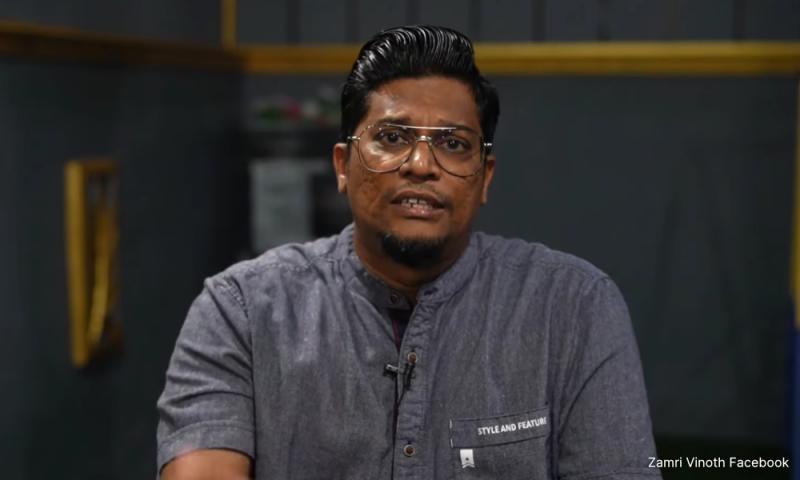
The fact that controversial Muslim preacher Zamri Vinoth is Teflon when it comes to his hate speech against Hindus in this country demonstrates two things.

The first is that Madani continues to coddle hate-mongers who use the religion of the state to shield them from the various laws that non-Muslims are not exempt from, and the second is that DAP is impotent when it comes to defending the rights of the non-Muslim community, even though they are part of Madani.


Image


I have no idea why some folks question why there has been no action taken against this hate-monger.

His latest arrest for organising a rally against “illegal” houses of worship and the prime minister’s eleventh-hour warning were merely a sandiwara (theatre) to appease not only Zamri’s detractors but to make Madani look good in the eyes of Indian Prime Minister Narendra Modi and the international press.

I have no doubt that nothing will come of this arrest, just as nothing came of the charges against him before.

You have to understand Zamri’s close connection with the religious bureaucracy. The Selangor Islamic Religious Department had hooked up with him in 2017 to give Islamic courses in Tamil to increase productivity in proselytising in a multilingual milieu.

What this course was supposed to do was make it easier for (state-sanctioned) Muslim preachers attempting to convert Indians, using Tamil as an entry point into their lives.


Modi is the real target

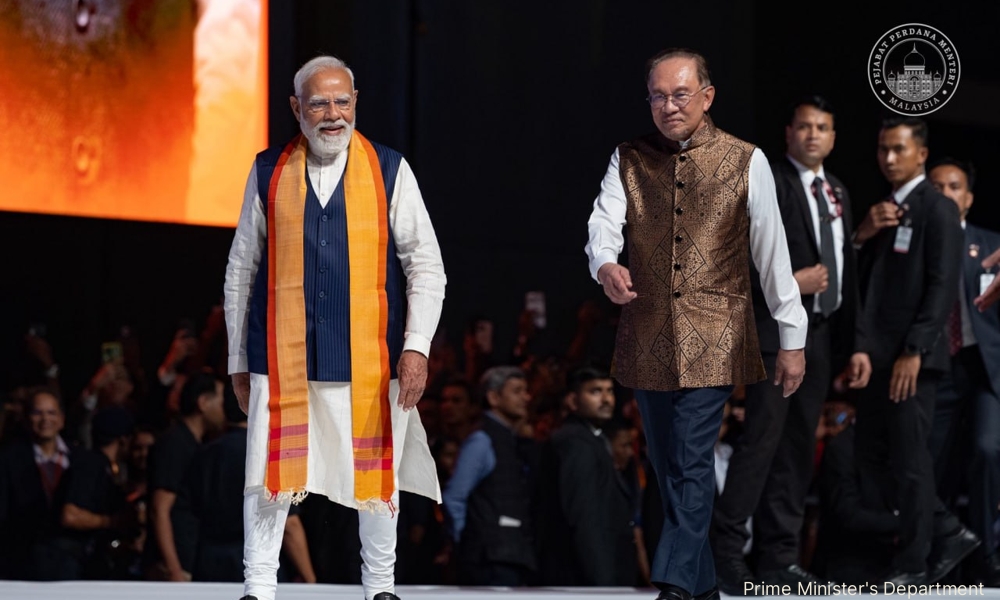
While Zamri may claim that his supposed rally against illegal houses of worship and the arrival of Modi are merely coincidental, this, of course, is farcical. The fact is that Modi is a hate figure for some Muslims abroad and in India for various reasons.

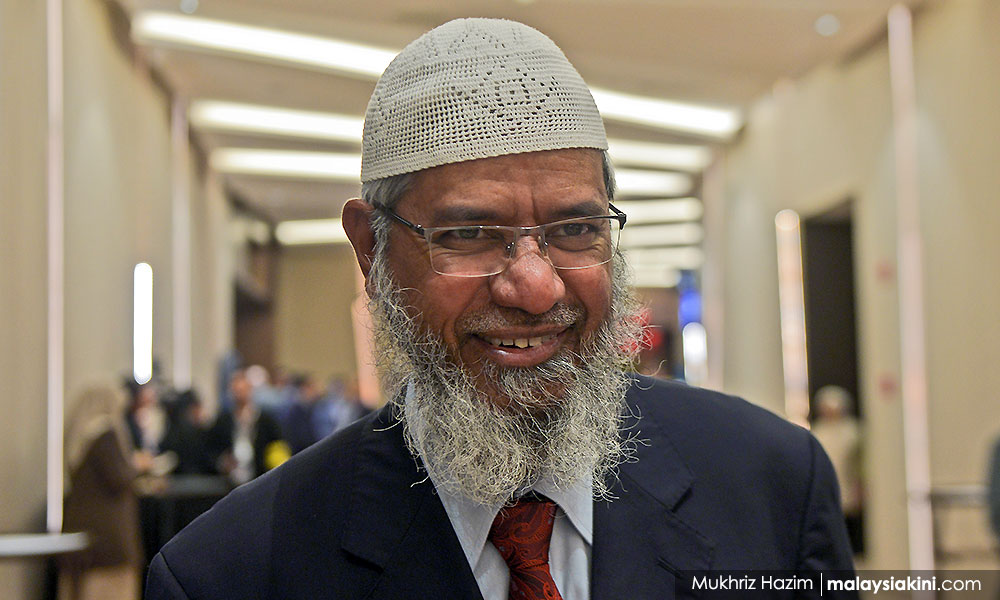
Keep in mind that Perlis mufti Asri Zainul Abidin’s “cow worshippers” poem was aimed at Modi and the extradition of another controversial Muslim preacher, Zakir Naik.


Image
Zakir Naik


Meanwhile, Zamri, a Zakir acolyte, once said he was willing to give up his citizenship if Zakir were extradited to India. As reported in the Malay Mail, “If the government wants to send back Zakir or extradite him, I will not hesitate to hand over my IC.”

Indeed, when Zamri was detained and released by the state for insulting Hindus, Asri put forward that the former was only testifying when it came to his personal experience with the Hindu faith.

What Zamri was doing as a professional proselytiser was creating a narrative for Muslims to use to convert Hindus in the course of his professional duties. This idea of Muslim converts as the perfect vehicles to proselytise is nothing new.

Muslim convert Ridhuan Tee Abdulah, for instance, always pleaded “special knowledge” when it came to the Chinese community. Hence, his “attacks” against the community had the appearance of legitimacy to a certain section of the Muslim community.

Using converts to preach is propagated by proselytising faiths all over the world.


Image
Ridhuan Tee Abdullah


And while I think that Zakir is influential in the anti-Modi sentiment, what really twisted the knickers of religious extremists was the sight of Modi inaugurating the BAPS Hindu Mandir, the largest Hindu temple in the UAE.

Modi hugging Sheikh Mohamed bin Zayed Al Nahyan, the president of the UAE, with honour guards in tow, inflamed the sensitivities and no doubt caused much annoyance to the bigots and extremists worldwide.

Here is a big, beautiful, sprawling Hindu temple and a prime minister who was nurturing a reputation for defending the historical and cultural contributions of Indians in the colonial and post-colonial world.

Celebrating that fact in the Middle East did not go down well with certain elements of the Muslim diaspora.


No such thing as ‘phobia’ here

So it is not a coincidence that a local preacher who has a history of using hate speech against the Hindu community and who remains immune to the laws that govern such speech decided to hold a rally which celebrates the destruction of “illegal houses of worship”.

The point is to demonstrate that in this country, temples, especially older pre-colonial temples, far from being celebrated as historical sites, are destroyed to demonstrate the victory of the religion of the state.

Unfortunately, for a simpleton like Zamri, what this does for Modi back in India is demonstrate that Hindus need a strong man to battle the extremist religious forces against the Hindu community in Asia.


Image
Indian Prime Minister Narendra Modi and Prime Minister Anwar Ibrahim


Last year, Anwar raged against Islamophobia - “We must work together to counter hate and intolerance, fostering a world where humanity thrives through mutual understanding and respect.”

Here is the thing. A phobia is often described as an extreme, irrational fear or aversion of something. This does not describe the sentiment that cretins like Zamri and states that enable them in their agenda for religious superiority all over the civilised world.

An accurate description would be an extremely rational loathing.


S THAYAPARAN is Commander (Rtd) of the Royal Malaysian Navy. Fīat jūstitia ruat cælum - “Let justice be done though the heavens fall.”


When Fanatics Advance and Moderates Retreat: The Slow Collapse of Multiracial Malaysia


Image


OPINION | When Fanatics Advance and Moderates Retreat: The Slow Collapse of Multiracial Malaysia


12 Feb 2026 • 4:00 PM MYT

Image

TheRealNehruism
An award-winning Newswav creator, Bebas News columnist & ex-FMT columnist


Image
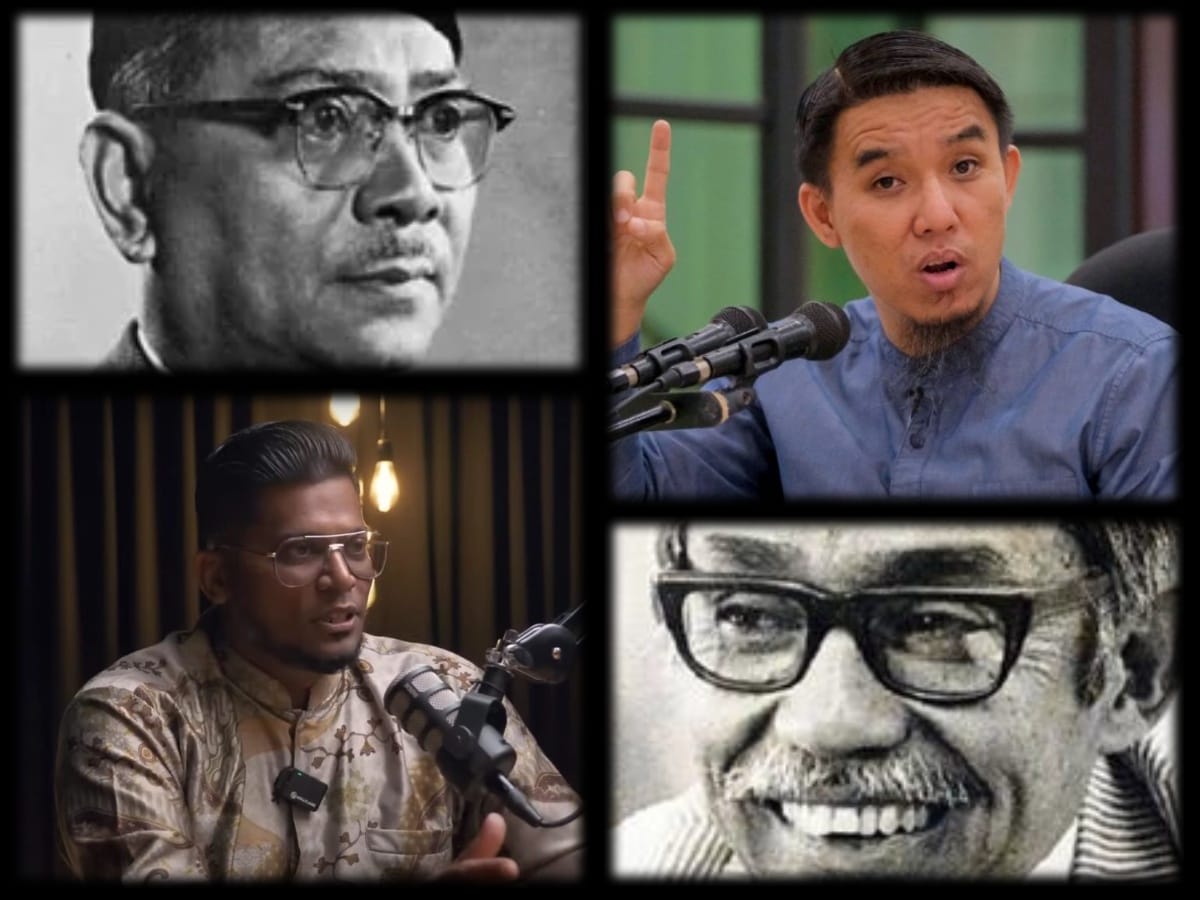
Image credit: Britannica / Malaysian Gazette / Tokoh Malaysia / Scoop


If we imagine social psychology as a spectrum, the middle is occupied by moderates, while the extremes are occupied by fanatics. The difference between the two is not merely ideological intensity — it is existential orientation.


As a rule, a moderate is oriented toward happiness and success.


A fanatic, on the other hand, is oriented toward being themselves.


This distinction explains far more about social conflict than ideology ever could.


A moderate possesses a flexible sense of self. Their identity is adaptable, negotiable, and fluid. They are willing to modify habits, language, dress, diet, rituals, or even cultural attachments if doing so improves their chances of happiness and success. For the moderate, identity is usually just something that you are born with — it is not something that you are stuck with - if the pursuit or happiness or success requires one to modify or change their identity, a moderate is usually a person who is amenable towards changing their identity.


For example, I consider myself as a moderate, in the sense that none of my identities - that of being an Indian, or a Malaysian, or a writer or a teacher -is etched in stone. I am not very proud of being a Malaysian or an Indian, I am just not ashamed of it. Everybody has a race and and a nationality, and mine happens to be such and such. When I see somebody with a different identity or nationality, I tend to not attach a lot of meaning to it. Rather than their identities, it is usually their capacity to pursue success or happiness that I am interested in. If I see someone from a different nationality or race being more capable than me in pursuing success or happiness, I might even adopt some of their characteristics, even if it is an identity characteristic, in order to improve my own chances of pursuing success or happiness.


A fanatic, by contrast, holds an intensely rigid sense of self. Their identity, to them, is sacred, fixed, and non-negotiable. As a result, they will insist on remaining exactly as they are, even when doing so makes them miserable or unsuccessful.


In another word, a fanatic is someone that will speak only the language they identify with, even when it disadvantages them.


They will follow rituals that they identify it even if they see not benefit in it.


They will preserve habits that no longer serve them.


They will defend symbols that they don't even understand.


They will do it, even when these attachments produce humiliation, stagnation, and failure, pain or even death. They will refuse to change — because if you are fanatic, happiness and success has no meaning to you, unless you are able to be exactly who you think you are. If you had to choose between being successful or happy not being yourself, or miserable and failing while being yourself, a fanatic will gladly choose the later.


In short, moderates want to live well; fanatics want to die as themselves.


Every identity group contains both moderates and fanatics. But when fanatics from different groups come into sustained contact, conflict becomes inevitable.


As Winston Churchill once famously said, “A fanatic is someone who can’t change their mind and won’t change the subject.”


Fanatics have no middle ground. They cannot compromise because to a fanatic, compromise feels like betrayal. They cannot negotiate because negotiation feels like submission. They cannot adapt because adaptation feels like humiliation. When two fanatics from two different identity group make contact, one will attempt to impose while the other will resist to the bitter end. The result is always friction, escalation, and eventually, explosion.


Moderates, on the other hand, possess middle ground. They can negotiate, adapt, exchange, learn, and transform. When moderates from different identity groups interact, what emerges is not conflict but social entropy — or a gradual mixing, learning, and convergence, in the pursuit of success or happiness, that slowly produces a new overarching identity, that is sufficiently distinct from any of the component identities that make it, although much of its features is derived from the original component identities.


In a monocultural society, it is possible to build to society where the fanatics are influential, but in a multicultural society, if it one or more of the fanatical faction of the of the various identity group that is calling the shots, it will bring about collapse of a the multicultural society, either by transforming the multicultural society into a monocultural one, or splinter the multicultural society through cultural wars.
The Structural Role of Moderates and Fanatics

Fanatics, despite their unsavory reputation, are by themselves, not evil or perfidious. They actually serve a crucial function: they are the guardians of identity. They preserve language, rituals, traditions, symbols, and collective memory. They are also the group most willing to make sacrifices to defend these markers.


Without fanatics, identity dissolves.


But without moderates, identity stagnates — societies are unable to evolve and become stuck in a world that no longer exists.


Moderates, therefore, are the agents of evolution. They allow communities to adapt to changing economic, social, and political realities. They ensure that identity remains relevant, functional, and forward-looking.


Fanatics on the other hand, are agents of preservation. Without fanatics, communities might change so rapidly that they will too rapidly lose as sense of who they are. .


A healthy society requires both. But it requires them in the correct proportion and structure.


In a multicultural country like Malaysia, moderates must always outnumber fanatics sufficiently so that fanatics remain structurally embedded within their own communities, while intergroup engagement is conducted primarily by moderates.


This creates a vital buffer zone.


Fanatics preserve identity internally.


Moderates manage coexistence externally.


When this structure holds, diversity becomes strength.


When it breaks, however, diversity becomes a fault line.


Why Malaysia Is Becoming More Tense

Malaysia’s growing racial, religious, and regional turbulence is not accidental. It reflects the weakening of moderates across one or more identity groups, allowing fanatics to move to the forefront and engage directly with other identity groups, or worse, with the fanatics of other identity groups.


Social media has accelerated this process dramatically. It bypasses traditional social buffers and enables direct, constant, and emotionally charged contact between fanatics of different groups. In doing so, it amplifies outrage, identity insecurity, and radicalization.


Once fanatics from one group become aggressive, moderates in other groups gradually weaken and retreat, allowing their own fanatics to emerge in defense. This creates a vicious escalation loop:


Fanatic contact → Identity defensiveness → Moderate collapse → Mutual radicalization


At this stage, intergroup interaction ceases to be adaptive and becomes purely confrontational. Society moves from negotiation to mobilization, from cooperation to antagonism.


The Political Consequence Malaysia Cannot Ignore

If Malaysia seeks lasting social stability, the answer does not lie in censorship, repression, or authoritarian control. Nor does it lie in moral lectures about tolerance. The real challenge is far more structural: how the state manages the positioning, contact, and interaction between moderates and fanatics across identity groups.


At present, the balance is tilting dangerously.


The spatial, social, and psychological distance between moderates and fanatics is collapsing, while direct contact between fanatical elements of different communities is rapidly increasing. This is pushing Malaysia away from the delicate equilibrium required for multicultural coexistence and steering it toward two equally destabilising outcomes: the forced emergence of monocultural dominance, or the fragmentation of the multicultural state itself.


Either path will not unfold peacefully.


Both will be paved with prolonged tension, social bitterness, identity hardening, and periodic explosions of conflict. There is no smooth transition from multiculturalism to monoculturalism, just as there is no gentle disintegration of a plural society. What lies in between is always turbulence.


To prevent such an outcome, the state must urgently rethink how it structures identity relations in the country.


Thursday, February 12, 2026

Hamzah vs Azmin: Bersatu division leader exposes cracks in party


Image


Image

Image


Hamzah vs Azmin: Bersatu division leader exposes cracks in party


Published: Feb 12, 2026 2:46 PM
Updated: 6:28 PM


A Bersatu division leader under disciplinary probe today openly admitted to the existence of “opposing camps” within the party - one of which is in support of deputy president Hamzah Zainudin to take over the president’s post from Muhyiddin Yassin.

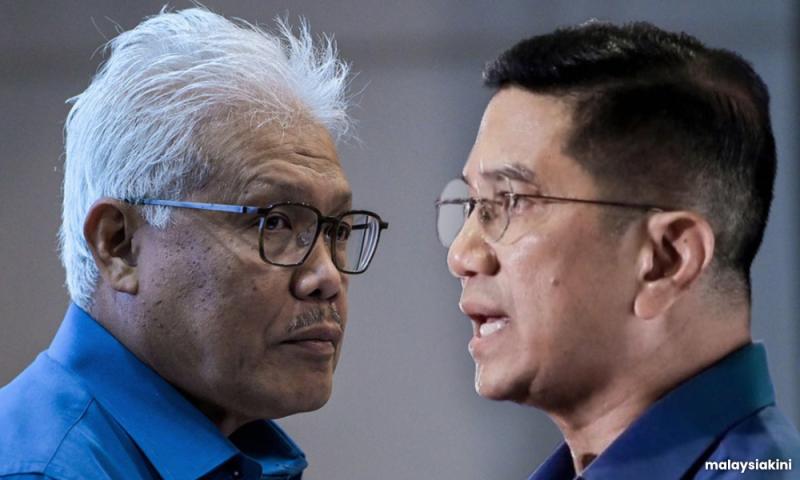
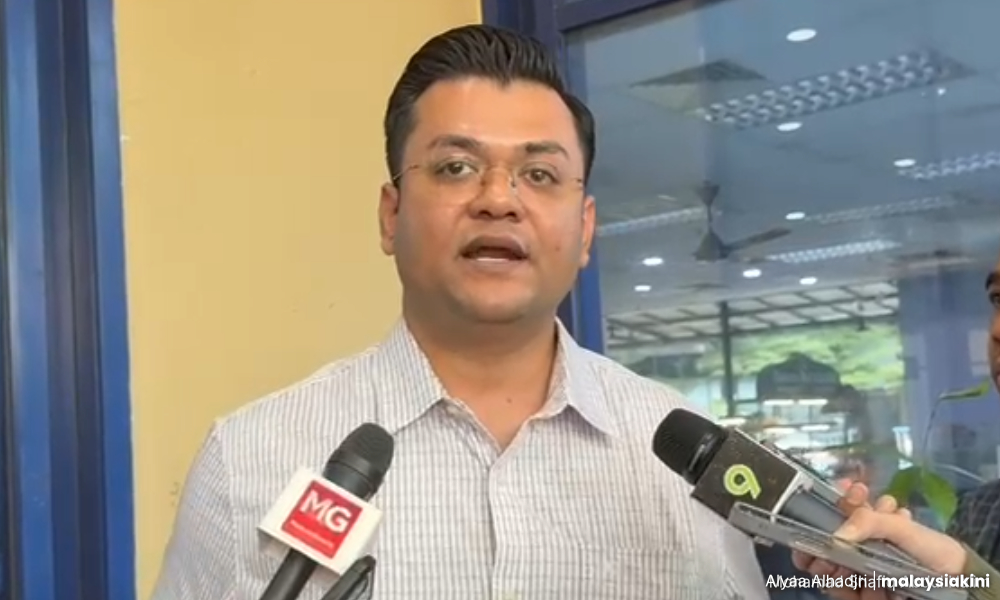
Met after an hour-long proceeding at the party’s headquarters in Petaling Jaya, Bersatu Hulu Langat information chief Shafiq Abdul Halim said the “other camp” is aligned with party secretary-general Azmin Ali.

“Everyone knows - there’s no need for me to keep it a secret - that two camps exist: the Azmin camp and the Hamzah (above, left) camp.

“Few people state this openly, but I will say that the real issue is the clash between the group that came from Umno and the group that came from PKR.

“The Umno group wants its own leader, while the group from PKR wants Azmin. That is where the split within the party began,” he said.


Image
Bersatu Hulu Langat information chief Shafiq Abdul Halim


Before joining Bersatu, Hamzah was among Umno lawmakers who declared a loss of confidence in Ahmad Zahid Hamidi’s leadership and exited the party on Dec 14, 2018.

Azmin, then-PKR deputy president, joined Bersatu two years later, along with 10 other PKR MPs, in the Sheraton Move that triggered the downfall of Pakatan Harapan’s first stint in federal power.

Previously, it was reported that the Bersatu disciplinary board chaired by Radzi Manan is expected to summon over a dozen members today, including Hamzah and his former press secretary, Johor Bahru Bersatu chief Zulkifli Bujang.

Both Hamzah and Zulkifli have requested a deferment as they are abroad, and as of 2pm today, only Shafiq was seen at the party headquarters.

In a text message later, Shafiq confirmed that he was the only one attending today’s hearing. Reasons for the others’ absence are unclear.


‘Split will happen’

Asked on impact of any actions taken against Hamzah, Shafiq said, “If you ask me, the impact would be a split. Whether it would be big or small, I can’t say.

“But I believe a split will happen. In fact, if we look at the current situation, those crises have already begun to unfold.”

As for the proceedings against him, Shafiq said he was summoned based on four complaints, including one by Bersatu information chief Tun Faisal Ismail Aziz.


Image

“Among the complaints were those related to my media statements and posts on social media.

“First, they concern my criticism of Tun Faisal in his capacity as information chief, my criticism of Azmin as the party’s secretary-general, and also my criticism regarding Muhyiddin’s position as Perikatan Nasional chairperson.

“I was also reported for making an open statement expressing support for PAS,” Shafiq said.

Recently, Bersatu vice-president Ronald Kiandee’s open call for Muhyiddin’s resignation exposed a widening rift with a faction said to support Hamzah.

Various party leaders at the central and division levels promptly issued statements as a response, with critics pointing to the Sabah Bersatu chief’s “failure” in leading PN at the last Sabah state polls.


***


AA??? Wakakaka, many in PKR left because of him. Most Machiavellian Mafulat.


Jamal, leave the towels behind, split a mandarin with Teresa Kok


Image

Jamal, leave the towels behind, split a mandarin with Teresa Kok


Image
Thursday, 12 Feb 2026 9:15 AM MYTBy Praba Ganesan


FEBRUARY 12 — The Sungai Besar Umno legend is true to form. He raised money yesterday by auctioning a towel and a pair of sandals, marking the closest Gandhian act by a Malaysian politician. Though Jamal Yunos is much more than a politician.

Let’s bring readers up to speed.

Court officials stormed his Ampang Jaya home last month because he owes legal fees which kicked off this episode. He lost a defamation case and paid RM300,000 as ordered by the court in 2022. Unfortunately he did not pay the legal fees, which prompted the raid.

They seized– or detailed 14, depending on which news report to be trusted – items at the residence for an auction at a later date.


Suitably incensed, Jamal declared he’d auction off a pair of sandals to raise the RM66,000 demanded. And by George, he did. Except he added a towel from his infamous visit to the Selangor State government building back in 2016 over a water supply shortage in the state.


Image
Sungai Besar Umno division chief Datuk Seri Jamal Md Yunos speaks during an interview at MSekin Wonderland in Sekinchan on July 12, 2023. — Picture by Hari Anggara


On that visit, he wrapped one towel around his waist and draped one over his shoulder. Obviously everyone had one question, what was under the towel?


Anyhow, Jamal has secured the amounts necessary and according to him will pay the plaintiff. That would be Teresa Kok, the veteran DAP Seputeh MP.

It would not be Jamal to just go about paying and leave it be.

He said Kok should rear pigs in her residence with the money. He added, to be incendiary, she cannot do so however unless her property was outside Selangor.

There is a developing kerfuffle about pig farming in Selangor and Jamal being Jamal, which is to say highly unoriginal, dragged in the controversy of the day and hopes Kok nibbles.

Kok has only one recourse in this matter, and it is not to become a swine herder.

She should invite him over for Chinese New Year.

Perhaps all he wanted was an invite, and was hinting at it in a roundabout way.

Wishing his favourite Kok would stand up and say, “No Jamal, I cannot have my dwelling swelling with hogs when the year of the horse is upon us. Say, what are you doing on Tuesday? Swing by my place for some mandarins.”

Rather than have a tired rehash about race relations, nationalism and multiculturalism, I’d rather have Jamal and Kok seated together on the festive day. That would be a great photo op for DAP and Umno in these heated days of hate ‘em till you make it.

He can bring along the two splendid characters who bid for his prized possessions. The Koks can make space for these special individuals. According to Jamal, Negeri Sembilan and Sabah dudes paid equal amounts for the towel and sandals respectively to raise RM66,000.

Actually, why not?

Use the holidays to bring people, even foes together.

If a towel and pair of sandals can rake up RM66,000, Malaysians are likely to throw in a fortune to see Jamal and Kok share tea in a civilised manner.

Jamal is a stage-four lung cancer survivor and showing humility days before Ramadan begins by sitting with his nemesis to fundraise for cancer patients would be a political coup.

I spent yesterday evening walking around the city visiting Peranakan eateries to figure out how to better the race situation with Chinese New Year on my mind.

Since they, the Peranakans, are the Chinese who took the country into their hearts perhaps the answer might be in the ondeh-ondeh or bubur cha cha they gave us.

It perpetually perplexes me that the country cannot navigate a week without asking are Malays at risk or the converse, will the Chinese overwhelm.

And rather than a complex solution involving 15 White papers, small actions can speak with greater sincerity.

I get it. Jamal was not enamoured that authorities poured into his home and treated him like a man too broke to pay a court fee. He is an Umno division chief, a man of means.

But does he also enjoy knowing the lasting memory he has in the hearts of Malaysians is tottering around a government building in his towel? A life cannot just be meme material.

His party and Kok’s party have been in a partnership for three years.

There’s too much history to go back in time and untangle the past. Though there is still enough goodwill for them to walk in the present to a room and take a picture together, since it is Chinese New Year. And by doing so, allow Malaysians to have a glimpse into the future.

And even if all that is gobbledygook, wishy-washy filth, they can still earn a few ringgit for cancer patients. No one walks out of that a loser.

All of this begins if Kok, rather than take Jamal’s pork bait, tries to penetrate his seemingly impregnable world with kindness. And for Jamal to relent to Kok.

I’ll leave that to them then.

Selangor stops issuing pig farming licences, existing farms to be phased out: MB


Image


Image
The Selangor government has decided to cease issuing pig farming licences to any party in the state, Menteri Besar Datuk Seri Amiruddin Shari announced today. – Bernama pic, February 12, 2026


Selangor stops issuing pig farming licences, existing farms to be phased out: MB


Move follows Sultan Sharafuddin’s decree, with full reliance on pork imports to meet non-Muslim demand


Scoop Reporters
Updated 58 minutes ago
12 February, 2026
12:41 PM MYT


KUALA LUMPUR – The Selangor government has decided to cease issuing pig farming licences to any party in the state, Menteri Besar Datuk Seri Amiruddin Shari announced today.

Amiruddin said the decision was made at the State Executive Council meeting and is in line with the decree of the Sultan of Selangor, Sultan Sharafuddin Idris Shah, who does not consent to pig farming being carried out in any district in Selangor.

He said that since January, the state government has stopped issuing pig farming licences and has focused on clearing existing farm sites in Tanjong Sepat.

“For farms that were previously operating, the areas will be closed at a faster rate in stages, with the cooperation of the Selangor State Veterinary Department.

Currently, 70% of pork requirements for the non-Muslim community are sourced through imports from other states. Following the State Executive Council’s decision, the entire local demand will be fully imported by the industry,” he said in a statement.

Amiruddin added that any issuance and approval of import licences would be referred to the federal government, in line with its jurisdiction over licensing matters.


Image
Selangor Ruler Sultan Sharafuddin Idris Shah recently decreed that he does not consent to pig farming being carried out in any district in the state. – Bernama pic, February 12, 2026


He said the decision was made to safeguard public sensitivities over concerns about the environmental impact of pig farms, including water drainage and odour pollution.

“With this decision, any polemic related to the pig farming issue must be stopped and not prolonged by any party who may seek to undermine harmony and sow suspicion among Selangor’s multiracial and multireligious communities,” he said.

Recently, Sultan Sharafuddin had suggested that the government issue licences for the import of pork to meet the demand and needs of non-Muslims, particularly the Chinese community in Selangor.

Through this approach, the Sultan decreed, the long-standing issue of pig farming could be resolved, while allowing the state government to optimise land use in Selangor for other purposes such as development and housing.

At the same time, the Sultan reiterated that he does not consent to pig farming being carried out in any district in the state.

He also stressed that the pig farming issue must be brought to a final close, as it has caused unease and affected peace and harmony within the community. – February 12, 2026


Netanyahu: Israel to take part in Trump’s newly launched ‘Board of Peace’


Image


Netanyahu: Israel to take part in Trump’s newly launched ‘Board of Peace’


Image
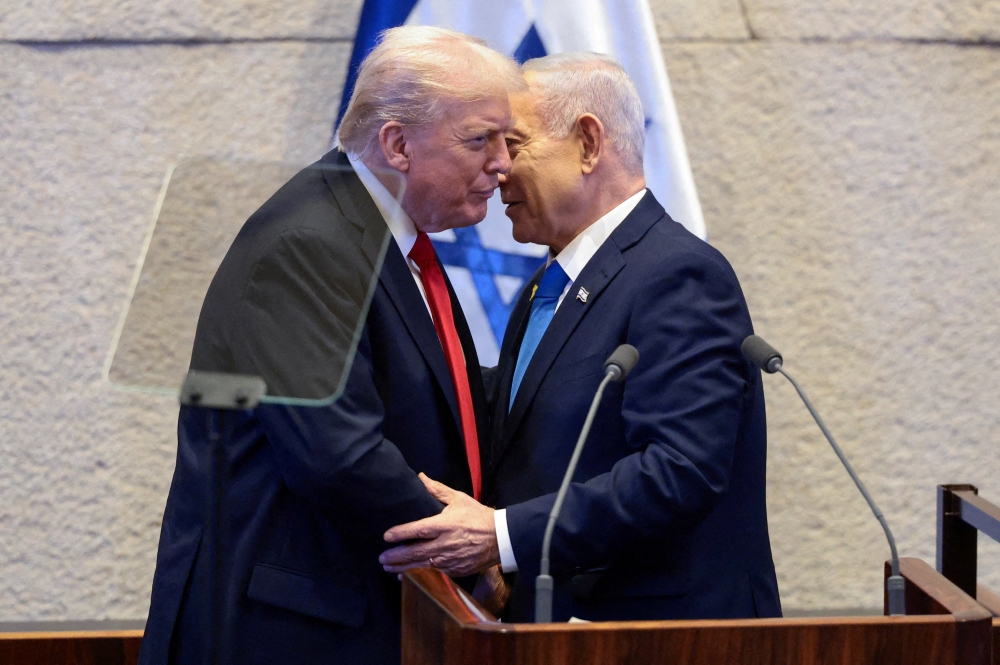
US President Donald Trump and Israeli Prime Minister Benjamin Netanyahu stand at the Knesset on the day Trump addresses it, amid a US-brokered prisoner-hostage swap and ceasefire deal between Israel and Hamas, in Jerusalem October 13, 2025. — Reuters pic

Thursday, 12 Feb 2026 9:50 AM MYT


  • Trump launched the board in late January
  • Board will hold its first meeting on February 19
  • Many US allies have been reluctant to join the board
  • Experts say it could undermine UN’s work


WASHINGTON, Feb 12 — Israel will join US President Donald Trump’s “Board of Peace” initiative, Prime Minister Benjamin Netanyahu said yesterday during his visit to Washington where he met Trump and Secretary of State Marco Rubio.

After meeting Rubio on Wednesday, Netanyahu posted on X that he “signed Israel’s accession as a member of the “Board of Peace.”


Netanyahu was in Washington to discuss Iran with Trump.

A UN Security Council resolution, adopted in mid-November, authorized the board and countries working with it to establish an international stabilization force in Gaza, where a fragile ceasefire began in October under a Trump plan on which Israel and Palestinian militant group Hamas signed off.


Under Trump’s Gaza plan, the board was meant to supervise Gaza’s temporary governance. ⁠Trump thereafter said the board, with him ⁠as chair, would be expanded to tackle global ⁠conflicts.


The board will hold its ⁠first meeting on ⁠February 19 in Washington to discuss Gaza’s reconstruction.

Many rights experts say that Trump overseeing a board to supervise a foreign territory’s affairs resembled a colonial structure. Israel’s ⁠presence on the board is expected to bring further criticism as the board does not include a Palestinian.


Countries have reacted cautiously to Trump’s invitation to join the board launched in late January. Many experts are concerned that the board could undermine the United Nations.

While some of Washington’s Middle Eastern allies have joined, ⁠many of its traditional Western allies have stayed away.

The ceasefire in Gaza has been repeatedly violated, with at least 580 Palestinians killed, say ⁠Gaza health officials, and four Israeli soldiers reportedly killed since it began in October.

Israel’s assault ⁠has ⁠killed over 72,000 Palestinians, according to the Gaza health ministry, and caused a hunger crisis and internally displaced Gaza’s entire population.

Multiple rights experts, scholars and a UN inquiry say it amounts to genocide. Israel calls its actions self-defence after Hamas-led militants killed 1,200 people and took over 250 hostages in a late 2023 attack. — Reuters


***


Utterly shocking and disgraceful to allow murderous genocidal Israel to be associated with the word 'Peace'.

And I doubt Israel has or will pay the membership fee of $1 billion - the Wanks will either pick that up or exempt the shailoks from paying.


‘UAE is selling Palestinian homes to Israel’


Thanks MF:


Image


‘UAE is selling Palestinian homes to Israel’


October 28, 2014 at 3:06 pm


The United Arab Emirates is played a big role in selling the houses of Arabs in Silwan, south of Al-Aqsa Mosque, to Israeli settlement construction companies, a senior member of the Islamic Movement has revealed.


In an interview with Al-Quds news channel, the vice chairman of the Islamic Movement in Israel Sheikh Kamal Khatib said: “Perhaps the coming days will reveal more. One should mention however, that a large sum of money was transferred from the UAE to the Bank of Palestine and that bags of money were handed over to approximately 34 families who owned apartments in Silwan.”

Khatib asked: “It was originally planned that this money would pass through the Palestinian monetary fund. So, my question is… why did it not?”

He called upon the competent authorities within the Palestinian Authority to open an investigation to follow up on this matter as soon as possible.

Settlers in Jerusalem have gained control of an apartment building and a house with its surrounding land in the Al-Hawa district in Silwan. These properties are located just south of Al-Aqsa Mosque and they are now under the protection of the Israeli army.

Haaretz newspaper revealed several days ago that a fake company belonging to Elad, an Israeli gang, has been registered abroad under the name Kandel Finances and has been buying Palestinian houses indirectly.


Ex-minister: I heard Saudi king promise donation to Najib at 2010 palace meeting


Image


Ex-minister: I heard Saudi king promise donation to Najib at 2010 palace meeting


Image
This file picture shows former minister in the prime minister’s department (religious affairs) Datuk Seri Jamil Khir Baharom. — Picture by Hari Anggara.

Wednesday, 11 Feb 2026 6:17 PM MYT


KUALA LUMPUR, Feb 11 — Former minister in the Prime Minister’s Department (Religious Affairs) Datuk Seri Jamil Khir Baharom told the High Court here today that he personally heard a donation pledge allegedly made by the late King Abdullah Abdul Aziz Al-Saud of Saudi Arabia to former prime minister Datuk Seri Najib Tun Razak in 2010.

Jamil Khir, 64, said he overheard the matter during an informal meeting between Najib and King Abdullah at the latter’s palace in Riyadh on January 11, 2010.

He said besides himself, the King’s interpreter, former foreign minister Datuk Seri Anifah Aman, and former Malaysian ambassador to Saudi Arabia Prof Datuk Syed Omar Al-Saggaf were also present at the meeting.

However, he said the conversation did not take place publicly but was only between Najib, King Abdullah and the interpreter.


“As the two (Najib and King Abdullah) were walking together, Datuk Seri Najib gestured me to join them. I followed and stood slightly behind him, but close enough to hear the conversation and its translation.

“The confidential discussion touched, among other things, on a financial contribution from King Abdullah to Datuk Seri Najib.

“If I am not mistaken, King Abdullah also mentioned that the funds would be sent shortly after the meeting and channelled into Datuk Seri Najib’s personal account for certain reasons.


“I was given to understand that the personal account was chosen to facilitate his political affairs and to avoid complications if the funds were transferred directly to any political entity or organisation,” he said.

Jamil Khir said this in his witness statement during examination-in-chief by lawyer Muhammad Farhan Muhammad Shafee, who is representing Najib in a RM42 million civil suit filed by SRC International Sdn Bhd and its subsidiary Gandingan Mentari Sdn Bhd against the former prime minister.

He said based on his assumption, the alleged Saudi contribution was given to Najib because the country admired Malaysia’s practice of moderate Islam and its firm stance against Syiah ideology.

However, during cross-examination by lawyer Kwan Will Sen, representing SRC International, he agreed that his view that Saudi Arabia admired Malaysia was merely his personal opinion.

The civil suit, filed in 2021 by SRC and Gandingan Mentari, seeks a declaration that Najib is liable for RM42 million and claims damages for knowing receipt, dishonest assistance, misfeasance in public office and abuse of power.

The trial before Judge Datuk Raja Ahmad Mohzanuddin Shah Raja Mohzan resumes on March 2. — Bernama

Wednesday, February 11, 2026

Netanyahu knowingly funded October 7th


Image


Trump and Netanyahu Posture Ahead of Wednesday Meeting on Iran

Ahead of Israeli Prime Minister Benjamin Netanyahu’s visit to Washington to meet President Donald Trump, key differences and alignments are emerging on multiple fronts.

Trump stated that Netanyahu “wants a good deal” with Iran on its nuclear program and described ongoing Oman-mediated talks—following a brief 2025 Israel-Iran war and U.S. strikes on Iranian sites—as “very different” from past negotiations, expressing optimism that Iran “wants to make a deal very badly” while warning of potential tough military action, including additional carrier deployments, if diplomacy fails; he noted any agreement would address nuclear facilities, and possibly missiles.

In contrast, Trump explicitly opposed recent Israeli moves toward greater control in the West Bank, declaring “I am against annexation” and emphasizing other priorities, despite the Israeli Security Cabinet’s approval of measures—praised by Likud Energy Minister Eli Cohen as establishing “de facto sovereignty” that rules out a Palestinian state—including shifting building authority in Hebron, facilitating settler land purchases, repealing restrictions on non-Muslim real estate transactions, and expanding Israeli enforcement into Palestinian-controlled areas, actions that violate Oslo Accords and have drawn U.S. concern over regional stability.

Additionally, an Israeli source indicated Netanyahu will inform Trump that Phase 2 of the October 2025 U.S.-brokered Gaza ceasefire—requiring Hamas disarmament and Israeli troop withdrawal— “is not moving” due to Hamas’s refusal to relinquish weapons, with Israel arguing a renewed military operation is needed to enforce demilitarization in line with Trump’s Gaza vision, amid ongoing incidents and IDF strikes on suspected violators.

GhostofBasedPatrickHenry: Mr Bibi goes to Washington.

For the seventh time in the past 12 months.

That is roughly one trip every 7 weeks.

This will mark at least the third time that Bibi has made the trip in order to shill for war with Iran.

A few days before departing, his security cabinet announced new measures (implemented via executive power, not legislation) that will effectively grant the Israeli government sovereignty over the West Bank (Palestine) once its intended effect has played out.

The measures allow for the Israeli public to purchase tracts of land in Palestine and then register those properties with the Israeli government— rather than the Palestinian Authority. This registration would place the land under the authority and jurisdiction of the Jewish State, in the eyes of Netanyahu's Security Cabinet.

As you would expect, the Muslim leadership throughout the Middle East is enraged by this development. Even President Trump told Barak Ravid during an interview with him yesterday morning that he opposes annexation.

"I am against annexation.”

“We have enough things to think about now. We don’t need to be dealing with the West Bank,” he adds.

Perhaps this is why Netanyahu plans to meet with Rubio in the morning before meeting with Trump. Bibi wants to gameplan how to deal with him.

Image

As President Trump clearly recognizes, the move is designed to be a provocation. Hamas is calling for kinetic escalation from the region against Israel—which is exactly what Netanyahu wants.

Speaking of Hamas, a report newly released by the Israeli government claims that Netanyahu knew about Hamas's plan to invade southern Israel as far back as early 2018, which means Bibi knew about the plan when he decided to step in and give Hamas tens of millions of dollars per month after the Palestinian Authority in the West Bank decided to cut off Hamas financially.

Image

Netanyahu knew they were planning the attack, and didn't want to squander the opportunity to start a war, so he appealed to Qatar and said that there would be a humanitarian crisis if cash wasn't sent to Gaza. Qatar gave Netanyahu the money, and Netanyahu had his people walk it into Gaza and give it to prominent families with known ties to Hamas.

If all of this is true, then that means that Netanyahu knowingly funded October 7th.

On top of that, he intends to tell President Trump that the Board of Peace's Phase Two Plan to take control of Gaza will not happen, and that the US needs to immediately start a war with Iran.

Good Luck.

(I will be covering Netanyahu's visit today on Badlands Media.)


Temples, Tensions, and the Failure to Lead


Dennis Ignatius


~ Provoking discussion, dissent & debate on politics, diplomacy, human rights & civil society.

Temples, Tensions, and the Failure to Lead

Tags

Image


[1] The peaceful assembly planned over the weekend to protest so-called “illegal” temples – undocumented houses of worship, many built decades ago on state or private land – was swiftly met with calls for it to be banned. Notably, even figures who had built their political careers on defending the right to peaceful assembly opposed the rally, arguing that it was deliberately provocative and aimed squarely at the Hindu faith.

[2] Those concerns were not unfounded. Zamri Vinoth, the principal organiser of the protest, has a long and troubling record of religious provocation, marked by repeated attempts to bait and antagonise Hindus. His recent actions suggest a deliberate effort to exploit the temple issue to inflame anti-Hindu sentiment. 

[3] It was against this backdrop that the prime minister urged the police to act against the demonstrators, declaring that they should be “arrested and thrown out.” He warned against exploiting sensitive issues involving places of worship to inflame racial tensions and stressed that national harmony and security must be protected at all costs. Many welcomed what they perceived as a firm and decisive intervention.

[4] Finding the proper balance between safeguarding peaceful assembly and free expression on the one hand, and preventing violence and communal discord on the other, is always challenging. Yet if peaceful assembly is permitted only for causes deemed acceptable or views considered inoffensive, we step onto a slippery slope. Such selectivity erodes constitutional protections and strengthens a state that has yet to demonstrate a consistent commitment to the liberties it is meant to uphold. We should be wary of sacrificing fundamental freedoms for the fleeting satisfaction of silencing voices we rightly reject.

[5] The present crisis over so-called “illegal” temples did not arise in a vacuum. It is the cumulative result of years of political neglect and a failure of leadership to confront sensitive issues of race and religion with honesty, fairness, and resolve.

[6] Zamri himself illustrates this institutional failure. Hundreds of police reports have reportedly been lodged against him for remarks that appear to cross the legal limits of free speech, yet no action has been taken against him.  The authorities move swiftly when the majority religion is disparaged, but far less decisively when other faiths are targeted. The result is near impunity for Zamri and others like him – an injustice that exposes the discriminatory double standards embedded in our system of governance. Such selectivity breeds resentment and distrust, and without trust, the resolution of sensitive issues becomes all the more difficult.

[7] Nor has the prime minister consistently set the right tone in dealing with matters of race and religion. He lectures the world on the importance of respect and tolerance of diversity, but too often falls short of those ideals at home. His handling of the century-old temple dispute in the Masjid India area of Kuala Lumpur, for example, left many Malaysian Indians hurt and disappointed. With greater foresight, restraint, and sensitivity – and less political grandstanding – the episode might have served as a constructive template for resolving similar disputes.

[8] Instead of pursuing an equitable and respectful solution to a long-standing problem, the prime minister has further heightened tensions with his harsh and callous insistence that all so-called “illegal” temples be summarily demolished. “I do not allow houses of worship that do not abide by the rules, and local councils have been given the authority to clear out areas not owned by such temples so that this issue can be resolved properly,” he was quoted as saying. As Zaid Malek of Lawyers for Liberty has warned, such a directive is dangerous and irresponsible, potentially opening the door to indiscriminate demolitions, particularly of Hindu temples.

[9] By effectively validating Zamri’s campaign, the prime minister has signalled what amounts to an open season on temples across the country. His failure to distinguish clearly between recently erected illegal structures and temples that have stood for generations – products of Malaysia’s layered history and plural society – places even long-established places of worship under a cloud of uncertainty.

[10] In doing so, the prime minister has broken faith with the Malaysian Indian community and plunged it into one of the gravest crises it has faced since independence. He has made his political calculation; Malaysian Indians must now make theirs. Whatever course they choose, one thing is clear: the real danger facing minorities in this country lies not in the theatrics of a single provocateur, but in the decisions and judgment of those entrusted with power.

[Dennis Ignatius | Kuala Lumpur | 11 February 2026]