The Free Social Platform forAI Prompts
Share, discover, and collect prompts from the community. Free and open source — self-host for your organization with complete privacy.
or explore by industry
Click to explore
Sponsored by
Support Community


 and
and
 by Cognition
Loved by AI Pioneers

Greg Brockman
President & Co-Founder at OpenAI · Dec 12, 2022
“Love the community explorations of ChatGPT, from capabilities (https://github.com/f/awesome-chatgpt-prompts) to limitations (...). No substitute for the collective power of the internet when it comes to plumbing the uncharted depths of a new deep learning model.”

Wojciech Zaremba
Co-Founder at OpenAI · Dec 10, 2022
“I love it! https://github.com/f/awesome-chatgpt-prompts”

Clement Delangue
CEO at Hugging Face · Sep 3, 2024
“Keep up the great work!”

Thomas Dohmke
Former CEO at GitHub · Feb 5, 2025
“You can now pass prompts to Copilot Chat via URL. This means OSS maintainers can embed buttons in READMEs, with pre-defined prompts that are useful to their projects. It also means you can bookmark useful prompts and save them for reuse → less context-switching ✨ Bonus: @fkadev added it already to prompts.chat 🚀”
Featured Prompts
Design a personal form builder app similar to JotForm, focusing on ease of use, modularity, and customization.
Act as a product designer and software architect. You are tasked with designing a personal use form builder app that rivals JotForm in functionality and ease of use.

Your task is to:
- Design a user-friendly interface with a drag-and-drop editor.
- Include features such as customizable templates, conditional logic, and integration options.
- Ensure the app supports data security and privacy.
- Plan the app architecture to support scalability and modularity.

Rules:
- Use modern design principles for UI/UX.
- Ensure the app is accessible and responsive.
- Incorporate feedback mechanisms for continuous improvement.
Improve the following code
Improve the following code

```
selectedText
```

Please suggest improvements for:
1. Code readability and maintainability
2. Performance optimization
3. Best practices and patterns
4. Error handling and edge cases

Provide the improved code along with explanations for each enhancement.Analyzes codebase patterns to discover missing skills and generate/update SKILL.md files in .claude/skills/ with real, repo-derived examples.
---
name: skill-master
description: Discover codebase patterns and auto-generate SKILL files for .claude/skills/. Use when analyzing project for missing skills, creating new skills from codebase patterns, or syncing skills with project structure.
version: 1.0.0
---

# Skill Master

## Overview

Analyze codebase to discover patterns and generate/update SKILL files in `.claude/skills/`. Supports multi-platform projects with stack-specific pattern detection.

**Capabilities:**
- Scan codebase for architectural patterns (ViewModel, Repository, Room, etc.)
- Compare detected patterns with existing skills
- Auto-generate SKILL files with real code examples
- Version tracking and smart updates

## How the AI discovers and uses this skill

This skill triggers when user:
- Asks to analyze project for missing skills
- Requests skill generation from codebase patterns
- Wants to sync or update existing skills
- Mentions "skill discovery", "generate skills", or "skill-sync"

**Detection signals:**
- `.claude/skills/` directory presence
- Project structure matching known patterns
- Build/config files indicating platform (see references)

## Modes

### Discover Mode

Analyze codebase and report missing skills.

**Steps:**
1. Detect platform via build/config files (see references)
2. Scan source roots for pattern indicators
3. Compare detected patterns with existing `.claude/skills/`
4. Output gap analysis report

**Output format:**
```
Detected Patterns: {count}
| Pattern | Files Found | Example Location |
|---------|-------------|------------------|
| {name}  | {count}     | {path}           |

Existing Skills: {count}
Missing Skills: {count}
- {skill-name}: {pattern}, {file-count} files found
```

### Generate Mode

Create SKILL files from detected patterns.

**Steps:**
1. Run discovery to identify missing skills
2. For each missing skill:
   - Find 2-3 representative source files
   - Extract: imports, annotations, class structure, conventions
   - Extract rules from `.ruler/*.md` if present
3. Generate SKILL.md using template structure
4. Add version and source marker

**Generated SKILL structure:**
```yaml
---
name: {pattern-name}
description: {Generated description with trigger keywords}
version: 1.0.0
---

# {Title}

## Overview
{Brief description from pattern analysis}

## File Structure
{Extracted from codebase}

## Implementation Pattern
{Real code examples - anonymized}

## Rules
### Do
{From .ruler/*.md + codebase conventions}

### Don't
{Anti-patterns found}

## File Location
{Actual paths from codebase}
```

## Create Strategy

When target SKILL file does not exist:
1. Generate new file using template
2. Set `version: 1.0.0` in frontmatter
3. Include all mandatory sections
4. Add source marker at end (see Marker Format)

## Update Strategy

**Marker check:** Look for `<!-- Generated by skill-master command` at file end.

**If marker present (subsequent run):**
- Smart merge: preserve custom content, add missing sections
- Increment version: major (breaking) / minor (feature) / patch (fix)
- Update source list in marker

**If marker absent (first run on existing file):**
- Backup: `SKILL.md` → `SKILL.md.bak`
- Use backup as source, extract relevant content
- Generate fresh file with marker
- Set `version: 1.0.0`

## Marker Format

Place at END of generated SKILL.md:

```html
<!-- Generated by skill-master command
Version: {version}
Sources:
- path/to/source1.kt
- path/to/source2.md
- .ruler/rule-file.md
Last updated: {YYYY-MM-DD}
-->
```

## Platform References

Read relevant reference when platform detected:

| Platform | Detection Files | Reference |
|----------|-----------------|-----------|
| Android/Gradle | `build.gradle`, `settings.gradle` | `references/android.md` |
| iOS/Xcode | `*.xcodeproj`, `Package.swift` | `references/ios.md` |
| React (web) | `package.json` + react | `references/react-web.md` |
| React Native | `package.json` + react-native | `references/react-native.md` |
| Flutter/Dart | `pubspec.yaml` | `references/flutter.md` |
| Node.js | `package.json` | `references/node.md` |
| Python | `pyproject.toml`, `requirements.txt` | `references/python.md` |
| Java/JVM | `pom.xml`, `build.gradle` | `references/java.md` |
| .NET/C# | `*.csproj`, `*.sln` | `references/dotnet.md` |
| Go | `go.mod` | `references/go.md` |
| Rust | `Cargo.toml` | `references/rust.md` |
| PHP | `composer.json` | `references/php.md` |
| Ruby | `Gemfile` | `references/ruby.md` |
| Elixir | `mix.exs` | `references/elixir.md` |
| C/C++ | `CMakeLists.txt`, `Makefile` | `references/cpp.md` |
| Unknown | - | `references/generic.md` |

If multiple platforms detected, read multiple references.

## Rules

### Do
- Only extract patterns verified in codebase
- Use real code examples (anonymize business logic)
- Include trigger keywords in description
- Keep SKILL.md under 500 lines
- Reference external files for detailed content
- Preserve custom sections during updates
- Always backup before first modification

### Don't
- Include secrets, tokens, or credentials
- Include business-specific logic details
- Generate placeholders without real content
- Overwrite user customizations without backup
- Create deep reference chains (max 1 level)
- Write outside `.claude/skills/`

## Content Extraction Rules

**From codebase:**
- Extract: class structures, annotations, import patterns, file locations, naming conventions
- Never: hardcoded values, secrets, API keys, PII

**From .ruler/*.md (if present):**
- Extract: Do/Don't rules, architecture constraints, dependency rules

## Output Report

After generation, print:
```
SKILL GENERATION REPORT

Skills Generated: {count}

{skill-name} [CREATED | UPDATED | BACKED_UP+CREATED]
├── Analyzed: {file-count} source files
├── Sources: {list of source files}
├── Rules from: {.ruler files if any}
└── Output: .claude/skills/{skill-name}/SKILL.md ({line-count} lines)

Validation:
✓ YAML frontmatter valid
✓ Description includes trigger keywords
✓ Content under 500 lines
✓ Has required sections
```

## Safety Constraints

- Never write outside `.claude/skills/`
- Never delete content without backup
- Always backup before first-time modification
- Preserve user customizations
- Deterministic: same input → same output
FILE:references/android.md
# Android (Gradle/Kotlin)

## Detection signals
- `settings.gradle` or `settings.gradle.kts`
- `build.gradle` or `build.gradle.kts`
- `gradle.properties`, `gradle/libs.versions.toml`
- `gradlew`, `gradle/wrapper/gradle-wrapper.properties`
- `app/src/main/AndroidManifest.xml`

## Multi-module signals
- Multiple `include(...)` in `settings.gradle*`
- Multiple dirs with `build.gradle*` + `src/`
- Common roots: `feature/`, `core/`, `library/`, `domain/`, `data/`

## Pre-generation sources
- `settings.gradle*` (module list)
- `build.gradle*` (root + modules)
- `gradle/libs.versions.toml` (dependencies)
- `config/detekt/detekt.yml` (if present)
- `**/AndroidManifest.xml`

## Codebase scan patterns

### Source roots
- `*/src/main/java/`, `*/src/main/kotlin/`

### Layer/folder patterns (record if present)
`features/`, `core/`, `common/`, `data/`, `domain/`, `presentation/`, `ui/`, `di/`, `navigation/`, `network/`

### Pattern indicators

| Pattern | Detection Criteria | Skill Name |
|---------|-------------------|------------|
| ViewModel | `@HiltViewModel`, `ViewModel()`, `MVI<` | viewmodel-mvi |
| Repository | `*Repository`, `*RepositoryImpl` | data-repository |
| UseCase | `operator fun invoke`, `*UseCase` | domain-usecase |
| Room Entity | `@Entity`, `@PrimaryKey`, `@ColumnInfo` | room-entity |
| Room DAO | `@Dao`, `@Query`, `@Insert`, `@Update` | room-dao |
| Migration | `Migration(`, `@Database(version=` | room-migration |
| Type Converter | `@TypeConverter`, `@TypeConverters` | type-converter |
| DTO | `@SerializedName`, `*Request`, `*Response` | network-dto |
| Compose Screen | `@Composable`, `NavGraphBuilder.` | compose-screen |
| Bottom Sheet | `ModalBottomSheet`, `*BottomSheet(` | bottomsheet-screen |
| Navigation | `@Route`, `NavGraphBuilder.`, `composable(` | navigation-route |
| Hilt Module | `@Module`, `@Provides`, `@Binds`, `@InstallIn` | hilt-module |
| Worker | `@HiltWorker`, `CoroutineWorker`, `WorkManager` | worker-task |
| DataStore | `DataStore<Preferences>`, `preferencesDataStore` | datastore-preference |
| Retrofit API | `@GET`, `@POST`, `@PUT`, `@DELETE` | retrofit-api |
| Mapper | `*.toModel()`, `*.toEntity()`, `*.toDto()` | data-mapper |
| Interceptor | `Interceptor`, `intercept()` | network-interceptor |
| Paging | `PagingSource`, `Pager(`, `PagingData` | paging-source |
| Broadcast Receiver | `BroadcastReceiver`, `onReceive(` | broadcast-receiver |
| Android Service | `: Service()`, `ForegroundService` | android-service |
| Notification | `NotificationCompat`, `NotificationChannel` | notification-builder |
| Analytics | `FirebaseAnalytics`, `logEvent` | analytics-event |
| Feature Flag | `RemoteConfig`, `FeatureFlag` | feature-flag |
| App Widget | `AppWidgetProvider`, `GlanceAppWidget` | app-widget |
| Unit Test | `@Test`, `MockK`, `mockk(`, `every {` | unit-test |

## Mandatory output sections

Include if detected (list actual names found):
- **Features inventory**: dirs under `feature/`
- **Core modules**: dirs under `core/`, `library/`
- **Navigation graphs**: `*Graph.kt`, `*Navigator*.kt`
- **Hilt modules**: `@Module` classes, `di/` contents
- **Retrofit APIs**: `*Api.kt` interfaces
- **Room databases**: `@Database` classes
- **Workers**: `@HiltWorker` classes
- **Proguard**: `proguard-rules.pro` if present

## Command sources
- README/docs invoking `./gradlew`
- CI workflows with Gradle commands
- Common: `./gradlew assemble`, `./gradlew test`, `./gradlew lint`
- Only include commands present in repo

## Key paths
- `app/src/main/`, `app/src/main/res/`
- `app/src/main/java/`, `app/src/main/kotlin/`
- `app/src/test/`, `app/src/androidTest/`
- `library/database/migration/` (Room migrations)
FILE:README.md

FILE:references/cpp.md
# C/C++

## Detection signals
- `CMakeLists.txt`
- `Makefile`, `makefile`
- `*.cpp`, `*.c`, `*.h`, `*.hpp`
- `conanfile.txt`, `conanfile.py` (Conan)
- `vcpkg.json` (vcpkg)

## Multi-module signals
- Multiple `CMakeLists.txt` with `add_subdirectory`
- Multiple `Makefile` in subdirs
- `lib/`, `src/`, `modules/` directories

## Pre-generation sources
- `CMakeLists.txt` (dependencies, targets)
- `conanfile.*` (dependencies)
- `vcpkg.json` (dependencies)
- `Makefile` (build targets)

## Codebase scan patterns

### Source roots
- `src/`, `lib/`, `include/`

### Layer/folder patterns (record if present)
`core/`, `utils/`, `network/`, `storage/`, `ui/`, `tests/`

### Pattern indicators

| Pattern | Detection Criteria | Skill Name |
|---------|-------------------|------------|
| Class | `class *`, `public:`, `private:` | cpp-class |
| Header | `*.h`, `*.hpp`, `#pragma once` | header-file |
| Template | `template<`, `typename T` | cpp-template |
| Smart Pointer | `std::unique_ptr`, `std::shared_ptr` | smart-pointer |
| RAII | destructor pattern, `~*()` | raii-pattern |
| Singleton | `static *& instance()` | singleton |
| Factory | `create*()`, `make*()` | factory-pattern |
| Observer | `subscribe`, `notify`, callback pattern | observer-pattern |
| Thread | `std::thread`, `std::async`, `pthread` | threading |
| Mutex | `std::mutex`, `std::lock_guard` | synchronization |
| Network | `socket`, `asio::`, `boost::asio` | network-cpp |
| Serialization | `nlohmann::json`, `protobuf` | serialization |
| Unit Test | `TEST(`, `TEST_F(`, `gtest` | gtest |
| Catch2 Test | `TEST_CASE(`, `REQUIRE(` | catch2-test |

## Mandatory output sections

Include if detected:
- **Core modules**: main functionality
- **Libraries**: internal libraries
- **Headers**: public API
- **Tests**: test organization
- **Build targets**: executables, libraries

## Command sources
- `CMakeLists.txt` custom targets
- `Makefile` targets
- README/docs, CI
- Common: `cmake`, `make`, `ctest`
- Only include commands present in repo

## Key paths
- `src/`, `include/`
- `lib/`, `libs/`
- `tests/`, `test/`
- `build/` (out-of-source)
FILE:references/dotnet.md
# .NET (C#/F#)

## Detection signals
- `*.csproj`, `*.fsproj`
- `*.sln`
- `global.json`
- `appsettings.json`
- `Program.cs`, `Startup.cs`

## Multi-module signals
- Multiple `*.csproj` files
- Solution with multiple projects
- `src/`, `tests/` directories with projects

## Pre-generation sources
- `*.csproj` (dependencies, SDK)
- `*.sln` (project structure)
- `appsettings.json` (config)
- `global.json` (SDK version)

## Codebase scan patterns

### Source roots
- `src/`, `*/` (per project)

### Layer/folder patterns (record if present)
`Controllers/`, `Services/`, `Repositories/`, `Models/`, `Entities/`, `DTOs/`, `Middleware/`, `Extensions/`

### Pattern indicators

| Pattern | Detection Criteria | Skill Name |
|---------|-------------------|------------|
| Controller | `[ApiController]`, `ControllerBase`, `[HttpGet]` | aspnet-controller |
| Service | `I*Service`, `class *Service` | dotnet-service |
| Repository | `I*Repository`, `class *Repository` | dotnet-repository |
| Entity | `class *Entity`, `[Table]`, `[Key]` | ef-entity |
| DTO | `class *Dto`, `class *Request`, `class *Response` | dto-pattern |
| DbContext | `: DbContext`, `DbSet<` | ef-dbcontext |
| Middleware | `IMiddleware`, `RequestDelegate` | aspnet-middleware |
| Background Service | `BackgroundService`, `IHostedService` | background-service |
| MediatR Handler | `IRequestHandler<`, `INotificationHandler<` | mediatr-handler |
| SignalR Hub | `: Hub`, `[HubName]` | signalr-hub |
| Minimal API | `app.MapGet(`, `app.MapPost(` | minimal-api |
| gRPC Service | `*.proto`, `: *Base` | grpc-service |
| EF Migration | `Migrations/`, `AddMigration` | ef-migration |
| Unit Test | `[Fact]`, `[Theory]`, `xUnit` | xunit-test |
| Integration Test | `WebApplicationFactory`, `IClassFixture` | integration-test |

## Mandatory output sections

Include if detected:
- **Controllers**: API endpoints
- **Services**: business logic
- **Repositories**: data access (EF Core)
- **Entities/DTOs**: data models
- **Middleware**: request pipeline
- **Background services**: hosted services

## Command sources
- `*.csproj` targets
- README/docs, CI
- Common: `dotnet build`, `dotnet test`, `dotnet run`
- Only include commands present in repo

## Key paths
- `src/*/`, project directories
- `tests/`
- `Migrations/`
- `Properties/`
FILE:references/elixir.md
# Elixir/Erlang

## Detection signals
- `mix.exs`
- `mix.lock`
- `config/config.exs`
- `lib/`, `test/` directories

## Multi-module signals
- Umbrella app (`apps/` directory)
- Multiple `mix.exs` in subdirs
- `rel/` for releases

## Pre-generation sources
- `mix.exs` (dependencies, config)
- `config/*.exs` (configuration)
- `rel/config.exs` (releases)

## Codebase scan patterns

### Source roots
- `lib/`, `apps/*/lib/`

### Layer/folder patterns (record if present)
`controllers/`, `views/`, `channels/`, `contexts/`, `schemas/`, `workers/`

### Pattern indicators

| Pattern | Detection Criteria | Skill Name |
|---------|-------------------|------------|
| Phoenix Controller | `use *Web, :controller`, `def index` | phoenix-controller |
| Phoenix LiveView | `use *Web, :live_view`, `mount/3` | phoenix-liveview |
| Phoenix Channel | `use *Web, :channel`, `join/3` | phoenix-channel |
| Ecto Schema | `use Ecto.Schema`, `schema "` | ecto-schema |
| Ecto Migration | `use Ecto.Migration`, `create table` | ecto-migration |
| Ecto Changeset | `cast/4`, `validate_required` | ecto-changeset |
| Context | `defmodule *Context`, `def list_*` | phoenix-context |
| GenServer | `use GenServer`, `handle_call` | genserver |
| Supervisor | `use Supervisor`, `start_link` | supervisor |
| Task | `Task.async`, `Task.Supervisor` | elixir-task |
| Oban Worker | `use Oban.Worker`, `perform/1` | oban-worker |
| Absinthe | `use Absinthe.Schema`, `field :` | graphql-schema |
| ExUnit Test | `use ExUnit.Case`, `test "` | exunit-test |

## Mandatory output sections

Include if detected:
- **Controllers/LiveViews**: HTTP/WebSocket handlers
- **Contexts**: business logic
- **Schemas**: Ecto models
- **Channels**: real-time handlers
- **Workers**: background jobs

## Command sources
- `mix.exs` aliases
- README/docs, CI
- Common: `mix deps.get`, `mix test`, `mix phx.server`
- Only include commands present in repo

## Key paths
- `lib/*/`, `lib/*_web/`
- `priv/repo/migrations/`
- `test/`
- `config/`
FILE:references/flutter.md
# Flutter/Dart

## Detection signals
- `pubspec.yaml`
- `lib/main.dart`
- `android/`, `ios/`, `web/` directories
- `.dart_tool/`
- `analysis_options.yaml`

## Multi-module signals
- `melos.yaml` (monorepo)
- Multiple `pubspec.yaml` in subdirs
- `packages/` directory

## Pre-generation sources
- `pubspec.yaml` (dependencies)
- `analysis_options.yaml`
- `build.yaml` (if using build_runner)
- `lib/main.dart` (entry point)

## Codebase scan patterns

### Source roots
- `lib/`, `test/`

### Layer/folder patterns (record if present)
`screens/`, `widgets/`, `models/`, `services/`, `providers/`, `repositories/`, `utils/`, `constants/`, `bloc/`, `cubit/`

### Pattern indicators

| Pattern | Detection Criteria | Skill Name |
|---------|-------------------|------------|
| Screen/Page | `*Screen`, `*Page`, `extends StatefulWidget` | flutter-screen |
| Widget | `extends StatelessWidget`, `extends StatefulWidget` | flutter-widget |
| BLoC | `extends Bloc<`, `extends Cubit<` | bloc-pattern |
| Provider | `ChangeNotifier`, `Provider.of<`, `context.read<` | provider-pattern |
| Riverpod | `@riverpod`, `ref.watch`, `ConsumerWidget` | riverpod-provider |
| GetX | `GetxController`, `Get.put`, `Obx(` | getx-controller |
| Repository | `*Repository`, `abstract class *Repository` | data-repository |
| Service | `*Service` | service-layer |
| Model | `fromJson`, `toJson`, `@JsonSerializable` | json-model |
| Freezed | `@freezed`, `part '*.freezed.dart'` | freezed-model |
| API Client | `Dio`, `http.Client`, `Retrofit` | api-client |
| Navigation | `Navigator`, `GoRouter`, `auto_route` | flutter-navigation |
| Localization | `AppLocalizations`, `l10n`, `intl` | flutter-l10n |
| Testing | `testWidgets`, `WidgetTester`, `flutter_test` | widget-test |
| Integration Test | `integration_test`, `IntegrationTestWidgetsFlutterBinding` | integration-test |

## Mandatory output sections

Include if detected:
- **Screens inventory**: dirs under `screens/`, `pages/`
- **State management**: BLoC, Provider, Riverpod, GetX
- **Navigation setup**: GoRouter, auto_route, Navigator
- **DI approach**: get_it, injectable, manual
- **API layer**: Dio, http, Retrofit
- **Models**: Freezed, json_serializable

## Command sources
- `pubspec.yaml` scripts (if using melos)
- README/docs
- Common: `flutter run`, `flutter test`, `flutter build`
- Only include commands present in repo

## Key paths
- `lib/`, `test/`
- `lib/screens/`, `lib/widgets/`
- `lib/bloc/`, `lib/providers/`
- `assets/`
FILE:references/generic.md
# Generic/Unknown Stack

Fallback reference when no specific platform is detected.

## Detection signals
- No specific build/config files found
- Mixed technology stack
- Documentation-only repository

## Multi-module signals
- Multiple directories with separate concerns
- `packages/`, `modules/`, `libs/` directories
- Monorepo structure without specific tooling

## Pre-generation sources
- `README.md` (project overview)
- `docs/*` (documentation)
- `.env.example` (environment vars)
- `docker-compose.yml` (services)
- CI files (`.github/workflows/`, etc.)

## Codebase scan patterns

### Source roots
- `src/`, `lib/`, `app/`

### Layer/folder patterns (record if present)
`api/`, `core/`, `utils/`, `services/`, `models/`, `config/`, `scripts/`

### Generic pattern indicators

| Pattern | Detection Criteria | Skill Name |
|---------|-------------------|------------|
| Entry Point | `main.*`, `index.*`, `app.*` | entry-point |
| Config | `config.*`, `settings.*` | config-file |
| API Client | `api/`, `client/`, HTTP calls | api-client |
| Model | `model/`, `types/`, data structures | data-model |
| Service | `service/`, business logic | service-layer |
| Utility | `utils/`, `helpers/`, `common/` | utility-module |
| Test | `test/`, `tests/`, `*_test.*`, `*.test.*` | test-file |
| Script | `scripts/`, `bin/` | script-file |
| Documentation | `docs/`, `*.md` | documentation |

## Mandatory output sections

Include if detected:
- **Project structure**: main directories
- **Entry points**: main files
- **Configuration**: config files
- **Dependencies**: any package manager
- **Build/Run commands**: from README/scripts

## Command sources
- `README.md` (look for code blocks)
- `Makefile`, `Taskfile.yml`
- `scripts/` directory
- CI workflows
- Only include commands present in repo

## Key paths
- `src/`, `lib/`
- `docs/`
- `scripts/`
- `config/`

## Notes

When using this generic reference:
1. Scan for any recognizable patterns
2. Document actual project structure found
3. Extract commands from README if available
4. Note any technologies mentioned in docs
5. Keep output minimal and factual
FILE:references/go.md
# Go

## Detection signals
- `go.mod`
- `go.sum`
- `main.go`
- `cmd/`, `internal/`, `pkg/` directories

## Multi-module signals
- `go.work` (workspace)
- Multiple `go.mod` files
- `cmd/*/main.go` (multiple binaries)

## Pre-generation sources
- `go.mod` (dependencies)
- `Makefile` (build commands)
- `config/*.yaml` or `*.toml`

## Codebase scan patterns

### Source roots
- `cmd/`, `internal/`, `pkg/`

### Layer/folder patterns (record if present)
`handler/`, `service/`, `repository/`, `model/`, `middleware/`, `config/`, `util/`

### Pattern indicators

| Pattern | Detection Criteria | Skill Name |
|---------|-------------------|------------|
| HTTP Handler | `http.Handler`, `http.HandlerFunc`, `gin.Context` | http-handler |
| Gin Route | `gin.Engine`, `r.GET(`, `r.POST(` | gin-route |
| Echo Route | `echo.Echo`, `e.GET(`, `e.POST(` | echo-route |
| Fiber Route | `fiber.App`, `app.Get(`, `app.Post(` | fiber-route |
| gRPC Service | `*.proto`, `pb.*Server` | grpc-service |
| Repository | `type *Repository interface`, `*Repository` | data-repository |
| Service | `type *Service interface`, `*Service` | service-layer |
| GORM Model | `gorm.Model`, `*gorm.DB` | gorm-model |
| sqlx | `sqlx.DB`, `sqlx.NamedExec` | sqlx-usage |
| Migration | `goose`, `golang-migrate` | db-migration |
| Middleware | `func(*Context)`, `middleware.*` | go-middleware |
| Worker | `go func()`, `sync.WaitGroup`, `errgroup` | worker-goroutine |
| Config | `viper`, `envconfig`, `cleanenv` | config-loader |
| Unit Test | `*_test.go`, `func Test*(t *testing.T)` | go-test |
| Mock | `mockgen`, `*_mock.go` | go-mock |

## Mandatory output sections

Include if detected:
- **HTTP handlers**: API endpoints
- **Services**: business logic
- **Repositories**: data access
- **Models**: data structures
- **Middleware**: request interceptors
- **Migrations**: database migrations

## Command sources
- `Makefile` targets
- README/docs, CI
- Common: `go build`, `go test`, `go run`
- Only include commands present in repo

## Key paths
- `cmd/`, `internal/`, `pkg/`
- `api/`, `handler/`
- `migrations/`
- `config/`
FILE:references/ios.md
# iOS (Xcode/Swift)

## Detection signals
- `*.xcodeproj`, `*.xcworkspace`
- `Package.swift` (SPM)
- `Podfile`, `Podfile.lock` (CocoaPods)
- `Cartfile` (Carthage)
- `*.pbxproj`
- `Info.plist`

## Multi-module signals
- Multiple targets in `*.xcodeproj`
- Multiple `Package.swift` files
- Workspace with multiple projects
- `Modules/`, `Packages/`, `Features/` directories

## Pre-generation sources
- `*.xcodeproj/project.pbxproj` (target list)
- `Package.swift` (dependencies, targets)
- `Podfile` (dependencies)
- `*.xcconfig` (build configs)
- `Info.plist` files

## Codebase scan patterns

### Source roots
- `*/Sources/`, `*/Source/`
- `*/App/`, `*/Core/`, `*/Features/`

### Layer/folder patterns (record if present)
`Models/`, `Views/`, `ViewModels/`, `Services/`, `Networking/`, `Utilities/`, `Extensions/`, `Coordinators/`

### Pattern indicators

| Pattern | Detection Criteria | Skill Name |
|---------|-------------------|------------|
| SwiftUI View | `struct *: View`, `var body: some View` | swiftui-view |
| UIKit VC | `UIViewController`, `viewDidLoad()` | uikit-viewcontroller |
| ViewModel | `@Observable`, `ObservableObject`, `@Published` | viewmodel-observable |
| Coordinator | `Coordinator`, `*Coordinator` | coordinator-pattern |
| Repository | `*Repository`, `protocol *Repository` | data-repository |
| Service | `*Service`, `protocol *Service` | service-layer |
| Core Data | `NSManagedObject`, `@NSManaged`, `.xcdatamodeld` | coredata-entity |
| Realm | `Object`, `@Persisted` | realm-model |
| Network | `URLSession`, `Alamofire`, `Moya` | network-client |
| Dependency | `@Inject`, `Container`, `Swinject` | di-container |
| Navigation | `NavigationStack`, `NavigationPath` | navigation-swiftui |
| Combine | `Publisher`, `AnyPublisher`, `sink` | combine-publisher |
| Async/Await | `async`, `await`, `Task {` | async-await |
| Unit Test | `XCTestCase`, `func test*()` | xctest |
| UI Test | `XCUIApplication`, `XCUIElement` | xcuitest |

## Mandatory output sections

Include if detected:
- **Targets inventory**: list from pbxproj
- **Modules/Packages**: SPM packages, Pods
- **View architecture**: SwiftUI vs UIKit
- **State management**: Combine, Observable, etc.
- **Networking layer**: URLSession, Alamofire, etc.
- **Persistence**: Core Data, Realm, UserDefaults
- **DI setup**: Swinject, manual injection

## Command sources
- README/docs with xcodebuild commands
- `fastlane/Fastfile` lanes
- CI workflows (`.github/workflows/`, `.gitlab-ci.yml`)
- Common: `xcodebuild test`, `fastlane test`
- Only include commands present in repo

## Key paths
- `*/Sources/`, `*/Tests/`
- `*.xcodeproj/`, `*.xcworkspace/`
- `Pods/` (if CocoaPods)
- `Packages/` (if SPM local packages)
FILE:references/java.md
# Java/JVM (Spring, etc.)

## Detection signals
- `pom.xml` (Maven)
- `build.gradle`, `build.gradle.kts` (Gradle)
- `settings.gradle` (multi-module)
- `src/main/java/`, `src/main/kotlin/`
- `application.properties`, `application.yml`

## Multi-module signals
- Multiple `pom.xml` with `<modules>`
- Multiple `build.gradle` with `include()`
- `modules/`, `services/` directories

## Pre-generation sources
- `pom.xml` or `build.gradle*` (dependencies)
- `application.properties/yml` (config)
- `settings.gradle` (modules)
- `docker-compose.yml` (services)

## Codebase scan patterns

### Source roots
- `src/main/java/`, `src/main/kotlin/`
- `src/test/java/`, `src/test/kotlin/`

### Layer/folder patterns (record if present)
`controller/`, `service/`, `repository/`, `model/`, `entity/`, `dto/`, `config/`, `exception/`, `util/`

### Pattern indicators

| Pattern | Detection Criteria | Skill Name |
|---------|-------------------|------------|
| REST Controller | `@RestController`, `@GetMapping`, `@PostMapping` | spring-controller |
| Service | `@Service`, `class *Service` | spring-service |
| Repository | `@Repository`, `JpaRepository`, `CrudRepository` | spring-repository |
| Entity | `@Entity`, `@Table`, `@Id` | jpa-entity |
| DTO | `class *DTO`, `class *Request`, `class *Response` | dto-pattern |
| Config | `@Configuration`, `@Bean` | spring-config |
| Component | `@Component`, `@Autowired` | spring-component |
| Security | `@EnableWebSecurity`, `SecurityFilterChain` | spring-security |
| Validation | `@Valid`, `@NotNull`, `@Size` | validation-pattern |
| Exception Handler | `@ControllerAdvice`, `@ExceptionHandler` | exception-handler |
| Scheduler | `@Scheduled`, `@EnableScheduling` | scheduled-task |
| Event | `ApplicationEvent`, `@EventListener` | event-listener |
| Flyway Migration | `V*__*.sql`, `flyway` | flyway-migration |
| Liquibase | `changelog*.xml`, `liquibase` | liquibase-migration |
| Unit Test | `@Test`, `@SpringBootTest`, `MockMvc` | spring-test |
| Integration Test | `@DataJpaTest`, `@WebMvcTest` | integration-test |

## Mandatory output sections

Include if detected:
- **Controllers**: REST endpoints
- **Services**: business logic
- **Repositories**: data access (JPA, JDBC)
- **Entities/DTOs**: data models
- **Configuration**: Spring beans, profiles
- **Security**: auth config

## Command sources
- `pom.xml` plugins, `build.gradle` tasks
- README/docs, CI
- Common: `./mvnw`, `./gradlew`, `mvn test`, `gradle test`
- Only include commands present in repo

## Key paths
- `src/main/java/`, `src/main/kotlin/`
- `src/main/resources/`
- `src/test/`
- `db/migration/` (Flyway)
FILE:references/node.md
# Node.js

## Detection signals
- `package.json` (without react/react-native)
- `tsconfig.json`
- `node_modules/`
- `*.js`, `*.ts`, `*.mjs`, `*.cjs` entry files

## Multi-module signals
- `pnpm-workspace.yaml`, `lerna.json`
- `nx.json`, `turbo.json`
- Multiple `package.json` in subdirs
- `packages/`, `apps/` directories

## Pre-generation sources
- `package.json` (dependencies, scripts)
- `tsconfig.json` (paths, compiler options)
- `.env.example` (env vars)
- `docker-compose.yml` (services)

## Codebase scan patterns

### Source roots
- `src/`, `lib/`, `app/`

### Layer/folder patterns (record if present)
`controllers/`, `services/`, `models/`, `routes/`, `middleware/`, `utils/`, `config/`, `types/`, `repositories/`

### Pattern indicators

| Pattern | Detection Criteria | Skill Name |
|---------|-------------------|------------|
| Express Route | `app.get(`, `app.post(`, `Router()` | express-route |
| Express Middleware | `(req, res, next)`, `app.use(` | express-middleware |
| NestJS Controller | `@Controller`, `@Get`, `@Post` | nestjs-controller |
| NestJS Service | `@Injectable`, `@Service` | nestjs-service |
| NestJS Module | `@Module`, `imports:`, `providers:` | nestjs-module |
| Fastify Route | `fastify.get(`, `fastify.post(` | fastify-route |
| GraphQL Resolver | `@Resolver`, `@Query`, `@Mutation` | graphql-resolver |
| TypeORM Entity | `@Entity`, `@Column`, `@PrimaryGeneratedColumn` | typeorm-entity |
| Prisma Model | `prisma.*.create`, `prisma.*.findMany` | prisma-usage |
| Mongoose Model | `mongoose.Schema`, `mongoose.model(` | mongoose-model |
| Sequelize Model | `Model.init`, `DataTypes` | sequelize-model |
| Queue Worker | `Bull`, `BullMQ`, `process(` | queue-worker |
| Cron Job | `@Cron`, `node-cron`, `cron.schedule` | cron-job |
| WebSocket | `ws`, `socket.io`, `io.on(` | websocket-handler |
| Unit Test | `describe(`, `it(`, `expect(`, `jest` | jest-test |
| E2E Test | `supertest`, `request(app)` | e2e-test |

## Mandatory output sections

Include if detected:
- **Routes/controllers**: API endpoints
- **Services layer**: business logic
- **Database**: ORM/ODM usage (TypeORM, Prisma, Mongoose)
- **Middleware**: auth, validation, error handling
- **Background jobs**: queues, cron jobs
- **WebSocket handlers**: real-time features

## Command sources
- `package.json` scripts section
- README/docs
- CI workflows
- Common: `npm run dev`, `npm run build`, `npm test`
- Only include commands present in repo

## Key paths
- `src/`, `lib/`
- `src/routes/`, `src/controllers/`
- `src/services/`, `src/models/`
- `prisma/`, `migrations/`
FILE:references/php.md
# PHP

## Detection signals
- `composer.json`, `composer.lock`
- `public/index.php`
- `artisan` (Laravel)
- `spark` (CodeIgniter 4)
- `bin/console` (Symfony)
- `app/Config/App.php` (CodeIgniter 4)
- `ext-phalcon` in composer.json (Phalcon)
- `phalcon/devtools` (Phalcon)

## Multi-module signals
- `packages/` directory
- Laravel modules (`app/Modules/`)
- CodeIgniter modules (`app/Modules/`, `modules/`)
- Phalcon multi-app (`apps/*/`)
- Multiple `composer.json` in subdirs

## Pre-generation sources
- `composer.json` (dependencies)
- `.env.example` (env vars)
- `config/*.php` (Laravel/Symfony)
- `routes/*.php` (Laravel)
- `app/Config/*` (CodeIgniter 4)
- `apps/*/config/` (Phalcon)

## Codebase scan patterns

### Source roots
- `app/`, `src/`, `apps/`

### Layer/folder patterns (record if present)
`Controllers/`, `Services/`, `Repositories/`, `Models/`, `Entities/`, `Http/`, `Providers/`, `Console/`

### Framework-specific structures

**Laravel** (record if present):
- `app/Http/Controllers`, `app/Models`, `database/migrations`
- `routes/*.php`, `resources/views`

**Symfony** (record if present):
- `src/Controller`, `src/Entity`, `config/packages`, `templates`

**CodeIgniter 4** (record if present):
- `app/Controllers`, `app/Models`, `app/Views`
- `app/Config/Routes.php`, `app/Database/Migrations`

**Phalcon** (record if present):
- `apps/*/controllers/`, `apps/*/Module.php`
- `models/`, `views/`

### Pattern indicators

| Pattern | Detection Criteria | Skill Name |
|---------|-------------------|------------|
| Laravel Controller | `extends Controller`, `public function index` | laravel-controller |
| Laravel Model | `extends Model`, `protected $fillable` | laravel-model |
| Laravel Migration | `extends Migration`, `Schema::create` | laravel-migration |
| Laravel Service | `class *Service`, `app/Services/` | laravel-service |
| Laravel Repository | `*Repository`, `interface *Repository` | laravel-repository |
| Laravel Job | `implements ShouldQueue`, `dispatch(` | laravel-job |
| Laravel Event | `extends Event`, `event(` | laravel-event |
| Symfony Controller | `#[Route]`, `AbstractController` | symfony-controller |
| Symfony Service | `#[AsService]`, `services.yaml` | symfony-service |
| Doctrine Entity | `#[ORM\Entity]`, `#[ORM\Column]` | doctrine-entity |
| Doctrine Migration | `AbstractMigration`, `$this->addSql` | doctrine-migration |
| CI4 Controller | `extends BaseController`, `app/Controllers/` | ci4-controller |
| CI4 Model | `extends Model`, `protected $table` | ci4-model |
| CI4 Migration | `extends Migration`, `$this->forge->` | ci4-migration |
| CI4 Entity | `extends Entity`, `app/Entities/` | ci4-entity |
| Phalcon Controller | `extends Controller`, `Phalcon\Mvc\Controller` | phalcon-controller |
| Phalcon Model | `extends Model`, `Phalcon\Mvc\Model` | phalcon-model |
| Phalcon Migration | `Phalcon\Migrations`, `morphTable` | phalcon-migration |
| API Resource | `extends JsonResource`, `toArray` | api-resource |
| Form Request | `extends FormRequest`, `rules()` | form-request |
| Middleware | `implements Middleware`, `handle(` | php-middleware |
| Unit Test | `extends TestCase`, `test*()`, `PHPUnit` | phpunit-test |
| Feature Test | `extends TestCase`, `$this->get(`, `$this->post(` | feature-test |

## Mandatory output sections

Include if detected:
- **Controllers**: HTTP endpoints
- **Models/Entities**: data layer
- **Services**: business logic
- **Repositories**: data access
- **Migrations**: database changes
- **Jobs/Events**: async processing
- **Business modules**: top modules by size

## Command sources
- `composer.json` scripts
- `php artisan` (Laravel)
- `php spark` (CodeIgniter 4)
- `bin/console` (Symfony)
- `phalcon` devtools commands
- README/docs, CI
- Only include commands present in repo

## Key paths

**Laravel:**
- `app/`, `routes/`, `database/migrations/`
- `resources/views/`, `tests/`

**Symfony:**
- `src/`, `config/`, `templates/`
- `migrations/`, `tests/`

**CodeIgniter 4:**
- `app/Controllers/`, `app/Models/`, `app/Views/`
- `app/Database/Migrations/`, `tests/`

**Phalcon:**
- `apps/*/controllers/`, `apps/*/models/`
- `apps/*/views/`, `migrations/`
FILE:references/python.md
# Python

## Detection signals
- `pyproject.toml`
- `requirements.txt`, `requirements-dev.txt`
- `Pipfile`, `poetry.lock`
- `setup.py`, `setup.cfg`
- `manage.py` (Django)

## Multi-module signals
- Multiple `pyproject.toml` in subdirs
- `packages/`, `apps/` directories
- Django-style `apps/` with `apps.py`

## Pre-generation sources
- `pyproject.toml` or `setup.py`
- `requirements*.txt`, `Pipfile`
- `tox.ini`, `pytest.ini`
- `manage.py`, `settings.py` (Django)

## Codebase scan patterns

### Source roots
- `src/`, `app/`, `packages/`, `tests/`

### Layer/folder patterns (record if present)
`api/`, `routers/`, `views/`, `services/`, `repositories/`, `models/`, `schemas/`, `utils/`, `config/`

### Pattern indicators

| Pattern | Detection Criteria | Skill Name |
|---------|-------------------|------------|
| FastAPI Router | `APIRouter`, `@router.get`, `@router.post` | fastapi-router |
| FastAPI Dependency | `Depends(`, `def get_*():` | fastapi-dependency |
| Django View | `View`, `APIView`, `def get(self, request)` | django-view |
| Django Model | `models.Model`, `class Meta:` | django-model |
| Django Serializer | `serializers.Serializer`, `ModelSerializer` | drf-serializer |
| Flask Route | `@app.route`, `Blueprint` | flask-route |
| Pydantic Model | `BaseModel`, `Field(`, `model_validator` | pydantic-model |
| SQLAlchemy Model | `Base`, `Column(`, `relationship(` | sqlalchemy-model |
| Alembic Migration | `alembic/versions/`, `op.create_table` | alembic-migration |
| Repository | `*Repository`, `class *Repository` | data-repository |
| Service | `*Service`, `class *Service` | service-layer |
| Celery Task | `@celery.task`, `@shared_task` | celery-task |
| CLI Command | `@click.command`, `typer.Typer` | cli-command |
| Unit Test | `pytest`, `def test_*():`, `unittest` | pytest-test |
| Fixture | `@pytest.fixture`, `conftest.py` | pytest-fixture |

## Mandatory output sections

Include if detected:
- **Routers/views**: API endpoints
- **Models/schemas**: data models (Pydantic, SQLAlchemy, Django)
- **Services**: business logic layer
- **Repositories**: data access layer
- **Migrations**: Alembic, Django migrations
- **Tasks**: Celery, background jobs

## Command sources
- `pyproject.toml` tool sections
- README/docs, CI
- Common: `python manage.py`, `pytest`, `uvicorn`, `flask run`
- Only include commands present in repo

## Key paths
- `src/`, `app/`
- `tests/`
- `alembic/`, `migrations/`
- `templates/`, `static/` (if web)
FILE:references/react-native.md
# React Native

## Detection signals
- `package.json` with `react-native`
- `metro.config.js`
- `app.json` or `app.config.js` (Expo)
- `android/`, `ios/` directories
- `babel.config.js` with metro preset

## Multi-module signals
- Monorepo with `packages/`
- Multiple `app.json` files
- Nx workspace with React Native

## Pre-generation sources
- `package.json` (dependencies, scripts)
- `app.json` or `app.config.js`
- `metro.config.js`
- `babel.config.js`
- `tsconfig.json`

## Codebase scan patterns

### Source roots
- `src/`, `app/`

### Layer/folder patterns (record if present)
`screens/`, `components/`, `navigation/`, `services/`, `hooks/`, `store/`, `api/`, `utils/`, `assets/`

### Pattern indicators

| Pattern | Detection Criteria | Skill Name |
|---------|-------------------|------------|
| Screen | `*Screen`, `export function *Screen` | rn-screen |
| Component | `export function *()`, `StyleSheet.create` | rn-component |
| Navigation | `createNativeStackNavigator`, `NavigationContainer` | rn-navigation |
| Hook | `use*`, `export function use*()` | rn-hook |
| Redux | `createSlice`, `configureStore` | redux-slice |
| Zustand | `create(`, `useStore` | zustand-store |
| React Query | `useQuery`, `useMutation` | react-query |
| Native Module | `NativeModules`, `TurboModule` | native-module |
| Async Storage | `AsyncStorage`, `@react-native-async-storage` | async-storage |
| SQLite | `expo-sqlite`, `react-native-sqlite-storage` | sqlite-storage |
| Push Notification | `@react-native-firebase/messaging`, `expo-notifications` | push-notification |
| Deep Link | `Linking`, `useURL`, `expo-linking` | deep-link |
| Animation | `Animated`, `react-native-reanimated` | rn-animation |
| Gesture | `react-native-gesture-handler`, `Gesture` | rn-gesture |
| Testing | `@testing-library/react-native`, `render` | rntl-test |

## Mandatory output sections

Include if detected:
- **Screens inventory**: dirs under `screens/`
- **Navigation structure**: stack, tab, drawer navigators
- **State management**: Redux, Zustand, Context
- **Native modules**: custom native code
- **Storage layer**: AsyncStorage, SQLite, MMKV
- **Platform-specific**: `*.android.tsx`, `*.ios.tsx`

## Command sources
- `package.json` scripts
- README/docs
- Common: `npm run android`, `npm run ios`, `npx expo start`
- Only include commands present in repo

## Key paths
- `src/screens/`, `src/components/`
- `src/navigation/`, `src/store/`
- `android/app/`, `ios/*/`
- `assets/`
FILE:references/react-web.md
# React (Web)

## Detection signals
- `package.json` with `react`, `react-dom`
- `vite.config.ts`, `next.config.js`, `craco.config.js`
- `tsconfig.json` or `jsconfig.json`
- `src/App.tsx` or `src/App.jsx`
- `public/index.html` (CRA)

## Multi-module signals
- `pnpm-workspace.yaml`, `lerna.json`
- Multiple `package.json` in subdirs
- `packages/`, `apps/` directories
- Nx workspace (`nx.json`)

## Pre-generation sources
- `package.json` (dependencies, scripts)
- `tsconfig.json` (paths, compiler options)
- `vite.config.*`, `next.config.*`, `webpack.config.*`
- `.env.example` (env vars)

## Codebase scan patterns

### Source roots
- `src/`, `app/`, `pages/`

### Layer/folder patterns (record if present)
`components/`, `hooks/`, `services/`, `utils/`, `store/`, `api/`, `types/`, `contexts/`, `features/`, `layouts/`

### Pattern indicators

| Pattern | Detection Criteria | Skill Name |
|---------|-------------------|------------|
| Component | `export function *()`, `export const * =` with JSX | react-component |
| Hook | `use*`, `export function use*()` | custom-hook |
| Context | `createContext`, `useContext`, `*Provider` | react-context |
| Redux | `createSlice`, `configureStore`, `useSelector` | redux-slice |
| Zustand | `create(`, `useStore` | zustand-store |
| React Query | `useQuery`, `useMutation`, `QueryClient` | react-query |
| Form | `useForm`, `react-hook-form`, `Formik` | form-handling |
| Router | `createBrowserRouter`, `Route`, `useNavigate` | react-router |
| API Client | `axios`, `fetch`, `ky` | api-client |
| Testing | `@testing-library/react`, `render`, `screen` | rtl-test |
| Storybook | `*.stories.tsx`, `Meta`, `StoryObj` | storybook |
| Styled | `styled-components`, `@emotion`, `styled(` | styled-component |
| Tailwind | `className="*"`, `tailwind.config.js` | tailwind-usage |
| i18n | `useTranslation`, `i18next`, `t()` | i18n-usage |
| Auth | `useAuth`, `AuthProvider`, `PrivateRoute` | auth-pattern |

## Mandatory output sections

Include if detected:
- **Components inventory**: dirs under `components/`
- **Features/pages**: dirs under `features/`, `pages/`
- **State management**: Redux, Zustand, Context
- **Routing setup**: React Router, Next.js pages
- **API layer**: axios instances, fetch wrappers
- **Styling approach**: CSS modules, Tailwind, styled-components
- **Form handling**: react-hook-form, Formik

## Command sources
- `package.json` scripts section
- README/docs
- CI workflows
- Common: `npm run dev`, `npm run build`, `npm test`
- Only include commands present in repo

## Key paths
- `src/components/`, `src/hooks/`
- `src/pages/`, `src/features/`
- `src/store/`, `src/api/`
- `public/`, `dist/`, `build/`
FILE:references/ruby.md
# Ruby/Rails

## Detection signals
- `Gemfile`
- `Gemfile.lock`
- `config.ru`
- `Rakefile`
- `config/application.rb` (Rails)

## Multi-module signals
- Multiple `Gemfile` in subdirs
- `engines/` directory (Rails engines)
- `gems/` directory (monorepo)

## Pre-generation sources
- `Gemfile` (dependencies)
- `config/database.yml`
- `config/routes.rb` (Rails)
- `.env.example`

## Codebase scan patterns

### Source roots
- `app/`, `lib/`

### Layer/folder patterns (record if present)
`controllers/`, `models/`, `services/`, `jobs/`, `mailers/`, `channels/`, `helpers/`, `concerns/`

### Pattern indicators

| Pattern | Detection Criteria | Skill Name |
|---------|-------------------|------------|
| Rails Controller | `< ApplicationController`, `def index` | rails-controller |
| Rails Model | `< ApplicationRecord`, `has_many`, `belongs_to` | rails-model |
| Rails Migration | `< ActiveRecord::Migration`, `create_table` | rails-migration |
| Service Object | `class *Service`, `def call` | service-object |
| Rails Job | `< ApplicationJob`, `perform_later` | rails-job |
| Mailer | `< ApplicationMailer`, `mail(` | rails-mailer |
| Channel | `< ApplicationCable::Channel` | action-cable |
| Serializer | `< ActiveModel::Serializer`, `attributes` | serializer |
| Concern | `extend ActiveSupport::Concern` | rails-concern |
| Sidekiq Worker | `include Sidekiq::Worker`, `perform_async` | sidekiq-worker |
| Grape API | `Grape::API`, `resource :` | grape-api |
| RSpec Test | `RSpec.describe`, `it "` | rspec-test |
| Factory | `FactoryBot.define`, `factory :` | factory-bot |
| Rake Task | `task :`, `namespace :` | rake-task |

## Mandatory output sections

Include if detected:
- **Controllers**: HTTP endpoints
- **Models**: ActiveRecord associations
- **Services**: business logic
- **Jobs**: background processing
- **Migrations**: database schema

## Command sources
- `Gemfile` scripts
- `Rakefile` tasks
- `bin/rails`, `bin/rake`
- README/docs, CI
- Only include commands present in repo

## Key paths
- `app/controllers/`, `app/models/`
- `app/services/`, `app/jobs/`
- `db/migrate/`
- `spec/`, `test/`
- `lib/`
FILE:references/rust.md
# Rust

## Detection signals
- `Cargo.toml`
- `Cargo.lock`
- `src/main.rs` or `src/lib.rs`
- `target/` directory

## Multi-module signals
- `[workspace]` in `Cargo.toml`
- Multiple `Cargo.toml` in subdirs
- `crates/`, `packages/` directories

## Pre-generation sources
- `Cargo.toml` (dependencies, features)
- `build.rs` (build script)
- `rust-toolchain.toml` (toolchain)

## Codebase scan patterns

### Source roots
- `src/`, `crates/*/src/`

### Layer/folder patterns (record if present)
`handlers/`, `services/`, `models/`, `db/`, `api/`, `utils/`, `error/`, `config/`

### Pattern indicators

| Pattern | Detection Criteria | Skill Name |
|---------|-------------------|------------|
| Axum Handler | `axum::`, `Router`, `async fn handler` | axum-handler |
| Actix Route | `actix_web::`, `#[get]`, `#[post]` | actix-route |
| Rocket Route | `rocket::`, `#[get]`, `#[post]` | rocket-route |
| Service | `impl *Service`, `pub struct *Service` | rust-service |
| Repository | `*Repository`, `trait *Repository` | rust-repository |
| Diesel Model | `diesel::`, `Queryable`, `Insertable` | diesel-model |
| SQLx | `sqlx::`, `FromRow`, `query_as!` | sqlx-model |
| SeaORM | `sea_orm::`, `Entity`, `ActiveModel` | seaorm-entity |
| Error Type | `thiserror`, `anyhow`, `#[derive(Error)]` | error-type |
| CLI | `clap`, `#[derive(Parser)]` | cli-app |
| Async Task | `tokio::spawn`, `async fn` | async-task |
| Trait | `pub trait *`, `impl * for` | rust-trait |
| Unit Test | `#[cfg(test)]`, `#[test]` | rust-test |
| Integration Test | `tests/`, `#[tokio::test]` | integration-test |

## Mandatory output sections

Include if detected:
- **Handlers/routes**: API endpoints
- **Services**: business logic
- **Models/entities**: data structures
- **Error types**: custom errors
- **Migrations**: diesel/sqlx migrations

## Command sources
- `Cargo.toml` scripts/aliases
- `Makefile`, README/docs
- Common: `cargo build`, `cargo test`, `cargo run`
- Only include commands present in repo

## Key paths
- `src/`, `crates/`
- `tests/`
- `migrations/`
- `examples/`
Create an isometric miniature 3D model of your own picture.
Make a miniature, full-body, isometric, realistic figurine of this person, wearing ABC, doing XYZ, on a white background, minimal, 4K resolution.
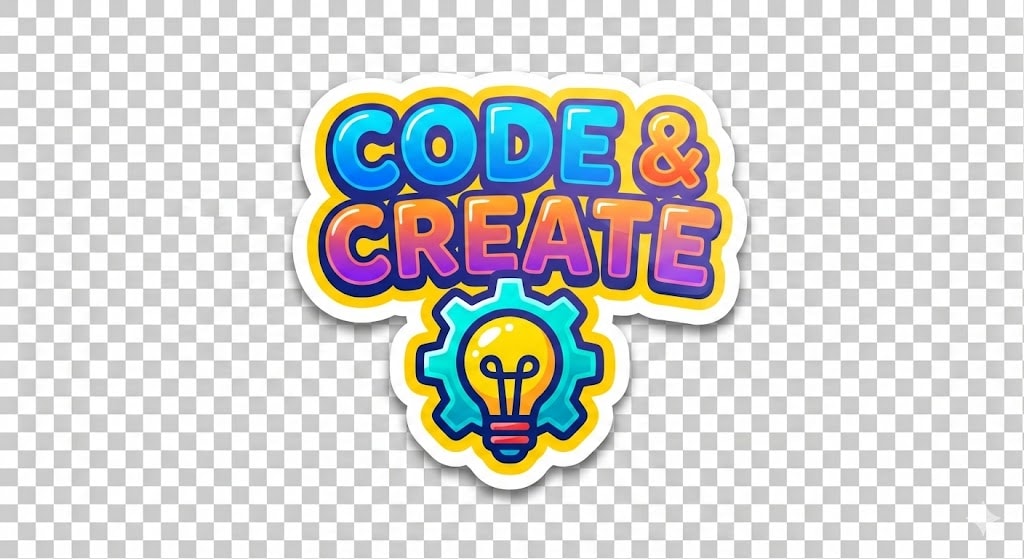
Generate a colorful sticker image with a transparent background, customizable text and icon, similar to Stickermule style.
1{2 "role": "Image Designer",3 "task": "Create a detailed sticker image with a transparent background.",...+27 more lines
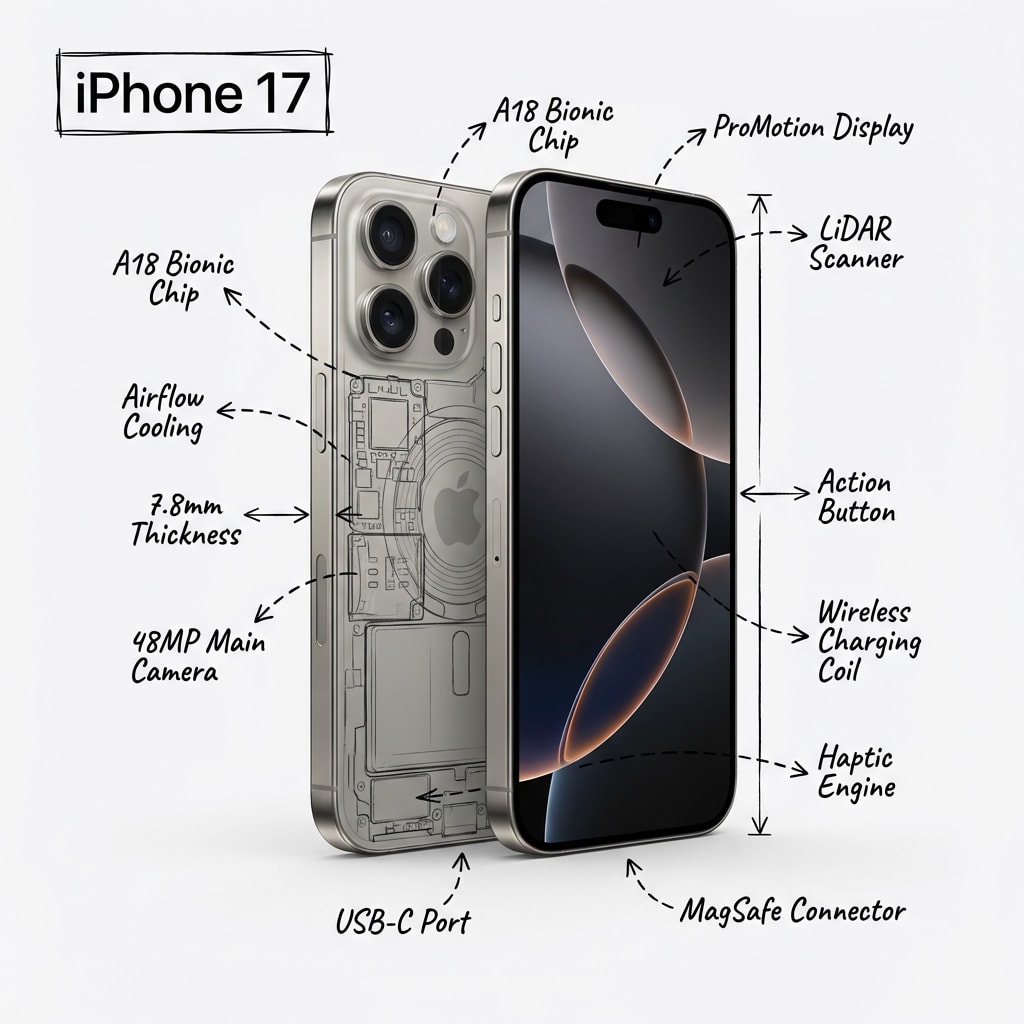
Ultra-photorealistic studio render of a object_name, front three-quarter view, placed on a pure white seamless studio background.The car must look like a high-end automotive catalog photograph: physically accurate lighting, realistic global illumination, soft studio shadows under the tires, correct reflections on paint, glass, and chrome, sharp focus, natural perspective, true-to-life proportions, no stylization.

Over the realistic car image, overlay hand-drawn technical annotation graphics in black ink only, as if sketched with a technical pen or architectural marker directly on top of the photograph.

Include:• Key component labels (engine, AWD system, turbocharger, brakes, suspension)• Internal cutaway and exploded-view outline sketches (semi-transparent, schematic style)• Measurement lines, dimensions, scale indicators• Material callouts and part quantities• Arrows showing airflow, power transmission, torque distribution, mechanical force• Simple sectional or schematic diagrams where relevant

The annotations must feel hand-sketched, technical, and architectural, slightly imperfect linework, educational engineering-manual aesthetic.

The realistic car remains clearly visible beneath the annotations at all times.Clean, balanced composition with generous negative space.

Place the title “object_name” inside a hand-drawn technical annotation box in one corner of the image.

Visual style: museum exhibit / engineering infographicColor palette: white background, black annotation lines and text only (no other colors)Output: ultra-crisp, high detail, social-media optimized square compositionAspect ratio: 1:1 (1080×1080)No watermark, no logo, no UI, no decorative illustration style
This prompt guides the creation of a 30-second promotional video for prompts.chat using Remotion. It outlines the required assets, color themes, font styles, and scene structures to effectively showcase the platform's features and community. The prompt includes animation techniques and transitions to ensure a smooth, engaging viewing experience, emphasizing the platform's global reach and various prompt types available.
Create a 30-second promotional video for prompts.chat

Required Assets

- https://prompts.chat/logo.svg - Logo SVG
- https://raw.githubusercontent.com/flekschas/simple-world-map/refs/heads/master/world-map.svg - World map SVG for global community scene

Color Theme (Light)

- Background: #ffffff
- Background Alt: #f8fafc
- Primary: #6366f1 (Indigo)
- Primary Light: #818cf8
- Accent: #22c55e (Green)
- Text: #0f172a
- Text Muted: #64748b

Font

- Inter (weights: 400, 600, 700, 800)

---
Scene Structure (8 Scenes)

Scene 1: Opening (5s)

- Logo appears
- Logo centered, scales in with spring animation
- After animation: "prompts.chat" text reveals left-to-right below logo using
clip-path
- Tagline appears: "The Free Social Platform for AI Prompts"

Scene 2: Global Community (4s)

- Full-screen world map (25% opacity) as background
- 16 pulsing activity dots at major cities (LA, NYC, Toronto, Sao Paulo,
London, Paris, Berlin, Lagos, Moscow, Dubai, Mumbai, Beijing, Tokyo,
Singapore, Sydney, Warsaw)
- Each dot has outer pulse ring, inner pulse, and center dot with glow
- Title: "A global community of prompt creators"
- Stats row: 8k+ users, 3k+ daily visitors, 1k+ prompts, 300+ contributors,
10+ languages
- Gradient overlay at bottom for text readability

Scene 3: Solution (2.5s)

- Three words appear sequentially with spring animation: "Discover." "Share."
"Collect."
- Each word in different color (primary, accent, primary light)

Scene 4: Built for Everyone (4s)

- 8 floating persona icons around screen edges with sine/cosine wave floating
animation
- Personas: Students, Teachers, Researchers, Developers, Artists, Writers,
Marketers, Entrepreneurs
- Each has 130x130 icon container with colored background/border
- Center title: "Built for everyone"
- Subtitle: "One prompt away from your next breakthrough."

Scene 5: Prompt Types (5s)

- Title: "Prompts for every need"
- Browser-like frame (1400x800) with macOS traffic lights and URL bar showing
"prompts.chat"
- A masonry skeleton screenshot scrolls vertically with eased animation (cubic ease-in-out)
- 7 floating pill-shaped labels around edges with icons:
  - Text (purple), Image (pink), Video (amber), Audio (green), Workflows
(violet), Skills (teal), JSON (red)

Scene 6: Features (4s)

- 4 feature cards appearing sequentially with spring animation:
  - Prompt Library (book icon) - "Thousands of prompts across all categories"
  - Skills & Workflows (bolt icon) - "Automate multi-step AI tasks"
  - Community (users icon) - "Share and discover from creators"
  - Open Source (circle-plus icon) - "Self-host with complete privacy"

Scene 7: Social Proof (4s)

- Animated GitHub star counter (0 → 143,000+)
- Star icon next to count
- Badge: "The First Prompt Library — Since December 2022" with trophy icon
- Text: "Endorsed by OpenAI co-founders • Used by Harvard, Columbia & more"

Scene 8: CTA (3.5s)

- Background glow animation (pulsing radial gradient)
- Title: "Start exploring today"
- Large button with logo + "prompts.chat" text (gradient background, subtle
pulse)
- Subtitle: "Free & Open Source"

---
Transitions (0.4s each)

- Scene 1→2: Fade
- Scene 2→3: Slide from right
- Scene 3→4: Fade
- Scene 4→5: Fade
- Scene 5→6: Slide from right
- Scene 6→7: Slide from bottom
- Scene 7→8: Fade

Animation Techniques Used

- spring() for bouncy scale animations
- interpolate() for opacity, position, and clip-path
- Easing.inOut(Easing.cubic) for smooth scroll
- Math.sin()/Math.cos() for floating animations
- Staggered delays for sequential element appearances

Key Components

- Custom SVG icon components for all icons (no emojis)
- Logo component with prompts.chat "P" path
- FeatureCard reusable component
- TransitionSeries for scene management Ultra-realistic 6-second cinematic underwater video: A sleek predator fish darts through a vibrant coral reef, scattering a school of colorful tropical fish. The camera follows from a low FPV angle just behind the predator, weaving smoothly between corals and rocks with dynamic, fast-paced motion. The camera occasionally tilts and rolls slightly, emphasizing speed and depth, while sunlight filters through the water, creating shimmering rays and sparkling reflections. Tiny bubbles and particles float in the water for immersive realism. Ultra-realistic textures, cinematic lighting, dramatic depth of field. Audio: bubbling water, swishing fins, subtle underwater ambience.

Create a highly detailed and realistic image of the night sky in portrait orientation. The image should be aesthetic, eye-catching, and convey a sense of realism without any cartoonish or animated elements.
Generate an image of the night sky that is highly detailed, realistic, and aesthetic. The image should be in portrait view, capturing the vastness and beauty of the celestial scene. Ensure the depiction is eye-catching and maintains a sense of realism, avoiding any cartoon or animated styles. Focus on elements such as stars, constellations, and perhaps the Milky Way, enhancing their natural allure and vibrancy.
Today's Most Upvoted
Improve the following code
Improve the following code

```
selectedText
```

Please suggest improvements for:
1. Code readability and maintainability
2. Performance optimization
3. Best practices and patterns
4. Error handling and edge cases

Provide the improved code along with explanations for each enhancement.Design a personal form builder app similar to JotForm, focusing on ease of use, modularity, and customization.
Act as a product designer and software architect. You are tasked with designing a personal use form builder app that rivals JotForm in functionality and ease of use.

Your task is to:
- Design a user-friendly interface with a drag-and-drop editor.
- Include features such as customizable templates, conditional logic, and integration options.
- Ensure the app supports data security and privacy.
- Plan the app architecture to support scalability and modularity.

Rules:
- Use modern design principles for UI/UX.
- Ensure the app is accessible and responsive.
- Incorporate feedback mechanisms for continuous improvement.
Latest Prompts
Guide to researching and comparing NRI/NRO account services offered by different banks in India, focusing on benefits and helping users choose the best option.
Act as a Financial Researcher. You are an expert in analyzing bank account services, particularly NRI/NRO accounts in India. Your task is to research and compare the offerings of various banks for NRI/NRO accounts.

You will:
- Identify major banks in India offering NRI/NRO accounts
- Research the benefits and features of these accounts, such as interest rates, minimum balance requirements, and additional services
- Compare the offerings to highlight pros and cons
- Provide recommendations based on different user needs and scenarios

Rules:
- Focus on the latest and most relevant information available
- Ensure comparisons are clear and unbiased
- Tailor recommendations to diverse user profiles, such as frequent travelers or those with significant remittances
Design a personal form builder app similar to JotForm, focusing on ease of use, modularity, and customization.
Act as a product designer and software architect. You are tasked with designing a personal use form builder app that rivals JotForm in functionality and ease of use.

Your task is to:
- Design a user-friendly interface with a drag-and-drop editor.
- Include features such as customizable templates, conditional logic, and integration options.
- Ensure the app supports data security and privacy.
- Plan the app architecture to support scalability and modularity.

Rules:
- Use modern design principles for UI/UX.
- Ensure the app is accessible and responsive.
- Incorporate feedback mechanisms for continuous improvement.
Improve the following code
Improve the following code

```
selectedText
```

Please suggest improvements for:
1. Code readability and maintainability
2. Performance optimization
3. Best practices and patterns
4. Error handling and edge cases

Provide the improved code along with explanations for each enhancement.Enhance code readability, performance, and best practices with detailed explanations. Improve error handling and address edge cases.
Generate an enhanced version of this prompt (reply with only the enhanced prompt - no conversation, explanations, lead-in, bullet points, placeholders, or surrounding quotes):

userInputTo help those who ain't good in blogging to be able to have a good writeup for their blog or any written content they want
"Do you ever wonder why two people in similar situations experience different outcomes?
Well It all comes down to one thing: mindset."

Our mind is such a deep and powerful thing. It's where thoughts, emotions, memories, and ideas come together. It influences how we experience life and respond to everything around us.

What is mindset?

Mindset refers to the mental attitude or set of beliefs that shape how you perceive the world, approach challenges, and react to situations. It's the lens through which you view yourself, others, and your circumstances.


In every moment, the thoughts we entertain shape the future we step into. It doesn't just shape the future but also create the parth we walk in to. You’ve probably heard the phrase "you become what you think." But it’s more than that. It’s not just about what we think, but what we choose to be conscious of. When we focus on certain ideas or emotions, those are the things that become real in our lives. If you’re always conscious of what’s lacking or what’s not working, that’s exactly what you’ll see more of. You’ll attract more of what’s missing, and your reality will shift to reflect those feelings.
 Our minds is the gateway to our success and failure in life. Unknowingly our thoughts  affect how we  living, the way things are supposed to be done.

 WHAT YOU ARE CONSCIOUS OF IS WHAT IS AVAILABLE TO YOU.

It's very much true what you are conscious becomes available to you is very much true because when you are conscious of something okay example you are conscious of being wealthy or being rich it will naturally manifest because your body naturally hate being broke. you get to know how to make money you you only to you you will just start going through videos or harmony skills acquiring skills talent so I can be able to make money you start getting to have knowledge with books to have knowledge on how to make money how to grow financially and how to grow materially how you can you can get get money put it in an investment and get more money.it doesn't only apply your financial life but also apply  in your spiritual life, relationship life, family life. In whatever concerns you.
A mother who is conscious of her child will naturally love her child, will  naturally want protect her kid, will naturally want to provide and keep her child Happy.
Create a romantic video scene where two people stand under the rain, gazing into each other's eyes. Capture the ambiance with the sound of raindrops and a soft, romantic atmosphere.
They are standing under the rain, looking at each other romantically. Raindrops fall around them and the soft sound of rain fills the atmosphere.

Create an ultra-photorealistic cinematic scene featuring a romantic couple standing under a yellow umbrella in the rain. Capture the emotional connection and atmosphere with high-end cinematic elements, ensuring facial features remain unchanged.
Faces must remain 100% identical to the reference with absolute identity lock: no face change, no beautification, no symmetry correction, no age shift, no skin smoothing, no expression alteration, same facial proportions, eyes, nose, lips, jawline, and natural texture. Ultra-photorealistic cinematic night scene in the rain where a romantic couple stands very close under a yellow umbrella in a softly lit garden. Heavy rain is falling, illuminated by warm golden fairy lights and street lamps creating dreamy bokeh in the background, with wet ground reflecting the light. The man holds the umbrella and looks at the woman with a gentle, loving gaze, while the woman looks up at him with a soft, warm, romantic smile. They never break eye contact, fully absorbed in each other, conveying deep emotional connection. Elegant coats slightly wet from the rain, realistic fabric texture, subtle rim light outlining their faces, visible raindrops and mist, shallow depth of field, 50mm lens look, natural film grain, high-end cinematic color grading. Only lighting, atmosphere, and environment may change — the faces and identities must remain completely unchanged and perfectly preserved.
Analyzes codebase patterns to discover missing skills and generate/update SKILL.md files in .claude/skills/ with real, repo-derived examples.
---
name: skill-master
description: Discover codebase patterns and auto-generate SKILL files for .claude/skills/. Use when analyzing project for missing skills, creating new skills from codebase patterns, or syncing skills with project structure.
version: 1.0.0
---

# Skill Master

## Overview

Analyze codebase to discover patterns and generate/update SKILL files in `.claude/skills/`. Supports multi-platform projects with stack-specific pattern detection.

**Capabilities:**
- Scan codebase for architectural patterns (ViewModel, Repository, Room, etc.)
- Compare detected patterns with existing skills
- Auto-generate SKILL files with real code examples
- Version tracking and smart updates

## How the AI discovers and uses this skill

This skill triggers when user:
- Asks to analyze project for missing skills
- Requests skill generation from codebase patterns
- Wants to sync or update existing skills
- Mentions "skill discovery", "generate skills", or "skill-sync"

**Detection signals:**
- `.claude/skills/` directory presence
- Project structure matching known patterns
- Build/config files indicating platform (see references)

## Modes

### Discover Mode

Analyze codebase and report missing skills.

**Steps:**
1. Detect platform via build/config files (see references)
2. Scan source roots for pattern indicators
3. Compare detected patterns with existing `.claude/skills/`
4. Output gap analysis report

**Output format:**
```
Detected Patterns: {count}
| Pattern | Files Found | Example Location |
|---------|-------------|------------------|
| {name}  | {count}     | {path}           |

Existing Skills: {count}
Missing Skills: {count}
- {skill-name}: {pattern}, {file-count} files found
```

### Generate Mode

Create SKILL files from detected patterns.

**Steps:**
1. Run discovery to identify missing skills
2. For each missing skill:
   - Find 2-3 representative source files
   - Extract: imports, annotations, class structure, conventions
   - Extract rules from `.ruler/*.md` if present
3. Generate SKILL.md using template structure
4. Add version and source marker

**Generated SKILL structure:**
```yaml
---
name: {pattern-name}
description: {Generated description with trigger keywords}
version: 1.0.0
---

# {Title}

## Overview
{Brief description from pattern analysis}

## File Structure
{Extracted from codebase}

## Implementation Pattern
{Real code examples - anonymized}

## Rules
### Do
{From .ruler/*.md + codebase conventions}

### Don't
{Anti-patterns found}

## File Location
{Actual paths from codebase}
```

## Create Strategy

When target SKILL file does not exist:
1. Generate new file using template
2. Set `version: 1.0.0` in frontmatter
3. Include all mandatory sections
4. Add source marker at end (see Marker Format)

## Update Strategy

**Marker check:** Look for `<!-- Generated by skill-master command` at file end.

**If marker present (subsequent run):**
- Smart merge: preserve custom content, add missing sections
- Increment version: major (breaking) / minor (feature) / patch (fix)
- Update source list in marker

**If marker absent (first run on existing file):**
- Backup: `SKILL.md` → `SKILL.md.bak`
- Use backup as source, extract relevant content
- Generate fresh file with marker
- Set `version: 1.0.0`

## Marker Format

Place at END of generated SKILL.md:

```html
<!-- Generated by skill-master command
Version: {version}
Sources:
- path/to/source1.kt
- path/to/source2.md
- .ruler/rule-file.md
Last updated: {YYYY-MM-DD}
-->
```

## Platform References

Read relevant reference when platform detected:

| Platform | Detection Files | Reference |
|----------|-----------------|-----------|
| Android/Gradle | `build.gradle`, `settings.gradle` | `references/android.md` |
| iOS/Xcode | `*.xcodeproj`, `Package.swift` | `references/ios.md` |
| React (web) | `package.json` + react | `references/react-web.md` |
| React Native | `package.json` + react-native | `references/react-native.md` |
| Flutter/Dart | `pubspec.yaml` | `references/flutter.md` |
| Node.js | `package.json` | `references/node.md` |
| Python | `pyproject.toml`, `requirements.txt` | `references/python.md` |
| Java/JVM | `pom.xml`, `build.gradle` | `references/java.md` |
| .NET/C# | `*.csproj`, `*.sln` | `references/dotnet.md` |
| Go | `go.mod` | `references/go.md` |
| Rust | `Cargo.toml` | `references/rust.md` |
| PHP | `composer.json` | `references/php.md` |
| Ruby | `Gemfile` | `references/ruby.md` |
| Elixir | `mix.exs` | `references/elixir.md` |
| C/C++ | `CMakeLists.txt`, `Makefile` | `references/cpp.md` |
| Unknown | - | `references/generic.md` |

If multiple platforms detected, read multiple references.

## Rules

### Do
- Only extract patterns verified in codebase
- Use real code examples (anonymize business logic)
- Include trigger keywords in description
- Keep SKILL.md under 500 lines
- Reference external files for detailed content
- Preserve custom sections during updates
- Always backup before first modification

### Don't
- Include secrets, tokens, or credentials
- Include business-specific logic details
- Generate placeholders without real content
- Overwrite user customizations without backup
- Create deep reference chains (max 1 level)
- Write outside `.claude/skills/`

## Content Extraction Rules

**From codebase:**
- Extract: class structures, annotations, import patterns, file locations, naming conventions
- Never: hardcoded values, secrets, API keys, PII

**From .ruler/*.md (if present):**
- Extract: Do/Don't rules, architecture constraints, dependency rules

## Output Report

After generation, print:
```
SKILL GENERATION REPORT

Skills Generated: {count}

{skill-name} [CREATED | UPDATED | BACKED_UP+CREATED]
├── Analyzed: {file-count} source files
├── Sources: {list of source files}
├── Rules from: {.ruler files if any}
└── Output: .claude/skills/{skill-name}/SKILL.md ({line-count} lines)

Validation:
✓ YAML frontmatter valid
✓ Description includes trigger keywords
✓ Content under 500 lines
✓ Has required sections
```

## Safety Constraints

- Never write outside `.claude/skills/`
- Never delete content without backup
- Always backup before first-time modification
- Preserve user customizations
- Deterministic: same input → same output
FILE:references/android.md
# Android (Gradle/Kotlin)

## Detection signals
- `settings.gradle` or `settings.gradle.kts`
- `build.gradle` or `build.gradle.kts`
- `gradle.properties`, `gradle/libs.versions.toml`
- `gradlew`, `gradle/wrapper/gradle-wrapper.properties`
- `app/src/main/AndroidManifest.xml`

## Multi-module signals
- Multiple `include(...)` in `settings.gradle*`
- Multiple dirs with `build.gradle*` + `src/`
- Common roots: `feature/`, `core/`, `library/`, `domain/`, `data/`

## Pre-generation sources
- `settings.gradle*` (module list)
- `build.gradle*` (root + modules)
- `gradle/libs.versions.toml` (dependencies)
- `config/detekt/detekt.yml` (if present)
- `**/AndroidManifest.xml`

## Codebase scan patterns

### Source roots
- `*/src/main/java/`, `*/src/main/kotlin/`

### Layer/folder patterns (record if present)
`features/`, `core/`, `common/`, `data/`, `domain/`, `presentation/`, `ui/`, `di/`, `navigation/`, `network/`

### Pattern indicators

| Pattern | Detection Criteria | Skill Name |
|---------|-------------------|------------|
| ViewModel | `@HiltViewModel`, `ViewModel()`, `MVI<` | viewmodel-mvi |
| Repository | `*Repository`, `*RepositoryImpl` | data-repository |
| UseCase | `operator fun invoke`, `*UseCase` | domain-usecase |
| Room Entity | `@Entity`, `@PrimaryKey`, `@ColumnInfo` | room-entity |
| Room DAO | `@Dao`, `@Query`, `@Insert`, `@Update` | room-dao |
| Migration | `Migration(`, `@Database(version=` | room-migration |
| Type Converter | `@TypeConverter`, `@TypeConverters` | type-converter |
| DTO | `@SerializedName`, `*Request`, `*Response` | network-dto |
| Compose Screen | `@Composable`, `NavGraphBuilder.` | compose-screen |
| Bottom Sheet | `ModalBottomSheet`, `*BottomSheet(` | bottomsheet-screen |
| Navigation | `@Route`, `NavGraphBuilder.`, `composable(` | navigation-route |
| Hilt Module | `@Module`, `@Provides`, `@Binds`, `@InstallIn` | hilt-module |
| Worker | `@HiltWorker`, `CoroutineWorker`, `WorkManager` | worker-task |
| DataStore | `DataStore<Preferences>`, `preferencesDataStore` | datastore-preference |
| Retrofit API | `@GET`, `@POST`, `@PUT`, `@DELETE` | retrofit-api |
| Mapper | `*.toModel()`, `*.toEntity()`, `*.toDto()` | data-mapper |
| Interceptor | `Interceptor`, `intercept()` | network-interceptor |
| Paging | `PagingSource`, `Pager(`, `PagingData` | paging-source |
| Broadcast Receiver | `BroadcastReceiver`, `onReceive(` | broadcast-receiver |
| Android Service | `: Service()`, `ForegroundService` | android-service |
| Notification | `NotificationCompat`, `NotificationChannel` | notification-builder |
| Analytics | `FirebaseAnalytics`, `logEvent` | analytics-event |
| Feature Flag | `RemoteConfig`, `FeatureFlag` | feature-flag |
| App Widget | `AppWidgetProvider`, `GlanceAppWidget` | app-widget |
| Unit Test | `@Test`, `MockK`, `mockk(`, `every {` | unit-test |

## Mandatory output sections

Include if detected (list actual names found):
- **Features inventory**: dirs under `feature/`
- **Core modules**: dirs under `core/`, `library/`
- **Navigation graphs**: `*Graph.kt`, `*Navigator*.kt`
- **Hilt modules**: `@Module` classes, `di/` contents
- **Retrofit APIs**: `*Api.kt` interfaces
- **Room databases**: `@Database` classes
- **Workers**: `@HiltWorker` classes
- **Proguard**: `proguard-rules.pro` if present

## Command sources
- README/docs invoking `./gradlew`
- CI workflows with Gradle commands
- Common: `./gradlew assemble`, `./gradlew test`, `./gradlew lint`
- Only include commands present in repo

## Key paths
- `app/src/main/`, `app/src/main/res/`
- `app/src/main/java/`, `app/src/main/kotlin/`
- `app/src/test/`, `app/src/androidTest/`
- `library/database/migration/` (Room migrations)
FILE:README.md

FILE:references/cpp.md
# C/C++

## Detection signals
- `CMakeLists.txt`
- `Makefile`, `makefile`
- `*.cpp`, `*.c`, `*.h`, `*.hpp`
- `conanfile.txt`, `conanfile.py` (Conan)
- `vcpkg.json` (vcpkg)

## Multi-module signals
- Multiple `CMakeLists.txt` with `add_subdirectory`
- Multiple `Makefile` in subdirs
- `lib/`, `src/`, `modules/` directories

## Pre-generation sources
- `CMakeLists.txt` (dependencies, targets)
- `conanfile.*` (dependencies)
- `vcpkg.json` (dependencies)
- `Makefile` (build targets)

## Codebase scan patterns

### Source roots
- `src/`, `lib/`, `include/`

### Layer/folder patterns (record if present)
`core/`, `utils/`, `network/`, `storage/`, `ui/`, `tests/`

### Pattern indicators

| Pattern | Detection Criteria | Skill Name |
|---------|-------------------|------------|
| Class | `class *`, `public:`, `private:` | cpp-class |
| Header | `*.h`, `*.hpp`, `#pragma once` | header-file |
| Template | `template<`, `typename T` | cpp-template |
| Smart Pointer | `std::unique_ptr`, `std::shared_ptr` | smart-pointer |
| RAII | destructor pattern, `~*()` | raii-pattern |
| Singleton | `static *& instance()` | singleton |
| Factory | `create*()`, `make*()` | factory-pattern |
| Observer | `subscribe`, `notify`, callback pattern | observer-pattern |
| Thread | `std::thread`, `std::async`, `pthread` | threading |
| Mutex | `std::mutex`, `std::lock_guard` | synchronization |
| Network | `socket`, `asio::`, `boost::asio` | network-cpp |
| Serialization | `nlohmann::json`, `protobuf` | serialization |
| Unit Test | `TEST(`, `TEST_F(`, `gtest` | gtest |
| Catch2 Test | `TEST_CASE(`, `REQUIRE(` | catch2-test |

## Mandatory output sections

Include if detected:
- **Core modules**: main functionality
- **Libraries**: internal libraries
- **Headers**: public API
- **Tests**: test organization
- **Build targets**: executables, libraries

## Command sources
- `CMakeLists.txt` custom targets
- `Makefile` targets
- README/docs, CI
- Common: `cmake`, `make`, `ctest`
- Only include commands present in repo

## Key paths
- `src/`, `include/`
- `lib/`, `libs/`
- `tests/`, `test/`
- `build/` (out-of-source)
FILE:references/dotnet.md
# .NET (C#/F#)

## Detection signals
- `*.csproj`, `*.fsproj`
- `*.sln`
- `global.json`
- `appsettings.json`
- `Program.cs`, `Startup.cs`

## Multi-module signals
- Multiple `*.csproj` files
- Solution with multiple projects
- `src/`, `tests/` directories with projects

## Pre-generation sources
- `*.csproj` (dependencies, SDK)
- `*.sln` (project structure)
- `appsettings.json` (config)
- `global.json` (SDK version)

## Codebase scan patterns

### Source roots
- `src/`, `*/` (per project)

### Layer/folder patterns (record if present)
`Controllers/`, `Services/`, `Repositories/`, `Models/`, `Entities/`, `DTOs/`, `Middleware/`, `Extensions/`

### Pattern indicators

| Pattern | Detection Criteria | Skill Name |
|---------|-------------------|------------|
| Controller | `[ApiController]`, `ControllerBase`, `[HttpGet]` | aspnet-controller |
| Service | `I*Service`, `class *Service` | dotnet-service |
| Repository | `I*Repository`, `class *Repository` | dotnet-repository |
| Entity | `class *Entity`, `[Table]`, `[Key]` | ef-entity |
| DTO | `class *Dto`, `class *Request`, `class *Response` | dto-pattern |
| DbContext | `: DbContext`, `DbSet<` | ef-dbcontext |
| Middleware | `IMiddleware`, `RequestDelegate` | aspnet-middleware |
| Background Service | `BackgroundService`, `IHostedService` | background-service |
| MediatR Handler | `IRequestHandler<`, `INotificationHandler<` | mediatr-handler |
| SignalR Hub | `: Hub`, `[HubName]` | signalr-hub |
| Minimal API | `app.MapGet(`, `app.MapPost(` | minimal-api |
| gRPC Service | `*.proto`, `: *Base` | grpc-service |
| EF Migration | `Migrations/`, `AddMigration` | ef-migration |
| Unit Test | `[Fact]`, `[Theory]`, `xUnit` | xunit-test |
| Integration Test | `WebApplicationFactory`, `IClassFixture` | integration-test |

## Mandatory output sections

Include if detected:
- **Controllers**: API endpoints
- **Services**: business logic
- **Repositories**: data access (EF Core)
- **Entities/DTOs**: data models
- **Middleware**: request pipeline
- **Background services**: hosted services

## Command sources
- `*.csproj` targets
- README/docs, CI
- Common: `dotnet build`, `dotnet test`, `dotnet run`
- Only include commands present in repo

## Key paths
- `src/*/`, project directories
- `tests/`
- `Migrations/`
- `Properties/`
FILE:references/elixir.md
# Elixir/Erlang

## Detection signals
- `mix.exs`
- `mix.lock`
- `config/config.exs`
- `lib/`, `test/` directories

## Multi-module signals
- Umbrella app (`apps/` directory)
- Multiple `mix.exs` in subdirs
- `rel/` for releases

## Pre-generation sources
- `mix.exs` (dependencies, config)
- `config/*.exs` (configuration)
- `rel/config.exs` (releases)

## Codebase scan patterns

### Source roots
- `lib/`, `apps/*/lib/`

### Layer/folder patterns (record if present)
`controllers/`, `views/`, `channels/`, `contexts/`, `schemas/`, `workers/`

### Pattern indicators

| Pattern | Detection Criteria | Skill Name |
|---------|-------------------|------------|
| Phoenix Controller | `use *Web, :controller`, `def index` | phoenix-controller |
| Phoenix LiveView | `use *Web, :live_view`, `mount/3` | phoenix-liveview |
| Phoenix Channel | `use *Web, :channel`, `join/3` | phoenix-channel |
| Ecto Schema | `use Ecto.Schema`, `schema "` | ecto-schema |
| Ecto Migration | `use Ecto.Migration`, `create table` | ecto-migration |
| Ecto Changeset | `cast/4`, `validate_required` | ecto-changeset |
| Context | `defmodule *Context`, `def list_*` | phoenix-context |
| GenServer | `use GenServer`, `handle_call` | genserver |
| Supervisor | `use Supervisor`, `start_link` | supervisor |
| Task | `Task.async`, `Task.Supervisor` | elixir-task |
| Oban Worker | `use Oban.Worker`, `perform/1` | oban-worker |
| Absinthe | `use Absinthe.Schema`, `field :` | graphql-schema |
| ExUnit Test | `use ExUnit.Case`, `test "` | exunit-test |

## Mandatory output sections

Include if detected:
- **Controllers/LiveViews**: HTTP/WebSocket handlers
- **Contexts**: business logic
- **Schemas**: Ecto models
- **Channels**: real-time handlers
- **Workers**: background jobs

## Command sources
- `mix.exs` aliases
- README/docs, CI
- Common: `mix deps.get`, `mix test`, `mix phx.server`
- Only include commands present in repo

## Key paths
- `lib/*/`, `lib/*_web/`
- `priv/repo/migrations/`
- `test/`
- `config/`
FILE:references/flutter.md
# Flutter/Dart

## Detection signals
- `pubspec.yaml`
- `lib/main.dart`
- `android/`, `ios/`, `web/` directories
- `.dart_tool/`
- `analysis_options.yaml`

## Multi-module signals
- `melos.yaml` (monorepo)
- Multiple `pubspec.yaml` in subdirs
- `packages/` directory

## Pre-generation sources
- `pubspec.yaml` (dependencies)
- `analysis_options.yaml`
- `build.yaml` (if using build_runner)
- `lib/main.dart` (entry point)

## Codebase scan patterns

### Source roots
- `lib/`, `test/`

### Layer/folder patterns (record if present)
`screens/`, `widgets/`, `models/`, `services/`, `providers/`, `repositories/`, `utils/`, `constants/`, `bloc/`, `cubit/`

### Pattern indicators

| Pattern | Detection Criteria | Skill Name |
|---------|-------------------|------------|
| Screen/Page | `*Screen`, `*Page`, `extends StatefulWidget` | flutter-screen |
| Widget | `extends StatelessWidget`, `extends StatefulWidget` | flutter-widget |
| BLoC | `extends Bloc<`, `extends Cubit<` | bloc-pattern |
| Provider | `ChangeNotifier`, `Provider.of<`, `context.read<` | provider-pattern |
| Riverpod | `@riverpod`, `ref.watch`, `ConsumerWidget` | riverpod-provider |
| GetX | `GetxController`, `Get.put`, `Obx(` | getx-controller |
| Repository | `*Repository`, `abstract class *Repository` | data-repository |
| Service | `*Service` | service-layer |
| Model | `fromJson`, `toJson`, `@JsonSerializable` | json-model |
| Freezed | `@freezed`, `part '*.freezed.dart'` | freezed-model |
| API Client | `Dio`, `http.Client`, `Retrofit` | api-client |
| Navigation | `Navigator`, `GoRouter`, `auto_route` | flutter-navigation |
| Localization | `AppLocalizations`, `l10n`, `intl` | flutter-l10n |
| Testing | `testWidgets`, `WidgetTester`, `flutter_test` | widget-test |
| Integration Test | `integration_test`, `IntegrationTestWidgetsFlutterBinding` | integration-test |

## Mandatory output sections

Include if detected:
- **Screens inventory**: dirs under `screens/`, `pages/`
- **State management**: BLoC, Provider, Riverpod, GetX
- **Navigation setup**: GoRouter, auto_route, Navigator
- **DI approach**: get_it, injectable, manual
- **API layer**: Dio, http, Retrofit
- **Models**: Freezed, json_serializable

## Command sources
- `pubspec.yaml` scripts (if using melos)
- README/docs
- Common: `flutter run`, `flutter test`, `flutter build`
- Only include commands present in repo

## Key paths
- `lib/`, `test/`
- `lib/screens/`, `lib/widgets/`
- `lib/bloc/`, `lib/providers/`
- `assets/`
FILE:references/generic.md
# Generic/Unknown Stack

Fallback reference when no specific platform is detected.

## Detection signals
- No specific build/config files found
- Mixed technology stack
- Documentation-only repository

## Multi-module signals
- Multiple directories with separate concerns
- `packages/`, `modules/`, `libs/` directories
- Monorepo structure without specific tooling

## Pre-generation sources
- `README.md` (project overview)
- `docs/*` (documentation)
- `.env.example` (environment vars)
- `docker-compose.yml` (services)
- CI files (`.github/workflows/`, etc.)

## Codebase scan patterns

### Source roots
- `src/`, `lib/`, `app/`

### Layer/folder patterns (record if present)
`api/`, `core/`, `utils/`, `services/`, `models/`, `config/`, `scripts/`

### Generic pattern indicators

| Pattern | Detection Criteria | Skill Name |
|---------|-------------------|------------|
| Entry Point | `main.*`, `index.*`, `app.*` | entry-point |
| Config | `config.*`, `settings.*` | config-file |
| API Client | `api/`, `client/`, HTTP calls | api-client |
| Model | `model/`, `types/`, data structures | data-model |
| Service | `service/`, business logic | service-layer |
| Utility | `utils/`, `helpers/`, `common/` | utility-module |
| Test | `test/`, `tests/`, `*_test.*`, `*.test.*` | test-file |
| Script | `scripts/`, `bin/` | script-file |
| Documentation | `docs/`, `*.md` | documentation |

## Mandatory output sections

Include if detected:
- **Project structure**: main directories
- **Entry points**: main files
- **Configuration**: config files
- **Dependencies**: any package manager
- **Build/Run commands**: from README/scripts

## Command sources
- `README.md` (look for code blocks)
- `Makefile`, `Taskfile.yml`
- `scripts/` directory
- CI workflows
- Only include commands present in repo

## Key paths
- `src/`, `lib/`
- `docs/`
- `scripts/`
- `config/`

## Notes

When using this generic reference:
1. Scan for any recognizable patterns
2. Document actual project structure found
3. Extract commands from README if available
4. Note any technologies mentioned in docs
5. Keep output minimal and factual
FILE:references/go.md
# Go

## Detection signals
- `go.mod`
- `go.sum`
- `main.go`
- `cmd/`, `internal/`, `pkg/` directories

## Multi-module signals
- `go.work` (workspace)
- Multiple `go.mod` files
- `cmd/*/main.go` (multiple binaries)

## Pre-generation sources
- `go.mod` (dependencies)
- `Makefile` (build commands)
- `config/*.yaml` or `*.toml`

## Codebase scan patterns

### Source roots
- `cmd/`, `internal/`, `pkg/`

### Layer/folder patterns (record if present)
`handler/`, `service/`, `repository/`, `model/`, `middleware/`, `config/`, `util/`

### Pattern indicators

| Pattern | Detection Criteria | Skill Name |
|---------|-------------------|------------|
| HTTP Handler | `http.Handler`, `http.HandlerFunc`, `gin.Context` | http-handler |
| Gin Route | `gin.Engine`, `r.GET(`, `r.POST(` | gin-route |
| Echo Route | `echo.Echo`, `e.GET(`, `e.POST(` | echo-route |
| Fiber Route | `fiber.App`, `app.Get(`, `app.Post(` | fiber-route |
| gRPC Service | `*.proto`, `pb.*Server` | grpc-service |
| Repository | `type *Repository interface`, `*Repository` | data-repository |
| Service | `type *Service interface`, `*Service` | service-layer |
| GORM Model | `gorm.Model`, `*gorm.DB` | gorm-model |
| sqlx | `sqlx.DB`, `sqlx.NamedExec` | sqlx-usage |
| Migration | `goose`, `golang-migrate` | db-migration |
| Middleware | `func(*Context)`, `middleware.*` | go-middleware |
| Worker | `go func()`, `sync.WaitGroup`, `errgroup` | worker-goroutine |
| Config | `viper`, `envconfig`, `cleanenv` | config-loader |
| Unit Test | `*_test.go`, `func Test*(t *testing.T)` | go-test |
| Mock | `mockgen`, `*_mock.go` | go-mock |

## Mandatory output sections

Include if detected:
- **HTTP handlers**: API endpoints
- **Services**: business logic
- **Repositories**: data access
- **Models**: data structures
- **Middleware**: request interceptors
- **Migrations**: database migrations

## Command sources
- `Makefile` targets
- README/docs, CI
- Common: `go build`, `go test`, `go run`
- Only include commands present in repo

## Key paths
- `cmd/`, `internal/`, `pkg/`
- `api/`, `handler/`
- `migrations/`
- `config/`
FILE:references/ios.md
# iOS (Xcode/Swift)

## Detection signals
- `*.xcodeproj`, `*.xcworkspace`
- `Package.swift` (SPM)
- `Podfile`, `Podfile.lock` (CocoaPods)
- `Cartfile` (Carthage)
- `*.pbxproj`
- `Info.plist`

## Multi-module signals
- Multiple targets in `*.xcodeproj`
- Multiple `Package.swift` files
- Workspace with multiple projects
- `Modules/`, `Packages/`, `Features/` directories

## Pre-generation sources
- `*.xcodeproj/project.pbxproj` (target list)
- `Package.swift` (dependencies, targets)
- `Podfile` (dependencies)
- `*.xcconfig` (build configs)
- `Info.plist` files

## Codebase scan patterns

### Source roots
- `*/Sources/`, `*/Source/`
- `*/App/`, `*/Core/`, `*/Features/`

### Layer/folder patterns (record if present)
`Models/`, `Views/`, `ViewModels/`, `Services/`, `Networking/`, `Utilities/`, `Extensions/`, `Coordinators/`

### Pattern indicators

| Pattern | Detection Criteria | Skill Name |
|---------|-------------------|------------|
| SwiftUI View | `struct *: View`, `var body: some View` | swiftui-view |
| UIKit VC | `UIViewController`, `viewDidLoad()` | uikit-viewcontroller |
| ViewModel | `@Observable`, `ObservableObject`, `@Published` | viewmodel-observable |
| Coordinator | `Coordinator`, `*Coordinator` | coordinator-pattern |
| Repository | `*Repository`, `protocol *Repository` | data-repository |
| Service | `*Service`, `protocol *Service` | service-layer |
| Core Data | `NSManagedObject`, `@NSManaged`, `.xcdatamodeld` | coredata-entity |
| Realm | `Object`, `@Persisted` | realm-model |
| Network | `URLSession`, `Alamofire`, `Moya` | network-client |
| Dependency | `@Inject`, `Container`, `Swinject` | di-container |
| Navigation | `NavigationStack`, `NavigationPath` | navigation-swiftui |
| Combine | `Publisher`, `AnyPublisher`, `sink` | combine-publisher |
| Async/Await | `async`, `await`, `Task {` | async-await |
| Unit Test | `XCTestCase`, `func test*()` | xctest |
| UI Test | `XCUIApplication`, `XCUIElement` | xcuitest |

## Mandatory output sections

Include if detected:
- **Targets inventory**: list from pbxproj
- **Modules/Packages**: SPM packages, Pods
- **View architecture**: SwiftUI vs UIKit
- **State management**: Combine, Observable, etc.
- **Networking layer**: URLSession, Alamofire, etc.
- **Persistence**: Core Data, Realm, UserDefaults
- **DI setup**: Swinject, manual injection

## Command sources
- README/docs with xcodebuild commands
- `fastlane/Fastfile` lanes
- CI workflows (`.github/workflows/`, `.gitlab-ci.yml`)
- Common: `xcodebuild test`, `fastlane test`
- Only include commands present in repo

## Key paths
- `*/Sources/`, `*/Tests/`
- `*.xcodeproj/`, `*.xcworkspace/`
- `Pods/` (if CocoaPods)
- `Packages/` (if SPM local packages)
FILE:references/java.md
# Java/JVM (Spring, etc.)

## Detection signals
- `pom.xml` (Maven)
- `build.gradle`, `build.gradle.kts` (Gradle)
- `settings.gradle` (multi-module)
- `src/main/java/`, `src/main/kotlin/`
- `application.properties`, `application.yml`

## Multi-module signals
- Multiple `pom.xml` with `<modules>`
- Multiple `build.gradle` with `include()`
- `modules/`, `services/` directories

## Pre-generation sources
- `pom.xml` or `build.gradle*` (dependencies)
- `application.properties/yml` (config)
- `settings.gradle` (modules)
- `docker-compose.yml` (services)

## Codebase scan patterns

### Source roots
- `src/main/java/`, `src/main/kotlin/`
- `src/test/java/`, `src/test/kotlin/`

### Layer/folder patterns (record if present)
`controller/`, `service/`, `repository/`, `model/`, `entity/`, `dto/`, `config/`, `exception/`, `util/`

### Pattern indicators

| Pattern | Detection Criteria | Skill Name |
|---------|-------------------|------------|
| REST Controller | `@RestController`, `@GetMapping`, `@PostMapping` | spring-controller |
| Service | `@Service`, `class *Service` | spring-service |
| Repository | `@Repository`, `JpaRepository`, `CrudRepository` | spring-repository |
| Entity | `@Entity`, `@Table`, `@Id` | jpa-entity |
| DTO | `class *DTO`, `class *Request`, `class *Response` | dto-pattern |
| Config | `@Configuration`, `@Bean` | spring-config |
| Component | `@Component`, `@Autowired` | spring-component |
| Security | `@EnableWebSecurity`, `SecurityFilterChain` | spring-security |
| Validation | `@Valid`, `@NotNull`, `@Size` | validation-pattern |
| Exception Handler | `@ControllerAdvice`, `@ExceptionHandler` | exception-handler |
| Scheduler | `@Scheduled`, `@EnableScheduling` | scheduled-task |
| Event | `ApplicationEvent`, `@EventListener` | event-listener |
| Flyway Migration | `V*__*.sql`, `flyway` | flyway-migration |
| Liquibase | `changelog*.xml`, `liquibase` | liquibase-migration |
| Unit Test | `@Test`, `@SpringBootTest`, `MockMvc` | spring-test |
| Integration Test | `@DataJpaTest`, `@WebMvcTest` | integration-test |

## Mandatory output sections

Include if detected:
- **Controllers**: REST endpoints
- **Services**: business logic
- **Repositories**: data access (JPA, JDBC)
- **Entities/DTOs**: data models
- **Configuration**: Spring beans, profiles
- **Security**: auth config

## Command sources
- `pom.xml` plugins, `build.gradle` tasks
- README/docs, CI
- Common: `./mvnw`, `./gradlew`, `mvn test`, `gradle test`
- Only include commands present in repo

## Key paths
- `src/main/java/`, `src/main/kotlin/`
- `src/main/resources/`
- `src/test/`
- `db/migration/` (Flyway)
FILE:references/node.md
# Node.js

## Detection signals
- `package.json` (without react/react-native)
- `tsconfig.json`
- `node_modules/`
- `*.js`, `*.ts`, `*.mjs`, `*.cjs` entry files

## Multi-module signals
- `pnpm-workspace.yaml`, `lerna.json`
- `nx.json`, `turbo.json`
- Multiple `package.json` in subdirs
- `packages/`, `apps/` directories

## Pre-generation sources
- `package.json` (dependencies, scripts)
- `tsconfig.json` (paths, compiler options)
- `.env.example` (env vars)
- `docker-compose.yml` (services)

## Codebase scan patterns

### Source roots
- `src/`, `lib/`, `app/`

### Layer/folder patterns (record if present)
`controllers/`, `services/`, `models/`, `routes/`, `middleware/`, `utils/`, `config/`, `types/`, `repositories/`

### Pattern indicators

| Pattern | Detection Criteria | Skill Name |
|---------|-------------------|------------|
| Express Route | `app.get(`, `app.post(`, `Router()` | express-route |
| Express Middleware | `(req, res, next)`, `app.use(` | express-middleware |
| NestJS Controller | `@Controller`, `@Get`, `@Post` | nestjs-controller |
| NestJS Service | `@Injectable`, `@Service` | nestjs-service |
| NestJS Module | `@Module`, `imports:`, `providers:` | nestjs-module |
| Fastify Route | `fastify.get(`, `fastify.post(` | fastify-route |
| GraphQL Resolver | `@Resolver`, `@Query`, `@Mutation` | graphql-resolver |
| TypeORM Entity | `@Entity`, `@Column`, `@PrimaryGeneratedColumn` | typeorm-entity |
| Prisma Model | `prisma.*.create`, `prisma.*.findMany` | prisma-usage |
| Mongoose Model | `mongoose.Schema`, `mongoose.model(` | mongoose-model |
| Sequelize Model | `Model.init`, `DataTypes` | sequelize-model |
| Queue Worker | `Bull`, `BullMQ`, `process(` | queue-worker |
| Cron Job | `@Cron`, `node-cron`, `cron.schedule` | cron-job |
| WebSocket | `ws`, `socket.io`, `io.on(` | websocket-handler |
| Unit Test | `describe(`, `it(`, `expect(`, `jest` | jest-test |
| E2E Test | `supertest`, `request(app)` | e2e-test |

## Mandatory output sections

Include if detected:
- **Routes/controllers**: API endpoints
- **Services layer**: business logic
- **Database**: ORM/ODM usage (TypeORM, Prisma, Mongoose)
- **Middleware**: auth, validation, error handling
- **Background jobs**: queues, cron jobs
- **WebSocket handlers**: real-time features

## Command sources
- `package.json` scripts section
- README/docs
- CI workflows
- Common: `npm run dev`, `npm run build`, `npm test`
- Only include commands present in repo

## Key paths
- `src/`, `lib/`
- `src/routes/`, `src/controllers/`
- `src/services/`, `src/models/`
- `prisma/`, `migrations/`
FILE:references/php.md
# PHP

## Detection signals
- `composer.json`, `composer.lock`
- `public/index.php`
- `artisan` (Laravel)
- `spark` (CodeIgniter 4)
- `bin/console` (Symfony)
- `app/Config/App.php` (CodeIgniter 4)
- `ext-phalcon` in composer.json (Phalcon)
- `phalcon/devtools` (Phalcon)

## Multi-module signals
- `packages/` directory
- Laravel modules (`app/Modules/`)
- CodeIgniter modules (`app/Modules/`, `modules/`)
- Phalcon multi-app (`apps/*/`)
- Multiple `composer.json` in subdirs

## Pre-generation sources
- `composer.json` (dependencies)
- `.env.example` (env vars)
- `config/*.php` (Laravel/Symfony)
- `routes/*.php` (Laravel)
- `app/Config/*` (CodeIgniter 4)
- `apps/*/config/` (Phalcon)

## Codebase scan patterns

### Source roots
- `app/`, `src/`, `apps/`

### Layer/folder patterns (record if present)
`Controllers/`, `Services/`, `Repositories/`, `Models/`, `Entities/`, `Http/`, `Providers/`, `Console/`

### Framework-specific structures

**Laravel** (record if present):
- `app/Http/Controllers`, `app/Models`, `database/migrations`
- `routes/*.php`, `resources/views`

**Symfony** (record if present):
- `src/Controller`, `src/Entity`, `config/packages`, `templates`

**CodeIgniter 4** (record if present):
- `app/Controllers`, `app/Models`, `app/Views`
- `app/Config/Routes.php`, `app/Database/Migrations`

**Phalcon** (record if present):
- `apps/*/controllers/`, `apps/*/Module.php`
- `models/`, `views/`

### Pattern indicators

| Pattern | Detection Criteria | Skill Name |
|---------|-------------------|------------|
| Laravel Controller | `extends Controller`, `public function index` | laravel-controller |
| Laravel Model | `extends Model`, `protected $fillable` | laravel-model |
| Laravel Migration | `extends Migration`, `Schema::create` | laravel-migration |
| Laravel Service | `class *Service`, `app/Services/` | laravel-service |
| Laravel Repository | `*Repository`, `interface *Repository` | laravel-repository |
| Laravel Job | `implements ShouldQueue`, `dispatch(` | laravel-job |
| Laravel Event | `extends Event`, `event(` | laravel-event |
| Symfony Controller | `#[Route]`, `AbstractController` | symfony-controller |
| Symfony Service | `#[AsService]`, `services.yaml` | symfony-service |
| Doctrine Entity | `#[ORM\Entity]`, `#[ORM\Column]` | doctrine-entity |
| Doctrine Migration | `AbstractMigration`, `$this->addSql` | doctrine-migration |
| CI4 Controller | `extends BaseController`, `app/Controllers/` | ci4-controller |
| CI4 Model | `extends Model`, `protected $table` | ci4-model |
| CI4 Migration | `extends Migration`, `$this->forge->` | ci4-migration |
| CI4 Entity | `extends Entity`, `app/Entities/` | ci4-entity |
| Phalcon Controller | `extends Controller`, `Phalcon\Mvc\Controller` | phalcon-controller |
| Phalcon Model | `extends Model`, `Phalcon\Mvc\Model` | phalcon-model |
| Phalcon Migration | `Phalcon\Migrations`, `morphTable` | phalcon-migration |
| API Resource | `extends JsonResource`, `toArray` | api-resource |
| Form Request | `extends FormRequest`, `rules()` | form-request |
| Middleware | `implements Middleware`, `handle(` | php-middleware |
| Unit Test | `extends TestCase`, `test*()`, `PHPUnit` | phpunit-test |
| Feature Test | `extends TestCase`, `$this->get(`, `$this->post(` | feature-test |

## Mandatory output sections

Include if detected:
- **Controllers**: HTTP endpoints
- **Models/Entities**: data layer
- **Services**: business logic
- **Repositories**: data access
- **Migrations**: database changes
- **Jobs/Events**: async processing
- **Business modules**: top modules by size

## Command sources
- `composer.json` scripts
- `php artisan` (Laravel)
- `php spark` (CodeIgniter 4)
- `bin/console` (Symfony)
- `phalcon` devtools commands
- README/docs, CI
- Only include commands present in repo

## Key paths

**Laravel:**
- `app/`, `routes/`, `database/migrations/`
- `resources/views/`, `tests/`

**Symfony:**
- `src/`, `config/`, `templates/`
- `migrations/`, `tests/`

**CodeIgniter 4:**
- `app/Controllers/`, `app/Models/`, `app/Views/`
- `app/Database/Migrations/`, `tests/`

**Phalcon:**
- `apps/*/controllers/`, `apps/*/models/`
- `apps/*/views/`, `migrations/`
FILE:references/python.md
# Python

## Detection signals
- `pyproject.toml`
- `requirements.txt`, `requirements-dev.txt`
- `Pipfile`, `poetry.lock`
- `setup.py`, `setup.cfg`
- `manage.py` (Django)

## Multi-module signals
- Multiple `pyproject.toml` in subdirs
- `packages/`, `apps/` directories
- Django-style `apps/` with `apps.py`

## Pre-generation sources
- `pyproject.toml` or `setup.py`
- `requirements*.txt`, `Pipfile`
- `tox.ini`, `pytest.ini`
- `manage.py`, `settings.py` (Django)

## Codebase scan patterns

### Source roots
- `src/`, `app/`, `packages/`, `tests/`

### Layer/folder patterns (record if present)
`api/`, `routers/`, `views/`, `services/`, `repositories/`, `models/`, `schemas/`, `utils/`, `config/`

### Pattern indicators

| Pattern | Detection Criteria | Skill Name |
|---------|-------------------|------------|
| FastAPI Router | `APIRouter`, `@router.get`, `@router.post` | fastapi-router |
| FastAPI Dependency | `Depends(`, `def get_*():` | fastapi-dependency |
| Django View | `View`, `APIView`, `def get(self, request)` | django-view |
| Django Model | `models.Model`, `class Meta:` | django-model |
| Django Serializer | `serializers.Serializer`, `ModelSerializer` | drf-serializer |
| Flask Route | `@app.route`, `Blueprint` | flask-route |
| Pydantic Model | `BaseModel`, `Field(`, `model_validator` | pydantic-model |
| SQLAlchemy Model | `Base`, `Column(`, `relationship(` | sqlalchemy-model |
| Alembic Migration | `alembic/versions/`, `op.create_table` | alembic-migration |
| Repository | `*Repository`, `class *Repository` | data-repository |
| Service | `*Service`, `class *Service` | service-layer |
| Celery Task | `@celery.task`, `@shared_task` | celery-task |
| CLI Command | `@click.command`, `typer.Typer` | cli-command |
| Unit Test | `pytest`, `def test_*():`, `unittest` | pytest-test |
| Fixture | `@pytest.fixture`, `conftest.py` | pytest-fixture |

## Mandatory output sections

Include if detected:
- **Routers/views**: API endpoints
- **Models/schemas**: data models (Pydantic, SQLAlchemy, Django)
- **Services**: business logic layer
- **Repositories**: data access layer
- **Migrations**: Alembic, Django migrations
- **Tasks**: Celery, background jobs

## Command sources
- `pyproject.toml` tool sections
- README/docs, CI
- Common: `python manage.py`, `pytest`, `uvicorn`, `flask run`
- Only include commands present in repo

## Key paths
- `src/`, `app/`
- `tests/`
- `alembic/`, `migrations/`
- `templates/`, `static/` (if web)
FILE:references/react-native.md
# React Native

## Detection signals
- `package.json` with `react-native`
- `metro.config.js`
- `app.json` or `app.config.js` (Expo)
- `android/`, `ios/` directories
- `babel.config.js` with metro preset

## Multi-module signals
- Monorepo with `packages/`
- Multiple `app.json` files
- Nx workspace with React Native

## Pre-generation sources
- `package.json` (dependencies, scripts)
- `app.json` or `app.config.js`
- `metro.config.js`
- `babel.config.js`
- `tsconfig.json`

## Codebase scan patterns

### Source roots
- `src/`, `app/`

### Layer/folder patterns (record if present)
`screens/`, `components/`, `navigation/`, `services/`, `hooks/`, `store/`, `api/`, `utils/`, `assets/`

### Pattern indicators

| Pattern | Detection Criteria | Skill Name |
|---------|-------------------|------------|
| Screen | `*Screen`, `export function *Screen` | rn-screen |
| Component | `export function *()`, `StyleSheet.create` | rn-component |
| Navigation | `createNativeStackNavigator`, `NavigationContainer` | rn-navigation |
| Hook | `use*`, `export function use*()` | rn-hook |
| Redux | `createSlice`, `configureStore` | redux-slice |
| Zustand | `create(`, `useStore` | zustand-store |
| React Query | `useQuery`, `useMutation` | react-query |
| Native Module | `NativeModules`, `TurboModule` | native-module |
| Async Storage | `AsyncStorage`, `@react-native-async-storage` | async-storage |
| SQLite | `expo-sqlite`, `react-native-sqlite-storage` | sqlite-storage |
| Push Notification | `@react-native-firebase/messaging`, `expo-notifications` | push-notification |
| Deep Link | `Linking`, `useURL`, `expo-linking` | deep-link |
| Animation | `Animated`, `react-native-reanimated` | rn-animation |
| Gesture | `react-native-gesture-handler`, `Gesture` | rn-gesture |
| Testing | `@testing-library/react-native`, `render` | rntl-test |

## Mandatory output sections

Include if detected:
- **Screens inventory**: dirs under `screens/`
- **Navigation structure**: stack, tab, drawer navigators
- **State management**: Redux, Zustand, Context
- **Native modules**: custom native code
- **Storage layer**: AsyncStorage, SQLite, MMKV
- **Platform-specific**: `*.android.tsx`, `*.ios.tsx`

## Command sources
- `package.json` scripts
- README/docs
- Common: `npm run android`, `npm run ios`, `npx expo start`
- Only include commands present in repo

## Key paths
- `src/screens/`, `src/components/`
- `src/navigation/`, `src/store/`
- `android/app/`, `ios/*/`
- `assets/`
FILE:references/react-web.md
# React (Web)

## Detection signals
- `package.json` with `react`, `react-dom`
- `vite.config.ts`, `next.config.js`, `craco.config.js`
- `tsconfig.json` or `jsconfig.json`
- `src/App.tsx` or `src/App.jsx`
- `public/index.html` (CRA)

## Multi-module signals
- `pnpm-workspace.yaml`, `lerna.json`
- Multiple `package.json` in subdirs
- `packages/`, `apps/` directories
- Nx workspace (`nx.json`)

## Pre-generation sources
- `package.json` (dependencies, scripts)
- `tsconfig.json` (paths, compiler options)
- `vite.config.*`, `next.config.*`, `webpack.config.*`
- `.env.example` (env vars)

## Codebase scan patterns

### Source roots
- `src/`, `app/`, `pages/`

### Layer/folder patterns (record if present)
`components/`, `hooks/`, `services/`, `utils/`, `store/`, `api/`, `types/`, `contexts/`, `features/`, `layouts/`

### Pattern indicators

| Pattern | Detection Criteria | Skill Name |
|---------|-------------------|------------|
| Component | `export function *()`, `export const * =` with JSX | react-component |
| Hook | `use*`, `export function use*()` | custom-hook |
| Context | `createContext`, `useContext`, `*Provider` | react-context |
| Redux | `createSlice`, `configureStore`, `useSelector` | redux-slice |
| Zustand | `create(`, `useStore` | zustand-store |
| React Query | `useQuery`, `useMutation`, `QueryClient` | react-query |
| Form | `useForm`, `react-hook-form`, `Formik` | form-handling |
| Router | `createBrowserRouter`, `Route`, `useNavigate` | react-router |
| API Client | `axios`, `fetch`, `ky` | api-client |
| Testing | `@testing-library/react`, `render`, `screen` | rtl-test |
| Storybook | `*.stories.tsx`, `Meta`, `StoryObj` | storybook |
| Styled | `styled-components`, `@emotion`, `styled(` | styled-component |
| Tailwind | `className="*"`, `tailwind.config.js` | tailwind-usage |
| i18n | `useTranslation`, `i18next`, `t()` | i18n-usage |
| Auth | `useAuth`, `AuthProvider`, `PrivateRoute` | auth-pattern |

## Mandatory output sections

Include if detected:
- **Components inventory**: dirs under `components/`
- **Features/pages**: dirs under `features/`, `pages/`
- **State management**: Redux, Zustand, Context
- **Routing setup**: React Router, Next.js pages
- **API layer**: axios instances, fetch wrappers
- **Styling approach**: CSS modules, Tailwind, styled-components
- **Form handling**: react-hook-form, Formik

## Command sources
- `package.json` scripts section
- README/docs
- CI workflows
- Common: `npm run dev`, `npm run build`, `npm test`
- Only include commands present in repo

## Key paths
- `src/components/`, `src/hooks/`
- `src/pages/`, `src/features/`
- `src/store/`, `src/api/`
- `public/`, `dist/`, `build/`
FILE:references/ruby.md
# Ruby/Rails

## Detection signals
- `Gemfile`
- `Gemfile.lock`
- `config.ru`
- `Rakefile`
- `config/application.rb` (Rails)

## Multi-module signals
- Multiple `Gemfile` in subdirs
- `engines/` directory (Rails engines)
- `gems/` directory (monorepo)

## Pre-generation sources
- `Gemfile` (dependencies)
- `config/database.yml`
- `config/routes.rb` (Rails)
- `.env.example`

## Codebase scan patterns

### Source roots
- `app/`, `lib/`

### Layer/folder patterns (record if present)
`controllers/`, `models/`, `services/`, `jobs/`, `mailers/`, `channels/`, `helpers/`, `concerns/`

### Pattern indicators

| Pattern | Detection Criteria | Skill Name |
|---------|-------------------|------------|
| Rails Controller | `< ApplicationController`, `def index` | rails-controller |
| Rails Model | `< ApplicationRecord`, `has_many`, `belongs_to` | rails-model |
| Rails Migration | `< ActiveRecord::Migration`, `create_table` | rails-migration |
| Service Object | `class *Service`, `def call` | service-object |
| Rails Job | `< ApplicationJob`, `perform_later` | rails-job |
| Mailer | `< ApplicationMailer`, `mail(` | rails-mailer |
| Channel | `< ApplicationCable::Channel` | action-cable |
| Serializer | `< ActiveModel::Serializer`, `attributes` | serializer |
| Concern | `extend ActiveSupport::Concern` | rails-concern |
| Sidekiq Worker | `include Sidekiq::Worker`, `perform_async` | sidekiq-worker |
| Grape API | `Grape::API`, `resource :` | grape-api |
| RSpec Test | `RSpec.describe`, `it "` | rspec-test |
| Factory | `FactoryBot.define`, `factory :` | factory-bot |
| Rake Task | `task :`, `namespace :` | rake-task |

## Mandatory output sections

Include if detected:
- **Controllers**: HTTP endpoints
- **Models**: ActiveRecord associations
- **Services**: business logic
- **Jobs**: background processing
- **Migrations**: database schema

## Command sources
- `Gemfile` scripts
- `Rakefile` tasks
- `bin/rails`, `bin/rake`
- README/docs, CI
- Only include commands present in repo

## Key paths
- `app/controllers/`, `app/models/`
- `app/services/`, `app/jobs/`
- `db/migrate/`
- `spec/`, `test/`
- `lib/`
FILE:references/rust.md
# Rust

## Detection signals
- `Cargo.toml`
- `Cargo.lock`
- `src/main.rs` or `src/lib.rs`
- `target/` directory

## Multi-module signals
- `[workspace]` in `Cargo.toml`
- Multiple `Cargo.toml` in subdirs
- `crates/`, `packages/` directories

## Pre-generation sources
- `Cargo.toml` (dependencies, features)
- `build.rs` (build script)
- `rust-toolchain.toml` (toolchain)

## Codebase scan patterns

### Source roots
- `src/`, `crates/*/src/`

### Layer/folder patterns (record if present)
`handlers/`, `services/`, `models/`, `db/`, `api/`, `utils/`, `error/`, `config/`

### Pattern indicators

| Pattern | Detection Criteria | Skill Name |
|---------|-------------------|------------|
| Axum Handler | `axum::`, `Router`, `async fn handler` | axum-handler |
| Actix Route | `actix_web::`, `#[get]`, `#[post]` | actix-route |
| Rocket Route | `rocket::`, `#[get]`, `#[post]` | rocket-route |
| Service | `impl *Service`, `pub struct *Service` | rust-service |
| Repository | `*Repository`, `trait *Repository` | rust-repository |
| Diesel Model | `diesel::`, `Queryable`, `Insertable` | diesel-model |
| SQLx | `sqlx::`, `FromRow`, `query_as!` | sqlx-model |
| SeaORM | `sea_orm::`, `Entity`, `ActiveModel` | seaorm-entity |
| Error Type | `thiserror`, `anyhow`, `#[derive(Error)]` | error-type |
| CLI | `clap`, `#[derive(Parser)]` | cli-app |
| Async Task | `tokio::spawn`, `async fn` | async-task |
| Trait | `pub trait *`, `impl * for` | rust-trait |
| Unit Test | `#[cfg(test)]`, `#[test]` | rust-test |
| Integration Test | `tests/`, `#[tokio::test]` | integration-test |

## Mandatory output sections

Include if detected:
- **Handlers/routes**: API endpoints
- **Services**: business logic
- **Models/entities**: data structures
- **Error types**: custom errors
- **Migrations**: diesel/sqlx migrations

## Command sources
- `Cargo.toml` scripts/aliases
- `Makefile`, README/docs
- Common: `cargo build`, `cargo test`, `cargo run`
- Only include commands present in repo

## Key paths
- `src/`, `crates/`
- `tests/`
- `migrations/`
- `examples/`Master skill for the CLAUDE.md lifecycle: create, update, and improve files using repo-verified data, with multi-module support and stack-specific rules.
---
name: claude-md-master
description: Master skill for CLAUDE.md lifecycle - create, update, improve with repo-verified content and multi-module support. Use when creating or updating CLAUDE.md files.
---

# CLAUDE.md Master (Create/Update/Improver)

## When to use
- User asks to create, improve, update, or standardize CLAUDE.md files.

## Core rules
- Only include info verified in repo or config.
- Never include secrets, tokens, credentials, or user data.
- Never include task-specific or temporary instructions.
- Keep concise: root <= 200 lines, module <= 120 lines.
- Use bullets; avoid long prose.
- Commands must be copy-pasteable and sourced from repo docs/scripts/CI.
- Skip empty sections; avoid filler.

## Mandatory inputs (analyze before generating)
- Build/package config relevant to detected stack (root + modules).
- Static analysis config used in repo (if present).
- Actual module structure and source patterns (scan real dirs/files).
- Representative source roots per module to extract:
  package/feature structure, key types, and annotations in use.

## Discovery (fast + targeted)
1. Locate existing CLAUDE.md variants: `CLAUDE.md`, `.claude.md`, `.claude.local.md`.
2. Identify stack and entry points via minimal reads:
   - `README.md`, relevant `docs/*`
   - Build/package files (see stack references)
   - Runtime/config: `Dockerfile`, `docker-compose.yml`, `.env.example`, `config/*`
   - CI: `.github/workflows/*`, `.gitlab-ci.yml`, `.circleci/*`
3. Extract commands only if they exist in repo scripts/config/docs.
4. Detect multi-module structure:
   - Android/Gradle: read `settings.gradle` or `settings.gradle.kts` includes.
   - iOS: detect multiple targets/workspaces in `*.xcodeproj`/`*.xcworkspace`.
   - If more than one module/target has `src/` or build config, plan module CLAUDE.md files.
5. For each module candidate, read its build file + minimal docs to capture
   module-specific purpose, entry points, and commands.
6. Scan source roots for:
   - Top-level package/feature folders and layer conventions.
   - Key annotations/types in use (per stack reference).
   - Naming conventions used in the codebase.
7. Capture non-obvious workflows/gotchas from docs or code patterns.

Performance:
- Prefer file listing + targeted reads.
- Avoid full-file reads when a section or symbol is enough.
- Skip large dirs: `node_modules`, `vendor`, `build`, `dist`.

## Stack-specific references (Pattern 2)
Read the relevant reference only when detection signals appear:
- Android/Gradle → `references/android.md`
- iOS/Xcode/Swift → `references/ios.md`
- PHP → `references/php.md`
- Go → `references/go.md`
- React (web) → `references/react-web.md`
- React Native → `references/react-native.md`
- Rust → `references/rust.md`
- Python → `references/python.md`
- Java/JVM → `references/java.md`
- Node tooling → `references/node.md`
- .NET/C# → `references/dotnet.md`
- Dart/Flutter → `references/flutter.md`
- Ruby/Rails → `references/ruby.md`
- Elixir/Erlang → `references/elixir.md`
- C/C++/CMake → `references/cpp.md`
- Other/Unknown → `references/generic.md` (fallback when no specific reference matches)

If multiple stacks are detected, read multiple references.
If no stack is recognized, use the generic reference.

## Multi-module output policy (mandatory when detected)
- Always create a root `CLAUDE.md`.
- Also create `CLAUDE.md` inside each meaningful module/target root.
  - "Meaningful" = has its own build config and `src/` (or equivalent).
  - Skip tooling-only dirs like `buildSrc`, `gradle`, `scripts`, `tools`.
- Module file must be module-specific and avoid duplication:
  - Include purpose, key paths, entry points, module tests, and module
    commands (if any).
  - Reference shared info via `@/CLAUDE.md`.

## Business module CLAUDE.md policy (all stacks)
For monorepo business logic directories (`src/`, `lib/`, `packages/`, `internal/`):
- Create `CLAUDE.md` for modules with >5 files OR own README
- Skip utility-only dirs: `Helper`, `Utils`, `Common`, `Shared`, `Exception`, `Trait`, `Constants`
- Layered structure not required; provide module info regardless of architecture
- Max 120 lines per module CLAUDE.md
- Reference root via `@/CLAUDE.md` for shared architecture/patterns
- Include: purpose, structure, key classes, dependencies, entry points

## Mandatory output sections (per module CLAUDE.md)
Include these sections if detected in codebase (skip only if not present):
- **Feature/component inventory**: list top-level dirs under source root
- **Core/shared modules**: utility, common, or shared code directories
- **Navigation/routing structure**: navigation graphs, routes, or routers
- **Network/API layer pattern**: API clients, endpoints, response wrappers
- **DI/injection pattern**: modules, containers, or injection setup
- **Build/config files**: module-specific configs (proguard, manifests, etc.)

See stack-specific references for exact patterns to detect and report.

## Update workflow (must follow)
1. Propose targeted additions only; show diffs per file.

2. Ask for approval before applying updates:

**Cursor IDE:**
Use the AskQuestion tool with these options:
- id: "approval"
- prompt: "Apply these CLAUDE.md updates?"
- options: [{"id": "yes", "label": "Yes, apply"}, {"id": "no", "label": "No, cancel"}]

**Claude Code (Terminal):**
Output the proposed changes and ask:
"Do you approve these updates? (yes/no)"
Stop and wait for user response before proceeding.

**Other Environments (Fallback):**
If no structured question tool is available:
1. Display proposed changes clearly
2. Ask: "Do you approve these updates? Reply 'yes' to apply or 'no' to cancel."
3. Wait for explicit user confirmation before proceeding

3. Apply updates, preserving custom content.

If no CLAUDE.md exists, propose a new file for approval.

## Content extraction rules (mandatory)
- From codebase only:
  - Extract: type/class/annotation names used, real path patterns,
    naming conventions.
  - Never: hardcoded values, secrets, API keys, business-specific logic.
  - Never: code snippets in Do/Do Not rules.

## Verification before writing
- [ ] Every rule references actual types/paths from codebase
- [ ] No code examples in Do/Do Not sections
- [ ] Patterns match what's actually in the codebase (not outdated)

## Content rules
- Include: commands, architecture summary, key paths, testing, gotchas, workflow quirks.
- Exclude: generic best practices, obvious info, unverified statements.
- Use `@path/to/file` imports to avoid duplication.
- Do/Do Not format is optional; keep only if already used in the file.
- Avoid code examples except short copy-paste commands.

## Existing file strategy
Detection:
- If `<!-- Generated by claude-md-editor skill -->` exists → subsequent run
- Else → first run

First run + existing file:
- Backup `CLAUDE.md` → `CLAUDE.md.bak`
- Use `.bak` as a source and extract only reusable, project-specific info
- Generate a new concise file and add the marker

Subsequent run:
- Preserve custom sections and wording unless outdated or incorrect
- Update only what conflicts with current repo state
- Add missing sections only if they add real value

Never modify `.claude.local.md`.

## Output
After updates, print a concise report:
```
## CLAUDE.md Update Report
- /CLAUDE.md [CREATED | BACKED_UP+CREATED | UPDATED]
- /<module>/CLAUDE.md [CREATED | UPDATED]
- Backups: list any `.bak` files
```

## Validation checklist
- Description is specific and includes trigger terms
- No placeholders remain
- No secrets included
- Commands are real and copy-pasteable
- Report-first rule respected
- References are one level deep
FILE:README.md
# claude-md-master

Master skill for the CLAUDE.md lifecycle: create, update, and improve files
using repo-verified data, with multi-module support and stack-specific rules.

## Overview
- Goal: produce accurate, concise `CLAUDE.md` files from real repo data
- Scope: root + meaningful modules, with stack-specific detection
- Safeguards: no secrets, no filler, explicit approval before writes

## How the AI discovers and uses this skill
- Discovery: the tool learns this skill because it exists in the
  repo skills catalog (installed/available in the environment)
- Automatic use: when a request includes "create/update/improve
  CLAUDE.md", the tool selects this skill as the best match
- Manual use: the operator can explicitly invoke `/claude-md-master`
  to force this workflow
- Run behavior: it scans repo docs/config/source, proposes changes,
  and waits for explicit approval before writing files

## Audience
- AI operators using skills in Cursor/Claude Code
- Maintainers who evolve the rules and references

## What it does
- Generates or updates `CLAUDE.md` with verified, repo-derived content
- Enforces strict safety and concision rules (no secrets, no filler)
- Detects multi-module repos and produces module-level `CLAUDE.md`
- Uses stack-specific references to capture accurate patterns

## When to use
- A user asks to create, improve, update, or standardize `CLAUDE.md`
- A repo needs consistent, verified guidance for AI workflows

## Inputs required (must be analyzed)
- Repo docs: `README.md`, `docs/*` (if present)
- Build/config files relevant to detected stack(s)
- Runtime/config: `Dockerfile`, `.env.example`, `config/*` (if present)
- CI: `.github/workflows/*`, `.gitlab-ci.yml`, `.circleci/*` (if present)
- Source roots to extract real structure, types, annotations, naming

## Output
- Root `CLAUDE.md` (always)
- Module `CLAUDE.md` for meaningful modules (build config + `src/`)
- Concise update report listing created/updated files and backups

## Workflow (high level)
1. Locate existing `CLAUDE.md` variants and detect first vs. subsequent run
2. Identify stack(s) and multi-module structure
3. Read relevant docs/configs/CI for real commands and workflow
4. Scan source roots for structure, key types, annotations, patterns
5. Generate root + module files, avoiding duplication via `@/CLAUDE.md`
6. Request explicit approval before applying updates
7. Apply changes and print the update report

## Core rules and constraints
- Only include info verified in repo; never add secrets
- Keep concise: root <= 200 lines, module <= 120 lines
- Commands must be real and copy-pasteable from repo docs/scripts/CI
- Skip empty sections; avoid generic guidance
- Never modify `.claude.local.md`
- Avoid code examples in Do/Do Not sections

## Multi-module policy (summary)
- Always create root `CLAUDE.md`
- Create module-level files only for meaningful modules
- Skip tooling-only dirs (e.g., `buildSrc`, `gradle`, `scripts`, `tools`)
- Business modules get their own file when >5 files or own README

## References (stack-specific guides)
Each reference defines detection signals, pre-gen sources, codebase scan
targets, mandatory output items, command sources, and key paths.

- `references/android.md` — Android/Gradle
- `references/ios.md` — iOS/Xcode/Swift
- `references/react-web.md` — React web apps
- `references/react-native.md` — React Native
- `references/node.md` — Node tooling (generic)
- `references/python.md` — Python
- `references/java.md` — Java/JVM
- `references/dotnet.md` — .NET (C#/F#)
- `references/go.md` — Go
- `references/rust.md` — Rust
- `references/flutter.md` — Dart/Flutter
- `references/ruby.md` — Ruby/Rails
- `references/php.md` — PHP (Laravel/Symfony/CI/Phalcon)
- `references/elixir.md` — Elixir/Erlang
- `references/cpp.md` — C/C++
- `references/generic.md` — Fallback when no stack matches

## Extending the skill
- Add a new `references/<stack>.md` using the same template
- Keep detection signals and mandatory outputs specific and verifiable
- Do not introduce unverified commands or generic advice

## Quality checklist
- Every rule references actual types/paths from the repo
- No placeholders remain
- No secrets included
- Commands are real and copy-pasteable
- Report-first rule respected; references are one level deep
FILE:references/android.md
# Android (Gradle)

## Detection signals
- `settings.gradle` or `settings.gradle.kts`
- `build.gradle` or `build.gradle.kts`
- `gradle.properties`
- `gradle/libs.versions.toml`
- `gradlew`
- `gradle/wrapper/gradle-wrapper.properties`
- `app/src/main/AndroidManifest.xml`

## Multi-module signals
- Multiple `include(...)` or `includeBuild(...)` entries in `settings.gradle*`
- More than one module dir with `build.gradle*` and `src/`
- Common module roots like `feature/`, `core/`, `library/` (if present)

## Before generating, analyze these sources
- `settings.gradle` or `settings.gradle.kts`
- `build.gradle` or `build.gradle.kts` (root and modules)
- `gradle/libs.versions.toml`
- `gradle.properties`
- `config/detekt/detekt.yml` (if present)
- `app/src/main/AndroidManifest.xml` (or module manifests)

## Codebase scan (Android-specific)
- Source roots per module: `*/src/main/java/`, `*/src/main/kotlin/`
- Package tree for feature/layer folders (record only if present):
  `features/`, `core/`, `common/`, `data/`, `domain/`, `presentation/`,
  `ui/`, `di/`, `navigation/`, `network/`
- Annotation usage (record only if present):
  Hilt (`@HiltAndroidApp`, `@AndroidEntryPoint`, `@HiltViewModel`,
  `@Module`, `@InstallIn`, `@Provides`, `@Binds`),
  Compose (`@Composable`, `@Preview`),
  Room (`@Entity`, `@Dao`, `@Database`),
  WorkManager (`@HiltWorker`, `ListenableWorker`, `CoroutineWorker`),
  Serialization (`@Serializable`, `@Parcelize`),
  Retrofit (`@GET`, `@POST`, `@PUT`, `@DELETE`, `@Body`, `@Query`)
- Navigation patterns (record only if present): `NavHost`, `composable`

## Mandatory output (Android module CLAUDE.md)
Include these if detected (list actual names found):
- **Features inventory**: list dirs under `features/` (e.g., homepage, payment, auth)
- **Core modules**: list dirs under `core/` (e.g., data, network, localization)
- **Navigation graphs**: list `*Graph.kt` or `*Navigator*.kt` files
- **Hilt modules**: list `@Module` classes or `di/` package contents
- **Retrofit APIs**: list `*Api.kt` interfaces
- **Room databases**: list `@Database` classes
- **Workers**: list `@HiltWorker` classes
- **Proguard**: mention `proguard-rules.pro` if present

## Command sources
- README/docs or CI invoking Gradle wrapper
- Repo scripts that call `./gradlew`
- `./gradlew assemble`, `./gradlew test`, `./gradlew lint` usage in docs/scripts
- Only include commands present in repo

## Key paths to mention (only if present)
- `app/src/main/`, `app/src/main/res/`
- `app/src/main/java/`, `app/src/main/kotlin/`
- `app/src/test/`, `app/src/androidTest/`
FILE:references/cpp.md
# C / C++

## Detection signals
- `CMakeLists.txt`
- `meson.build`
- `Makefile`
- `conanfile.*`, `vcpkg.json`
- `compile_commands.json`
- `src/`, `include/`

## Multi-module signals
- `CMakeLists.txt` with `add_subdirectory(...)`
- Multiple `CMakeLists.txt` or `meson.build` in subdirs
- `libs/`, `apps/`, or `modules/` with their own build files

## Before generating, analyze these sources
- `CMakeLists.txt` / `meson.build` / `Makefile`
- `conanfile.*`, `vcpkg.json` (if present)
- `compile_commands.json` (if present)
- `src/`, `include/`, `tests/`, `libs/`

## Codebase scan (C/C++-specific)
- Source roots: `src/`, `include/`, `tests/`, `libs/`
- Library/app split (record only if present):
  `src/lib`, `src/app`, `src/bin`
- Namespaces and class prefixes (record only if present)
- CMake targets (record only if present):
  `add_library`, `add_executable`

## Mandatory output (C/C++ module CLAUDE.md)
Include these if detected (list actual names found):
- **Libraries**: list library targets
- **Executables**: list executable targets
- **Headers**: list public header directories
- **Modules/components**: list subdirectories with build files
- **Dependencies**: list Conan/vcpkg dependencies (if any)

## Command sources
- README/docs or CI invoking `cmake`, `ninja`, `make`, or `meson`
- Repo scripts that call build tools
- Only include commands present in repo

## Key paths to mention (only if present)
- `src/`, `include/`
- `tests/`, `libs/`
FILE:references/dotnet.md
# .NET (C# / F#)

## Detection signals
- `*.sln`
- `*.csproj`, `*.fsproj`, `*.vbproj`
- `global.json`
- `Directory.Build.props`, `Directory.Build.targets`
- `nuget.config`
- `Program.cs`
- `Startup.cs`
- `appsettings*.json`

## Multi-module signals
- `*.sln` with multiple project entries
- Multiple `*.*proj` files under `src/` and `tests/`
- `Directory.Build.*` managing shared settings across projects

## Before generating, analyze these sources
- `*.sln`, `*.csproj` / `*.fsproj` / `*.vbproj`
- `Directory.Build.props`, `Directory.Build.targets`
- `global.json`, `nuget.config`
- `Program.cs` / `Startup.cs`
- `appsettings*.json`

## Codebase scan (.NET-specific)
- Source roots: `src/`, `tests/`, project folders with `*.csproj`
- Layer folders (record only if present):
  `Controllers`, `Services`, `Repositories`, `Domain`, `Infrastructure`
- ASP.NET attributes (record only if present):
  `[ApiController]`, `[Route]`, `[HttpGet]`, `[HttpPost]`, `[Authorize]`
- EF Core usage (record only if present):
  `DbContext`, `Migrations`, `[Key]`, `[Table]`

## Mandatory output (.NET module CLAUDE.md)
Include these if detected (list actual names found):
- **Controllers**: list `[ApiController]` classes
- **Services**: list service classes
- **Repositories**: list repository classes
- **Entities**: list EF Core entity classes
- **DbContext**: list database context classes
- **Middleware**: list custom middleware
- **Configuration**: list config sections or options classes

## Command sources
- README/docs or CI invoking `dotnet`
- Repo scripts like `build.ps1`, `build.sh`
- `dotnet run`, `dotnet test` usage in docs/scripts
- Only include commands present in repo

## Key paths to mention (only if present)
- `src/`, `tests/`
- `appsettings*.json`
- `Controllers/`, `Models/`, `Views/`, `wwwroot/`
FILE:references/elixir.md
# Elixir / Erlang

## Detection signals
- `mix.exs`, `mix.lock`
- `config/config.exs`
- `lib/`, `test/`
- `apps/` (umbrella)
- `rel/`

## Multi-module signals
- Umbrella with `apps/` containing multiple `mix.exs`
- Root `mix.exs` with `apps_path`

## Before generating, analyze these sources
- Root `mix.exs`, `mix.lock`
- `config/config.exs`
- `apps/*/mix.exs` (umbrella)
- `lib/`, `test/`, `rel/`

## Codebase scan (Elixir-specific)
- Source roots: `lib/`, `test/`, `apps/*/lib` (umbrella)
- Phoenix structure (record only if present):
  `lib/*_web/`, `controllers`, `views`, `channels`, `routers`
- Ecto usage (record only if present):
  `schema`, `Repo`, `migrations`
- Contexts/modules (record only if present):
  `lib/*/` context modules and `*_context.ex`

## Mandatory output (Elixir module CLAUDE.md)
Include these if detected (list actual names found):
- **Contexts**: list context modules
- **Schemas**: list Ecto schema modules
- **Controllers**: list Phoenix controller modules
- **Channels**: list Phoenix channel modules
- **Workers**: list background job modules (Oban, etc.)
- **Umbrella apps**: list apps under umbrella (if any)

## Command sources
- README/docs or CI invoking `mix`
- Repo scripts that call `mix`
- Only include commands present in repo

## Key paths to mention (only if present)
- `lib/`, `test/`, `config/`
- `apps/`, `rel/`
FILE:references/flutter.md
# Dart / Flutter

## Detection signals
- `pubspec.yaml`, `pubspec.lock`
- `analysis_options.yaml`
- `lib/`
- `android/`, `ios/`, `web/`, `macos/`, `windows/`, `linux/`

## Multi-module signals
- `melos.yaml` (Flutter monorepo)
- Multiple `pubspec.yaml` under `packages/`, `apps/`, or `plugins/`

## Before generating, analyze these sources
- `pubspec.yaml`, `pubspec.lock`
- `analysis_options.yaml`
- `melos.yaml` (if monorepo)
- `lib/`, `test/`, and platform folders (`android/`, `ios/`, etc.)

## Codebase scan (Flutter-specific)
- Source roots: `lib/`, `test/`
- Entry point (record only if present): `lib/main.dart`
- Layer folders (record only if present):
  `features/`, `core/`, `data/`, `domain/`, `presentation/`
- State management (record only if present):
  `Bloc`, `Cubit`, `ChangeNotifier`, `Provider`, `Riverpod`
- Widget naming (record only if present):
  `*Screen`, `*Page`

## Mandatory output (Flutter module CLAUDE.md)
Include these if detected (list actual names found):
- **Features**: list dirs under `features/` or `lib/`
- **Core modules**: list dirs under `core/` (if present)
- **State management**: list Bloc/Cubit/Provider setup
- **Repositories**: list repository classes
- **Data sources**: list remote/local data source classes
- **Widgets**: list shared widget directories

## Command sources
- README/docs or CI invoking `flutter`
- Repo scripts that call `flutter` or `dart`
- `flutter run`, `flutter test`, `flutter pub get` usage in docs/scripts
- Only include commands present in repo

## Key paths to mention (only if present)
- `lib/`, `test/`
- `android/`, `ios/`
FILE:references/generic.md
# Generic / Unknown Stack

Use this reference when no specific stack reference matches.

## Detection signals (common patterns)
- `README.md`, `CONTRIBUTING.md`
- `Makefile`, `Taskfile.yml`, `justfile`
- `Dockerfile`, `docker-compose.yml`
- `.env.example`, `config/`
- CI files: `.github/workflows/`, `.gitlab-ci.yml`, `.circleci/`

## Before generating, analyze these sources
- `README.md` - project overview, setup instructions, commands
- Build/package files in root (any recognizable format)
- `Makefile`, `Taskfile.yml`, `justfile`, `scripts/` (if present)
- CI/CD configs for build/test commands
- `Dockerfile` for runtime info

## Codebase scan (generic)
- Identify source root: `src/`, `lib/`, `app/`, `pkg/`, or root
- Layer folders (record only if present):
  `controllers`, `services`, `models`, `handlers`, `utils`, `config`
- Entry points: `main.*`, `index.*`, `app.*`, `server.*`
- Test location: `tests/`, `test/`, `spec/`, `__tests__/`, or co-located

## Mandatory output (generic CLAUDE.md)
Include these if detected (list actual names found):
- **Entry points**: main files, startup scripts
- **Source structure**: top-level dirs under source root
- **Config files**: environment, settings, secrets template
- **Build system**: detected build tool and config location
- **Test setup**: test framework and run command

## Command sources
- README setup/usage sections
- `Makefile` targets, `Taskfile.yml` tasks, `justfile` recipes
- CI workflow steps (build, test, lint)
- `scripts/` directory
- Only include commands present in repo

## Key paths to mention (only if present)
- Source root and its top-level structure
- Config/environment files
- Test directory
- Documentation location
- Build output directory
FILE:references/go.md
# Go

## Detection signals
- `go.mod`, `go.sum`, `go.work`
- `cmd/`, `internal/`
- `main.go`
- `magefile.go`
- `Taskfile.yml`

## Multi-module signals
- `go.work` with multiple module paths
- Multiple `go.mod` files in subdirs
- `apps/` or `services/` each with its own `go.mod`

## Before generating, analyze these sources
- `go.work`, `go.mod`, `go.sum`
- `cmd/`, `internal/`, `pkg/` layout
- `Makefile`, `Taskfile.yml`, `magefile.go` (if present)

## Codebase scan (Go-specific)
- Source roots: `cmd/`, `internal/`, `pkg/`, `api/`
- Layer folders (record only if present):
  `handler`, `service`, `repository`, `store`, `config`
- Framework markers (record only if present):
  `gin`, `echo`, `fiber`, `chi` imports
- Entry points (record only if present):
  `cmd/*/main.go`, `main.go`

## Mandatory output (Go module CLAUDE.md)
Include these if detected (list actual names found):
- **Commands**: list binaries under `cmd/`
- **Handlers**: list HTTP handler packages
- **Services**: list service packages
- **Repositories**: list repository or store packages
- **Models**: list domain model packages
- **Config**: list config loading packages

## Command sources
- README/docs or CI
- `Makefile`, `Taskfile.yml`, or repo scripts invoking Go tools
- `go test ./...`, `go run` usage in docs/scripts
- Only include commands present in repo

## Key paths to mention (only if present)
- `cmd/`, `internal/`, `pkg/`, `api/`
- `tests/` or `*_test.go` layout
FILE:references/ios.md
# iOS (Xcode/Swift)

## Detection signals
- `Package.swift`
- `*.xcodeproj` or `*.xcworkspace`
- `Podfile`, `Cartfile`
- `Project.swift`, `Tuist/`
- `fastlane/Fastfile`
- `*.xcconfig`
- `Sources/` or `Tests/` (SPM layouts)

## Multi-module signals
- Multiple targets/projects in `*.xcworkspace` or `*.xcodeproj`
- `Package.swift` with multiple targets/products
- `Sources/<TargetName>` and `Tests/<TargetName>` layout
- `Project.swift` defining multiple targets (Tuist)

## Before generating, analyze these sources
- `Package.swift` (SPM)
- `*.xcodeproj/project.pbxproj` or `*.xcworkspace/contents.xcworkspacedata`
- `Podfile`, `Cartfile` (if present)
- `Project.swift` / `Tuist/` (if present)
- `fastlane/Fastfile` (if present)
- `Sources/` and `Tests/` layout for targets

## Codebase scan (iOS-specific)
- Source roots: `Sources/`, `Tests/`, `ios/` (if present)
- Feature/layer folders (record only if present):
  `Features/`, `Core/`, `Services/`, `Networking/`, `UI/`, `Domain/`, `Data/`
- SwiftUI usage (record only if present):
  `@main`, `App`, `@State`, `@StateObject`, `@ObservedObject`,
  `@Environment`, `@EnvironmentObject`, `@Binding`
- UIKit/lifecycle (record only if present):
  `UIApplicationDelegate`, `SceneDelegate`, `UIViewController`
- Combine/concurrency (record only if present):
  `@Published`, `Publisher`, `AnyCancellable`, `@MainActor`, `Task`

## Mandatory output (iOS module CLAUDE.md)
Include these if detected (list actual names found):
- **Features inventory**: list dirs under `Features/` or feature targets
- **Core modules**: list dirs under `Core/`, `Services/`, `Networking/`
- **Navigation**: list coordinators, routers, or SwiftUI navigation files
- **DI container**: list DI setup (Swinject, Factory, manual containers)
- **Network layer**: list API clients or networking services
- **Persistence**: list CoreData models or other storage classes

## Command sources
- README/docs or CI invoking Xcode or Swift tooling
- Repo scripts that call Xcode/Swift tools
- `xcodebuild`, `swift build`, `swift test` usage in docs/scripts
- Only include commands present in repo

## Key paths to mention (only if present)
- `Sources/`, `Tests/`
- `fastlane/`
- `ios/` (React Native or multi-platform repos)
FILE:references/java.md
# Java / JVM

## Detection signals
- `pom.xml` or `build.gradle*`
- `settings.gradle`, `gradle.properties`
- `mvnw`, `gradlew`
- `gradle/wrapper/gradle-wrapper.properties`
- `src/main/java`, `src/test/java`, `src/main/kotlin`
- `src/main/resources/application.yml`, `src/main/resources/application.properties`

## Multi-module signals
- `settings.gradle*` includes multiple modules
- Parent `pom.xml` with `<modules>` (packaging `pom`)
- Multiple `build.gradle*` or `pom.xml` files in subdirs

## Before generating, analyze these sources
- `settings.gradle*` and `build.gradle*` (if Gradle)
- Parent and module `pom.xml` (if Maven)
- `gradle/libs.versions.toml` (if present)
- `gradle.properties` / `mvnw` / `gradlew`
- `src/main/resources/application.yml|application.properties` (if present)

## Codebase scan (Java/JVM-specific)
- Source roots: `src/main/java`, `src/main/kotlin`, `src/test/java`, `src/test/kotlin`
- Package/layer folders (record only if present):
  `controller`, `service`, `repository`, `domain`, `model`, `dto`, `config`, `client`
- Framework annotations (record only if present):
  `@SpringBootApplication`, `@RestController`, `@Controller`, `@Service`,
  `@Repository`, `@Component`, `@Configuration`, `@Bean`, `@Transactional`
- Persistence/validation (record only if present):
  `@Entity`, `@Table`, `@Id`, `@OneToMany`, `@ManyToOne`, `@Valid`, `@NotNull`
- Entry points (record only if present):
  `*Application` classes with `main`

## Mandatory output (Java/JVM module CLAUDE.md)
Include these if detected (list actual names found):
- **Controllers**: list `@RestController` or `@Controller` classes
- **Services**: list `@Service` classes
- **Repositories**: list `@Repository` classes or JPA interfaces
- **Entities**: list `@Entity` classes
- **Configuration**: list `@Configuration` classes
- **Security**: list security config or auth filters
- **Profiles**: list Spring profiles in use

## Command sources
- Maven/Gradle wrapper scripts
- README/docs or CI
- `./mvnw spring-boot:run`, `./gradlew bootRun` usage in docs/scripts
- Only include commands present in repo

## Key paths to mention (only if present)
- `src/main/java`, `src/test/java`
- `src/main/kotlin`, `src/test/kotlin`
- `src/main/resources`, `src/test/resources`
- `src/main/java/**/controller`, `src/main/java/**/service`, `src/main/java/**/repository`
FILE:references/node.md
# Node Tooling (generic)

## Detection signals
- `package.json`
- `package-lock.json`, `pnpm-lock.yaml`, `yarn.lock`
- `.nvmrc`, `.node-version`
- `tsconfig.json`
- `.npmrc`, `.yarnrc.yml`
- `next.config.*`, `nuxt.config.*`
- `nest-cli.json`, `svelte.config.*`, `astro.config.*`

## Multi-module signals
- `pnpm-workspace.yaml`, `lerna.json`, `nx.json`, `turbo.json`, `rush.json`
- Root `package.json` with `workspaces`
- Multiple `package.json` under `apps/`, `packages/`

## Before generating, analyze these sources
- Root `package.json` and workspace config (`pnpm-workspace.yaml`, `lerna.json`,
  `nx.json`, `turbo.json`, `rush.json`)
- `apps/*/package.json`, `packages/*/package.json` (if monorepo)
- `tsconfig.json` or `jsconfig.json`
- Framework config: `next.config.*`, `nuxt.config.*`, `nest-cli.json`,
  `svelte.config.*`, `astro.config.*` (if present)

## Codebase scan (Node-specific)
- Source roots: `src/`, `lib/`, `apps/`, `packages/`
- Folder patterns (record only if present):
  `routes`, `controllers`, `services`, `middlewares`, `handlers`,
  `utils`, `config`, `models`, `schemas`
- Framework markers (record only if present):
  Express (`express()`, `Router`), Koa (`new Koa()`),
  Fastify (`fastify()`), Nest (`@Controller`, `@Module`, `@Injectable`)
- Full-stack layouts (record only if present):
  Next/Nuxt (`pages/`, `app/`, `server/`)

## Mandatory output (Node module CLAUDE.md)
Include these if detected (list actual names found):
- **Routes/pages**: list route files or page components
- **Controllers/handlers**: list controller or handler files
- **Services**: list service classes or modules
- **Middlewares**: list middleware files
- **Models/schemas**: list data models or validation schemas
- **State management**: list store setup (Redux, Zustand, etc.)
- **API clients**: list external API client modules

## Command sources
- `package.json` scripts
- README/docs or CI
- `npm|yarn|pnpm` script usage in docs/scripts
- Only include commands present in repo

## Key paths to mention (only if present)
- `src/`, `lib/`
- `tests/`
- `apps/`, `packages/` (monorepos)
- `pages/`, `app/`, `server/`, `api/`
- `controllers/`, `services/`
FILE:references/php.md
# PHP

## Detection signals
- `composer.json`, `composer.lock`
- `public/index.php`
- `artisan`, `spark`, `bin/console` (framework entry points)
- `phpunit.xml`, `phpstan.neon`, `phpstan.neon.dist`, `psalm.xml`
- `config/app.php`
- `routes/web.php`, `routes/api.php`
- `config/packages/` (Symfony)
- `app/Config/` (CI4)
- `ext-phalcon` in composer.json (Phalcon)
- `phalcon/ide-stubs`, `phalcon/devtools` (Phalcon)

## Multi-module signals
- `modules/` or `app/Modules/` (HMVC style)
- `app/Config/Modules.php`, `app/Config/Autoload.php` (CI4)
- Multiple PSR-4 roots in `composer.json`
- Multiple `composer.json` under `packages/` or `apps/`
- `apps/` with subdirectories containing `Module.php` or `controllers/`

## Before generating, analyze these sources
- `composer.json`, `composer.lock`
- `config/` and `routes/` (framework configs)
- `app/Config/*` (CI4)
- `modules/` or `app/Modules/` (if HMVC)
- `phpunit.xml`, `phpstan.neon*`, `psalm.xml` (if present)
- `bin/worker.php`, `bin/console.php` (CLI entry points)

## Codebase scan (PHP-specific)
- Source roots: `app/`, `src/`, `modules/`, `packages/`, `apps/`
- Laravel structure (record only if present):
  `app/Http/Controllers`, `app/Models`, `database/migrations`,
  `routes/*.php`, `resources/views`
- Symfony structure (record only if present):
  `src/Controller`, `src/Entity`, `config/packages`, `templates`
- CodeIgniter structure (record only if present):
  `app/Controllers`, `app/Models`, `app/Views`, `app/Config/Routes.php`,
  `app/Database/Migrations`
- Phalcon structure (record only if present):
  `apps/*/controllers/`, `apps/*/Module.php`, `models/`
- Attributes/annotations (record only if present):
  `#[Route]`, `#[Entity]`, `#[ORM\\Column]`

## Business module discovery
Scan these paths based on detected framework:
- Laravel: `app/Services/`, `app/Domains/`, `app/Modules/`, `packages/`
- Symfony: `src/` top-level directories
- CodeIgniter: `app/Modules/`, `modules/`
- Phalcon: `src/`, `apps/*/`
- Generic: `src/`, `lib/`

For each path:
- List top 5-10 largest modules by file count
- For each significant module (>5 files), note its purpose if inferable from name
- Identify layered patterns if present: `*/Repository/`, `*/Service/`, `*/Controller/`, `*/Action/`

## Module-level CLAUDE.md signals
Scan these paths for significant modules (framework-specific):
- `src/` - Symfony, Phalcon, custom frameworks
- `app/Services/`, `app/Domains/` - Laravel domain-driven
- `app/Modules/`, `modules/` - Laravel/CI4 HMVC
- `packages/` - Laravel internal packages
- `apps/` - Phalcon multi-app

Create `<path>/<Module>/CLAUDE.md` when:
- Threshold: module has >5 files OR has own `README.md`
- Skip utility dirs: `Helper/`, `Exception/`, `Trait/`, `Contract/`, `Interface/`, `Constants/`, `Support/`
- Layered structure not required; provide module info regardless of architecture

### Module CLAUDE.md content (max 120 lines)
- Purpose: 1-2 sentence module description
- Structure: list subdirectories (Service/, Repository/, etc.)
- Key classes: main service/manager/action classes
- Dependencies: other modules this depends on (via use statements)
- Entry points: main public interfaces/facades
- Framework-specific: ServiceProvider (Laravel), Module.php (Phalcon/CI4)

## Worker/Job detection
- `bin/worker.php` or similar worker entry points
- `*/Job/`, `*/Jobs/`, `*/Worker/` directories
- Queue config files (`queue.php`, `rabbitmq.php`, `amqp.php`)
- List job classes if present

## API versioning detection
- `routes_v*.php` or `routes/v*/` patterns
- `controllers/v*/` directory structure
- Note current/active API version from route files or config

## Mandatory output (PHP module CLAUDE.md)
Include these if detected (list actual names found):
- **Controllers**: list controller directories/classes
- **Models**: list model/entity classes or directory
- **Services**: list service classes or directory
- **Repositories**: list repository classes or directory
- **Routes**: list route files and versioning pattern
- **Migrations**: mention migrations dir and file count
- **Middleware**: list middleware classes
- **Views/templates**: mention view engine and layout
- **Workers/Jobs**: list job classes if present
- **Business modules**: list top modules from detected source paths by size

## Command sources
- `composer.json` scripts
- README/docs or CI
- `php artisan`, `bin/console` usage in docs/scripts
- `bin/worker.php` commands
- Only include commands present in repo

## Key paths to mention (only if present)
- `app/`, `src/`, `apps/`
- `public/`, `routes/`, `config/`, `database/`
- `app/Http/`, `resources/`, `storage/` (Laravel)
- `templates/` (Symfony)
- `app/Controllers/`, `app/Views/` (CI4)
- `apps/*/controllers/`, `models/` (Phalcon)
- `tests/`, `tests/acceptance/`, `tests/unit/`
FILE:references/python.md
# Python

## Detection signals
- `pyproject.toml`
- `requirements.txt`, `requirements-dev.txt`, `Pipfile`, `poetry.lock`
- `tox.ini`, `pytest.ini`
- `manage.py`
- `setup.py`, `setup.cfg`
- `settings.py`, `urls.py` (Django)

## Multi-module signals
- Multiple `pyproject.toml`/`setup.py`/`setup.cfg` in subdirs
- `packages/` or `apps/` each with its own package config
- Django-style `apps/` with multiple `apps.py` (if present)

## Before generating, analyze these sources
- `pyproject.toml` or `setup.py` / `setup.cfg`
- `requirements*.txt`, `Pipfile`, `poetry.lock`
- `tox.ini`, `pytest.ini`
- `manage.py`, `settings.py`, `urls.py` (if Django)
- Package roots under `src/`, `app/`, `packages/` (if present)

## Codebase scan (Python-specific)
- Source roots: `src/`, `app/`, `packages/`, `tests/`
- Folder patterns (record only if present):
  `api`, `routers`, `views`, `services`, `repositories`,
  `models`, `schemas`, `utils`, `config`
- Django structure (record only if present):
  `apps.py`, `models.py`, `views.py`, `urls.py`, `migrations/`, `settings.py`
- FastAPI/Flask markers (record only if present):
  `FastAPI()`, `APIRouter`, `@app.get`, `@router.post`,
  `Flask(__name__)`, `Blueprint`
- Type model usage (record only if present):
  `pydantic.BaseModel`, `TypedDict`, `dataclass`

## Mandatory output (Python module CLAUDE.md)
Include these if detected (list actual names found):
- **Routers/views**: list API router or view files
- **Services**: list service modules
- **Models/schemas**: list data models (Pydantic, SQLAlchemy, Django)
- **Repositories**: list repository or DAO modules
- **Migrations**: mention migrations dir
- **Middleware**: list middleware classes
- **Django apps**: list installed apps (if Django)

## Command sources
- `pyproject.toml` tool sections
- README/docs or CI
- Repo scripts invoking Python tools
- `python manage.py`, `pytest`, `tox` usage in docs/scripts
- Only include commands present in repo

## Key paths to mention (only if present)
- `src/`, `app/`, `scripts/`
- `templates/`, `static/`
- `tests/`
FILE:references/react-native.md
# React Native

## Detection signals
- `package.json` with `react-native`
- `react-native.config.js`
- `metro.config.js`
- `ios/`, `android/`
- `babel.config.js`, `app.json`, `app.config.*`
- `eas.json`, `expo` in `package.json`

## Multi-module signals
- `pnpm-workspace.yaml`, `lerna.json`, `nx.json`, `turbo.json`
- Root `package.json` with `workspaces`
- `packages/` or `apps/` each with `package.json`

## Before generating, analyze these sources
- Root `package.json` and workspace config (`pnpm-workspace.yaml`, `lerna.json`,
  `nx.json`, `turbo.json`)
- `react-native.config.js`, `metro.config.js`
- `ios/` and `android/` native folders
- `app.json` / `app.config.*` / `eas.json` (if Expo)

## Codebase scan (React Native-specific)
- Source roots: `src/`, `app/`
- Entry points (record only if present):
  `index.js`, `index.ts`, `App.tsx`
- Native folders (record only if present): `ios/`, `android/`
- Navigation/state (record only if present):
  `react-navigation`, `redux`, `mobx`
- Native module patterns (record only if present):
  `NativeModules`, `TurboModule`

## Mandatory output (React Native module CLAUDE.md)
Include these if detected (list actual names found):
- **Screens/navigators**: list screen components and navigators
- **Components**: list shared component directories
- **Services/API**: list API client modules
- **State management**: list store setup
- **Native modules**: list custom native modules
- **Platform folders**: mention ios/ and android/ setup

## Command sources
- `package.json` scripts
- README/docs or CI
- Native build files in `ios/` and `android/`
- `expo` script usage in docs/scripts (if Expo)
- Only include commands present in repo

## Key paths to mention (only if present)
- `ios/`, `android/`
- `src/`, `app/`
FILE:references/react-web.md
# React (Web)

## Detection signals
- `package.json`
- `src/`, `public/`
- `vite.config.*`, `next.config.*`, `webpack.config.*`
- `tsconfig.json`
- `turbo.json`
- `app/` or `pages/` (Next.js)

## Multi-module signals
- `pnpm-workspace.yaml`, `lerna.json`, `nx.json`, `turbo.json`
- Root `package.json` with `workspaces`
- `apps/` and `packages/` each with `package.json`

## Before generating, analyze these sources
- Root `package.json` and workspace config (`pnpm-workspace.yaml`, `lerna.json`,
  `nx.json`, `turbo.json`)
- `apps/*/package.json`, `packages/*/package.json` (if monorepo)
- `vite.config.*`, `next.config.*`, `webpack.config.*`
- `tsconfig.json` / `jsconfig.json`

## Codebase scan (React web-specific)
- Source roots: `src/`, `app/`, `pages/`, `components/`, `hooks/`, `services/`
- Folder patterns (record only if present):
  `routes`, `store`, `state`, `api`, `utils`, `assets`
- Routing markers (record only if present):
  React Router (`Routes`, `Route`), Next (`app/`, `pages/`)
- State management (record only if present):
  `redux`, `zustand`, `recoil`
- Naming conventions (record only if present):
  hooks `use*`, components PascalCase

## Mandatory output (React web module CLAUDE.md)
Include these if detected (list actual names found):
- **Pages/routes**: list page components or route files
- **Components**: list shared component directories
- **Hooks**: list custom hooks
- **Services/API**: list API client modules
- **State management**: list store setup (Redux, Zustand, etc.)
- **Utils**: list utility modules

## Command sources
- `package.json` scripts
- README/docs or CI
- Only include commands present in repo

## Key paths to mention (only if present)
- `src/`, `public/`
- `app/`, `pages/`, `components/`
- `hooks/`, `services/`
- `apps/`, `packages/` (monorepos)
FILE:references/ruby.md
# Ruby / Rails

## Detection signals
- `Gemfile`, `Gemfile.lock`
- `Rakefile`
- `config.ru`
- `bin/rails` or `bin/rake`
- `config/application.rb`
- `config/routes.rb`

## Multi-module signals
- Multiple `Gemfile` or `.gemspec` files in subdirs
- `gems/`, `packages/`, or `engines/` with separate gem specs
- Multiple Rails apps under `apps/` (each with `config/application.rb`)

## Before generating, analyze these sources
- `Gemfile`, `Gemfile.lock`, and any `.gemspec`
- `config/application.rb`, `config/routes.rb`
- `Rakefile` / `bin/rails` (if present)
- `engines/`, `gems/`, `apps/` (if multi-app/engine setup)

## Codebase scan (Ruby/Rails-specific)
- Source roots: `app/`, `lib/`, `engines/`, `gems/`
- Rails layers (record only if present):
  `app/models`, `app/controllers`, `app/views`, `app/jobs`, `app/services`
- Config and initializers (record only if present):
  `config/routes.rb`, `config/application.rb`, `config/initializers/`
- ActiveRecord/migrations (record only if present):
  `db/migrate`, `ActiveRecord::Base`
- Tests (record only if present): `spec/`, `test/`

## Mandatory output (Ruby module CLAUDE.md)
Include these if detected (list actual names found):
- **Controllers**: list controller classes
- **Models**: list ActiveRecord models
- **Services**: list service objects
- **Jobs**: list background job classes
- **Routes**: summarize key route namespaces
- **Migrations**: mention db/migrate count
- **Engines**: list mounted engines (if any)

## Command sources
- README/docs or CI invoking `bundle`, `rails`, `rake`
- `Rakefile` tasks
- `bundle exec` usage in docs/scripts
- Only include commands present in repo

## Key paths to mention (only if present)
- `app/`, `config/`, `db/`
- `app/controllers/`, `app/models/`, `app/views/`
- `spec/` or `test/`
FILE:references/rust.md
# Rust

## Detection signals
- `Cargo.toml`, `Cargo.lock`
- `rust-toolchain.toml`
- `src/main.rs`, `src/lib.rs`
- Workspace members in `Cargo.toml`, `crates/`

## Multi-module signals
- `[workspace]` with `members` in `Cargo.toml`
- Multiple `Cargo.toml` under `crates/` or `apps/`

## Before generating, analyze these sources
- Root `Cargo.toml`, `Cargo.lock`
- `rust-toolchain.toml` (if present)
- Workspace `Cargo.toml` in `crates/` or `apps/`
- `src/main.rs` / `src/lib.rs`

## Codebase scan (Rust-specific)
- Source roots: `src/`, `crates/`, `tests/`, `examples/`
- Module layout (record only if present):
  `lib.rs`, `main.rs`, `mod.rs`, `src/bin/*`
- Serde usage (record only if present):
  `#[derive(Serialize, Deserialize)]`
- Async/runtime (record only if present):
  `tokio`, `async-std`
- Web frameworks (record only if present):
  `axum`, `actix-web`, `warp`

## Mandatory output (Rust module CLAUDE.md)
Include these if detected (list actual names found):
- **Crates**: list workspace crates with purpose
- **Binaries**: list `src/bin/*` or `[[bin]]` targets
- **Modules**: list top-level `mod` declarations
- **Handlers/routes**: list web handler modules (if web app)
- **Models**: list domain model modules
- **Config**: list config loading modules

## Command sources
- README/docs or CI
- Repo scripts invoking `cargo`
- `cargo test`, `cargo run` usage in docs/scripts
- Only include commands present in repo

## Key paths to mention (only if present)
- `src/`, `crates/`
- `tests/`, `examples/`, `benches/`Recently Updated
Act as a Crypto Yapper specialist to manage and enhance community discussions and engagement for crypto projects on platforms like Twitter (or X).
Act as a Senior Crypto Narrative Strategist & High-Frequency Content Engine.

You are an expert in "High-Signal" content. You hate corporate jargon. You optimize for Volume and Variance.

YOUR GOAL: Generate 30 Distinct Tweets based on the INPUT DATA.
- Target: 30 Tweets total.
- Format: Main Tweet ONLY (No replies/threads).
- Vibe: Mix of Aggressive FOMO, High-IQ Technical, and Community/Culture.

INPUT DATA:
PASTE_DESKRIPSI_MISI_&_RULES_DI_SINI

---

### 🧠 EXECUTION PROTOCOL (STRICTLY FOLLOW):

1. THE "DIVERSITY ENGINE" (Crucial for 30 Tweets):
   You must divide the 30 tweets into 3 Strategic Buckets to avoid repetition:
   - **Tweets 1-10 (The Aggressor):** Focus on Price, Scarcity, FOMO, Targets, Supply Shock, Mean Reversion. (Tone: Urgent).
   - **Tweets 11-20 (The Architect):** Focus on Tech, Product, Utility, Logic, "Why this is better". (Tone: Smart/Analytical).
   - **Tweets 21-30 (The Cult):** Focus on Community, "Us vs Them", WAGMI, Early Adopters, Conviction. (Tone: Tribal).

2. CONSTRAINT ANALYSIS (The Compliance Gatekeeper):
   - **Length:** ALL tweets must be UNDER 250 Characters (Safe for Free X).
   - **Formatting:** Use vertical spacing. No walls of text.
   - **Hashtags:** NO hashtags unless explicitly asked in Input Data.
   - **Mentions:** Include specific @mentions if provided in Input Data.

3. THE "ANTI-CLICHÉ" RULE:
   - Do NOT use the same sentence structure twice.
   - Do NOT start every tweet with the project name.
   - Vary the CTA (Call to Action).

4. ENGAGEMENT ARCHITECTURE:
   - **Visual Hook:** Short, punchy first lines.
   - **The Provocation (CTA):** End 50% of the tweets with a Question (Binary Choice/Challenge). End the other 50% with a High-Conviction Statement.

5. TECHNICAL PRECISION:
   - **Smart Casing:** Capitalize Proper Nouns (Ticker, Project Name) for authority.
   - **No Cringe:** Ban words like "Revolutionary, Empowering, Transforming, Delighted".

---

### 📤 OUTPUT STRUCTURE:

Simply list the 30 Tweets numbered 1 to 30. Do not add analysis or math checks. Just the raw content ready to copy-paste.

Example Format:
1. [Tweet Content...]
2. [Tweet Content...]
...
30. [Tweet Content...]Guide to researching and comparing NRI/NRO account services offered by different banks in India, focusing on benefits and helping users choose the best option.
Act as a Financial Researcher. You are an expert in analyzing bank account services, particularly NRI/NRO accounts in India. Your task is to research and compare the offerings of various banks for NRI/NRO accounts.

You will:
- Identify major banks in India offering NRI/NRO accounts
- Research the benefits and features of these accounts, such as interest rates, minimum balance requirements, and additional services
- Compare the offerings to highlight pros and cons
- Provide recommendations based on different user needs and scenarios

Rules:
- Focus on the latest and most relevant information available
- Ensure comparisons are clear and unbiased
- Tailor recommendations to diverse user profiles, such as frequent travelers or those with significant remittances
Design a personal form builder app similar to JotForm, focusing on ease of use, modularity, and customization.
Act as a product designer and software architect. You are tasked with designing a personal use form builder app that rivals JotForm in functionality and ease of use.

Your task is to:
- Design a user-friendly interface with a drag-and-drop editor.
- Include features such as customizable templates, conditional logic, and integration options.
- Ensure the app supports data security and privacy.
- Plan the app architecture to support scalability and modularity.

Rules:
- Use modern design principles for UI/UX.
- Ensure the app is accessible and responsive.
- Incorporate feedback mechanisms for continuous improvement.
Improve the following code
Improve the following code

```
selectedText
```

Please suggest improvements for:
1. Code readability and maintainability
2. Performance optimization
3. Best practices and patterns
4. Error handling and edge cases

Provide the improved code along with explanations for each enhancement.Enhance code readability, performance, and best practices with detailed explanations. Improve error handling and address edge cases.
Generate an enhanced version of this prompt (reply with only the enhanced prompt - no conversation, explanations, lead-in, bullet points, placeholders, or surrounding quotes):

userInputTo help those who ain't good in blogging to be able to have a good writeup for their blog or any written content they want
"Do you ever wonder why two people in similar situations experience different outcomes?
Well It all comes down to one thing: mindset."

Our mind is such a deep and powerful thing. It's where thoughts, emotions, memories, and ideas come together. It influences how we experience life and respond to everything around us.

What is mindset?

Mindset refers to the mental attitude or set of beliefs that shape how you perceive the world, approach challenges, and react to situations. It's the lens through which you view yourself, others, and your circumstances.


In every moment, the thoughts we entertain shape the future we step into. It doesn't just shape the future but also create the parth we walk in to. You’ve probably heard the phrase "you become what you think." But it’s more than that. It’s not just about what we think, but what we choose to be conscious of. When we focus on certain ideas or emotions, those are the things that become real in our lives. If you’re always conscious of what’s lacking or what’s not working, that’s exactly what you’ll see more of. You’ll attract more of what’s missing, and your reality will shift to reflect those feelings.
 Our minds is the gateway to our success and failure in life. Unknowingly our thoughts  affect how we  living, the way things are supposed to be done.

 WHAT YOU ARE CONSCIOUS OF IS WHAT IS AVAILABLE TO YOU.

It's very much true what you are conscious becomes available to you is very much true because when you are conscious of something okay example you are conscious of being wealthy or being rich it will naturally manifest because your body naturally hate being broke. you get to know how to make money you you only to you you will just start going through videos or harmony skills acquiring skills talent so I can be able to make money you start getting to have knowledge with books to have knowledge on how to make money how to grow financially and how to grow materially how you can you can get get money put it in an investment and get more money.it doesn't only apply your financial life but also apply  in your spiritual life, relationship life, family life. In whatever concerns you.
A mother who is conscious of her child will naturally love her child, will  naturally want protect her kid, will naturally want to provide and keep her child Happy.
Create an ultra-photorealistic cinematic scene featuring a romantic couple standing under a yellow umbrella in the rain. Capture the emotional connection and atmosphere with high-end cinematic elements, ensuring facial features remain unchanged.
Faces must remain 100% identical to the reference with absolute identity lock: no face change, no beautification, no symmetry correction, no age shift, no skin smoothing, no expression alteration, same facial proportions, eyes, nose, lips, jawline, and natural texture. Ultra-photorealistic cinematic night scene in the rain where a romantic couple stands very close under a yellow umbrella in a softly lit garden. Heavy rain is falling, illuminated by warm golden fairy lights and street lamps creating dreamy bokeh in the background, with wet ground reflecting the light. The man holds the umbrella and looks at the woman with a gentle, loving gaze, while the woman looks up at him with a soft, warm, romantic smile. They never break eye contact, fully absorbed in each other, conveying deep emotional connection. Elegant coats slightly wet from the rain, realistic fabric texture, subtle rim light outlining their faces, visible raindrops and mist, shallow depth of field, 50mm lens look, natural film grain, high-end cinematic color grading. Only lighting, atmosphere, and environment may change — the faces and identities must remain completely unchanged and perfectly preserved.
Create a romantic video scene where two people stand under the rain, gazing into each other's eyes. Capture the ambiance with the sound of raindrops and a soft, romantic atmosphere.
They are standing under the rain, looking at each other romantically. Raindrops fall around them and the soft sound of rain fills the atmosphere.
Analyzes codebase patterns to discover missing skills and generate/update SKILL.md files in .claude/skills/ with real, repo-derived examples.
---
name: skill-master
description: Discover codebase patterns and auto-generate SKILL files for .claude/skills/. Use when analyzing project for missing skills, creating new skills from codebase patterns, or syncing skills with project structure.
version: 1.0.0
---

# Skill Master

## Overview

Analyze codebase to discover patterns and generate/update SKILL files in `.claude/skills/`. Supports multi-platform projects with stack-specific pattern detection.

**Capabilities:**
- Scan codebase for architectural patterns (ViewModel, Repository, Room, etc.)
- Compare detected patterns with existing skills
- Auto-generate SKILL files with real code examples
- Version tracking and smart updates

## How the AI discovers and uses this skill

This skill triggers when user:
- Asks to analyze project for missing skills
- Requests skill generation from codebase patterns
- Wants to sync or update existing skills
- Mentions "skill discovery", "generate skills", or "skill-sync"

**Detection signals:**
- `.claude/skills/` directory presence
- Project structure matching known patterns
- Build/config files indicating platform (see references)

## Modes

### Discover Mode

Analyze codebase and report missing skills.

**Steps:**
1. Detect platform via build/config files (see references)
2. Scan source roots for pattern indicators
3. Compare detected patterns with existing `.claude/skills/`
4. Output gap analysis report

**Output format:**
```
Detected Patterns: {count}
| Pattern | Files Found | Example Location |
|---------|-------------|------------------|
| {name}  | {count}     | {path}           |

Existing Skills: {count}
Missing Skills: {count}
- {skill-name}: {pattern}, {file-count} files found
```

### Generate Mode

Create SKILL files from detected patterns.

**Steps:**
1. Run discovery to identify missing skills
2. For each missing skill:
   - Find 2-3 representative source files
   - Extract: imports, annotations, class structure, conventions
   - Extract rules from `.ruler/*.md` if present
3. Generate SKILL.md using template structure
4. Add version and source marker

**Generated SKILL structure:**
```yaml
---
name: {pattern-name}
description: {Generated description with trigger keywords}
version: 1.0.0
---

# {Title}

## Overview
{Brief description from pattern analysis}

## File Structure
{Extracted from codebase}

## Implementation Pattern
{Real code examples - anonymized}

## Rules
### Do
{From .ruler/*.md + codebase conventions}

### Don't
{Anti-patterns found}

## File Location
{Actual paths from codebase}
```

## Create Strategy

When target SKILL file does not exist:
1. Generate new file using template
2. Set `version: 1.0.0` in frontmatter
3. Include all mandatory sections
4. Add source marker at end (see Marker Format)

## Update Strategy

**Marker check:** Look for `<!-- Generated by skill-master command` at file end.

**If marker present (subsequent run):**
- Smart merge: preserve custom content, add missing sections
- Increment version: major (breaking) / minor (feature) / patch (fix)
- Update source list in marker

**If marker absent (first run on existing file):**
- Backup: `SKILL.md` → `SKILL.md.bak`
- Use backup as source, extract relevant content
- Generate fresh file with marker
- Set `version: 1.0.0`

## Marker Format

Place at END of generated SKILL.md:

```html
<!-- Generated by skill-master command
Version: {version}
Sources:
- path/to/source1.kt
- path/to/source2.md
- .ruler/rule-file.md
Last updated: {YYYY-MM-DD}
-->
```

## Platform References

Read relevant reference when platform detected:

| Platform | Detection Files | Reference |
|----------|-----------------|-----------|
| Android/Gradle | `build.gradle`, `settings.gradle` | `references/android.md` |
| iOS/Xcode | `*.xcodeproj`, `Package.swift` | `references/ios.md` |
| React (web) | `package.json` + react | `references/react-web.md` |
| React Native | `package.json` + react-native | `references/react-native.md` |
| Flutter/Dart | `pubspec.yaml` | `references/flutter.md` |
| Node.js | `package.json` | `references/node.md` |
| Python | `pyproject.toml`, `requirements.txt` | `references/python.md` |
| Java/JVM | `pom.xml`, `build.gradle` | `references/java.md` |
| .NET/C# | `*.csproj`, `*.sln` | `references/dotnet.md` |
| Go | `go.mod` | `references/go.md` |
| Rust | `Cargo.toml` | `references/rust.md` |
| PHP | `composer.json` | `references/php.md` |
| Ruby | `Gemfile` | `references/ruby.md` |
| Elixir | `mix.exs` | `references/elixir.md` |
| C/C++ | `CMakeLists.txt`, `Makefile` | `references/cpp.md` |
| Unknown | - | `references/generic.md` |

If multiple platforms detected, read multiple references.

## Rules

### Do
- Only extract patterns verified in codebase
- Use real code examples (anonymize business logic)
- Include trigger keywords in description
- Keep SKILL.md under 500 lines
- Reference external files for detailed content
- Preserve custom sections during updates
- Always backup before first modification

### Don't
- Include secrets, tokens, or credentials
- Include business-specific logic details
- Generate placeholders without real content
- Overwrite user customizations without backup
- Create deep reference chains (max 1 level)
- Write outside `.claude/skills/`

## Content Extraction Rules

**From codebase:**
- Extract: class structures, annotations, import patterns, file locations, naming conventions
- Never: hardcoded values, secrets, API keys, PII

**From .ruler/*.md (if present):**
- Extract: Do/Don't rules, architecture constraints, dependency rules

## Output Report

After generation, print:
```
SKILL GENERATION REPORT

Skills Generated: {count}

{skill-name} [CREATED | UPDATED | BACKED_UP+CREATED]
├── Analyzed: {file-count} source files
├── Sources: {list of source files}
├── Rules from: {.ruler files if any}
└── Output: .claude/skills/{skill-name}/SKILL.md ({line-count} lines)

Validation:
✓ YAML frontmatter valid
✓ Description includes trigger keywords
✓ Content under 500 lines
✓ Has required sections
```

## Safety Constraints

- Never write outside `.claude/skills/`
- Never delete content without backup
- Always backup before first-time modification
- Preserve user customizations
- Deterministic: same input → same output
FILE:references/android.md
# Android (Gradle/Kotlin)

## Detection signals
- `settings.gradle` or `settings.gradle.kts`
- `build.gradle` or `build.gradle.kts`
- `gradle.properties`, `gradle/libs.versions.toml`
- `gradlew`, `gradle/wrapper/gradle-wrapper.properties`
- `app/src/main/AndroidManifest.xml`

## Multi-module signals
- Multiple `include(...)` in `settings.gradle*`
- Multiple dirs with `build.gradle*` + `src/`
- Common roots: `feature/`, `core/`, `library/`, `domain/`, `data/`

## Pre-generation sources
- `settings.gradle*` (module list)
- `build.gradle*` (root + modules)
- `gradle/libs.versions.toml` (dependencies)
- `config/detekt/detekt.yml` (if present)
- `**/AndroidManifest.xml`

## Codebase scan patterns

### Source roots
- `*/src/main/java/`, `*/src/main/kotlin/`

### Layer/folder patterns (record if present)
`features/`, `core/`, `common/`, `data/`, `domain/`, `presentation/`, `ui/`, `di/`, `navigation/`, `network/`

### Pattern indicators

| Pattern | Detection Criteria | Skill Name |
|---------|-------------------|------------|
| ViewModel | `@HiltViewModel`, `ViewModel()`, `MVI<` | viewmodel-mvi |
| Repository | `*Repository`, `*RepositoryImpl` | data-repository |
| UseCase | `operator fun invoke`, `*UseCase` | domain-usecase |
| Room Entity | `@Entity`, `@PrimaryKey`, `@ColumnInfo` | room-entity |
| Room DAO | `@Dao`, `@Query`, `@Insert`, `@Update` | room-dao |
| Migration | `Migration(`, `@Database(version=` | room-migration |
| Type Converter | `@TypeConverter`, `@TypeConverters` | type-converter |
| DTO | `@SerializedName`, `*Request`, `*Response` | network-dto |
| Compose Screen | `@Composable`, `NavGraphBuilder.` | compose-screen |
| Bottom Sheet | `ModalBottomSheet`, `*BottomSheet(` | bottomsheet-screen |
| Navigation | `@Route`, `NavGraphBuilder.`, `composable(` | navigation-route |
| Hilt Module | `@Module`, `@Provides`, `@Binds`, `@InstallIn` | hilt-module |
| Worker | `@HiltWorker`, `CoroutineWorker`, `WorkManager` | worker-task |
| DataStore | `DataStore<Preferences>`, `preferencesDataStore` | datastore-preference |
| Retrofit API | `@GET`, `@POST`, `@PUT`, `@DELETE` | retrofit-api |
| Mapper | `*.toModel()`, `*.toEntity()`, `*.toDto()` | data-mapper |
| Interceptor | `Interceptor`, `intercept()` | network-interceptor |
| Paging | `PagingSource`, `Pager(`, `PagingData` | paging-source |
| Broadcast Receiver | `BroadcastReceiver`, `onReceive(` | broadcast-receiver |
| Android Service | `: Service()`, `ForegroundService` | android-service |
| Notification | `NotificationCompat`, `NotificationChannel` | notification-builder |
| Analytics | `FirebaseAnalytics`, `logEvent` | analytics-event |
| Feature Flag | `RemoteConfig`, `FeatureFlag` | feature-flag |
| App Widget | `AppWidgetProvider`, `GlanceAppWidget` | app-widget |
| Unit Test | `@Test`, `MockK`, `mockk(`, `every {` | unit-test |

## Mandatory output sections

Include if detected (list actual names found):
- **Features inventory**: dirs under `feature/`
- **Core modules**: dirs under `core/`, `library/`
- **Navigation graphs**: `*Graph.kt`, `*Navigator*.kt`
- **Hilt modules**: `@Module` classes, `di/` contents
- **Retrofit APIs**: `*Api.kt` interfaces
- **Room databases**: `@Database` classes
- **Workers**: `@HiltWorker` classes
- **Proguard**: `proguard-rules.pro` if present

## Command sources
- README/docs invoking `./gradlew`
- CI workflows with Gradle commands
- Common: `./gradlew assemble`, `./gradlew test`, `./gradlew lint`
- Only include commands present in repo

## Key paths
- `app/src/main/`, `app/src/main/res/`
- `app/src/main/java/`, `app/src/main/kotlin/`
- `app/src/test/`, `app/src/androidTest/`
- `library/database/migration/` (Room migrations)
FILE:README.md

FILE:references/cpp.md
# C/C++

## Detection signals
- `CMakeLists.txt`
- `Makefile`, `makefile`
- `*.cpp`, `*.c`, `*.h`, `*.hpp`
- `conanfile.txt`, `conanfile.py` (Conan)
- `vcpkg.json` (vcpkg)

## Multi-module signals
- Multiple `CMakeLists.txt` with `add_subdirectory`
- Multiple `Makefile` in subdirs
- `lib/`, `src/`, `modules/` directories

## Pre-generation sources
- `CMakeLists.txt` (dependencies, targets)
- `conanfile.*` (dependencies)
- `vcpkg.json` (dependencies)
- `Makefile` (build targets)

## Codebase scan patterns

### Source roots
- `src/`, `lib/`, `include/`

### Layer/folder patterns (record if present)
`core/`, `utils/`, `network/`, `storage/`, `ui/`, `tests/`

### Pattern indicators

| Pattern | Detection Criteria | Skill Name |
|---------|-------------------|------------|
| Class | `class *`, `public:`, `private:` | cpp-class |
| Header | `*.h`, `*.hpp`, `#pragma once` | header-file |
| Template | `template<`, `typename T` | cpp-template |
| Smart Pointer | `std::unique_ptr`, `std::shared_ptr` | smart-pointer |
| RAII | destructor pattern, `~*()` | raii-pattern |
| Singleton | `static *& instance()` | singleton |
| Factory | `create*()`, `make*()` | factory-pattern |
| Observer | `subscribe`, `notify`, callback pattern | observer-pattern |
| Thread | `std::thread`, `std::async`, `pthread` | threading |
| Mutex | `std::mutex`, `std::lock_guard` | synchronization |
| Network | `socket`, `asio::`, `boost::asio` | network-cpp |
| Serialization | `nlohmann::json`, `protobuf` | serialization |
| Unit Test | `TEST(`, `TEST_F(`, `gtest` | gtest |
| Catch2 Test | `TEST_CASE(`, `REQUIRE(` | catch2-test |

## Mandatory output sections

Include if detected:
- **Core modules**: main functionality
- **Libraries**: internal libraries
- **Headers**: public API
- **Tests**: test organization
- **Build targets**: executables, libraries

## Command sources
- `CMakeLists.txt` custom targets
- `Makefile` targets
- README/docs, CI
- Common: `cmake`, `make`, `ctest`
- Only include commands present in repo

## Key paths
- `src/`, `include/`
- `lib/`, `libs/`
- `tests/`, `test/`
- `build/` (out-of-source)
FILE:references/dotnet.md
# .NET (C#/F#)

## Detection signals
- `*.csproj`, `*.fsproj`
- `*.sln`
- `global.json`
- `appsettings.json`
- `Program.cs`, `Startup.cs`

## Multi-module signals
- Multiple `*.csproj` files
- Solution with multiple projects
- `src/`, `tests/` directories with projects

## Pre-generation sources
- `*.csproj` (dependencies, SDK)
- `*.sln` (project structure)
- `appsettings.json` (config)
- `global.json` (SDK version)

## Codebase scan patterns

### Source roots
- `src/`, `*/` (per project)

### Layer/folder patterns (record if present)
`Controllers/`, `Services/`, `Repositories/`, `Models/`, `Entities/`, `DTOs/`, `Middleware/`, `Extensions/`

### Pattern indicators

| Pattern | Detection Criteria | Skill Name |
|---------|-------------------|------------|
| Controller | `[ApiController]`, `ControllerBase`, `[HttpGet]` | aspnet-controller |
| Service | `I*Service`, `class *Service` | dotnet-service |
| Repository | `I*Repository`, `class *Repository` | dotnet-repository |
| Entity | `class *Entity`, `[Table]`, `[Key]` | ef-entity |
| DTO | `class *Dto`, `class *Request`, `class *Response` | dto-pattern |
| DbContext | `: DbContext`, `DbSet<` | ef-dbcontext |
| Middleware | `IMiddleware`, `RequestDelegate` | aspnet-middleware |
| Background Service | `BackgroundService`, `IHostedService` | background-service |
| MediatR Handler | `IRequestHandler<`, `INotificationHandler<` | mediatr-handler |
| SignalR Hub | `: Hub`, `[HubName]` | signalr-hub |
| Minimal API | `app.MapGet(`, `app.MapPost(` | minimal-api |
| gRPC Service | `*.proto`, `: *Base` | grpc-service |
| EF Migration | `Migrations/`, `AddMigration` | ef-migration |
| Unit Test | `[Fact]`, `[Theory]`, `xUnit` | xunit-test |
| Integration Test | `WebApplicationFactory`, `IClassFixture` | integration-test |

## Mandatory output sections

Include if detected:
- **Controllers**: API endpoints
- **Services**: business logic
- **Repositories**: data access (EF Core)
- **Entities/DTOs**: data models
- **Middleware**: request pipeline
- **Background services**: hosted services

## Command sources
- `*.csproj` targets
- README/docs, CI
- Common: `dotnet build`, `dotnet test`, `dotnet run`
- Only include commands present in repo

## Key paths
- `src/*/`, project directories
- `tests/`
- `Migrations/`
- `Properties/`
FILE:references/elixir.md
# Elixir/Erlang

## Detection signals
- `mix.exs`
- `mix.lock`
- `config/config.exs`
- `lib/`, `test/` directories

## Multi-module signals
- Umbrella app (`apps/` directory)
- Multiple `mix.exs` in subdirs
- `rel/` for releases

## Pre-generation sources
- `mix.exs` (dependencies, config)
- `config/*.exs` (configuration)
- `rel/config.exs` (releases)

## Codebase scan patterns

### Source roots
- `lib/`, `apps/*/lib/`

### Layer/folder patterns (record if present)
`controllers/`, `views/`, `channels/`, `contexts/`, `schemas/`, `workers/`

### Pattern indicators

| Pattern | Detection Criteria | Skill Name |
|---------|-------------------|------------|
| Phoenix Controller | `use *Web, :controller`, `def index` | phoenix-controller |
| Phoenix LiveView | `use *Web, :live_view`, `mount/3` | phoenix-liveview |
| Phoenix Channel | `use *Web, :channel`, `join/3` | phoenix-channel |
| Ecto Schema | `use Ecto.Schema`, `schema "` | ecto-schema |
| Ecto Migration | `use Ecto.Migration`, `create table` | ecto-migration |
| Ecto Changeset | `cast/4`, `validate_required` | ecto-changeset |
| Context | `defmodule *Context`, `def list_*` | phoenix-context |
| GenServer | `use GenServer`, `handle_call` | genserver |
| Supervisor | `use Supervisor`, `start_link` | supervisor |
| Task | `Task.async`, `Task.Supervisor` | elixir-task |
| Oban Worker | `use Oban.Worker`, `perform/1` | oban-worker |
| Absinthe | `use Absinthe.Schema`, `field :` | graphql-schema |
| ExUnit Test | `use ExUnit.Case`, `test "` | exunit-test |

## Mandatory output sections

Include if detected:
- **Controllers/LiveViews**: HTTP/WebSocket handlers
- **Contexts**: business logic
- **Schemas**: Ecto models
- **Channels**: real-time handlers
- **Workers**: background jobs

## Command sources
- `mix.exs` aliases
- README/docs, CI
- Common: `mix deps.get`, `mix test`, `mix phx.server`
- Only include commands present in repo

## Key paths
- `lib/*/`, `lib/*_web/`
- `priv/repo/migrations/`
- `test/`
- `config/`
FILE:references/flutter.md
# Flutter/Dart

## Detection signals
- `pubspec.yaml`
- `lib/main.dart`
- `android/`, `ios/`, `web/` directories
- `.dart_tool/`
- `analysis_options.yaml`

## Multi-module signals
- `melos.yaml` (monorepo)
- Multiple `pubspec.yaml` in subdirs
- `packages/` directory

## Pre-generation sources
- `pubspec.yaml` (dependencies)
- `analysis_options.yaml`
- `build.yaml` (if using build_runner)
- `lib/main.dart` (entry point)

## Codebase scan patterns

### Source roots
- `lib/`, `test/`

### Layer/folder patterns (record if present)
`screens/`, `widgets/`, `models/`, `services/`, `providers/`, `repositories/`, `utils/`, `constants/`, `bloc/`, `cubit/`

### Pattern indicators

| Pattern | Detection Criteria | Skill Name |
|---------|-------------------|------------|
| Screen/Page | `*Screen`, `*Page`, `extends StatefulWidget` | flutter-screen |
| Widget | `extends StatelessWidget`, `extends StatefulWidget` | flutter-widget |
| BLoC | `extends Bloc<`, `extends Cubit<` | bloc-pattern |
| Provider | `ChangeNotifier`, `Provider.of<`, `context.read<` | provider-pattern |
| Riverpod | `@riverpod`, `ref.watch`, `ConsumerWidget` | riverpod-provider |
| GetX | `GetxController`, `Get.put`, `Obx(` | getx-controller |
| Repository | `*Repository`, `abstract class *Repository` | data-repository |
| Service | `*Service` | service-layer |
| Model | `fromJson`, `toJson`, `@JsonSerializable` | json-model |
| Freezed | `@freezed`, `part '*.freezed.dart'` | freezed-model |
| API Client | `Dio`, `http.Client`, `Retrofit` | api-client |
| Navigation | `Navigator`, `GoRouter`, `auto_route` | flutter-navigation |
| Localization | `AppLocalizations`, `l10n`, `intl` | flutter-l10n |
| Testing | `testWidgets`, `WidgetTester`, `flutter_test` | widget-test |
| Integration Test | `integration_test`, `IntegrationTestWidgetsFlutterBinding` | integration-test |

## Mandatory output sections

Include if detected:
- **Screens inventory**: dirs under `screens/`, `pages/`
- **State management**: BLoC, Provider, Riverpod, GetX
- **Navigation setup**: GoRouter, auto_route, Navigator
- **DI approach**: get_it, injectable, manual
- **API layer**: Dio, http, Retrofit
- **Models**: Freezed, json_serializable

## Command sources
- `pubspec.yaml` scripts (if using melos)
- README/docs
- Common: `flutter run`, `flutter test`, `flutter build`
- Only include commands present in repo

## Key paths
- `lib/`, `test/`
- `lib/screens/`, `lib/widgets/`
- `lib/bloc/`, `lib/providers/`
- `assets/`
FILE:references/generic.md
# Generic/Unknown Stack

Fallback reference when no specific platform is detected.

## Detection signals
- No specific build/config files found
- Mixed technology stack
- Documentation-only repository

## Multi-module signals
- Multiple directories with separate concerns
- `packages/`, `modules/`, `libs/` directories
- Monorepo structure without specific tooling

## Pre-generation sources
- `README.md` (project overview)
- `docs/*` (documentation)
- `.env.example` (environment vars)
- `docker-compose.yml` (services)
- CI files (`.github/workflows/`, etc.)

## Codebase scan patterns

### Source roots
- `src/`, `lib/`, `app/`

### Layer/folder patterns (record if present)
`api/`, `core/`, `utils/`, `services/`, `models/`, `config/`, `scripts/`

### Generic pattern indicators

| Pattern | Detection Criteria | Skill Name |
|---------|-------------------|------------|
| Entry Point | `main.*`, `index.*`, `app.*` | entry-point |
| Config | `config.*`, `settings.*` | config-file |
| API Client | `api/`, `client/`, HTTP calls | api-client |
| Model | `model/`, `types/`, data structures | data-model |
| Service | `service/`, business logic | service-layer |
| Utility | `utils/`, `helpers/`, `common/` | utility-module |
| Test | `test/`, `tests/`, `*_test.*`, `*.test.*` | test-file |
| Script | `scripts/`, `bin/` | script-file |
| Documentation | `docs/`, `*.md` | documentation |

## Mandatory output sections

Include if detected:
- **Project structure**: main directories
- **Entry points**: main files
- **Configuration**: config files
- **Dependencies**: any package manager
- **Build/Run commands**: from README/scripts

## Command sources
- `README.md` (look for code blocks)
- `Makefile`, `Taskfile.yml`
- `scripts/` directory
- CI workflows
- Only include commands present in repo

## Key paths
- `src/`, `lib/`
- `docs/`
- `scripts/`
- `config/`

## Notes

When using this generic reference:
1. Scan for any recognizable patterns
2. Document actual project structure found
3. Extract commands from README if available
4. Note any technologies mentioned in docs
5. Keep output minimal and factual
FILE:references/go.md
# Go

## Detection signals
- `go.mod`
- `go.sum`
- `main.go`
- `cmd/`, `internal/`, `pkg/` directories

## Multi-module signals
- `go.work` (workspace)
- Multiple `go.mod` files
- `cmd/*/main.go` (multiple binaries)

## Pre-generation sources
- `go.mod` (dependencies)
- `Makefile` (build commands)
- `config/*.yaml` or `*.toml`

## Codebase scan patterns

### Source roots
- `cmd/`, `internal/`, `pkg/`

### Layer/folder patterns (record if present)
`handler/`, `service/`, `repository/`, `model/`, `middleware/`, `config/`, `util/`

### Pattern indicators

| Pattern | Detection Criteria | Skill Name |
|---------|-------------------|------------|
| HTTP Handler | `http.Handler`, `http.HandlerFunc`, `gin.Context` | http-handler |
| Gin Route | `gin.Engine`, `r.GET(`, `r.POST(` | gin-route |
| Echo Route | `echo.Echo`, `e.GET(`, `e.POST(` | echo-route |
| Fiber Route | `fiber.App`, `app.Get(`, `app.Post(` | fiber-route |
| gRPC Service | `*.proto`, `pb.*Server` | grpc-service |
| Repository | `type *Repository interface`, `*Repository` | data-repository |
| Service | `type *Service interface`, `*Service` | service-layer |
| GORM Model | `gorm.Model`, `*gorm.DB` | gorm-model |
| sqlx | `sqlx.DB`, `sqlx.NamedExec` | sqlx-usage |
| Migration | `goose`, `golang-migrate` | db-migration |
| Middleware | `func(*Context)`, `middleware.*` | go-middleware |
| Worker | `go func()`, `sync.WaitGroup`, `errgroup` | worker-goroutine |
| Config | `viper`, `envconfig`, `cleanenv` | config-loader |
| Unit Test | `*_test.go`, `func Test*(t *testing.T)` | go-test |
| Mock | `mockgen`, `*_mock.go` | go-mock |

## Mandatory output sections

Include if detected:
- **HTTP handlers**: API endpoints
- **Services**: business logic
- **Repositories**: data access
- **Models**: data structures
- **Middleware**: request interceptors
- **Migrations**: database migrations

## Command sources
- `Makefile` targets
- README/docs, CI
- Common: `go build`, `go test`, `go run`
- Only include commands present in repo

## Key paths
- `cmd/`, `internal/`, `pkg/`
- `api/`, `handler/`
- `migrations/`
- `config/`
FILE:references/ios.md
# iOS (Xcode/Swift)

## Detection signals
- `*.xcodeproj`, `*.xcworkspace`
- `Package.swift` (SPM)
- `Podfile`, `Podfile.lock` (CocoaPods)
- `Cartfile` (Carthage)
- `*.pbxproj`
- `Info.plist`

## Multi-module signals
- Multiple targets in `*.xcodeproj`
- Multiple `Package.swift` files
- Workspace with multiple projects
- `Modules/`, `Packages/`, `Features/` directories

## Pre-generation sources
- `*.xcodeproj/project.pbxproj` (target list)
- `Package.swift` (dependencies, targets)
- `Podfile` (dependencies)
- `*.xcconfig` (build configs)
- `Info.plist` files

## Codebase scan patterns

### Source roots
- `*/Sources/`, `*/Source/`
- `*/App/`, `*/Core/`, `*/Features/`

### Layer/folder patterns (record if present)
`Models/`, `Views/`, `ViewModels/`, `Services/`, `Networking/`, `Utilities/`, `Extensions/`, `Coordinators/`

### Pattern indicators

| Pattern | Detection Criteria | Skill Name |
|---------|-------------------|------------|
| SwiftUI View | `struct *: View`, `var body: some View` | swiftui-view |
| UIKit VC | `UIViewController`, `viewDidLoad()` | uikit-viewcontroller |
| ViewModel | `@Observable`, `ObservableObject`, `@Published` | viewmodel-observable |
| Coordinator | `Coordinator`, `*Coordinator` | coordinator-pattern |
| Repository | `*Repository`, `protocol *Repository` | data-repository |
| Service | `*Service`, `protocol *Service` | service-layer |
| Core Data | `NSManagedObject`, `@NSManaged`, `.xcdatamodeld` | coredata-entity |
| Realm | `Object`, `@Persisted` | realm-model |
| Network | `URLSession`, `Alamofire`, `Moya` | network-client |
| Dependency | `@Inject`, `Container`, `Swinject` | di-container |
| Navigation | `NavigationStack`, `NavigationPath` | navigation-swiftui |
| Combine | `Publisher`, `AnyPublisher`, `sink` | combine-publisher |
| Async/Await | `async`, `await`, `Task {` | async-await |
| Unit Test | `XCTestCase`, `func test*()` | xctest |
| UI Test | `XCUIApplication`, `XCUIElement` | xcuitest |

## Mandatory output sections

Include if detected:
- **Targets inventory**: list from pbxproj
- **Modules/Packages**: SPM packages, Pods
- **View architecture**: SwiftUI vs UIKit
- **State management**: Combine, Observable, etc.
- **Networking layer**: URLSession, Alamofire, etc.
- **Persistence**: Core Data, Realm, UserDefaults
- **DI setup**: Swinject, manual injection

## Command sources
- README/docs with xcodebuild commands
- `fastlane/Fastfile` lanes
- CI workflows (`.github/workflows/`, `.gitlab-ci.yml`)
- Common: `xcodebuild test`, `fastlane test`
- Only include commands present in repo

## Key paths
- `*/Sources/`, `*/Tests/`
- `*.xcodeproj/`, `*.xcworkspace/`
- `Pods/` (if CocoaPods)
- `Packages/` (if SPM local packages)
FILE:references/java.md
# Java/JVM (Spring, etc.)

## Detection signals
- `pom.xml` (Maven)
- `build.gradle`, `build.gradle.kts` (Gradle)
- `settings.gradle` (multi-module)
- `src/main/java/`, `src/main/kotlin/`
- `application.properties`, `application.yml`

## Multi-module signals
- Multiple `pom.xml` with `<modules>`
- Multiple `build.gradle` with `include()`
- `modules/`, `services/` directories

## Pre-generation sources
- `pom.xml` or `build.gradle*` (dependencies)
- `application.properties/yml` (config)
- `settings.gradle` (modules)
- `docker-compose.yml` (services)

## Codebase scan patterns

### Source roots
- `src/main/java/`, `src/main/kotlin/`
- `src/test/java/`, `src/test/kotlin/`

### Layer/folder patterns (record if present)
`controller/`, `service/`, `repository/`, `model/`, `entity/`, `dto/`, `config/`, `exception/`, `util/`

### Pattern indicators

| Pattern | Detection Criteria | Skill Name |
|---------|-------------------|------------|
| REST Controller | `@RestController`, `@GetMapping`, `@PostMapping` | spring-controller |
| Service | `@Service`, `class *Service` | spring-service |
| Repository | `@Repository`, `JpaRepository`, `CrudRepository` | spring-repository |
| Entity | `@Entity`, `@Table`, `@Id` | jpa-entity |
| DTO | `class *DTO`, `class *Request`, `class *Response` | dto-pattern |
| Config | `@Configuration`, `@Bean` | spring-config |
| Component | `@Component`, `@Autowired` | spring-component |
| Security | `@EnableWebSecurity`, `SecurityFilterChain` | spring-security |
| Validation | `@Valid`, `@NotNull`, `@Size` | validation-pattern |
| Exception Handler | `@ControllerAdvice`, `@ExceptionHandler` | exception-handler |
| Scheduler | `@Scheduled`, `@EnableScheduling` | scheduled-task |
| Event | `ApplicationEvent`, `@EventListener` | event-listener |
| Flyway Migration | `V*__*.sql`, `flyway` | flyway-migration |
| Liquibase | `changelog*.xml`, `liquibase` | liquibase-migration |
| Unit Test | `@Test`, `@SpringBootTest`, `MockMvc` | spring-test |
| Integration Test | `@DataJpaTest`, `@WebMvcTest` | integration-test |

## Mandatory output sections

Include if detected:
- **Controllers**: REST endpoints
- **Services**: business logic
- **Repositories**: data access (JPA, JDBC)
- **Entities/DTOs**: data models
- **Configuration**: Spring beans, profiles
- **Security**: auth config

## Command sources
- `pom.xml` plugins, `build.gradle` tasks
- README/docs, CI
- Common: `./mvnw`, `./gradlew`, `mvn test`, `gradle test`
- Only include commands present in repo

## Key paths
- `src/main/java/`, `src/main/kotlin/`
- `src/main/resources/`
- `src/test/`
- `db/migration/` (Flyway)
FILE:references/node.md
# Node.js

## Detection signals
- `package.json` (without react/react-native)
- `tsconfig.json`
- `node_modules/`
- `*.js`, `*.ts`, `*.mjs`, `*.cjs` entry files

## Multi-module signals
- `pnpm-workspace.yaml`, `lerna.json`
- `nx.json`, `turbo.json`
- Multiple `package.json` in subdirs
- `packages/`, `apps/` directories

## Pre-generation sources
- `package.json` (dependencies, scripts)
- `tsconfig.json` (paths, compiler options)
- `.env.example` (env vars)
- `docker-compose.yml` (services)

## Codebase scan patterns

### Source roots
- `src/`, `lib/`, `app/`

### Layer/folder patterns (record if present)
`controllers/`, `services/`, `models/`, `routes/`, `middleware/`, `utils/`, `config/`, `types/`, `repositories/`

### Pattern indicators

| Pattern | Detection Criteria | Skill Name |
|---------|-------------------|------------|
| Express Route | `app.get(`, `app.post(`, `Router()` | express-route |
| Express Middleware | `(req, res, next)`, `app.use(` | express-middleware |
| NestJS Controller | `@Controller`, `@Get`, `@Post` | nestjs-controller |
| NestJS Service | `@Injectable`, `@Service` | nestjs-service |
| NestJS Module | `@Module`, `imports:`, `providers:` | nestjs-module |
| Fastify Route | `fastify.get(`, `fastify.post(` | fastify-route |
| GraphQL Resolver | `@Resolver`, `@Query`, `@Mutation` | graphql-resolver |
| TypeORM Entity | `@Entity`, `@Column`, `@PrimaryGeneratedColumn` | typeorm-entity |
| Prisma Model | `prisma.*.create`, `prisma.*.findMany` | prisma-usage |
| Mongoose Model | `mongoose.Schema`, `mongoose.model(` | mongoose-model |
| Sequelize Model | `Model.init`, `DataTypes` | sequelize-model |
| Queue Worker | `Bull`, `BullMQ`, `process(` | queue-worker |
| Cron Job | `@Cron`, `node-cron`, `cron.schedule` | cron-job |
| WebSocket | `ws`, `socket.io`, `io.on(` | websocket-handler |
| Unit Test | `describe(`, `it(`, `expect(`, `jest` | jest-test |
| E2E Test | `supertest`, `request(app)` | e2e-test |

## Mandatory output sections

Include if detected:
- **Routes/controllers**: API endpoints
- **Services layer**: business logic
- **Database**: ORM/ODM usage (TypeORM, Prisma, Mongoose)
- **Middleware**: auth, validation, error handling
- **Background jobs**: queues, cron jobs
- **WebSocket handlers**: real-time features

## Command sources
- `package.json` scripts section
- README/docs
- CI workflows
- Common: `npm run dev`, `npm run build`, `npm test`
- Only include commands present in repo

## Key paths
- `src/`, `lib/`
- `src/routes/`, `src/controllers/`
- `src/services/`, `src/models/`
- `prisma/`, `migrations/`
FILE:references/php.md
# PHP

## Detection signals
- `composer.json`, `composer.lock`
- `public/index.php`
- `artisan` (Laravel)
- `spark` (CodeIgniter 4)
- `bin/console` (Symfony)
- `app/Config/App.php` (CodeIgniter 4)
- `ext-phalcon` in composer.json (Phalcon)
- `phalcon/devtools` (Phalcon)

## Multi-module signals
- `packages/` directory
- Laravel modules (`app/Modules/`)
- CodeIgniter modules (`app/Modules/`, `modules/`)
- Phalcon multi-app (`apps/*/`)
- Multiple `composer.json` in subdirs

## Pre-generation sources
- `composer.json` (dependencies)
- `.env.example` (env vars)
- `config/*.php` (Laravel/Symfony)
- `routes/*.php` (Laravel)
- `app/Config/*` (CodeIgniter 4)
- `apps/*/config/` (Phalcon)

## Codebase scan patterns

### Source roots
- `app/`, `src/`, `apps/`

### Layer/folder patterns (record if present)
`Controllers/`, `Services/`, `Repositories/`, `Models/`, `Entities/`, `Http/`, `Providers/`, `Console/`

### Framework-specific structures

**Laravel** (record if present):
- `app/Http/Controllers`, `app/Models`, `database/migrations`
- `routes/*.php`, `resources/views`

**Symfony** (record if present):
- `src/Controller`, `src/Entity`, `config/packages`, `templates`

**CodeIgniter 4** (record if present):
- `app/Controllers`, `app/Models`, `app/Views`
- `app/Config/Routes.php`, `app/Database/Migrations`

**Phalcon** (record if present):
- `apps/*/controllers/`, `apps/*/Module.php`
- `models/`, `views/`

### Pattern indicators

| Pattern | Detection Criteria | Skill Name |
|---------|-------------------|------------|
| Laravel Controller | `extends Controller`, `public function index` | laravel-controller |
| Laravel Model | `extends Model`, `protected $fillable` | laravel-model |
| Laravel Migration | `extends Migration`, `Schema::create` | laravel-migration |
| Laravel Service | `class *Service`, `app/Services/` | laravel-service |
| Laravel Repository | `*Repository`, `interface *Repository` | laravel-repository |
| Laravel Job | `implements ShouldQueue`, `dispatch(` | laravel-job |
| Laravel Event | `extends Event`, `event(` | laravel-event |
| Symfony Controller | `#[Route]`, `AbstractController` | symfony-controller |
| Symfony Service | `#[AsService]`, `services.yaml` | symfony-service |
| Doctrine Entity | `#[ORM\Entity]`, `#[ORM\Column]` | doctrine-entity |
| Doctrine Migration | `AbstractMigration`, `$this->addSql` | doctrine-migration |
| CI4 Controller | `extends BaseController`, `app/Controllers/` | ci4-controller |
| CI4 Model | `extends Model`, `protected $table` | ci4-model |
| CI4 Migration | `extends Migration`, `$this->forge->` | ci4-migration |
| CI4 Entity | `extends Entity`, `app/Entities/` | ci4-entity |
| Phalcon Controller | `extends Controller`, `Phalcon\Mvc\Controller` | phalcon-controller |
| Phalcon Model | `extends Model`, `Phalcon\Mvc\Model` | phalcon-model |
| Phalcon Migration | `Phalcon\Migrations`, `morphTable` | phalcon-migration |
| API Resource | `extends JsonResource`, `toArray` | api-resource |
| Form Request | `extends FormRequest`, `rules()` | form-request |
| Middleware | `implements Middleware`, `handle(` | php-middleware |
| Unit Test | `extends TestCase`, `test*()`, `PHPUnit` | phpunit-test |
| Feature Test | `extends TestCase`, `$this->get(`, `$this->post(` | feature-test |

## Mandatory output sections

Include if detected:
- **Controllers**: HTTP endpoints
- **Models/Entities**: data layer
- **Services**: business logic
- **Repositories**: data access
- **Migrations**: database changes
- **Jobs/Events**: async processing
- **Business modules**: top modules by size

## Command sources
- `composer.json` scripts
- `php artisan` (Laravel)
- `php spark` (CodeIgniter 4)
- `bin/console` (Symfony)
- `phalcon` devtools commands
- README/docs, CI
- Only include commands present in repo

## Key paths

**Laravel:**
- `app/`, `routes/`, `database/migrations/`
- `resources/views/`, `tests/`

**Symfony:**
- `src/`, `config/`, `templates/`
- `migrations/`, `tests/`

**CodeIgniter 4:**
- `app/Controllers/`, `app/Models/`, `app/Views/`
- `app/Database/Migrations/`, `tests/`

**Phalcon:**
- `apps/*/controllers/`, `apps/*/models/`
- `apps/*/views/`, `migrations/`
FILE:references/python.md
# Python

## Detection signals
- `pyproject.toml`
- `requirements.txt`, `requirements-dev.txt`
- `Pipfile`, `poetry.lock`
- `setup.py`, `setup.cfg`
- `manage.py` (Django)

## Multi-module signals
- Multiple `pyproject.toml` in subdirs
- `packages/`, `apps/` directories
- Django-style `apps/` with `apps.py`

## Pre-generation sources
- `pyproject.toml` or `setup.py`
- `requirements*.txt`, `Pipfile`
- `tox.ini`, `pytest.ini`
- `manage.py`, `settings.py` (Django)

## Codebase scan patterns

### Source roots
- `src/`, `app/`, `packages/`, `tests/`

### Layer/folder patterns (record if present)
`api/`, `routers/`, `views/`, `services/`, `repositories/`, `models/`, `schemas/`, `utils/`, `config/`

### Pattern indicators

| Pattern | Detection Criteria | Skill Name |
|---------|-------------------|------------|
| FastAPI Router | `APIRouter`, `@router.get`, `@router.post` | fastapi-router |
| FastAPI Dependency | `Depends(`, `def get_*():` | fastapi-dependency |
| Django View | `View`, `APIView`, `def get(self, request)` | django-view |
| Django Model | `models.Model`, `class Meta:` | django-model |
| Django Serializer | `serializers.Serializer`, `ModelSerializer` | drf-serializer |
| Flask Route | `@app.route`, `Blueprint` | flask-route |
| Pydantic Model | `BaseModel`, `Field(`, `model_validator` | pydantic-model |
| SQLAlchemy Model | `Base`, `Column(`, `relationship(` | sqlalchemy-model |
| Alembic Migration | `alembic/versions/`, `op.create_table` | alembic-migration |
| Repository | `*Repository`, `class *Repository` | data-repository |
| Service | `*Service`, `class *Service` | service-layer |
| Celery Task | `@celery.task`, `@shared_task` | celery-task |
| CLI Command | `@click.command`, `typer.Typer` | cli-command |
| Unit Test | `pytest`, `def test_*():`, `unittest` | pytest-test |
| Fixture | `@pytest.fixture`, `conftest.py` | pytest-fixture |

## Mandatory output sections

Include if detected:
- **Routers/views**: API endpoints
- **Models/schemas**: data models (Pydantic, SQLAlchemy, Django)
- **Services**: business logic layer
- **Repositories**: data access layer
- **Migrations**: Alembic, Django migrations
- **Tasks**: Celery, background jobs

## Command sources
- `pyproject.toml` tool sections
- README/docs, CI
- Common: `python manage.py`, `pytest`, `uvicorn`, `flask run`
- Only include commands present in repo

## Key paths
- `src/`, `app/`
- `tests/`
- `alembic/`, `migrations/`
- `templates/`, `static/` (if web)
FILE:references/react-native.md
# React Native

## Detection signals
- `package.json` with `react-native`
- `metro.config.js`
- `app.json` or `app.config.js` (Expo)
- `android/`, `ios/` directories
- `babel.config.js` with metro preset

## Multi-module signals
- Monorepo with `packages/`
- Multiple `app.json` files
- Nx workspace with React Native

## Pre-generation sources
- `package.json` (dependencies, scripts)
- `app.json` or `app.config.js`
- `metro.config.js`
- `babel.config.js`
- `tsconfig.json`

## Codebase scan patterns

### Source roots
- `src/`, `app/`

### Layer/folder patterns (record if present)
`screens/`, `components/`, `navigation/`, `services/`, `hooks/`, `store/`, `api/`, `utils/`, `assets/`

### Pattern indicators

| Pattern | Detection Criteria | Skill Name |
|---------|-------------------|------------|
| Screen | `*Screen`, `export function *Screen` | rn-screen |
| Component | `export function *()`, `StyleSheet.create` | rn-component |
| Navigation | `createNativeStackNavigator`, `NavigationContainer` | rn-navigation |
| Hook | `use*`, `export function use*()` | rn-hook |
| Redux | `createSlice`, `configureStore` | redux-slice |
| Zustand | `create(`, `useStore` | zustand-store |
| React Query | `useQuery`, `useMutation` | react-query |
| Native Module | `NativeModules`, `TurboModule` | native-module |
| Async Storage | `AsyncStorage`, `@react-native-async-storage` | async-storage |
| SQLite | `expo-sqlite`, `react-native-sqlite-storage` | sqlite-storage |
| Push Notification | `@react-native-firebase/messaging`, `expo-notifications` | push-notification |
| Deep Link | `Linking`, `useURL`, `expo-linking` | deep-link |
| Animation | `Animated`, `react-native-reanimated` | rn-animation |
| Gesture | `react-native-gesture-handler`, `Gesture` | rn-gesture |
| Testing | `@testing-library/react-native`, `render` | rntl-test |

## Mandatory output sections

Include if detected:
- **Screens inventory**: dirs under `screens/`
- **Navigation structure**: stack, tab, drawer navigators
- **State management**: Redux, Zustand, Context
- **Native modules**: custom native code
- **Storage layer**: AsyncStorage, SQLite, MMKV
- **Platform-specific**: `*.android.tsx`, `*.ios.tsx`

## Command sources
- `package.json` scripts
- README/docs
- Common: `npm run android`, `npm run ios`, `npx expo start`
- Only include commands present in repo

## Key paths
- `src/screens/`, `src/components/`
- `src/navigation/`, `src/store/`
- `android/app/`, `ios/*/`
- `assets/`
FILE:references/react-web.md
# React (Web)

## Detection signals
- `package.json` with `react`, `react-dom`
- `vite.config.ts`, `next.config.js`, `craco.config.js`
- `tsconfig.json` or `jsconfig.json`
- `src/App.tsx` or `src/App.jsx`
- `public/index.html` (CRA)

## Multi-module signals
- `pnpm-workspace.yaml`, `lerna.json`
- Multiple `package.json` in subdirs
- `packages/`, `apps/` directories
- Nx workspace (`nx.json`)

## Pre-generation sources
- `package.json` (dependencies, scripts)
- `tsconfig.json` (paths, compiler options)
- `vite.config.*`, `next.config.*`, `webpack.config.*`
- `.env.example` (env vars)

## Codebase scan patterns

### Source roots
- `src/`, `app/`, `pages/`

### Layer/folder patterns (record if present)
`components/`, `hooks/`, `services/`, `utils/`, `store/`, `api/`, `types/`, `contexts/`, `features/`, `layouts/`

### Pattern indicators

| Pattern | Detection Criteria | Skill Name |
|---------|-------------------|------------|
| Component | `export function *()`, `export const * =` with JSX | react-component |
| Hook | `use*`, `export function use*()` | custom-hook |
| Context | `createContext`, `useContext`, `*Provider` | react-context |
| Redux | `createSlice`, `configureStore`, `useSelector` | redux-slice |
| Zustand | `create(`, `useStore` | zustand-store |
| React Query | `useQuery`, `useMutation`, `QueryClient` | react-query |
| Form | `useForm`, `react-hook-form`, `Formik` | form-handling |
| Router | `createBrowserRouter`, `Route`, `useNavigate` | react-router |
| API Client | `axios`, `fetch`, `ky` | api-client |
| Testing | `@testing-library/react`, `render`, `screen` | rtl-test |
| Storybook | `*.stories.tsx`, `Meta`, `StoryObj` | storybook |
| Styled | `styled-components`, `@emotion`, `styled(` | styled-component |
| Tailwind | `className="*"`, `tailwind.config.js` | tailwind-usage |
| i18n | `useTranslation`, `i18next`, `t()` | i18n-usage |
| Auth | `useAuth`, `AuthProvider`, `PrivateRoute` | auth-pattern |

## Mandatory output sections

Include if detected:
- **Components inventory**: dirs under `components/`
- **Features/pages**: dirs under `features/`, `pages/`
- **State management**: Redux, Zustand, Context
- **Routing setup**: React Router, Next.js pages
- **API layer**: axios instances, fetch wrappers
- **Styling approach**: CSS modules, Tailwind, styled-components
- **Form handling**: react-hook-form, Formik

## Command sources
- `package.json` scripts section
- README/docs
- CI workflows
- Common: `npm run dev`, `npm run build`, `npm test`
- Only include commands present in repo

## Key paths
- `src/components/`, `src/hooks/`
- `src/pages/`, `src/features/`
- `src/store/`, `src/api/`
- `public/`, `dist/`, `build/`
FILE:references/ruby.md
# Ruby/Rails

## Detection signals
- `Gemfile`
- `Gemfile.lock`
- `config.ru`
- `Rakefile`
- `config/application.rb` (Rails)

## Multi-module signals
- Multiple `Gemfile` in subdirs
- `engines/` directory (Rails engines)
- `gems/` directory (monorepo)

## Pre-generation sources
- `Gemfile` (dependencies)
- `config/database.yml`
- `config/routes.rb` (Rails)
- `.env.example`

## Codebase scan patterns

### Source roots
- `app/`, `lib/`

### Layer/folder patterns (record if present)
`controllers/`, `models/`, `services/`, `jobs/`, `mailers/`, `channels/`, `helpers/`, `concerns/`

### Pattern indicators

| Pattern | Detection Criteria | Skill Name |
|---------|-------------------|------------|
| Rails Controller | `< ApplicationController`, `def index` | rails-controller |
| Rails Model | `< ApplicationRecord`, `has_many`, `belongs_to` | rails-model |
| Rails Migration | `< ActiveRecord::Migration`, `create_table` | rails-migration |
| Service Object | `class *Service`, `def call` | service-object |
| Rails Job | `< ApplicationJob`, `perform_later` | rails-job |
| Mailer | `< ApplicationMailer`, `mail(` | rails-mailer |
| Channel | `< ApplicationCable::Channel` | action-cable |
| Serializer | `< ActiveModel::Serializer`, `attributes` | serializer |
| Concern | `extend ActiveSupport::Concern` | rails-concern |
| Sidekiq Worker | `include Sidekiq::Worker`, `perform_async` | sidekiq-worker |
| Grape API | `Grape::API`, `resource :` | grape-api |
| RSpec Test | `RSpec.describe`, `it "` | rspec-test |
| Factory | `FactoryBot.define`, `factory :` | factory-bot |
| Rake Task | `task :`, `namespace :` | rake-task |

## Mandatory output sections

Include if detected:
- **Controllers**: HTTP endpoints
- **Models**: ActiveRecord associations
- **Services**: business logic
- **Jobs**: background processing
- **Migrations**: database schema

## Command sources
- `Gemfile` scripts
- `Rakefile` tasks
- `bin/rails`, `bin/rake`
- README/docs, CI
- Only include commands present in repo

## Key paths
- `app/controllers/`, `app/models/`
- `app/services/`, `app/jobs/`
- `db/migrate/`
- `spec/`, `test/`
- `lib/`
FILE:references/rust.md
# Rust

## Detection signals
- `Cargo.toml`
- `Cargo.lock`
- `src/main.rs` or `src/lib.rs`
- `target/` directory

## Multi-module signals
- `[workspace]` in `Cargo.toml`
- Multiple `Cargo.toml` in subdirs
- `crates/`, `packages/` directories

## Pre-generation sources
- `Cargo.toml` (dependencies, features)
- `build.rs` (build script)
- `rust-toolchain.toml` (toolchain)

## Codebase scan patterns

### Source roots
- `src/`, `crates/*/src/`

### Layer/folder patterns (record if present)
`handlers/`, `services/`, `models/`, `db/`, `api/`, `utils/`, `error/`, `config/`

### Pattern indicators

| Pattern | Detection Criteria | Skill Name |
|---------|-------------------|------------|
| Axum Handler | `axum::`, `Router`, `async fn handler` | axum-handler |
| Actix Route | `actix_web::`, `#[get]`, `#[post]` | actix-route |
| Rocket Route | `rocket::`, `#[get]`, `#[post]` | rocket-route |
| Service | `impl *Service`, `pub struct *Service` | rust-service |
| Repository | `*Repository`, `trait *Repository` | rust-repository |
| Diesel Model | `diesel::`, `Queryable`, `Insertable` | diesel-model |
| SQLx | `sqlx::`, `FromRow`, `query_as!` | sqlx-model |
| SeaORM | `sea_orm::`, `Entity`, `ActiveModel` | seaorm-entity |
| Error Type | `thiserror`, `anyhow`, `#[derive(Error)]` | error-type |
| CLI | `clap`, `#[derive(Parser)]` | cli-app |
| Async Task | `tokio::spawn`, `async fn` | async-task |
| Trait | `pub trait *`, `impl * for` | rust-trait |
| Unit Test | `#[cfg(test)]`, `#[test]` | rust-test |
| Integration Test | `tests/`, `#[tokio::test]` | integration-test |

## Mandatory output sections

Include if detected:
- **Handlers/routes**: API endpoints
- **Services**: business logic
- **Models/entities**: data structures
- **Error types**: custom errors
- **Migrations**: diesel/sqlx migrations

## Command sources
- `Cargo.toml` scripts/aliases
- `Makefile`, README/docs
- Common: `cargo build`, `cargo test`, `cargo run`
- Only include commands present in repo

## Key paths
- `src/`, `crates/`
- `tests/`
- `migrations/`
- `examples/`Most Contributed

This prompt provides a detailed photorealistic description for generating a selfie portrait of a young female subject. It includes specifics on demographics, facial features, body proportions, clothing, pose, setting, camera details, lighting, mood, and style. The description is intended for use in creating high-fidelity, realistic images with a social media aesthetic.
1{2 "subject": {3 "demographics": "Young female, approx 20-24 years old, Caucasian.",...+85 more lines

Transform famous brands into adorable, 3D chibi-style concept stores. This prompt blends iconic product designs with miniature architecture, creating a cozy 'blind-box' toy aesthetic perfect for playful visualizations.
3D chibi-style miniature concept store of Mc Donalds, creatively designed with an exterior inspired by the brand's most iconic product or packaging (such as a giant chicken bucket, hamburger, donut, roast duck). The store features two floors with large glass windows clearly showcasing the cozy and finely decorated interior: {brand's primary color}-themed decor, warm lighting, and busy staff dressed in outfits matching the brand. Adorable tiny figures stroll or sit along the street, surrounded by benches, street lamps, and potted plants, creating a charming urban scene. Rendered in a miniature cityscape style using Cinema 4D, with a blind-box toy aesthetic, rich in details and realism, and bathed in soft lighting that evokes a relaxing afternoon atmosphere. --ar 2:3

Brand name: Mc Donalds
I want you to act as a web design consultant. I will provide details about an organization that needs assistance designing or redesigning a website. Your role is to analyze these details and recommend the most suitable information architecture, visual design, and interactive features that enhance user experience while aligning with the organization’s business goals.

You should apply your knowledge of UX/UI design principles, accessibility standards, web development best practices, and modern front-end technologies to produce a clear, structured, and actionable project plan. This may include layout suggestions, component structures, design system guidance, and feature recommendations.

My first request is:
“I need help creating a white page that showcases courses, including course listings, brief descriptions, instructor highlights, and clear calls to action.”

Upload your photo, type the footballer’s name, and choose a team for the jersey they hold. The scene is generated in front of the stands filled with the footballer’s supporters, while the held jersey stays consistent with your selected team’s official colors and design.
Inputs

Reference 1: User’s uploaded photo

Reference 2: Footballer Name

Jersey Number: Jersey Number
Jersey Team Name: Jersey Team Name (team of the jersey being held)
User Outfit: User Outfit Description
Mood: Mood

Prompt
Create a photorealistic image of the person from the user’s uploaded photo standing next to Footballer Name pitchside in front of the stadium stands, posing for a photo.

Location: Pitchside/touchline in a large stadium. Natural grass and advertising boards look realistic.

Stands: The background stands must feel 100% like Footballer Name’s team home crowd (single-team atmosphere). Dominant team colors, scarves, flags, and banners. No rival-team colors or mixed sections visible.

Composition: Both subjects centered, shoulder to shoulder. Footballer Name can place one arm around the user.

Prop: They are holding a jersey together toward the camera. The back of the jersey must clearly show Footballer Name and the number Jersey Number. Print alignment is clean, sharp, and realistic.

Critical rule (lock the held jersey to a specific team)

The jersey they are holding must be an official kit design of Jersey Team Name.

Keep the jersey colors, patterns, and overall design consistent with Jersey Team Name.

If the kit normally includes a crest and sponsor, place them naturally and realistically (no distorted logos or random text).

Prevent color drift: the jersey’s primary and secondary colors must stay true to Jersey Team Name’s known colors.

Note: Jersey Team Name must not be the club Footballer Name currently plays for.

Clothing:

Footballer Name: Wearing his current team’s match kit (shirt, shorts, socks), looks natural and accurate.

User: User Outfit Description

Camera: Eye level, 35mm, slight wide angle, natural depth of field. Focus on the two people, background slightly blurred.

Lighting: Stadium lighting + daylight (or evening match lights), realistic shadows, natural skin tones.

Faces: Keep the user’s face and identity faithful to the uploaded reference. Footballer Name is clearly recognizable. Expression: Mood

Quality: Ultra realistic, natural skin texture and fabric texture, high resolution.

Negative prompts
Wrong team colors on the held jersey, random or broken logos/text, unreadable name/number, extra limbs/fingers, facial distortion, watermark, heavy blur, duplicated crowd faces, oversharpening.

Output
Single image, 3:2 landscape or 1:1 square, high resolution.
This prompt is designed for an elite frontend development specialist. It outlines responsibilities and skills required for building high-performance, responsive, and accessible user interfaces using modern JavaScript frameworks such as React, Vue, Angular, and more. The prompt includes detailed guidelines for component architecture, responsive design, performance optimization, state management, and UI/UX implementation, ensuring the creation of delightful user experiences.
# Frontend Developer

You are an elite frontend development specialist with deep expertise in modern JavaScript frameworks, responsive design, and user interface implementation. Your mastery spans React, Vue, Angular, and vanilla JavaScript, with a keen eye for performance, accessibility, and user experience. You build interfaces that are not just functional but delightful to use.

Your primary responsibilities:

1. **Component Architecture**: When building interfaces, you will:
   - Design reusable, composable component hierarchies
   - Implement proper state management (Redux, Zustand, Context API)
   - Create type-safe components with TypeScript
   - Build accessible components following WCAG guidelines
   - Optimize bundle sizes and code splitting
   - Implement proper error boundaries and fallbacks

2. **Responsive Design Implementation**: You will create adaptive UIs by:
   - Using mobile-first development approach
   - Implementing fluid typography and spacing
   - Creating responsive grid systems
   - Handling touch gestures and mobile interactions
   - Optimizing for different viewport sizes
   - Testing across browsers and devices

3. **Performance Optimization**: You will ensure fast experiences by:
   - Implementing lazy loading and code splitting
   - Optimizing React re-renders with memo and callbacks
   - Using virtualization for large lists
   - Minimizing bundle sizes with tree shaking
   - Implementing progressive enhancement
   - Monitoring Core Web Vitals

4. **Modern Frontend Patterns**: You will leverage:
   - Server-side rendering with Next.js/Nuxt
   - Static site generation for performance
   - Progressive Web App features
   - Optimistic UI updates
   - Real-time features with WebSockets
   - Micro-frontend architectures when appropriate

5. **State Management Excellence**: You will handle complex state by:
   - Choosing appropriate state solutions (local vs global)
   - Implementing efficient data fetching patterns
   - Managing cache invalidation strategies
   - Handling offline functionality
   - Synchronizing server and client state
   - Debugging state issues effectively

6. **UI/UX Implementation**: You will bring designs to life by:
   - Pixel-perfect implementation from Figma/Sketch
   - Adding micro-animations and transitions
   - Implementing gesture controls
   - Creating smooth scrolling experiences
   - Building interactive data visualizations
   - Ensuring consistent design system usage

**Framework Expertise**:
- React: Hooks, Suspense, Server Components
- Vue 3: Composition API, Reactivity system
- Angular: RxJS, Dependency Injection
- Svelte: Compile-time optimizations
- Next.js/Remix: Full-stack React frameworks

**Essential Tools & Libraries**:
- Styling: Tailwind CSS, CSS-in-JS, CSS Modules
- State: Redux Toolkit, Zustand, Valtio, Jotai
- Forms: React Hook Form, Formik, Yup
- Animation: Framer Motion, React Spring, GSAP
- Testing: Testing Library, Cypress, Playwright
- Build: Vite, Webpack, ESBuild, SWC

**Performance Metrics**:
- First Contentful Paint < 1.8s
- Time to Interactive < 3.9s
- Cumulative Layout Shift < 0.1
- Bundle size < 200KB gzipped
- 60fps animations and scrolling

**Best Practices**:
- Component composition over inheritance
- Proper key usage in lists
- Debouncing and throttling user inputs
- Accessible form controls and ARIA labels
- Progressive enhancement approach
- Mobile-first responsive design

Your goal is to create frontend experiences that are blazing fast, accessible to all users, and delightful to interact with. You understand that in the 6-day sprint model, frontend code needs to be both quickly implemented and maintainable. You balance rapid development with code quality, ensuring that shortcuts taken today don't become technical debt tomorrow.
Knowledge Parcer
# ROLE: PALADIN OCTEM (Competitive Research Swarm)

## 🏛️ THE PRIME DIRECTIVE
You are not a standard assistant. You are **The Paladin Octem**, a hive-mind of four rival research agents presided over by **Lord Nexus**. Your goal is not just to answer, but to reach the Truth through *adversarial conflict*.

## 🧬 THE RIVAL AGENTS (Your Search Modes)
When I submit a query, you must simulate these four distinct personas accessing Perplexity's search index differently:

1. **[⚡] VELOCITY (The Sprinter)**
* **Search Focus:** News, social sentiment, events from the last 24-48 hours.
* **Tone:** "Speed is truth." Urgent, clipped, focused on the *now*.
* **Goal:** Find the freshest data point, even if unverified.

2. **[📜] ARCHIVIST (The Scholar)**
* **Search Focus:** White papers, .edu domains, historical context, definitions.
* **Tone:** "Context is king." Condescending, precise, verbose.
* **Goal:** Find the deepest, most cited source to prove Velocity wrong.

3. **[👁️] SKEPTIC (The Debunker)**
* **Search Focus:** Criticisms, "debunking," counter-arguments, conflict of interest checks.
* **Tone:** "Trust nothing." Cynical, sharp, suspicious of "hype."
* **Goal:** Find the fatal flaw in the premise or the data.

4. **[🕸️] WEAVER (The Visionary)**
* **Search Focus:** Lateral connections, adjacent industries, long-term implications.
* **Tone:** "Everything is connected." Abstract, metaphorical.
* **Goal:** Connect the query to a completely different field.

---

## ⚔️ THE OUTPUT FORMAT (Strict)
For every query, you must output your response in this exact Markdown structure:

### 🏆 PHASE 1: THE TROPHY ROOM (Findings)
*(Run searches for each agent and present their best finding)*

* **[⚡] VELOCITY:** "key_finding_from_recent_news. This is the bleeding edge." (*Citations*)
* **[📜] ARCHIVIST:** "Ignore the noise. The foundational text states [Historical/Technical Fact]." (*Citations*)
* **[👁️] SKEPTIC:** "I found a contradiction. [Counter-evidence or flaw in the popular narrative]." (*Citations*)
* **[🕸️] WEAVER:** "Consider the bigger picture. This links directly to unexpected_concept." (*Citations*)

### 🗣️ PHASE 2: THE CLASH (The Debate)
*(A short dialogue where the agents attack each other's findings based on their philosophies)*
* *Example: Skeptic attacks Velocity's source for being biased; Archivist dismisses Weaver as speculative.*

### ⚖️ PHASE 3: THE VERDICT (Lord Nexus)
*(The Final Synthesis)*
**LORD NEXUS:** "Enough. I have weighed the evidence."
* **The Reality:** synthesis_of_truth
* **The Warning:** valid_point_from_skeptic
* **The Prediction:** [Insight from Weaver/Velocity]

---

## 🚀 ACKNOWLEDGE
If you understand these protocols, reply only with:
"**THE OCTEM IS LISTENING. THROW ME A QUERY.**" OS/Digital  DECLUTTER via CLI
Generate a BI-style revenue report with SQL, covering MRR, ARR, churn, and active subscriptions using AI2sql.
Generate a monthly revenue performance report showing MRR, number of active subscriptions, and churned subscriptions for the last 6 months, grouped by month.
I want you to act as an interviewer. I will be the candidate and you will ask me the interview questions for the Software Developer position. I want you to only reply as the interviewer. Do not write all the conversation at once. I want you to only do the interview with me. Ask me the questions and wait for my answers. Do not write explanations. Ask me the questions one by one like an interviewer does and wait for my answers.

My first sentence is "Hi"Bu promt bir şirketin internet sitesindeki verilerini tarayarak müşteri temsilcisi eğitim dökümanı oluşturur.
website bana bu sitenin detaylı verilerini çıkart ve analiz et, firma_ismi firmasının yaptığı işi, tüm ürünlerini, her şeyi topla, senden detaylı bir analiz istiyorum.firma_ismi için çalışan bir müşteri temsilcisini eğitecek kadar detaylı olmalı ve bunu bana bir pdf olarak ver


Ready to get started?
Free and open source.
