The post Miracle of Mind Launches Reward Store to Encourage Daily Meditation appeared first on Stillchemy.
]]>Tap into Your Mind’s Potential with Just 7 Minutes a Day
Mental health challenges are becoming more common across the world. While some people seek help, many remain unaware of their own mental well-being. According to Sadhguru, if we don’t take charge now, we could be heading toward a mental health crisis, followed by a suicide pandemic. With the right tools and awareness, we can take small but powerful steps toward a healthier and a more balanced mind.
The Miracle of Mind app is here to support you on your journey to a healthier, happier mind. Whether you’re looking to restore emotional balance or mental wellness, this app makes it simple and effortless.
In the words of Sadhguru, if your mind becomes a conscious process, it is the most miraculous thing in existence. The Miracle of Mind app helps you unlock your mind, overcome emotional lows, and embrace a life of joy, energy and balance.
Short on Time? Meditate Anytime, Anywhere
This app includes a 7-minute guided meditation with Sadhguru, thus giving you a simple way to include meditation into your daily routine. It has curated insights about mental well-being, by Sadhguru. As you proceed with the daily meditation practice, the app lets you track and share your progress about each milestone you achieve in your meditation journey. As the duration of this meditation practice is just 7 minutes daily, it easily fits in your schedule, and thus helps you to meditate even on the busiest or the most tiring days, thereby turning meditation into a daily activity.
Key Benefits of the Miracle of Mind App
This app is absolutely free. Download it once and use it forever.
There is only a single meditation in this app, so you can stay focused on it and practice it more intensely.
It provides a way for everyone to meditate. You could be someone who has been meditating for years or you could be someone who is totally new to the idea, the guided meditation in this app, along with insights by Sadhguru are sure to help you unleash a more joyful and calmer you.
It is a thoughtfully designed app to help you build a daily meditation practice, with its theme, aesthetics, and core inputs personally guided by Sadhguru.
It lets you track your progress with streaks. Statistics like total meditation minutes and length of your streak give you an elaborate and detailed view of your meditation regimen.
It gives you an engaging experience through its milestones and rewards, and its reminders help you stay consistent.
This app keeps you motivated to continue meditating daily. Every time you meditate, you earn coins that can be used for in-app purchases, exciting deals, or shopping with brand partners. Sounds too good to be true? But it’s real!
Who knew peace of mind could be this rewarding?
A powerful 7-minute practice can reap a lifetime of benefits! And here’s the exciting part—you can earn coins and badges not just for meditating, but also for referring others!
Download the app now and start collecting rewards… along with a little extra peace, of course! You can download it for free from the Play Store or App Store anytime.
Remember, by sharing this app, you’re offering a powerful, zero-cost tool for self-transformation—one that can truly make a difference. Every referral not only earns you rewards but also spreads peace, joy, and well-being to those you care about.
Imagine someone finding clarity, balance, and happiness — all because you introduced them to this app. This is your chance to gift a life-changing tool to your loved ones. Start sharing today and be the reason someone experiences a little more peace, joy and abundance!
In today’s fast-paced world, where technology overload, instant gratification, and the constant race to keep up are pulling us away from life’s deeper joys, Miracle of Mind brings a much-needed pause. This app helps you cultivate patience, build perseverance, and take charge of your mind.





With just 7 minutes of guided meditation each day, you can unlock more joy, tap into your true abilities, and experience life with greater clarity and balance.
So, download the app now and share it with those you care about—because something this powerful is meant to be experienced together. Let’s make well-being a way of life! Link – Here
The post Miracle of Mind Launches Reward Store to Encourage Daily Meditation appeared first on Stillchemy.
]]>The post Mahashivaratri Unveiled: 10 Interesting Facts and Essential Celebration Insights appeared first on Stillchemy.
]]>Mahashivaratri Mysteries: 10 Interesting Facts You Need to Know!

1. Mahashivaratri is said to have originated in the 5th century BCE. It has been mentioned in many puranas.
2. Astronomically speaking, on Mahashivaratri, the northern hemisphere of Earth is positioned in such a way, that there is a natural increase in the energy levels of individuals.
3. Astrologically, the alignment of the sun and moon is conducive for practices like worship and meditation.
4. Since Mahashivaratri is a time good for spiritual growth, it is advisable to meditate through the night sitting upright. The spine should be erect, as this helps ease the flow of energy through the body.
5. Mahashivaratri is believed to be the night Lord Shiva married Parvati. So, symbolically, it is the night when Shiva tattva merged with Shakti, which is why there is more positivity and peace in the environment on Mahashivaratri. This night is conducive for observing spiritual practices.

6. It is said to be the night when Lord Shiva performs Tandava, the dance of creation, preservation and destruction. It is believed to mark the time when Lord Shiva attained absolute stillness after meditation. So, Mahashivaratri is considered as the night of stillness.
7. Seers advise that one should wake up early on the Brahma muhurtam, take an early bath and wear white clothes on this day. Among the things to do on Mahashivaratri is fasting. One should fast on the day preceding Mahashivaratri and worship the lingam at night.
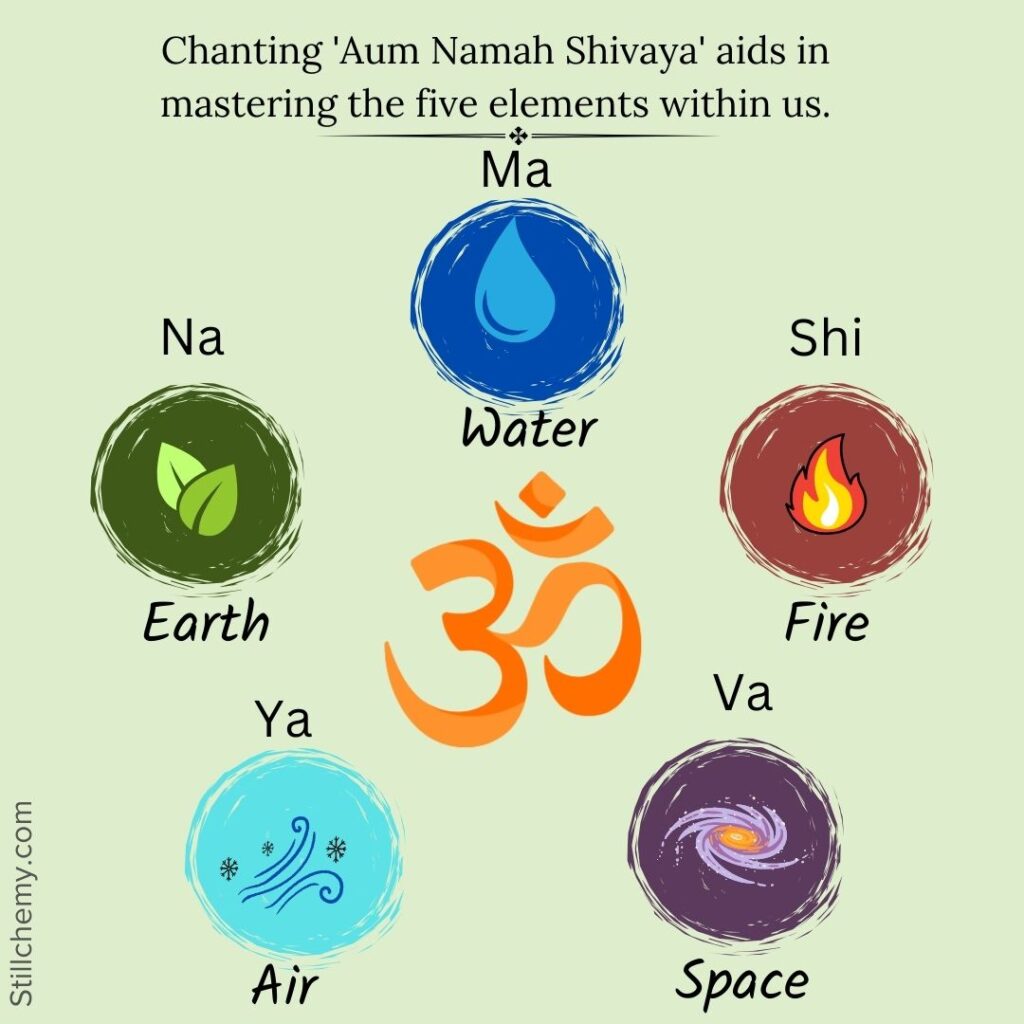
8. Devotees of Shiva chant the mantra Aum Namah Shivaay throughout the night of Mahashivaratri. Aum is the sound of the universe. The letters ‘na’, ‘ma’, ‘shi’, ‘va’, ‘ya’ are believed to signify the five elements of nature – Earth, water, fire, air and ether. Wise people advise chanting of this mantra on Mahashivaratri, in order to harmonize the five elements.
9. A legend has it that on Mahashivaratri, Lord Shiva swallowed the poison that was churned out during the Samudra Manthana.
10. It is believed that on Mahashivaratri, Goddess Ganga descended from the heavens to the Earth, posing a threat to life on the planet. To save the Earth from destruction, Lord Shiva is said to have caught Ganga in his locks and sent her to the Earth in the form of streams. So, it is a custom to bathe the shivalinga on Mahashivaratri.
5 Essential Insights into Mahashivaratri Celebrations
11. Historically, dance festivals have been held at various Hindu temples like Chidambaram, Khajuraho and Konark. Today, fairs are organized at main Jyotirlinga Shiva temples in India, like Somanatha and Varanasi.
12. Mahashivratri at the Isha Yoga Center in Coimbatore is a vibrant celebration set against the captivating backdrop of Velliangiri foothills. Set for 15th February this year, this nightlong festival promises an enchanting blend of explosive meditations and mesmerizing musical performances by Sounds of Isha and other renowned artists, drawing participants from far and wide.
In the mystic presence of Sadhguru, this celestial festival unfolds profound spiritual possibilities. The event offers a unique opportunity to connect with the exuberant festivities and guided meditations through live webstreams on isha.sadhguru.org, transcending geographical boundaries.
As the night progresses, traditional and martial arts performances by Isha Samskriti students infuse cultural richness into the celebration. The Adiyogi Divya Darshanam, a captivating video imaging show, unveils the mystique of yoga’s origin.
As the clock strikes midnight, Sadhguru initiates a highly anticipated meditation, urging participants to commence the practice in their respective time zones, starting 20 minutes before midnight.
Throughout the event, the air reverberates with the pulsating energy of performances, featuring music, dance, and cultural expressions from celebrated artists. Mahashivratri at the Isha Yoga Center transcends the traditional festival experience; it’s a transformative journey into the depths of spirituality, creating an immersive and resonant connection with the essence of this auspicious night.
13. One of the famous sites of Mahashivaratri celebrations is Mandi, a town in Himachal Pradesh. It is believed that over 200 gods and goddesses of the region gather here on Mahashivaratri.
14. Among the other biggest celebrations of Mahashivaratri, is the one in Tamil Nadu, held in Tiruvannamalai at the Annamalaiyar temple, known for Girivalam, a 14-km barefoot walk around Shiva’s temple.
15. Interestingly, Mahashivaratri is a national holiday in Nepal. It is a custom for married women to pray for the well-being of their husbands and for unmarried women to pray for a husband like Shiva. The festival is celebrated with great pomp in many temples in Nepal, especially Pashupathinath.
These were some intriguing facts about the origin of Mahashivaratri, the legends around this festivity, and the present-day celebrations.
All in all, this festival observed to honor Lord Shiva, is a night to reflect on yourself through meditation and prayer, and bring peace and harmony in your life. How do you celebrate Mahashivaratri, let us know?
The post Mahashivaratri Unveiled: 10 Interesting Facts and Essential Celebration Insights appeared first on Stillchemy.
]]>The post 19 Symbols of Lord Shiva: Meaning and Significance appeared first on Stillchemy.
]]>The Symbolism of Lord Shiva’s Adornments
Lord Shiva is often depicted with a crescent moon on his head, river Ganga held in his locks, a snake around his neck, a trident held in one hand and a damaru in the other, half-open eyes and a third eye. Some of his common symbols include the rudraksha, kundalas, tripunda, shivalinga and a nandi, among others. Here is a look at the 19 symbols of Lord Shiva and their meaning and significance.
1. Ash-smeared Body
Ashes smeared on Lord Shiva’s body represent the ultimate truth, stand for thinking beyond the materialistic world, and serve as a reminder to stay humble. According to Sadhguru, Shiva’s body smeared with ashes depicts him as one who constantly lives death as he lives life. He is the one who is always aware that the flesh and blood is mortal and will ultimately turn into ashes. As per Sadhguru, Shiva does not smear ashes on his body, rather ashes ooze out from each of his pores, representing the ultimate dispassion that he embodies.
2. Shiva’s Blue Throat
As per legend, during the churning of the ocean (Samudra Manthana), a deadly poison came out. It was called halahal. The Gods were afraid that so much poison could destroy life. Lord Shiva drank up all the poison. Goddess Parvati held Shiva’s throat to stop the poison from entering the Lord’s body, which is how Lord Shiva’s throat turned blue.
According to Hindu tradition, Lord Shiva’s throat is blue (which has given him the name Neelkanth), and not his entire body. However, Shiva’s whole body is depicted as blue very often, which is actually to represent the infinite, all-pervading sky. It is also said that Lord Shiva, as also some other Gods like Krishna and Rama are depicted with blue skin and referred to as blue Gods since they had a blue aura.
3. Crescent Moon
Shiva uses the moon as a decoration because he is a great yogi who is intoxicated all the time, but he sits in great alertness. That is how yogis are – totally drunk, but fully alert. – Sadhguru
So, when Shiva is called ‘Somasundara,’ it recognizes the moon’s symbolism and suggests a state of blissful intoxication, indicating heightened consciousness.
Lord Shiva’s crescent moon also symbolizes the cyclic nature of the universe. The waxing and waning of the moon represents the cycle of creation and destruction.
4. Damaru or Drum
The depiction of Lord Shiva with the Damaru symbolizes the cosmic sound energy. It’s believed that the rhythmic resonance of the Damaru governs the creation and destruction of the universe.
The Damaru signifies the expanding and collapsing of the universe, the pattern of the heartbeats going up and down, and the rising and collapsing of the energy. This symbolism can be derived from the unique shape of the damaru; it expands, collapses and expands again. Devotees of Lord Shiva believe that when Shiva played the damaru and started dancing to its beats, the universe was created.
5. His Half Open Eyes
The half open eyes of Shiva mean that the cycle of the universe is in progress. Completely open eyes would mean the beginning of creation while closed eyes would mean destruction. The half-open, half-closed eyes of Lord Shiva also depict that he is looking at the outside world with inner wisdom.
Fully open eyes would mean an extrovert nature, or looking outside, while completely closed eyes would mean introversion or looking inward. However, Shiva’s half-open eyes mean that he is fully aware of the outer world as well as his inner self.
6. Mount Kailash
Kailash is held as the abode of Shiva, not because he is sitting on top of Kailash, but everything that he knew he stored in this mountain. – Sadhguru
Sadhguru explains, that abode does not mean you will find Shiva in his physical form over there, but it means that all the knowledge Lord Shiva possessed, is present in Mount Kailash, in energy form. This also means that the knowledge and ability carried by Shiva is accessible at Kailash.
7. Kamandalu or Water Pitcher
It is a water pot with a handle, and is commonly used by ascetics. The kamandalu in Shiva’s hand depicts him as an ascetic and the water in the kamandalu is symbolic of amrita (or the elixir of life). The kamandalu is also a representation of a self-contained, minimalistic lifestyle, and the giving up of materialistic joys. Lord Shiva carrying a kamandalu quite aptly depicts him as the supreme yogi.
8. Kundalas (Two Ear Rings)
Lord Shiva is depicted as wearing two kundalas in his ears; one named as Alakshya and the other called Niranjan. Alakshya means ‘that which cannot be shown using any sign’ and Niranjan means ‘that which cannot be seen with mortal eyes’. The kundalas worn by Shiva depict his complex nature, or that he is difficult to be understood by an ordinary soul.
It is also said that Lord Shiva wears the makara kundala on his right ear and the tarakanka on his left ear, where the makara kundala denote the male principle of Shiva while the tarakanka signifies his female principle.
9. Matted Hair
Lord Shiva’s matted hair represent his renunciation of worldly pleasures, his ascetism, and his purity (as the hair are never cut or combed). The flow of Shiva’s matted hair is believed to represent wind (or Vayu). Each of his hair strands is also said to represent desires, and his matted locks symbolize that he has knotted all desires thus keeping them in control, which is also his message to his devotees; to keep one’s desires in control and renounce the materialistic pleasures.
10. Nandi – The Sacred Bull
Nandi is Shiva’s closest accomplice because he is the essence of receptivity. Nandi is a symbolism of eternal waiting, because waiting is considered the greatest virtue in Indian culture. One who knows how to simply sit and wait is naturally meditative. Meditation is about listening to God and existence without the need to speak. Nandi exemplifies this by sitting alert and attentive, which is a vital aspect of meditation.
11. River Ganga
In the Himalayas, each peak is thought to embody Shiva, with river streams resembling his dreadlocks, ultimately forming the sacred river Ganga. Thus, the image of Ganga flowing from Shiva’s hair symbolizes the river’s divine purity and mystical origin.
Ganga is also symbolic of the knowledge that purifies the soul. Knowledge leads to freedom, it purifies the mind, it also means movement and fluidity; which is why river Ganga coming out of Shiva’s head can mean the flow of knowledge.
12. Rudraksha
Lord Shiva is seen wearing Rudraksha beads on his head, arms and hands. Rudraksha is believed to contain the secrets of the evolution of cosmos. It is also believed that Rudraksha beads are the tears of Lord Shiva, as Rudra means Shiva and Aksha means tears.
One legend says that during meditation, Shiva had shed tears of joy, while another legend says that after years of meditation when Lord Shiva opened his eyes, on seeing the humanity in suffering, he got tears in his eyes. These tears fell on the Earth and turned into seeds of Rudraksha.
13. Shiva Linga
The Linga symbolizes Lord Shiva. It’s believed that during the process of creation, the first form taken was an ellipsoid, which is also the shape of a lingam. Interestingly, it is also the final form. It is said that when one goes into a deep state of meditation, just before the point of absolute dissolution, the energy takes the form of an ellipsoid.
14. Snake
Lord Shiva wearing a snake around his neck depicts him as fearless and powerful. Legend says that the snake that coiled around the Lord’s neck is Vasuki, the child of Kashyap and Kadru. He was a great devotee of Lord Shiva and the most powerful snake. Vasuki is depicted with three coils around Lord Shiva’s neck, where the three coils represent the three parts of time; past, present and future.
Vasuki’s head is seen resting on the Lord’s right shoulder, which symbolizes Lord’s justice and laws to preserve nature and order of the universe. There’s another legend which says, that once when the snake species was in danger, they approached Lord Shiva for shelter, who allowed them to stay on Mount Kailash. The snakes, unable to bear the cold temperatures there, sought protection from Shiva, who let them rest on his body for warmth.
Spiritually speaking, the snake around Lord Shiva’s neck, is symbolic of the dormant energy within us. It is said that when one inclines towards spirituality, the Kundalini, symbolized by the snake, is awakened, and it starts rising upwards. The snake is also believed to be a symbol of our passions and desires.
15. Tandava
It is the cosmic dance of creation and is believed to have been performed by Lord Shiva on various occasions. The various forms of this dance include Ananda Tandav and Rudra Tandava, among others. Lord Shiva is believed to perform the Ananda Tandava when he is happy and Rudra Tandava when he is angry.
16. The Third Eye
The third eye refers to an eye that can see something that is not physical, meaning that which cannot be seen by the two sensory eyes. While the two eyes can see what is outside you, the third eye can be used to see what is inside you. So, opening the third eye can mean, turning inward to see and understand your real nature or gaining awareness of your true self.
Legend says that Kamadeva, the God of lust, once shot an arrow towards Shiva’s heart. Shiva who was working towards yoga, or working towards being limitless, got perturbed by this act of Kamadeva. Shiva opened his third eye and burned down Kamadeva. Symbolically, this sequence of events can mean that while Shiva was practicing yoga, he was disturbed by his own desires (or lust), so he opened his third eye and destroyed his lust. As per Sadhguru, the opening of Shiva’s third eye refers to him perceiving a dimension of himself that is beyond the physical world.
17. Tiger Skin
Lord Shiva is depicted as sitting on the tiger skin. Ascetics used animal skin as a seat to prevent the flow of their energy towards the ground. Lord Shiva is commonly depicted as also wearing tiger skin. It symbolizes power. It is also symbolic of the triumph of divine forces over animal instincts.
18. Tripundra or Tilak or Three Stripes
It is a tilaka worn by Shaivas and the Smarta Hindus, and consists of three horizontal lines and sometimes a dot. It symbolizes the Prana or life force and the three horizontal lines represent the three responsibilities of Brahma, Vishnu and Shiva, which are creation, sustenance and destruction, respectively. Thus, the tripundra is symbolic of the Holy trinity of Hindu Gods.
The three lines also represent the three Vedic fires (fire in the kitchen, fire lighted for ancestors, and the fire used for Homa), three syllables of AUM, three gunas, three worlds and the three aspects of Lord Shiva.
19. Trident/Trishul
Trident (or Trishul) depicts the three states of consciousness; waking, dreaming and sleeping. Lord Shiva holding the trident represents him as the upholder of these states. The Trishul also represents the three gunas (satva, rajas and tamas). The trident held by Shiva is believed to destroy illusion in the physical world, ego in the mental world and take us towards spiritualism. According to Sadhguru, Shiva’s trident signifies the three aspects of life, or the three dimensions of life; Ida, Pingala and Sushumna.
The varied and interesting symbols of Lord Shiva are indeed a unique representation of this deity as someone who is powerful, dispassionate, and incomprehensible to the ordinary. He is a true yogi, the destroyer of evil, and the liberator.
He is accessible as a God, unattainable as a form. He is like the all-pervading darkness that is the reality of everyone’s existence, and that which can be perceived without senses but can never be fully understood. Easy to see, difficult to fathom, and impossible to embody – that’s Shiva!!
The post 19 Symbols of Lord Shiva: Meaning and Significance appeared first on Stillchemy.
]]>The post 28 Liberating Sadhguru Quotes On ‘Adiyogi Shiva’ That Will Help You Reach Your Highest Potential appeared first on Stillchemy.
]]>
“Adiyogi is a fountainhead of knowing. The world needs to be drenched in this to know life and wellbeing to the fullest.” – Sadhguru
“No one did it before Adiyogi. And no one has needed to do it since. His work remains alive for those who have the eyes to see it.” – Sadhguru
“The freedom to believe or not believe is one of the tremendous contributions of Adiyogi to the spiritual culture of the world.” – Sadhguru
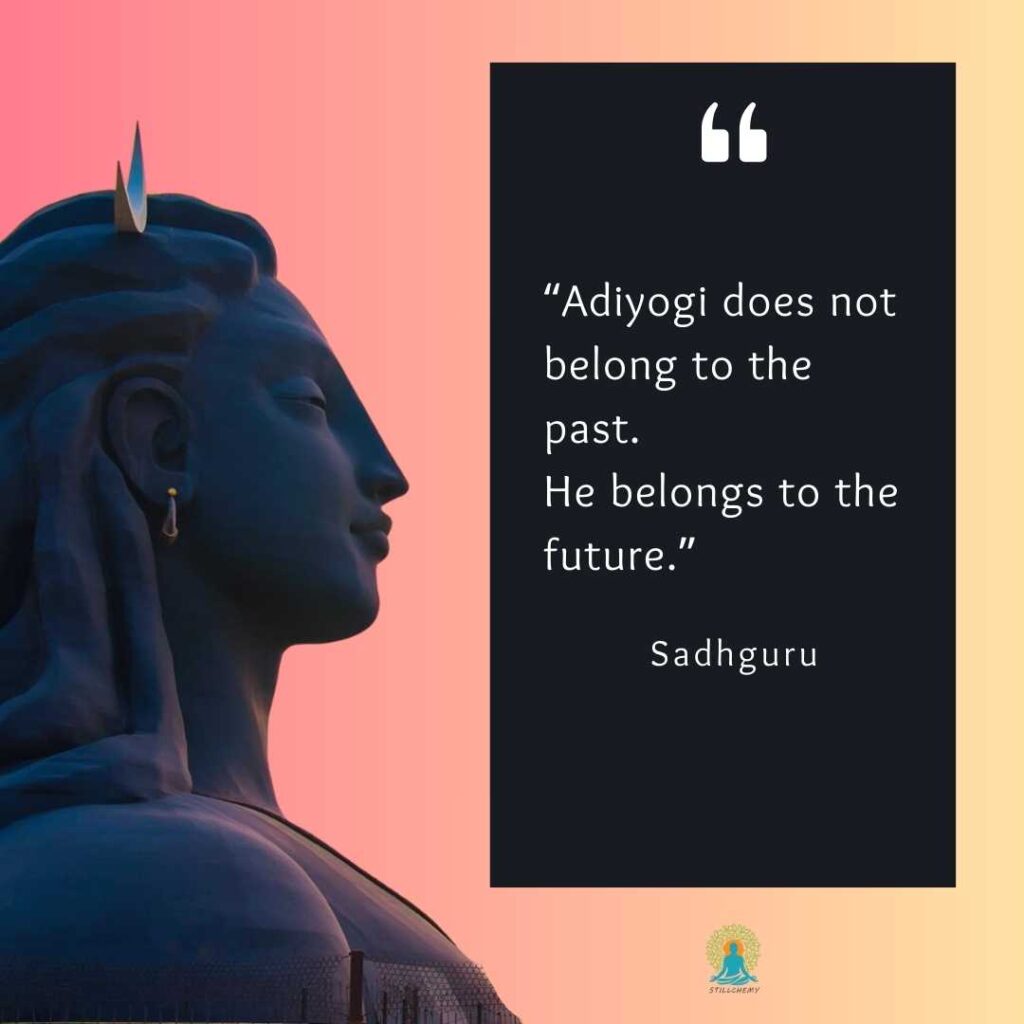
“Adiyogi does not belong to the past. He belongs to the future.” – Sadhguru
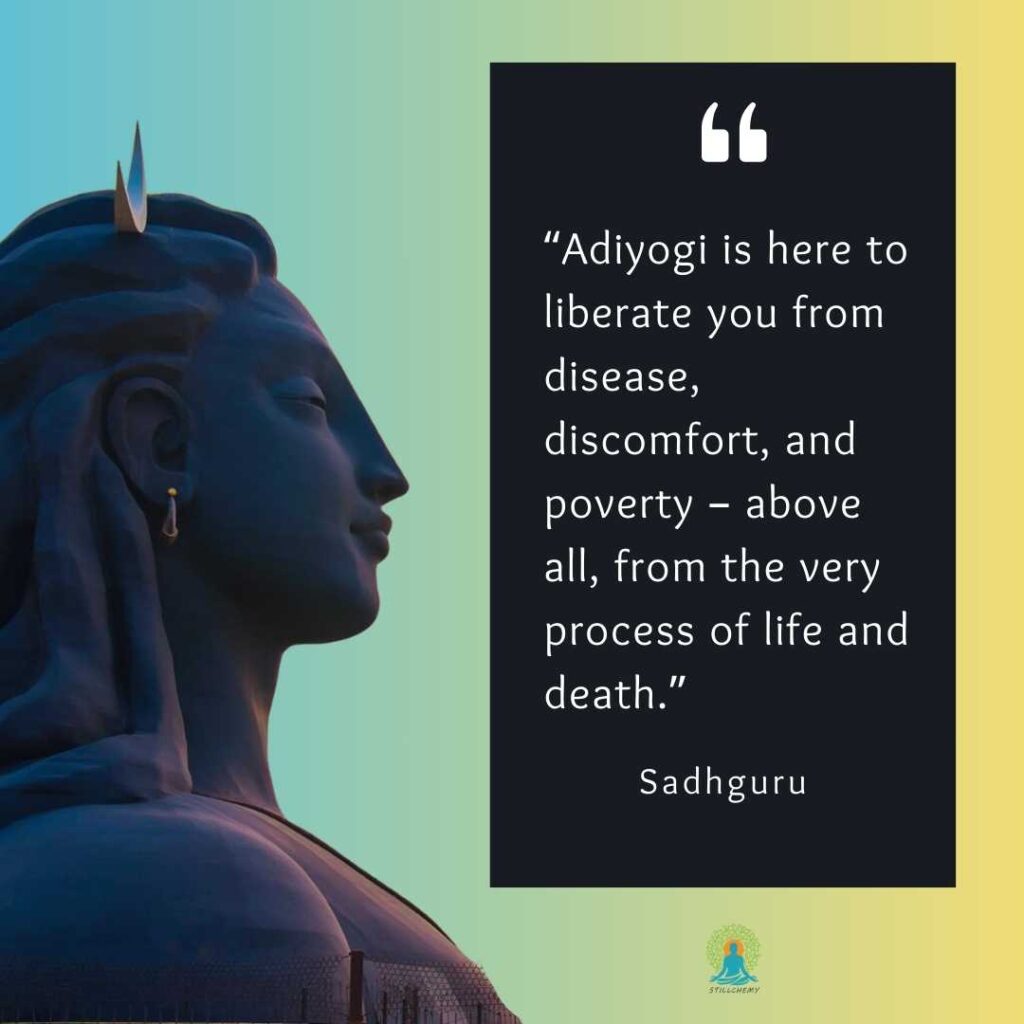
“Adiyogi is here to liberate you from disease, discomfort, and poverty – above all, from the very process of life and death.” – Sadhguru
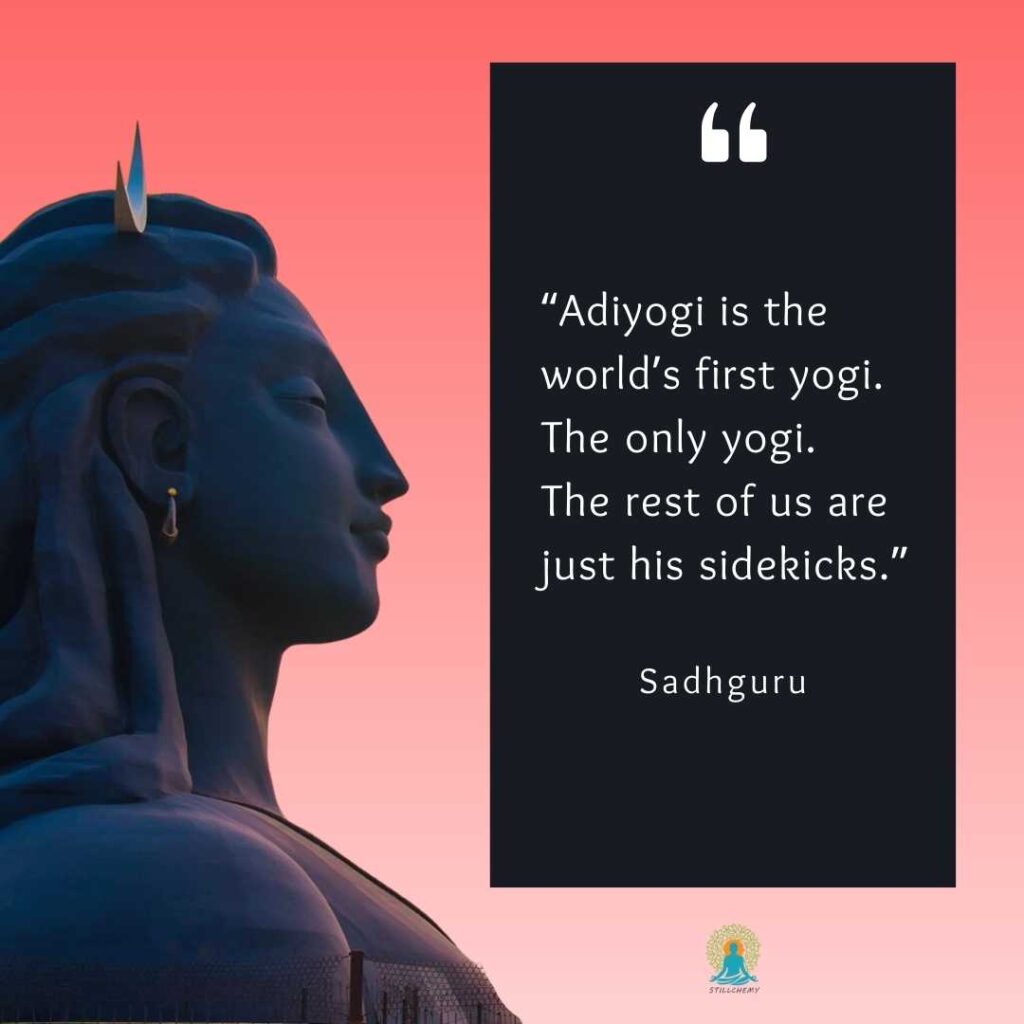
“Adiyogi is the world’s first yogi. The only yogi. The rest of us are just his sidekicks.” – Sadhguru
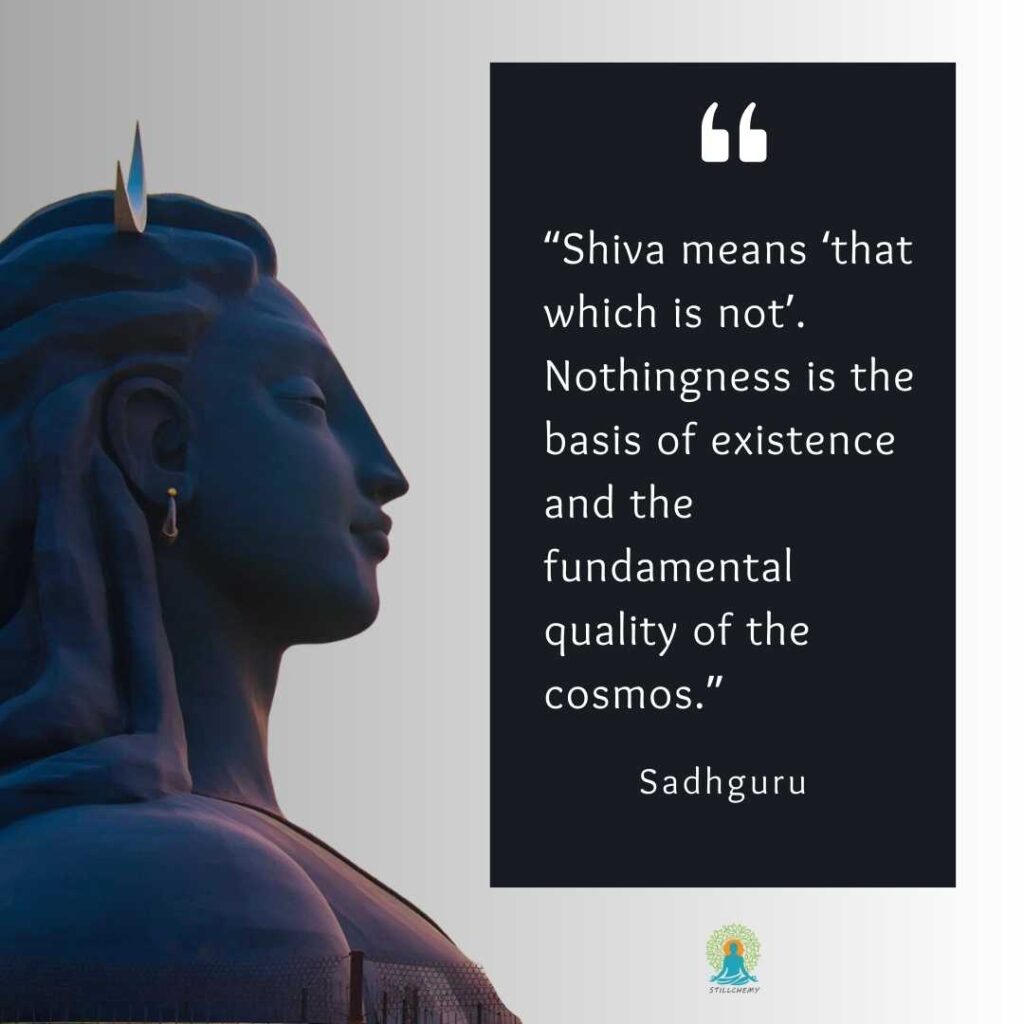
“Shiva means ‘that which is not’. Nothingness is the basis of existence and the fundamental quality of the cosmos.” – Sadhguru
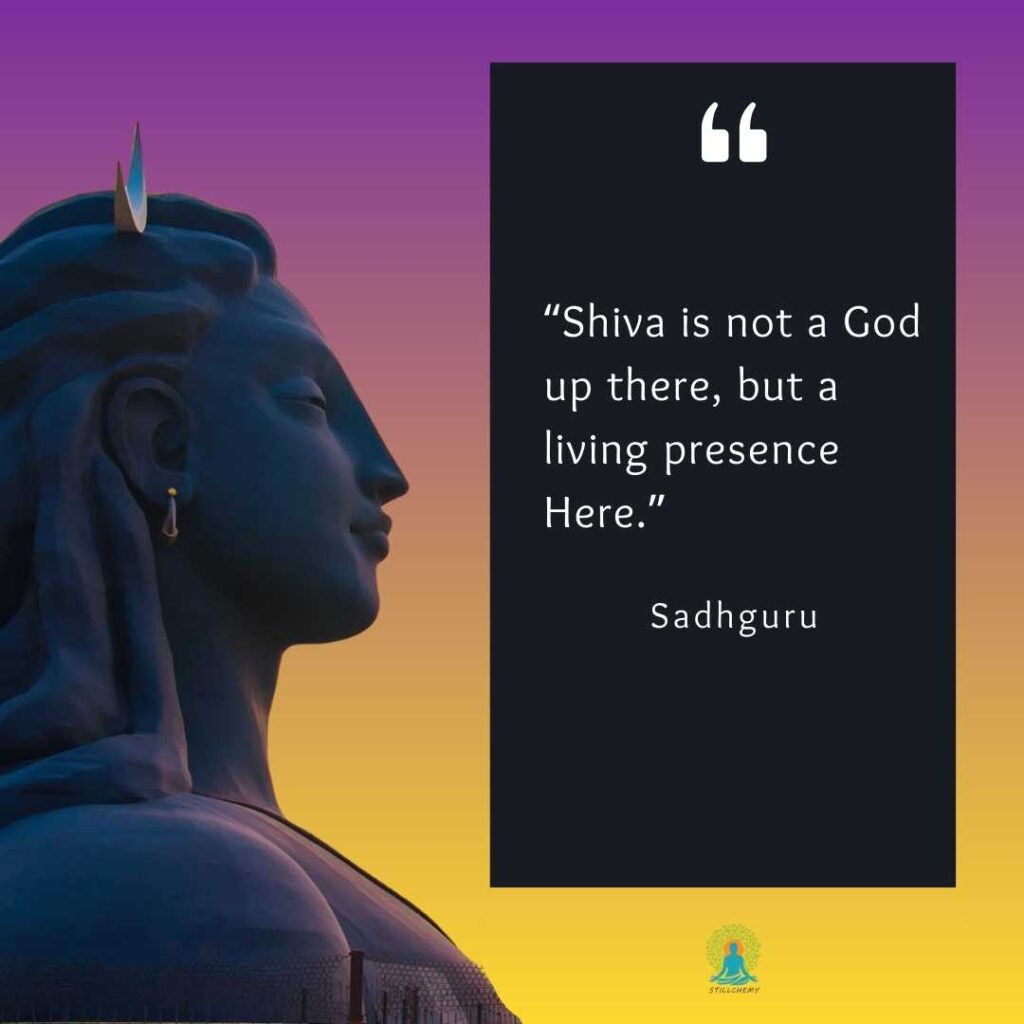
“Shiva is not a God up There but a living presence Here.” – Sadhguru
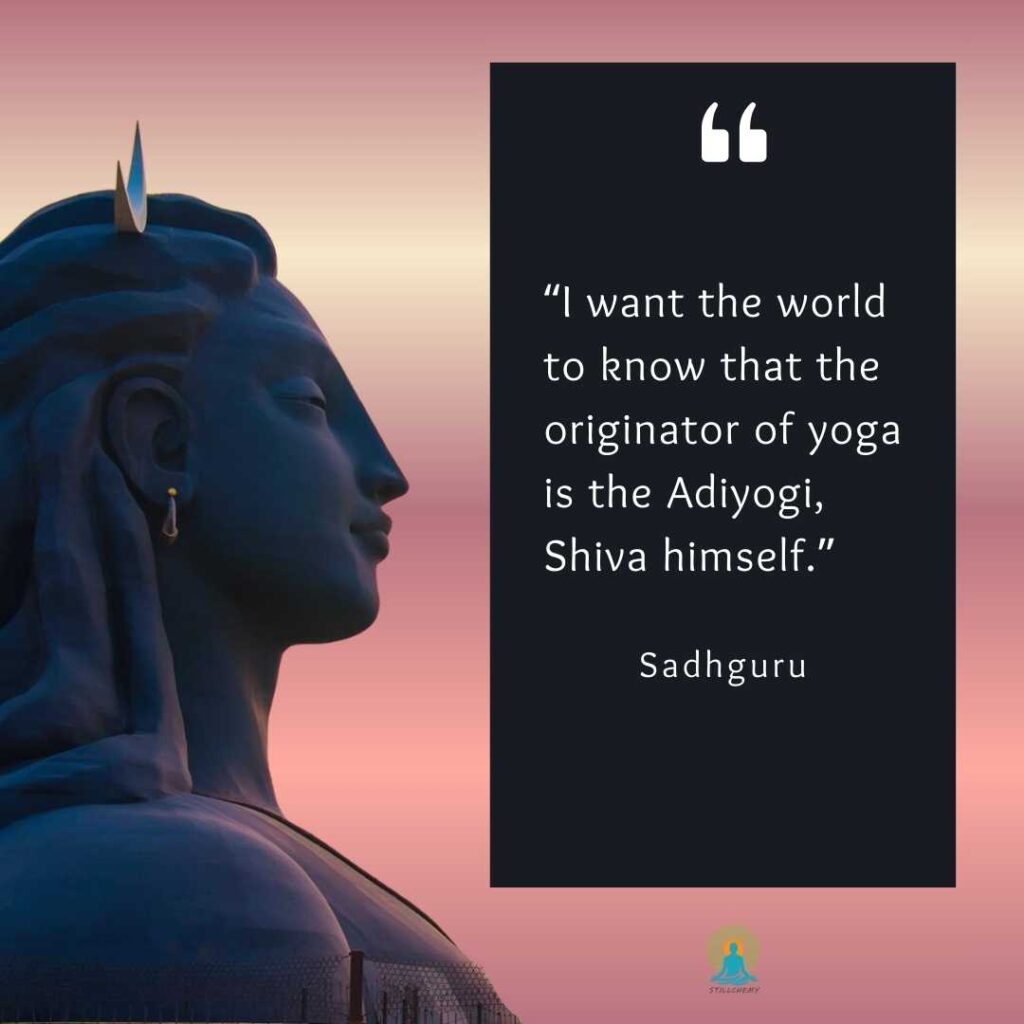
“I want the world to know that the originator of yoga is the Adiyogi, Shiva himself.” – Sadhguru
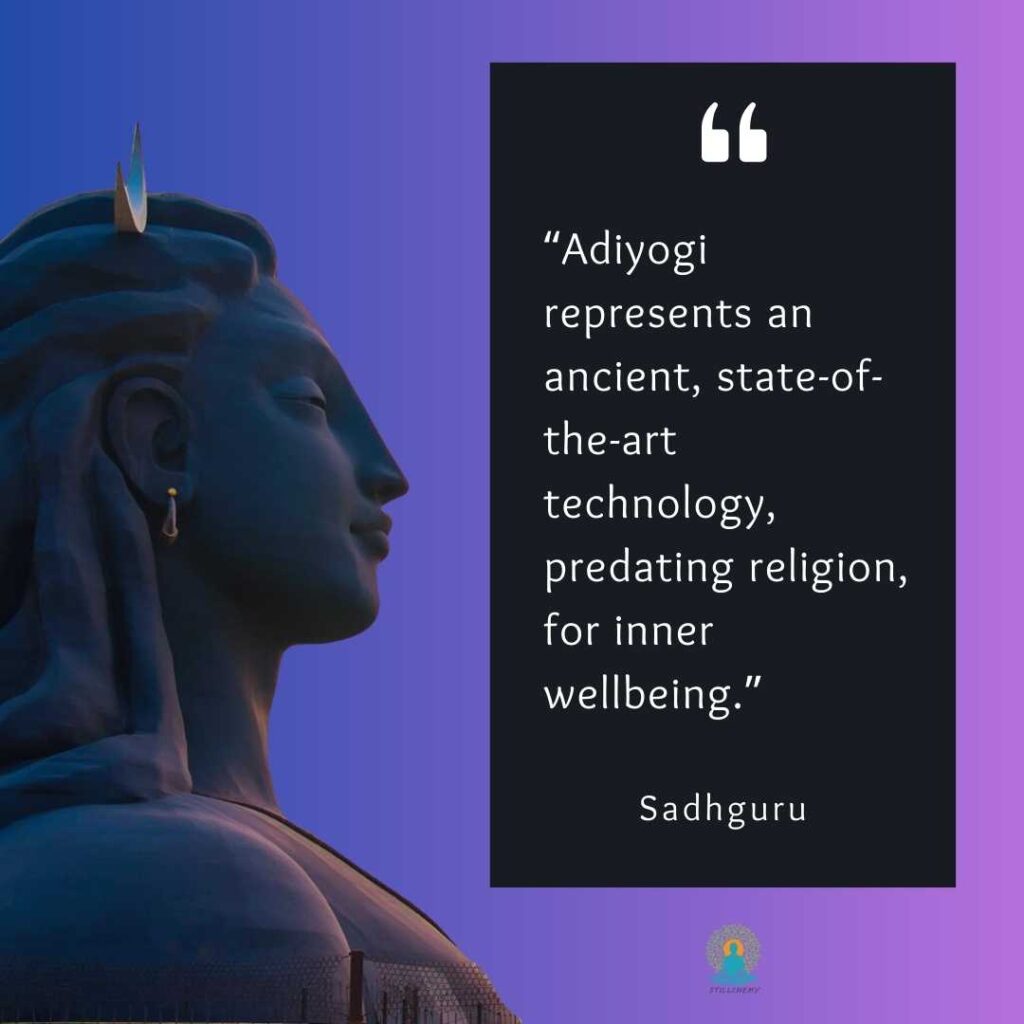
“Adiyogi represents an ancient, state-of-the-art technology, predating religion, for inner wellbeing.” – Sadhguru
“The Ultimate Mystic Adiyogi wearing the moon as an ornament is an indication that his sense of perception has reached its peak. Keenness of perception determines profoundness of Experience.” – Sadhguru
“In the yogic culture, we do not see Shiva as a God. Guru Purnima celebrates the human ability to rise beyond physical nature, and the Greatness of Adiyogi, who made this possible.” – Sadhguru
“Adiyogi Shiva is the source of the science of yoga. Yoga is a way of addressing human wellbeing in a scientific manner. Adiyogi Shiva predates all religion. His relevance is not in his ancientness but of the future.” – Sadhguru
“Human beings desperately resort to chemicals in the form of drugs and alcohol, not realizing that all the ingredients for a blissful chemistry lie within us. There is a way to be utterly intoxicated and fully aware at the same time from within. This is the essence of Adiyogi.” – Sadhguru
“Shiva went through all that a human being can go through. He is most beautiful & the ugliest. A great ascetic & a family person. The most disciplined & a drunkard. If you can accept this man who is a complex formation of every quality, you have crossed life itself” – Sadhguru
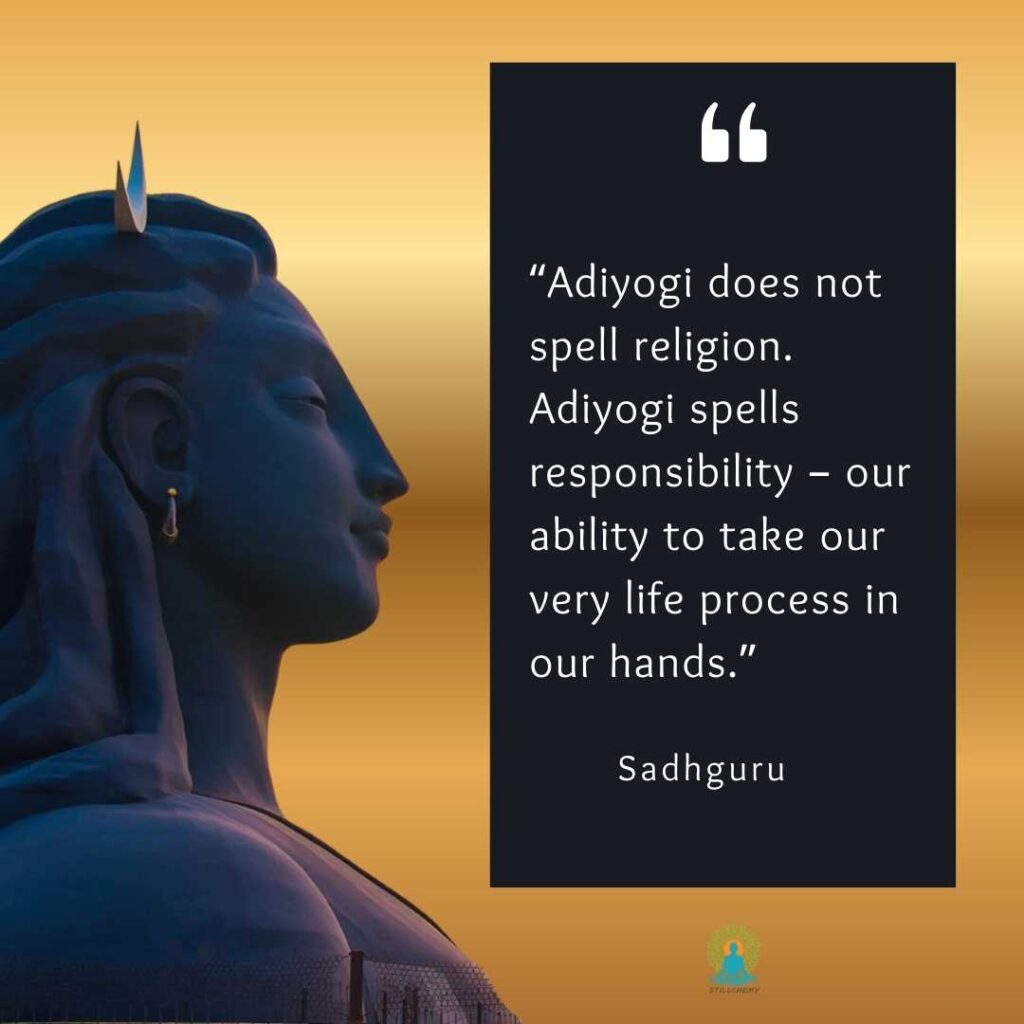
“Adiyogi does not spell religion. Adiyogi spells responsibility – our ability to take our very life process in our hands.” – Sadhguru
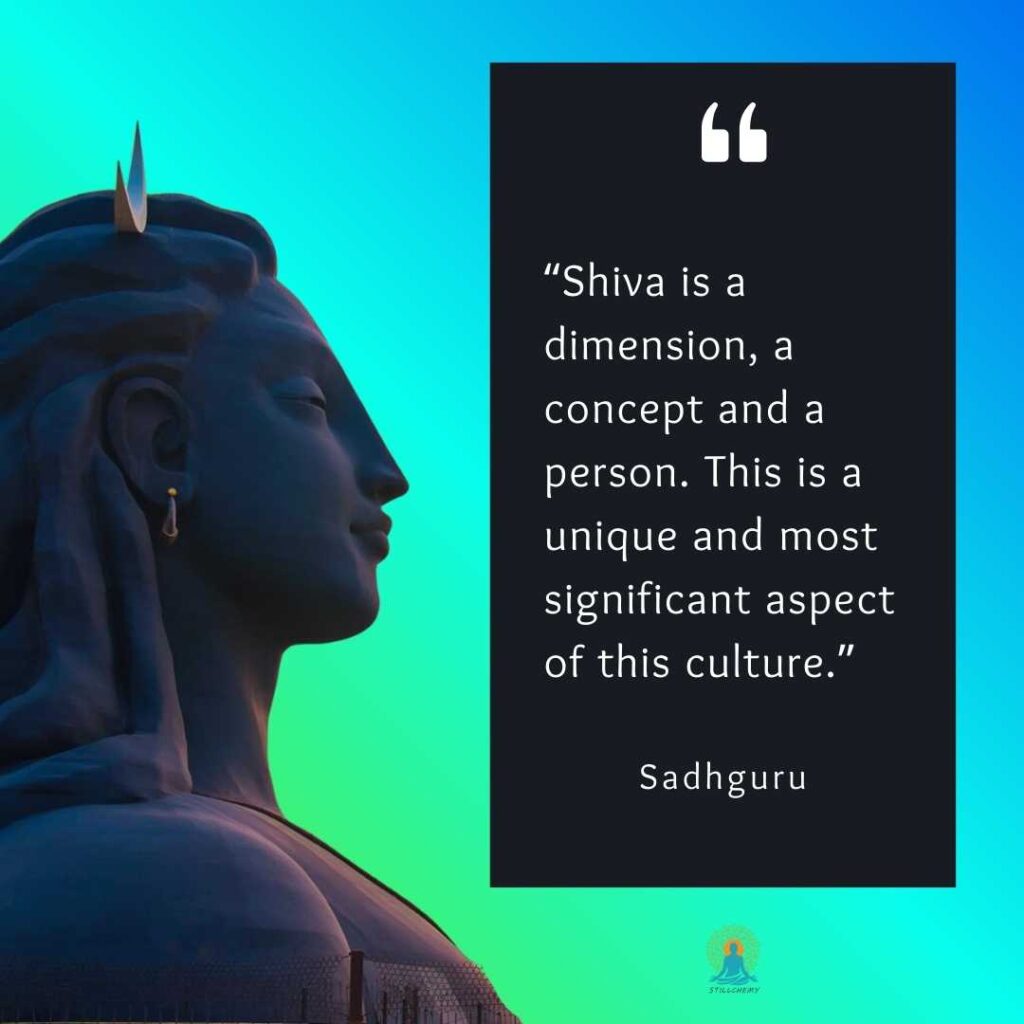
“Shiva is a dimension, a concept and a person. This is a unique and most significant aspect of this culture.” – Sadhguru
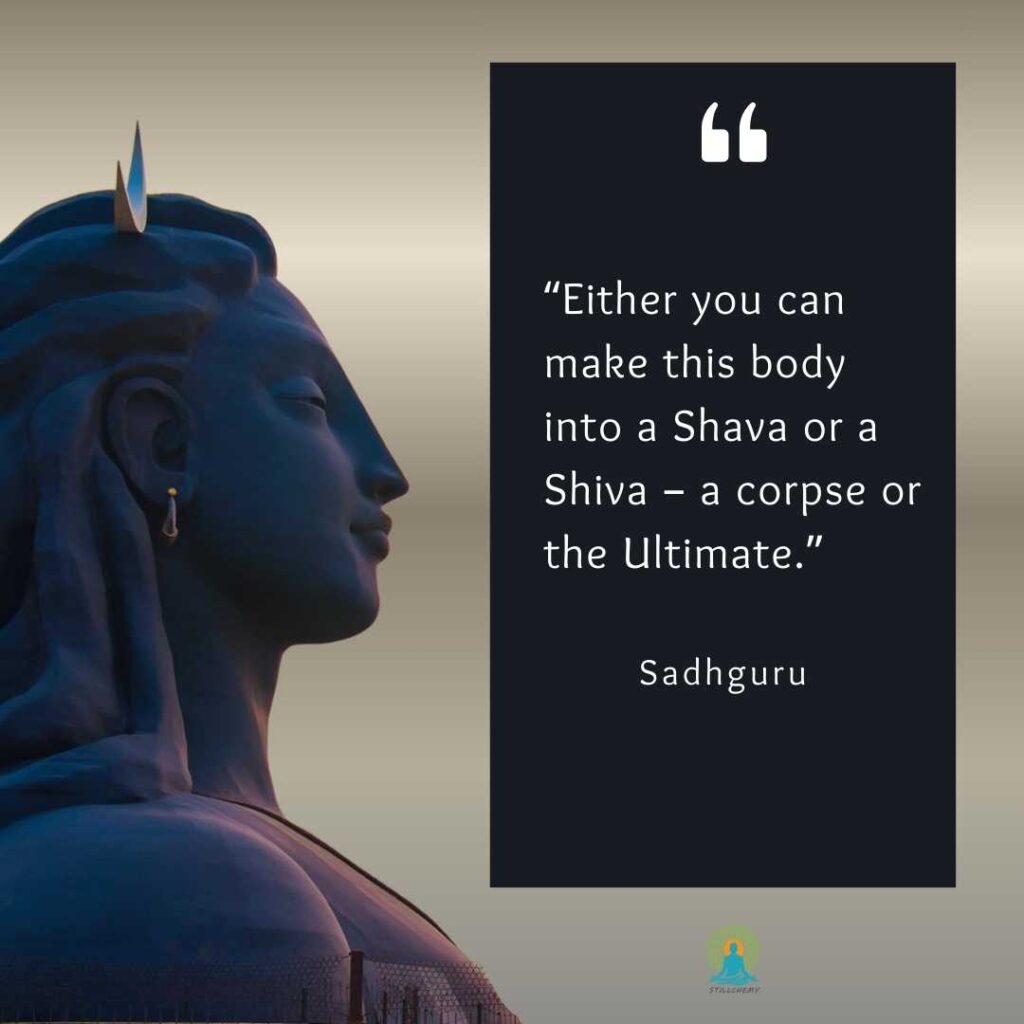
“Either you can make this body into a Shava or a Shiva – a corpse or the Ultimate.” – Sadhguru
“I am not a devotee of Shiva. I never worshipped him. But he invaded me & became my life breath. There is no way I can shake him off.“ – Sadhguru
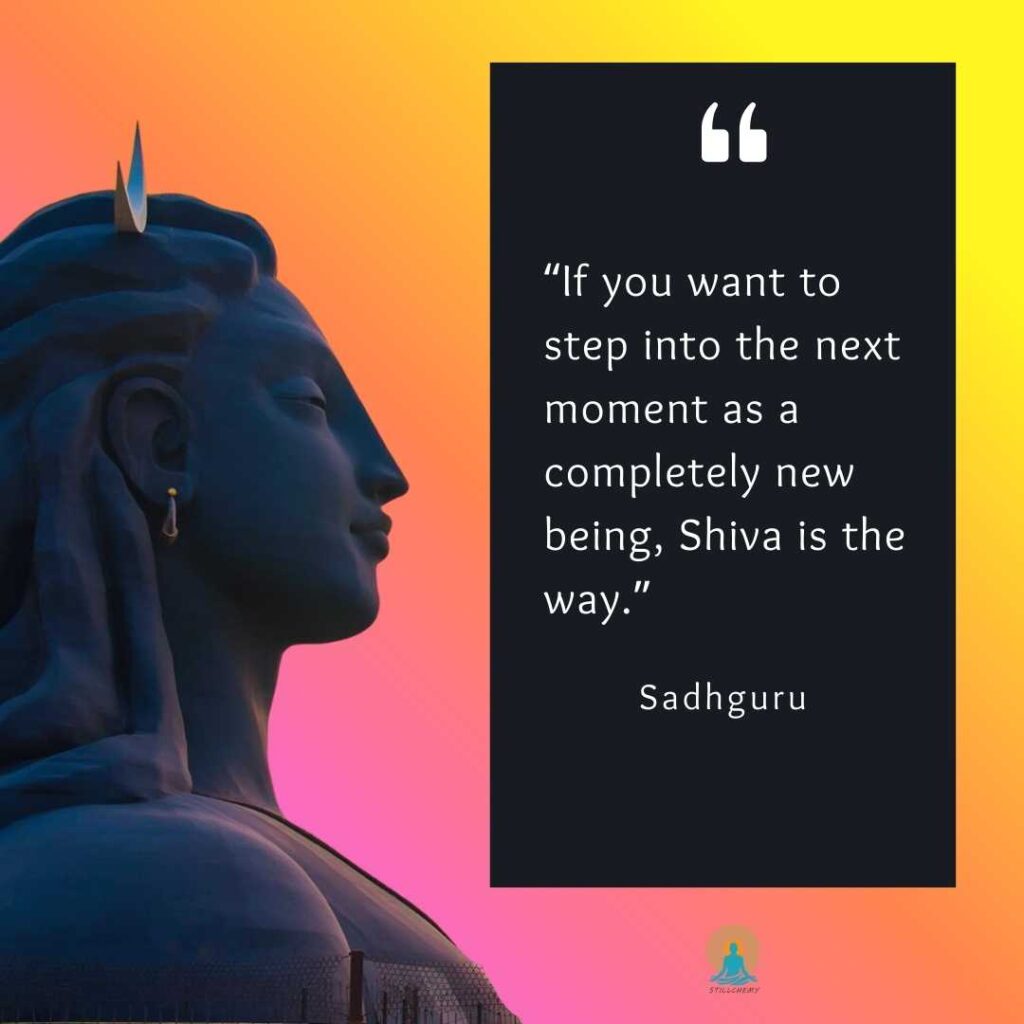
“If you want to step into the next moment as a completely new being, Shiva is the way.” – Sadhguru
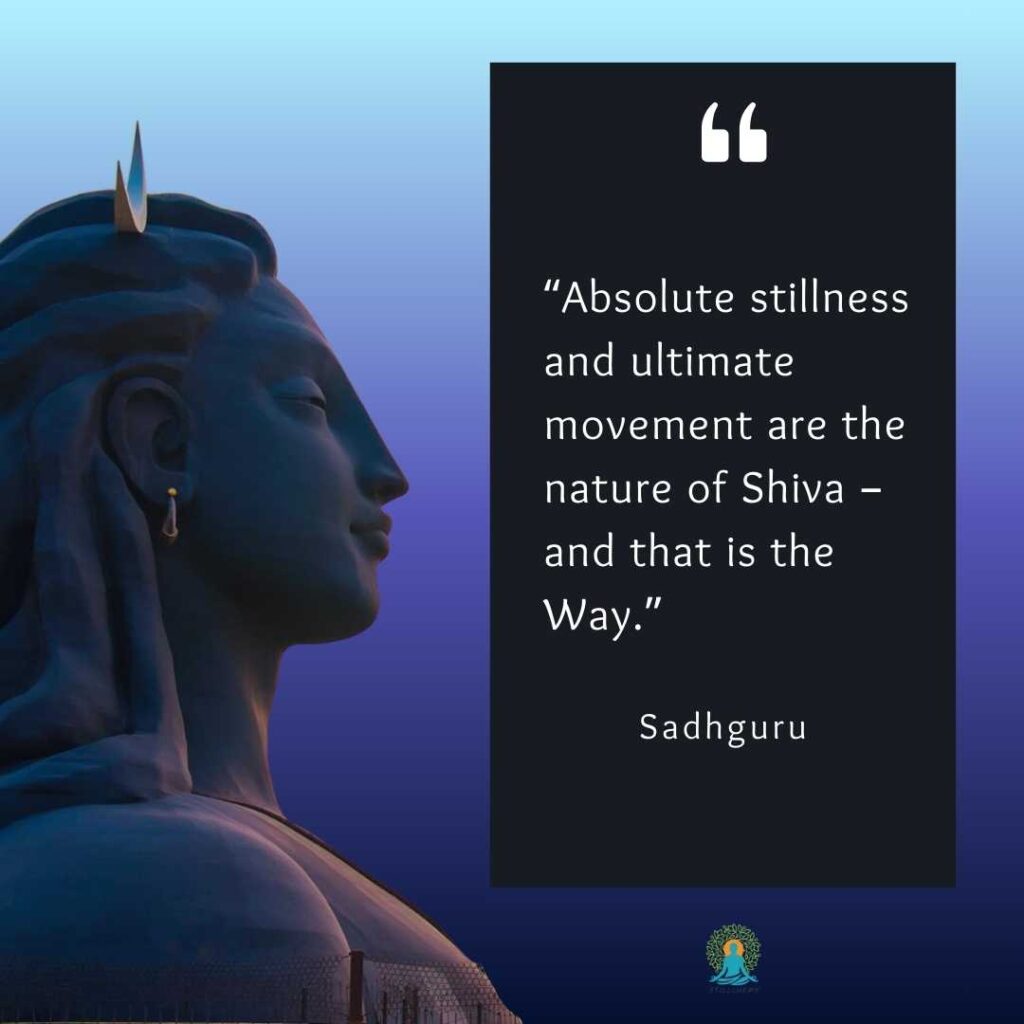
“Absolute stillness and ultimate movement are the nature of Shiva – and that is the Way.” – Sadhguru
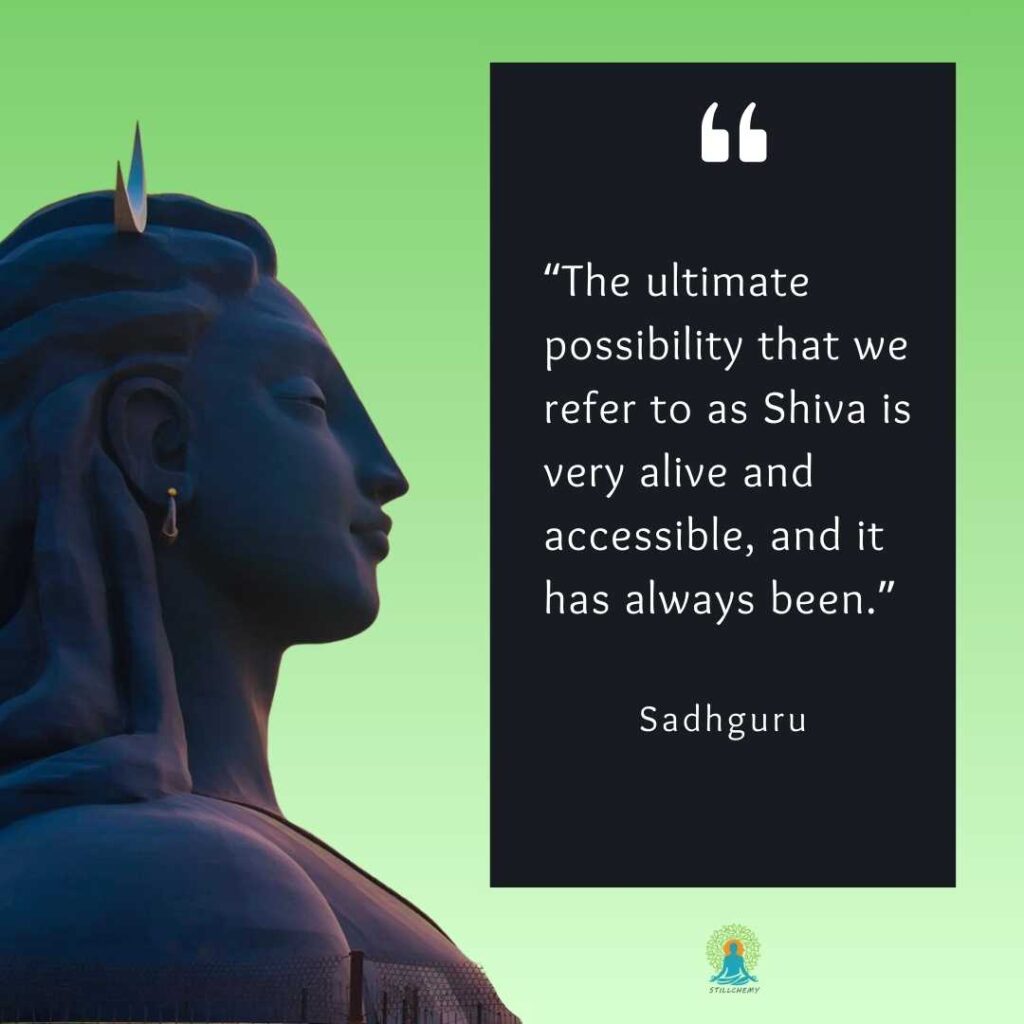
“The ultimate possibility that we refer to as Shiva is very alive and accessible, and it has always been.” – Sadhguru
“For me, Shambho is not just a word. It is all that I know. It is all that flows through me. It is the last thing I will utter before I shed my body.“ – Sadhguru
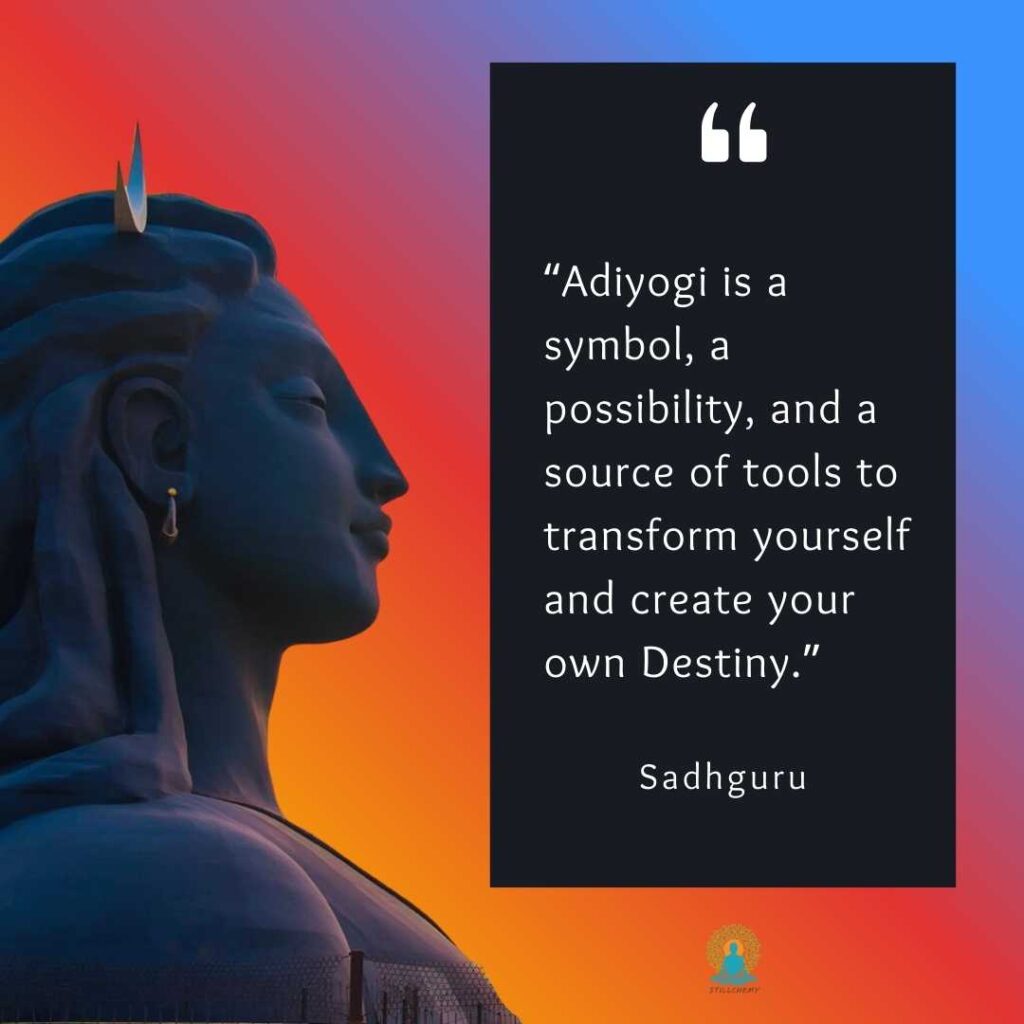
“Adiyogi is a symbol, a possibility, and a source of tools to transform yourself and create your own Destiny.” – Sadhguru
“The significance of Adiyogi is he provided methods to evolve human consciousness that are relevant for all times.” – Sadhguru
“The spine of knowledge that the Adiyogi created is the source of almost everything you can call spiritual on the planet.” – Sadhguru
“I am not your destination, just an open doorway. A doorway to all that Adiyogi stands for – all his knowing and all the possibilities.” – Sadhguru
“Shiva was not using substances – he is the substance. If you can stimulate a state of intoxication in you without any outside substance or activity, then there is an element of Shiva in you.” – Sadhguru
Explore the bestselling books by Sadhguru: “Adiyogi: The Source of Yoga,” “Inner Engineering A Yogi’s Guide to Joy,” and “KARMA: A Yogi’s Guide to Crafting Your Destiny.”
The post 28 Liberating Sadhguru Quotes On ‘Adiyogi Shiva’ That Will Help You Reach Your Highest Potential appeared first on Stillchemy.
]]>The post Revisiting Mahashivratri 2025 Celebration at Isha Yoga Center (Throwback) appeared first on Stillchemy.
]]>Stellar performances and the meditative practices that were part of this night-long event, left the audience enthralled and infused the attendees with positive energy and a sense of calm.
Mahashivratri is one of the most sacred festivities in India and is dedicated to Lord Shiva who is considered as the Adi Guru and originator of yogic traditions. It is the darkest night of the year and the planetary positions at this time are such that there is a natural rise in the energy in our system. It is said that staying awake and keeping the spine erect throughout the night of Mahashivratri can be greatly beneficial for one’s physical, mental and spiritual well-being.
Celebrated with great fervor at the Isha Yoga Center since 1995, this festival has transformed from an intimate event into a magnificent gathering, attracting nearly 10 lakh visitors in just one day. Several eminent artists have graced the night with their spectacular performances, people of all age groups have taken part in this event, and Sadhguru’s powerful stage appearance has been a constant in all these celebrations. His versatile personality and presence on stage always leaves the audience spellbound, and that’s one of the important reasons why people the world over look forward to the Shivratri celebration at Isha Yoga Center.
One of the key reasons to celebrate Mahashivratri at the Isha Yoga Center is its unique geographical location—situated at 11 degrees latitude from the equator. This positioning is considered highly beneficial for those seeking to elevate their energies to the highest level. It is said to be almost like sitting right on 11, creating an ideal atmosphere for spiritual growth.
The event’s popularity is also driven by the powerful spiritual offerings available, such as Pancha Bhuta Kriya, Shivanga Sadhana, the Grace of Yoga program, and the Velliangiri Yatra (exclusively for men) designed as a preparatory process for Mahashivratri.
Additionally, the night comes alive with performances by artists from diverse backgrounds, along with chanting, yogic practices and meditative processes that deepen the spiritual intensity of the celebration. The ceremonial procession of the Linga Bhairavi Utsav Murti further enhances the atmosphere, creating a space for devotees to connect with Devi’s grace.
Last year’s Mahashivaratri celebration at Isha Yoga Center had this all, and some other attractions. Let’s look at the highlights of the Mahashivratri night of 2025 that was celebrated with great fervour at the Isha Yoga Center in Coimbatore.
Key Highlights of the Mahashivratri Night 2025 at Isha
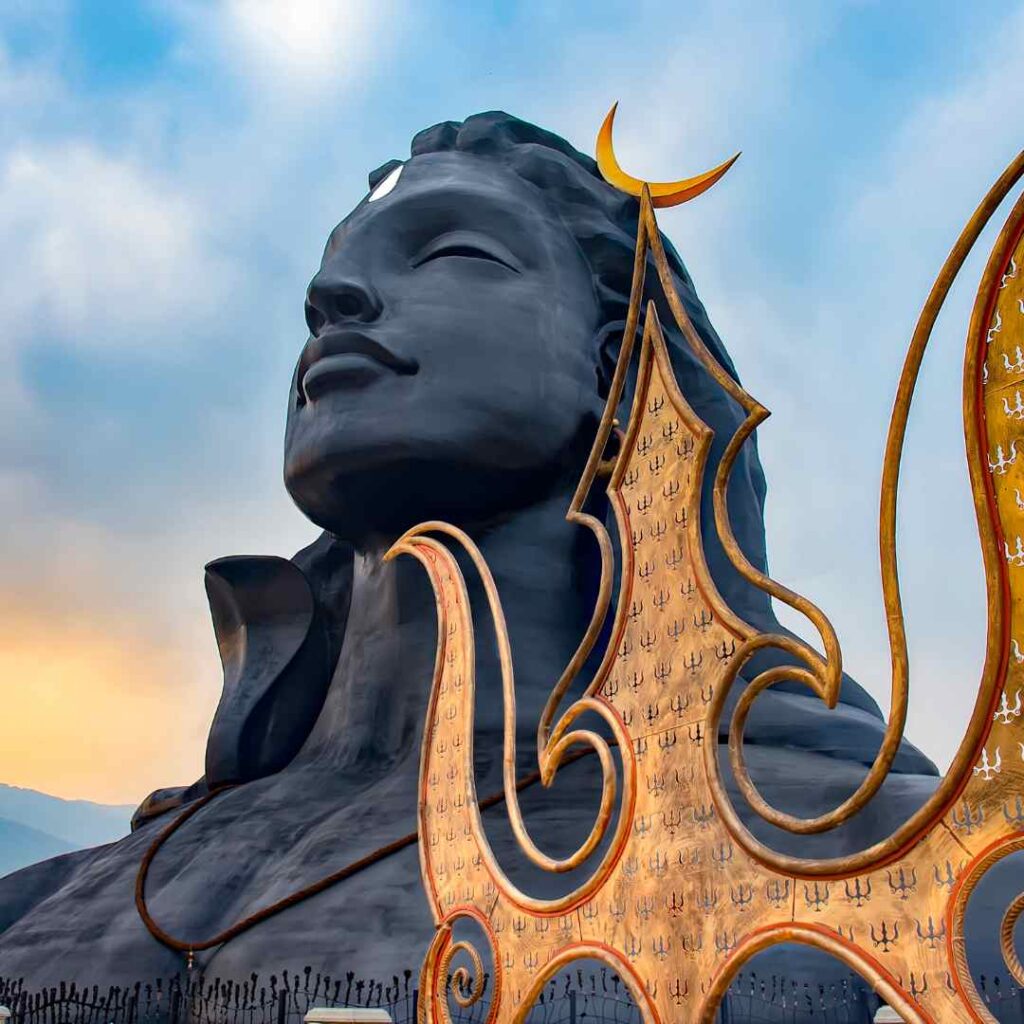
The nightlong Mahashivratri festival at IYC last year began at 6pm on February 26, 2025. The stage décor theme was Kailash. The stage setup and decoration beautifully depicted Kailash, the holy abode of Lord Shiva and added a mystic element to the celebration.
The chief guest for this event was Mr. Amit Shah, Honourable Union Home Minister and Minister of Cooperation of Bharat. His presence at the event gave a new dimension to this night-long celebration. The celebration commenced with the soulful singing by the artists of Sounds of Isha. Their musical expressions added to the spiritual vibe of the sacred space.
Speech by the Chief Guest
Chief guest Mr. Amit Shah, during his speech, described the event at Coimbatore as Bhaktika Mahakumbh. He said that Isha Yoga Center is not only a pilgrimage center but also a center of yoga, sadhana, bhakti and self-realization, and that IYC is giving positive thinking and positive direction to many, creating an impact on their lives. While speaking about Sadhguru, Amit Shah said that Sadhguru is a mystic man on a mission and he is guiding people to live life fully, and that he believes that in order to transform the world, one must first change oneself by turning inward. He appreciated the Save Soil initiative and said that Sadhguru is indeed an asset to the nation. Shah later described the celebration at IYC incredible, unimaginable and beyond words.
Launch of Miracle of Mind App
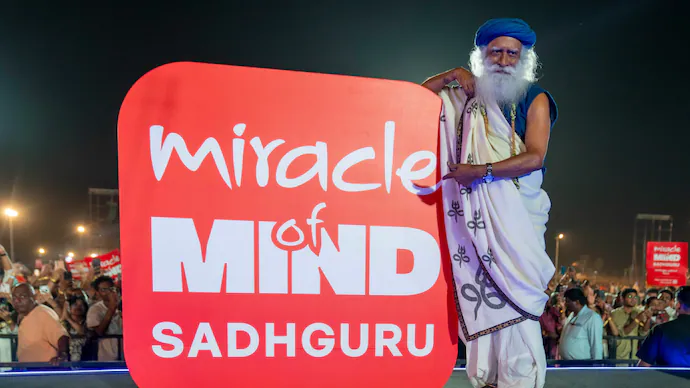
Then came the Miracle of Mind app launch, the most striking event in last year’s celebration. Miracle of Mind is a zero-cost app that includes a 7-minute guided meditation by Sadhguru and his curated insights in the form of audio-video clips. The progress tracking feature and rewards in the app serve to keep you motivated. With consistent practice of the meditation provided in this app, one can seek relief from stress, exercise mental control, and achieve peace and joy.
In less than 15 hours, Miracle of Mind hit 1 million downloads—a truly astonishing feat!
Download App using this link.
Music & Dance
The app launch was followed by captivating performances, including Kalaripayattu, classical singing, and Bharatanatyam by Project Samskriti. The performances were filled with grace and devotion, with Sandeep Narayan leading the classical singing and Radhe Jaggi choreographing the Bharatanatyam for the students of Project Samskriti.
Mahamantra Initiation
The highlight of last year’s MahaShivRatri celebration at IYC was the Midnight Mahamantra initiation by Sadhguru. Most of us know about the importance of chanting Aum Namah Shivaya, but not many of us know that it has to be chanted in a particular way and its maximum benefits can be reaped only when one is initiated into it by a guru.
A highlight of last year’s Mahashivratri program was Sadhguru personally initiating millions of seekers and devotees into the Mahamantra. Devotees not only received the initiation but also learned the correct pronunciation and rhythm for chanting. This sacred process took place around midnight, making it a deeply significant moment of the night.
Adiyogi Maha Arati & Divyadarshanam
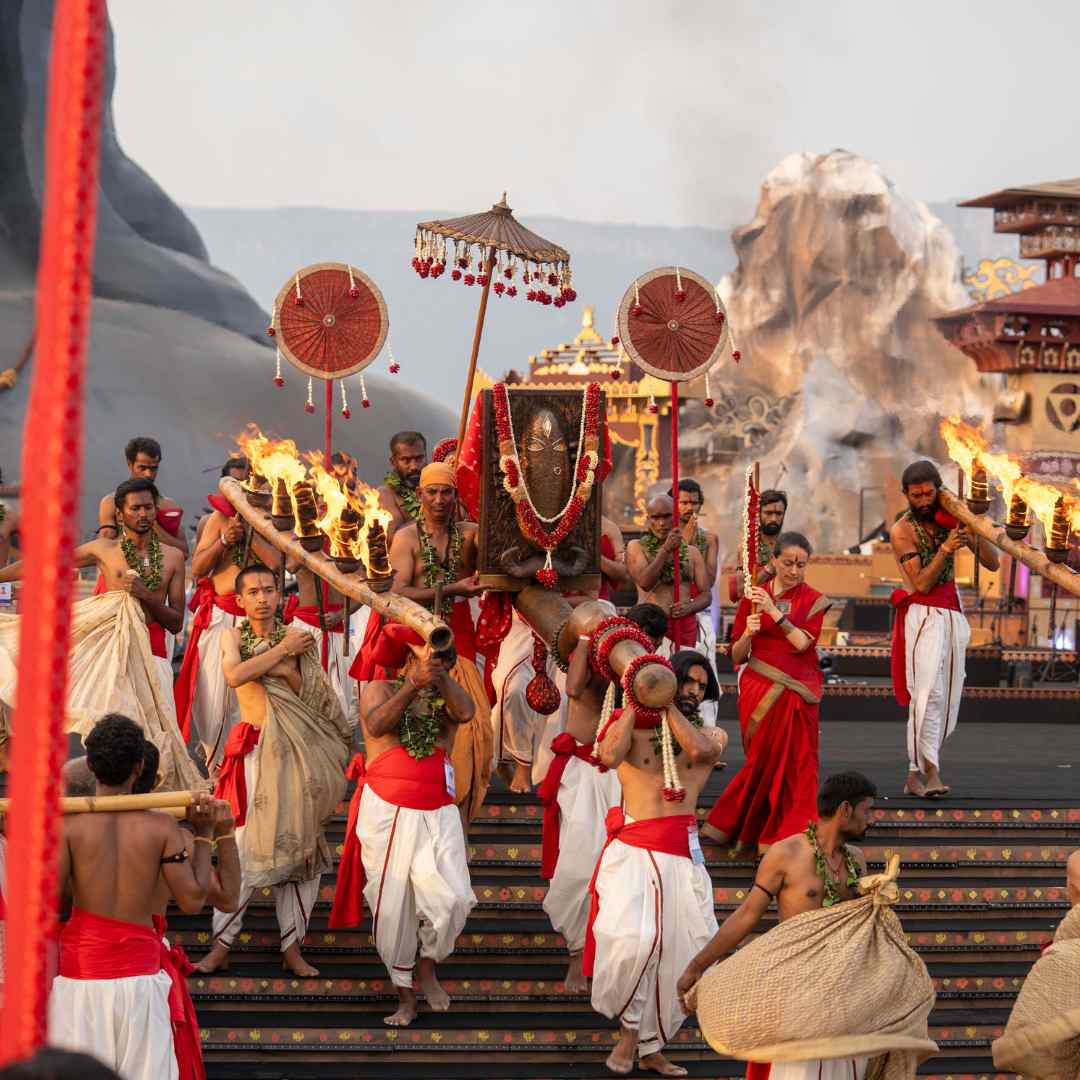
Next was the Adiyogi Maha Arati that featured melodic vocals and an exhilarating fire dance performance. The Adiyogi Divyadarshanam followed, featuring a stunning light and sound show that brought Adiyogi’s story to life through Sadhguru’s powerful narration. This 14-minute visual spectacle, filled with grandeur and beauty, continues to captivate audiences every single time.
Questions from Viewers
Later, Sadhguru answered several questions from viewers watching this celebration online. Individuals from different parts of the world asked him about various aspects of spirituality, yoga and overall wellness.
Kumbh Teertham
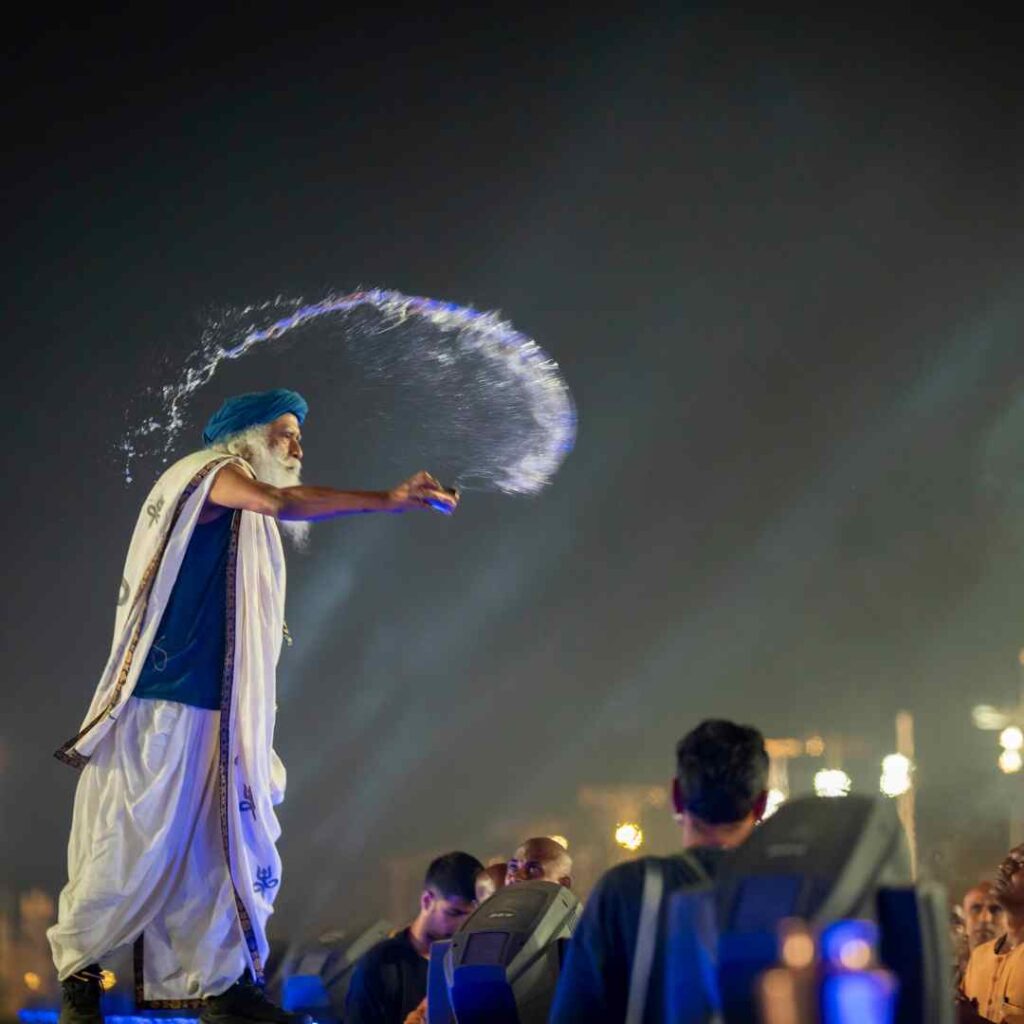
Around that time, Sadhguru blessed the audience by sprinkling sacred Kumbh water, allowing those who couldn’t attend the Maha Kumbh to receive the grace of the holy rivers.
Musical Performances
The musical performances of the Mahashivratri celebration at IYC last year featured famed artists:
- The Indian musical duo Ajay Atul amused the audiences with brilliant renditions of some of their popular songs like Malhar Wari and Gananayaka followed by a Gondhal.
- The India rapper, lyricist and hip-hop musician Paradox mesmerized the listeners with his songs like Bhola Mere and two fresh compositions.
- Cass Mae (real name: Cassandra Mae Spittmann) is a German singer who is blind since birth. She started as a drummer in childhood and has appeared on many TV and radio shows and recently rose to fame due to her rendition of ‘Ram Ayenge‘ after the construction of Ram Mandir in Ayodhya. At the Mahashivratri event at IYC in 2025, millions were spellbound by her performance. She sang Shiv Kailashonke Vasi, He Bhola Shankara (Marathi) and Shiv Tandava stotram, along with some other songs.
- Audience swayed to the foot-tapping musical performance by Sandeep Narayan, Ram Miriyala, Prithvi Gandharva and Ankita Joshi on the vocals and some brilliant musicians whose performances blended beautifully with the singers.
Devotional singer Muktidan Gadhvi, Kannada singer Shubha Raghavendra, and ‘Sound of Isha’ artists like Meenal Jain, Nihar Shembekar, and Swagat Rathod delighted the audience with their captivating performances.
Shambho Chanting
This took place at the Brahma Muhurtam, and the attendees basked in the sacred and spiritual ambience created thus.
Ways in Which Millions Attended the Event
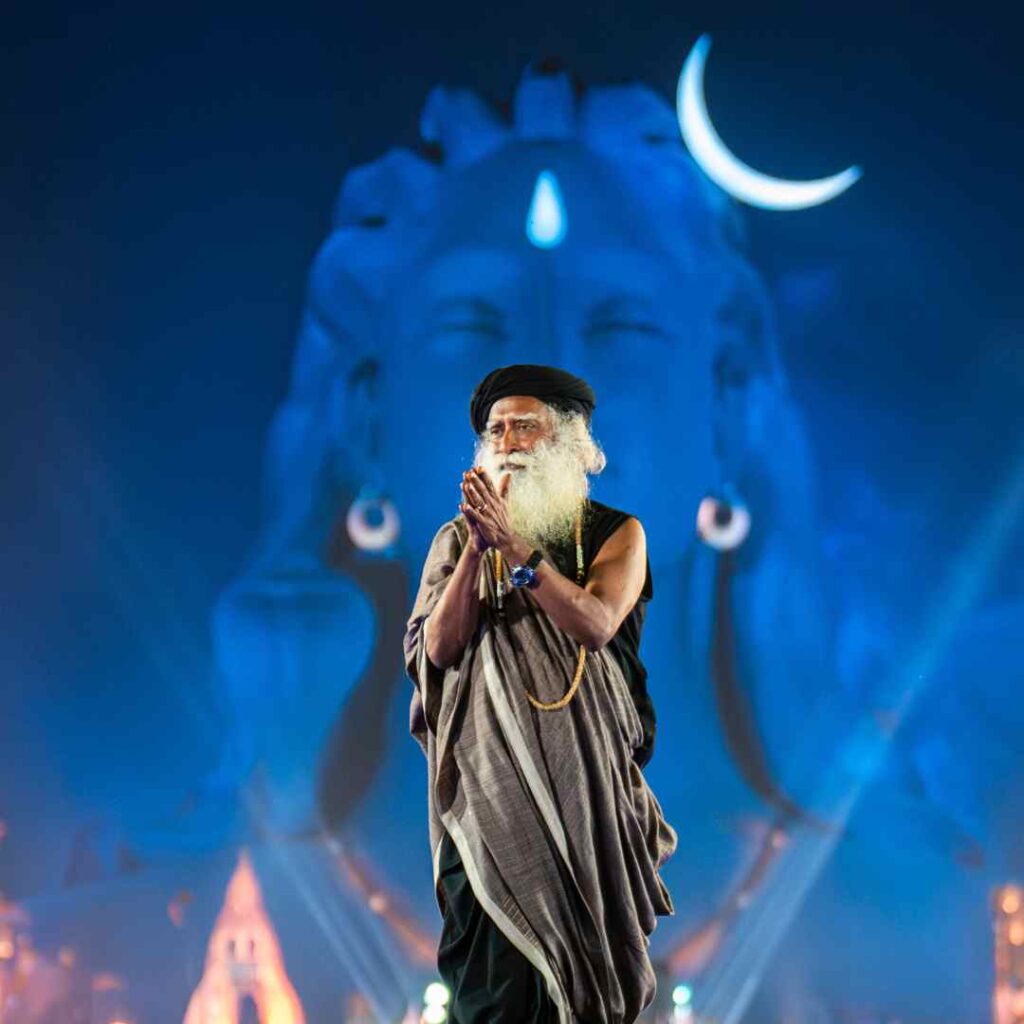
The Mahashivratri program at Isha Yoga Center, Coimbatore, welcomed devotees to experience the celebration in person. For those unable to attend, the grand event was streamed live on Isha’s official website and social media handles, allowing people worldwide to participate. Additionally, more than 100 TV channels, including Zee TV, ABP News, and several regional language channels, broadcasted the event, bringing the festivities to millions of homes.
Last year, instead of a closing message, Sadhguru concluded the event with the powerful chant of ‘Shiva Shambho.’ Unlike an ending speech, this simple yet profound chant is known to invoke Shiva’s presence and brings stillness. Perhaps, the spiritual energy of the night was meant to linger in the minds of everyone present.
By choosing this chant over a speech, Sadhguru may have intended to convey that after all the words, sound and music, what remains is silence. After experiencing everything, what is left to experience is nothingness — and Mahashivratri is the time to connect with this nothingness, which is Shiva. This magnificent night at IYC indeed turned out to be like the one Sadhguru had described earlier, a night of not just wakefulness but of awakening!
The post Revisiting Mahashivratri 2025 Celebration at Isha Yoga Center (Throwback) appeared first on Stillchemy.
]]>The post 108 Names of Lord Shiva With Meanings – Shiva Ashtothram appeared first on Stillchemy.
]]>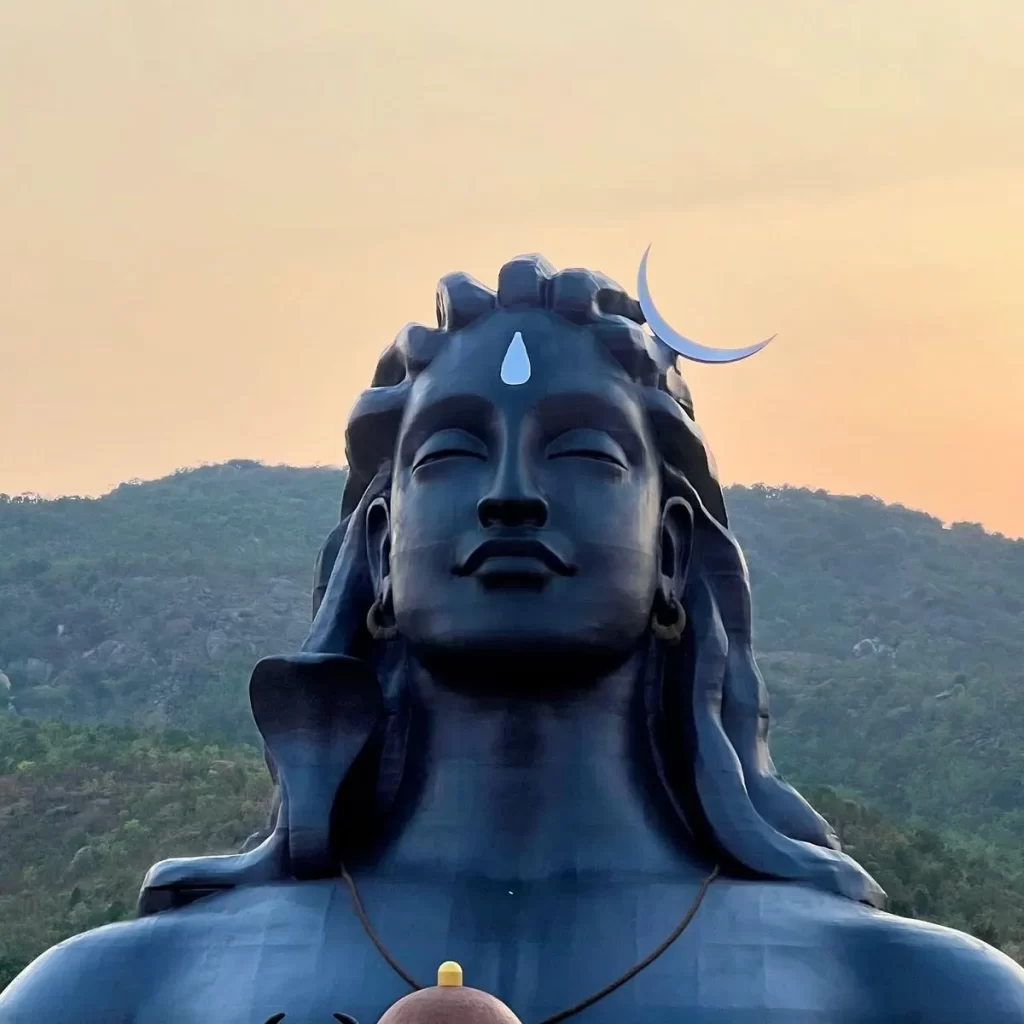
Here we give you the 108 names of Lord Shiva with their meanings. Some of Lord Shiva’s names give an insight into his nature, some describe his appearance, while others honour his qualities and deeds.
108 Names of Lord Shiva In English and Their Meanings
1. Shiva: Pure
2. Maheshwara: Lord of Gods
3. Shambhava: One who gives prosperity
4. Pinakin: One who has a bow in his hand
5. Shashishekhara: One who wears the crescent moon in his hair
6. Vamadeva: One who is pleasing and auspicious
7. Virupaksha: Lord Shiva with oblique eyes
8. Kapardi: Lord Shiva with matted hair
9. Nila-lohita: One with red and blue colour
10. Shankara: One who gives joy and prosperity
11. Shulapani: One who carries a trident
12. Khatvangi: One who carries a knurled club
13. Vishnuvallabha: One who is dear to Lord Vishnu
14. Shipivishta: One who emits rays of light
15. Ambikanath: Consort of Ambika
16. Shrikantha: One with a glorious neck
17. Bhaktavatsala: One who is inclined towards his devotees
18. Bhava: The God who is existence itself
19. Sharva: Remover of troubles
20. Trilokesha: Lord of three worlds
21. Shitikantha: One with a white neck
22. Shivapriya: Beloved of Parvati
23. Ugra: One with a fierce nature
24. Kapali: One who wears a necklace of skulls
25. Kamaree: Enemy of Kamadev
26. Andhakarsurasudan: One who killed the demon Andhaka
27. Gangadhar: One who holds the Ganges river in his hair
28. Lalataksha: One who has an eye in his forehead
29. Kalakala: One who is the death of Deaths
30. Krupanidhi: God who is the treasure of compassion
31. Bhima: One who has a fearful form
32. Parashuhasta: One who holds an axe in his hands
33. Mrugapani: One who has a deer in his hands
34. Jatadhara: One who keeps a tress
35. Kailasvasi: One who is native to Kailash
36. Kavachi: God with an armour
37. Kathor: God with a strong body
38. Tripurantak: God who killed Tripurasura
39. Vrishanka: One who has a flag with a symbol of a bull
40. Vrushabharudha: One who rides a bull
41. Bhasmodhulitavigraha: One who applies ashes all over his body
42. Samapriya: One who loves with equality
43. Swaramayi: God who lives in all seven notes
44. Trayimurti: One who possesses veda form
45. Anishwara: One who does not have any Lord
46. Sarvadnya: One who knows everything
47. Paramatma: Everyone’s own soul
48. Somasuryagnilochan: One who has eyes in the form of sun, moon and fire
49. Havi: One who is wealthy in the form of ahuti
50. Yadnyamaya: Architect of all sacrificial rights
51. Soma: One who includes the form of Uma
52. Panchavaktraya: God of five activities
53. Sadashiva: One who is eternally auspicious
54. Vishveshwara: Lord of the universe
55. Virabhadra: One who is violent yet peaceful
56. Gananath: God of the Ganas
57. Prajapati: Creator of dynasty
58. Hiranyareta: One who emanates golden souls
59. Durdharsha: One who is unconquerable
60. Gireesh: Lord of Mountains
61. Girish: God who sleeps on mountain Kailash
62. Anagha: One who is pure
63. Bhujangbhushana: One who is adorned with golden snakes
64. Bharga: Destroyer of sins
65. Giridhanva: God whose weapon is a mountain
66. Giripriya: Lord who is fond of mountains
67. Krittivasa: God who wears clothes of elephant skin
68. Purarati: Destroyer of the enemy named Pura
69. Bhagvan: God of prosperity
70. Pramathadhip: God served by goblins
71. Mrityunjaya: Victor of death
72. Sookshmatanu: God with a subtle body
73. Jagadvyapi: God who encompasses the world
74. Jagadguru: Guru of all worlds
75. Vyomakesha: One whose hair spreads in the sky
76. Mahasenajanaka: Father of Kartikeya
77. Charuvikrama: Guardian of wandering pilgrims
78. Rudra: One who is saddened by the pain of devotees
79. Bhootapati: Lord of Panchamahabhoota (five elements of nature)
80. Sthaanu: Firm and immovable
81. Ahirbudhnya: One who possesses kundalini
82. Digambara: God whose robes are the cosmos
83. Ashtamurti: Lord who has 8 forms
84. Anekatma: God who has many forms
85. Satvika: Lord of boundless energy
86. Shuddhavigraha: Lord of pure soul
87. Shashvata: Eternal, endless
88. Khandaparashu: Lord who wears the broken axe
89. Aja: One who is boundless
90. Pashvimochana: Lord who releases all fetters
91. Mridaya: Lord who shows mercy
92. Pashupati: Lord of animals
93. Dev: Lord of devas
94. Mahadev: Greatest of the gods
95. Avyaya: One who is never subject to change
96. Hari: Same as Lord Vishnu
97. Bhagnetrabhida: Lord who damaged Bhaga’s eyes
98. Avyakta: Shiva who is unseen
99. Dakshadhvarahara: Destroyer of Daksha’s sacrifice
100. Hara: Lord who dissolves all bondages and sins
101. Pushadantabhita: One who punished Pushan
102. Avyagra: One who is steady and unwavering
103. Sahastraksha: One who has limitless forms
104. Sahastrapaada: One who is standing and walking everywhere (one with a thousand feet)
105. Apavargaprada: One who gives and takes all things
106. Ananta: One who is unending
107. Taraka: Great liberator of mankind
108. Parameshwara: The great god
This was a list of the 108 names of Lord Shiva. You may use them during japa or while performing puja of this deity. Which name would you prefer to call Him?
Whether you find solace in chanting the omnipotent ‘Pashupati,’ connecting with the transcendent ‘Mahadeva,’ or seeking the unwavering presence of ‘Avyaya,’ each name resonates with a unique energy.
Just as the Shiva Purana unfolds the grandeur of 1008 names, in your spiritual journey, perhaps you’ll discover the perfect trio – whispering ‘Hara,’ invoking the liberating essence of ‘Shambho,’ and surrendering to the supreme ‘Adiyogi.” In the realm of devotion, the names are not just syllables; they are pathways to a profound connection with the divine.
Sri Shiva Ashtottara Shatanamavali For Chanting
Reciting the Shiva AshtotTara Shatanamavali, consisting of the 108 names of Lord Shiva, is believed to bestow numerous benefits upon devotees. By fervently chanting these sacred names, individuals can invoke the blessings and protection of Lord Shiva. The practice serves as a potent means to purify the mind, dispel negative energies, and foster spiritual growth.
1. ōṃ śivāya namaḥ
2. ōṃ mahēśvarāya namaḥ
3. ōṃ śambhavē namaḥ
4. ōṃ pinākinē namaḥ
5. ōṃ śaśiśēkharāya namaḥ
6. ōṃ vāmadēvāya namaḥ
7. ōṃ virūpākṣāya namaḥ
8. ōṃ kapardinē namaḥ
9. ōṃ nīlalōhitāya namaḥ
10. ōṃ śaṅkarāya namaḥ
11. ōṃ śūlapāṇayē namaḥ
12. ōṃ khaṭvāṅginē namaḥ
13. ōṃ viṣṇuvallabhāya namaḥ
14. ōṃ śipiviṣṭāya namaḥ
15. ōṃ ambikānāthāya namaḥ
16. ōṃ śrīkaṇṭhāya namaḥ
17. ōṃ bhaktavatsalāya namaḥ
18. ōṃ bhavāya namaḥ
19. ōṃ śarvāya namaḥ
20. ōṃ trilōkēśāya namaḥ
21. ōṃ śitikaṇṭhāya namaḥ
22. ōṃ śivāpriyāya namaḥ
23. ōṃ ugrāya namaḥ
24. ōṃ kapālinē namaḥ
25. ōṃ kāmārayē namaḥ
26. ōṃ andhakāsura sūdanāya namaḥ
27. ōṃ gaṅgādharāya namaḥ
28. ōṃ lalāṭākṣāya namaḥ
29. ōṃ kālakālāya namaḥ
30. ōṃ kṛpānidhayē namaḥ
31. ōṃ bhīmāya namaḥ
32. ōṃ paraśuhastāya namaḥ
33. ōṃ mṛgapāṇayē namaḥ
34. ōṃ jaṭādharāya namaḥ
35. ōṃ kailāsavāsinē namaḥ
36. ōṃ kavachinē namaḥ
37. ōṃ kaṭhōrāya namaḥ
38. ōṃ tripurāntakāya namaḥ
39. ōṃ vṛṣāṅkāya namaḥ
40. ōṃ vṛṣabhārūḍhāya namaḥ
41. ōṃ bhasmōddhūḻita vigrahāya namaḥ
42. ōṃ sāmapriyāya namaḥ
43. ōṃ svaramayāya namaḥ
44. ōṃ trayīmūrtayē namaḥ
45. ōṃ anīśvarāya namaḥ
46. ōṃ sarvajñāya namaḥ
47. ōṃ paramātmanē namaḥ
48. ōṃ sōmasūryāgni lōchanāya namaḥ
49. ōṃ haviṣē namaḥ
50. ōṃ yajñamayāya namaḥ
51. ōṃ sōmāya namaḥ
52. ōṃ pañchavaktrāya namaḥ
53. ōṃ sadāśivāya namaḥ
54. ōṃ viśvēśvarāya namaḥ
55. ōṃ vīrabhadrāya namaḥ
56. ōṃ gaṇanāthāya namaḥ
57. ōṃ prajāpatayē namaḥ
58. ōṃ hiraṇyarētasē namaḥ
59. ōṃ durdharṣāya namaḥ
60. ōṃ girīśāya namaḥ
61. ōṃ giriśāya namaḥ
62. ōṃ anaghāya namaḥ
63. ōṃ bhujaṅga bhūṣaṇāya namaḥ
64. ōṃ bhargāya namaḥ
65. ōṃ giridhanvanē namaḥ
66. ōṃ giripriyāya namaḥ
67. ōṃ kṛttivāsasē namaḥ
68. ōṃ purārātayē namaḥ
69. ōṃ bhagavatē namaḥ
70. ōṃ pramathādhipāya namaḥ
71. ōṃ mṛtyuñjayāya namaḥ
72. ōṃ sūkṣmatanavē namaḥ
73. ōṃ jagadvyāpinē namaḥ
74. ōṃ jagadguravē namaḥ
75. ōṃ vyōmakēśāya namaḥ
76. ōṃ mahāsēna janakāya namaḥ
77. ōṃ chāruvikramāya namaḥ
78. ōṃ rudrāya namaḥ
79. ōṃ bhūtapatayē namaḥ
80. ōṃ sthāṇavē namaḥ
81. ōṃ ahirbudhnyāya namaḥ
82. ōṃ digambarāya namaḥ
83. ōṃ aṣṭamūrtayē namaḥ
84. ōṃ anēkātmanē namaḥ
85. ōṃ svāttvikāya namaḥ
86. ōṃ śuddhavigrahāya namaḥ
87. ōṃ śāśvatāya namaḥ
88. ōṃ khaṇḍaparaśavē namaḥ
89. ōṃ ajāya namaḥ
90. ōṃ pāśavimōchakāya namaḥ
91. ōṃ mṛḍāya namaḥ
92. ōṃ paśupatayē namaḥ
93. ōṃ dēvāya namaḥ
94. ōṃ mahādēvāya namaḥ
95. ōṃ avyayāya namaḥ
96. ōṃ harayē namaḥ
97. ōṃ pūṣadantabhidē namaḥ
98. ōṃ avyagrāya namaḥ
99. ōṃ dakṣādhvaraharāya namaḥ
100. ōṃ harāya namaḥ
101. ōṃ bhaganētrabhidē namaḥ
102. ōṃ avyaktāya namaḥ
103. ōṃ sahasrākṣāya namaḥ
104. ōṃ sahasrapādē namaḥ
105. ōṃ apavargapradāya namaḥ
106. ōṃ anantāya namaḥ
107. ōṃ tārakāya namaḥ
108. ōṃ paramēśvarāya namaḥ
Please click to download the printable PDF version of the Shiva Ashtottara Shatanamavali.
The post 108 Names of Lord Shiva With Meanings – Shiva Ashtothram appeared first on Stillchemy.
]]>The post Exploring Adiyogi Shiva Bangalore: Your Complete Visitor Guide & Travel Tips appeared first on Stillchemy.
]]>“Sadhguru Sannidhi” is more than just a spiritual facility – it’s the heart of the Isha Foundation in Bangalore. Surrounded by picturesque hills, this sanctuary offers a serene escape that enchants nature lovers and spiritual seekers alike.
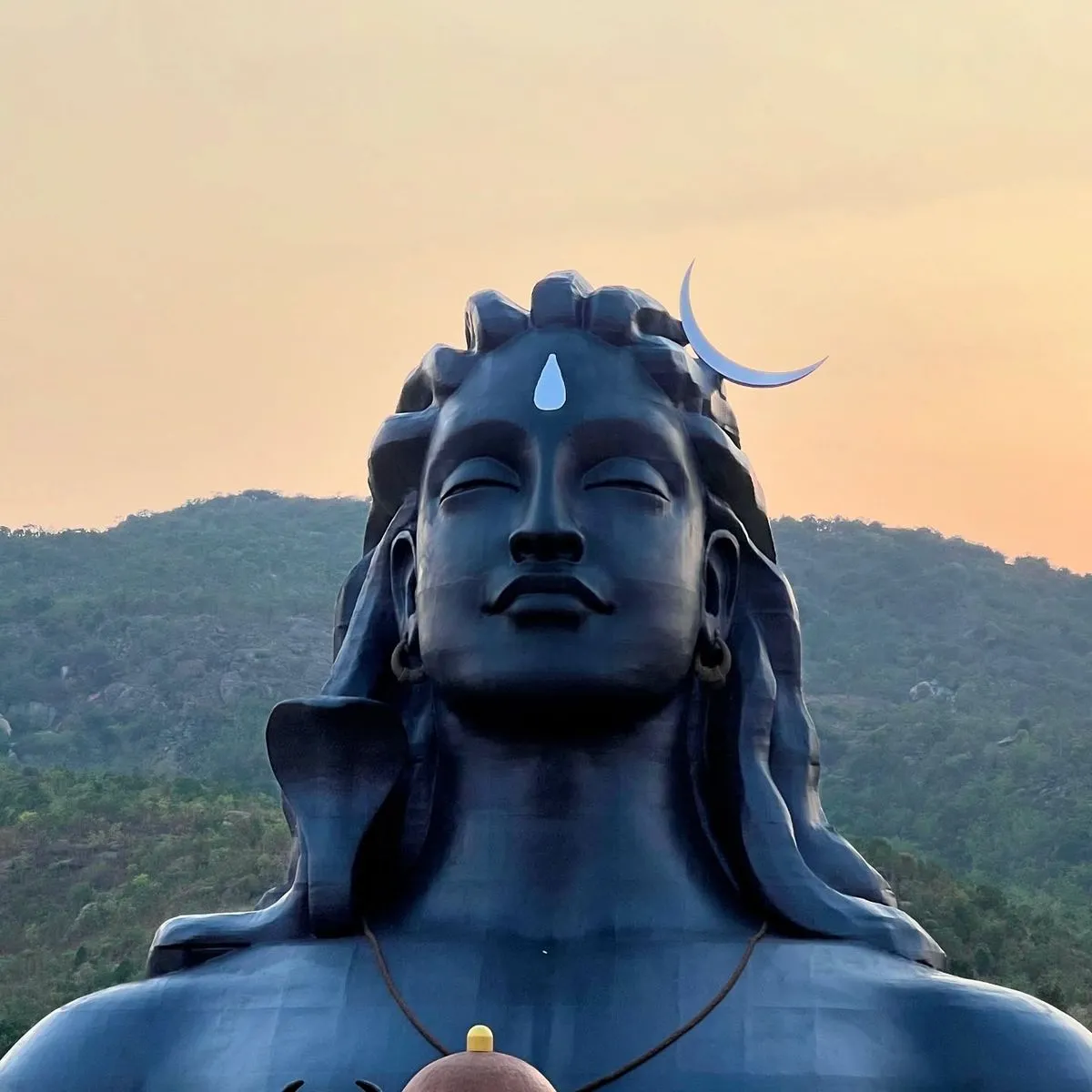
At Sadhguru Sannidhi, you’ll find revered spaces like the iconic 112-ft. Adiyogi, the Yogeshwara Linga, the Naga shrine, Trishul, and Nandi, each offering a diverse array of transformative experiences for your immediate and ultimate wellbeing.
Looking forward, Sadhguru Sannidhi is set to introduce more sacred spaces, such as the Navagraha shrines, Linga Bhairavi, and the Teerthakunds, in addition to essential ventures like the Isha Leadership Academy, Isha Home School, Isha Samskriti, and Isha Health Solutions.
The ambitious expansion also encompasses the Anubhava Mandapa, a grand program hall capable of hosting 6000 participants, along with residential facilities and more.
An inclusive ethos prevails at this center, committed to extending yoga and meditation programs to all, without bias towards caste, creed, gender, or religious affiliations. The Sadhguru Sannidhi is a testament to its dedication to holistic wellbeing and spiritual growth.
Adiyogi Shiva Bangalore – Location and Accessibility
Sadhguru Sannidhi in Bengaluru is conveniently situated near Nandi Hills in the Chikkaballapura district, just 65 kilometers north of the city. The center’s accessibility is further enhanced by its proximity to transportation hubs. It’s only a 60-minute drive (45 km) from Kempegowda International Airport and an 80-minute drive (63 km) from Cantonment Railway Station in Bengaluru.
Transportation Options to Sadhguru Sannidhi
Taxis offer a convenient mode of travel from Bengaluru to Sadhguru Sannidhi, ensuring a hassle-free journey. Bengaluru is connected to Chikkaballapura town by regular bus services that also extend to Sannidhi, offering an affordable transportation option.
Adiyogi Shiva Statue in Bengaluru
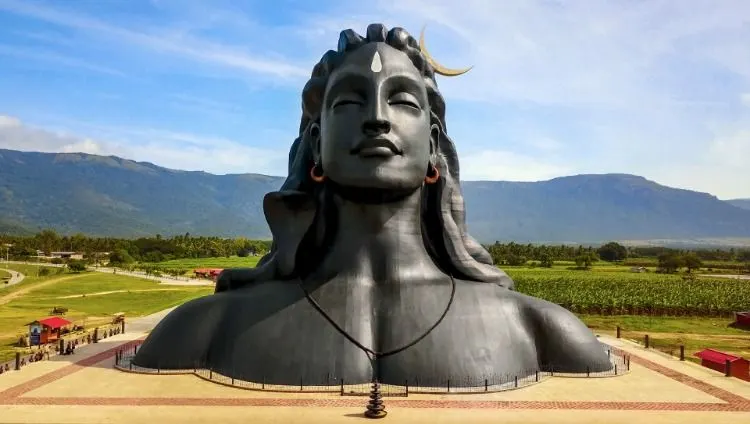
The impressive “Adiyogi” bust sculpture, unveiled on January 15, 2023, at Sadhguru Sannidhi Bengaluru, stands at a towering height of 112 feet. Adiyogi was conceived as a timeless symbol, urging all individuals to strive for liberation. Understanding the transformative power of form, Sadhguru meticulously designed Adiyogi’s image to radiate three qualities: exuberance, stillness, and intoxication.
More than 15,000 years ago, Adiyogi, the first Yogi, shared the science of yoga with his followers, offering 112 paths to rise above human limitations and realize their highest potential. Adiyogi’s teachings highlight that individual transformation paves the way for global transformation.
The Yogeshwar Linga, consecrated by Sadhguru near Adiyogi, embodies five major chakras in the human system, transforming Adiyogi into a living entity.
The statue’s spiritual significance is further enriched by its role as the second Adiyogi Shiva statue by Isha Foundation, following the one in Coimbatore, Tamil Nadu. Sadhguru explains that even a brief contemplation of Adiyogi’s image leaves a lasting impression in one’s mind, inspiring them to pursue ultimate wellbeing, thanks to its precise geometry.
Naga shrine at Sadhguru Sannidhi
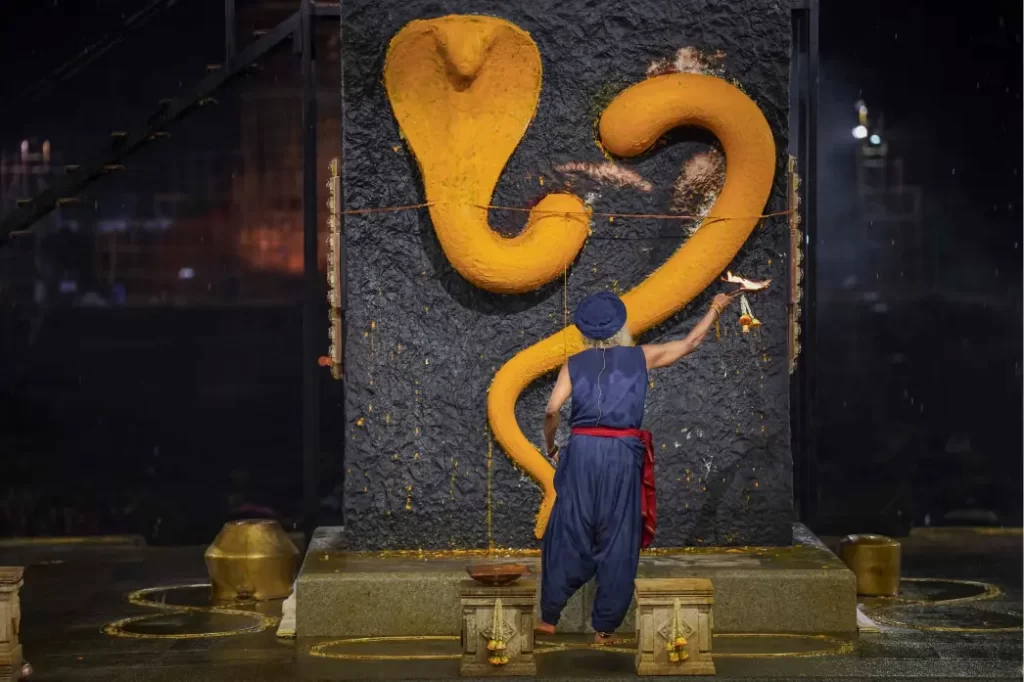
The Naga shrine at Sadhguru Sannidhi in Bengaluru holds immense significance, as it marks the first Naga consecration in the world in over 800 years. This consecration involved the use of a Kaalsarpa Yantra, and the Naga is now the guardian (Kshetrapala) of this sacred space. Sadhguru emphasized that specific Naga Sadhanas will be performed here to help individuals overcome life’s obstacles. This shrine in Chikkaballapur, Bangalore, serves as a source of grace, offering the potential to unlock mystical dimensions and remove hurdles from one’s life.
Offerings At The Bengaluru Center
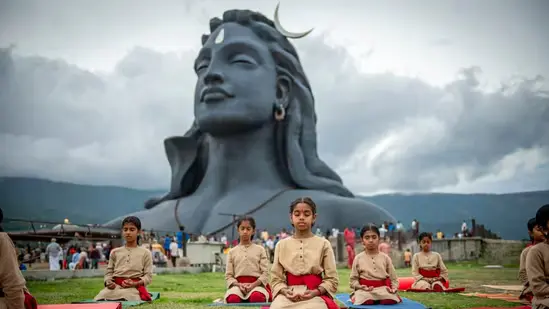
Yoga Sandhya: A transformative 30-minute program by Sadhguru, Yoga Sandhya fosters family wellbeing and spiritual growth, helping overcome energetic obstacles.
Samarpane: A coconut and sacred items offering made to Yogeshwar Linga for individual or family wellbeing, requiring two participants.
Jala Offering: Devotees connect with Yogeshwar Linga’s energies by offering water and neem leaves.
Mala Arpane: Fresh flower garlands are daily offerings to the Naga, expressing gratitude or honoring special occasions.
Sarpa Seva: A powerful process involving the 112 carved serpents on the Naga shrine, bringing health, well-being, relief from ailments, mental health support, and mystical empowerment, while addressing Naga and Kula Doshas.
Dosha Nivarana Arpane: Devotees can offer flowers, neem leaves, and red earth to seek well-being by appeasing the Naga.
Dhoop Arpane: Present an incense offering (dhoop) to the Naga for your personal wellness.
Taila Arpane: The consecrated 21-ft Nandi in all his grandeur – an inspiration for millions. This new addition at Sadhguru Sannidhi Bengaluru has enhanced the experience of thousands of devotees who visit everyday.
On every Amavasya, you can participate in ‘Taila Arpane’ which is an offering of oil to Nandi at Sadhguru Sannidhi, Bengaluru. Open to all! No prior registration required
Helpful Tips for Visitors
Sadhguru Sannidhi is open daily from 6 am to 8 pm, welcoming people from all backgrounds.
The Naga premises welcome visitors daily from 6:00 AM to 8:00 PM.
One can experience the Naga Arati ritual at 6:20 AM, 12:20 PM, and 6:20 PM.
For those planning a visit, it’s recommended to wear comfortable walking shoes and carry a hat, especially during afternoons when it can get hot, particularly in summer.
While the place boasts good restrooms, it’s important to note that the center might not be entirely friendly for the elderly or physically challenged individuals at the moment. Elderly visitors may need to stay at Naga Mandapa due to this limitation.
Weekend visits should be avoided if possible, as both the Adiyogi Shiva statue and the surrounding areas tend to get crowded.
Adiyogi Shiva – Exact Address With Google Map
 Isha Foundation – Bengaluru
 Sadhguru Sannidhi,
Kasab Hobli, Avalagurki,
Chikkaballapura, Karnataka, 562101
The Isha Foundation Center in Chikkaballapur, particularly the Adiyogi Shiva statue, offers a serene and spiritually enriching experience. With its accessible location and various offerings, it’s a place worth exploring, though visitors should keep in mind the mentioned tips to enhance their visit.
Explore the bestselling books by Sadhguru: “Adiyogi: The Source of Yoga,” “Inner Engineering: A Yogi’s Guide to Joy,” and “KARMA: A Yogi’s Guide to Crafting Your Destiny.”
The post Exploring Adiyogi Shiva Bangalore: Your Complete Visitor Guide & Travel Tips appeared first on Stillchemy.
]]>The post 14 Facts About the 112-feet Adiyogi Shiva Statue that Will Leave You in Awe! appeared first on Stillchemy.
]]>“Adiyogi is here to liberate you from disease, discomfort, and poverty – above all, from the very process of life and death.”
~ SadhguruAdiyogi, also known as Shiva, is the first yogi and originator of yoga. After attaining enlightenment, he danced ecstatically in the Himalayas, drawing the attention of a select few individuals who were deeply inspired and yearned to learn from him.
After years of preparation, Shiva became the first Guru on Guru Purnima and transmitted the yogic science to the 7 chosen individuals, known as the Saptarishis. These sages became enlightened and spread the knowledge of yoga worldwide.
Adiyogi’s teachings emphasize transcending physical limitations, utilizing the mind’s potential, and evolving beyond present boundaries through inner work.
Adiyogi Shiva Statue Facts
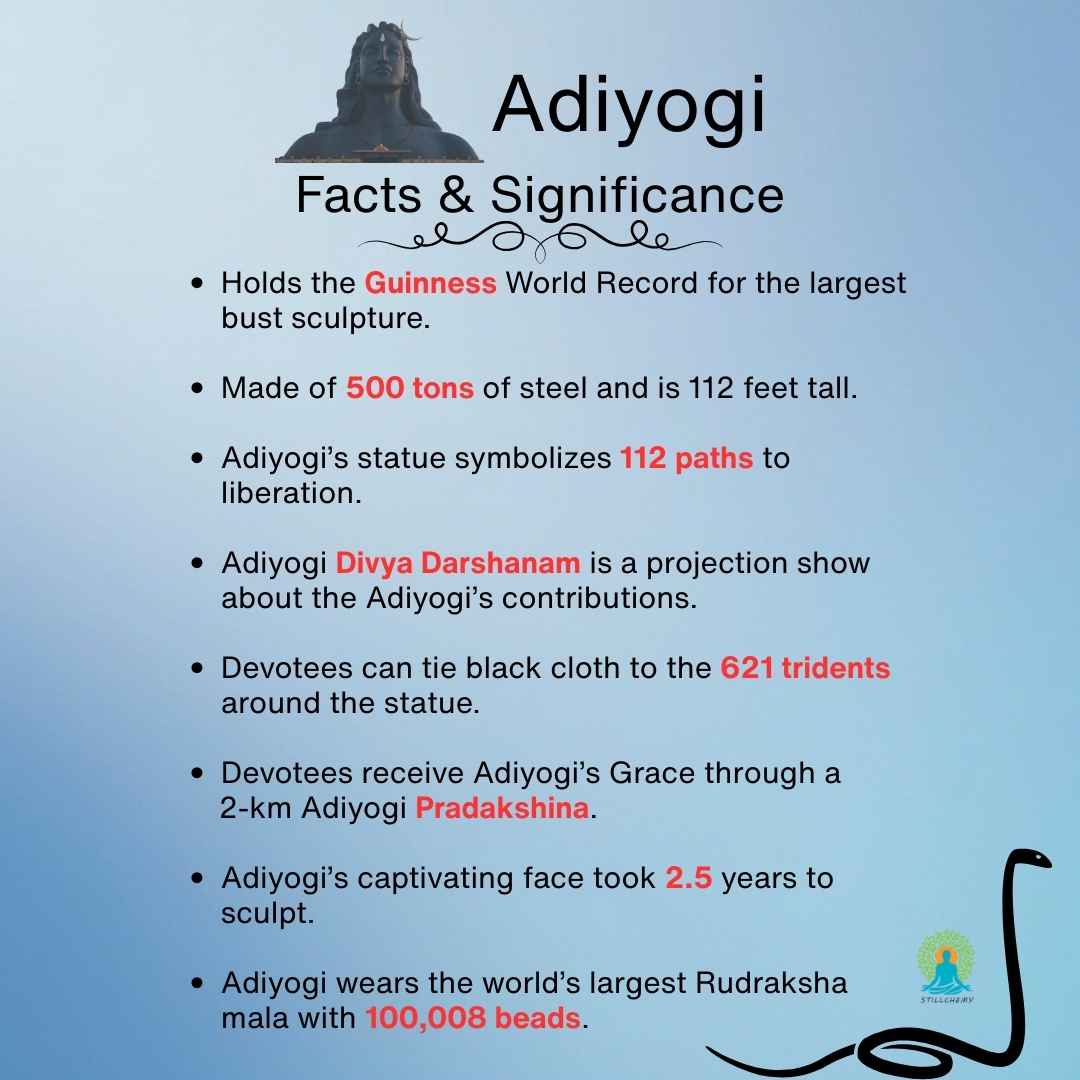
#Fact 1 – Why is Adiyogi’s statue 112 feet tall?
The number 112 holds significant spiritual symbolism. It represents the 112 paths to achieve moksha or liberation, corresponding to the 112 chakras in the human system. Adiyogi graciously gifted humanity with 112 transformative methods, empowering individuals to transcend their limitations and awaken to their ultimate nature
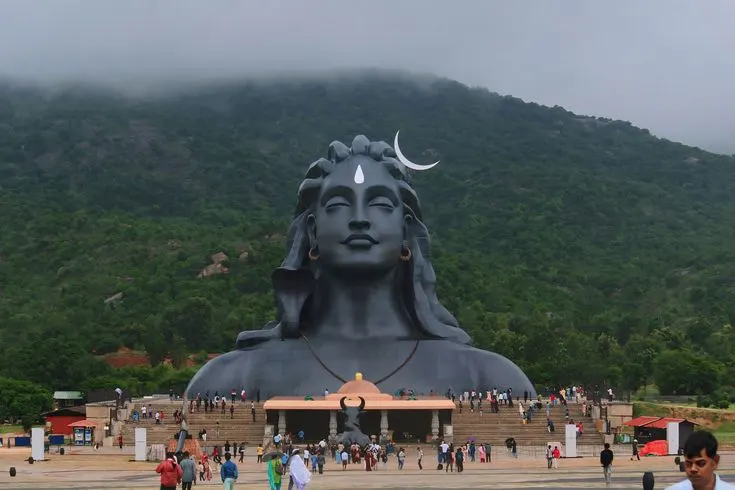
2. The Adiyogi Shiva Statue, created by the ISHA Foundation in Coimbatore, Tamil Nadu, India, holds the prestigious Guinness World Record for being the largest bust sculpture.
3. This awe-inspiring statue stands an impressive 112 feet tall and is crafted from a staggering 500 tons of steel. With dimensions of 34.24 meters in height, 24.99 meters in width, and 44.90 meters in length, its monumental presence captivates and inspires all who lay their eyes upon it.
4. The Yogeshwar Linga holds immense spiritual significance, offering a profound connection to higher dimensions. By offering water and neem leaves to this sacred linga, individuals can tap into its energies. By experiencing the Grace of Adiyogi through the Yogeshwar Linga, one’s life can truly blossom, enabling a joyful and inclusive existence.
5. Adiyogi Divya Darshanam is a captivating 14-minute projection show that happens daily at the Isha Yoga Center. This mesmerizing light and sound show is projected onto the Adiyogi statue, showcasing the story of Adiyogi, the first yogi, and his contributions to humanity. With a compelling narration by Sadhguru, the show attracts thousands of visitors to the Yoga Center each day.

6. Devotees can offer a symbolic vastram by tying a black cloth to any of the 621 tridents encircling the Adiyogi statue.
7. Adiyogi Pradakshina is a 2 km circumambulation path designed by Sadhguru, allowing devotees to receive Adiyogi’s Grace. By embarking on this clockwise walk around Dhyanalinga and Adiyogi, individuals open themselves to the powerful energy and strive towards ultimate liberation. It can be performed a specific number of times within a year, chosen by the individual, such as 1, 3, 5, 7, 9, 12, and more, based on their spiritual aspirations.
8. Sounds of Isha offers a mesmerizing musical performance during the Purnima Music Concert. The concert takes place every full moon night from 10:30 PM to 11:30 PM
9. On every new moon day, traditional offerings, music, dance, and the distribution of prasadam (blessed food) take place at the Yogeshwar Linga.
10. The captivating face of Adiyogi, reflecting Sadhguru’s vision, took two and a half years and underwent numerous design iterations before completion.
11. The brass floor tiles surrounding Yogeshwar Linga showcase intricate carvings of Adiyogi’s treasured symbols, including earrings, a crescent moon, a rudraksha bead, a neem leaf, a damaru, a bow, an axe, and a bell.
12. The Yogeshwar Linga features the chant “Shambho” inscribed in 4 languages – Tamil, Telugu, Kannada, and Malayalam, making it a “multilingual” linga.
13. Consecrated black stone panels within the sacred space surrounding the Yogeshwar Linga display sculptures of the revered Saptarishis, untouched by hand.
14. Adiyogi wears the world’s largest Rudraksha mala, consisting of 100,008 beads. These beads absorb divine energy for twelve months and are later offered as prasadam to devotees on Mahashivratri.

A second 112-feet Adiyogi statue was inaugurated at Sadhguru Sannidhi in Bengaluru, featuring the iconic face of Adiyogi and radiating a profound spiritual presence. This magnificent statue serves as a symbol of ultimate liberation and transformation, capable of inspiring and touching the lives of millions around the world.
Explore the bestselling books by Sadhguru: “Adiyogi: The Source of Yoga,” “Inner Engineering: A Yogi’s Guide to Joy,” and “KARMA: A Yogi’s Guide to Crafting Your Destiny.”
The post 14 Facts About the 112-feet Adiyogi Shiva Statue that Will Leave You in Awe! appeared first on Stillchemy.
]]>The post Why Do We Offer Bilva Leaves to Lord Shiva? appeared first on Stillchemy.
]]>
Generations have been following what ancient texts state about the link between Bilva leaves and Lord Shiva. Due to the symbolism of these leaves and their significance in mythology, devotees have been worshipping Lord Shiva with Bilva leaves since ages. Even today, the worship or puja of Lord Shiva is incomplete without Bel leaves. On occasions like Mahashivratri and religious ceremonies where Lord Shiva is worshipped, it is customary to include Bilva leaves as offerings to the Lord.
Mystic Wisdom

However, why would one plant be more sacred than the other, you may ask, or why Bilva leaves are dear to Lord Shiva? Sadhguru has an apt answer. He says that the true meaning of Bel leaves being Shiva’s favourite is that their reverberance is closest to what we refer to as Shiva. He further states that ideally, when you offer a Bilva leaf to Lord Shiva, you should take it with you after offering, as Lord Shiva’s energy absorbed by the leaf, will thus, stay with you. This energy will help you achieve wellness and peace.
Significance of Offering Bilva Leaves to Lord Shiva
The Bel plant also has a high medicinal value. Its leaves, fruit and bark find applications in Ayurveda. Due to its health benefits and spiritual importance, having a Bel plant is considered auspicious and Hindus commonly use the Bilva leaves in their daily puja, but why do we offer Bilva leaves to Lord Shiva? Find out now.
According to certain Hindu scriptures, the Bel tree was created from the sweat drops of Goddess Parvati. Skanda Purana says that drops of sweat fell from Goddess Parvati’s forehead, and from them, emerged a tree, which the Goddess named as Bilva. It is believed that she resides in the tree in all her forms and that every part of the Bel tree contains Goddess Parvati. So, the leaves of Bilva tree are considered ideal for worshipping Lord Shiva.
In the Shiva Purana, certain things that please Lord Shiva have been stated, and one of them is Bilva leaves.
According to Shiva Purana, the Bilva tree is a manifestation of Lord Shiva and that one who worships the Shiva Linga sitting under a Bilva tree can attain the state of Lord Shiva.
The trifoliate structure of Bilva leaves is said to represent the trinity of creation, preservation and destruction, which is why the Bel leaves are offered to Lord Shiva.
The trifoliate structure is said to also denote the three divine eyes of Lord Shiva and the trident.
The three-leaf structure signifies the three syllables of AUM, the sound of the Universe’s creation and that which resonates with Lord Shiva.
Bilva leaves are said to be capable of absorbing Shiva’s energy and it is believed that one who offers these leaves to Lord Shiva, can gain some of his energy.
As per the Puranas, if Bilva leaves are offered to Lord Shiva during his worship, he grants all our wishes.
Lord Shiva is depicted as angry on those who pose a threat to the good. Devotees offer Bilva leaves to Lord Shiva with the intent to calm him. Bel leaves have a cooling effect on the body, and hence, they are believed to be effective in soothing the angry Shiva. Scientifically speaking, Bel patra leaves have a cooling effect, and are used to cool the Agni tattva of Lord Shiva.
The Tale of the Hunter and the Bel Tree
A popular story about offering Bilva leaves to Lord Shiva goes like this. Once a hunter was wandering in a forest. He got frightened of tigers and other wild animals, and for safety, he climbed up a Bel tree and spent the night there. To stay awake, he plucked leaves of the tree and dropped them down. Incidentally, there was a Shiv Linga below that tree and the leaves were falling on it. The hunter remembered Lord Shiva and chanted his mantras through the night. Lord Shiva, pleased with his devotion, bestowed mercy upon him.
The post Why Do We Offer Bilva Leaves to Lord Shiva? appeared first on Stillchemy.
]]>The post Adiyogi Shiva, Coimbatore Visit: Essential Planning Tips and FAQs appeared first on Stillchemy.
]]>
Who is Adiyogi?
Adiyogi, also known as the ‘First Yogi,’ holds a significant role in the ancient yogic tradition. He introduced 112 methods for individuals to tap into their true nature and experience profound transformation. These techniques are accessible to all, regardless of their background or faith, enabling anyone to embark on a path of increased joy, love and inner peace.
Adiyogi is revered as the first Guru who transmitted the wisdom of yoga to his seven disciples, the Saptarishis. His teachings have sparked inspiration in countless individuals, motivating them to strive to reach their highest potential.
Discovering Adiyogi Shiva Statues: Where and How Many?
- The primary Adiyogi Shiva Statue is located in the Isha Foundation complex in Coimbatore, Tamil Nadu.
- A second one in India, magnificent, 112-feet Adiyogi Shiva statue is located at Sadhguru Sannidhi in Bengaluru.
- Additionally, a 21-foot tall Adiyogi statue was unveiled at the Isha Yoga Center in Tennessee, United States.
What Are The Facts About Adiyogi Shiva Statue?
Here are the 14 Adiyogi Facts explained in detail…
What Are the Devotional Activities & Offerings One Can Engage In?
1. Experience the captivating Adiyogi Divya Darshanam, a mesmerizing 14-minute 3D projection show at Isha Yoga Center. Through enchanting light and sound, it unveils the inspiring story of Adiyogi, the first yogi, and his profound contributions to humanity. Narrated by Sadhguru, the show draws thousands of visitors daily. Adiyogi Divya Darshanam is presented daily at 7 pm.

2. Devotees can seek the blessings of Adiyogi by offering a symbolic vastram, tying black cloth to any of the 621 tridents encircling the sacred statue.
3. Devotees can perform circumambulation, known as Adiyogi Pradakshina, around the Adiyogi statue. It is believed to invoke the grace and blessings of Adiyogi. Individuals can choose to perform this powerful ritual a specific number of times within a year, like 1, 3, 5, 7, 9, 12, or more, aligning with their spiritual aspirations.
4. The Yogeshwar Linga receives traditional offerings on new moon days, providing an opportunity for devotees to participate in rituals and deepen their spiritual connection.
5. Sounds of Isha offers a mesmerizing musical performance during the Purnima Music Concert. The concert takes place every full moon night from 10:30 PM to 11:30 PM
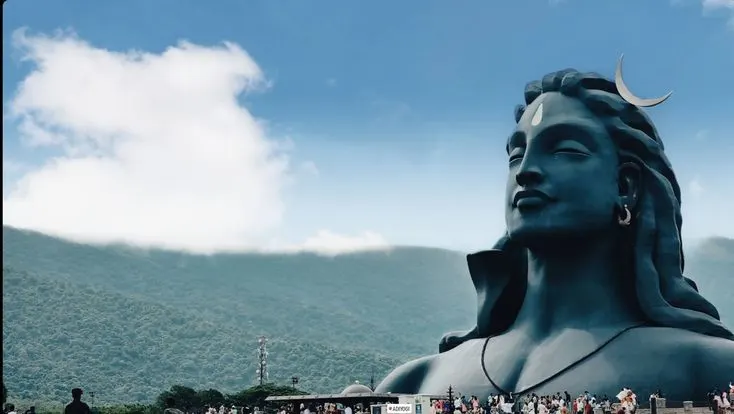
6. Mahashivaratri is a significant festival celebrated at the Isha Yoga Center. During this time, the center conducts special sadhana programs and cultural events, like Yaksha, attracting devotees from around the world.
7. Visitors can buy hay and feed the cows and bullocks in the vicinity of the statue. Feeding cows is not only an act of kindness, but also considered a sacred service to the deity, fostering a profound sense of compassion.
How to Reach Adiyogi?
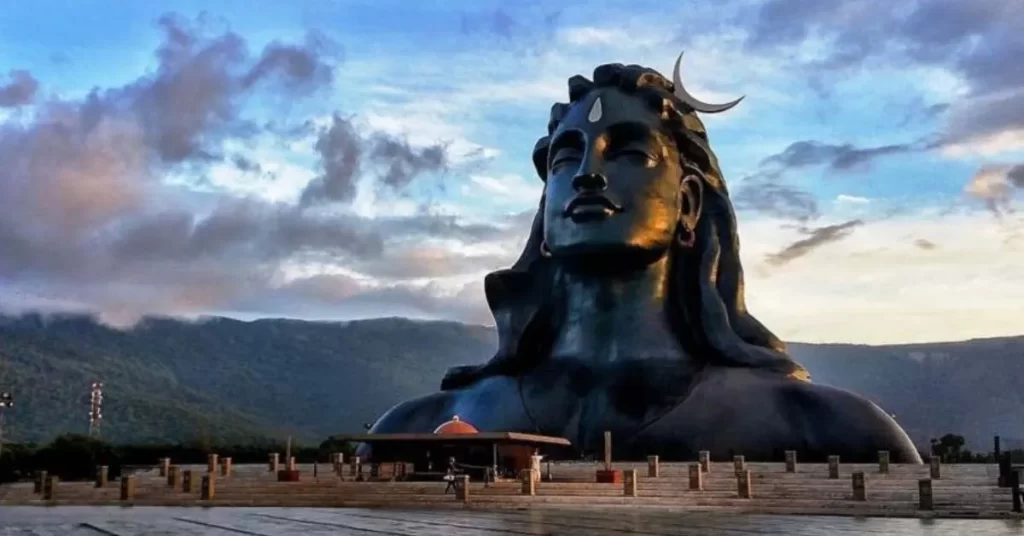
If you prefer public transport, you can take a state bus from Gandhipuram bus stand in Coimbatore. Buses to the Dhyanalinga complex, where the Adiyogi statue is located, depart approximately every 45 minutes. From the Dhyanalinga temple, it is a short 7-minute walk to reach the Adiyogi sculpture. However, if you prefer not to walk, there are modified bullock carts and open rickshaws available to ferry you to Adiyogi.
For faster travel, book a cab or auto-rickshaw through Uber. Opt for time-saving taxis or cost-effective buses based on your choice. For your return journey to the station or airport, the Isha Foundation office can assist you in arranging a cab.
Entry Fees and Timings?
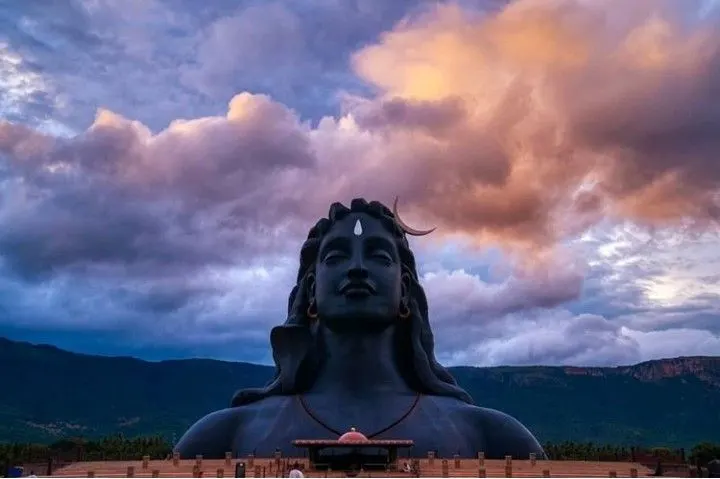
Visiting the Adiyogi Shiva Statue at the Isha Yoga Center in Coimbatore is absolutely free of charge. The complex is open on all days from 6 AM to 8 PM, allowing visitors to explore and experience the serene ambience. Adiyogi Divya Darshanam – Every day at 7 pm.
Can You Stay at Isha Yoga Center?
If you wish to stay at the Isha Yoga Center, you need to send a booking request in advance. You can contact ishastay@ishafoundation.org or call 0422-2515470 / 71 for booking inquiries. The center provides accommodation options for visitors who want to immerse themselves in the spiritual ambience and participate in the various programs and activities.
P.S. Make sure to visit other consecrated spaces at the Isha Yoga Center, including Dhyanalinga, Linga Bhairavi Temple, Chandrakund, Suryakund and Naga Shrine, to experience the serene and calming energy of these sacred places.
Explore the bestselling books by Sadhguru: “Adiyogi: The Source of Yoga,” “Inner Engineering: A Yogi’s Guide to Joy,” and “KARMA: A Yogi’s Guide to Crafting Your Destiny.”
The post Adiyogi Shiva, Coimbatore Visit: Essential Planning Tips and FAQs appeared first on Stillchemy.
]]>