Author Interview: Joe Young/Immersion

Image

Name and Horror genre you write: 

ImageMy name is Joe Young and I write Horror, Thrillers, and SciFi.

What was the first thing you ever wrote?

The first thing I wrote was actually a comic book when I was eleven or twelve where a headstone manufacturer hid a reanimator like fluid in all of their tombstones and released the fluid one night, starting a zombie apocalypse. The first serious thing I wrote was a screenplay which was a cross between I Am Legend by Richard Matheson and Night of the Comet.

What inspires your writing?

Mostly daydreaming and asking what if? Often.

What music inspires your creation?

John Carpenter and other movie soundtracks like Jurassic Park—but I don’t listen as often as I used to. I loved listening to John Carpenter themes in the car during heavy storms.

What Horror icon (living or dead) would you love to invite to dinner?

George Romero. Sadly he’s past. I’d love to know what he thought of my latest book, Immersion.

What was the scariest thing you’ve witnessed?

There are a few. This one was more creepy than scary. I was driving with a car full of friends and turned off a main road, in a town I was not familiar with. The road quickly ended in a cul-de-sac. So, I looped around and went back the way we came. It ended in another cul-de-sac. I stopped and confirmed with everyone in the car that I did indeed go back the way we came in and I did not miss any turns. I looped around that cul-de-sac and went back the way we just came in. The road ended in a cul-de-sac. At this point we were freaked out and looked at each other in disbelief. What had happened was not possible. I looped around again and went back, and this time there was no cul-de-sac. We returned to the main road and drove away quickly in utter silence. This happened in broad daylight and none of us were under any influence of anything.

If invited to a haunted house party, what would you bring?

I’d bring some scares. When I was much younger I would go to a party and cut the power to the house and walk around the outside and scratch at the walls. I usually had an inside man that would play on everyone’s fears and get them really worked up. (This was in PA, in the woods, with houses spread out, and no street lights, so that helped.)

Do you have a Horror tip for us?

No, but I’ll think on that one.

Have you ever been haunted or seen a ghost?

I have seen ghosts.

What is your favorite Horror accessory?

It’s usually a mask, but at the proper time of year.

What one book/story of yours should Horror Addicts read?

The Dead Walk Diaries: Night is a good place to start. Immersion , my newest, is my favorite right now.

What are you working on now?

ImageI was working on DWD:Dawn when I stopped mid-story to write Immersion. I have been writing some horror and SciFi short stories which I want to finish first and then go back to Dawn or Immersion 2. I will probably go back to Dawn first which is an anthology. I was writing “The Hut,” and was just getting to the really good part and I really want to know how it ends.

Where can readers find your work?

My website www.joeyoungofficial.com or Amazon.

https://www.amazon.com/stores/Joe-Young/author/B0B3R4KGC7?ref=sr_ntt_srch_lnk_9&qid=1773443942&sr=8-9&shoppingPortalEnabled=true

Book Birthday: #NGHW Editor’s Pick

Image

HorrorAddicts.net continues our Horror Bites series with a bundle of new fiction by our Next Great Horror Writer Contestants.

ImageFeaturing work by:

Jonathan Fortin
Naching T. Kassa
Daphne Strasert
Jess Landry
Harry Husbands
Sumiko Saulson
Adele Marie Park
Feind Gottes
JC Martínez
Cat Voleur
Abi Kirk-Thomas
Timothy G. Huguenin
Riley Pierce
Quentin Norris

With an introduction by Emerian Rich.

HorrorAddicts.net is proud to present our top 14 contestants in the Next Great Horror Writer Contest. The included stories, scripts, and poems are the result of the hard work and dedication these fine writers put forth to win a book contract. Some learned they loved writing and want to pursue it as a career for the rest of their lives. Some discovered they should change careers either to a different genre of writing or to a new career entirely. Whatever lessons came along the way, they each learned something about themselves and grew as writers. We hope you enjoy the writing as much as we did.

Historian of Horror: Comics – Dick Briefer’s Frankenstein

Image

Two – Two – Two Monsters in One!

ImagePrize was the comic book imprint of Crestwood Publications, one of the myriad comic book publishers that popped up like weeds in the Golden Age of Comics. Their flagship title, the eponymous Prize Comics, debuted in March of 1940 and ran for eight years, for a total of sixty-eight issues. Never one to challenge the mighty DC, their most important and longest running super-hero was a minor pulp character whose comic adventures began in Prize Comics #7 and continued until creator Ken Crossen started his own company, Spark Publications, in 1944 to publish his creation in his own title. He ought to have left well enough alone, since neither the comic or the company lasted past 1946.

Oh, well.

Of more importance to horror fans was the debut, also in the seventh issue of Prize Comics, of the first ongoing horror series in the medium’s history.

Dick Briefer (1915-1980) had been kicking around various minor league comic companies since graduating from the Art Students League in New York in 1936. He landed at Prize in 1940 and created a new incarnation of the classic monster, Frankenstein.

Yes, yes, we all know that Frankenstein was the name of the creator, but since the monster was to all intents and purposes his son, well, calling him that isn’t entirely contraindicated.

Anyhow.

As is always the case, the creation runs amok, learns to talk, and terrorizes the world for the next twenty-five issues. In the thirty-third issue, however, the United States Armed Forces manage to capture the hulking creature and put him on trial. A less-mad-than-usual scientist, one Professor Carroll, agrees to attempt to reform Frankenstein, even going so far as to give him a more appealing appearance via plastic surgery. The monster tries to fit into normal human life, but his ignorance of the niceties of polite society causes problems. Therefore, it was determined that some education was in order, and he started the first grade in #35, with predictably humorous results.

This went on until the thirty-ninth issue, in which Frankenstein was captured by Nazis and converted via hypnosis to their heinous philosophy. After terrorizing Europe on the behalf of his new masters, he threw off the effects of their brainwashing and fought back beginning in #43, picking up along the way a vampire girlfriend and a zombie sidekick.

A few issues later, the ghastly trio returned to America and opened a hotel for monsters. The strip went into full humor mode, accelerated by Frankenstein getting his own title in 1945.

Briefer’s art on the earlier, horrific phase of the monster’s history in four colors can be charitably referred to as slightly better than the general run of small press comic artists, which isn’t saying much, although his depiction of the monster was rather striking. The shift to humor instead of horror revealed a more attractive kind of artwork, less constrained by the rigors of serious comic book illustration. It was a looser and more gently manic style that suited the new version of the monster, one that would be the hallmark of the early Mad in the following decade as exemplified by the likes of Bill Elder and Harvey Kurtzman.

Briefer’s funny monster lasted through the run of Prize Comics, ending in #68, and the first seventeen issues of his own title. Frankenstein was cancelled in February, 1949, but returned three years later, once again his mean old self instead of the gentle giant of earlier times. That incarnation of the monster as monster only lasted sixteen issues, ending with #33, before the societal and governmental attacks on horror comics in general shut it down in November, 1955, along with so many other horror titles and publishers.

Oh, well. One could speculate that perhaps a rebirth of the funny monster instead of rampaging murderous creature might have survived the purge, but such was not to be. Briefer left comics behind for commercial art, and that was the end of that other than a couple of reprint collections of the tales in recent years. Good condition copies of the books do command fairly high prices, although not on a par with super-heroes like Superman or Batman or Captain America. Still.

When once again we all congregate down here in the catacombs, we’ll take a look at the horror films released in 1942 by one of the least of the Poverty Row studios, Monogram, one or two of which might actually be better than they had any right to be. Or maybe not. We can all make our own determinations in this space in a fortnight. I hope you’ll be here for that. In the meantime, I bid you as always, my fiends of fantasmagoria, to never neglect the impulse to be afraid…

Be very afraid!


Manor of Frights Interviews, Excerpts, and more!

Check out all the great Manor of Frights content! Did you miss anything?

Manor of Frights Audible PRHAHorrorAddicts.net
INTERVIEWLoren RhoadsHorrorAddicts.net
INTERVIEWEmzhttps://rosettayorke.wordpress.com/2026/02/04/manor-of-frights-is-now-available-on-audible/
INTERVIEWDaphne StrasertHorrorAddicts.net
ExcerptEmzhttps://emzbox.wordpress.com/
INTERVIEWLesley WarrenHorrorAddicts.net
ExcerptRosetta Yorkehttps://rosettayorke.wordpress.com/2026/02/08/manor-of-frights-is-now-available-on-audible-2/
ExcerptLeslie Warrenhttps://emzbox.wordpress.com/
ExcerptLoren Rhoadshttps://lorenrhoads.com/2026/02/09/manor-of-frights-audiobook/
INTERVIEWAmanda LeslieHorrorAddicts.net
excerptmark orrhttps://emzbox.wordpress.com/
INTERVIEWSumiko SaulsonHorrorAddicts.net
excerptMichael Fassbenderhttps://michaeltfassbender.com/fiction/withered-bindings/manor-of-frights/
excerptBarend Nieuwstraten IIIhttps://rosettayorke.wordpress.com/2026/02/14/manor-of-frights-is-now-available-on-audible-3/
INTERVIEWBarend Nieuwstraten IIIHorrorAddicts.net
excerptBF Vegahttps://emzbox.wordpress.com/
INTERVIEWJudy PancoastHorrorAddicts.net
excerptBarend Nieuwstraten IIIhttps://barend3.blogspot.com/2026/02/mannor-of-frights-on-audible.html
INTERVIEWMark OrrHorrorAddicts.net
INTERVIEWJason FischerHorrorAddicts.net
INTERVIEWDW MiltonHorrorAddicts.net
INTEVIEWR.L. MerrillHorrorAddicts.net
INTERVIEWMichael FassbenderHorrorAddicts.net
INTERVIEWRosetta YorkeHorrorAddicts.net
excerptR.L. Merrillhttps://sumikosaulson.com/2026/03/05/missing-by-r-l-merrill-excerpt-from-manor-of-frights-2/
INTERVIEWDJ PitsiladisHorrorAddicts.net
INTERVIEWBF VEGAHorrorAddicts.net
MOF YT VIDSEmzHorrorAddicts.net
INTERVIEWOLLIE FOXHorrorAddicts.net

Author Interview: Ollie Fox / Manor of Frights / Storage

Image

Manor of Frights – Now on Audible!

What is your name and what genre of Horror do you usually write about?

Image


I’m Ollie Fox, and this is honestly my first proper Horror story! Most of my fiction is queer erotica, although to be fair, it does sometimes veer into horror-adjacent territory. (Are tentacles a genre?)

What is the title of your story in Manor of Frights and what is it about?


My story is called “Storage.” A servant usually sleeps in the nice, warm kitchen, but has to wait until it’s empty. In the meantime, she’s trapped in the storage room, which is not a friendly place at night…


What inspired you to write your story for Manor of Frights?


When I was thinking about a spooky old house, the class disparity seemed like a good place to start…and, of course, the less glamorous parts of an old house, the ones you don’t see on a historic tour but are just as necessary as the rest. Bill Bryson’s At Home, in a section talking about private domestic servants in Victorian society, mentioned a servant who, like Anna, slept in the kitchen, but whose inconsiderate employer liked to sit in the warm kitchen at night to read without any thought to his servant’s comfort, while said servant was stuck trying to get some rest in the storeroom until he finally went to bed. That concept has been stuck in my mind for a decade, so I ran with it.

What is your favorite Horror house story in fiction, movies, or TV and why?


The Haunting of Hill House by Shirley Jackson. The uncertainty, the exploration of the characters, the eerie energy. I also love the 50s take on a scientific approach to paranormal investigations, long before that became a serious thing with YouTube channels devoted to it. I also love Crimson Peak, which also has a slow, uneasy dread.

What music most inspires you to write Horror?


Nothing in particular! I think I listened to a lot of piano-heavy instrumentals when I was writing “Storage.”

Where can readers/listeners find your work? (URL #1 place for them to go.)

QueerEarthling.com! Please be advised that my work is generally very adult-centric (read: sexy), not for under 18, and it’s definitely not a good one to check out while slacking off at work. Well, depends on where you work, I guess, but I wouldn’t advise it.


Free Fiction Audio: The Mysteries of Udolpho by Ann Radcliffe

Image

The Mysteries of Udolpho

Image

Considered a change agent in early Gothic romance; oft-referenced in later literary works or paid homage to by such authors as Jane Austen (influential novel ready by her heroine, Catherine Morland, in Northanger Abbey); Edgar Allen Poe (borrowed plot elements for the short story The Oval Portrait); and Sir Walter Scott. – In The Mysteries of Udolpho, one of the most famous and popular gothic novels of the eighteenth century, Ann Radcliffe took a new tack from her predecessors and portrayed her heroine’s inner life, creating an atmosphere thick with fear, and providing a gripping plot that continues to thrill readers today. – The Mysteries of Udolpho, set in Europe in the year 1584, is the story of orphan Emily St. Aubert, who finds herself separated from the man she loves and confined within the medieval castle of her aunt’s new husband, Montoni, after being forced to travel through France and Italy. Inside the castle, she must cope with an unwanted suitor, Montoni’s threats, and the wild imaginings and terrors that threaten to overwhelm her. – The mysterious happenings in the story always have a natural and probable explanation because Radcliffe was a very rational person and did not believe in the supernatural. Radcliffe’s strengths in writing were in describing scenery as well as suspense and terror. Many critics have called the work “dreamlike” and “suggestive of the cinematic technique of slow-motion.” (Summary by Wikipedia/Michelle Crandall)

Genre(s): General Fiction, Horror & Supernatural Fiction

Language: English

https://librivox.org/mysteries-of-udolpho-by-ann-radcliffe/

Author Interview: B.F. Vega / Manor of Frights / Lanai

Image

Manor of Frights – Now on Audible!

What is your name and what genre of Horror do you usually write about?

Image

B.F. Vega. I have published works in almost every subgenre except for transgressive. Most of my work tends to highlight Female-identifying characters of color causing havoc in the best way possible. Currently, I am working on a dark creature-horror book set in gold-rush era California.

What is the title of your story in Manor of Frights and what is it about?

Lanai. It’s about the ramifications and cost of Colonialism, But the more sellable elevator pitch is about family secrets and what we are willing to sacrifice in the name of family.


What inspired you to write your story for Manor of Frights?

I’m a sucker for the Tiki Room at Disneyland.  Seriously though, I was researching sugar plantations for a different project, and I found myself interested in writing a non-kitsch Tiki story that didn’t reduce an entire culture into funny drinks and Dole Whip…Although, I do love Dole Whip.

What is your favorite Horror house story in fiction, movies, or TV and why?

This is hard! I love the concept of haunted houses. Back to Disneyland, I would happily become one of the happy haunts! Shirley Jackson’s classic The Haunting of Hill House was hugely influential to me as a writer, so if I had to pick a favorite, that might be it. For a more modern story, I adore The Others. It still creeps me out even though I know what’s going on.

What music most inspires you to write Horror?
It depends on why I’m writing. I have always been a “my mood inspires my music” instead of the other way around person. Vampire stories usually are emo/punk like Breaking Benjamin or Fallout Boy. More straight-up splatterpunk I tend to listen to more new age/Celtic music with a lot of bagpipes. For Lanai I listened to a lot of Five finger Death Punch, Rob Zombie, and Shamans Harvest. The book I’m writing now alternates between Marty Robbins and Larkin Poe.

Where can readers/listeners find your work? (URL #1 place for them to go.)

The best place is on Facebook because it’s the one I remember to update!

 @BFVegaauthor


Author Interview: D.J. Pitsiladis / Manor of Frights / A Fresh Start

Image

Manor of Frights – Now on Audible!

Image

What is your name and what genre of Horror do you usually write about?

My name is D.J. Pitsiladis, and my go-to Horror genres are Science Fiction, Monster, Urban Fantasy, and some Psychological thrown in for added spice.

What is the title of your story in Manor of Frights and what is it about?

The title of my story is “A Fresh Start” and it is about a young woman trying to rebuild her life from the ground up as a scullery maid after being shunned by family and friends. The longer she stays and works in the house, the more her past haunts her.

What inspired you to write your story for Manor of Frights?

I’m a fan of Agatha Christie’s work. My favorite of her stories is “And Then There Were None,” where people are killed off as punishment for past misdeeds they got away with. One character had the suicide of a former employee because of getting pregnant out of wedlock, while another was haunted by the memory of a child in her care that she intentionally allowed to drown. It got me wondering, “What can a haunted house use to squeeze the misery, guilt, and anguish it needs to sustain itself?”

What is your favorite Horror house story in fiction, movies, or TV and why?

I enjoyed the first two House movies from back in the 1980s and the Evil Dead movies because of the campiness and scares they offered. The first season of American Horror Story was also a good one because of the stories that happened there. I also enjoyed both versions of House on Haunted Hill, The Conjuring, and both versions of The Haunting because they each brought the scares, even if some were a little gimmicky.

What music most inspires you to write Horror?

A lot of that depends on what the mood and the muse want. Sometimes it’s silence, other times it’s movie scores, and sometimes it’s music by Godsmack, Emilie Autumn, Mushroomhead, or Screamin’ Jay Hawkins. One of my go-to’s while writing is the Dark Knight movie soundtrack because it has a way of building up tension.

Where can readers/listeners find your work? 

You can find me at https://dpitsiladis.wordpress.com/. You can also Facebook, Twitter, and Instagram as D.J. Pitsiladis.

Author Interview: Jim Doran/Forlorn Harbor

Image

My name is Jim Doran, and I write horror novels and short stories.

Name:

ImageJim Doran

Horror Genre:
Monster/Paranormal
 
What was the first thing you ever wrote?
I wrote a horror novella set in the 1970s about a paperboy delivering newspapers on Halloween morning. You meet the neighbors. As Halloween continues into night, each neighbor has a horrific experience, and the kid must save the town.
 
What inspires your writing?
Horror is a catalyst, bringing out the best or worst in a person. The situation the main character is in allows us to see them in their truest form.
 
What music inspires your creation?
Halloween movie soundtracks. The soundtrack to the original Creepshow is a gem.
 
What Horror icon (living or dead) would you like to invite to dinner?
Boris Karloff. No other actor created three cultural icons like Karloff – the Frankenstein Monster, the Mummy, and the Grinch. Whenever you picture any of these three, you’re associating them with Karloff.
 
What was the scariest thing you witnessed?
Spiders. I have arachnophobia, so when I see one, I obsess over it.
 
If invited to a haunted house party, what would you bring?
An aspergillum, the most underrated tool in the industry.
 
Do you have a Horror tip for us?
The best horror movies are the ones where the hero is just as interesting as the monster or villian. The balance between good and evil is crucial.
 
Have you ever been haunted or seen a ghost?
No, but I believe the dead are often close to us.
 
What is your favorite Horror accessory?
I have a Phantom of the Opera pin. I have special memories of The Phantom of the Opera.
 
What one book/story of yours should Horror Addicts read?
ImageForlorn Harbor. It is a YA Horror novel that will be published on May 26, 2026. The novel is about seven teenagers stuck in a movie theater that transports them into segments of a horror anthology film.
 
What are you working on now?
A short story about an invisible woman who kidnaps her rivals and removes their physical senses.
 
Where can readers find your work?
Two main sites. My website is 
https://jimdorantales.com (Jim Doran Tales Dot Com). 
For my books, go to my Author page on Amazon:

Author Interview: Rosetta Yorke / Manor of Frights / Come Find Me, Mummy

Image

Manor of Frights – Now on Audible!

What is your name and what genre of Horror do you usually write about?

Image


Hello. My name is Rosetta Yorke. I usually write Time Travel and Gothic Romance stories.

What is the title of your story in Manor of Frights and what is it about?


My story is called, “Come Find Me, Mummy.”

In 1979, a single mum, accompanied by her three-year-old daughter, catalogues the contents of a haunted manor house to prove herself worthy of joining her misogynistic family’s Auctioneers, Valuers and Estate Agents firm, only to encounter horrors beyond her worst nightmare in the Nursery.

What inspired you to write your story for Manor of Frights?


Late one evening, I was quietly reading in the lounge of my son’s house whilst my little grandson, whom I was babysitting, was asleep upstairs. Suddenly, I heard the unmistakable sound of a ball bouncing across the nursery floor. I hurried to investigate, but my grandson was still fast asleep, and the only ball sat immobile in the toybox. I returned to the lounge. Again, a ball bounced across the floor followed, this time, by childish footsteps. I crept upstairs, intending to catch him out of bed. Still, he slept. I spent the rest of the night huddled in an armchair in the nursey but heard nothing more. Next morning, when carefully questioned, my grandson said he liked waking up at night because a boy always came to play with him and the ball from the toybox. An online search later revealed my son’s house had been built on the site of the nineteenth-century infectious fever hospital, next to the town’s Poorhouse (Workhouse). It proved impossible to identify this one little boy from amongst the many recorded children’s deaths, but his ghostly presence inspired my story.


What is your favorite Horror house story in fiction, movies, or TV and why?


General Tilney’s house, Northanger Abbey, in the book by Jane Austen. When I first read the story, aged eight, I’d never heard of a parody or read any Horror before. Catherine Morland’s passion for long damp passages, narrow cells and ruined chapels ignited my own lifelong enthusiasm for them. I loved her excitement at discovering an old chest, mysterious manuscript, and secret staircase in the Abbey, with the suspense heightened by her snuffed-out candle, only to have the cold light of day reveal none of them to be what they’d seemed. If it weren’t for Northanger Abbey, I wouldn’t later have read every Gothic Novel I could find, and my story for Manor of Frights would never have been written.

What music most inspires you to write Horror?


I’d turn to Iron Maiden’s songs, especially Empire of the Clouds about the ill-fated British airship, R10, that crashed in France in 1930 on its maiden overseas voyage. Whenever I listen to the climatic section’s dissonant percussion notes, I hear the doomed airship’s metal framework twisting and screaming as it plummets to the ground – perfect inspiration for any darker-themed writing.

Where can readers/listeners find your work? (URL #1 place for them to go.)

More information about my work, including links to anthologies containing my drabbles and short stories, can be found on my website: https://rosettayorke.wordpress.com


Author Interview: Michael Fassbender / Manor of Frights / Withered Bindings

Image

Manor of Frights – Now on Audible!

What is your name and what genre of Horror do you usually write about?

Image

My name is Michael Fassbender, and I prefer to write supernatural horror stories. That covers a lot of ground, though, and my fiction ranges from ghost stories to cosmic horror.

What is the title of your story in Manor of Frights and what is it about?

“Withered Bindings” tells the tale of a maid cleaning up the study in anticipation of the master’s return from a safari, only to find that a block of books on one of the shelves has fallen victim to rapid and noisome decay. She tries to clear up the mess and determine the source of the rot, but only spreads it around and raises more questions.


What inspired you to write your story for Manor of Frights?

A year or so ago, I was passing one of my bookshelves, and I was struck by the notion of what might happen if one of my books harbored great, malevolent power. I imagined it causing the physical decay of all of the books adjacent to it, and I might only discover the change after a half dozen books had been reduced to rotten pulp.

 What is your favorite Horror house story in fiction, movies, or TV and why?

If a hotel counts, it would have to be the Kubrick version of The Shining. The vivid, multilateral manifestations of malevolence resonate so strongly for me. Otherwise, I’d pick Shirley Jackson’s The Haunting of Hill House. It’s a wonderful example of the power of suggestion to create an enduring haunted narrative.

What music most inspires you to write Horror?

I’m a diehard headbanger, and I love many different forms of Heavy Metal, from classic bands to niche sub-subgenres like Symphonic Black Metal and Melodic Death Metal. Much of the Metal scene feeds into horror imagery.

Where can readers/listeners find your work? (URL #1 place for them to go.)

I maintain a website at michaeltfassbender.com and I update the Fiction page as new stories are published. Each story gets a page of its own with its corresponding links.


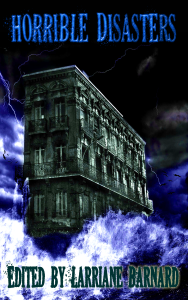
Book Birthday: Horrible Disasters Anthology

Image


Horrible Disasters

hahdfront-coverA Horror Disaster Anthology
Available now on Amazon.com

HorrorAddicts.net proudly presents Horrible Disasters. Thirteen authors from around the globe share their visions of terror set during real natural disasters throughout history. Travel back in time to earth shattering events like the eruption of Mount Vesuvius in 79 A.D., the San Francisco earthquake of 1906, and the Winter of Terror avalanches, 1950. What supernatural events went unnoticed? What creatures caused such destruction without remorse? Stock your emergency kit, hunker in your bunker, and prepare for… Horrible Disasters.

Cover Art by: Thierry Pouzergues

Edited by: Larraine Barnard

authors:
Emerian Rich
H. E. Roulo
Dan Shaurette
Steve Merrifield
Mark Eller
Laurel Anne Hill
Timothy Reynolds
Ed Pope
Jennifer Rahn
Chris Ringler
Philip Carroll
Mike McGee
Garth von Buchholz

Proceeds to benefit Disaster Relief by way of the non-profit agency, Rescue Task Force.

Historian of Horror: Radio – Lux is on the Air

Image

Once upon a time, it was not unusual for radio and early television programs, at least here in the United States, to be named after their sponsors. Gasoline refiners, food companies, and soap manufacturers all had shows with their names prominently on display in the title. The Texaco Star Theater, for example, or The Kraft Suspense Theatre. So it was that from 1934 to 1947, The Lux Radio Theatre brought audio versions of popular movies into the homes of millions of Americans every week, courtesy of Lux Soap.

It was a natural fit, as parent company Lever Brothers had been marketing their product to Hollywood since 1933. Ads claimed that most of the more popular movie actresses of the day used Lux Soap, which of course led to massive sales, and more than enough income to create and promote their radio program, and to hire film director Cecil B. DeMille to appear as the show’s host beginning in 1936 and continuing until 1945. Thereafter, a rotating roster of Hollywood personalities including Lionel Barrymore and Walter Huston introduced the various broadcasts.

Unfortunately, very few episodes from the first couple of seasons have survived, but none of those were audio versions of any scary movies. The earliest horror film honored with an adaptation was the 1934 picture Death Takes a Holiday, aired March 22, 1937, which does still exist and can be found on YouTube. Fredric March recreated his film role as Prince Sirki, AKA Death, but none of his film costars appeared on the radio broadcast.

The next program with any supernatural content was Wuthering Heights on September 13, 1939, a mere five months after the classic film starring Laurence Olivier and Merle Oberon  was released. Neither actor appeared on the air, being replaced by Barbara Stanwyck and Brian Aherne, with Ida Lupino in a supporting role. Lupino took over the female lead a year later, with Basil Rathbone co-starring. Rathbone returned to the program as The Phantom of the Opera in 1943, replacing Claude Rains from that year’s film version, although Nelson Eddy and Susanna Foster did return.

This was typical of the show, that the original film’s cast frequently did not recreate their performances on the show. Charles Laughton did appear as The Canterville Ghost in 1945, but without Robert Young, his film co-star. Charles Boyer replaced Rex Harrison in The Ghost and Mrs. Muir two years later, with Madeleine Carroll standing in for Gene Tierney, while Anne Baxter appeared opposite Joseph Cotten in Portrait of Jenny in 1949 instead of Jennifer Jones. And so on.

Similar programs like The Screen Guild Players would occasionally retain the films’ stars, with Ray Milland appearing in The Uninvited on August 28, 1944, or in the case of Arsenic and Old Lace, the play’s star rather than the film’s, with Boris Karloff displacing Raymond Massey in the role of Jonathan Brewster for the night of November 25, 1946.

Milland did recreate his performance in The Uninvited in 1949 on The Screen Directors Playhouse, a show for which Bob Hope starred in two separate versions of The Ghostbreakers, but Robert Donat was conspicuous by his absence in The Ghost Goes West, having been supplanted once more by Rathbone. The practice did allow the audience to imagine different stars in familiar roles, but at this distance in time it seems a shame to not be able to hear some of the original actors in the roles.

Oh, well.

The final horror film to be adapted for The Lux Radio Theatre was the February 8, 1955 episode, War of the Worlds, with Dana Andrews in the lead rather than Gene Barry. The show came to an end a few months later with the final broadcast on June 7.

Before the end, however, there was what might almost be considered a temporal anomaly. Rather than adapting an existing film, the Lux Radio Theatre episode for July 20, 1953 presented Herbert Marshall in an adaptation of Daphne DuMaurier’s story, The Birds, ten years before Alfred Hitchcock’s film adaptation. I am unaware of any other instance of a story not yet filmed being aired on the show. Perhaps the soap company had a clairvoyant working for them.

Thanks to the Old Time Radio Researchers, Jerry Haentiges’ Vintage Radio Logs website, and the invaluable 1998 volume, On the Air: The Encyclopedia of Old-Time Radio by John Dunning for the information contained in this post.

The next time we meet, we’ll take a look at the schizophrenic exploits of a certain man-made monster from the Golden Age of Comics. Join me down here in the vaults for that in a mere two weeks, won’t you? Until then, I bid you, my devotees of the dire and the dreadful, to be sure to ever and always be afraid…

Be VERY afraid!

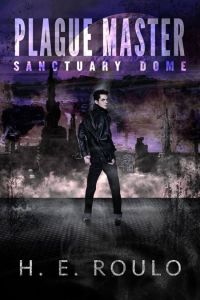
Book Birthday: Plague Master Sanctuary Dome by H. E. Roulo

Image


Author Interview: R.L Merrill / Manor of Frights / Missing

Image

Manor of Frights – Now on Audible!

What is your name and what genre of Horror do you usually write about?

Image

I’m R.L. Merrill and I mostly write romance! However, I love all the things that go bump in the night, so horrorific tidbits tend to end up in a lot of my books. I do love to write scary short fiction, and haunted houses are my jam, so I was thrilled to submit a story for Manor of Frights.

What is the title of your story in Manor of Frights and what is it about?

My story, “Missing,” is about a young girl who is assigned a volunteer shift at the manor for a class project. While working in the scullery, she is pestered by a sneaky runaway child who turns out to have a chilling story of his own.


What inspired you to write your story for Manor of Frights?

A kids I know had to have all of his baby teeth extracted because they wouldn’t fall out on their own. His mom sent me a picture of his x-rays, along with a photo of a child’s skull from the Victorian era where all of the baby teeth and adult teeth were still attached. It was one of the creepiest and most fascinating things I’d ever seen. I felt so sorry for the kid for having to have his teeth all pulled. They did it over two or three visits. I guess “Missing” was my way of letting him have his revenge.

What is your favorite Horror house story in fiction, movies, or TV and why?

“The House of Usher” film with Vincent Price is a favorite, but I was also infatuated with the Michael Flanagan projects “Haunting of Hill House” and “Haunting of Bly Manor.” There is something so beautiful about a terrifying old house, isn’t there?

What music most inspires you to write Horror?

Most recently I was working on a paranormal romance and a friend turned me on to Norwegian Folk Music featuring artists like Wardruna, SKALD, and Emian.

Where can readers/listeners find your work? (URL #1 place for them to go.)

http://www.rlmerrillauthor.com

From the Vault: Rich and Roulo Volume 1: DESIRE

Image

rrdesire12

D E S I R E:

(verb) to wish or long for; crave; want.

HorrorAddicts.net is proud to present a treat for Valentine’s Day…

A free preview of the new book, Rich & Roulo, Volume 1: DESIRE

Some of this book is so steamy, we can’t post the content online without an adult warning on it, but the authors have agreed to give you a taste of what you’re in store for when you open the pages of DESIRE.

Authors Emerian Rich and H. E. Roulo come together to bring you Rich & Roulo, a fiction series harking back to vaudevillian days where madness bordered on greatness, misery became wisdom, ahttp://www.heroulo.comnd beauty was found in even the most broken doll.

THE HIVE
by Emerian Rich

Here lies in wait
A longing hard to sate.
Innocent limbs entwine
In pleasure most divine.

Twist and turn
Her innards burn.

She dreams of only him.
Blood rushes to every limb.
Memory of the day they met
Causes her wake in a cold sweat.
Not the smile but the form
Made her every stem warm.

A kind of stir
Made by that Sir.
A twitch and flutter
And then a shudder.
At his mere sight,
Too strong to fight,
Strikes within her a flame.
She’ll never be the same.

His breath in her ear
His hand on her rear.
“Don’t fret pretty one,
I’ve something quite fun.
Just stay very still,
And I’ll break your will…”

To read more, follow the links to… DESIRE, now available at Amazon.com

Rich & Roulo, Volume 1: DESIRE pushes the boundaries between burlesque and grotesque, featuring a pair of twisted obsession stories and one very naughty poem.

A faded tome wrapped with a red velvet ribbon falls into your possession.

A note attached reads, “To my love.”

As you open it, the spine creaks. Spiders scramble out and skitter across your leg. Startled, you rise and the book thuds to the floor in a puff of perfume-scented dust. Picking it up, you find the velvet ribbon crumbling. It breaks. Where the ribbon had formed a cross holding the novel shut, the cover is still dark and gold leafing inscribed in whirls outlines sensual bare flesh but the rest has faded away, leaving only a hint of naked lovers once sprawled across the luxurious leather.

Meet Heather’s blossoming latex model and Emerian’s virile vampire king in DESIRE. Now only 99¢ at Amazon.com.

Author Interview: DW Milton / Manor of Frights / The Flowers in the Foyer

Image

Manor of Frights – Now on Audible!

What is your name and what genre of Horror do you usually write about?

Image

My name is DW Milton. While a longtime fan of Horror, this publication makes me a first-time author in Horror (and it is great to be here-thank you!)

What is the title of your story in Manor of Frights and what is it about?

The title of my story is “The Flowers in the Foyer”. The year is 1880 and at the Manor the Mistress demands fresh flowers in the foyer each morning; however, only Mrs. Danvers, the housekeeper, knows why must there be a new housemaid named for a flower every fortnight.


What inspired you to write your story for Manor of Frights?

The description from the anthology call was wonderful. Everything I needed was there.

What is your favorite Horror house story in fiction, movies, or TV and why?

Hell House by Richard Matheson still makes me cringe every time I read it.

What music most inspires you to write Horror?

I would love to say something interesting and redeeming here, but it would be a lie-pretty much anything loud and angry.

Where can readers/listeners find your work? (URL #1 place for them to go.)

dwmilton.com


Author Interview: Jason Fischer / Manor of Frights / A Fresh Start

Image

Manor of Frights – Now on Audible!

What is your name and what genre of Horror do you usually write about?

My name is Jason Fischer, and my genre of Horror is usually psychological, with a hint of the supernatural.

What is the title of your story in Manor of Frights and what is it about?

“A Study in Terror” – A single mother wins a contest for a murder mystery party and at the last minute is forced to bring her daughter. In their room is a very special clock. She soon realizes why her daughter had been afraid of it all along.

Image

What inspired you to write your story for Manor of Frights?

I love haunted house and single room stories. I immediately pictured a study with an old clock and what it could represent to different people.

What is your favorite Horror house story in fiction, movies, or TV and why?

House on Haunted Hill – Seeing Vincent Price host a wild party where the guests are all given weapons is just a great premise for an eerie film.

What music most inspires you to write Horror?

Classic, particularly Beethoven

Where can readers/listeners find your work? (URL #1 place for them to go.)

Website – https://www.jasonfischerauthor.com

Facebook – https://www.facebook.com/jasonfischerhorror

Twitter – @jhorror73


Author Interview : Mark Orr/ Manor of Frights

Image

Manor of Frights – Now on Audible!

What is your name and what genre of Horror do you usually write about?
My name is Mark Orr. The overarching genre for all my fiction writing is a sort of slipstream
neo-pulp, whether I’m writing ghost stories, vampire yarns, murder mysteries, science
fiction, westerns, fantasy or whatever. I frequently find myself bringing a hardboiled
sensibility to my spooky stuff, regardless of setting or subject. I have jokingly referred to this
style as ParaNOIRmal, which is a mouthful, but is close to where I nearly always wind up
going.

Image

What is the title of your story in Manor of Frights and what is it about?
“Turning Pages” is about connecting between worlds over aesthetics, and the consequences of interfering with that connection.

What inspired you to write your story for Manor of Frights?
The central conceit has been tickling at the back of my brain for a couple of years, initiated by my love of classical music as well as the classic ghost stories of the 19th and early 20th Centuries.

What is your favorite Horror house story in fiction, movies, or TV and why?
Naturally, I love and revere Shirley Jackson’s The Haunting of Hill House, and Robert Wise’s
1963 film adaptation, The Haunting, as well as Richard Matheson’s Hell House and the 1973
movie based on it, and of course there’s The Old Dark House from 1932 based on J.B.
Priestley’s novel Benighted and starring Boris Karloff, but my favorites will always be the first
ones I saw as a child – the old dark house from the 1963 remake of The Old Dark House,
directed by William Castle and starring Tom Poston, and the Simmons Mansion from the
1966 Don Knotts horror-comedy, The Ghost and Mr. Chicken.

What music most inspires you to write Horror?
Classical, mostly from the Romantic Era, but also some Progressive and Modern – “Danse
Macabre” by Camille Saint-Saëns, “Night on Bald Mountain” by Modest Mussorgsky, the
Peer Gynt Suites by Edvard Grieg, various pieces by Liszt, Beethoven, Wagner,
Tchaikovsky, Rimsky-Korsakoff, Prokofiev, Delius, Sibelius, Holst, Delibes, Rachmaninoff,
Bartok, Stravinsky, and many others. There are a few earlier pieces I draw inspiration from –
Bach’s “Toccata and Fugue in D Minor”, Tartini’s Devil’s Trill Sonata, a couple of
movements from Vivaldi’s Four Seasons, Paganini’s “Capricio No. 24”, a bit of late Mozart
here and there. Film scores by Max Steiner or Bernard Hermann or Jerry Goldsmith from various horror pictures, or the scores Ennio Morricone did for Italian giallo movies in the
1970s. And there are lots of operas built around horror themes, from Marschner’s Der
Vampire to Dvorak’s Rusalka to Britten’s The Turn of the Screw.

Where can readers/listeners find your work? (URL #1 place for them to go.)
Both of my hardboiled supernatural mystery novels, Smarter Than the Average Werewolf and
Dead Women in Love, can be acquired from the Dark Recesses Press website.
https://darkrecessespress.com/product-category/books/novel/
Or from Amazon, if you insist.
https://www.amazon.com/stores/Mark-Orr/author/B00JFMY8AM

I also have a short story, “Mourning Medusa”, in Curiosities #6, which is apparently still
available at Amazon.
https://www.amazon.com/dp/1948396106

Author Interview : Judith Pancoast Manor of Frights/CACOPHONY

Image

Manor of Frights – Now on Audible!

What is your name and what genre of Horror do you usually write about? 

My professional author name is Judith Pancoast (but most people call me Judy) and I usually write ghost stories, or paranormal.

What is the title of your story in Manor of Frights and what is it about?

Image

CACOPHONY is about a haunted piano!

What inspired you to write your story for Manor of Frights?

I play piano and I’m a piano teacher as well. When you announced that you were looking for stories that involved one room of a haunted house, of course, I picked the music room!

What is your favorite Horror house story in fiction, movies, or TV, and why?

My absolute favorite horror house story is “The Haunting of Hill House.” The book, the original film adaptation, and the miniseries by Mike Flanagan are all top-notch, nightmare-inducing psychological AND paranormal horror. That old black-and-white film still give me the creeps, and I’ve seen it a LOT.

What music most inspires you to write Horror? 

Believe it or not, the pop music of the seventies, because that’s when I was living my most horrific life.

Where can readers/listeners find your work? (URL #1 place for them to go.)

As of now, my short stories have only been published in various journals and anthologies, so they’re scattered all over the place, but they can all be found by searching my name on Goodreads!


From the Vault: Black History Month/The State of Speculative Fiction: Why Race Matters

ImageImageThe State of Speculative Fiction: Why Race Matters

by Valjeanne Jeffers

Why is race, why is diversity, important in speculative fiction? Why is it important, why should it matter, what race one’s characters are?

As a child, I devoured YA fiction, filled with ghosts and goblins. My TV interests were the same: I gravitated toward the weird, the fantastic, so much so I often had to look under my bed to make sure Dracula hadn’t found his new resting place there.

But there were, with few exceptions, no characters who looked like me. There were no characters from neighborhoods like mine. What was far worse was that many of the characters who later came, and are still around today, didn’t act like me or anyone else I knew. I wonder if my life would have been more enriched if there’d been a brown-skinned girl or boy who starred in the fiction I so greedily devoured? If he or she had walked across the TV screen of my youth? Of this I’m sure.

Diversity is important because we, people of color, need heroines and heroes to people the landscape of our imagination … to point the way, to help us dream, to help us see something better in our tomorrows. We need characters to help make us proud of who we are and where we came from. In short, we need characters to identify with. Characters who are coming from the same space. We need role models, most especially ones who don’t die in the first fifteen minutes of the story, ones who aren’t caricatures and stereotypes.

Now don’t get me wrong. I continue to enjoy literature and films created by white authors. But I still need, I’d venture to say we still need stories that emerge from the Black experience. And we aren’t the only ones who need this. Diversity in speculative fiction is important for folks of all races.

If you want to know what’s going on in my neighborhood, if you want to know what moves me politically, and socially, if you want to know what I dream, who better to ask than me? In other words, SF/fantasy/horror written not just by Black folks, but by Native Americans, peoples of Latin descent, written by the full racial spectrum, goes a long way toward making folks more intelligent, more tolerant … to moving our world a little bit closer to global humanity and understanding.

Racial inclusiveness, diversity, is just as important in speculative fiction as it is in every other aspect of our lives. And in 2019 it is becoming an everpresent reality. 

I’ve always hated it when folks overgeneralize and paint everyone with the same broad brush. So here’s what I have to say: to those white creators who are trying so hard to be racially sensitive and accurate. We are not talking about you. I myself, create Native American, Asian, Spanish and White characters based on folks I’ve been fortunate enough to meet in my lifetime. As I’ve said before, I hope that I do a decent job. Only my readers can answer that.

The authors and screenwriters we’re trying to move forward are those who have no idea how to create a nonwhite character and don’t even try to learn. Who just dig in their bag of stereotypes and throw something together. Personally, I’d rather be portrayed as a White woman with a deep tan, not perfect mind you, but better, rather than a “Yuk, yuk missus … I’s a-comin’” myth.

As writers, we’ve all heard of publishing companies that strong-arm authors into making their characters white or racially ambiguous, so they can attract white readers. Again, all publishing companies are not equal. But these stories have made me glad I decided to self-publish. I’d also like to say, since I have white readers, to these companies (you know who you are): you aren’t giving your readers enough credit. You should stop treating them like children. Folks will read good writing, no matter where it comes from, and who writes it.

And now to Hollywood. Oh man, don’t get me started!  On the stereotypical characters that make us all cringe, the people of color (yes, not just black folks) who die fifteen to thirty minutes into the film, to the scores and scores of films made with no people of color at all.

So what do we do? We keep on keeping on. In 2019, the speculative fiction landscape is filled with more films, books and animation created by folks of color than I have ever seen in my lifetime.

Our numbers will continue to grow. We are coming. We have arrived. We are here. 

And we are the ones we’ve been waiting for.

____________________________________________________________________________________________________________

ImageValjeanne Jeffers is a science fiction writer and the author of Immortal, Immortal 2: The Time of Legend and Immortal 3: Stealer of Souls. She is a graduate of Spelman College, NCCU and a member of the Carolina African American Writers Collective (CAAWC).

Author Interview : Barend Nieuwstraten III / Manor of Frights / Beyond the Ensuite

Manor of Frights – Now on Audible!

Image

What is your name and what genre of Horror do you usually write about?
Barend Nieuwstraten III. I typically write fantasy and occasionally science fiction, but more often than not, they end up straying into horror. I suppose Dark Fantasy would be the answer. Though, so far, I’ve written six pure horror stories and have ideas for more.

What is the title of your story in Manor of Frights and what is it about?
‘Beyond the Ensuite’

Image

 It’s about a man who stays in one of the rooms, in the 1970s and discovers his ensuite bathroom has an entry to a secret bathhouse. But it turns out his room isn’t the only one that leads to it. 

What inspired you to write your story for Manor of Frights?
I’ve always loved horror stories with a bunch of strangers sharing a stay in a large manor or old mansion. So, when the project came to my attention, I immediately jumped on it. I’ve always loved the idea of finding hidden rooms. I have a lot of dreams about it. Often in a place I know or live/d in. Often it’s some grand bathroom (typically antique) usually intended for multiple users, but I’m the only one that knows about it, so I have it all to myself. I don’t know why that idea appeals to my subconscious so.

What is your favorite Horror house story in fiction, movies, or TV and why?
It’s hard to go past ‘The Shinning’ (my second favourite movie of all time). Not just a house but a massive hotel in the middle of nowhere. A dark ride into losing one’s mind while surrounded by dark entities. Though as a writer I would absolutely have taken that job as well. (Even with the evil spirits)

For TV, ‘The Haunting of Hill House’ was just something I utterly adored. Though I need to mention 1970’s Doctor Who. A lot of those stories were haunted/horror house stories. Yes, the house may have been a space station, an ark in space, a mining vessel, etc. but under the thin veneer of science fiction (and silver-painted cardboard sets), was the dark heart of a house haunted or plagued by monsters, or a killer of some kind. There’s something exciting about an unnatural mystery unfolding while the list of suspects grows shorter.

What music most inspires you to write Horror?

Coil always sets me in the right place. I struggle to write while listening to anything that has lyrics, so it’s a shame I can’t listen to some of my favourite albums of theirs and write, but their instrumental albums are perfect. I tend to go for their ‘Unreleased Hellraiser Themes’ and their ‘Unnatural History’ collection. Though, I’d recommend to other writers ‘Music to Play in the Dark’ volumes 1 and 2.

Where can readers/listeners find your work? 

Readers: amazon.com/author/barend3


Historian of Horror: TV – One Step Beyond

Image

A Big Step

The Twilight Zone premiered on October 2, 1959 over the CBS television network, and has since become the gold standard against which all subsequent speculative fiction television anthology programs have been measured. Rod Serling’s vivid imagination supported by scripts from the likes of Richard Matheson and Charles Beaumont and a steady rotation of rising and established stars kept the show in production for five years and in syndication for decades to follow.

But it was not the first of its kind. Several spooky anthology radio programs made the transition to television in the 1950s, including Suspense and Inner Sanctum. And on the 20th of January, 1959, an original series called One Step Beyond debuted on rival network ABC.

The American Broadcasting Company began as NBC’s poor cousin network before that broadcaster was forced to divest itself of it in 1942 by the Federal Communications Commission. Known as the NBC Blue Network, it was renamed while the old NBC Red Network simply became NBC.

Clear as mud? Good. We continue…

ABC was not in those years as prestigious as its older rivals, and in markets incapable of supporting more than two affiliate stations, it was invariably the one left out. So it was that One Step Beyond never had the market penetration outside of the larger cities that NBC and CBS programs did. Nor did it attain cult status like The Twilight Zone, or the same level of relentless widespread syndication after its broadcast run ended. And it didn’t help that series host John Newland lacked the intense charisma of Rod Serling. It did enjoy some added life in syndication, but I have no recollection of seeing it until it showed up on the Sci-Fi Channel in the 1990s, nor of the single season 1978 reboot under the title The Next Step Beyond.

And that’s a shame. While it never really challenged The Twilight Zone in terms of quality of scripts or production, it was a worthy effort within its rather limited scope. By which I mean it relied less on overtly fictional science fiction, fantasy and horror stories than on the kind of tale that we now call Urban Legends.

You know the ones. A man kills a boy in a hit-and-run accident, then sees the same boy on the road later and veers to avoid him, only to crash into a tree and die in the wreck. Or a woman has premonitions of perishing in freezing water, shortly before booking passage on the Titanic. Or a vision of danger leads to the rescue of a loved one. Or George Washington has a dream about what a free America has the potential to become and changes his mind about surrendering to the British. All of which were adapted for the program.

According to the show’s creator and associate producer Merwin Gerard, a significant percentage of the show’s fan mail tended towards the sharing of similar stories from One Step Beyond’s more credulous viewers. These included educated professionals whom one would expect to be more skeptical of such things. “Why, yes, the same thing happened to me!” some lawyer or doctor would write. “Or to my cousin. Or to my cousin’s sister’s aunty’s great grandmother’s chauffeur!”

That was perhaps a tad snarky, but I would never mean to imply that it was a bad show. Far from it. One Step Beyond attracted some actors of significance, including Academy Award winner Joan Fontaine, rising star Warren Beatty, former Scrooge (and Sherlock Holmes) Reginald Owen and the reigning incumbent Dracula himself, Christopher Lee. Twilight Zone scribe Charles Beaumont even contributed a couple of scripts, but the program’s narrow focus prevented it from competing against its more broadly imaginative competitor. One Step Beyond lasted a mere three seasons over two and a half years. It was cancelled on the Fourth of July, 1961, after ninety-seven episodes.

You can judge for yourself if I’ve been unduly harsh on the show. Episodes can be found on YouTube, where it has its own channel. Or you can purchase it on DVD from Amazon or other online retailers, if you’re so inclined.

‘Tis meet I credit the 1977 volume Fantastic Television by Gary Gerani and Paul H.Schulman for the bulk of the information included above, along with the Internet Movie Database.

When next we meet down here in the catacombs to discuss the elder times of the horror genre, we’ll take a ride in the Way-Back Machine to television’s predecessor, radio, and that medium’s primary disseminator of sonic film adaptations. In a mere two weeks, Lux will be once more on the air — or at least, in your mailbox. Join me then, won’t you? Until that happy circumstance comes to fruition, I bid you, as always, my precious partners in perfidy, to be afraid…

Be very afraid!


Author Interview – Manor of Frights : Sumiko Saulson

Image

Manor of Frights – Now on Audible!

What is your name and what genre of Horror do you usually write about?

My name is Sumiko Saulson and I usually write Afrosurrealist and multicultural psychological horror and horror romance. When I say Afrossurealsist or psychological horror, think Jordan Peele’s “Us” or “Get Out.” The Twilight Zone and Outer Limits also featured a lot of psychological horror stories.

What is the title of your story in Manor of Frights and what is it about?

“The Dessicated Heart” is about a seventies punk garage band and their particularly terrifying tastes in rehearsal spaces. As you know, the stories are each set in different parts of the house, and the old carriage house, which was originally built for horse-drawn carriages, was been renovated and turned into a garage for automobiles later on and has a storied history including ties to the Hellfire Club. That attracts the band, and although it has been in a fire and seen better days. they decide to rehearse there. What could possibly go wrong?

Image

What inspired you to write your story for Manor of Frights?

I was a teenager in the early eighties daydreaming about the generation before and the idea of setting my Manor of Frights story right in the late seventies punk scene put a huge smile on my face. The store is inspired by the bands that proceed the queercore movement of the eighties, bands like the Buzzcocks, The Slits, and The Runaways that were queer or had queer members and inspired the later movement. And where I grew up in Hawaii, punk was very multicultural, so the characters in my story were as well. And I think when you read it you’ll see that I was also inspired by the punk and underground horror movies of my adolescence, such as The Evil Dead and Return of the Living Dead, although the story has the seventies rather than an eighties feel. I was on the Hawaiian punk scene from 1981 to 1987 and that definitely inspired me.

What is your favorite Horror house story in fiction, movies, or TV, and why?

Toni Morrison’s “Beloved.” Her gift for language, and for descriptive writing was unparalleled. The memorable first line of the novel “124 was spiteful” refers to 124 Bluestone Road, the haunted house where the story takes place. The ghost haunting the house is that of a small child, the protagonist Sethe’s daughter who was murdered before she was two years old. But in classic Gothic horror fashion, the house itself is also a character. Rather than dread, there is an overwhelming sense of soul-sucking grief associated with the place. The child ghost chases off her sons, but it is the house itself that sucks all of the joy and life out of Sethe’s mother-in-law Baby Suggs.  The house represents how slavery tore away the foundation of this family, even after they were freed from it. The addresses numbers 124 represent the absence of Sethe’s third child, Beloved – one, two, four. Toni Morrison is the best-known of the Afrossurealist writers and although her status as a literary legend often obscures the fact that Beloved is a ghost story, this is one haunted house that will show you just how deep horror can go. 

What music most inspires you to write Horror?

It depends a lot on the story I’m writing, but for this one, obviously, the bands I mentioned earlier such as the Buzzcocks, but also Iggy and the Stooges, Television, New York Dolls, and other punk of the era, especially that which was in various ways queer, as well as bands that existed in the punk era but were later known as goth bands, such as the Damned and early Siouxsie and the Banshees. There’s one gothic or proto-gothic character in the band. I was also inspired by the bands I actually got to see in the early 80s which included Black Flag, Circle Jerks, Agent Orange, and a bunch of Hawaii Punk bands like Something Really Offensive, The Vaccum, and Devil Dog from back in the day.

Where can readers/listeners find your work? (URL #1 place for them to go.)

Manor of Frights : Amanda Leslie, The Living Room

Image

Manor of Frights – Now Available on Audible!

Image

What is your name and what genre of Horror do you usually write about?

Amanda Leslie. I typically write monster/paranormal horror, but I’ve also dabbled in writing dystopia and slasher horror.

What is the title of your story in Manor of Frights and what is it about?

My story is titled “The Living Room.” It’s about a woman stuck living the same day over and over and over while she slowly loses her mind. I won’t spoil the ending here, but it’s one of my favorite things I’ve written.

What inspired you to write your story for Manor of Frights?

I was inspired by the theme of Manor of Frights! I mostly write Horror that takes place in a single location, but a story taking place in a single room/mostly in one room was a challenge that inspired me.

What is your favorite Horror house story in fiction, movies, or TV and why?

The Hell House LLC series of movies is by far my favorite. Much like this book, it takes place in a single location. I watched the entire series over quarantine, and it quickly became my favorite to the point I recommend it to anyone. It’s just a fun horror movie that I think anyone can enjoy.

What music most inspires you to write Horror?

Post-metal, dark classical, “wonky rock,” and folk punk inspire me the most. My story in this book is particularly inspired by Shayfer James and Miracle Musical — both artists that I would firmly place in the “wonky rock” genre.

Where can readers/listeners find your work? (URL #1 place for them to go.)

I have a blog at http://amandaleslie.com where you can get updates on all of my work.


Manor of Frights : Lesley Warren, Bye, Baby Bunting

Image

Manor of Frights – Now Available on Audible!

Image

What is your name and what genre of Horror do you usually write about?
My name is Lesley Warren and I enjoy writing psychological horror stories with unexpected twists. As someone living in a different country from where I was born and raised, I often write about the feeling of “otherness”, and this manifests itself in protagonists who do not quite fit into the boxes in which they are placed by their surroundings.

What is the title of your story in Manor of Frights and what is it about?
My story is called “Bye, Baby Bunting”. Ida Wells, a young and beautiful widow, is left to care for her newborn baby in the grand but eerie manor house she once shared with her recently deceased husband. During the first few months of the child’s life, Ida struggles in vain to bond with baby Minnie; ghastly visions transform her from an innocent infant to a demon, from Ida’s point of view. Is the bereaved and exhausted mother losing her wits, or is there really something strange about the baby, who seems to have her dead father’s eyes?

What inspired you to write your story for Manor of Frights?
I have always enjoyed reading stories and watching films in which things are not as they first appear to be. Some of my friends have embarked on the rewarding but demanding journey of parenthood in the past couple of years, and I get the feeling that it’s something you never quite feel prepared for – I thought it would be interesting to combine the challenges of raising a child with supernatural phenomena in my story. Add a spooky manor house and the age-old question of whether or not the strangeness is real or just happening inside the protagonist’s head, and you’ve got a recipe for a spine-tingling read.   

What is your favorite Horror house story in fiction, movies, or TV, and why?
As an avid watcher of Asian horror movies, the first film that comes to mind when I think of haunted houses is definitely the Korean psychological horror masterpiece “A Tale of Two Sisters”. It’s a perfect example of how the same events shown from two different perspectives can paint an entirely new picture. Without giving too much away, I can say that it manages to be hauntingly beautiful at the same time as shocking you speechless and breaking your heart. No mean feat! 

What music most inspires you to write Horror?
I’m a lifelong gothic rock and metal fan, so it’s never been difficult for me to lean into my darker side. I write best with music as background noise. Usual bands in my rotation are alternative rock band Palaye Royale (the musical equivalent of an espresso shot), rock cellists Apocalyptica (great for conjuring up atmospheric settings), and Viking-esque groups such as Wardruna and Heilung (perfect for tapping into one’s primal instincts – after attending a Heilung concert, my friends are still convinced that I have joined a pagan cult!)

Where can readers/listeners find your work? (URL #1 place for them to go.)

My work has been published in several online and print journals. You can find a couple of my short stories by searching for the “Open Bookcase” anthologies of the Frankfurt Creative Writing Group, readily available on Amazon. In the virtual sphere, you’ll find me enjoying the kind-spirited feedback and camaraderie of my fellow writers at ABCTales.com; this is my user page: https://www.abctales.com/user/lem

Author Interview : Daphne Strasert / Manor of Frights – A Green Thumb

Image

Manor of Frights – Now Available on Audible!

Image

What is your name and what genre of Horror do you usually write about?
Daphne Strasert. Typically, I write supernatural or psychological horror. I avoid blood and gore in favor of creeping terror, possible insanity, and things that go bump in the night. I love to refresh classic horror monsters and make them frightening all over again.

What is the title of your story in Manor of Frights and what is it about?
A Green Thumb is the story of an ambitious Anthophile (plant lover) who breaks into the manor’s conservatory to steal a rare orchid. She finds herself in deep peril when she discovers the secret to the enigmatic flower’s growth.

What inspired you to write your story for Manor of Frights?
I love plants. I have an extensive collection of potted plants (including an orchid!). Every plant is unique and caring for them can be tricky. Plants in the wild naturally feed off the decay of other organisms and some trap animals and insects as a way to fertilize themselves. I took this biological reality and amped it up a bit, combining it with the historical craze over rare orchids to create A Green Thumb.

What is your favorite Horror house story in fiction, movies, or TV, and why?
Thirteen Ghosts. If you haven’t seen this cult classic 90’s movie, make time to watch it. The house itself is a visual delight of glass walls and shining clockwork. It was constructed to be haunted, made from the designs of a madman, and created with the purpose of harnessing restless spirits. The cast of ghosts that inhabit the house have a fascinating lore of their own which has been lovingly documented online. I would love to see this movie remade into a series that goes into even more depth.

What music most inspires you to write Horror?
I write best with instrumental music. Lyrics can get in the way of the flow of words for me. My favorite source is Two Steps from Hell, which makes epic, movie-score-style songs. Their Halloween album is an all-time favorite.

Where can readers/listeners find your work?

You can find out more about me and read some of my work at www.daphnestrasert.com


Band Interview: The Polybius Cabinet

Image

ImageWhat horror-related themes have you found to be the most inspiring for your music?

Miguel de la Cruz: “Movies about the occult , spirit summoning , science fiction horror , spirit possession , zombies… Who doesn’t like zombies? Not just the music but also we took inspiration for our album cover from the movie cover of Evil Speaks. By the way, our album cover for Level 1 was done by HELLISH MAGGOT .You can search them up as @hellish.cav on Instagram.”

What horror movie/TV show would you re-score if given the chance?

Miguel: “ If I could, I would rescore Night of the Demons 1988”

Markus Galvan: “I’m thinking maybe From Dusk Till Dawn. Give it a bit of a sleazy darkwave touch.”

On the new album, ‘Level 1’ do any of the tracks address topics that could be emotionally or psychologically considered to be a “horror”?

Miguel: “Cisco, our opening track to our album. This song is inspired by personal encounters with a friend who I only had the privilege of knowing briefly before his passing. He was a  good guy, and a kind and generous person. Being introduced by a mutual friend for spiritual consultation and reference reasons. Over time he became a friend that I would see often because we just liked to hang out and talk about life. However it seemed like each time we met he was reporting on things getting worse for him such as his health and a heavy energy seemed to follow him. Not to get too personal on the conversations but it was revealed he was under the suspicion that someone was doing some brujeria on him. It seemed like there’s perhaps some dark forces that were involved and unfortunately, and sadly he fell ill and passed away over time. “

Markus: “I feel like the song Doorway has a horror soundscape throughout the song. It sounds straight out of a classic horror flick to me. I think it sounds very haunting.”

Alyse Galvan: “ The synth line on the verse of Corazon Azul brings with it a haunting creepy vibe to it. Some of the synth work on this album is kinda inspired by the songs that were found on older Halloween decoration toys”

What film/TV horror-related character would you most identify with? Why?

Miguel: “I would say the Hell Blazer, John Constatine. Where we are from, we have occult shops more than Starbucks, so it feels like we sort of have to protect and defend against unknown energies, supernatural forces and things we cannot see.”

Markus: “I won’t get into too much detail because it’s a bit personal, but the new Frankenstein movie from Guillermo del Toro really moved me.”

Alyse: “Eleven from Stranger Things because she has this incredible power and has to learn how to use it and has to learn along the way from past mistakes from that power and the kind of restraint and control it takes to wield that power. Each time throughout the series when activates her telekinesis abilities  she realizes that she’s more powerful than she initially realized. I wish I had telekinesis.”  

How do you handle fear as an artist?

Miguel: “I do a practice called despojo ( spiritual cleanse ) also use that fear to make music , preferably working on music around the witching hour  3am”

Alyse: “I try to process my fear as an artist by writing about, in a sense by rationalizing it in this way. Sometimes that also means facing it head on”

What are your favorite horror movies? Have any inspired your music directly?

Miguel: “The Blob 1988 , Evilspeak 1981 , Return of the Living Dead 1985 ,The Gate 1 and 2 , Pumpkin Head 1988 , The Exorcist , The Gates of Hell, Night of The Demons 1 and 2 , The Thing 1982 , Howl 2015 and so many more to remember”

Alyse: “I’ve always loved the original Carrie movie.

Markus: “Off the top of my head, I remember being a kid in the 90s and Return of the Dead regularly coming out on late night tv. Always been a favorite for that reason. Cemetery Man is another favorite of mine.

What was the scariest night of your life?

Markus: “The first night of what became a regular occurrence of scary sounding loud growls coming from outside our house at night.These were not growls of a large dog, coyote. This was something that sounded big and beastly. This experience was actually shared with Alyse, and a cousin of ours that was in town visiting. Later this was also experienced by other relatives and friends that were around.”

Alyse: “If I could piggyback off what Markus said… yes, a very deep and not of this earth type of growl was coming from the right side of the house we lived in at the time which by the way was in a rural area known to have a certain, historical past, but anyway it happened the first time and I ran to his room to tell him and he would blast music at the time so he didn’t hear it the first time and didn’t believe me since I was but a kid. Then it roared again, and he came back with such fear in his eyes saying “I heard it!”. Just one of the many terrorizing incidents we got to share at that old property back then.”

Markus: “Yeah, and that wasn’t the only time that growl was heard. It was crazy. Sometimes it even sounded like it was coming from the roof, like whatever was doing that climbed up there. Several friends also heard that same growl at different times when visiting and left alone outside. I’d still like to know what that was out there”

If you could bring back greats who have passed on, who would be your undead opening band?

Miguel: “Maybe Rozz Williams of Christian Death, but I would open for him.”

Markus: “ It would definitely be Bowie, and I would have us open as well. How would we even follow that?”

Alyse: “Alan Wilder (Depeche Mode) on keys/synth, Selena on vocals, Jimi Hendrix on electric guitar, and Andy Rourke (The Smiths) on bass.

Final thoughts / Anything you want to tell the Horror Addicts? 

Miguel: “Don’t play around with the occult because you think it’s cool or trendy. It is not a game nor is it meant for just anyone”

Markus: “ Yeah, what he said. Also want to invite everyone, especially all you horror addicts, to check out our debut album Level 1 on bandcamp and all streaming. Also follow us on our social accounts to keep up with the latest from us. Music videos coming soon!”

Alyse: “Thank you, Horror Addicts for having us for this interview.

(Fan contacts…)

Website/Twitter/Facebook/Instagram/Bandcamp? https://www.facebook.com/profile.php?id=100090026500997

https://thepolybiuscabinet.bandcamp.com/album/level-1

https://www.instagram.com/the_polybiuscabinet/?hl=en

https://www.tiktok.com/@thepolybius_cabinet?lang=en

https://x.com/TCabinet93458

https://www.youtube.com/watch?v=qRzkyVmvSBM&list=RDqRzkyVmvSBM&start_radio=1


Author Interview: Loren Rhoads / Manor of Frights / Nightbears

Image

Manor of Frights – Now Available on Audible!

What is your name and what genre of Horror do you usually write about?

Image

I’m Loren Rhoads. I’ve written ghost stories, folk horror, stories about witches, vampires, and werewolves, and an apocalyptic love story about angels and demons.

What is the title of your story in Manor of Frights and what is it about?

“Nightbears” is about childhood night terrors like the closet creep and the under-the-bed monster and how they prepare us for grown-up horrors.

What inspired you to write your story for Manor of Frights?

I wanted to write about all the horrible things that lived in my childhood bedroom.

What is your favorite Horror house story in fiction, movies, or TV and why?

Ten or twelve years ago, I went to a Haunted Mansion Retreat with a gang of other horror writers. Afterward, I edited one of the books of stories written at or inspired by that weekend. I really loved seeing how the things that spooked us at the mansion were translated into fiction. To be honest, editing the book gave me nightmares. I wish those books were still in print!

What music most inspires you to write Horror?

I love to put together playlists on Spotify. I’ve got a playlist for my collection of short stories, one for my angel/succubus novels, and another for my witchy stories. You can check them out here: https://open.spotify.com/user/22tnsstsvaxseo5mraohaghvi?si=f2a61e8299944f85

Where can readers/listeners find your work? (URL #1 place for them to go.)

The best place to keep an eye on me is at https://lorenrhoads.com/


Loren Rhoads is co-author of the As Above, So Below books about a succubus and her angel. Her short stories have appeared in Best New Horror, Strange California, Fright Mare: Women Write Horror, Sins of the Sirens: 14 Tales of Dark Desire, and much more. Unsafe Words, the first full-length collection of her short stories, was called a “lyrical kaleidoscope of shining beauty and immense darkness.”

Press Release: Manor of Frights

HorrorAddicts.net Press Presents:
Manor of Frights NOW AVAILABLE ON AUDIBLE!

Image

Manor of Frights

Imagine a Victorian house where every room is cursed with a frightful existence. Are monsters in the halls? Ghosts left to fester in the library? Or are the rooms themselves enchanted with malevolent energy? What was summoned long ago and what doorways were left open? Manor of Frights is a collection of tales all set in different rooms of the same house.

“Flowers in the Foyer” DW Milton

Everyone at the Manor knows there must be fresh flowers in the foyer every morning but why must there be a new housemaid named for a flower every fortnight?

“Storage” Ollie Fox

A servant locked in a storeroom finds there are far worse things than being caught by the master of the house.

“Bye, Baby Bunting” Lesley Warren

First-time mother Ida Wells thought losing her husband was the worst that could happen, that is until the baby came along, bringing hell with it.

“Withered Bindings” Michael Fassbender

While cleaning up the study in preparation for the master’s return to the manor, Philippa finds half the books on one shelf rotten under the influence of a mysterious tome.

“Dinner Guests” Emerian Rich

A dutiful butler attempts to keep zombies at bay without letting the family know anything’s amiss.

“A Green Thumb” Daphne Strasert

Eleanor breaks into her friend’s conservatory to take a clipping of her prized orchid, only to discover that the plant has more exotic needs than she could have ever imagined.

“Turning Pages” Mark Orr

A ghostly pianist is witness to a gruesome murder, and takes her revenge in a like manner.

“A Fresh Start” DJ Pitsiladis

A woman looking for a fresh start after a tragedy finds something far worse in her new employer.

“The Living Room” Amanda Leslie

There’s something alive in Jenny’s living room. She hasn’t heard it or seen it yet, but she knows it’s there and that it pulsates with a sickening version of life.

“Lanai” BF Vega

A family secret proves deadly for one of the young heirs to the Castorelli sugar fortune.

“Cacophony” Judith Pancoast 

Annalyse is a gifted young pianist who reaches another level when she begins playing the haunted piano in her new home.

“Nightbears” Loren Rhoads

When Jimmy gets sick, it brings a whole new meaning to the “monster under the bed.”

“Beyond the Ensuite” Barend Nieuwstraten III

The ensuite bathroom hides a hidden bathhouse that contains delights (and horrors) only a wild imagination could conjure.

“The Desiccated Heart” Sumiko Saulson

Some punk kids have an idea for the perfect garage band, but an item found in their practice studio soon makes it all go to hell.

“A Study in Terror” Jason Fischer

A family heirloom brings terror to a small girl staying over at the manor, but what her mother doesn’t realize is… It’s best to listen to the little ones.

“Come Find Me, Mummy” Rosetta Yorke

When single mum Debbie, accompanied by her three-year-old daughter, catalogs the manor’s contents to prove herself worthy of a place in her family’s firm, she encounters horrors beyond her worst nightmare in the nursery.

“Missing” R.L. Merrill

High school senior Kristy is creeped out about volunteering in the manor for the 100th anniversary open house, but working in the scullery turns out to be even more menacing than she’d anticipated.

To these stories and check out the floor plans, go to: Manor of Frights

Historian of Horror: Republic Horror Movies 1946-1957

Image

Republic Horror Movies 1946-1957

ImageBy the end of the Second World War, Republic Pictures had settled into production of a steady stream of B-westerns, B-mysteries and serials (although fewer than before), with the occasional prestige film, often starring John Wayne and directed by John Ford, or others of that caliber, thrown in. Their never prolific slate of scary pictures trickled down to pretty much nothing over the next few years. The studio made a couple of B-grade horrors that barely lived up to the ranking in 1946, another in 1947, and one prestige film in 1948 that did little to redeem the studio for its sins against our favorite genre. Unlike Universal, the paucity of Republic’s output kept the studio from capitalizing on the horror renaissance of the late 1950s that was fueled by the dumping onto television of so many classic horror films. Consequently, the handful of Republic horrors were nearly forgotten for many decades. Their rediscovery and recent availability on the internet is something of a mixed blessing.

The first offering of 1946, The Catman of Paris, is a pretty dismal affair, I’m afraid. Released in April of that year, it tells the tale of a 19th Century French writer already under scrutiny for a political book the government takes exception to who begins experiencing mysterious blackouts. These lapses always coincide with the bloody murders committed by someone resembling a giant cat in a cape and top hat. The storyline resembles more a B-western or serial in its set pieces, including a bar fight that seems quite out of place in a belle epoch Parisian horror movie. It does feature a performance of the Can Can set to Chopin’s Scherzo No. 2 in B flat minor rather than the usual ‘Gallop Infernal’, which is of some slight interest. The plot is contrived and ridiculous, so don’t expect much if you can bring yourself to set aside the time to watch it. Worth seeing, maybe, but in no way worth going to see. It does feature Lenore Aubert as the hero’s love interest, two years before her most important genre film role in Abbott & Costello Meet Frankenstein.

Valley of the Zombies was released a month later, and like Catman it seems to be in the wrong genre. It is a little better, however, with some snappy dialog between the main characters as they track down the vengeful bad guy who has been going about killing and exsanguinating their fellow employees at a medical research laboratory, but it seems more like one of the studio’s B-mysteries than a true horror picture. Western and serial regular and former Zorro Robert Livingston starred.

The following year’s The Ghost Goes Wild is a pretty silly concoction about an artist who is sued for an unflattering caricature and tries to elude that and other complications in his life by pretending to be a ghost. His issues are only resolved when he recruits a real specter to assist.

In 1948, Orson Welles convinced Republic to let him film the Shakespearean tragedy Macbeth, which he had the very Wellesian temerity to rewrite. He created a very stylized setting with costumes that looked more Middle Eastern than being from the Scottish Highlands. Welles pre-recorded the dialog and had the actors lip-sync their own words, which gave the proceedings an off-kilter vibe that almost worked. But not quite. The whole thing is jarring and disjointed – a valiant attempt, but ultimately unsuccessful.

And that was it for horror from Republic Pictures, other than distribution deals on a couple of independent films in 1957, not long before the studio was sold. Neither of the distributed films is up to the status of being a classic. The Beginning of the End is generally considered the worst of the decade’s giant bug pictures, grasshoppers not being as inherently scary as spiders or ants, while the same year’s The Unearthly is a barely watchable mad scientist picture starring former Universal Dracula John Carradine.

Under new management, Republic’s assets were turned to other efforts including manufacturing appliances, while the backlot was leased out to other film and television production companies, including CBS. The network bought it outright in 1967, and today the Los Angeles site of the onetime home of B-movies and serials houses the headquarters of CBS.

When next we gather down here in the crypt for another meander down horror’s memory lane, we’ll take a short sidestep from movies over to the related medium of television for an examination of one of The Twilight Zone’s poor but worthy relations, the anthology series that is so unjustly neglected in these latter days, One Step Beyond. I hope to see you then, two weeks from now. In the interim, I bid you, as always, my cohorts of creepiness, to be afraid…

Be very afraid!


Band Interview: Vox Umbra

Image

ImageWhat horror-related themes have you found to be the most inspiring for your music?

We’re drawn to horror that explores the unseen forces shaping human behavior—possession, liminality, transformation, and the thin veils between worlds. What inspires us most isn’t gore or shock, but rather the psychic landscape of fear; confronting your own darkness, the seduction of the unknown, the ancient idea that spirits and shadows cling and linger everywhere.

Our music echoes a sense of ritual, a place where witchcraft and myth are intertwined.

What horror movie/TV show would you re-score if given the chance?

“The Witch” would be our dream—our sound definitely has a vibe of “Wouldst thou like to live deliciously?”. 😝

We’d also love to re-score “Penny Dreadful”.  The idea of layering cinematic darkwave and ethereal vocals over beautifully tragic monologues and brooding Victorian monsters feels like home for us.

On the new EP, do you address any personal issues that could emotionally or psychologically be considered to be a “horror”?

“Unchained” is about the horror of emotional stasis—when you feel yourself drifting from your own warmth, becoming a ghost inside your own life. It’s the terror of numbing out, of locking away the most vulnerable parts of yourself until they begin to wither.

The imagery in the video for our single “Cold Heart” is witchy for sure, but the EP at its core is about the quiet, creeping fear that you’re losing your humanity and the world you know one small compromise at a time.

What film/TV horror-related character would you most identify with? Why?

That’s easy—Black Phillip.🐐😅 We identify with characters who didn’t ask for supernatural sensitivity but somehow ended up with a lifetime supply.  Plus, we like the taste of butter (IYKYK 😉).

How do you handle fear as an artist?

Fear is an ingredient, not an obstacle. Instead of resisting it, we listen to it—trace where it comes from, what it’s trying to guard. Often fear points toward something powerful waiting to be uncovered.

We handle fear through embodiment: ritual, writing, sound. Once fear is translated into art, it becomes a companion instead of a captor.

What are your favorite horror movies? Have any inspired your music directly?

We gravitate toward atmospheric horror; “The Witch” (yeah, it’s a theme), “Suspiria” (with the Goblin soundtrack!!!), “Pan’s Labyrinth”, Eggers’ “Nosferatu”, del Toro’s “Frankenstein” and classic occult films.

You can hear echoes of these works in our music—the tension between beauty and dread, folklore and modernity. Films that honor the supernatural without explaining it away definitely seep into our songwriting.

What was the scariest night of your life?

The night before the debut EP dropped—we longed for some trusty specters after being haunted like that!

If you could bring back greats who have passed on, who would be your undead opening band?

What if Ozzy and Peter Steele sang a dark duet with Ace Frehley and Dimebag Darrel on guitars, Chi Cheng on bass and John Bonham on drums? That’s the one we would want.

Final thoughts / Anything you want to tell the Horror Addicts?

To the Horror Addicts: thank you for embracing the beautifully macabre corners of art where most fear to look. Horror isn’t just darkness—it’s transformation, catharsis, and truth stripped of its polite mask.

If our music guides you through a shadow or lights a candle in your ritual space, then we’re honored to be part of your world.

You can find Vox Umbra and all of our future incantations at:

Instagram: https://www.instagram.com/voxumbramusic/  

Facebook: https://www.facebook.com/profile.php?id=61575058771006  

Spotify: https://spotify.link/kHqFM0QHJXb

Bandcamp: https://voxumbra.bandcamp.com/

Insert one of your video YouTube links: https://youtu.be/PEZCLcMrLHw?si=tuiCG4ZYXQaRMc9B

Free Fiction Audio: Not for the Night-Time by Theo Gift 

Image

Not for the Night-Time

ImageTheo Gift (1847 – 1923)

Dorothy Boulger (1847-1923), who wrote under the pen-name Theo Gift, assembled four original short stories of supernatural and unsettling happenings in this collection. – Summary by Sonia

Genre(s): Fantastic Fiction, Single Author Collections

Language: English

Keyword(s): murder (210), suspense (121), supernatural (85), uncanny (66), Gothic (58), demon (5), possession (4)

https://librivox.org/not-for-the-night-time-by-theo-gift/

From the Vault: Exorcism for Fun and Profit by Loren Rhoads

Image

Exorcism for Fun and Profit

by Loren Rhoads

My mom was a school librarian and didn’t place any limits on what I read, figuring that if it was too mature for me, I simply wouldn’t understand it. She limited what I could watch, though. I wasn’t allowed to see The Exorcist in the theater, but she didn’t stop me from reading the novel. Long after everyone I knew was terrified—or claimed they were terrified—by the movie, I checked the novel out of the public library.

The part that struck me more than anything else was Blatty’s introduction, in which a man is tortured in a dirty prison cell with a cattle prod and a bucket of water. I was a farm girl. My dad’s cattle prod lived on the telephone desk in the kitchen, where it was close to hand in case the cows got out. I knew a cattle prod would make a 1200-pound steer sit down. I could easily imagine what it would do to a man.

Blatty’s point was that men did such evil to each other that demonic possession was easy to believe in. It would be decades before I wondered about humans possessing demons.

***

A couple of years after I read the novel, I came home from university one weekend when my parents weren’t home. Of course I invited a couple of friends over to my folks’ place in the country. Because there was whiskey involved, everyone was expected to spend the night.

My memories of that night come in fragments, like a broken kaleidoscope: there was pizza. Under-aged boys. My best friend from high school. It goes without saying there was puking.

In the middle of the night, I crawled out to the family room with my misery. Unable to sleep at the best of times, my friend Martha had the TV on. The only thing she could find to watch in the middle of that interminable night was The Exorcist.

I wonder now if the movie had been edited for TV. I remember the boils and the pea soup and the backbend and the spinning head. The possession was not, by a long stretch, the most horrific thing I saw that night.

Even so, Father Merrin, speaking the rites, lodged in my imagination.

Many years later, Brian Thomas followed the story I’d written about a succubus meeting an angel by possessing my succubus with a mortal girl’s soul. Suddenly, Brian and I were writing the book that would come to be called Lost Angels.

Clearly, if there was a possession, there would need to be an exorcist. I didn’t grow up Catholic, so I don’t know the rituals of the Church. I do know–all too well–how it feels to be a young woman completely out of control, when something else takes control of your body and poisons you. The possession was easy to write. The exorcism worried me. I wanted to get it right, to do justice to my influences.

Poking around in the Brand Bookstore in Glendale with Brian, I came across Exorcism Through the Ages, published in 1974 by the Philosophical Library of New York. It was exactly the book I needed to guide the exorcism of a mortal girl’s soul from the succubus Lorelei. Wheels within wheels: a historical overview of exorcism inspired by a fictional exorcism inspired by the real-life exorcism of Roland Doe…and all of it inspiring the events in the back room at Lost Angels.

Here’s a little taste of the exorcism at Lost Angels:

The exorcism was working. Lorelei felt a dreadful tearing in her chest, like the agony a cell feels as it divides.

Joseph watched her closely. He raised his hands to shoulder height, palms facing her, and began to pray. “Satan, Father of Lies, Author of Evil, look in pity on this your servant, now caught up in the coils of this human spirit. Unravel this angelic labyrinth, break asunder these snares and traps, put this childish ghost to flight. By this sign,”—he drew an upside cross—“let your servant be protected. Keep watch over the inmost recesses of her heart, rule over her emotions, strengthen her will. Let vanish from her flesh the temptations of this human child. As we call on your name, O Satan, allow this child to retreat in grace and in peace, so that this servant of yours may sincerely and steadfastly render you the service which is your due.”

The agony spiraled beyond anything Lorelei had previously imagined. The more she tried to shove aside Ashleigh’s ghost, the more of her own spirit she felt ripped away. Her flesh had turned to stone, galvanized by lightning. She convulsed and arced and struggled, breathing out a steady tormented moan.

Author Interview: Logan Spurgeon/Hinterland

Image

Name and Horror genre you write:

ImageLogan Spurgeon. Horror/gothic/speculative

I used to write small mysteries when I was in elementary
school. The first short story I wrote was inspired by Lost. The first full length novel was a haunted house story with a mother in religious psychosis.

What inspires your writing?

I’m often inspired by big questions, the wonder of the universe, and the darkness within the human heart. I love learning new things and I’m constantly adding them to my novels as I draft.

What music inspires your creation?

I’m a big fan of Phoebe Bridgers, Paramore, Florence + the Machine. Anything alternative, interesting, and moody.

What Horror icon (living or dead) would you love to invite to dinner?

Shirley Jackson What was the scariest thing you’ve witnessed? I once went into an alleged haunted house. There was definitely some strange things happening there. I once saw someone who claimed to be demon possessed writhing on the floor and screaming but I’m not sure if it was real or just religious psychosis.

If invited to a haunted house party, what would you bring?

Ouija themed charcuterie board and maybe an actual Ouija board.

Do you have a Horror tip for us?

If something scares you, scare it back.

Have you ever been haunted or seen a ghost?

Besides summoning ancient spirits in a cave in Iceland, I’ve never been haunted or seen a ghost. Though I have felt some presence

What is your favorite Horror accessory?

A candelabra to carry through a haunted house.

What one book/story of yours should Horror Addicts read?

ImageHinterland, my debut novel.

What are you working on now?

I’m working on a horror novel based on the desert mothers and the demons they encountered. As well as a novella about demonic possession

Where can readers find your work?

My website loganspurgeon.com or through my publisher
Quill & Crow Publishing House.

Book Review: Still Wish You Were Here by Loren Rhoads

Image

Still Wish You Were Here by Loren Rhoads

This is a non-fiction book about the author’s trek through cemeteries and how they affected her. It is the second book in a series, but the first does not have to be read in order to enjoy this one. 

If you enjoy cemeteries, you will also enjoy Loren’s first-hand accounts of these places she visited from around the globe. From small, pioneer cemeteries, to large monuments that don’t even call themselves cemeteries, you will get a glimpse into what it’s like to actually tour these places. Mixed with stories of the author in different stages of her life, these trips feel so personal. Just like your own life, what is happening on the day you tour a place, colors the experience with a lens that often holds a lesson.

Because a lot of these trips were unplanned, there was a feeling of fleeting beauty which inspired me to write down the names so I could possibly visit the sites myself someday. I enjoyed experiencing the locations with Loren as she tells us what stone or name or monument spoke to her the most. From art made of real bones to true mummies on display, each one of these locations has a different feeling.

Before even opening the book, I was hoping she’d take us on the trek through one of my favorite topics to hear from her, the Sedlec Ossuary. This story was super cool, but I was amazed to find out that there were even other locations I was more interested in. 

Just like everyone gets something different from visiting cemeteries, everyone will read these essays and gain enjoyment from different ones. Whereas a history buff may be interested in the American history of our four fathers from the Christ Church burial ground in PA, I was really touched by descriptions of the mass of bodies frozen in their last breath in Pompeii, Italy. Wow. Talk about inspiration to live every day to its fullest! We never really know when we will get struck down and this chapter brought that home in a way that reading names on tombstones never could.

Not only does this book speak to experiences we can have in cemeteries or other burial locations, it delves into the relationship and viewpoint of those that buried them (or didn’t.)  I found the feelings of the monks in the Church of Immaculate Conception rather heartless, but also fitting to those who sacrificed their life in the Service of God. To them, the body didn’t matter–only to glorify God was their purpose. Using their bones or skeletons to make up the church was providing their last service to God.

And where her big coffee table books (199/222 Cemeteries to See Before You Die) are beautiful reference books for taphophiles, this book is more like spending an afternoon with Loren by your side, as  she curates cemeteries with detailed descriptions, anecdotes only she holds the knowledge of, and personal details you’ll feel special to be privy to. The atmospheres are described so well, you feel like you’re actually there with her. She’s telling stories of heroic acts, horrific accidents, and touching memorials, helping us remember the beings buried there even though we’ve never stepped foot inside. I also like that she gives a tour of the cities she visited as she walks toward the cemetery. This feels like a time capsule that you could access in 50 years and although everything had changed around it, you could still find the cemetery in its static state.

There are a couple of spooky ones, too, whether it’s bad weather giving them a fright, a creepy story about a bird, or spotting orbs. Loren weaves her life experiences into each story with relatable events we can all relate to.  Do I visit the cemetery or stay at the hospital? How do kids deal with the death subject? The AIDS epidemic and how it unfolded in San Francisco encompassing the AIDS Memorial Grove, the quilt that was on display, and how her friends both alive and dead added to the story. 

One part of the book that is especially helpful for those of you who like to go traipsing around other people’s cemeteries is the, “How to be safe in the cemetery” chapter. This is a great field guide for those of you inspired by her stories and wanting to take your own trips. I took a couple of notes myself because although I am careful when I go to cemeteries, there are some things I didn’t think about  when traveling out of state or overseas. 

This is a truly personal book that will have you strapping on your boots to go exploring. Don’t forget to take Loren’s field guide and a journal or camera to document your own journey.

Still Wish You Were Here by Loren Rhoads is available now.

Historian of Horror: The Promise Destined to Be Broken

Image

The Promise Destined to Be Broken

ImageFor twenty years, American service members had been bringing American music with them to American military bases in England. Those shellac and vinyl discs had filtered out to the local population until all the genres of the G.I.s – country, blues, jazz, swing, R&B, folk, rockabilly – had gotten stirred up together with music hall tunes and pub songs and indigenous folk styles. It all exploded back into the United States in 1963-1964. We called it the British Invasion, and it changed everything.

Not by itself, though. There was also the Civil Rights movement, and the Free Speech Movement, and the Anti-War Movement, and all manner of youth-led social ferment happening on our side of the Big Pond. The urgency of needed change was immediate, and the new music was its jet fuel.

But it was more than just English music that was new and improved. British author Michael Moorcock was revolutionizing horror’s fellow specific genres fantasy and science fiction with a New Wave intended to lift those genres out of the literary ghettos they inhabited. The centers of fashion and style moved from New York and Paris to London and San Francisco. Carnaby Street and Haight-Ashbury became the hubs of all that was new and hip, and the hippies on both sides of the Atlantic embraced whole new swaths of culture that their elders could not fathom.

Of course, this extended to the horror films of the rest of the decade and into the early 1970s. Dour old Poe was made young again by this new energy as Vincent Price hosted The Masque of the Red Death, with its psychedelic color scheme and modern hedonistic sensibilities, despite its Medieval setting. The stolidly Victorian Hammer Films output moved into the new era with hip sounds and hip threads and pretty young hippie girls like Caroline Munro getting their pretty young necks nuzzled by Dracula and his kinsmen, instead of the bustled and corseted ladies of the earlier films. And in New York City, elderly satanists arranged for a young woman to bear the son of the Devil in Rosemary’s Baby (1968).

Conversely, it was a perilous period to be a parent. From the psychically-powered alien hybrids of Village of the Damned and its sequel, Children of the Damned, to the zombie girl who killed and ate her parents in Night of the Living Dead, to the baby born with a full set of teeth and claws – the better to dismember you with – in It’s Alive, and culminating in Linda Blair being possessed in The Exorcist, adults had good reasons to fear their own rebellious offspring. Since the kids were growing up to be pagan hippies disrespecting authority and sacrificing their elders in The Wicker Man and others, the youth movements seemed to be hell-bent on destroying society all over the silver screen, reflecting the real- world violence of the Weather Underground and other extremists.

The new more liberal racial attitudes, which in recent years have turned out to be a thin veneer of acceptance layered on top of the same old prejudices, brought us the Blaxploitation films – Blacula, Blackenstein, Dr. Jekyll and Mr. Black – few of which redounded to the credit of their creators. I suppose the cycle was a step in the right direction, opening doors and leading to better things, but, c’mon. Blackenstein?!?!?

Environmental concerns started popping up in the horror films of the 70s, with the little woodland critters fighting back in Frogs (1972); the worms turning in Squirm (1976), and a mutant mama bear running amok on Prophecy (1979). These pictures were full of a lot of ‘I told ya so’, a message we have yet to fully embrace.

In fact, once America finally abandoned its unwinnable war in Southeast Asia, all those activist movements more or less fizzled out and gave way to a riot of sex-and-drugs-and-rock’n’roll. The We generation got jobs on Wall Street and traded in their Nehru jackets for Brooks Brothers suits, bringing on the Me decade, with its urban decay and white flight to the suburbs and destructive regentrification. The hippies metamorphosed into Yuppies. This surrender to greed showed up in the horror films of the subsequent years, culminating in the 1980 adaptation of Whitley Strieber’s novel Wolfen. The promise of societal evolution went onto the back burner in favor of snorting cocaine at the disco.

Oh, well.

I suspect we’ll return to this topic at some point in the future, but in a mere fortnight we’ll return you to your regularly scheduled programming with a look at the last few horror pictures made by the most influential of the Poverty Row studios. Until we meet again, my phalanx of fright fiends, I hope that you will never forget to be afraid…

Be VERY afraid!!!

Book Birthday: Spooky Writer’s Planner SLIM version!

Image

Introducing the new “SLIM” Spooky Writer’s Planner.

ImageWas our full version with week-by-week updates too much for you? Now we have a slim version that is only the month spreads plus all the other sheet goodies in the back. Need a thin version to carry with you? Don’t want to have to write in it everyday? This new SLIM version is for you!

 The quick-download version gives you a digital copy so you can print the pages you want, print multiples of those you think you’ll use the most, leave those you won’t use, and create your own Frankenstein’s Monster of a planner! These pages are designed to be printed on 8.5 x 11-inch paper. You can put them in a three-ring binder, bind them with disks, or a spiral, as you choose. You can print different sheets on different colors.


Free Fiction Audio: The Black Drama by Manly Wade Wellman (1903 – 1986)

Image

ImageThe Black Drama

Manly Wade Wellman (1903 – 1986)

A strange weird story about the eery personality known as Varduk, who claimed descent from Lord Byron, and the hideous doom that stalked in his wake. – Summary by Weird Tales, June 1938

Genre(s): Horror & Supernatural Fiction

Language: English

Keyword(s): horror (233), novella (52), vampire (23), lord byron (7), lost play (1)

https://librivox.org/the-black-drama-by-manly-wade-wellman/

Author Interview: R. A. Betzer/ Winter’s Teeth

Image

Name and Horror genre you write: 

ImageR. A. Betzer (Rory) | horror romance  

What was the first thing you ever wrote? 

A werewolf story!

What inspires your writing? 

Several personal experiences during my time in the Appalachian woods for work.

What music inspires your creation? 

Bon Iver and anything dark and instrumental

What Horror icon (living or dead) would you love to invite to dinner. 

Coraline’s Other-Mother

What was the scariest thing you’ve witnessed? 

Getting back from a hike in a remote area, someone or thing had left a fresh ring of bones and carnage in a circle around my car.

If invited to a haunted house party, what would you bring?

A polaroid camera to capture all the candids

Do you have a Horror tip for us? 

Not my tip but one I live by: “fear is the unknown” (M. Night Shyamalan)

Have you ever been haunted or seen a ghost? 

My dear, heavy-footed roof walker… He left me a chair on my balcony once.

What is your favorite Horror accessory? 

Masks. Any and all! But I’m also a sucker for a bloody ax.

What one book/story of yours should Horror Addicts read? 

ImageMy debut! Winter’s Teeth, horror romance, set in the Appalachian woods of PA. Like Blair Witch, but with cryptids and more smut.

What are you working on now? 

A dark fantasy romance with body horror about a succubus raised in religion, ignorant of her true nature, who can’t get close to any man without killing him. But the rules don’t apply to nonbinary demon kings.

Where can readers find your work? 

Right now on Goodreads, adding to your reading list helps the most since pre-orders aren’t available yet. But soon to be available online everywhere. (Universal link: https://books2read.com/u/baXJky)

Historian of Horror: Comics – Stanley and His Monster

Image

Boy’s Best FiendImage

I trust everyone is having a happy new year so far. It’s a little early to tell how it’s going to go, but one can hope, can’t one? Come, walk with me down Memory Lane for a visit to the days of my childhood, when a new car cost about $2000, gas was about a quarter a gallon and comic books were a mere twelve cents apiece.

Ah, me. Anyhow…

Once upon a time, anthropomorphic animal comic books were all the rage, but their day was fading fast by the mid 1960s. DC’s The Fox and the Crow comic book, based on a Columbia Studios cartoon series of the 1940s, outlived the animated adventures of Fauntleroy Fox and Crawford Crow by a decade and a half. The last theatrical cartoon was released in 1950, after which the combative pair graduated from being back-up features in a couple of anthology titles into their own series, beginning in January, 1952. By January of 1966, it was time for a change. A monstrous change, in keeping with the times, for the 60s was a time of monsters.

I think I might have mentioned that before.

Anyhow…

A new feature was introduced in the ninety-fifth issue of The Fox and the Crow, one that would take over the title a little over a year later. Stanley Dover was a six-year-old boy (or maybe five – his age varied issue to issue) with a lisp and long-suffering parents who clearly did not expect their only child to be a typical boy. He was messy, mischievous and borderline destructive, but he had a good heart. Sort of like I would have been at that age, had I not been afflicted with a little brother.

One day some older boys were playing baseball and the ball rolled into an open manhole. Stanley went down to fetch it, and found himself a pet at the bottom – a gigantic red-furred bear-sized cowardly monster. Hence the title of the new feature, “Stanley and His Monster”. 

Stanley assumed his new pet was some exotic breed of humongous dog, and the series settled into a pattern of him keeping his pet’s true nature from his clueless parents, or his friends, or the authorities. Somehow, the ‘dog’ managed to fit under Stanley’s bed every time Mom checked on her wayward son. Meanwhile, Dad was too concerned with bills and work to notice what was going on in his own household. Other supernatural characters popped up before long – the ghost of Napoleon and a pair of gnomes named Schnitzel and Shaugnessy among them – whose true nature always eluded the oblivious parental units.  

The original stars hung around until the 108th issue, during which time the adventures of Stanley and his Big Red Dog were drawn by Win Mortimer and written by Arnold Drake. The series was retitled Stanley and His Monster for the final four issues, and drawn variously by Mortimer, Bob Oksner, Henry Scarpelli and Mike Sekowsky. It was briefly revived in 1993 with story and art by Phil Foglio.

Two other DC holdovers from the 50s also included monstrously humorous intrusions about the same time.The company had adapted a number of movie stars of those halcyon days as comic book heroes. The Adventures of Dean Martin and Jerry Lewis began its run in 1952, but the title was shortened to The Adventures of Jerry Lewis with the 41st issue because the comedy team split up in 1956. Beginning in 1964, the comic featured a series of occasional non-recurrent monster guest stars, including dragons, mummies, vampires and werewolves. These horrors were frequently summoned as a result of the nefarious machinations of Jerry’s naughty and inventive nephew, Renfrew. The run is notable for featuring early work by legendary comic book artist Neal Adams, who took over for Oksner from #101 to #104.

The Adventures of Bob Hope introduced a new cast of regular back-up characters in the 95th issue of his title, dated November, 1965. The son of an old college chum came to stay with him. Stuffy Tadwallader Jutefruice went to the local high school, where the biology teacher was a lady vampire, the chemistry teacher was a werewolf, the principle a dead ringer for Dracula and the gym teacher resembled Frankenstein’s monster, but really resented being told that. Even odder, whenever Tadwallader got mad he turned into a shapeshifting hippie superhero called Super-Hip.

That lasted until the magazine ended with issue #109 in March, 1968. A very strange time to be a comic book fan, I can assure you.

Do join us back down here in the crypt in two weeks for the last installment of my look at 

how trends in horror reflect the Zeitgeist. Until then, my host of horrorphiles, remember to be afraid…

Be very afraid!

It’s Our Birthday!! 16 Years of Blog Excellence!

Image

Today marks the 16th Birthday of the Horroraddicts.net Blog.

Congratulations to our founder – Emz and all who have contributed to the growth and success of the blog.

Thank you to all our writers, musicians, and contributors.

And a big THANK YOU! to all our fans! Keep reading and enjoying and as always – stay spooky!

From The Vault: The Exorcist (1973) Encore Review

Image

ImageThe Exorcist was made in 1973 and was adapted from a book that was written by William Peter Blatty.  The book, and thus the film, were said to have been loosely based on an actual record exorcism that took place in 1949.  The film stars Max von Sydow (Father Merrin), Ellen Burstyn (Chris MacNeil), and a young Linda Blair (Regan MacNeil).

The film starts and moves in a slow pace unraveling a story that comes to be called one of the scariest films of all time.  This is done masterfully by Director William Friedkin as we get to see scenes of a loving mother raising her daughter.  The other center plot in the film is the struggle of young Father Damien Karras (Jason Miller) who is struggling with his faith and ability to carry on in his role as a Father.  Karras is actually a very brilliant man that we find out chose the church over taking a more lucrative job as a psychologist.

The movie’s opening sequence introduces us to Father Merrin (von Sydow) who finds a small relic showing a dark looking figure while on a dig in Egypt.  Father Merrin later travels to a small region in Egypt where he comes across a much larger statue that resembles the relic and a bit of foreshadowing comes to us as we suddenly hear two dogs fighting nearby.

The film jumps to Georgetown where we are introduced to the actress Chris MacNeil, (Burstyn) who is working on her latest film.  MacNeil seems to have a great life as she lives with her daughter Regan.  Regan is an active 12 year old who like many her age has her likes and dislikes and during one scene we find that Regan would really like a horse.  It’s not long after this that we find out that Regan had found an Ouija board and had actually played with the game.  The problem is when Chris tries to use the game the board, well it tells her NO.

The film progresses building questions and suspense throughout as the plots unravel. We continue to see Father Karras struggle with his faith and talking about his problem with friends. Regan begins having seizures and other health problems that cause her mother to take her to several doctors. Of which some do painful medical tests and studies on Regan that in themselves are quite scary to watch. It’s only about the midway point of the film do we find out what is happening to Regan and the story that unravels to our eyes is startling.  Things are made even darker as people begin to die that may have a connection to the McNeil’s.

The Exorcist is one of those films that you can talk to friends, family and even strangers about and most will have a favorite scene.  People will tell you how the film has scared them and in some cases given then nightmares.  The version of the film I watched included scenes that were held out of the original theatrical release as they were deemed to be too scary for viewers at the time.  This just adds to the movies lore and appeal and explains why it has remained to be one of the scariest films ever made.

You’d think making this film the cast and crew would have a light hearted set and would find ways to relax as they dealt with this story.  Well, that wasn’t the case for those involved in the production of the film.  Actor Jack MacGrowan died during the filming of the movie due to complications that came from the flu.  There are reported Urban Legends about blessings being down on the set due to technical and other problems that took place during the filming.  One such incident is when the interior sets of the MacNeil home were destroyed by fire, well except for Regan’s bedroom.   Linda Blair was also injured during the film as a harness used during one of her thrashing scenes broke.

Learning about the Urban Legends and that the inspiration of the story came from an actual exorcism, does not ruin the film but makes it even more chilling.  To think that so much surrounds a movie released in 1973, and the fact it still chills viewers today tells you something about this film.  This is one of those films that if you are a horror fan and have yet to watch it, I have to ask what are you waiting for?

From The Vault: The Ghost of Father Christmas by Dean Farnell

Image

The Ghost of Father Christmas

by DEAN FARNELL

Santa Claus Is just a ghost I’ve waited every year

I stay up every Christmas eve and shed a little tear

He never comes to our house I’d know if he had been

I see him in my mind sometimes it must have been a dream.

The spirits placed my presents around the Christmas tree

Or It’s my imagination playing tricks on me.

My Mother tells me Santa’s been, my Father said It’s true

They said he comes when you’re asleep just like they always do.

Every bloody year this happens I get this same old tale

I decided Santa is a ghost I’m not even sure he’s male

I’ll stay awake this Christmas eve just like I’ve done before

Please Santa show your face this year as I’m touching 54.

*************************

deanDean Farnell writes quirky songs, & poetry, mainly paranormal / horror themed as a bit of fun. The songs are recorded in one single take so are raw demos in affect but have still been played on over 600 various radio stations and podcasts all over the world. He currently has 8 tracks In the TuneVibe Top 1000 Indie Chart top 10 including a number one record which has been there for over a year. His poems have been published in Paranormal /Horror mags which include: SCREAM MAGAZINE, TREMBLES MAGAZINE, THE WHITE CROW MAGAZINE, SNM POETRY, DAILY DOSE OF HORROR, SPOOK CITY, GHOST VOICES MAGAZINE, HEARSE-SAY MAGAZINE, BLACK PETAL, and DEAD OF NIGHT TALES. One of his songs titled “Ghost On The Stairs” is mentioned in the book “Rock & Roll Ghost Stories”. One Track “Friday The 13th” has been played on BBC Radio. Angie Bowie (David Bowies Wife) , & Karl Beattie of Living TV & Most Haunted , have all commented how much they have enjoyed his songs. The songs are available on itunes, Tesco, amazon, and Songcast.

Free Fiction Audio: A Christmas Carol by Charles Dickens

Image

ImageA Christmas Carol

Charles Dickens (1812 – 1870)

A classic tale of what comes to those whose hearts are hard. In a series of ghostly visits, Scrooge visits his happy past, sees the difficulties of the present, views a bleak future, and in the end amends his mean ways. (Summary written by Kristen McQuillin)

Genre(s): General Fiction

Language: English

https://librivox.org/a-christmas-carol-by-charles-dickens/

Historian of Horror: Music – Rimsky-Korsakov’s Christmas Eve

Image

The Devil Went Down to Russia, He Was Looking for Some Souls to Steal…


Nikolai Gogol was born in a village in central Ukraine in 1809, then part of the Russian Empire, two months and a day after Edgar Allan Poe. Like Poe, he wrote a number of short horror stories, many of which have been adapted into other media. One of them, “Nochpyered Rozhdestvom, or “Christmas Eve” as it’s usually rendered in English, first appeared in Gogol’s second story collection, 1832’s Evenings on a Farm Near Dikanka Volume 2.

The story goes that on Christmas Eve, the Devil is allowed to wreak as much havoc on as many mortals as he wants to, which liberty seems to be peculiar to Ukraine as I don’t recall that happening in most other parts of the world. He starts out by stealing the Moon with the assistance of a witch and stuffing various of the occupants of the village of Dikanka into sacks. He is particularly put out with the village blacksmith and the witch’s son Vakula, who is in love with Oksana, daughter of a local Cossack. The witch hides the Devil in a sack when things get too hot for him. Oksana agrees to marry Vakula if he can convince the Tsarina to give him her slippers, said person being Russian Empress Catherine the Great. Vakula gets ahold of the sack the Devil is hiding in and threatens him with a cross until Satan agrees to help the blacksmith acquire the slippers.

The Internet Movie Database lists 223 films and television shows based on the works of Nikolai Gogol, several of them based on this yarn under various titles. In addition, Pyotr Tchaikovsky, who has been mentioned in this space a couple of times before now, composed an opera in 1874 based on the tale entitled Vakula the Smith. He revised it thirteen years later as Cherevichki, which is Russian for The Slippers, referring to Vakula’s quest. Ukrainian composer Mykola Lysenko also created an operatic version in 1872. Audio recordings of all three can be found on YouTube.

The other Nikolai I referred to last time was the Russian composer Nikolai Rimsky-Korsakoff, who came from a noble family living about 120 miles east of St. Petersburg, which was the Imperial capital at the time. He was born in 1844, two years after Gogol’s untimely death, and was a member of the group of composers called “The Five”. One of his fellows in “The Five” was Modest Moussorgsky, composer of the spooky tone poem Night on Bald Mountain.

Rimsky-Korsakoff is perhaps best known among classical music fans for his 1888 symphonic suite Scheherezade, which was based on the Arabian Nights Entertainments. Several of his fifteen operas used supernatural Russian myths and folk legends as their basis, including Koschey the Immortal, The Golden Cockerel, The Snow Maiden, and May Night or the Drowned Maid, which was also based on a Gogol story, one from the first volume of Evenings on a Farm Near Dikanka. Its final act includes a dance by a cluster of rusalki, the legendary Slavic spectres of jilted brides who’ve committed suicide by drowning. I spoke about them in Episode 225 of the Horror Addicts podcast back in August of 2023, with a brief mention at the end of that season in Episode 230.

Rimsky-Korsakoff’s version of Christmas Eve debuted in 1895 and has been fairly regularly performed in Russia since then. You can find one of the several YouTube performances of the opera here, with English subtitles. There are at least three recordings that are commercially available, as well. It does not appear to be staged frequently in the West, having only had its British debut as recently as 1988. And that’s a shame, as it is on a par with the rest of Rimsky-Korsakoff’s works, at least the ones I’ve experienced via YouTube. I despair of it being performed anywhere close to me in the near future, but one never knows, does one? I can hope.

Nikolai Rimsky-Korsakoff passed away in June of 1908 of heart disease. He left behind a profound legacy as far as 20th Century classical music goes because he taught either privately or as a professor at the St. Petersburg Conservatory such luminaries as Igor Stravinsky, Sergei Prokofiev and Ottarino Resphighi. 

The next time the populace descends down here into the dungeon, we’ll crack open a box chock full of late 1960s comic books from DC that feature some wild, wacky and whimsical monsters. Join us down here in a couple of weeks, won’t you? Get dolled up in your best bell bottom bluejeans, favorite Nehru jacket and some love beads, ‘cause we’re gonna have a ghastly… I mean a groovy time! Until then, don’t forget to be afraid…

Be very afraid!

Band Interview: Bite The Boxer 

Image

ImageWhat horror-related themes have you found to be the most inspiring for your music?

This would probably be post-apocalyptic. I quite often take sounds that are usually “beautiful” and see how far I can push them, twist them, and distort them. As if they were an item that was somehow repurposed into something else after an apocalypse. I would also say there is often a slight glimmer of hope in my music, I try to keep that human element in there, sometimes it’s hidden deep, but it’s there.

What horror movie/TV show would you re-score if given the chance?

I grew up playing horror games like Silent Hill and Resident Evil, so if there is ever the chance to get on one of those, I’d be all over it. I was also a big fan of The Crow, even the most recent version had its moments but I feel like the soundtrack didn’t quite hit the mark.

Is the single, “Venom Test” about anything that could be emotionally or psychologically considered to be a “horror”?

Venom Test was inspired by exploring an abandoned building that had been wrecked and ruined by the elements, although some parts were still untouched. There was a very eerie divide and difference between the two halves of the same building. It was also a reminder that everything could be destroyed in a blink of an eye. We’re all on that knife edge.

What film/TV horror-related character would you most identify with? Why?

You might hate me for this but Ed from Shaun of the Dead. He just seems so accepting of what’s going on but gets on with it anyway and tries to make the best of the situation.

How do you handle fear as an artist?

I accept it, the same with any other darkness. Darkness is all around us and always will be. As long as there is light, there is darkness and fear. The best we can do is learn to embrace it and use it.

What are your favorite horror movies? Have any inspired your music directly?

I can’t remember if I watched The Shining or Silence of the Lambs first but I watched them both when I was, probably, too young and they both left such a huge impression on me and I still love them. I’m a big fan of Trent Reznor and Atticus Ross’ soundtrack work, and in-particular their work for Birdbox was incredible and their work is often a reference point for me.

What was the scariest night of your life?

I like exploring abandoned buildings. One evening I explored an old nursing home, I’m not usually a spiritual person but there was certainly something telling me not to open a door into one of the bedrooms. It was deeper than intuition but I couldn’t explain it, so I left and went to look at the rest of the building, when I came back the door had been opened. The place burned down two days later.

If you could bring back greats who have passed on, who would be your undead opening band?

David Bowie, for sure. What an incredible artist and a terrible loss.

Final thoughts / Anything you want to tell the Horror Addicts?

The new album ‘Haunted Remains Pt 2’ is out on 31st October, if you like it please consider buying it on bandcamp. I am also open for commissions for film scoring.

Website/Twitter/Facebook/Instagram/Bandcamp?

bitetheboxer.com

https://www.facebook.com/bitetheboxer

https://www.instagram.com/bitetheboxer/

https://bitetheboxer.bandcamp.com/

Insert one of your video YouTube links:

PRESS RELEASE: HorrorAddicts.net AI initiative

Press Release: December 17th, 2025
HorrorAddicts.net Press (including all subsidiaries such as Horror Curated Magazine, the podcast, and the blog) announces AI initiative.

The threat of AI encroaching upon our human creativity and stealing from other creatives has caused us to institute a non-AI policy here at HorrorAddicts.net. Although HorrorAddicts.net has never accepted AI-generated text, we are now extending this policy to include art, photography, music, and any other creative works. Any AI art used in past publications will not be removed, but we will not knowingly use it for new works. All content submitted in the future must be human created and proof may be requested.  

Due to the ever-increasing amount of AI submissions and AI-generated text, we are restructuring our publishing process. To assist in regulating this initiative and streamline our future publication process, we will now use a two-step submission procedure. Authors looking to submit work to future HA publications must present their unique,  registered HA ID number in order to be considered. The issuance of a registration number does not guarantee publication, but you cannot be published without one.

Previously published authors: Authors previously published with HA, and in good standing* will be issued registration numbers automatically. They may submit to any future publications as long as they supply their registration number and remain in good standing.

New authors: New authors are still encouraged to submit work, but must first apply for a unique HA registration number. This is a one-time application request. Applications will be reviewed by a committee and measured not for experience or quality of writing, but for human status. After approval, new authors will be issued a registration number. They will be able to submit to any future publications as long as they supply their registration number and remain in good standing.

*Good Standing: As long as an author maintains a good relationship with HA Staff and doesn’t submit AI-Generated material, they will be considered in “good standing.”

Exceptions: We do not consider the use of AI-assisted disability tools to be the same as using AI to generate content. For example, if an author has spoken in their own words into a speech-to-text generator, we consider this a writing aid and not against the rules of this initiative. Spelling or grammar checking software is also okay as long as it is not generating any of the content. When in doubt, please ask.

We are instituting this initiative to protect creative freedom and not to penalize real human creators.  

To apply for a unique HA ID, fill out the application here: https://forms.gle/12CpKUdpMukX3HbX9

From the Vault: Pat-a-pan, a Spooky Holiday Carol?

Image

Pat-a-pan, a Spooky Holiday Carol?
by Emerian Rich

My favorite holiday song is a French Christmas Carol called “Pat-a-pan” written by Bernard de La Monnoye and first published in 1720. Written way before “The Little Drummer Boy” (circa 1941) it has the same sort of concept. A young boy playing a drum in celebration of the birth of Christ.

“Willie, bring your little drum, Robin bring your fife and come!
And be merry while you play, ture-lure-lu, pata-pata-pan,
Come be merry while you play for the joy of Christmas day.”

Often played as an instrumental due to the awesome drum and flute parts that can be highlighted without vocals, “Pat-a-pan” is most well known by the Mannheim Steamroller version here:

I fell in love with this song in high school choir where we learned the French lyrics which meant nothing to me. Its haunting melody and renaissancy sound always made me feel as if there were some underlying tale, like it spoke of a story without using words. Very few songs can evoke feelings in just the music – without lyrics.

You might be wondering what this has to do with horror. It’s hard to imagine such a benign song conjuring evil images, but one year when playing it around my husband I found out. The ultimate scrooge when it comes to Christmas music, my husband quirked a brow and said, “I kind of like this one. It’s spooky.”

I had to know more!

You see, his vision of “Pat-a-pan” plays out a bit differently than the “Willie, bring your drum” message that La Monnoye thought up. Instead of little Willie and Robin rallying the town into Christmas spirit by playing their drum and fife, his version features another little boy.spooky

Patapan is a little ghost or demon boy who runs around up in the attic. I’m not sure of the extent of evil he perpetrates (hubby wasn’t clear on the deets) but he was sure nothing good could come from it. The thought of the evil minion “pat-a-panning” around up in the attic makes my husband happy (as it would any self-respecting horror addict).

So, I play this shared favorite faithfully every year and grin at my husband’s dark imaginings. I’ll never share the actual lyrics with him and burst his happy twisted bubble—ever.

Now, listen to the instrumental version again and conjure the image of a pasty-skinned, shadow-eyed boy in an old school uniform, haunting your attic.

For those of you curious about the English lyrics, my favorite vocal version is by Mindy Gledhill below.
https://www.youtube.com/watch?v=oGeRaCTt8dQ

Have a spooky connection to a holiday carol? Tell us! We can’t wait to share it.